


Plot Summary
Ashes Demand an Answer
London is still smoking after bombs destroyed the five vampire Families, and Bo Blackman, a vampire investigator who survived, refuses the government’s offer of asylum abroad. At a pub, she asks Inspector Foxworthy to trace a Kakos daemon, one of the powerful beings she believes ordered the attacks.
Foxworthy warns that the police cannot challenge the daemons, even with proof, but agrees to follow the paper trail. Bo also recruits her former legal contact, Harry D’Argneau, to examine vampire rights and the daemons’ history.
She keeps Michael Montserrat’s condition secret: the former Family leader has been turned human and is gravely ill. Bo’s immediate aim is not rebuilding the Families. It is finding the daemon who made their destruction personal.
The opening makes Bo’s refusal to flee both political and intimate. She does not trust official protection because the government’s recent conduct has helped make vampires vulnerable, yet she still asks a policeman and a lawyer to work within the law. That tension defines her method: she wants accountability, but expects institutions to retreat when power stands in front of them. Her secrecy about Michael also shows how grief narrows her trust. Before the larger conspiracy comes into view, Bo is already trying to protect one fragile life while seeking justice for thousands.
The Bunker Beneath London
Bo returns to her shifting safe house, where Maria, a guarded teenager she rescued from trafficking, and hacker Alistair Rogu3 help care for Michael. He can barely breathe or stay conscious after Kakos daemon X stripped away his vampirism, and he begs Bo to turn him again. She refuses because she does not know whether he would survive.
When the group must move him, Bo discovers her grandfather Arbuthnot has left hospital and concealed an MI7 bunker inside an abandoned warehouse. It offers medical equipment, supplies, wards, and surveillance. Bo agrees to stay because Michael cannot endure another move. Before they settle, Rogu3’s camera feed shows a surviving vampire surrounded by witches near Covent Garden, forcing Bo back into danger.
The bunker offers protection, but it does not restore Bo’s sense of control. Its advanced systems contrast with Michael’s helpless body, which no technology can quickly repair. His plea to be turned again exposes the humiliation of losing the identity and authority he once possessed; Bo’s refusal is loving precisely because it denies him the relief he wants. Arbuthnot’s intervention also complicates Bo’s independence. She resents being managed, yet accepts shelter when another person’s survival depends on it.
A Vampire on Camera
Bo reaches Covent Garden to find a mob of hybrid witches and humans tormenting the vampire on Rogu3’s feed. She pulls a young participant into her grip and threatens to exchange his life for the victim’s, forcing the mob to hand the battered vampire over. The rescued man dies soon afterward, but Bo escapes with his body despite magical attacks and a snake bite.
Back at the bunker, Rogu3 replays the news footage. Bo notices a human in the crowd whispering to the witch leader that Vincent Hale, a politician who has worked against vampires, would object. The clue suggests Hale is directing the violence, not merely responding to it. Bo now has a new target alongside X, and a recorded fragment to investigate.
Bo’s rescue is morally compromised from the start: she uses a child as leverage and performs menace for the cameras, even as she is trying to stop a killing. The scene refuses a clean division between protector and predator. Yet the failed rescue still yields evidence, because Rogu3 studies the footage rather than treating it as spectacle. Public images become both a danger to Bo’s reputation and a tool for seeing what the crowd missed. The dead vampire’s fate also makes clear that survival after the bombing does not mean safety.
Alice in the Photograph
Bo takes Rogu3 and Maria to his family home to retrieve the software needed to reach Hale’s protected computer systems. Among Rogu3’s photographs, Maria freezes at an image of Alice Goldman, the child who disappeared five years earlier and once lived nearby.
Rogu3 had known Alice and helped Bo prove that vampires were not responsible for her disappearance. Maria’s reaction makes him fear that Alice shared her captivity. Bo asks him not to press Maria until she is ready, though she herself wants answers.
That night, Bo uses a mind-link with Maria to learn what happened to her. Maria’s memories reveal a hidden holding room where kidnapped children were kept, and Alice was among them. The discovery changes Bo’s priority from revenge to finding the children.
The photograph turns a private friendship into the hinge between two investigations. Rogu3’s history with Alice gives the missing child a face and a relationship, while Maria’s silence signals that knowledge can be painful to disclose, not merely withheld. Bo’s choice to delay questioning her is an important restraint: she recognizes that another person’s trauma cannot simply be mined for useful facts. The moment also exposes how easily public certainty can mislead. Alice was presumed dead, yet a chance recognition suggests that the official story may have been built on incomplete evidence.
A Memory Opens
Maria’s memories show how her mother sold her to a man posing as a relative, after which she was taken to a prison filled with stolen children. Alice protected the younger girl and taught her enough of a new language to survive.
When white-coated staff discovered Maria’s Romany heritage, they rejected her for their experiment and eventually sold her into another form of exploitation. Sharing the memories also lets Bo recognize that Alice is alive.
Meanwhile, a female Kakos daemon has secretly pushed Bo and O’Shea toward panic by manipulating their minds. Arbuthnot works out what is happening, and Maria uses her own power to break the influence. Bo is shaken by the invasion, but the newly recovered knowledge gives her a reason to stay and search.
Maria’s recollections reveal a system that exploits children by first making them socially invisible, then treating their bodies as commodities. Alice’s care for Maria is a small act of agency inside an institution designed to erase agency altogether. Bo’s involuntary access to these memories makes her both witness and trespasser; her empathy does not undo the violation, but it changes what she feels responsible for. The mind manipulation sharpens that ethical problem: control can arrive disguised as one’s own reasonable judgment. Maria’s intervention restores Bo’s ability to choose, not simply her ability to fight.
Rumours in the Streets
Bo and her allies search for leads among people who are usually ignored. A homeless man recalls stories of alien-looking figures and points toward a dead acquaintance who reported seeing them near Alice’s disappearance.
O’Shea finds a former street child, Benjy, living under a new identity as a wealthy man’s nephew; Benjy no longer recognizes him. Bo also visits Alice’s mother, who describes seeing a short-haired girl in Westminster years earlier, a child who seemed emotionally absent.
The clues suggest that missing children may be hidden in ordinary life rather than locked away. Bo promises to investigate, though she does not yet tell Alice’s mother that she has reason to believe Alice is alive. The group’s search now has a place to begin: Westminster.
The witnesses in this section are easy for society to dismiss: a homeless man, a traumatized parent, and a street child whose identity has been overwritten. Bo’s investigation depends on taking their observations seriously even when they sound implausible. The alien reports are not treated as literal proof but as evidence of how perpetrators exploit disbelief. Alice’s mother, meanwhile, offers a painful form of testimony: she knows grief can make recognition unreliable, yet she remembers a girl who did not seem fully present. The search becomes an argument about whose perception counts.
The Government’s Coffin
After a black witch from the shop where Bo bought supplies alerts her pursuers, a government team gases Bo and seals her in a coffin-like transport case. She identifies the operation with Hale’s plan to round up surviving vampires and nearly escapes from the underground garage, but a guard disables her with an anti-vampire taser.
In captivity, she reunites with Beth and other surviving vampires, including members of Families thought destroyed. Hale admits he intends to stage their deaths in a transport accident.
Before the bus can reach its destination, masked witches tear it open and release the prisoners. Bo recognizes the female Kakos daemon watching the rescue, then follows the vampires back to Arbuthnot’s bunker, where the rescuers’ black-witch leader, Hope, asks for an alliance.
Hale’s detention converts the language of protection into a mechanism of extermination. He can claim legality because fear has made the public willing to accept confinement, while his planned crash removes even the appearance of due process. Bo’s escape depends on improvisation and collective cooperation, not on her usual solitary competence. The black witches’ rescue unsettles old assumptions about enemies: they have their own reasons to fear what follows the vampires’ destruction. Hope’s arrival does not make trust automatic. It makes cooperation a practical necessity that Bo must judge without pretending history has vanished.
No More Family Thrones
As Michael recovers enough to stand, Bo tells the surviving vampires that the Families’ legal privilege ended with their destruction. D’Argneau confirms that the old exemption belonged to the Families, not vampires themselves, so Hale’s mass arrests violate the rights of ordinary citizens.
Bo rejects a proposal to recreate the old hierarchy, arguing that its isolation helped leave vampires exposed. Michael backs her, while Hope offers black-witch support. The survivors decide individually whether to stay or leave, and many remain in London.
Bo then organizes a search for Alice, sending teams through Westminster with an altered photograph. When street inquiries fail, O’Shea points out that a hidden child would likely be enrolled in school. Bo and Hope turn to the local education authority for records.
Bo’s emerging leadership is defined less by command than by refusing to restore the structure that once gave vampires security. The old Families were not merely destroyed by outside force; their separation from wider society left them politically brittle. The legal discovery gives the survivors a language for belonging, but it cannot instantly erase public fear. Michael’s support matters because he once embodied the hierarchy Bo is rejecting. Together, they frame a future in which vampires must accept common law while claiming common rights, a more precarious bargain than inherited privilege.
The Girl Called Mildred
At the education office, a helpful civil servant gives Bo a list of homeschooled children and photographs. O’Shea spots Millicent Beatty, a polished teenager whose image seems too carefully composed. At her apartment, Bo and Hope find the girl living alone and behaving like an adult.
Bo brings her to X, drinking a blood sample Maria has prepared so Romany magic can temporarily shield her thoughts from Kakos daemons. X confirms that Millicent is actually Mildred, a seventy-seven-year-old woman occupying a child’s stolen body.
The procedure costs millions and relies on children whose original souls are kept elsewhere. Mildred’s revelation explains Benjy’s altered identity and points Bo toward an organized body-swapping business, though Mildred cannot identify its operators.
The revelation gives literal form to the novel’s concern with who gets to count as a person. Mildred treats longevity as a personal entitlement, discounting the child whose body makes it possible; the procedure turns age and class into a market with children as its hidden currency. Bo’s temporary protection comes from Maria’s blood, but she refuses to take it directly from her friend, insisting that urgency does not erase consent. X remains a source of information without becoming trustworthy. His usefulness sharpens, rather than resolves, Bo’s conflict with him.
Hale Loses the Camera
After Hale broadcasts footage portraying Bo as a threat, she drives toward Parliament intending to kill him. Michael talks her down before she reaches the building, and Bo instead confronts the female Kakos daemon outside.
Protected briefly by Maria’s blood, she warns that Magix can study the blood and develop defenses against mind-reading. The daemon withdraws rather than risk that knowledge spreading. Bo then enters Portcullis House and asks Hale to help find Alice and the other children.
He openly dismisses their lives as unimportant. Rogu3 has arranged for Hale’s computer to broadcast the conversation, so the politician’s own words reach the public. Bo leaves without attacking him. Hale later resigns after being assaulted by a vigilante group.
This is Bo’s clearest break from revenge as reflex. She has a chance to attack Hale and a reason to do so, but recognizes that violence would confirm his public story. Instead, she makes him reveal himself. The tactic depends on the same media machinery that once magnified her worst moments, now redirected toward accountability. Her exchange with the Kakos daemon is likewise a contest over information: a small sample of Maria’s blood threatens an empire built on unreadable power. Bo does not defeat either enemy outright, but she changes what each can safely do.
The Paper Trail Bites
With Hale’s influence weakened, Bo and her allies pursue the body-swapping network through its finances. Mildred admits that the procedure cost two million pounds, and Foxworthy supplies a list of companies whose taxes suggest comparable income.
The search is slow and frustrating until Bo recognizes the man who whispered to the witch leader in the Covent Garden footage. He appears repeatedly in photographs connected to Renascentia, a consultancy with an unusually vague business description.
Mildred identifies him as Stephen MacIntyre, the young-looking man who reassured her before her transition. The company is now exposed, but the discovery makes its staff panic. Bo realizes they may destroy records or harm the children before investigators can reach them, so she orders her team to move immediately.
The investigation advances through the unglamorous work of matching faces, tax records, and business descriptions. This matters because the perpetrators have hidden behind legitimacy rather than a visibly monstrous lair. Mildred’s admission supplies a financial scale, while the earlier footage supplies a human connection; neither clue is enough alone. The paper trail also shifts Bo’s role from avenger to organizer. She must keep a diverse group focused through tedious work, then recognize when patience becomes dangerous. The threat is no longer merely discovering the truth, but reaching the children before their evidence is erased.
Renascentia Burns Its Past
Bo’s team surrounds Renascentia’s industrial-estate office and interrupts staff as they discuss shutting the operation down. The manager, Phil, admits that their clients are being arrested but claims the children are compensated for lending out their bodies.
When the emergency exit proves locked, Bo suspects the building is rigged and orders everyone outside. The office explodes moments later, confirming that Renascentia intended to kill its own employees and destroy evidence.
The female Kakos daemon appears in the smoke and offers Bo a choice: leave Britain, trade away her vampirism, or receive X’s head. Bo refuses all bargains. The daemon then directs her to a woman in a red skirt who knows where the children are held, giving Bo a location before vanishing.
The explosion strips away the company’s respectable cover and reveals that its workers are expendable once they become liabilities. Phil’s claim of compensation echoes the language of consent while ignoring the coercion and irreversibility behind the operation. Bo’s refusal of the daemon’s offers is significant because each bargain targets a private desire: safety, humanity, or revenge. She chooses none of them while children remain in danger. The daemon’s decision to provide the location is not kindness; it is leverage in a larger struggle. Bo must act on useful information from an adversary without mistaking it for a truce.
The Stolen Bodies Wake
The woman from Renascentia leads Bo’s group to an underground laboratory, where police gather outside and the only obvious entrance is a lift shaft. Bo descends through the ventilation system with Beth, while Maria follows despite being told to stay behind.
In the original holding room, they find Alice’s initials carved beside Maria’s. They break into the observation chamber and confront MacIntyre, a hybrid witch, and an accomplice. Behind glass lie 132 bodies connected to machines; MacIntyre admits that adult clients inhabit children’s bodies while the children’s souls are kept separate.
Rogu3 and Hope reverse the process. Alice wakes in her own body and recognizes Maria. The returning children are saved, while the adult occupants die when their stolen bodies fail. Alice’s parents arrive and embrace her.
The climax forces Bo to choose between preserving the stolen adults and restoring the children they displaced. MacIntyre frames the procedure as a fair exchange, but the children never consented and some were selected precisely because nobody would look for them. Reversal saves the victims while carrying a lethal cost for the people who profited from the theft. Bo accepts that cost rather than letting the perpetrators use the children as hostages. Alice’s reunion with her parents makes the stakes intimate again: the vast operation ends not in abstract victory, but in a family recovering the child it had been told to mourn.
London Chooses Today
After the rescue, Bo refuses the Kakos daemon’s offer to leave London in exchange for X’s death or her humanity. She warns that if the daemons harm vampires again, Magix will receive Romany blood and the means to study it. The daemon agrees to leave them alone, and X is seen departing with her, alive. Bo’s remaining allies disperse toward independent lives, while MI7 offers her the warehouse as a base and a consulting role.
She accepts that the vampires must build a future under ordinary law, not restore the Families. D’Argneau also uncovers illegal activity at Streets of Fire, but Bo asks him to save the evidence for later. Michael remains at her side, and Bo chooses the imperfect safety of the present over another pursuit of revenge.
The resolution does not deliver justice proportionate to the massacre: X survives, the Kakos daemons retain power, and Bo’s threat depends on a vulnerable friend’s blood. Its achievement is narrower and more credible. Bo prevents another immediate conflict, secures room for vampires to live openly, and declines to make vengeance the condition of every future choice. Her decision to preserve D’Argneau’s evidence rather than act on it shows a new capacity to defer gratification. The title’s emphasis on today becomes a psychological discipline: she cannot guarantee tomorrow, but she can choose what she does with the people beside her now.
Analysis
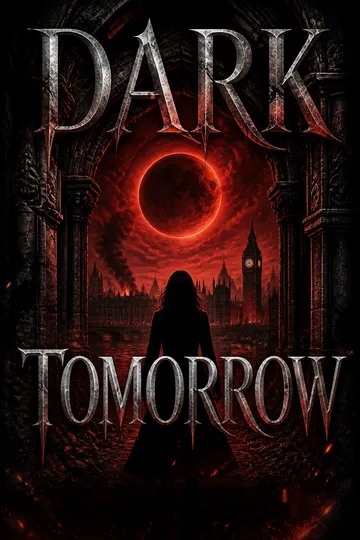
Dark Tomorrow tests what happens when inherited power collapses before any fair replacement is ready. The vampire Families have been destroyed, but their fall does not produce justice by itself. It leaves survivors exposed to street violence, political scapegoating, and a government willing to call imprisonment protection. Bo’s search for accountability therefore moves through several systems at once: police records, legal history, media footage, corporate taxes, and finally a hidden laboratory. Each system offers evidence while also showing how easily the vulnerable disappear inside official categories.
The missing children plot gives that disappearance a bodily form. Renascentia’s clients do not merely falsify identities; they claim children’s bodies as instruments for extending their own lives. Their language of compensation and opportunity masks a transaction the children never chose. Maria and Alice become the emotional counterweight to this logic. Their friendship survives captivity because they treat each other as persons, not resources. Bo’s decision to return the children, even when the process kills the adults occupying their bodies, makes the climax morally difficult rather than cleanly triumphant.
Bo’s development is similarly practical, not purifying. She remains capable of rage and violence, and she never stops wanting X dead. What changes is her ability to delay those impulses when a better action can protect others. She learns to ask allies for help, to let Michael challenge her, and to build a coalition with witches and surviving vampires without pretending their history is harmless. The final settlement is not justice in full: the Kakos daemons remain powerful, and X survives. But Bo secures a space for her people by choosing restraint as an active tactic. The novel’s hope is not that darkness disappears, but that people can make decisions together that prevent it from ruling everything.
Characters
Bo Blackman
Vampire investigatorBo is a resourceful vampire investigator with a strong instinct for protecting people and a dangerous capacity for violence. She distrusts authority, partly because she has seen powerful institutions protect themselves instead of the vulnerable, yet she repeatedly seeks help from police, lawyers, and officials when their tools can serve justice. Her fierce independence makes her effective in a crisis but also tempts her to treat revenge as a personal duty. The people around her matter because they challenge that isolation: Michael offers emotional steadiness, Maria makes her confront the cost of using someone else’s pain, and Arbuthnot pushes her to think beyond immediate anger. Bo’s central struggle is not whether she has darkness, but whether she can choose what to do with it.
Michael Montserrat
Bo’s human anchorMichael is a former vampire leader and Bo’s lover, accustomed to authority and to carrying responsibility for others. He is proud, controlled, and intensely protective, but illness and dependence expose how much of his identity has been bound to strength and status. His affection for Bo is not simply reassurance: he is willing to challenge her when grief and rage begin to dictate her choices. Michael’s presence gives the story an intimate measure of change. He must reckon with the difference between who he was and who he is becoming, while Bo must learn that loving him cannot mean deciding every risk on his behalf.
Maria
Traumatized young survivorMaria is a teenage Romany girl whom Bo rescued from trafficking. She is quiet, observant, and more self-possessed than her guarded manner first suggests. Years of neglect and exploitation have taught her to read danger quickly, but they have not erased her capacity for loyalty or tenderness. She bonds with Rogu3 and forms an unexpected connection with Michael, while Bo tries to protect her without turning her into a resource. Maria’s experience gives the investigation its human center: she understands what it means to be treated as disposable, and her choices are shaped by a desire to protect others from the same fate.
X
Charming Kakos daemonX is a powerful Kakos daemon who moves through human society with cultivated charm and unnerving composure. His relationship with Bo is complicated by a history of apparent intimacy, manipulation, and acts that have both harmed her and spared people she loves. He reads minds, anticipates reactions, and treats emotional conflict as something he can manage from a distance. Yet his polished control does not make him emotionally neutral: his choices reveal personal attachments and tensions within the daemon world. X is dangerous partly because he can make cruelty sound reasonable and partly because Bo cannot easily separate what he has done from what he has prevented.
Arbuthnot Blackman
Bo’s watchful grandfatherArbuthnot is Bo’s sharp-minded grandfather and a retired MI7 operative whose knowledge, resources, and habits of secrecy remain formidable. Frailty has not dulled his judgment or his appetite for controlling a situation. He protects Bo, but he does not confuse protection with approving every decision she makes. His questions and interventions force her to distinguish evidence from fear and responsibility from possessiveness. Their affection is real, though often expressed through teasing, strategic omissions, and blunt corrections. Arbuthnot represents an older form of institutional competence, one Bo can use without surrendering her independence.
Alistair Rogu3
Teenage hacker and allyRogu3 is a gifted teenage hacker and Bo’s friend, with a history of using his technical skill to help her investigate dangerous cases. He is quick-witted and capable, but still young enough for grief and fear to show plainly. His connection to Alice Goldman makes her disappearance personal, while his growing closeness to Maria gives him a reason to imagine a future beyond crisis. Rogu3 often supplies the digital access Bo lacks, but his value is not merely technical: he notices patterns others miss and keeps searching when the evidence seems to have gone cold.
Devlin O’Shea
Loyal Agathos partnerO’Shea is an Agathos daemon and Bo’s irreverent, loyal partner. His humor helps defuse fear, though it can also conceal grief over the partner he has lost. He is resourceful on the street and willing to take risks beside Bo, but he is not simply a comic companion: his observations about missing children help redirect the investigation. O’Shea’s loyalty is practical and emotional. He stays near Bo even when he doubts her judgment, and he reminds her that courage does not require pretending danger is amusing.
Vincent Hale
Anti-vampire politicianHale is a human politician who turns public fear of vampires into a political weapon. He presents himself as a defender of safety and order, but his prejudice makes him dismiss the lives of children who do not fit his priorities. His confidence comes from believing that power and public approval will shield him from consequences. Hale is most revealing when he speaks without the polish of a public address: beneath his carefully managed image lies a willingness to sacrifice vulnerable people for an ideological cause.
Hope
Pragmatic black witchHope is a black witch who helps rescue the surviving vampires and seeks cooperation across old divisions. She is direct, capable, and unembarrassed by the hard choices her magic requires. Her alliance with Bo begins under suspicion, since black witches have recently taken part in anti-vampire violence. Hope insists that shared danger matters more than inherited grudges, while remaining clear-eyed about the risks of trust. Her presence makes coalition-building concrete: she can bring resources and abilities the vampires lack, but she expects Bo to meet her as a partner rather than a supplicant.
Inspector Foxworthy
Cautious police allyFoxworthy is a police inspector who respects procedure but understands that procedure can become an excuse for inaction. He warns Bo when the government begins rounding up vampires and quietly supplies leads that official channels will not pursue effectively. His relationship with Bo is strained by her willingness to act outside the law, yet he remains concerned for her safety and the safety of the city. Foxworthy’s caution is not cowardice so much as an awareness of how quickly a failed intervention can cost lives.
Harry D’Argneau
Ambitious human lawyerD’Argneau is a human lawyer who once built a career by serving powerful vampire clients. Ambition and self-interest shape his first instincts, but he is not incapable of moral courage. Bo asks him to investigate vampire legal status and the Kakos daemons’ record, forcing him to look beyond the lucrative relationships he has lost. He is meticulous when given a legal problem and enjoys recognition, yet the story also shows his anxiety about being small in the face of overwhelming power.
Beth
Surviving vampire allyBeth is one of the surviving vampires Bo encounters after Hale’s forces capture them. She is resilient, loyal to the people she has lost, and willing to stand beside Bo as the remaining vampires decide what comes next. Her faith in Bo is stronger than Bo’s faith in herself. Beth helps turn a frightened gathering of survivors into a group capable of acting together, while remaining a distinct person rather than merely an admirer of Bo’s choices.
Alice Goldman
Missing child at the centerAlice is a child whose disappearance devastated her parents and remained an unresolved wound in the lives of those who knew her. She was a neighbor and friend to Rogu3, and her case first brought him into Bo’s orbit. In Maria’s memories, Alice appears as a protective, patient girl who uses the small freedom available to her to help another captive. Her story links the public mystery of a missing child to the hidden exploitation of children who are easier for society to overlook.
Mildred Beatty
Affluent woman in disguiseMildred is a wealthy older woman who presents herself as a carefully groomed teenager named Millicent. She is defensive, status-conscious, and convinced that her own desire for more life outweighs another person’s claim to their body. Her manner shows how privilege can make exploitation feel like a reasonable purchase. When confronted, she is more concerned with protecting herself from punishment than with the harm done to the child whose life she has taken.
Stephen MacIntyre
Face of the body-swapping schemeMacIntyre is the youthful-looking operator who reassures clients considering the transition procedure. He is strategic, self-satisfied, and skilled at presenting exploitation as a solution to aging. His work depends on a network that hides behind respectable business language and the assumption that some children will not be missed. MacIntyre’s confidence rests on treating people as interchangeable bodies, a logic that unravels when the victims are recognized and their original identities recovered.
Kimchi
Bo’s devoted dogKimchi is Bo’s affectionate, drooling dog, whose loyalty often punctures the grim atmosphere around the group. He is not a trained guard, but he is a steady source of comfort and a reminder of ordinary attachment amid supernatural violence.
Alice’s mother
Grieving, determined parentAlice’s mother has lived with uncertainty for years while continuing to search for her daughter. Grief has not stopped her from building a family or demanding that every possible lead be followed. Her memories give Bo a crucial clue about a girl she once saw in Westminster.
Plot Devices
Romany blood
Shield against daemon mindsMaria’s Romany heritage gives her a form of magical resistance to Kakos daemon mind-reading and emotional manipulation. A small amount of her blood temporarily transfers that protection to Bo, allowing her to approach X without being as easily read. The device turns an aspect of Maria’s identity into practical leverage, but the story treats that leverage as ethically costly: Bo refuses to take blood directly from her and uses a sample Maria has already chosen to give. The blood becomes a possible defense that Magix can study, and therefore a threat to the daemons’ usual advantage.
The MI7 warehouse
A hidden refuge and baseArbuthnot’s concealed MI7 facility gives Bo’s group a secure place to treat Michael, shelter survivors, review footage, and coordinate investigations. Its medical supplies and surveillance systems matter because the group has no reliable public protection. The bunker does not solve their problems: it cannot prevent Bo from being captured, and its security cannot replace judgment or trust. It instead serves as a temporary organizing center from which Bo can move between personal protection and public action.
The tax paper trail
Finding a hidden criminal networkMildred’s account of the price paid for a stolen body gives Bo a financial scale to investigate. Foxworthy’s list of companies with matching tax profiles narrows the search to businesses that appear legitimate but report unusually large revenues for vague services. Bo and the vampires cross-reference that list with Rogu3’s footage and identify Renascentia. This method makes the conspiracy vulnerable to ordinary records rather than a magical revelation. It also reflects the criminals’ strategy: they hide behind paperwork, corporate respectability, and the assumption that no one will connect money to missing children.
Body transitions
A market in stolen livesRenascentia arranges for wealthy older clients to occupy children’s bodies while the children’s souls are stored separately and their original bodies kept in stasis. The process explains why missing children can reappear under false names and altered appearances, and why a simple mind-wiping theory does not fit the evidence. It also creates the climax’s moral dilemma: restoring the children requires reversing the transitions, but the adult occupants may die when removed from the bodies they stole. The device literalizes the scheme’s central injustice by making one person’s longevity depend on another person’s stolen future.
Public broadcasts
Turning spectacle into evidenceNews footage and online video repeatedly shape the public meaning of events. The first recordings expose Bo to hostile attention, but Rogu3 also uses footage to identify Hale’s presence in the witch mob and later connect MacIntyre to Renascentia. Bo turns the same media logic against Hale by ensuring his dismissive remarks about abducted children are broadcast. Publicity is therefore neither simply helpful nor harmful: it amplifies prejudice when powerful people control the story, but it can make private conduct visible when evidence is preserved and shared.
Bo Blackman Series


Download PDF
Download EPUB
.epub digital book format is ideal for reading ebooks on phones, tablets, and e-readers.








