


Plot Summary
The Summons Turns Bloody
Bo Blackman, a human private investigator in a world shared with supernatural Tribers, enters a derelict house to serve Devlin O’Shea with a court summons. Instead, she finds the quarter-daemon tied to a chair, beaten and bleeding from his throat. When Bo calls for an ambulance, O’Shea warns that reporting the attack will get them both killed.
She cancels the call, frees him, and hauls him toward her car. Armed police arrive almost immediately, far too fast for an ordinary response. Bo turns away from the hospital and drives O’Shea to the one place she can get help without involving the authorities: her estranged grandfather’s home. The assignment that should have been routine has made her a witness, a rescuer, and a possible target.
The inciting incident works by making professional procedure collide with bodily emergency. Bo arrives with a summons, the tool of a minor investigator, and is forced to choose between following the job’s rules and keeping a wounded stranger alive. Her choice makes her morally responsible for O’Shea before she knows whether he is innocent. The suspiciously rapid police response also converts her instinctive unease into evidence: someone has anticipated her actions and arranged the scene around them. Her courage is practical rather than grand. She acts first, then discovers the cost.
Her Father’s Handcuffs
Bo’s grandfather cauterizes O’Shea’s wounds and helps keep him alive, though his old-fashioned manners and prejudice make every favor feel like a negotiation. Then he recognizes the steel cuffs still hanging from O’Shea’s wrist: they belonged to Bo’s father and were stolen from her flat. The clue suggests someone restrained O’Shea with Bo’s property and planned to have her arrive after he died.
Bo leaves O’Shea in her grandfather’s care, dumps her bloodied car in a cash-rented lockup, destroys her phone, and arranges a temporary hideout through a teenage hacker she knows as Rogu3. With no safe way to call ahead, she travels to her employer Tam’s office to learn whether he sent her into the trap knowingly.
The cuffs transform an atmospheric suspicion into a personal mechanism of entrapment. They are not merely evidence; they carry family history, making Bo’s past materially present in a crime designed to implicate her. Her response reveals the investigator she is becoming: she abandons comfort, destroys the tools that can locate her, and relies on improvised networks rather than official channels. Yet the chapter also exposes her isolation. The grandfather who can protect her is difficult to trust emotionally, and the friends she summons are useful precisely because they operate outside institutions. Survival requires both resourcefulness and selective dependence.
Dire Straits Massacred
Bo slips into Dire Straits through a fire exit and crawls above the dropped ceiling to observe Tam without alerting his staff. She overhears colleague Boris tell Tam that police are looking for her, then hears Tam summon his assistant Arzo.
Before Bo can make sense of the exchange, a dark-haired vampire attacks. He tears into Arzo and kills Tam with a single brutal bite. Arzo catches Bo’s eye and silently urges her to stay hidden, so she cannot intervene.
After the attacker leaves, Bo discovers that most of the office staff are dead and Arzo is barely alive. She calls emergency services from another desk, avoids touching Tam’s body, and escapes as sirens approach. The massacre leaves her employer dead and her only surviving colleague hospitalized.
Bo’s position above the ceiling literalizes her powerlessness: she can see the violence but cannot safely enter it. The scene also complicates her assumptions about loyalty. Tam’s response to the police warning gives her reason to suspect him, yet his death prevents an easy verdict. Arzo’s silent instruction saves Bo while leaving her with guilt for obeying it. The slaughter is not a conventional action climax, because Bo’s survival depends on restraint rather than combat. She must witness, remember, and flee. That choice shifts her from employee to investigator of a case whose victims include the people who once defined her working life.
O’Shea’s Dangerous Spell
After moving O’Shea to a hidden flat, Bo wakes to find him trying to escape with the broken bedframe still attached to his cuffs. She questions him and learns he created an illegal enhancement spell for a woman using the online name Lucy. The spell gives men sexual potency while making them infertile and unusually passive, a combination that could leave vampire users pliable to whoever directs them.
O’Shea says a vampire stole the spell and tried to kill him. Bo contacts Rogu3 to trace Lucy and asks O’Shea to find out whether Arzo survived. Rogu3’s search leads to Brighton Hospital, while O’Shea confirms Arzo is alive. Bo also discovers that her photograph has appeared in the papers, making their hideout unsafe.
The spell gives the mystery a concrete mechanism while preserving uncertainty about motive. Its danger lies not in spectacular magic but in altering agency: it can make powerful men easier to direct by changing their bodies and dispositions. That makes Bo’s investigation a question of consent as much as crime. O’Shea’s self-interest remains visible, especially in his concern for profit, but his survival now depends on cooperating with the woman he nearly got framed. Meanwhile, Bo’s reliance on Rogu3 shows how knowledge travels through informal networks when institutions are compromised. Each useful answer narrows the possibilities while enlarging the threat.
Lucy Dies on the Tracks
At Brighton Hospital, Bo learns that Arzo survived but his spinal cord was severed in the attack. There she meets Michael Montserrat, head of a vampire Family, and refuses his offer to join while she can still investigate independently.
Searching for O’Shea’s client, she discovers that barrister Harry D’Argneau hired Dire Straits to pursue the daemon. A woman tails Bo through the library and into the Underground. Bo confronts her, recognizes her as Lucy, and hears that a hidden female leader has recruited vampires across all five Families.
Before Lucy can identify that leader, a vampire shoves her beneath an arriving train. Bo is arrested at the station, where witnesses and surveillance footage are treated as less important than the chance to question her about two murders.
The revelation of a new leader turns the case from a sequence of attacks into a political crisis. Lucy offers a crucial account, but the speed of her murder deprives Bo of the name that might have made the conspiracy legible. The public setting intensifies the injustice: witnesses see what happened, yet Bo is still taken into custody. Her refusal of Montserrat’s first offer also matters. She wants agency and answers without surrendering her identity to a Family, but the investigation is steadily eliminating that freedom. The scene makes information itself precarious: the closer Bo gets to a source, the more likely that source is to be silenced.
The Recruit’s Last Choice
In the police station, D’Argneau initially refuses to trust Bo, mistaking her approach as an attempt to entrap him. A black witch in her cell recognizes her family name and attacks her while officers watch. Michael Montserrat arrives with O’Shea, who is alive, and secures Bo’s release.
He explains that Arzo is Sanguine, a rare person who can endure the vampire turning process without drinking human blood. Montserrat offers Bo the same path: join his Family, investigate the traitors from inside, and gain protection from police and rival vampires.
Bo rejects him again, but after the cell assault and the collapse of her remaining options, she accepts recruitment. Her choice is not a desire for vampire life. It is the price she pays to pursue the people who destroyed her firm.
Recruitment is framed as a constrained decision rather than a seductive escape. Montserrat offers safety, access, and a possible route to remain human, but each benefit is attached to institutional obedience. Bo’s consent is real, yet narrowed by the threats surrounding her. The revelation of Arzo’s Sanguine identity gives her a model of resistance within the system: survival without full conversion may be possible, but it demands extraordinary endurance. Her decision therefore preserves a sliver of self-determination while making her body part of the investigation. The turning point asks whether a person can enter a powerful institution without becoming its possession.
Blood Behind Closed Doors
Bo enters Montserrat headquarters with twelve other recruits and learns that some will die during the turning. She signs the contract and lets Michael bite her, then drinks his vampire blood to begin the change while avoiding human blood in hopes of becoming Sanguine. Three recruits do not survive.
Bo meets Peter Allen, Beth, Nell, Nicky, and the boastful former soldier Matt, while Ursus lays out the Family’s strict rules. The new group’s first crisis comes when Matt tries to hang himself in a shower. Bo and Beth break the fixture, cut him down, and revive him. Matt later wakes with his mind altered by the passivity spell, while Michael grows suspicious after Matt repeats Bo’s name.
The recruitment house presents transformation as both communal ritual and controlled danger. The recruits receive rules, rooms, and companions, but the deaths make clear that the Family’s care cannot guarantee safety. Bo’s refusal to drink human blood distinguishes her from the others and gives her a private objective inside the institution. Matt’s attempted suicide exposes the spell’s reach in an intimate, unsettling form: its victims may appear compliant even when their agency has been compromised. Bo and Beth’s rescue creates trust through action, while Michael’s suspicion immediately threatens that alliance. The group is bound together by need, but the same vulnerability makes each person a potential source of fear.
A Night Out Goes Wrong
As Michael withdraws from Bo and accuses her of endangering his Family, she grows increasingly desperate for information. She finds a suspicious packet beneath Beth’s water jug, but when Michael’s people search, it has vanished. The recruits sneak out to a nightclub, where D’Argneau tells Bo that Lady Bancroft hired him to find O’Shea and that one Family has captured someone who may know more.
When D’Argneau cuts his finger, the scent of blood overwhelms Bo. She attacks him, but Beth restrains her while Nell gets him away. Bo has not yet drunk, but the craving nearly makes her kill him. At dawn, she refuses to seek shelter and burns in the sunlight before Michael carries her inside.
This section turns the danger inward. Until now, Bo’s greatest fear has been an enemy acting upon her; the bloodlust reveals that her own altered body can make her the threat. Her attack on D’Argneau is not a chosen betrayal, but it still has consequences for someone who has helped her. Beth’s intervention is therefore both lifesaving and ethically important: she protects Bo without pretending that Bo’s actions are harmless. The sunrise scene deepens the cost of her stubbornness. Refusing shelter becomes a form of self-punishment, blurring determination with despair. Bo’s need to control the investigation now collides with the fact that she cannot fully control herself.
The Powder and the Alibi
Bo wakes more than a week later, having survived the bloodlust without being force-fed blood. She learns that a vampire involved in the attacks confessed to killing Lucy and attacking O’Shea, but was executed before the mastermind could be identified. Beth explains that Bo’s grandfather secretly supplied a powder that dampens the cravings and asked Beth to help keep Bo from drinking.
The revelation gives Bo a way to continue resisting, though she remains weak and distrustful of Montserrat. She visits Lady Bancroft at a spa, suspecting the only female Family Head, but Bancroft denies involvement. On the way out, Bo watches a video of vampire leaders meeting and recognizes Boris, her former colleague, disguised as a waiter.
The powder reframes apparent resilience as a relationship Bo did not know she had. Her grandfather’s covert help is loving but also controlling, repeating the family pattern in which care arrives through manipulation rather than open trust. The failed visit to Bancroft shows how easily suspicion can substitute for evidence; Bo has mistaken a plausible profile for a proven culprit. The video corrects her course by returning attention to a familiar colleague whose access to powerful gatherings matters more than his apparent rank. Her progress comes not from superior strength but from revising her theory when concrete evidence contradicts it. The investigation begins to reward scrutiny over confidence.
Rosewater in the Basement
Bo asks Arzo who knew about her assignment and learns that only he and Tam did. Boris could not have known she was targeting O’Shea unless he had inside information, and footage places him near the vampire leaders before their meetings.
Bo realizes he helped arrange the frame-up and the Dire Straits massacre, though another person remains in charge. Still weak from resisting blood, she later searches the storage room for Peter’s discarded crucifix. The smell of rosewater clinging to Nicky’s belongings recalls the scent at O’Shea’s attack.
Bo and Beth search the garden and find two guards dead, each holding the stake that killed the other. Their unnatural passivity suggests Nicky has escaped. Bo alerts the Family, learns the leaders are meeting at Big Ben, and takes Ursus’s motorcycle toward the tower.
The clues in this section are small, cumulative, and embodied: a voice, a restricted assignment, a scent, and the position of two bodies. Bo’s deductive work succeeds because she stops treating the conspiracy as an abstract enemy and starts asking who could physically know or do each thing. The crucifix gives the search an apparently modest purpose, but it leads her to evidence that threatens everyone. Her physical weakness remains consequential; she is not suddenly restored by solving the mystery. Instead, urgency forces her to act while compromised. The dead guards also demonstrate the spell’s most chilling effect: it can turn obedience into a weapon directed against the obedient.
Boris at Big Ben
At Big Ben, Bo spots Boris guarding the entrance while Nicky slips inside toward the assembled Family Heads. She follows, but Boris intercepts her on the tower stairs and beats her down. He admits that he wanted to remove vampires from power and used Nicky’s plan to do it, insisting that she intends to become Sanguine rather than a vampire.
His hatred of Tribers makes clear that he sees their destruction as righteous. When an alarm sounds and distracts him, Bo grabs the tower’s original bell hammer and knocks him unconscious. She leaves him for the arriving Family forces and climbs toward the clock, where she hears Nicky confronting Lady Bancroft. Bo reaches the top just as Nicky’s attack begins.
Boris’s confession reveals that the conspiracy is not driven by one coherent motive. He wants to destroy vampire power; Nicky wants revenge; their alliance depends on overlapping aims rather than shared ethics. His language of cleansing and justice exposes how prejudice can turn violence into a supposedly virtuous project. Bo defeats him not through a sudden awakening of vampire strength, but by using the tower’s own machinery as an improvised weapon. The bell hammer is a fitting counterweight to his certainty: a practical object interrupts a grand ideological plan. Yet his capture is only a local victory. The larger danger remains above her, and Bo must continue while her body is failing.
The Clock Face Confrontation
Nicky reveals that she has spent years planning revenge on the vampires, whom she believes caused her family’s ruin. She has used O’Shea’s spell to make male vampires passive and gathered the means to control the Family Heads. Lady Bancroft tries to restrain her, but Nicky drives a stake into Bancroft’s heart.
When Nicky turns to unleash the spell, Bo sprays her with pepper spray and takes a knife wound herself. The other Heads rush in as Bo loses consciousness. The spray gives them the opening to subdue Nicky, but Bo cannot prevent Bancroft’s death or stop herself from being badly injured. Her final intervention halts the takeover at the cost of the human future she had been trying to preserve.
The climax refuses a clean victory. Bo stops Nicky from controlling the Heads, but she cannot save Bancroft or escape injury, and the success of her intervention is confirmed only afterward. Nicky’s personal grievance has become political violence, while the Families’ secrecy and past failures have helped make her delusion difficult to challenge. Bo’s pepper spray is a modest, human tool, not a triumphant display of supernatural power; the decisive act is her willingness to interrupt Nicky despite knowing the cost. The scene also brings the novel’s central problem into sharp focus: institutions can protect people and still generate the conditions that make revenge feel necessary.
Epilogue
Bo wakes to learn that the Heads captured Nicky, who is being held rather than executed. Michael explains that Nicky killed her parents as a child after years of abuse, then built false memories in which vampires were responsible. The Family had recruited her believing it could help, but failed to understand how deeply her grievance had taken hold.
Boris is in police custody. Bo’s own injuries were too severe to survive without human blood, so she has become a full vampire rather than Sanguine. Peter, who had resisted blood for his own reasons, has achieved the rare Sanguine outcome. Bo drinks from the glass Michael gives her, grieving the human identity she could not keep.
The ending grants factual closure without moral comfort. Nicky’s false memories explain her actions, but they do not erase the deaths she engineered; likewise, the Family’s attempt to rehabilitate her does not absolve its secrecy or its failure to see her clearly. Bo’s transformation is the most intimate consequence of the crisis: she succeeds in protecting others, yet loses the future she chose for herself. Peter’s Sanguine survival sharpens that loss rather than canceling it, since the two recruits arrive at different outcomes through different motives and limits. The final drink is not acceptance so much as a necessary act of living with a body and system she did not want.
Analysis
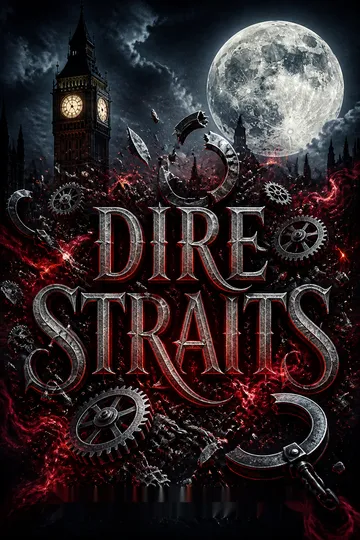
Dire Straits builds a mystery around agency: who is acting freely, who is being manipulated, and what happens when a person’s body or memory becomes unreliable evidence. O’Shea’s spell makes passivity literal, but the novel also scrutinizes the ordinary forms of control exercised by employers, police, Family leaders, and relatives. Bo is repeatedly offered protection that requires dependence. She resists because she wants to remain the author of her decisions, yet survival ultimately alters her body in ways she cannot fully choose.
The vampire Families are both a refuge and a governing system. They take in people whose lives have been shaped by violence, crime, or social exclusion, then impose strict loyalty as the price of belonging. That arrangement can redirect harmful behavior, but secrecy and exceptional power make accountability difficult. Nicky’s history shows how benevolent intention can fail when institutions mistake containment for understanding. Her false explanation for childhood trauma grows partly from a world where powerful groups control what may be known.
Bo’s investigative method is deliberately unglamorous. She notices an inherited cuff, a badly timed police response, a familiar voice, and the return of a scent. Her mistakes matter because she is not a flawless detective; she learns to distinguish a convincing theory from evidence that survives challenge. Her emotional arc moves from suspicion, through forced belonging, to a painful recognition that solving the case cannot restore her previous life. The final transformation denies the clean reward of the Sanguine outcome, but it also clarifies the book’s central tension: protecting other people may demand a cost that the protector never agreed to pay.
Characters
Bo Blackman
Human investigator under pressureBo is a short, stubborn human private investigator who takes assignments others consider unglamorous and prefers human motives to supernatural politics. She is observant, improvisational, and more compassionate than her rough humor suggests, but her independence can become a refusal to ask for help. Her loyalty to the people who have treated her imperfectly, including her grandfather and colleagues, gives her both emotional grounding and blind spots. When crisis pushes her into the vampire world, she tries to preserve her identity by resisting blood and insisting on making her own judgments. Bo’s drive is not a hunger for power. She wants the truth, the safety of people caught in the case, and the right to choose what kind of life she inhabits.
Devlin O’Shea
Daemon spellmaker and survivorDevlin is a quarter Agathos daemon who sells unauthorized spells and has enough confidence to treat danger as an inconvenience until it reaches his own doorstep. He is clever, commercially minded, and capable of charm, but his choices are shaped by a habit of minimizing consequences when money is involved. His illegal enhancement spell becomes central to the crisis, though he did not anticipate how others would exploit it. Devlin’s connection with Bo begins in coercion and suspicion, then develops into a practical alliance because each needs the other’s knowledge. His vulnerability also exposes the precarious position of mixed-blood Tribers, who can be targeted by powerful groups while remaining poorly protected by either human or supernatural institutions.
Michael Montserrat
Vampire Family HeadMichael leads the Montserrat vampire Family with composure, strategic caution, and a strong belief in its structure. He can be courteous and protective, but his position makes him accustomed to deciding what others need to know. He sees Bo’s investigative ability as valuable, especially because she stands outside vampire loyalties, yet he struggles to distinguish suspicion from proof when his Family is threatened. His bond with Bo is complicated by the way he initiates her turning and by the trust his role demands. Michael is neither a simple tyrant nor an uncomplicated rescuer. He represents an institution that offers refuge and order while asking its members to surrender privacy, autonomy, and, at times, their former lives.
Arzo
Sanguine investigatorArzo is Tam’s trusted assistant and a quiet source of steadiness at Dire Straits. He combines organizational discipline with a capacity for tenderness that his reserved manner rarely advertises. His unusual status as Sanguine places him between human and vampire life, and his history makes him wary of the costs of loyalty. Arzo supports Bo’s investigation because he trusts her judgment, even when he cannot protect her from the Family’s suspicions. His injuries and limited access to information frustrate him, but he remains an important bridge between Bo and Montserrat. Arzo’s experience offers Bo a model of resistance that is possible, though never easy, within a powerful institution.
Arbuthnot Blackman
Proud protective grandfatherBo’s grandfather is a polished, exacting man whose formal manners sit oddly beside his modest home. He holds entrenched prejudices, offers help on his own terms, and can make affection feel like criticism. Beneath that difficult surface, however, he watches over Bo and fears the risks she takes. Their relationship is marked by mutual stubbornness: he wants to guide her, while she resists being managed. His practical connections and willingness to intervene matter when Bo is isolated, even though his secrecy can deepen her distrust.
Tam
Bo’s demanding employerTam owns Dire Straits and has spent years building a private investigation firm whose name reflects his affection for 1980s music. He is a demanding employer who keeps Bo near the bottom of the ladder, but she respects his experience and wants to prove herself under him. His guarded manner makes it difficult for her to know what he thinks, especially once she begins to suspect that her assignment was arranged to frame her. Tam’s professional authority and personal distance shape Bo’s early uncertainty about whom she can trust.
Boris
Blunt fellow investigatorBoris is a large, seemingly uncomplicated investigator at Dire Straits who cultivates police contacts and tends to speak without much tact. Bo initially regards him as a nuisance rather than a serious presence. His access to information and his work across supernatural circles give him a reach that is easy to underestimate. He represents the danger of reading people only by the role they occupy in a workplace: routine familiarity can conceal both useful knowledge and motives that are not obvious to colleagues.
Rogu3
Teenage hacker and allyRogu3 is a teenage hacker Bo met years earlier while investigating an insurance case. Precocious, self-directed, and serious about his craft, he treats information as a tool rather than a chance to show off. Bo respects his skill and protects his identity, while he trusts her enough to offer safe houses and searches. Their relationship has the easy friction of an adult who still tells him not to swear and a young person who knows more about digital security than she does. His work extends Bo’s reach without placing him directly in the physical danger of the investigation.
Rebecca
Dry cleaner and loyal friendRebecca runs The Steam Team and has become one of Bo’s dependable friends after Bo helped stop a series of break-ins. She is practical, quick to notice when Bo is in trouble, and generous without demanding an explanation. Her dry-cleaning shop offers Bo a shower, clean clothes, and a place to pause, but Rebecca’s most important help is her refusal to panic when dangerous visitors arrive. She gives Bo a glimpse of friendship that does not depend on shared supernatural status or professional obligation.
Harry D’Argneau
Barrister with hidden leadsHarry D’Argneau is a successful barrister whose sharp presentation and confidence make him difficult to read. He has experience representing both human and supernatural clients, and he is accustomed to bargaining for advantage. His encounters with Bo are colored by mutual suspicion: he believes she may be trying to use him, while she needs his connection to the case. He is neither a dependable ally nor a straightforward enemy, and his willingness to trade information for a future favor reflects the transactional world both characters inhabit.
Beth
Defiant recruit with heelsBeth is a stylish, sharp-tongued recruit who refuses to abandon her high heels even when Ursus disapproves. Beneath the performative glamour is someone alert to danger and willing to act decisively when another recruit is at risk. She and Bo develop a wary friendship through shared trouble, teasing, and moments of practical loyalty. Beth has reasons for joining the Montserrat Family that she keeps private, but her guardedness should not be mistaken for selfishness. She is most revealing when a crisis forces her to choose between self-protection and helping someone else.
Peter Allen
Devout, troubled recruitPeter is a quiet recruit who clutches a crucifix as he faces the decision to become a vampire. His faith does not remove his fear; it gives him an object to hold while he weighs a choice he cannot easily reverse. Peter is thoughtful and perceptive, often noticing what Bo tries to conceal, but he is also burdened by a private sense of guilt. His reluctance to drink sets him apart from the more confident recruits and gives his spiritual struggle a physical form.
Nicky
Young recruit finding freedomNicky is a young recruit who has spent years in a wheelchair and is newly able to walk after joining the Montserrat Family. Her excitement at exploring the mansion and garden is infectious, and she quickly forms a close connection with Bo and Nell. She is affectionate, curious, and eager to experience ordinary pleasures that were previously out of reach. Her vulnerable appearance and history shape how others respond to her, sometimes leading them to make assumptions. Nicky’s desire for independence is central to her presence among the recruits.
Nell
Bold, irreverent recruitNell is an outgoing recruit who brings humor and momentum to the group. She is quick to suggest breaking routine, eager to dance, and comfortable making fun of the rules when they seem excessive. Her confidence can make her appear carefree, but she is also attentive to the people around her and acts quickly when danger appears. Nell’s sociability helps the recruits form a makeshift community inside the imposing Family headquarters.
Matthew Baldwick
Former soldier and recruitMatt is a muscular former soldier who enters the recruitment process with swagger and confidence in his own discipline. He expects his military background to make him useful to the Family and initially treats uncertainty as something to overpower. His early bravado contrasts with the vulnerability that emerges during the turning process. Matt’s experience shows that physical strength and training do not protect someone from a threat aimed at the mind.
Ursus
Strict Family instructorUrsus is a formidable Montserrat vampire who oversees recruit instruction and delivers the Family’s rules with stern authority. He believes discipline is necessary to keep vulnerable newcomers alive, though his blunt methods can make him intimidating. His concern for the recruits occasionally surfaces beneath his formal, hard-edged manner. Ursus values order and expects people to follow instructions, especially when their choices could endanger the entire Family.
Ria
Efficient Family administratorRia is a long-serving Montserrat member who manages practical details with brisk efficiency. She is observant, protective of the Family’s routines, and frustrated when people outside its hierarchy gain access to information. Her skepticism toward Bo grows from uncertainty about Bo’s role, not simple dislike. Ria’s disciplined manner reflects the labor required to keep a large and secretive community functioning.
Lady Bancroft
Independent Family leaderLady Bancroft heads one of the five vampire Families and is accustomed to exercising power in a male-dominated political structure. She is self-possessed, direct, and difficult to intimidate. Her preference for privacy and her confidence in her own judgment make her a formidable figure when Bo seeks answers. She regards the Family system as something to navigate strategically rather than accept uncritically.
Charity Weathers
Secretive spell clientCharity Weathers contacts O’Shea through an online identity and becomes an important witness to the dangerous dealings around his spell. She is frightened and desperate, with limited power in a conflict shaped by vampires and supernatural politics. Her brief appearance gives Bo a glimpse of how vulnerable human intermediaries can become when powerful groups use them.
Plot Devices
O’Shea’s enhancement spell
Weakens male vampire agencyO’Shea’s illegal spell gives male clients sexual potency while making them infertile and unusually passive. Its effects make it valuable to people who want to influence powerful men without confronting them openly. A version of the spell is distributed among vampires and becomes a means of manipulation, violence, and political destabilization. Because the spell affects behavior as well as the body, the story repeatedly asks whether a person’s actions remain their own under supernatural coercion. Its consequences also expose O’Shea’s carelessness: a scheme he treated as a profitable product becomes a weapon beyond his control.
The Sanguine turning
Tests resistance to bloodNew recruits undergo a month-long vampire transformation. Drinking human blood completes the change, while refusing to drink offers the rare possibility of becoming Sanguine, a stronger but still partly human state. The process brings physical weakness, cravings, and the risk of death, so it turns Bo’s investigation into a test of bodily endurance. The lunar deadline gives the story a ticking clock: Bo must uncover the conspiracy while resisting the very hunger that could destroy her ability to choose. Arzo and Peter demonstrate that the outcome is possible, but neither makes it look easy.
The stolen handcuffs
Frames Bo through evidenceThe steel cuffs used to restrain O’Shea belong to Bo and were inherited from her father. Their presence at the crime scene makes her appear responsible for his torture and possible death, while their theft indicates that someone planned the frame-up before she arrived. They tie the conspiracy to Bo’s private life and give the police a tangible reason to pursue her. Later, the cuffs also force her to recognize that the danger is not an ordinary misunderstanding. Evidence that should establish guilt instead becomes the first clue that someone is constructing a story around her.
The rosewater scent
Links separate crime scenesBo notices a faint rosewater smell in the house where O’Shea was attacked. Much later, the same scent clings to belongings in the Montserrat storage room, linking the original assault to someone inside the Family’s headquarters. The clue is easy to overlook because it is sensory rather than documentary, and Bo has already made several mistaken assumptions. Its return rewards attention to small details and helps her recognize that a recruit she considers vulnerable may be connected to the conspiracy. The scent is a bridge between two places that otherwise seem unrelated.
The bell hammer
Improvised weapon in the towerInside Elizabeth Tower, Bo finds the original bell hammer and uses it to knock Boris unconscious after he blocks her path. The object belongs to the clock machinery rather than to her investigative kit, which makes the victory an act of adaptation rather than preparation. Bo is physically weakened and cannot overpower Boris through strength, so she uses the space and tools around her. The hammer also connects the story’s central image of time to the approaching deadline at the lunar month’s end. Its practical use buys her the moments needed to reach the Family Heads.
Bo Blackman Series



Download PDF
Download EPUB
.epub digital book format is ideal for reading ebooks on phones, tablets, and e-readers.








