


Plot Summary
A Vigilante Chooses Her Target
Bo Blackman has made herself London’s answer to crimes the authorities leave untouched. After breaking up a witch coven’s attempt to raise a corpse, she accepts a new address from X, her unsettling benefactor, and finds a club where underage girls are being held. Bo sets the bar alight to frighten customers into fleeing, frees the captives, and takes one terrified girl, Maria, away with her.
When the girl begs not to be handed to the police, Bo brings her to her own apartment instead. X rebukes Bo for choosing a small witch coven over more urgent crimes, exposing the flaw in her crusade: she wants justice, but she chooses her targets by personal grievance as much as need.
Bo’s vigilantism begins as an answer to institutional failure, but the opening immediately complicates her claim to moral clarity. She frees the girls, yet her methods include arson, threats, and leaving a manager trapped in a burning room. Her choice to shelter Maria is more intimate and less certain than punishing criminals: Bo must respond to a frightened person rather than a category of offender. X’s criticism presses the same point from another direction. Bo can act decisively against the witches she hates, but she cannot treat that preference as proof she has helped the city.
The Missing Girl's Father
At home, Bo tries to give Maria clean towels and a place to sleep, but the girl cannot explain where she came from or who might be looking for her. X passes along a request from Jonesy, a Tube station caretaker who once offered Bo a favour: his nineteen-year-old daughter, Lisa Johnson, has vanished.
Jonesy has already gone to the police and received little help, so Bo agrees to investigate, though she warns him she may find Lisa dead or unwilling to return. Around the same time, Beth and Matt bring Bo her dog, Kimchi. They reveal that Matt’s obedience spell has finally worn off, but the Montserrat vampires are recruiting again to match Medici’s swelling numbers. Bo takes the dog, not the Family’s invitation back into its ranks.
The missing-person case gives Bo a task that cannot be resolved by overpowering a suspect. Jonesy’s desperation asks her to search without deciding in advance what Lisa wants, while Maria’s silence shows how little Bo can learn through force. Bo’s refusal to return to the Montserrats is likewise more than a political stance: she keeps herself apart from people who remember her before grief hardened her. Kimchi becomes a small, comic tether to that earlier life. Matt’s recovered autonomy offers hope, but the Families’ renewed recruitment turns personal recovery into part of a much larger contest for power.
Files Beneath the Family War
Bo asks lawyer Harry D’Argneau whether the Families can legally expand their vampire ranks. When he warns her that the answer lies in private client files, she uses his keys to enter his office and searches his paper records herself.
A report commissioned by the Stuart Family estimates how far vampire numbers can grow before human authorities intervene, even proposing that human blood supplies be bought from people in poverty. The same file lists hundreds of anti-vampire protestors who have disappeared.
Bo photographs the names, then trades information with Inspector Foxworthy, who agrees to obtain Lisa’s case file in exchange for the address of a wanted murderer. The missing protestors give Bo reason to suspect that Lisa’s disappearance is not an isolated escape.
The paper trail makes institutional power concrete. The Families do not merely recruit more vampires; they commission legal calculations about the limits of public resistance and treat blood as a resource to be managed. Bo’s break-in mirrors that system’s own disregard for consent, even as it uncovers evidence of possible harm. The list of missing protestors also shifts her investigation from one family’s grief toward a civic pattern. Foxworthy’s bargain shows that information moves through compromised channels: the police officer does not endorse Bo’s methods, but he recognizes that the official process has left gaps she can exploit.
A Tree in Lisa's Room
Bo searches Lisa’s carefully ordered bedroom and finds little beyond a thank-you note begun to her grandmother and signs that Lisa took her contraception and personal supplies when she left.
At the family doctor’s women’s health meeting, other patients recall Lisa asking about sex with multiple partners and stopping her periods. They also remember her unusual farewell hug. Dr Bryant then connects Lisa’s delicate gold tree necklace to Melissa Greek, a former patient who disappeared after joining activist circles.
Bo understands that Lisa may have chosen to leave, but the matching symbol makes it harder to believe she is simply living freely elsewhere. The discovery gives the missing-person case a trail: two young women, both connected to protest and the same tree emblem.
Lisa’s absence is first legible through what she chose to take and what she left behind. Her tidy room encourages her parents’ image of a dutiful daughter, but the contraceptives and missing supplies suggest a private plan they did not know about. The clinic’s testimony complicates the idea that Lisa was simply reckless: her questions sound like someone testing the cost of choices she was already considering. The tree necklace changes the investigation from psychological inference to pattern recognition. Bo must hold both possibilities at once: Lisa may have acted willingly, and the organization she joined may still have taken control of her.
Blood on the Cafe Floor
A receipt leads Bo to a shabby café where the owner reacts to her presence with open hatred. He shoots her before she can question him, and she drinks enough of his blood to stay conscious. His associates arrive carrying shotguns, but leave when an ambulance and police appear. One man’s neck bears the same tree symbol as Lisa’s necklace.
Bo then speaks with Lisa’s former boyfriend, Adrian Leeman, who says she broke up with him because he lacked her ambition and concern about vampire power. He denies knowing about a tree pendant. Bo’s questions have uncovered a secretive human group and a possible link to the protestors, but the bullet in her side catches up with her before she can pursue the lead.
The café strips away the respectable version of Lisa’s story without replacing it with a simple villain narrative. Adrian remembers her as politically intense, while the café’s hostility suggests she entered spaces her parents would never have imagined. Bo’s wound is a physical consequence of treating every hostile encounter as manageable; her strength cannot prevent blood loss or bad judgment. The tree tattoo is the first visible mark tying separate clues together, yet it offers no explanation of the group’s motives. The investigation advances not through a confession but through symbols, evasions, and the risks Bo takes to keep asking.
Michael Removes the Bullet
As Bo’s injury leaves her dizzy, Beth and Matt take her to the Montserrat mansion, where Michael has a vampire medic remove the bullet and stitch her side. Bo confronts him about the renewed recruitment drive. Michael says the Families believe they must match Medici’s numbers before they can challenge him, while Bo warns that turning people quickly risks repeating the disaster caused by Nicky.
Their argument softens into a reunion, and they sleep together, though Bo refuses to discuss what it means. Before leaving, she asks Michael about a tree symbol; he knows nothing. He also keeps the coming Family plans from her, leaving Bo caught between renewed intimacy and the same secrecy that drove her away.
The scene makes physical care and political disagreement part of the same relationship. Michael’s effort to save Bo’s life is genuine, but he still withholds information and expects the Family’s decisions to remain within its hierarchy. Bo, in turn, wants closeness without the vulnerability of relying on him. Their intimacy briefly gives her relief without resolving that contradiction. The recruitment debate sharpens their different responses to threat: Michael accepts expansion as a necessary defense, while Bo sees the new recruits as people being turned into strategic numbers. Neither position is emotionally neutral, because each protects a different form of responsibility.
Rogu3 Betrays Bo on Camera
Rogu3, the teenage hacker Bo once saved, arrives despite her request to stay away and insists he wants to help. X approves bringing him and Maria into his orbit, then hosts them at dinner, where Rogu3 negotiates a paid technology role with conditions that protect his schooling.
To draw out Lisa’s organization, Bo and Rogu3 stage a public quarrel outside Medici’s stronghold. Rogu3 denounces both vampires and Bo, making their split convincing enough to attract attention.
A Medici vampire follows Bo onto a rooftop and attacks her. When she pins Bo over the edge, Bo bites through her throat and throws her to the street below. The performance succeeds in making Bo more visible, but the cost is a new enemy and greater danger for everyone near her.
Rogu3’s participation tests whether Bo can distinguish protection from control. She wants him safe, yet she accepts his help once he insists on choosing the risk himself. Their staged betrayal turns trust into a public instrument: to reach Lisa’s captors, Rogu3 must make the newspapers believe he rejects Bo. The rooftop fight then exposes the cost of performing toughness. Bo survives by using her body as a weapon, and the pleasure she takes in victory unsettles her claim that violence is merely practical. The episode advances the investigation while making the boundary between strategy and appetite harder for Bo to see.
The Thief Is O'Shea
X sends Bo, Maria, and Kimchi to stop a burglary at Magix, the magic retailer whose equipment is designed to incapacitate vampires. Bo catches the disguised thief beside a delivery of specialized tasers, but Maria strikes before Bo can question him. The glamour drops, revealing Devlin O’Shea, Bo’s quarter-daemon friend, who was stealing the weapons at Michael’s request.
O’Shea says the Families suspect the vanished protestors are connected to a larger human plot. Bo’s reunion with him forces her to face the friend she avoided after Connor’s death. Meanwhile, Maria wants to hurt the people who harmed her. Bo gives her an assignment, trying to channel that anger without pretending that she can make it harmless.
O’Shea’s sudden reappearance turns a routine assignment into a test of Bo’s estrangement. She has used distance as a form of self-punishment, believing that staying away will spare him the sight of what she has become. His presence challenges that logic, though his own grief remains visible beneath the familiar banter. Maria’s desire for revenge echoes Bo’s vigilantism, making mentorship ethically fraught: Bo cannot condemn Maria’s anger without confronting the violence she herself practices. The tasers are more than stolen goods. They show that someone is preparing specifically for vampires, while O’Shea’s explanation ties the missing protestors to the Families’ mounting fear.
The Tree's Hidden Number
Rogu3 learns that the tree-marked group, Tov V’ra, wants to meet him at St Paul’s Cathedral. To attend in daylight, Bo uses O’Shea’s glamour to pass as Rogu3. Before the meeting, she overhears Doris, a hostile witch, boast about a dangerous hex aimed at vampires and kills her in the cathedral crypt to prevent its use.
At noon, Tov V’ra organizer Isaac identifies the group’s purpose as destroying the vampire Families. He offers Rogu3 money, education, and sexual access, then promises proof of the organization’s reach through an anti-vampire bill in Parliament. Bo’s disguise begins to fail in the sunlight. O’Shea and Michael arrive with a UV-protective coat and get her away before the exposure becomes fatal.
The disguise lets Bo cross a boundary her body cannot yet cross, but it also places her inside the role of a vulnerable teenager. Isaac’s pitch reveals how Tov V’ra converts ordinary desires into recruitment tools, offering status and sexual access alongside its crusade. Bo’s killing of Doris complicates the distinction between prevention and punishment: she acts on the possibility of a harmful spell without waiting for it to injure anyone. Her rescue depends on Michael and O’Shea, precisely the people she has tried to keep outside her life. The scene makes independence look less like strength than a story Bo tells herself to avoid needing others.
Medici's Public Decapitations
Back at the Montserrat mansion, Bo makes her feelings for Michael public, admitting that she loves him and wants to become someone he can trust. Michael returns her declaration, but news that Medici is outside cuts the moment short. Before the gathered Families and press, Medici presents three new vampires as criminals who have harmed humans, then executes them with one sword stroke.
Bo recognizes the spectacle as a bid to cast Medici as the only vampire leader willing to punish offenders. The other Family Lords argue over what his performance means, while Bo insists it is calculated propaganda. The incident makes her own public image part of the conflict: Medici can use the Red Angel’s reputation to justify his version of justice.
Bo’s declaration is an act of emotional exposure that she cannot take back, and it comes just as the political crisis becomes public theater. Medici’s executions borrow the appearance of accountability while denying any independent process; he chooses the accused, controls the setting, and supplies the verdict. Bo sees through the performance, but her own reputation has helped make it persuasive. Her vigilante identity already teaches audiences to admire punishment without procedure. The difference she insists upon, that she does not stage her killings for cameras, matters morally, but it cannot keep the public from comparing her methods with Medici’s.
Parliament Signs the Trap
Vince Hale introduces a bill to return each vampire Family to its old limit of five hundred members, then proposes killing anyone recruited beyond that number. Medici publicly endorses the cap, making the Families appear isolated and setting them against both Parliament and popular fear. At home, X orders Bo to stop pursuing Medici and focus on Lisa.
Rogu3 deciphers the hidden phone number in Tov V’ra’s tree emblem, and the group demands Bo in exchange for the rewards it promised him. Bo chooses to meet them herself, arranging her capture as a way to reach Lisa and learn what the organization intends. The official threat and the private bargain converge: both sides are trying to turn people into expendable instruments.
The proposed bill transforms political panic into a mechanism for elimination. Its language of restoring a limit hides the human cost of deciding that thousands of existing vampires can simply be erased. Medici’s support makes the trap especially effective: he appears to concede while forcing his rivals to choose between obedience and resistance. X’s insistence that Bo concentrate on Lisa seems increasingly suspect, but she has no proof of his purpose. By offering herself to Tov V’ra, Bo again accepts danger as a route to information, although this time the group’s demand makes clear that she is not merely investigating from the outside.
The Maypole at Sunrise
Tov V’ra cages Bo in a restraint field and lets Vince Hale claim that Rogu3 betrayed her. Lisa arrives, explaining that she joined the group believing she could help change the world, but has been made to serve its leaders. They cut her arm to provoke Bo for the cameras, then threaten to unleash a starved Montserrat vampire if she refuses to drink.
Bo feeds from Lisa without killing her. At dawn, Tov V’ra chains Bo to a maypole for a staged execution and presents the starving vampire as proof that all vampires are monsters. When it breaks loose, Bo kills it to save Lisa. A follower releases her restraints; the sunlight no longer burns her. Lisa chooses not to stab Isaac, and Bo calls the police to take the survivors into custody.
Tov V’ra’s public ritual is designed to manufacture the evidence it claims merely to reveal. Its leaders starve a vampire, provoke a rescue, and frame the resulting violence as proof of innate evil. Bo’s refusal to kill Lisa, followed by her decision to save the attacking vampire’s potential victims, disrupts that script without making her innocent of violence. Her new ability to withstand daylight marks a bodily threshold she has been testing for much of the story, but it does not arrive through triumph alone. Lisa’s choice to drop the knife matters just as much: she refuses to let victimhood dictate what she becomes next.
A Family Comes Back
Bo accompanies Lisa home, where Alison and Jonesy pull their daughter into an embrace before Bo can even explain what happened. Seeing the family reunited breaks through Bo’s guardedness, and she runs to the hospital to visit her grandfather, who has been in a coma since the earlier violence. He has awakened, though he remains weak, and greets her with the familiar sharpness she had thought she might never hear again.
Bo apologizes for staying away; he laughs rather than condemning her. Then O’Shea reveals that he has worked out the identity of Bo’s secret employer: X is a Kakos daemon. Bo panics because X has threatened anyone who learns the truth. Her grandfather tells her to stop reacting and discover what X truly wants.
Lisa’s reunion gives Bo a picture of care that does not require punishment or spectacle. Her parents’ relief is immediate and physical, and it makes her own absence from her grandfather’s bedside impossible to excuse away. His return to consciousness offers forgiveness without pretending the months of distance did not happen. O’Shea’s revelation then threatens the fragile safety Bo has built around her new household. The secret was never sustainable, as her grandfather recognizes, but naming that fact does not make the danger smaller. Bo is forced to move from fearing X’s rules to investigating the purpose behind them.
Five Explosions for Revenge
On her way out of the hospital, Bo questions Tara Wilkes, the woman Medici had presented as a victim. Tara reveals that Tov V’ra’s martyrs are attacking the Families. Explosions soon reduce the Montserrat, Gully, Stuart, Bancroft, and Medici strongholds to rubble.
X admits that the Kakos daemons planned the destruction to punish the Families for blaming them for past killings, and that he kept Bo focused on Lisa to keep her from interfering. He offers to save one person.
Bo chooses Michael, and X carries him from the collapsing mansion before bringing him to Bo’s apartment. Michael is alive, but his eyes now appear human. The others’ fates remain uncertain, and X calls this change his revenge, leaving Bo with survival and loss in the same room.
The final reversal reveals that the human conspiracy was only one layer of the conflict. Tov V’ra’s attacks provide the immediate mechanism, but X identifies a broader act of retaliation by the beings the Families have used as scapegoats. Bo’s choice of Michael exposes the painful limit of rescue: she can name only one person, and doing so means accepting that others may be lost. X preserves Michael’s life while altering what he is, turning mercy into an instrument of punishment. The ending refuses a clean victory. Bo has saved Lisa and recovered her grandfather, yet the political order she hoped to reform has been physically erased.
Analysis
Vigilante Vampire places Bo between two claims to justice: the Families’ inherited authority and her own belief that force can repair what institutions leave undone. The novel refuses to make either claim clean. Bo saves captives and finds Lisa, but she also punishes people without trial and sometimes kills on the basis of a threat she believes is imminent. Medici borrows her public credibility to stage executions, while Tov V’ra manufactures an image of vampire cruelty through starvation and cameras. In both cases, violence becomes persuasive when it is detached from its cause and offered to an audience as proof.
The mystery of Lisa’s disappearance keeps this political conflict tied to private life. Her parents’ tidy memories do not reveal her inner world, and her activist conviction does not protect her from manipulation. Bo has to recognize Lisa as both an adult who chose to leave and a person whose choices were narrowed by a coercive group. Maria’s presence offers a parallel: rescuing someone does not give Bo the right to decide what that person should become.
Bo’s relationships measure her capacity to accept care. She keeps Michael, O’Shea, her grandfather, and even Rogu3 at a distance because she confuses isolation with control. Their repeated attempts to help challenge the story she tells herself about being alone. Yet the ending does not reward her with uncomplicated belonging. X’s destruction of the vampire strongholds exposes the larger conflict she could not see while he directed her attention elsewhere. Bo saves Michael by choosing him, but his altered eyes make that rescue feel less like restoration than another imposed change.
The novel’s sharpest question is not whether violence can ever be justified, but who gets to define its purpose and control its story. Bo can expose manipulation, but she cannot prevent every catastrophe, and her own methods make her vulnerable to the same moral shortcuts she condemns. Her hard-won progress is therefore not innocence. It is a growing ability to see other people as more than weapons, burdens, or evidence.
Characters
Bo Blackman
Rogue vampire investigatorBo is a young vampire who works as an investigator and vigilante in London, acting where she believes police and political authorities have failed. She is sharp, physically daring, funny in a cutting way, and increasingly willing to use violence. Grief over Connor’s death and her grandfather’s coma has made her isolate herself from Michael and O’Shea, while her work for X gives her a sense of purpose and resources. Beneath her bravado is a woman testing whether pain, danger, and punishment can keep guilt at bay. Her commitment to doing good is real, but she struggles to tell justice apart from revenge.
Michael Montserrat
The burdened Family lordMichael leads the Montserrat vampire Family and has a history of love and conflict with Bo. He is disciplined, politically responsible, and inclined to shoulder problems rather than share them. His loyalty to the Family makes him support recruitment as a response to Medici’s growing power, even when Bo sees the moral and practical risks. With Bo, he is both an anchor and a source of frustration: he wants her safe and close, but his secrecy makes her feel managed rather than trusted. He combines authority with genuine tenderness, though the demands of leadership often leave little room for either.
X
The unseen patronX is Bo’s powerful, secretive employer, who supplies her with a home, assignments, and access to information. He is urbane and teasing, but his humor often carries an unmistakable threat. X values control, bargains, and loyalty to one’s word, and he expects Bo to follow his priorities even when she believes another crisis matters more. Their relationship is neither simple employment nor friendship: he protects her, manipulates her, and keeps strict limits on what she may reveal. Bo’s dependence on his resources makes it difficult for her to judge whether his help is benevolent or self-serving.
Devlin O'Shea
The grieving quarter-daemonO’Shea is Bo’s old friend, a quarter-daemon whose quick wit and practical skills often steady a chaotic situation. He is grieving Connor and hurt by Bo’s withdrawal, but he continues to help her rather than turning his pain into a demand for repayment. His humour is partly a defense, especially when the people he loves are in danger. O’Shea understands the supernatural world well enough to question Bo’s assumptions, and his willingness to tell her difficult truths makes him one of the few people able to challenge her without simply trying to control her.
Maria
The rescued survivorMaria is a teenager Bo rescues from a club where girls are being exploited. She speaks limited English, keeps her past guarded, and is frightened of people and situations that others might consider harmless. Her mistrust is not caprice; it reflects what she has endured. Maria is perceptive about supernatural identities and quick to recognize danger, even when Bo overlooks it. She wants the power to strike back at those who hurt people like her. Bo’s effort to protect her becomes a test of whether care can make room for Maria’s own choices rather than merely replacing one form of control with another.
Alistair Jones, called Rogu3
The young hackerAlistair, who uses the online name Rogu3, is a gifted teenage hacker whom Bo once saved. Clever, curious, and stubbornly self-directed, he wants to use his abilities against the forces threatening London rather than retreat into ordinary school life. His past trauma has left him sensitive to the darkness within himself, but he sees work as a way to regain agency. Bo’s instinct is to protect him by keeping him away; he insists that choosing danger for a purpose is still his choice. His confidence can look reckless, yet he is more thoughtful and strategic than Bo initially allows.
Lisa Johnson
The activist gone missingLisa is the nineteen-year-old daughter of Jonesy and Alison, known to her family as tidy, kind, and deeply concerned with public causes. She has organized protests and challenged people around her to care about problems beyond their own lives. Her relationship with Adrian ended partly because they wanted different kinds of lives. Lisa’s private questions about sex and contraception suggest that her choices were more complex than her parents understood. She is not merely a symbol in Bo’s investigation; she is a young woman seeking a cause that gives her agency, while remaining vulnerable to people who exploit that desire.
Lord Medici
The expansionist rulerMedici is the powerful head of the vampire Family that bears his name. Rather than preserve the traditional limit on recruitment, he expands his ranks dramatically, forcing the other Families to decide whether to follow. He understands that power is not only physical: public confidence, fear, and carefully staged displays can be as useful as strength. His willingness to present himself as a protector makes him especially dangerous to opponents who rely on people recognizing his ambition. Bo sees him as a threat, while the other Family leaders are divided over how directly they can challenge him.
Jonesy
The desperate fatherJonesy is a Tube station caretaker and Lisa’s father. He asks Bo to find his missing daughter after the police make little progress. His hope in Bo rests less on trusting vampires than on believing that someone outside official channels will keep looking. He struggles to accept that Lisa may have had a private life and political commitments he did not know about. His devotion is sincere, but his certainty about the daughter he remembers can make it difficult to see the adult she has become.
Alison Johnson
The hopeful motherAlison is Lisa’s mother, a warm, practical woman who tries to keep busy while her daughter is missing. She welcomes Bo into the family home and even prepares blood for her vampire visitor, showing how far desperation can override ordinary caution. Alison remembers Lisa through domestic rituals and family photographs, and her reluctance to imagine the worst protects her from despair. She is loving without being fully informed about her daughter’s choices.
Beth
Bo's clear-eyed friendBeth is a vampire and one of Bo’s former allies. She is direct, perceptive, and difficult to dismiss, especially when she recognizes that Bo is pushing people away to avoid confronting grief. She helps Matt and Kimchi reconnect with Bo, and her willingness to remain present does not depend on Bo welcoming her warmly. Beth respects Bo’s strength while refusing to mistake it for proof that Bo needs no one.
Matt
The recovering recruitMatt is a Montserrat vampire who was once controlled by a spell that distorted his judgment and obedience. When the spell fades, he and Beth bring Kimchi back to Bo and try to draw her into the Family’s concerns. He is physically imposing but emotionally open, and his hurt when Bo accepts Rogu3’s help instead of his shows how much he wants their friendship restored. His recovery matters because it demonstrates that the damage caused by Nicky’s magic may not be permanent.
Inspector Foxworthy
The wary detectiveFoxworthy is a police inspector who has worked with Bo before and respects her abilities more than her methods. He believes due process matters because mistakes by vigilantes can destroy innocent lives, and he warns Bo that her actions may drive criminals underground. Even so, he makes limited bargains with her when information can help solve serious crimes. His conflict with Bo is not simple hostility: he shares her concern about danger but distrusts the shortcuts she takes.
Harry D'Argneau
The compromised lawyerD’Argneau is a human lawyer who represents vampire Families and understands how their power intersects with human law. He is ambitious and careful about confidentiality, yet his records reveal how readily legal expertise can be used to calculate the boundaries of political tolerance. Bo treats him as a source of information, while he continues to protect his professional relationships. His polished manner does not make him neutral.
Arzo
The loyal adviserArzo is a Sanguine vampire and adviser connected to the Montserrat circle. He has offered Bo counsel and support, and he continues to worry about her after she leaves New Order. His loyalty is complicated by earlier failures of judgment around people who betrayed the group. He values the bonds that hold the community together, while Bo sees those bonds as a source of obligation she cannot currently bear.
Vince Hale
The anti-vampire politicianHale is a politician who openly opposes vampire power and knows how to turn public anxiety into a political platform. He speaks in the language of public safety and legal reform, but his positions shift in ways that serve a larger strategy. His polished performance makes him more dangerous than a simple loud opponent: he understands that legislation, television, and public opinion can threaten the Families where force alone cannot.
Isaac
The cult recruiterIsaac is a persuasive organizer for Tov V’ra, the human group opposing vampires. He approaches potential recruits by offering money, education, status, and sexual access, presenting these inducements as part of a righteous cause. His confidence depends on treating people as tools for a larger struggle. He is most effective when he makes coercion sound like choice and spectacle sound like justice.
Tara Wilkes
The fearful witnessTara is the woman Medici identifies as a victim of a vampire attack. When Bo meets her later, Tara’s fear gives way to open hostility and a warning about the group’s planned violence. Her account reveals that public narratives around victims may conceal political use.
Bo's grandfather
Bo's formidable mentorBo’s grandfather is a sharp-minded former head of MI7, the organization dealing with supernatural affairs. He has shaped her sense of duty and self-respect, and his coma becomes one of the losses Bo avoids facing. He is proud, observant, and blunt enough to recognize when Bo is hiding behind action. Their bond is affectionate without being sentimental.
Plot Devices
The Tree Emblem
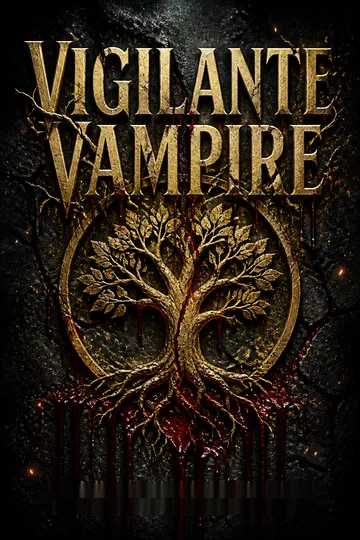
Connects the missing womenA small gold tree appears on Lisa’s necklace, on a missing woman’s jewellery, and as a tattoo among people connected to a hostile café. The image lets Bo connect separate witnesses to Tov V’ra, while the emblem’s negative space hides a phone number that Rogu3 can decipher. It functions first as a trace left by an unknown group, then as a practical route into that group’s network. The visual clue is memorable because it is both a public identity and a coded invitation.
The Recruitment Cap
Turns population into leverageFor centuries, each vampire Family has held to a limit of five hundred members, preserving a rough balance of power. Medici breaks the custom and recruits thousands, forcing the other Families to consider expanding in response. Lawyers calculate how far the numbers can rise before the human government intervenes, while Hale later turns the old cap into a proposed political weapon. The rule begins as a stabilizing tradition and becomes a lever that multiple factions can use to threaten, divide, or control vampires.
Glamour and Sunlight
Conceals identity and weaknessO’Shea uses glamour to disguise Bo as Rogu3, allowing her to enter a daytime meeting she could not otherwise reach. The disguise changes her appearance but does not fully change her voice, and the spell becomes physically difficult to maintain. Bo’s vulnerability to sunlight remains a continuing limit on when and where she can act. At the Tov V’ra ritual, her increasing strength reaches a new threshold. Together, glamour and sunlight make identity and bodily capacity practical obstacles rather than abstract supernatural rules.
Public Spectacle
Makes violence into propagandaMedici stages executions before journalists to present himself as a protector who disciplines vampires. Tov V’ra later uses cameras, a starving vampire, and Bo’s forced feeding to construct the opposite image, portraying all vampires as monsters. Bo’s reputation as the Red Angel makes her especially useful to both sides: if she can be framed as evil, public trust in vampires may collapse. The device highlights how a true event can be manipulated through staging, selective context, and control of the audience’s attention.
Magix Anti-Vampire Gear
Restrains vampire strengthMagix manufactures weapons meant to stun vampires, including tasers and restraints that sap strength. The equipment first appears in an attempted attack on Bo and later helps Tov V’ra capture her and stage its dawn ritual. These tools turn supernatural strength into a temporary disadvantage, forcing Bo to rely on observation, allies, and timing rather than brute force. Their presence also shows how commercial products can rapidly convert public fear of vampires into a market for coercion.
Bo Blackman Series


Download PDF
Download EPUB
.epub digital book format is ideal for reading ebooks on phones, tablets, and e-readers.








