

Plot Summary
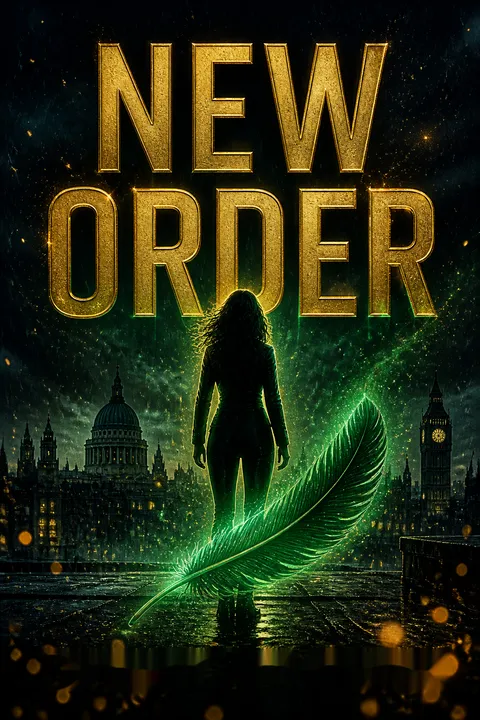
The Green Feather
Six weeks after becoming a full vampire, Bo Blackman is still searching for a way back to her human life. At Fingertips and Frolics, a magic shop owner tells her that a reversal spell is unlikely, dangerous, and might not exist. When Bo accidentally hurls the woman into a wall with her new strength, the shopkeeper makes her buy an amethyst and a bright green feather to keep quiet about the encounter.
Michael Montserrat, head of the Family that recruited Bo, finds her outside and insists she stop sneaking out alone. He offers weekly excursions to test her abilities; Bo accepts, though she has no intention of abandoning the search for a cure.
Bo treats the transformation as a correctable mistake, not a new identity, and every question about a cure becomes a bid to reclaim control. Her accidental injury to the shopkeeper exposes the gap between her intentions and her new physical power. Michael offers freedom in carefully rationed form, making care difficult to distinguish from containment. The green feather seems like a petty purchase, but its unexplained significance turns Bo’s private desperation into the first thread of a wider conflict.
Rooftops and Stolen Magic
Michael takes Bo across London and teaches her to climb office walls and leap between rooftops. When a scream rises from the street, Bo pursues a young mugger while Michael tends to the injured woman. The police arrest the boy, but Bo notices a green feather in his pocket, matching the one she bought at the shop.
The coincidence turns her unwanted purchase into a clue. The next day, she calls Rogu3, a teenage hacker who has helped her before, and asks him to investigate the shop. Before he can report back, an anxious man appears at the Montserrat mansion searching for Arzo Gelzman. He says Arzo’s former fiancée, Dahlia, has disappeared, and Bo offers to help.
Michael’s rooftop exercise lets Bo feel capable before danger forces her to use that capability for someone else. The chase gives her a first, practical taste of vampiric power, but the feather shifts the scene from exhilaration to investigation. Her decision to help Stephen Templeton also shows how quickly professional instinct overrides personal upheaval. She lies to protect Arzo from the man who once betrayed him, revealing that Bo’s loyalty is selective: she distrusts the Family’s rules, yet feels responsible for the people those rules bind together.
Freedom by Legal Loophole
Arzo challenges Bo’s refusal to drink and recognizes signs of post-traumatic stress, which she angrily denies. The shop has suddenly been emptied, and a confrontation with Michael triggers a hallucination of her murdered colleagues. Terrified by what confinement is doing to her, Bo calls lawyer Harry D’Argneau.
He argues that Michael pressured her into recruitment and promised she could remain Sanguine, a more human state, so her contract is invalid. Bo leaves the mansion despite Michael’s warning that she will still need blood and protection. She has no home, little money, and no safe plan for daylight. Her decision frees her from the Family’s walls, but not from vampirism or the consequences of her past.
Bo’s exit is neither a triumphant escape nor a clean return to independence. The hallucination makes visible the violence she has tried to file away as finished, while her denial of trauma reproduces the same self-protective rigidity that keeps her from accepting blood. D’Argneau supplies a legal route where no magical cure exists. Yet the law can dissolve a contract, not restore a life: Bo leaves with more agency and fewer safeguards, forced to discover what freedom demands in practice.
Templeton's Staged Crime
Bo visits Stephen Templeton’s house and finds crime-scene tape, a broken window, scattered furniture, and a glass of wine. The clues do not fit a real police investigation: the tape is fake, the window was broken from inside, and Stephen admits he staged the apparent struggle because he fears the authorities will uncover his own crimes.
He insists Dahlia was taken, not that she left voluntarily. His list of people he has cheated includes the Triads, white witches, and a supposed Kakos daemon, a feared being said to drive witnesses insane. Bo agrees to investigate while doubting his account. The case gives her work and a way to protect Arzo from Dahlia’s return, but Stephen’s deceit makes every lead suspect.
The staged crime scene turns Stephen’s fear of exposure into an obstacle to finding his wife. He wants help, but his first instinct is to manipulate the evidence and protect himself. Bo recognizes the falsehoods because investigation is one of the few parts of her former life she can still inhabit with confidence. Yet her moral certainty is compromised by her personal loyalty to Arzo. She takes the case partly to shield him from renewed heartbreak, which means her professional judgment begins entangled with an old betrayal.
A Hex in Custody
At the police station, Bo learns that the mugger, Samuel Lewis, died in his cell beneath a white-magic hex, and the stolen feather vanished from evidence. A Medici limousine then collects Bo. Lord Medici offers her a place in his Family and tries to tempt her with a human donor; Bo refuses both the recruitment and the blood.
Hungry and weakened, she later reaches the shuttered magic shop and discovers a hidden phone and a camera feeding images elsewhere. Rogu3 reports that Magix, a powerful magic corporation, bought the shop’s stock after pressuring its owner out of business. Someone is watching the empty store, and Samuel’s death suggests the feather matters to people with far greater reach than a street thief.
Samuel’s death converts a strange clue into evidence of organized interference. The stolen feather is valuable enough to disappear from a secured police station, while the hex makes the investigation cross human and magical jurisdictions. Medici’s offer tests Bo’s hunger as much as her loyalty, reducing survival to a transaction she refuses to accept. Her refusal is costly: she weakens herself while pursuing autonomy. The camera and Magix connection widen the threat from isolated criminal acts to corporate surveillance and control.
The Exit Was Engineered
Sick from hunger, Bo finally visits her grandfather, Arbuthnot Blackman, who has invited Michael to meet her there. Michael explains that he quietly arranged the pressures that led her to leave: O’Shea suggested independence, Arzo confronted her about trauma, Connor offered a willing source of blood, and D’Argneau was available to challenge her contract.
Michael needed Bo to choose departure herself so the other Family Heads would accept it. He proposes an agency where humans can report vampire misconduct and mixed teams can investigate. Arbuthnot explains that the green feather is a challenge and dismisses Bo’s hope of a simple cure. Bo drinks from Connor and agrees to help build the agency, though she resents Michael’s manipulation.
Michael’s care has been strategic all along: he gives Bo enough pressure to make a choice the Family council will respect. The revelation complicates the meaning of her freedom, since the escape she experienced as self-authored was also carefully arranged by the person who recruited her. Still, his plan creates a real institutional opening, not merely a private favor. Arbuthnot’s account of the feather reframes Bo’s search as a challenge to act, while drinking from Connor marks a first reluctant accommodation with the body she cannot undo.
A Ghost Names Janus
Bo and O’Shea pursue Stephen’s Triad lead by infiltrating a poker game. O’Shea cheats, the room erupts, and Bo has to apologize to the human leader, Eugene Cheung, without learning whether he knows anything about Dahlia. They then visit Crossbones, the burial ground where Bo learned to see and speak with ghosts.
Her old friend Maisie recognizes that Bo has changed, while the ghost called Mother confirms that Samuel Lewis’s spirit has already passed on. Before dismissing Bo, Mother gives her one word from the dead man: Janus. Bo leaves without an explanation, but the clue points toward a two-sided force and connects the feather, the hex, and the increasingly suspicious magic businesses.
The failed poker inquiry shows the limits of Bo’s improvisation: vampiric strength cannot repair the social damage caused by O’Shea’s cheating. At Crossbones, her childhood bond with Maisie offers a quieter measure of change. Bo once came here as a frightened child; now she returns carrying adult grief and a vampire’s hunger. Mother’s cryptic clue does not solve the case, but it redirects it. The dead are not an archive she can freely consult. Their knowledge comes with boundaries, and Bo must interpret rather than command it.
X Behind the Glass
Bo breaks into the Streets of Fire offices to question the supposed Kakos daemon Stephen named. Inside the director’s office she meets X, who reveals that he is a real Kakos daemon and that he leads the technology company rather than merely working for it. X denies taking Dahlia, admits that powerful daemons are preparing to re-enter society, and tells Bo that a vampire cure exists.
He also reads her thoughts and threatens the people she cares about if she exposes him. Before he lets her go, X touches her temples and the weight of her traumatic visions lifts. The encounter leaves Bo alive, unexpectedly relieved, and burdened with a secret that could endanger Michael, O’Shea, and her grandfather.
X unsettles the categories Bo relies on: he is both a feared predator and a deliberate participant in ordinary corporate life. His claim that daemons intend to return to society echoes the agency’s attempt to create trust across species, but his threats expose the coercion beneath his civility. The cure changes Bo’s hope from rumor to possibility, while his intervention in her trauma offers relief she did not earn through therapy. That relief is ethically ambiguous because it arrives as an unasked-for act from someone who can enter her mind.
The Cross Burns Blue
After X’s encounter, Bo returns to Michael’s apartment and learns that attacks on vampires have already caused casualties. Michael lets her bring Matt, a vulnerable fledgling, into the agency’s work, while Doctor Love begins treating Bo’s post-traumatic symptoms. Arzo finds office space and recruits Connor, Matt, and Peter to help establish a human-facing team.
The need becomes immediate when someone plants a burning cross outside the Montserrat mansion. Beth urges restraint, but Nell wants the offenders punished violently. Bo rejects both the insult aimed at Matt and the idea that retaliation will solve the growing hostility. The new agency now has to prove its value amid fear on both sides, not merely prepare for a press announcement.
The burning cross translates public hostility into a threat at the Family’s doorstep, while Nell’s response shows how easily fear becomes permission to punish. Bo’s insistence that Matt deserves protection even when he is an easy target marks a shift from self-absorption toward responsibility. The agency’s mixed membership is not a symbolic flourish: Connor’s humanity, Arzo’s Sanguine status, and Bo’s contested vampire identity are meant to make its investigations credible. Yet the fire shows that credibility will have to be earned against an already accelerating cycle of grievance.
Frolic's Dangerous Bargain
At a run-down block of flats, white witch Mrs Jackson tells Bo that Magix stole her Tracker spell and ruined her livelihood. Bo follows the trail to Frolic in Hyde Park. Frolic says Magix is driving independent magic sellers out of business and may be building a monopoly over witchcraft supplies.
She offers to investigate whether a cure exists if Bo returns the feather, then asks her to sabotage Magix’s new glamour spell. Bo refuses to corrupt magic and harm people, so Frolic switches to asking for company files instead.
Afterward, Harry D’Argneau’s proposal to challenge the Families infuriates Michael; he and Bo fight in Hyde Park, where their anger turns into a kiss. Michael wants her to choose him freely, but their attraction does not settle their conflict.
Mrs Jackson gives Magix’s expansion a human cost: a working witch has lost both her invention and her livelihood. Frolic’s grievance is credible, but her proposed sabotage asks Bo to reproduce the very kind of reckless spellwork that harmed Matt. Bo’s refusal shows that her search for a cure no longer overrides every other responsibility. The kiss with Michael brings desire into the same territory as power and consent. His plan for Bo’s independence may be loving, yet she still has to decide whether she trusts the person who arranged it.
Cuffs Made for Vampires
Bo visits Dahlia’s neighbors and hears that Dahlia regularly met a police inspector named Simon Beauvoit. At Magix headquarters, she demands to see its leader, O’Connell. The company’s security team fastens enchanted cuffs around her wrists, and Bo loses the strength and fangs that usually protect her. O’Connell calls them vampire inhibitors and describes plans to sell them as protection for humans.
While Bo waits, a guard tries to sexually assault her; O’Connell stops him and orders him removed. He gives Bo files on Frolic’s business in exchange for warning him about a planned spell sabotage. The visit reveals that Magix can suppress vampires, but also that its human employees can be dangerous without magic.
The cuffs make the balance of power physical: Bo’s usual advantage disappears at the hands of a corporation that presents restraint as public safety. The attempted assault makes clear that vulnerability does not automatically produce compassion; the guard sees helplessness as permission. O’Connell’s intervention is morally better than the guard’s conduct, but his exchange with Bo remains transactional. He is willing to offer information and protection while advancing a business whose tools could become instruments of control.
The Hybrid's Shuriken
Bo copies the files she obtained from Magix and returns to the police, where she realizes a Magix associate was present when Samuel was arrested. Samuel’s widow, Suzanne, explains that her husband was hired to steal a feather from a woman, confirming Frolic’s role in the theft. Before Bo can act on the information, a masked attacker ambushes her with shuriken and magic.
She survives by using a burning tree and a car’s petrol, but the attacker dies in the fire. His face bears both black- and white-witch tattoos, an impossible combination according to O’Shea. A damaged photograph from Magix shows Michael and Medici beside dead Triad members. Bo now has evidence of a hybrid magic project and a troubling glimpse of vampire history.
The double tattoo makes Janus concrete: the supposed impossibility of combining opposing magics has already been overcome, but not in a way that produces peace. Bo survives by setting fire to the attacker, an act of self-defense that leaves her confronting the same moral ambiguity she sees in others. The photograph destabilizes her faith in Michael without supplying enough context to judge him. The scene’s central pressure is epistemic: each new piece of evidence opens a question, while any confident conclusion could be dangerous.
Dawn Takes the Feather
Bo returns to the Montserrat mansion for her feather and finds Michael angry that she still hopes for a cure. She leaves before she can explain the case and meets Frolic in Hyde Park, bringing the files she requested. A hidden attacker throws a shuriken into Frolic’s chest, then traps Bo in enchanted cuffs as dawn approaches.
Frolic’s ghost appears long enough to reveal that Kakos daemon blood may reverse vampirism. The attacker abandons Bo in the rising sunlight, expecting her to burn. Bo uses Frolic’s blood to draw the strange symbol from X’s notebook, and the gesture reaches the daemon. The answer to her deepest question comes at the moment she is about to die, but only through a power she fears.
Frolic’s death collapses Bo’s practical bargain into a final, costly revelation. The feather was never a simple token of payment; it drew her into a struggle between people who treat magic as property and those who want to reshape its use. The cure arrives with a terrible condition, Kakos blood, so hope is inseparable from proximity to the being most likely to kill her. Bo’s attempt to summon X is an act of desperation, not confidence, and it turns her search into a choice about what risks she is willing to take.
Blood, Evidence, and Choice
X rescues Bo from the sunlight and leaves a vial of his blood, the first possible cure she has ever held. He also returns the bloody shuriken from the attack. Once recovered, Bo confronts O’Connell at Magix and accuses him of combining black and white magic to create Janus witches, sacrificing Samuel, and driving Frolic’s business to ruin.
O’Connell admits that he wants a new age of unified magic, though his methods have already produced violence. Bo plants the shuriken on him as evidence. She then meets Michael, explains that Kakos blood may cure her, and struggles to drink from a donor. Michael gives her the new agency address and asks her to wait until she can accept what she is before pursuing their relationship.
Bo finally has a cure within reach, but the vial does not resolve the question of who she wants to be. Her confrontation with O’Connell exposes the danger of utopian reform when its architect treats casualties as acceptable costs. His aim of ending the division between witches resembles the agency’s aspiration, but his methods erase consent and accountability. Michael’s restraint matters because he declines to turn her dependence into romantic leverage. The choice remains Bo’s, and for once she is not being forced to make it in the middle of an emergency.
Dahlia Was Not Taken Randomly
At the agency’s new offices, Arzo tells Bo that he knows she has been investigating Dahlia and appreciates her effort to protect him. Bo visits Simon Beauvoit, then presses Stephen for the truth.
Stephen reveals that Dahlia’s affair with Beauvoit was consensual and that he watched recordings of her encounters; he had not reported the supposed kidnapping because he feared exposure of his own crimes. When Bo calls the Medici Family pretending to threaten them, the receptionist mentions a recent recruitment.
Bo connects the timing to Medici’s earlier attempt to recruit her and realizes that Dahlia may have been taken to pressure Arzo and sabotage the new agency. Michael and Arzo agree that the theory fits, but they cannot accuse Medici without risking open conflict among the Families.
Stephen’s confession strips the missing-person case of its respectable surface. His marriage operated by rules outsiders might condemn, but his selfishness lies less in the arrangement than in using the staged abduction to conceal his own vulnerability. Bo’s misdirection call turns an incidental detail into a pattern: Medici’s recruitment attempt, Dahlia’s disappearance, and the threat to Arzo converge. The agency’s first major case therefore implicates the very institutions it hopes to mediate, making neutrality harder than simply keeping vampire and human investigators in the same room.
Matt's Coffee Run
Bo, Michael, and Arzo set a trap by sending Matt on a routine coffee run, expecting Medici to approach him. Bo watches from the rooftops while Connor waits nearby on a motorbike. Medici arrives with several vampires and orders Matt into his car. Matt and Connor improvise, with Connor pretending to complain about the agency and Matt spilling hot coffee over Medici before they escape.
Medici’s reaction confirms that he has taken Dahlia and turned her into a fledgling, intending to use her as leverage against Arzo and the agency. The team has uncovered his plan, but Dahlia remains in Medici’s hands. Their first victory is information, not rescue, and they must act without provoking a war.
Matt’s role reverses the Family’s usual assumptions about him. Others treat him as suggestible and helpless, but his army experience and willingness to follow the plan make him essential to the operation. Connor’s clumsy performance succeeds because Medici underestimates both of them. Still, the trap does not free Dahlia or neutralize Medici; it confirms the scale of the threat. The agency’s early test is therefore not a clean triumph but a lesson in restraint: exposing wrongdoing is not the same as having the power to stop it.
Epilogue
Stephen returns to his wrecked home, where Cheung arrives after Bo’s questions led him to examine the accountant’s dealings more closely. Cheung’s men blow up Stephen’s garage, killing him for stealing from the Triads.
Bo later visits Crossbones and tells Maisie that she has a cure but intends to remain a vampire, partly because the new agency needs her and partly because of Michael. Maisie sees that affection matters too, and Bo begins teaching her to read. A press release announces New Order, headed by Arbuthnot Blackman, as a joint human and vampire venture for investigating complaints.
The ending refuses to treat the cure as an automatic happy ending. Bo’s decision to remain a vampire is practical, ethical, and emotional at once: she believes the agency needs her, but Maisie recognizes the part Michael plays in her choice. Stephen’s death also prevents the investigation from ending in tidy justice. Cheung punishes a thief through private violence, confirming that no faction owns virtue. Against that bleakness, Bo’s lesson with Maisie and the public announcement of New Order offer modest beginnings: literacy, investigation, and cooperation rather than a promise that old divisions have vanished.
Analysis
New Order makes the question of consent concrete at several levels. Bo’s transformation began under pressure and a misleading promise, so her struggle is not simply to dislike vampirism but to recover authorship over a life other people have already arranged. Michael’s concealed plan gives her a lawful exit, yet that help repeats the very pattern she resents: powerful people deciding which choices she needs. The novel leaves their relationship alive by making restraint, rather than rescue, the test of whether intimacy can be freely chosen.
The wider conflict also resists clean divisions between good and evil. Magix’s O’Connell describes a genuine ambition to unite rival magical traditions, but he pursues it through corporate coercion, secrecy, and acceptable casualties. The vampire Families preserve their authority through laws that protect insiders while leaving humans without recourse. Cheung, Stephen, Frolic, and the violent attackers each show how self-interest cuts across species and factions. No group can claim moral purity merely by naming another group monstrous.
Bo’s work as an investigator gives this argument a form. She studies crime scenes, tracks material clues, and revises her theories, but evidence never arrives without emotional pressure. Her loyalty to Arzo shapes the missing-person case; her fear of becoming a vampire distorts her relationship to hunger; her trauma interrupts her ability to trust her own perception. The agency’s promise is not that humans and vampires will suddenly understand one another. It is that complaints can be examined by people with different stakes, before grievance becomes retaliation. Its first major success is discovering Medici’s leverage, not rescuing Dahlia. That unresolved danger keeps the new institution from feeling like a cure for prejudice. It is only a tool, and its value will depend on whether its members can resist the power they are meant to hold accountable.
People Also Read
Characters
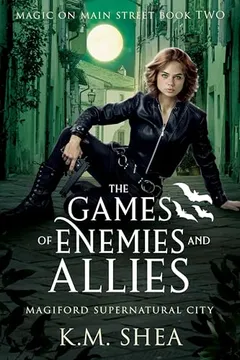
Bo Blackman
Reluctant vampire investigatorBo is a private investigator newly transformed into a full vampire after hoping to remain Sanguine, a more human state. She is observant, stubborn, and quick to act, but her independence can become self-punishment when she refuses blood or help. Her professional habits give her a way to function while grief and trauma unsettle her sense of self. Bo distrusts institutions that claim authority over her, yet she is drawn toward protecting individuals caught in their machinery. Her bond with her grandfather, her complicated connection to Michael, and her loyalty to Arzo expose different sides of her: the investigator who wants evidence, the granddaughter who wants approval, and the friend who takes other people’s pain personally.
Michael Montserrat
Strategic vampire leaderMichael leads the Montserrat Family and is the vampire who recruited Bo. His authority rests on strength, discipline, and a willingness to bend old rules when he believes the cost is justified. He tries to protect Bo while giving her room to choose, but his preference for arranging outcomes rather than explaining them strains her trust. Their attraction develops alongside a real imbalance of power: he is her recruiter and Family head, while she is newly transformed and dependent on his protection. Michael’s care is therefore never simple reassurance. It carries the question of whether love can remain freely chosen when one person controls the rules of the other’s world.
Arzo Gelzman
Steadfast Sanguine allyArzo is a Sanguine member of the Montserrat circle and a former colleague of Bo’s from the private investigation firm Dire Straits. He is perceptive about trauma and more willing than Bo to name what she is avoiding. His physical disability and measured manner do not diminish his authority; he often sees the emotional consequences of a decision before others do. Arzo has been betrayed by Stephen Templeton and Dahlia, yet he does not define himself solely through that wound. His plans for the new agency reflect a practical hope that cooperation can be built through patient work, even when personal loyalties make impartiality difficult.
O'Shea
Unreliable daemon allyO’Shea is a daemon and one of Bo’s long-standing contacts. He is resourceful, sociable, and frequently less discreet than the situation requires. His hacking contacts and willingness to investigate the magic shop help Bo follow leads when she cannot safely move through the city. He jokes to deflect tension, but his loyalty is genuine, even when his methods create fresh problems. Bo’s affection for him does not erase her frustration with his loose tongue or his habit of withholding information when Michael asks him to.
Stephen Templeton
Deceptive missing-person clientStephen is an accountant who asks Bo to find his missing wife, Dahlia. He presents himself as a frightened husband but is also a practiced liar, willing to manipulate a crime scene and conceal information if he thinks honesty could expose him. His polished professional life contrasts with the shabby moral shortcuts he takes in private. Stephen’s relationship with Arzo carries the history of a serious betrayal, and his treatment of Dahlia reveals a marriage whose arrangements defy Bo’s assumptions. He is most revealing when he believes his behavior is ordinary and beyond judgment.
Dahlia Templeton
Missing wife with secretsDahlia is Stephen’s wife and Arzo’s former fiancée. She is initially known through a staged crime scene, a missing-person claim, and the conflicting accounts of people close to her. Those fragments suggest a woman who sought excitement and intimacy beyond the narrow life Stephen constructed around their home. Her relationships are more complicated than Bo first assumes, and her absence becomes a pressure point in the conflict among vampire Families. Dahlia’s importance lies not just in whom she once loved, but in how others use her choices to justify their own actions.
Frolic
Cornered magic-shop ownerFrolic runs Fingertips and Frolics after the death of her business partner. A white-magic ally with deep ties to independent sellers, she sees Magix as a corporate force capable of swallowing small practitioners whole. She is proud, calculating, and unwilling to help Bo without a clear exchange. Her grief over her husband’s supposed death fuels her anger, but that anger does not make her methods harmless. Frolic understands how to turn promises into leverage, and she believes a larger cause can justify asking other people to take risks she would rather not take herself.
X
Kakos daemon enigmaX is a Kakos daemon whose intelligence and manner are more controlled than the monstrous reputation of his kind suggests. He operates behind the human-facing image of a technology company and speaks of daemons entering society again. His ability to read thoughts makes every exchange with him feel exposed, while his threats establish that his civility has limits. X offers Bo information and an unexpected form of help, but he never becomes easy to trust. He represents the possibility that a feared group may seek ordinary power, without proving that its members have abandoned coercion.
O'Connell
Magix idealist executiveO’Connell leads Magix and describes the company’s ambitions as a project to make the world safer and unite rival forms of witchcraft. He is composed, persuasive, and willing to bargain, presenting corporate expansion as a public good. His confidence in his vision makes it easy for him to treat dissent as obstruction and harm as an acceptable cost. Bo’s meetings with him reveal a man who may sincerely believe in reform while remaining insulated from the people his company displaces or endangers.
Lord Medici
Rival vampire powerbrokerMedici heads one of the five vampire Families and treats recruitment as both a source of power and a political tool. He approaches Bo when she leaves Montserrat, offering freedom under his protection, but his interest in her is not purely personal. He understands how hunger, status, and rivalry can be used to influence younger vampires. Medici is disciplined in public and capable of sudden cruelty in private. His opposition to the proposed agency grows from a belief that adapting to human demands weakens the authority of the Families.
Matt
Vulnerable fledgling soldierMatt is a young vampire whose behavior was affected by a coercive spell. He can appear childlike and overly literal, but his past army experience gives him practical skills that people around him overlook. Other fledglings sometimes bully him because he is an easy target, while senior vampires focus more on managing him than protecting him. Bo recognizes both his vulnerability and his capacity to contribute. Matt’s presence asks whether a person should be judged by how easily they follow instructions or by the judgment and courage they can still bring to a task.
Connor
Willing human donorConnor is a human who voluntarily offers blood to vampires and becomes one of Bo’s most reliable supports. He treats the arrangement as a choice and a source of income, resisting the idea that others should decide for him whether it is acceptable. His good humor can conceal nerves, but he is willing to improvise when the agency needs him. Connor also gives Bo a way to feed without surrendering control to a stranger, making their relationship a small but important example of consent within a world built around unequal power.
Arbuthnot Blackman
Watchful human grandfatherArbuthnot is Bo’s grandfather, a human with extensive knowledge of the triber world and a guarded attitude toward its inhabitants. His affection often arrives disguised as criticism, practical instructions, or an insistence that Bo face what she has done. He knows history and family memory can shape present conflicts, as seen in his explanation of the feather’s symbolism and the Blackman name. Arbuthnot is wary of vampires, yet his relationship with Bo forces him to confront the difference between distrust of a group and love for a person. His experience gives the new agency a potential source of discipline and intelligence.
Beth
Blunt fledgling friendBeth is a Montserrat fledgling and one of Bo’s closest companions in the mansion. Her humor is irreverent, her confidence hard won, and her past as a sex worker gives her a practical understanding of how people use bodies and power. She can be impatient with Matt, but she also recognizes the loneliness and strain of life in training. Beth is not sentimental about the vampire Family, yet she cares about the people inside it. Her frankness gives Bo a friend who can tease her without pretending that the situation is easy.
Nell
Resentful fledgling rivalNell is a Montserrat fledgling who resents the special freedom Michael grants Bo. She is quick to interpret Bo’s departure as a rejection of the others’ shared hardship. Under pressure, Nell favors retaliation and displays how fear can harden into aggression even among people who have little power themselves.
Ursus
Gruff vampire trainerUrsus is a senior Montserrat vampire responsible for training and supervising fledglings. He is imposing, blunt, and impatient with Bo’s refusal to drink, but his insistence reflects real concern about the dangers of hunger and inexperience. His authority is practical rather than tender.
Harry D'Argneau
Ambitious human barristerHarry D’Argneau is a human lawyer who understands the laws governing vampire recruitment and is eager to engage with the Families. He helps Bo challenge the terms of her recruitment, but his professional interest is mixed with a desire for access to powerful vampires. He can offer useful protection without being a disinterested ally. Bo recognizes that even people who help her may also be pursuing their own ambitions.
Rogu3
Teenage hacker allyRogu3 is a teenage hacker who helps Bo investigate digital trails and businesses. He is clever, enterprising, and still tied to ordinary pressures such as school and exams. His friendship with Bo survives her transformation, although both have to renegotiate what help and payment mean now that she belongs to a vampire Family. Rogu3’s technical skill opens doors Bo cannot reach by force.
Mother
Graveyard ghost guideMother is an ancient ghost who tends the informal shrine at Crossbones and speaks in compressed, unsettling observations. He does not offer information merely because Bo asks for it; he insists on the distance between the living and the dead. His cryptic knowledge makes him a guide rather than a convenient oracle.
Maisie
Bo's enduring ghost friendMaisie is a ghost Bo befriended as a child at Crossbones. She remains a teenager in appearance and carries the loneliness of being separated from the ordinary passage of human life. Her gentle attention once helped Bo face the frightening dead, and their renewed connection gives her a relationship outside the graveyard’s other spirits. Maisie is perceptive about Bo’s feelings and does not accept easy explanations simply because they sound noble.
Mrs Jackson
Dispossessed white witchMrs Jackson is a white witch whose Tracker spell once helped people locate missing objects. Magix’s legal pressure took the work from her and left her impoverished. Her bitterness is grounded in a specific theft of labor, not simply dislike of a large company. She provides Bo with a view of how corporate power can reach into the livelihood of individual magic users.
Samuel Lewis
Feather-stealing muggerSamuel Lewis, also known as Slick, is a young criminal caught after attacking a woman and stealing the green feather. His actions place him at the center of Bo’s first clue, though he has a family and a life beyond the role he plays in the investigation. His widow remembers him as a loving father despite his criminal choices.
Simon Beauvoit
Police inspector in Dahlia's circleSimon Beauvoit is a police inspector whose connection to Dahlia complicates the missing-person investigation. He is described through the opposing accounts of Stephen and others, so Bo must separate evidence from assumptions about his role. His position within the police also makes him a reminder that official authority does not guarantee emotional clarity.
Doctor Love
Vampire trauma therapistDoctor Love is a vampire clinician who evaluates Bo’s trauma and recommends cognitive behavioral therapy alongside medication. His manner is direct and practical, and he treats her symptoms as serious even when she tries to dismiss them. He represents the possibility of professional care, though Bo resists the time and vulnerability treatment requires.
Peter
Troubled Sanguine recruitPeter is a Sanguine recruit who joined the Montserrat orbit around the same time as Bo. Arzo considers bringing him into the new agency because he needs purpose and support. Peter’s difficult temperament and uncertain place among the vampires make him part of the agency’s wider effort to give people who struggle with ordinary Family structures a useful role.
Plot Devices
The green feather
A challenge and an IOUThe shopkeeper makes Bo buy the feather, which first looks like an arbitrary price for silence. It later connects the mugger, the missing shop inventory, and Frolic’s attempt to recruit Bo against Magix. The feather functions as a record of a promise, but also as bait: several people are willing to steal, bargain, or kill over what it represents. Its color and Bo’s grandfather’s interpretation turn an object that could be dismissed as decoration into a signal that someone wants her to act.
The recruitment contract
A legal exit from MontserratVampire law requires a recruit to choose a Family freely, then remain within its protection while learning to survive. Michael’s pressure and promise that Bo could remain Sanguine give D’Argneau grounds to challenge her contract. The legal loophole lets Bo leave without making her human again or erasing her obligations to the people who care for her. It also creates a political distinction between Bo’s departure and the ordinary recruitment process, allowing Michael to propose an independent agency without openly breaking the Family laws.
Vampire inhibitor cuffs
A restraint that removes powerMagix’s enchanted cuffs suppress Bo’s fangs and strength, leaving her slow and vulnerable while she is restrained. The company markets them as protection for humans, but their effectiveness gives any purchaser a way to overpower a vampire. Their appearance turns public fear into a product and raises a question the story leaves politically urgent: who gets to control a technology designed to make one group defenseless?
Janus magic
A breach of magical boundariesBlack and white magic are believed to cancel each other when combined. Magix’s effort to create Janus witches breaks that rule and promises a new kind of power. The hybrid magic initially appears to support O’Connell’s dream of ending old divisions, but the people using it still carry inherited resentments and commit violence. Janus therefore tests the difference between changing a system’s mechanics and changing the attitudes of those who live within it.
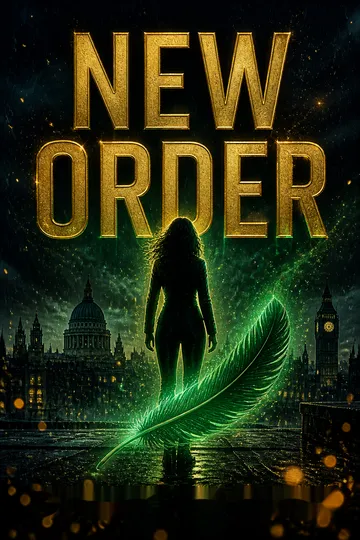
New Order
A human-vampire bridgeMichael’s proposed agency investigates complaints about vampires with a team that includes human and vampire members. Its purpose is to give people outside the Families a place to seek answers while allowing vampires to address misconduct before public hostility becomes open conflict. The agency is also Bo’s route into independent work, but its credibility depends on remaining separate from the Family power it is meant to scrutinize. Dahlia’s case immediately tests whether that independence can survive pressure from a vampire Lord.
Bo Blackman Series


Download PDF
Download EPUB
.epub digital book format is ideal for reading ebooks on phones, tablets, and e-readers.








