

Key Takeaways
Test miracle claims by evidence, not atmosphere, spectacle, or testimony.
Define the claim first. Hinn and Wood distinguish a miracle from an ordinary answer to prayer: in their account, a miracle is an observable, extraordinary act of God that points beyond itself and authenticates the gospel. They contrast biblical accounts such as Jesus healing a man born blind with modern reports of gradual, temporary, or unverifiable improvement. Falling feathers and glitter, they argue, do not become miracles merely because worshippers interpret them that way. Psalm 91’s image of God sheltering people beneath wings, for example, is poetry, not a prediction of literal feathers.
Keep wonder precise. The authors do not deny that God can act or heal today. Their warning is that treating every unusual event as a miracle blurs the difference between divine action, providence, coincidence, and performance. They urge readers to ask what happened, whether it can be checked, and whether it directs attention to Christ.
The useful move is separating a moving experience from evidence for the explanation attached to it. That distinction matters in religion, medicine, and politics alike: a sincere witness can report an experience accurately while misidentifying its cause. The authors’ criteria encourage verification rather than reflexive acceptance. Their own standard, especially the claim that biblical miracles were always immediate and unmistakable, belongs to a particular theological interpretation, not a neutral test accepted by every Christian tradition. Readers can still use the central discipline: assess what is claimed before deciding what it means.
Do not turn a private impression into God's command without testing it.
Separate guidance from authority. The book’s central concern is not simply emotional worship or belief in spiritual gifts. It is the use of dreams, prophecies, and personal impressions as messages from God that can override Scripture or another person’s judgment. The authors describe a marriage strained when one spouse’s claimed revelation became the final word on parenting, while the other looked to the Bible for guidance.
Read the text in context. Their example is Psalm 91: its language about feathers is a metaphor for protection, not evidence that falling feathers signal God’s presence. They call the opposite approach eisegesis, inserting a preferred idea into a passage rather than drawing meaning from its wording and setting. Their proposed safeguard is to treat Scripture as the governing authority and to scrutinize claims made in God’s name.
The case highlights a problem of unequal authority: when a person says a decision is God’s direct instruction, disagreement can be framed as disobedience to God. That can make ordinary negotiation in families and congregations nearly impossible. A shared, public standard gives people a way to challenge claims without pretending to know another person’s inner life. The authors place that standard exclusively in Scripture, a position not shared by all Christians who affirm prophecy. Even among those traditions, however, a claimed revelation needs clear limits and accountability.
Reject healing formulas that make sick people responsible for remaining sick.
Do not make pain a verdict. The authors challenge teachings that every believer should be healthy now and that persistent illness proves insufficient faith, hidden sin, or demonic influence. They recount Smith Wigglesworth blaming sick people for failed healings, while some modern teachers present healing as already guaranteed by Christ’s atonement. When recovery does not occur, the sufferer can be left carrying guilt as well as illness.
Distinguish hope from a guarantee. Hinn and Wood interpret passages such as Isaiah 53 as promising ultimate freedom from sin and sickness, not universal physical healing in this life. They note that the Bible describes faithful people who remained ill. They also affirm that God may heal, while arguing that healing is not controlled by a person’s faith or a minister’s technique. Their alternative is to pray, care for the sick, and avoid promising what cannot be assured.
This is the book’s strongest pastoral warning because a failed promise can become a second injury. A person already coping with disease may conclude that spiritual failure caused it, or delay practical care while chasing a guaranteed cure. The authors’ distinction between hope and certainty protects sufferers from that burden. Their account would be stronger if it more clearly separated irresponsible healing claims from ordinary prayer for recovery, which can coexist with medical treatment and uncertainty. The ethical test is straightforward: does a teaching comfort the ill without making them culpable for outcomes beyond their control?
Trace revival movements carefully, without blaming every Pentecostal for their extremes.
Follow the family tree. The authors trace influences on the modern mystical-miracle movement through figures including Charles Parham, William Seymour, Smith Wigglesworth, Aimee Semple McPherson, William Branham, Oral Roberts, and Kenneth Hagin. They describe recurring patterns: tongues treated as proof of spiritual status, healing promised to all, and faith linked to money or personal power. Their history is intended to challenge the claim that today’s leaders simply continue an unbroken, trustworthy tradition.
Keep the categories distinct. Their cited table estimates more than 500 million Pentecostal and charismatic adherents worldwide by 2000, but the authors explicitly say that this broad population is not identical to the teachers they criticize. They distinguish historic Pentecostal churches from Word of Faith and New Apostolic Reformation circles, and note that figures such as John Wimber opposed some later excesses.
Genealogies are powerful because they expose how ideas travel through admired teachers, institutions, and media, rather than appearing from nowhere. They can also mislead when resemblance is treated as proof of direct influence or when a movement’s varied communities are compressed into one lineage. The authors acknowledge diversity, which is essential: Pentecostal identity alone does not establish agreement with prosperity teaching or modern apostleship. Historical tracing is most persuasive when it distinguishes documented borrowing, shared vocabulary, and mere family resemblance instead of treating them as interchangeable.
Question self-appointed apostles who claim authority over churches and nations.
Ask what the title permits. The book describes the New Apostolic Reformation, or NAR, as a network that promotes contemporary apostles and prophets with special authority to direct churches and influence society. C. Peter Wagner announced a new apostolic era, organized an apostles’ coalition with membership fees, and identified multiple categories of apostles. Hinn and Wood argue that this structure gives leaders a spiritual authority that ordinary members may struggle to question.
Examine the biblical case. The authors read the New Testament apostles as a foundational group commissioned by Christ and tied to witnessing the resurrection. From that reading, they conclude that the office cannot simply be recreated by modern leaders. They contrast this with John Wimber, who participated in the Third Wave but opposed prosperity teaching and some disorderly revival practices. Their distinction cautions readers not to treat every charismatic church as part of the NAR.
Titles matter most when they change who can question whom. A claim to unique revelation can concentrate authority, while fees, credentials, or organizational networks can make that authority look institutionally legitimate. This is a familiar governance problem beyond religion: accountability weakens when leaders define both the rules and the evidence that validates them. The authors’ conclusion that apostleship ended with the first century is a contested theological position. Their practical concern remains useful across traditions: clarify a leader’s actual powers, limits, and mechanisms of correction.
Judge ministry partnerships by what they endorse, not by their popularity.
A shared platform signals trust. Hinn and Wood examine Bill Johnson’s relationships with Benny Hinn and Todd Bentley, arguing that conference appearances and public endorsements help normalize teachings they consider seriously unorthodox. They recount the 2008 Lakeland revival, which drew a reported 400,000 visitors over three months. An ABC News investigation found no documentation substantiating the healing claims it examined; Bentley later stepped down amid revelations of an affair and then returned to ministry after a restoration process supported by allies including Johnson.
Distinguish cooperation from endorsement. The authors offer a contrast: a Baptist and Pentecostal pastor can work together on a Bible distribution trip while setting aside their secondary disagreements. They argue that supporting a teacher who preaches a different gospel is not the same kind of cooperation. The question is not whether leaders share every doctrine, but whether a partnership lends credibility to claims that harm the faith or exploit vulnerable people.
Platforms function as reputational currency: audiences often infer that an invited speaker has passed some test of trustworthiness. That makes partnership a substantive act, not merely a scheduling choice. The authors are right to distinguish collaboration on a limited project from shared promotion. Still, association alone cannot establish that two leaders hold identical beliefs or share responsibility for every claim made by a partner. The strongest assessment combines public teaching, conduct, the specific purpose of a partnership, and the response when credible concerns arise.
Protect Christ's uniqueness from teachings that make him merely an empowered man.
The central dispute is about Jesus. Hinn and Wood object to Bill Johnson’s teaching that Jesus performed miracles as a man empowered by the Holy Spirit, rather than through his divine nature. They argue that this blurs the historic Christian belief that Jesus is fully divine and fully human. In their reading, the practical consequence is that believers are encouraged to expect the same miraculous power Jesus exercised.
Connect doctrine to promised outcomes. The authors link this view to Kingdom Now theology, which anticipates Christians reclaiming earthly dominion and establishing a transformed world before Christ’s return. They argue that the resulting emphasis on miracles and victory can obscure suffering, repentance, and the hope of future restoration. Their critique is not simply that a teacher makes a technical theological error; it is that beliefs about Jesus shape what followers are promised and how failure is explained.
This section shows why doctrinal disputes are not merely academic within a religious community. A claim about Jesus’ nature can become a practical claim about what ordinary believers should expect from their bodies, prayers, and social influence. The authors make that connection clearly. Their classification of Johnson’s view as a particular historic heresy is a serious theological judgment that depends on contested interpretation of his writings. A careful reader should compare the primary texts and the tradition’s standards, while still asking whether a teaching preserves the distinction between Christ’s unique identity and human imitation.
Treat intense religious experiences as meaningful, but not self-authenticating.
Atmosphere shapes interpretation. The book describes services with prolonged music, urgent promises of an encounter, emotionally charged lighting, and a pastor selecting people for prayer. The authors suggest that expectation, peer pressure, suggestion, and imitation can help explain why people fall, shake, or report unusual sensations. They also acknowledge that some people may fake manifestations. They reject the claim that these behaviors, commonly called being slain in the Spirit, are clearly established by the biblical passages used to defend them.
Do not overdiagnose. The authors list demonic influence as one possible explanation, alongside psychological and social factors. Their strongest practical point is that a bodily reaction does not prove its source. Readers should ask what was taught, how participants were treated, and whether the experience produced verifiable benefit, rather than assuming either supernatural power or fraud.
This account benefits from treating experience as both real to the participant and open to interpretation. Social psychology helps explain how expectation and group behavior can shape bodily responses without reducing every participant to a dupe. The authors’ range of explanations is useful, but their suggestion of demonic causation is not established by the examples presented and should not be treated as a diagnosis. Careful inquiry avoids both extremes: dismissing all unusual experiences as fake, and granting them divine authority simply because they feel powerful.
Help people leave deceptive churches with patient discipleship, not just warnings.
Correction is only the beginning. Costi Hinn writes as someone who once worked within his uncle Benny Hinn’s ministry and later rejected its teaching. He describes the shock of discovering how far his former beliefs diverged from Scripture, and recounts the isolation and confusion some former followers experience. Testimonies in the appendix describe people burdened by failed healing promises, pressure to speak in tongues, debt from giving, and fear that they were spiritually deficient.
Pair clarity with care. The authors urge churches to teach people how to read Scripture, offer personal support, and take emotional distress seriously. They warn against turning criticism into an excuse for contempt toward those still involved. Their closing model is both protective and restorative: identify harmful teaching clearly, maintain relationships where possible, and offer a durable community in which people can rebuild trust.
The insider narrative gives the critique a human scale: leaving a movement can unsettle identity, family ties, and trust, not just opinions. That makes patient support a necessary part of any reform effort. A community that only celebrates exposing error may reproduce the same social abandonment it condemns. At the same time, care should not require minimizing harm or pressuring people to reconcile before they feel safe. The book’s combination of doctrinal clarity and attention to recovery is most valuable when both are practiced without turning former members into trophies.
Analysis
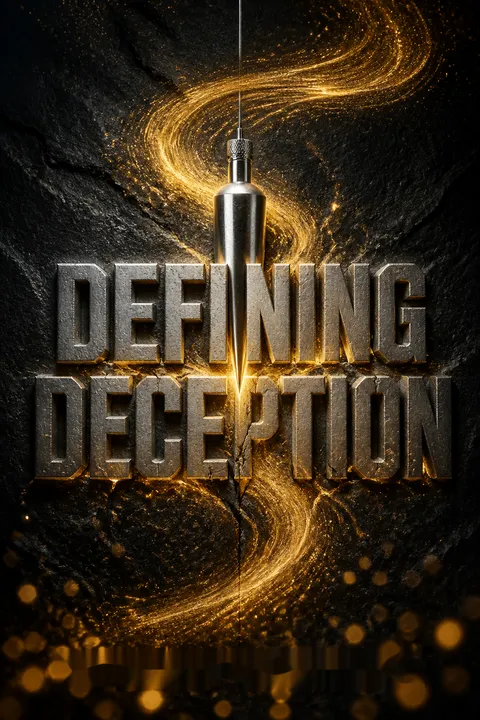
Defining Deception is a theological polemic, a movement history, and an insider account of leaving a religious world. Its structure moves from visible phenomena, such as gold dust and healing claims, through the movement’s historical influences and networks of endorsement, then into disputes over doctrine and a proposed path toward recovery. Costi Hinn’s family connection to Benny Hinn gives the argument unusual firsthand authority, while the authors’ footnotes, sermon excerpts, and historical references invite readers to inspect specific claims rather than rely only on denunciation.
The book’s most durable contribution is its insistence that extraordinary experience cannot authenticate its own interpretation. It asks readers to distinguish a testimony from proof, a spiritual impression from authoritative revelation, and cooperation from public endorsement. It also identifies a troubling incentive structure: promises of health, wealth, and special power can attract vulnerable audiences, while failed promises may shift blame onto those already suffering.
The argument is explicitly cessationist and should be read as such. Its claims about the end of apostolic gifts, biblical tongues, and the meaning of healing passages are not consensus conclusions across Christianity. Its historical sketches sometimes bring together leaders and traditions that differ substantially, and its polemical language can make association appear more conclusive than individual evidence warrants. Claims of demonic involvement are especially difficult to verify and should not be inferred from unusual behavior alone.
These limits do not erase the book’s central questions. What does a leader claim to know, what evidence supports it, who can challenge the claim, and who bears the cost when promised outcomes fail? Readers need not adopt every theological conclusion to recognize the value of those questions. The strongest reading preserves both the book’s warnings about spiritual exploitation and its distinction between abusive teachers and the wider Pentecostal and charismatic communities it does not intend to condemn.
Review Summary
Defining Deception receives mostly positive reviews, with readers praising its thorough examination of the New Apostolic Reformation and Word of Faith movements. Many appreciate the authors' insider perspective, biblical approach, and compassionate tone. The book is commended for its historical context, critique of false teachings, and call for discernment. Some readers found it repetitive or biased, but overall, it's considered a valuable resource for understanding and addressing issues within charismatic Christianity.
People Also Read









Glossary
Third Wave
Modern charismatic renewal streamA term associated in the book with the movement promoted by C. Peter Wagner and John Wimber in the 1980s. It encouraged Christians across denominations to expect signs, wonders, healing, prophecy, and other charismatic experiences. The authors distinguish its early, more restrained form from later movements they criticize.
New Apostolic Reformation (NAR)
Network of modern apostlesThe name used for a movement associated with C. Peter Wagner that promotes contemporary apostles and prophets, special revelation, and broad influence over churches and society. Hinn and Wood argue that its claims exceed biblical authority and accountability. The term describes a disputed movement, not all Pentecostal or charismatic Christians.
Word of Faith
Confession-based prosperity teachingA teaching tradition traced in the book through E. W. Kenyon and Kenneth Hagin. It emphasizes spoken confession as a means of receiving desired outcomes, including healing and material provision. The authors argue that this approach shifts biblical confession toward personal prosperity and can blame people when promised results do not occur.
Kingdom Now theology
Earthly kingdom before Christ's returnA theological view described by the authors as expecting Christians to establish or restore God’s dominion on earth before Christ returns. In the version they criticize, believers are expected to overcome sickness, poverty, and other forms of suffering through spiritual power. They contrast this with a view that places complete restoration in the future.
sola Scriptura
Scripture as final authorityA Reformation principle meaning that Scripture is the church’s final authority for faith and practice. In this book, the authors use it to oppose claims that personal prophecy, visions, or experience may override biblical teaching. Christians differ on how this principle relates to contemporary spiritual gifts, but the book treats Scripture as the decisive test.
kenotic theology
Christ's self-emptying interpreted as divestmentA theological interpretation of Philippians 2 in which Christ’s self-emptying is understood as setting aside divine attributes or powers. Hinn and Wood argue that this interpretation compromises the historic Christian teaching that Jesus remains fully divine while becoming fully human. Other theologians interpret the passage differently, including as Christ’s humility and servant-like incarnation.
eisegesis
Reading ideas into ScriptureA method of interpretation in which a reader imports a preferred meaning into a biblical passage instead of deriving meaning from its language, context, and literary form. The book uses the term to criticize interpretations that treat poetic images, such as God sheltering people beneath wings, as literal predictions of modern signs.
slain in the Spirit
Falling during religious servicesA phrase used by some charismatic Christians for falling to the floor, sometimes with shaking, laughter, crying, or other physical responses, during prayer or worship. The authors argue that these events are not clearly supported by the biblical passages commonly cited for them and may have psychological, social, deceptive, or other explanations.
grave sucking
Seeking power at gravesA practice described in the book in which people lie on or near the grave of a deceased religious figure, hoping to receive that person’s spiritual power or anointing. The authors condemn the practice as incompatible with biblical teaching. They also state that the practice was associated with some people connected to Bethel, while direct approval by Bill Johnson was not established.
FAQ
1. What is Defining Deception: Freeing the Church from the Mystical-Miracle Movement by Costi W. Hinn about?
- Critical Examination of Movements: The book exposes the theological errors and deceptive practices within the Mystical-Miracle Movement, especially the New Apostolic Reformation (NAR), Third Wave, and leaders like Bill Johnson and Bethel Church.
- Historical and Theological Analysis: It traces the roots and development of these movements, identifying key figures and doctrines that deviate from biblical Christianity.
- Personal and Pastoral Perspective: Written by insiders, including Costi Hinn (nephew of Benny Hinn), it combines scholarly research with pastoral concern to help believers discern truth from error.
2. Why should I read Defining Deception by Costi W. Hinn?
- Urgent Need for Discernment: The book addresses a widespread lack of discernment in the modern church, equipping readers to recognize and reject false teachings.
- Insider Testimony: Costi Hinn’s personal experience within the movement provides unique insights into its inner workings and manipulations.
- Hope and Healing: It offers encouragement and biblical clarity for those hurt or confused by failed faith-healing or prosperity teachings, affirming that their faith is not flawed.
3. What are the key takeaways from Defining Deception by Costi W. Hinn?
- Expose and Refute False Doctrines: The book systematically identifies and biblically refutes the core errors of the Mystical-Miracle Movement.
- Restore Biblical Authority: It emphasizes the sufficiency of Scripture and the true Gospel over subjective experiences and unbiblical practices.
- Encourage Discernment and Healing: Readers are equipped to discern truth, protect their faith, and help others recover from spiritual deception.
4. Who are the main historical figures and leaders discussed in Defining Deception and why are they important?
- Early Pentecostal Leaders: Charles F. Parham and William Seymour are highlighted for introducing doctrines like tongues as evidence of Spirit baptism, but also for their theological errors.
- Faith Healers and Prosperity Preachers: Figures like Smith Wigglesworth, Aimee Semple McPherson, Kathryn Kuhlman, William Branham, Oral Roberts, and Kenneth Hagin are examined for their influence on healing revivals and prosperity gospel.
- Modern Leaders: Bill Johnson, Benny Hinn, Todd Bentley, and Todd White are critiqued for perpetuating and expanding these unbiblical teachings in contemporary charismatic circles.
5. How does Defining Deception by Costi W. Hinn define a true biblical miracle versus a false miracle?
- Biblical Miracle Criteria: A true miracle is an observable, supernatural act performed by God or His authorized agents, which suspends natural laws and points to God’s glory.
- Authenticates the Gospel: Genuine miracles in Scripture always confirm the person and message of Jesus Christ, not the performer.
- False Miracle Traits: Modern “miracles” are often unverifiable, partial, or manipulated for personal gain, lacking the divine authority and purpose seen in the Bible.
6. What are the main doctrinal errors in Bill Johnson’s teachings according to Defining Deception?
- Healing Depends on Faith: Johnson teaches that sickness is due to lack of faith or demonic forces, contradicting the Bible’s teaching on God’s sovereignty.
- Kingdom Now Theology: He promotes the idea of a utopian kingdom on earth led by man, which the book argues is unbiblical.
- Scripture vs. Experience: Johnson elevates personal mystical experiences and signs above the authority of Scripture, leading to practices like “grave sucking.”
- Distorted Christology: He claims Jesus performed miracles as a man, not as God, which the authors identify as a heretical view of Christ’s nature.
7. What is the New Apostolic Reformation (NAR) and the “Third Wave” as explained in Defining Deception?
- Third Wave Movement: Coined by C. Peter Wagner, the Third Wave emphasizes signs, wonders, and supernatural experiences within traditional denominations.
- NAR Characteristics: The NAR seeks to restore the office of apostle, promotes dominion theology, and operates outside denominational accountability.
- Key Differences: John Wimber’s more cautious approach is contrasted with Wagner’s NAR, which is less biblically grounded and more open to excesses.
8. How does Defining Deception by Costi W. Hinn address the practices of being “slain in the spirit” and speaking in tongues?
- No Scriptural Basis: The book finds no biblical support for being “slain in the spirit” (falling, convulsing, animal sounds) as evidence of the Holy Spirit’s work.
- Explanations for Phenomena: Such experiences are attributed to peer pressure, suggestion, desire for experience, faking, or demonic influence.
- Tongues as Known Languages: Biblical tongues are described as real human languages, not ecstatic speech, and the book affirms that sign gifts ceased with the apostolic age.
9. What does Defining Deception by Costi W. Hinn say about the prosperity gospel and health-and-wealth teachings?
- False Promises: The book critiques the teaching that Christ’s atonement guarantees health and wealth, calling it a fatal doctrinal flaw.
- Purpose of Suffering: It explains that illness and poverty may be part of God’s sovereign plan to refine believers and display true faith.
- True Prosperity: Real prosperity is defined as eternal and spiritual, not material or temporal, and the prosperity gospel is seen as insensitive to suffering Christians worldwide.
10. How does Defining Deception by Costi W. Hinn recommend Christians respond to mystical-miracle movements like Bethel Church and the NAR?
- Avoid False Teachers: Christians are urged not to share platforms or endorse false teachers unless they publicly repent.
- Hold to Scripture: The Bible must be the final authority, and all experiences and teachings should be tested against it.
- Protect the Church: Believers are called to guard the church from deception and to speak the truth in love, following the example of Christ and the apostles.
11. What practical advice does Defining Deception by Costi W. Hinn offer for helping those caught in deception?
- Discernment and Biblical Literacy: Christians should study Scripture carefully and test all teachings against the Bible.
- Confront Error with Love: Address false teaching with humility, love, and biblical evidence, prioritizing restoration over condemnation.
- Support and Discipleship: Provide pastoral care, prayer, and community support to help those recovering from mystical-miracle deception.
12. What encouraging testimonies and stories are shared in Defining Deception by Costi W. Hinn?
- Rescued from Deception: The book shares testimonies from former Word of Faith, charismatic, and NAR adherents who found freedom through biblical teaching.
- Transformation through Scripture: Many were led to repentance and true faith by ministries focused on biblical orthodoxy.
- Healing from False Guilt: Testimonies affirm that their faith was not flawed, but that they were misled by false doctrines, and now find unity in the true Gospel.
About the Author
Other books by Costi W. Hinn
Download PDF
Download EPUB
.epub digital book format is ideal for reading ebooks on phones, tablets, and e-readers.








