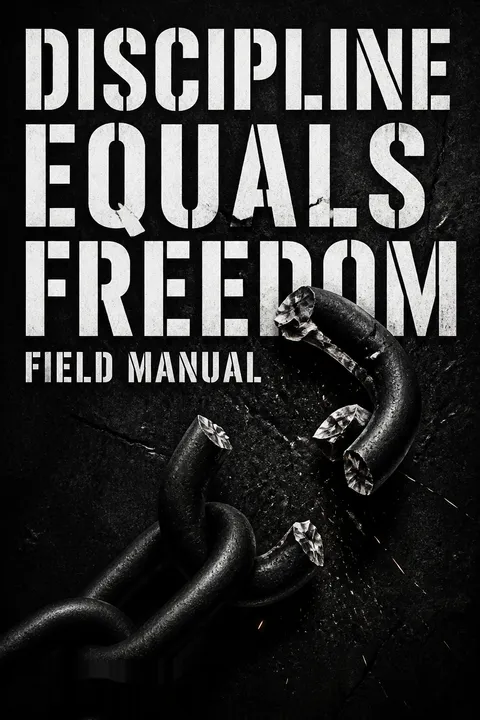


Key Takeaways
Treat discipline as the price of freedom, not its opposite
Freedom through self-command. Willink argues that worthwhile goals require repeated effort, not a shortcut or a burst of inspiration. Discipline is the decision to keep doing what serves a longer-term aim when comfort offers an easier alternative. In this view, freedom is not having no demands. It is gaining enough control over habits and impulses to direct a life toward chosen goals.
Purpose gives effort weight. Willink connects this ethic to his military service and to teammates who died. Remembering them makes ordinary time feel precious and gives effort a purpose beyond personal achievement. The practical question is smaller: what daily action would make good use of the freedom and time available?
What's compelling is the shift from discipline as punishment to discipline as agency. In psychology, autonomy is not simply doing whatever feels pleasant; it also involves acting in line with chosen values. That makes the book's account of freedom richer than a productivity slogan. Yet discipline becomes less humane if every pause is treated as failure or every achievement becomes a measure of personal worth. A durable version leaves room for grief, care, and rest. Remembering the dead can orient a life, but nobody needs to turn sorrow into constant performance to honor someone.
Start before confidence arrives; action is the antidote to hesitation
Begin with movement. Faced with an idea, a workout, or a project, Willink's answer to the question of when to begin is immediate action. Researching and debating can look productive while leaving the actual work untouched. A first step turns an imagined task into a real one, where the next step can become clearer.
Fear can prepare, or paralyze. Willink does not ask readers to eliminate fear of failure. He treats it as a reason to rehearse, prepare, and take the risk, while casting years of inaction as the deeper danger. Shakespeare's description of the dreadful interval before action gives this hesitation a vivid shape. The useful response is not reckless speed in every situation, but a deliberate first move when delay is merely avoidance.
The insight aligns with a practical feature of behavior: beginning often reduces uncertainty because action generates feedback that rumination cannot. A small attempt can reveal whether a plan is feasible, what skills are missing, and what deserves attention next. This is a stronger case for action than the promise that confidence will magically follow. Still, hesitation sometimes signals a genuine need to assess risk, gather consent, or seek expertise. The productive distinction is between preparation that changes the decision and delay that only postpones discomfort.
Build yourself through choices, not comparisons or inherited labels
Work within real limits. Willink rejects the fantasy that anyone can become the world's best at anything through desire alone. Genetics and individual capacity matter. His alternative is to study excellence as evidence of what humans can do, then pursue the strongest, fastest, or most capable version of oneself.
Treat weakness as changeable. The author describes his own shortcomings, including procrastination, poor choices, and ego, as problems to confront rather than identities to accept. He also recalls encountering successful and unsuccessful people from widely different backgrounds in military and business settings. His lesson is that upbringing does not dictate every next move. A person can choose what to practice, whom to learn from, and which weakness to address first.
This blend of realism and agency avoids two familiar traps: pretending talent and circumstance do not matter, and using them to declare the future settled. Comparing oneself with exceptional performers can be useful when it expands the sense of what is possible; it can also distort judgment if their advantages are invisible. Likewise, choice matters, but opportunity is unevenly distributed. A fair reading treats agency as the capacity to influence the next move, not proof that every outcome is fully under individual control.
Make daily routines carry you when motivation disappears
Prepare before resistance. Willink distrusts motivation because it rises and falls. He favors a repeatable routine: decide what to do, prepare what is needed, and begin even on low-energy days. For morning exercise, he suggests setting out clothes and planning the session before bed, so the next morning requires fewer decisions.
Keep the practice alive. The book applies discipline beyond exercise: to eating, emotional control, work, humility, and how people treat others. Its training advice favors doing some manageable activity over abandoning the routine entirely. It also recommends recording workouts to see progress and notice when effort needs adjustment. Willink argues that one disciplined choice makes the next easier, though consistency still requires judgment about what the body and circumstances can sustain.
Routines reduce the number of moments in which a person must renegotiate a valued action with a changing mood. That is the quiet strength of the night-before preparation: it shifts effort from morning persuasion to prior design. The book's claim that discipline itself grows through use is motivational, but it need not be treated as a universal law of willpower. Some people face fatigue, illness, caregiving, or unstable schedules. Flexible routines, with a clear minimum version, can preserve continuity without turning adherence into an all-or-nothing test.
Train hard enough to adapt, then recover before stress becomes damage
Challenge creates adaptation. The manual presents exercise as a stressor that can improve fitness and sharpen mental performance. Its practical message is to make the body work, then pay attention to how it responds. Willink describes cortisol as part of the body's response to demands: it helps mobilize energy, but persistent high stress can be harmful, and excessive training can undermine performance.
Scale effort to the person. The workout appendix offers beginner, intermediate, and advanced progressions built around pulling, pushing, lifting, squatting, core work, and conditioning. It advises tracking work, using sound technique, and adjusting effort rather than chasing a number at any cost. If injury or illness limits training, the author recommends doing a safe alternative instead of abandoning all activity, while recognizing that serious illness or injury can require rest.
The useful model is not that stress is inherently good, but that adaptation depends on the relationship between challenge and recovery. Training plans work best when they increase demand without treating pain, fatigue, or declining performance as character flaws. The book's insistence on technique and measured adjustment supports that distinction, especially in its weightlifting warnings. Its more aggressive language can obscure it. For readers, a sensible translation is to pursue progressive challenge while treating persistent symptoms as information, not an enemy to overpower.
Protect sleep instead of treating exhaustion as proof of discipline
Early starts need early nights. Willink values predawn training because it protects exercise time from later demands. But the sleep section also calls sleep essential, gives seven to nine hours as a general adult range, and recommends moving bedtime earlier to make an early alarm sustainable. It offers practical steps such as reducing screen use, reading before bed, and keeping a steady schedule.
Do not copy the exception. Willink says he has unusual short-sleep genetics, while acknowledging that most adults need more sleep than he does. The book also suggests rising at the usual time after a late night to become tired earlier the following evening. That advice can leave a reader underslept and should not be mistaken for a general health rule. The stronger principle is to build training around adequate recovery.
This is an important corrective inside a book that often celebrates relentless effort. Sleep is not a reward earned after work; it is part of the capacity to work, learn, and recover. The author does acknowledge individual differences, but his personal short-sleep experience cannot safely serve as a template for most readers. Early exercise is useful only if bedtime moves with it. When the schedule forces a choice, protecting adequate sleep is more consistent with the book's own concern for health than defending an arbitrary alarm time.
Treat food as fuel, not every dietary theory as fact
Choose food deliberately. Willink urges readers to limit highly processed, sugary foods and describes eating as a way to fuel training and health. He favors a Paleo-style pattern centered on meat, fish, eggs, vegetables, nuts, and some dairy, while excluding grains, potatoes, legumes, refined sugar, and processed oils. He also recommends fasting when convenient healthy food is unavailable and argues that strict rules are easier to maintain than frequent exceptions.
Separate the practice from the claims. The author presents sugar as addictive in a way comparable to hard drugs and makes strong claims about grains, insulin, and fasting. These are his arguments, not necessary premises for the practical advice. A reader can take from the section the value of noticing food's effects and planning ahead without treating one diet as universally correct.
The strongest part of this guidance is its attention to defaults: tempting food is easier to resist when a person has already decided what to eat. The weakest part is the certainty of its biological explanations. Describing sugar as equivalent to heroin overstates what the comparison can establish, and evolutionary stories do not by themselves prove that one menu suits everyone. Fasting and restrictive diets can also be inappropriate for some health conditions or histories. Food choices are best judged by nutritional adequacy, sustainability, and individual medical needs, not by the intensity of a metaphor.
Turn setbacks into information, then choose the next move
Accept the facts; work the problem. Willink's response to a setback is a brief word of approval, not because bad news is secretly pleasant, but because the problem still contains a task. A canceled mission can free resources for another priority; a failed attempt can expose what needs practice. The response is meant to stop frustration from consuming the attention required to solve the issue.
Sort what can be changed. The book distinguishes problems within one's control, which call for action, from events that cannot be controlled, which call for acceptance and adaptation. Its account of stress asks the reader to detach enough to see the situation clearly. Willink also writes about death and regret: memories and lessons can remain valuable, but dwelling on what cannot be undone does not change it.
This is a compact form of cognitive reappraisal: changing the question from why this is happening to what can be done now. It can interrupt helplessness without pretending that loss or injustice is harmless. That distinction matters most in grief. Finding meaning in a loved one's life may comfort some people, but it should not become pressure to feel grateful or positive on command. The method works best as a tool for recovering choice, not as a verdict that every painful event must contain a hidden benefit.
Stabilize the team by absorbing pressure and clarifying the next move
Leadership absorbs impact. Willink uses the military idea of drawing fire as a metaphor for a leader who takes on some of a team's pressure so others can move. In everyday crises, this means staying composed, helping people identify the problem, and making the next action visible. He argues that a leader's steady response can keep fear and negativity from spreading through a group.
Cooperate without surrendering standards. The book supports compromise when people with different approaches need to coordinate. It draws a boundary between that outward flexibility and internal commitments such as owning mistakes, working hard, and maintaining self-discipline. When dealing with gossip, Willink favors professional directness when a response is necessary, and otherwise recommends focusing on useful work rather than retaliating.
The best version of this principle is not a leader who silently carries every burden. It is a leader who regulates the room, shares accurate information, and helps distribute the work. That resembles emotional contagion in groups: people attend to one another's reactions when interpreting uncertain events. Calm can therefore be useful, but forced positivity can silence valid warnings. The book's distinction between external compromise and internal standards is valuable when standards mean integrity and accountability, not inflexibility about methods or refusal to hear dissent.
Train practical skills consistently, and make escape the goal of self-defense
Make practice concrete. The manual moves beyond motivation into workout templates, equipment suggestions, travel routines, and guidance for finding a martial arts school. Its fitness plans offer progressions from assisted body-weight movements to demanding lifts, and repeatedly emphasize form over ego. If no gym is available, it suggests adapting with body-weight exercises or available equipment rather than treating travel as an automatic break in discipline.
Learn to leave danger. For self-defense, Willink recommends Brazilian jiu-jitsu, boxing, Muay Thai, and wrestling as complementary skills. He stresses that the goal is not to win a prolonged fight: avoid danger when possible, escape when possible, and use training to respond if escape is blocked. He also advises choosing a school by attending, assessing instruction and culture, and looking for a safe, respectful environment.
The field-manual format gives the book an advantage over advice that stops at mindset: it asks readers to practice observable skills and adjust difficulty. The self-defense emphasis on avoidance and escape is especially important because confidence can outrun competence. Martial arts training does not make real violence predictable, and the techniques taught in a gym do not guarantee safety outside it. Good coaching, controlled practice, and realistic limits matter more than accumulating styles or equipment. The same principle applies to fitness: skill and consistency beat theatrical intensity.
Analysis
Discipline Equals Freedom is best read as a field manual shaped by a combat veteran's ethic, not as a neutral scientific guide. Its core argument is that self-command expands the range of possible action: a person who can persist through discomfort has more options than one governed entirely by impulse. The book gives this idea emotional force through Willink's remembrance of fallen teammates, then translates it into daily behaviors, from getting out of bed to maintaining fitness while traveling.
Its structure is deliberately repetitive. Short, forceful passages rehearse a vocabulary of action, while the second half turns that vocabulary into exercise, sleep, nutrition, and self-defense advice. Repetition is part of the method: the reader is meant to absorb an operating attitude, not merely memorize a theory. The concrete workout progressions and emphasis on technique make the manual more useful than motivation alone.
The same rhetorical intensity is also the book's main limitation. The language can collapse meaningful distinctions between avoidance and laziness, rest and surrender, or emotional endurance and suppressing emotion. The sleep guidance itself shows why context matters: the author promotes early rising, but also recognizes that sleep is essential and that his own short-sleep needs may be unusual. Similar caution is needed around its confident nutritional claims. Its strict Paleo recommendations, sugar-addiction analogy, and broad case for fasting should not be treated as settled medical guidance.
The most useful synthesis is selective rather than literal. Preserve the book's insistence on taking ownership, beginning before motivation appears, practicing tangible skills, and turning setbacks into decisions. Reject the idea that every pause is weakness or that one regimen fits every body. Discipline is most freeing when it is in service of chosen aims, informed by evidence, and flexible enough to protect the person doing the work. In that form, the book's warrior imagery becomes a metaphor for reliable effort, not a demand to live permanently at war with oneself.
Review Summary
Discipline Equals Freedom receives mixed reviews. Many readers find it motivational and appreciate its no-nonsense approach to self-discipline. The book's straightforward advice on fitness, nutrition, and mental toughness resonates with some. However, critics argue it lacks depth, relying on repetitive mantras and oversimplified solutions. The writing style, featuring short sentences and all-caps text, is polarizing. Some readers value the concise, direct messaging, while others find it gimmicky. The book's effectiveness seems to depend on individual preferences and expectations for self-help literature.
People Also Read









Glossary
Discipline Equals Freedom
Self-command expands choiceThe book's central principle that self-discipline makes a person more capable of pursuing chosen aims. Repeated effort, restraint, and follow-through are presented not as restrictions for their own sake, but as ways to reduce the control of impulse, avoidance, and circumstance over one's actions.
The Warpath
Daily path of preparationWillink's metaphor for a continuing practice of preparing, learning, and confronting personal weaknesses. The path may involve literal readiness for conflict, but in ordinary life it means building strength, knowledge, control, and ownership through sustained discipline. Its endpoint is not aggression for its own sake, but greater capability and peace.
Destroyer Mode
Effort under extreme strainWillink's label for the capacity to continue when either emotion or reason alone seems insufficient. He describes combining emotional drive with logical resolve: feelings can supply energy when continuing seems irrational, while deliberate reasoning can counter the urge to stop when exhaustion feels overwhelming.
Stand To
Predawn readiness practiceA military term the book uses for being awake and prepared before dawn, when an attack might be expected. Willink adapts the idea to early-morning exercise: getting up before the day's demands begin can protect time for training and create a sense of readiness.
Draw fire
Absorb pressure for othersA battlefield phrase for attracting an opponent's attention or fire to create an opening for teammates. Willink extends it into a leadership metaphor: during a crisis, a leader can remain steady, absorb some of the group's stress, and help others act. In the book, the metaphor concerns support and composure, not seeking harm.
MetCon
Metabolic conditioning workShort for metabolic conditioning, a category in Willink's workout plans that uses demanding activity to challenge cardiovascular and muscular endurance. The appendix pairs it with strength or body-weight movements and gives examples such as running, shuttle runs, and burpees. The difficulty should be adjusted to the trainee's level and technique.
Every Minute On The Minute (EMOTM)
Timed work intervalsA workout structure in which a person begins a prescribed exercise or number of repetitions at the start of each minute. Any time left in that minute becomes recovery before the next interval. Willink uses it in progressive exercise sets, while emphasizing that form should remain sound as fatigue accumulates.
FAQ
What's "Discipline Equals Freedom: Field Manual" about?
- Core Message: The book by Jocko Willink emphasizes the importance of discipline as the foundation for achieving freedom in life. It argues that discipline is the key to overcoming obstacles and reaching personal goals.
- Structure: The book is divided into two main parts: "Thoughts" and "Actions," which provide philosophical insights and practical advice, respectively.
- Target Audience: It is aimed at individuals seeking motivation and guidance to improve their personal and professional lives through self-discipline.
- Author's Background: Jocko Willink, a former Navy SEAL, draws on his military experience to offer strategies for developing discipline and resilience.
Why should I read "Discipline Equals Freedom: Field Manual"?
- Practical Advice: The book offers actionable strategies for cultivating discipline in various aspects of life, from physical fitness to mental resilience.
- Motivational Insights: Jocko Willink's personal anecdotes and military experiences provide powerful motivation to push through challenges.
- Universal Application: The principles of discipline discussed are applicable to anyone, regardless of their profession or personal goals.
- Empowerment: Reading the book can empower you to take control of your life and make meaningful changes through disciplined action.
What are the key takeaways of "Discipline Equals Freedom: Field Manual"?
- Discipline Over Motivation: The book emphasizes that discipline is more reliable than motivation, which can be fleeting.
- Self-Discipline Origin: Discipline must come from within; external sources of discipline are not sustainable.
- Action-Oriented: The book encourages immediate action—starting "here and now"—to overcome procrastination and achieve goals.
- Mind Control: It stresses the importance of controlling your mind and emotions to maintain focus and drive.
How does Jocko Willink define discipline in "Discipline Equals Freedom: Field Manual"?
- Root of Qualities: Discipline is described as the root of all good qualities, driving daily execution and overcoming laziness.
- Internal Force: It is an internal force that must be cultivated from within, not imposed externally.
- Path to Freedom: Discipline is portrayed as the only path to achieving true freedom, allowing individuals to reach their full potential.
- Relentless Commitment: The book advocates for a relentless commitment to discipline, which leads to strength, intelligence, and health.
What is "The Way of Discipline" according to Jocko Willink?
- No Shortcuts: The book asserts that there are no shortcuts or hacks to achieving success; only hard work and discipline will get you there.
- Daily Practice: Discipline involves daily practice, including late nights, early mornings, and consistent effort.
- Overcoming Excuses: It is about defeating excuses and lethargy that prevent progress and personal growth.
- Ultimate Freedom: Following the way of discipline leads to ultimate freedom, allowing you to become the best version of yourself.
How does Jocko Willink suggest overcoming procrastination in "Discipline Equals Freedom: Field Manual"?
- Immediate Action: The book advises starting immediately—"here and now"—to overcome procrastination.
- Initiate Action: It emphasizes the importance of initiating action rather than overthinking or planning excessively.
- Consistent Effort: Consistent effort and taking the first step are crucial to making progress and achieving goals.
- Avoid Over-Researching: Willink warns against getting stuck in the cycle of researching and debating instead of doing.
What does Jocko Willink mean by "Mind Control" in "Discipline Equals Freedom: Field Manual"?
- Self-Control: Mind control refers to controlling your own mind, not others, by asserting your will over your thoughts and emotions.
- Decisive Action: It involves making decisive actions, such as waking up early or working out consistently, despite feelings of laziness or weakness.
- Emotional Regulation: The book suggests controlling emotions like sadness or frustration by not giving them a vote in your decisions.
- Positive Mindset: Imposing discipline, power, and positivity on your mind helps steer your life in the desired direction.
What are the "Bad Instincts" Jocko Willink warns about in "Discipline Equals Freedom: Field Manual"?
- Instinct to Rest: Willink warns against the instinct that tells you to rest or take it easy, as it can lead to complacency.
- Ego Defense: This instinct acts as a defense mechanism for your ego, providing excuses for not pushing harder.
- Lies and Deception: It deceives you into believing you've done enough, which can lead to failure and stagnation.
- Fight Instincts: The book advises fighting these instincts with logic and determination to continue striving for improvement.
How does Jocko Willink address stress in "Discipline Equals Freedom: Field Manual"?
- Perspective: Willink suggests gaining perspective by comparing your stress to historical or extreme situations faced by others.
- Detachment: Detaching from stressors and focusing on what you can control is crucial for managing stress.
- Embrace Stress: Instead of fighting stress, embrace it and use it to become sharper and more alert.
- Problem Solving: If stress is within your control, take ownership and solve the problem to relieve it.
What is "The Warpath" in "Discipline Equals Freedom: Field Manual"?
- Path of Preparation: The Warpath is a metaphorical path of preparation, discipline, and overcoming personal weaknesses.
- Leads to Strength: It leads to strength, knowledge, and understanding by confronting challenges head-on.
- Ownership of Life: Following The Warpath means taking control and ownership of your life through discipline.
- Path to Peace: Ultimately, The Warpath leads to peace by achieving freedom through disciplined action.
What are the best quotes from "Discipline Equals Freedom: Field Manual" and what do they mean?
- "Discipline Equals Freedom": This quote encapsulates the book's core message that discipline is the key to achieving freedom in life.
- "There is no easy way": It emphasizes that success requires hard work and there are no shortcuts.
- "Get up and go": A call to action, urging readers to take immediate steps toward their goals.
- "Control your mind": Highlights the importance of self-discipline and mental control in achieving personal success.
How does Jocko Willink suggest dealing with negative people in "Discipline Equals Freedom: Field Manual"?
- Ignore and Outperform: Willink advises ignoring negative talk and focusing on outperforming those who doubt you.
- Professional Engagement: If necessary, engage professionally to address serious allegations or issues.
- Focus on Self-Improvement: Concentrate on what you can do right and continue working hard.
- Winning Attitude: By maintaining a winning attitude and work ethic, you will ultimately succeed and silence negativity.
About the Author
Other books by Jocko Willink





Download PDF
Download EPUB
.epub digital book format is ideal for reading ebooks on phones, tablets, and e-readers.








