

Key Takeaways
Accept responsibility for every outcome without making leadership about yourself
The team comes first. Willink learned leadership through experience in SEAL platoons, where competent guidance could determine whether a team functioned or froze. His account moves from training and deployment to the Battle of Ramadi, then into civilian organizations. The setting changes, but his central test remains: can a leader help people accomplish the mission together? A title is not proof of leadership, and success is not a personal trophy. The leader carries responsibility for decisions, preparation, and the conditions that let others do their jobs.
This framing joins accountability to service: authority is not a reward but an obligation to make the group more capable. It also counters a familiar organizational failure, where leaders claim credit for wins and distribute blame for losses. The demanding part is that responsibility can become an unhealthy fiction if it means one person controls every outcome. The useful interpretation is not that leaders cause everything, but that they must own their response to whatever happens and improve the conditions they can influence.
Step out of the immediate problem to see the whole field
Create room to notice. During an oil-platform exercise, Willink watched his platoon stare down weapons at a complicated area, waiting for someone to direct the next move. He stepped away from the firing line, looked across the whole deck, and saw a simple way to proceed. The maneuver was familiar; the useful change was his perspective. He calls this detachment: deliberately stepping back physically or mentally to regain awareness of the wider situation. He suggests noticing signs of stress, such as tense muscles or raised voices, then pausing, breathing, and scanning before deciding. Detachment should improve contact with reality, not become aloofness.
The episode illustrates how attention can become trapped by the task immediately in front of it. In high-pressure work, a pause can restore the capacity to notice context, alternatives, and other people's reactions. That makes detachment a practical form of self-regulation, not a claim to be emotionless. Its limit matters: a leader who keeps retreating to the big picture may miss expertise and danger close to the work. The strongest version alternates between distance and engagement, using each vantage point to correct the other.
Give people the mission, then let them own the route
Delegate the how. Willink's platoon changed sharply when an experienced commander, nicknamed Delta Charlie, replaced an arrogant one. Rather than dictate every move, the new commander gave junior SEALs a mission and asked them to devise a plan. He corrected weaknesses, but the team carried out its own plan with commitment. Commander’s Intent is the clear statement of the goal and purpose that lets subordinates make decisions about execution. Decentralized Command means pushing appropriate decisions to people closest to the work, while keeping them aligned with that intent. The leader still sets direction, checks risk, and remains accountable.
People often commit more deeply to a plan they helped shape, while those closest to a problem may possess information unavailable to senior leaders. This resembles distributed cognition: good decisions emerge from combining perspectives, rather than expecting one person to know everything. Delegation is not abdication, however. Autonomy without shared purpose can scatter effort, and a novice may need more coaching than an experienced colleague. The leader's work is to calibrate authority to competence, risk, and clarity, not simply to step away.
Build teams around mutual support, clear goals, priorities, and initiative
Make teamwork executable. After watching a SEAL training exercise collapse, Willink identified four foundations he calls the Laws of Combat. Cover and Move means people and units support one another as they act. Simple means goals and instructions must be understandable. Prioritize and Execute means solving the most consequential problem before scattering effort across many. Decentralized Command lets people act within the leader's intent instead of waiting for every instruction. In the failed exercise, forces were split too widely to help one another, instructions became tangled, and people waited for orders while danger grew. These ideas work together: initiative needs clarity, and clarity is not enough if teammates cannot support one another.
The framework is strongest as a set of linked conditions rather than four slogans. Mutual support reduces isolation, simplicity lowers the chance of misunderstanding, priority protects limited attention, and delegated action speeds response. This resembles reliability engineering, where a system's performance depends on interfaces between components, not just on individual skill. A caveat is that local initiative can create inconsistent decisions when objectives conflict. Shared intent and communication are therefore not preliminaries to decentralization; they are what keep distributed action coordinated.
Own failures early, then prevent the next one
Turn blame into preparation. Extreme Ownership is Willink's principle that leaders accept responsibility for team failures, identify what they can change, and act on it rather than making excuses. A machine gunner who shoots outside his assigned area may have lacked training or a clear briefing; the leader must investigate and correct those gaps. Even uncontrollable conditions, such as bad weather, call for contingency planning where possible. Preemptive Ownership describes taking responsibility before a failure by preparing people, clarifying roles, and planning alternatives. The point is not to deny an individual's mistake. It is to prevent blame from becoming an excuse to leave the system unchanged.
This approach can make a team safer to learn in: admitting an error becomes the start of repair rather than a contest over who deserves punishment. It also fits a systems perspective, where failures often arise from several interacting weaknesses. Yet accountability can be distorted if every failure is attributed to the leader, since that may hide deliberate misconduct or structural constraints. A sound application separates learning from consequences: examine the conditions, fix what can be fixed, and still address individual responsibility fairly.
Earn influence through trust, useful work, and carefully chosen pushback
Build credibility before conflict. Willink recommends doing dependable work, listening, and building relationships up, down, and across an organization. That credibility gives a subordinate a better chance to question a boss's plan without turning disagreement into a personal attack. He advises first checking whether the concern is important or mostly wounded pride, then raising it tactfully and offering an alternative. Disobedience is reserved for grave cases, such as illegal or unethical orders, or a plan that threatens catastrophic failure after serious attempts to resolve the concern. Playing the long game means serving the mission, not flattering a superior for private gain.
Trust gives dissent a channel. Without it, valid warnings can sound like rivalry; with it, disagreement can improve decisions before they become expensive. This is especially important in steep hierarchies, where people may hide bad news to avoid consequences. The advice also contains a tension: patience and tact can preserve influence, but they can become rationalizations for silence when a powerful leader refuses correction. The ethical test is whether relationship-building still serves honest communication and the people exposed to the decision.
Adapt your leadership to the person, not just the position
Match tools to people. Willink argues that some leadership traits come more naturally than others, but practice can improve communication, analysis, confidence, and the ability to read a room. Leaders can also build teams whose members compensate for one another. A quiet officer in a noisy training environment struggled to project orders, but succeeded by asking the loudest teammate to relay them. More broadly, the same direction may need different delivery for different people. A leader should observe how someone responds, adjust the approach, and avoid applying more pressure when it is making performance worse. People share human patterns, but individual motives and limits vary.
The emphasis on adaptation moves leadership away from one-size-fits-all management. It also treats a team as a portfolio of complementary abilities: a weakness in one person need not become a weakness in the group. Modern coaching similarly distinguishes a person's current skill from the conditions under which that skill appears. The caution is to avoid turning observation into fixed labeling. A person who seems quiet, resistant, or fragile in one setting may behave differently in another. Adaptation works best as a testable hypothesis, checked through conversation and results.
Explain the why until distant goals matter to frontline people
Close the information gap. On a foot patrol, people near the rear knew less about the route, distance, and terrain than those near the leader. That lack of information hurt both morale and readiness. Willink carried the lesson into other organizations: leaders should keep people informed and give clear, concise guidance, then check understanding by asking them to explain it back. In one company, a CEO announced restored profitability, but employees heard only cuts, lost colleagues, and gains for shareholders. The message needed a thread connecting profit to resources, growth, and workers' opportunities. When information cannot be shared, leaders should explain that constraint truthfully.
Communication is not just message delivery; it is the work of helping people construct a usable picture of events. The patrol example makes information asymmetry tangible: people cannot make sound local decisions if they do not know where they are going. The CEO example also shows that a technically accurate explanation may fail if it ignores the audience's stakes. The limit is that no single message can erase genuine trade-offs, such as layoffs. Credibility depends on naming costs honestly, not dressing every loss as an uncomplicated benefit.
Train through responsibility, and match pressure to readiness
Give meaningful stretch. Willink describes a capable SEAL whose cynical attitude worsened when he was assigned to clean a bathroom. The task felt like punishment, not trust. When he was instead made responsible for planning a demanding training mission, his attitude and performance improved. Responsibility can develop judgment, confidence, and ownership, but the challenge must fit the person. A new leader who lacks confidence may need manageable assignments that grow gradually. An overconfident leader may need a difficult training task that exposes the need to prepare or ask for help. Such experiments belong in settings where failure does not endanger the real mission.
This is a practical account of stretch assignments: learning accelerates when people face meaningful responsibility with a chance to recover and improve. The distinction between challenge and humiliation is crucial. A task communicates trust only when it matters and comes with appropriate support; otherwise, it can confirm that the person is being dismissed. The method should not be treated as a universal cure for bad attitudes. Motivation has many causes, and leaders need evidence about what is driving a problem before choosing the intervention.
Abandon failing tactics without abandoning the strategic objective
Change the approach. In a training exercise, a heavily protected shooter at the end of a hallway repeatedly hit SEALs sent to clear it. The young leader kept sending more people down the same route because the building still needed clearing. Willink taught him to stop, reassess, and use windows to reach the threat from another direction. Iterative decision-making means taking smaller, adjustable steps when information is incomplete, rather than committing everything to one uncertain choice. A leader may retreat from a tactical plan that is failing while staying committed to the broader purpose. The same discipline applies to micromanagement: increase oversight when performance falters, then ease it as competence returns.
The distinction between purpose and method is a defense against sunk-cost thinking: prior effort does not make a failing route safer or more sensible. Small, reversible decisions are especially valuable when new information arrives quickly. The lesson also guards against confusing persistence with rigidity. Still, changing direction has costs, including lost time and shaken confidence. Leaders should make the reason for a pivot explicit, so adaptation looks like disciplined judgment rather than impulsiveness.
Analysis
This field manual is a story-driven toolkit. Its authority comes less from abstract theory than from contrasts: the arrogant commander and the humble one, the frozen training unit and the unit that shares initiative, the leader trapped in a hallway and the leader who steps back. Those contrasts make the lessons memorable, but the deeper structure is a recurring problem of attention and control. Leaders must see enough to set direction without taking over every task; subordinates need enough freedom to act without losing alignment.
The book's most useful contribution is its treatment of leadership as a set of adjustable behaviors rather than a fixed personality. Detachment, clear intent, trust-building, and proportionate oversight are practices that can be rehearsed. Its stories also insist that relationships are operational infrastructure: trust determines whether people share bad news, accept a correction, or act when there is no time for discussion.
The sharpest tension is between total ownership and the distributed nature of failure. The ownership principle is powerful when it redirects a leader from excuses toward training, planning, and repair. Taken literally, however, it can blur the difference between responsibility and control. Leaders cannot determine every outcome, and organizations can fail through policies or resource limits beyond one person's reach. A more precise application is to own the response, investigate causes honestly, and distinguish what can be changed from what must be escalated.
The military setting also matters. Clear hierarchy and urgent decisions can justify practices that require adaptation in workplaces where authority is more negotiated. The transferable lesson is not to imitate combat command, but to preserve its strongest disciplines: clarity under pressure, candid information, mutual support, and enough trust for capable people to act.
Review Summary
Leadership Strategy and Tactics receives mostly positive reviews, with readers praising its practical advice and real-world examples. Many find it valuable for both military and business settings, appreciating Jocko Willink's straightforward approach to leadership principles. Some reviewers note similarities to his previous books but still find value in the content. Critics mention potential limitations in applicability outside military contexts and gender considerations. Overall, readers appreciate the book's focus on humility, accountability, and effective communication in leadership roles.
People Also Read









Glossary
Laws of Combat
Four teamwork principlesWillink's name for four connected principles drawn from combat leadership: mutual support between people or units, clear and simple goals, attention to the most important problem first, and authority distributed so subordinates can act. The ideas are presented as useful beyond combat, including business and other team settings.
Cover and Move
Support while others actA combat principle in which one person or element provides protection or support while another moves, with roles coordinated as needed. Willink treats it as a basic model of teamwork: individuals and groups become more effective when they cooperate rather than operate as isolated parts.
Prioritize and Execute
Solve the key problem firstA decision principle for situations with several simultaneous tasks or problems. Rather than attempting everything at once, the leader identifies the issue with the greatest immediate impact, addresses it, and then moves to the next priority. The method is intended to prevent scattered effort and paralysis.
Decentralized Command
Distribute decisions downwardA leadership approach in which a senior leader communicates the goal and its purpose, then empowers subordinate leaders to make appropriate decisions close to the work. It depends on shared understanding, trust, and preparation. It does not remove the senior leader's responsibility for direction, support, or results.
Commander’s Intent
Goal and purposeA concise explanation of what a mission must accomplish and why it matters. It gives subordinate leaders a shared destination without prescribing every step. When circumstances change, people who understand the intent can adjust their methods while remaining aligned with the mission.
Extreme Ownership
Take responsibility for outcomesWillink's principle that leaders should accept responsibility for team performance and respond to failure by finding solutions rather than shifting blame. The approach includes examining training, communication, planning, and support, and preparing in advance for foreseeable problems. It emphasizes agency without requiring leaders to pretend they control every external event.
Dichotomy of Leadership
Balance competing demandsWillink's term for the opposing pressures leaders must manage without drifting too far toward either extreme. Leaders may need to be forceful but not reckless, involved but not controlling, confident but humble, and communicative without overwhelming people. The appropriate balance depends on the situation and the people involved.
Preemptive Ownership
Prevent problems in advanceTaking responsibility before something goes wrong by preparing people, clarifying expectations, and building contingency plans. It extends the idea of ownership beyond responding to failure: leaders anticipate likely obstacles and reduce their impact rather than waiting for a problem and then assigning blame.
Reflect and Diminish
Mirror, then lower emotionA communication technique in which a leader briefly reflects the emotion another person is expressing, but at a calmer level. The aim is to acknowledge the person's state and establish rapport without intensifying it, making it easier to shift the conversation toward understanding and solving the underlying problem.
Iterative decision-making
Advance through small decisionsA method for acting when information is incomplete. Instead of making a large, irreversible commitment immediately, the leader takes smaller steps toward the most plausible objective, reassessing as new information appears. This preserves options and can limit unnecessary risk while still allowing progress.
FAQ
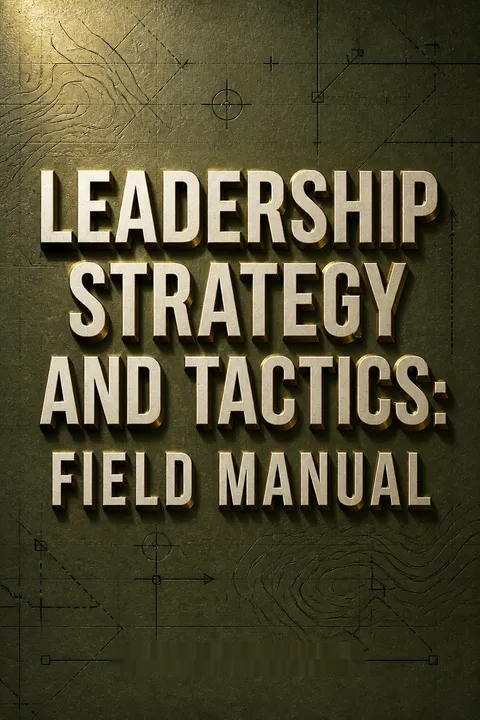
What's Leadership Strategy and Tactics: Field Manual about?
- Leadership Principles from Combat: The book distills leadership lessons learned by Jocko Willink during his time as a Navy SEAL, applying them to both military and civilian contexts.
- Practical Strategies and Tactics: It provides actionable strategies for leaders to implement in their organizations, focusing on real-world applications.
- Field Manual Format: Designed as a reference guide, it allows readers to jump to relevant sections based on their immediate leadership challenges.
Why should I read Leadership Strategy and Tactics: Field Manual?
- Real-World Experience: Jocko Willink shares insights from his military experience, making the lessons credible and applicable to various leadership scenarios.
- Actionable Advice: The book is filled with practical advice that can be implemented immediately, valuable for leaders at any level.
- Focus on Human Behavior: It addresses the complexities of dealing with people, emphasizing the importance of understanding human behavior in leadership.
What are the key takeaways of Leadership Strategy and Tactics: Field Manual?
- Extreme Ownership: Leaders must take full responsibility for their team's actions and outcomes.
- Decentralized Command: Empowering subordinates to make decisions allows for quicker responses in dynamic situations.
- Detachment: Leaders should practice detaching from immediate chaos to gain a clearer perspective on the situation.
What are the best quotes from Leadership Strategy and Tactics: Field Manual and what do they mean?
- "Cover and Move": Emphasizes teamwork, where units support each other to achieve objectives, highlighting collaboration.
- "Simplicity": Plans should be simple and clear to ensure everyone understands their roles, avoiding confusion.
- "Prioritize and Execute": Focus on the most critical tasks first, assessing situations to tackle pressing issues effectively.
What is the concept of Extreme Ownership in Leadership Strategy and Tactics: Field Manual?
- Total Responsibility: Leaders are accountable for everything that happens within their team, including mistakes.
- No Excuses: Leaders should not blame others or external factors; focus on solutions and improvements.
- Cultural Impact: Fosters a culture of accountability and proactive problem-solving within teams.
How does Leadership Strategy and Tactics: Field Manual define Decentralized Command?
- Empowerment of Subordinates: Allows team members to make decisions based on their understanding of the situation.
- Trust and Relationships: Relies on building trust between leaders and teams, ensuring mission understanding.
- Flexibility in Execution: Leaders focus on strategy while subordinates handle tactical execution, enhancing operations.
What role does detachment play in effective leadership according to Leadership Strategy and Tactics: Field Manual?
- Gaining Perspective: Detachment allows leaders to step back from chaos, enabling a clearer view for decision-making.
- Emotional Regulation: Helps leaders manage emotions and reactions, crucial in high-stress situations.
- Improved Decision-Making: Avoids tunnel vision, considering multiple factors before acting for better outcomes.
How does Jocko Willink suggest leaders build trust and relationships in Leadership Strategy and Tactics: Field Manual?
- Honesty and Transparency: Emphasizes telling the truth to build trust, with open communication.
- Giving Trust: Empower subordinates by allowing decision-making and task ownership, fostering mutual trust.
- Consistent Communication: Regular interactions help leaders understand team needs and concerns, strengthening relationships.
What is the significance of humility in Leadership Strategy and Tactics: Field Manual?
- Openness to Learning: Humility allows leaders to recognize limitations and seek guidance, enhancing effectiveness.
- Building Relationships: A humble leader is approachable, fostering an environment for idea and feedback sharing.
- Avoiding Arrogance: Warns against pride, which can lead to poor decision-making and disconnect with the team.
How does Leadership Strategy and Tactics: Field Manual address the balance between discipline and care for team members?
- Discipline as Care: True care involves pushing team members to improve and preparing them for challenges.
- Balancing Hardship and Support: Find the right balance between demanding performance and providing support.
- Long-Term Success: Instilling discipline ensures teams are well-prepared for future challenges, benefiting individuals and the organization.
What does Jocko Willink mean by "leading from the rear" in Leadership Strategy and Tactics: Field Manual?
- Strategic Oversight: Allows leaders to maintain a broader perspective, ensuring informed decisions.
- Empowering Subordinates: Encourages team members to take initiative and ownership of tasks.
- Risk Management: Avoids unnecessary risks, ensuring leaders are available to support their teams when needed.
How can I apply the principles from Leadership Strategy and Tactics: Field Manual in my workplace?
- Implement Clear Communication: Ensure team understanding of the mission and roles, with regular updates and feedback.
- Foster a Culture of Ownership: Encourage accountability and recognize responsible behavior.
- Lead by Example: Demonstrate desired behaviors and attitudes, setting the tone for team culture and performance.
About the Author
Other books by Jocko Willink



Download PDF
Download EPUB
.epub digital book format is ideal for reading ebooks on phones, tablets, and e-readers.








