

Key Takeaways
Write a personal code before drift turns your days into default.
Make the standard visible. The book opens with a simple diagnosis: without a defined aim, it is easy to stay busy while neglecting what matters. Its Code offers ten commitments spanning physical health, learning, time, money, goals, work, humility, emotional control, service, and readiness to protect others. The list is a starting point, not a universal rulebook. Readers are encouraged to adapt it to their circumstances and relationships.
Translate values into conduct. A code is useful because it turns a vague ideal, such as being a good parent or colleague, into actions that can be attempted and reviewed. The aim is not perfect compliance. The book argues that striving toward a demanding standard still improves conduct, even when the standard is never fully met.
A written code can reduce the gap between values people endorse and choices they make under pressure. This resembles the role of professional ethics: principles become more useful when they guide concrete decisions, not merely express identity. The book’s breadth is a strength because it resists defining a good life by career achievement alone. Its risk is that a long list can become another instrument for self-reproach. A code should clarify priorities, not make every neglected domain feel like a moral failure. The invitation to customize it is therefore essential, not a minor concession.
Treat the Path as daily practice, not a finish line.
Progress has no endpoint. The book calls the personally chosen route toward a better life the Path. It is shaped by what someone cares about, who they want to become, and what important people need from them. Its direction is individual, but its recurring demands are familiar: build strength, knowledge, and understanding, then act on them.
Begin before certainty arrives. Laziness, fear, ego, and the pull of immediate rewards can all interrupt progress. The proposed response is to start with the next necessary action and keep choosing it. This is not a claim that every moment must be productive: the Code itself includes sleep, recovery, and relationships. Rather, discipline means giving important commitments repeated attention, instead of waiting for motivation or a perfect plan.
The Path is a process model of identity: a person becomes more capable through repeated action, rather than by announcing a fixed identity in advance. That framing fits learning, where competence is built through practice and correction. It also makes room for changing priorities as life changes. The more demanding phraseology around discipline can obscure a useful distinction, however: rest is not a lapse when recovery is necessary. A sustainable practice needs rhythms, limits, and flexibility. Otherwise, discipline can become a contest in which exhaustion is mistaken for evidence of seriousness.
Measure effort against your capacity, not someone else's performance.
Grade the attempt honestly. The Code Evaluation asks readers to compare what they did with what they were capable of doing, rather than compete with another person. The book illustrates this with exercise: a mile of walking might represent a major effort for a beginner, but little exertion for a seasoned athlete. The same action can therefore merit different assessments depending on the person and their current capacity.
Recalibrate as you improve. A task that once demanded full effort may become easy, so yesterday’s benchmark may no longer show meaningful progress. The evaluation is meant to prompt honest review of effort and follow-through, not to declare someone permanently successful or deficient. It also depends on self-knowledge: inaccurate estimates of capacity or effort make the score less useful.
This approach avoids a common measurement error: comparing outcomes without accounting for different starting points. In education and rehabilitation, progress is often judged relative to a learner’s or patient’s baseline for exactly that reason. The framework also has a built-in challenge: capacity is hard to estimate, and self-ratings can swing with mood, fatigue, or perfectionism. A useful assessment should guide the next adjustment, not become a verdict on character. Tracking observable behaviors alongside subjective effort can make the review more grounded.
Audit six life domains instead of mistaking career for the whole.
Look across the whole life. The evaluation framework names six areas: health, personal development, professional development, character and leadership, relationships, and preparedness and safety. Health includes fitness, sleep, and nutrition. Personal development includes intellectual activity, time, money, and goals. Work includes performance, qualifications, and finding meaning. Character includes humility, emotional control, and helping others.
Make neglected areas visible. Relationships are assessed through trust and mutual support, while preparedness includes self-defense, emergency plans, basic life-saving knowledge, and community ties. The point is not that everyone should pursue every measure equally. It is that success in one area can hide serious neglect elsewhere. The book’s ideal of an Eminently Qualified Human is not a completed achievement, but someone continually trying to improve across these domains.
The six-domain map counters the tendency to use the most visible metric, often work, as a proxy for overall well-being. It also recognizes that health, relationships, and practical safety affect a person’s capacity to pursue other goals. A broad checklist can reveal trade-offs that a narrow score misses. Still, its categories are not neutral: people face unequal time, money, health, and caregiving constraints. The evaluation is most humane when it helps identify a workable next step, rather than treating every domain as equally controllable or equally urgent.
In a crisis, pause, name the problem, and take one manageable step.
Create room to think. For situations where the next move is unclear, the book’s protocol begins with stepping back and taking stock. Identify the decisions available now, consider likely outcomes, and write down what success would look like. In a workplace crisis, it recommends listing problems, addressing the most pressing one first, and speaking directly with affected family members, supervisors, or coworkers.
Act, then reassess. Instead of committing blindly to a giant move, take a smaller step that offers information and preserves room to adjust. Continue until new information or resistance signals a need to pause and reconsider. This approach turns an overwhelming situation into a series of decisions. It does not promise control over events; it focuses attention on the response that remains available.
The pause-plan-act cycle is valuable because stress narrows attention and makes every problem feel equally urgent. Breaking a crisis into observable decisions can restore a sense of agency without pretending that uncertainty has disappeared. The small-step emphasis is especially useful when the facts are incomplete, since it limits the cost of a mistaken assumption. Some emergencies do require immediate action, though, and deliberation can itself become delay. The practical question is whether a step buys clarity or wastes time that the situation does not allow.
Use routines for recovery, but bring professionals into serious health struggles.
Build support into the plan. The protocols address illness, injury, addiction, and psychological trauma with organization, disciplined routines, and help from other people. For a serious diagnosis, the book recommends working with clinicians, keeping track of appointments and paperwork, and assigning someone to coordinate practical support. For addiction and trauma, it explicitly says professional help may be necessary and should not be avoided out of pride.
Separate agency from blame. The advice also encourages acknowledging what has happened, avoiding harmful coping behaviors, and identifying actions that support recovery. These steps can help someone participate in care, but they are not substitutes for medical or mental-health treatment. Outcomes may depend on factors beyond personal control. The book’s strongest practical message here is to seek appropriate help, organize support, and focus on the next constructive action.
Routines and practical coordination can reduce the cognitive load of illness, while a trusted person can help track questions and follow-through. This is a useful complement to professional care, not a competing theory of recovery. The distinction matters because exhortations to take responsibility can sound like blame when someone is sick or traumatized. Agency means having some influence over one’s response; it does not mean causing, choosing, or being able to overcome every condition. The book’s recommendation to seek qualified help is crucial, especially where symptoms are serious or safety is at stake.
Let grief have its waves, then give memory a concrete place.
Make room for loss. In its guidance on death, the book recognizes that grief can arrive in powerful waves and that those waves may become less frequent or intense over time. It suggests writing a eulogy or letter to the person who died, remembering what they gave, and supporting other people who are grieving. A visit to the grave on an anniversary is offered as one possible ritual for honoring memory.
Use distance to make choices. For breakups, the protocol advises stepping back from emotional reactions, reflecting on the relationship, and rebuilding daily routines. It urges readers to move forward rather than repeatedly reopen a painful separation. That advice is forceful, but the underlying aim is to regain perspective and self-trust. Grief and relationship endings differ, so no single timetable or ritual fits everyone.
Writing and ritual can give otherwise private feelings a form: a letter, a eulogy, or a recurring visit can make remembrance tangible without requiring grief to disappear. The book is strongest when it permits emotion and acknowledges that its intensity changes over time. Its breakup advice is less nuanced when it treats the other person’s behavior as proof that the relationship was entirely false. That certainty may feel clarifying in some cases, but relationships are often mixed. Boundaries can be firm without rewriting every good memory as deception.
Turn financial panic into a shared budget and a sequence of decisions.
Find the numbers first. The money protocol begins with a budget that records income and expenses. Reviewing past spending can reveal what to reduce, while tracking savings and debt shows whether the changes are working. In a financial squeeze, the book suggests postponing nonessential purchases, eating at home more, selling unneeded belongings, and asking lenders about interest rates.
Treat recovery as a household effort. It also recommends looking for ways to increase income, paying down high-interest debt, and reviewing the budget each month. Family members affected by the changes should understand the situation and contribute ideas, rather than experience cuts as unexplained punishment. The process may take time, but a clear account of money can replace vague dread with specific choices and a way to check whether those choices help.
A budget is both a planning tool and a shared description of reality. Making constraints visible can reduce arguments driven by different assumptions about what the household can afford. Involving family members also treats financial decisions as relational, not merely arithmetic. The advice is most actionable for spending that can be changed. A budget cannot by itself create income, eliminate an unexpected bill, or resolve every structural barrier. Its value lies in clarifying available options, helping people coordinate, and showing when outside financial guidance may be needed.
Repair your own harm directly, and handle betrayal with evidence and boundaries.
Own the part that is yours. For an apology, the book recommends taking responsibility, choosing a suitable time and place, and addressing the specific harm without adding old grievances. If children witnessed the conflict, acknowledging the mistake in front of them can show that repair is part of adult conduct. The aim is not to control whether forgiveness is granted, but to make a sincere attempt to restore trust.
Respond proportionately to betrayal. At work, the book advises gathering evidence and raising serious ethical or safety concerns through appropriate channels. In personal relationships, it recommends distance when trust has been seriously damaged, while keeping a minor breach in mind without letting it dictate an emotional confrontation. This distinction matters: apology concerns one’s own conduct; betrayal concerns how to assess and respond to someone else’s.
The separation between accountability and retaliation is useful. A clean apology focuses on the injured person’s experience and avoids turning repair into a negotiation over who was worse. Evidence and appropriate escalation also matter when workplace misconduct could affect others. At the same time, labeling someone permanently untrustworthy on limited evidence can harden suspicion into a self-confirming story. Proportionate boundaries leave room for context, while clear documentation protects against wishful thinking. Reconciliation is not always safe or required, and an apology does not entitle the person who caused harm to forgiveness.
When progress arrives, maintain what you built and help others advance.
Success shifts the assignment. The book describes improvement as temporary unless it is maintained: attention moves from one area of life to another, and earlier gains can erode. Being eminently qualified is therefore not a status a person finally earns. It means continuing to notice what needs attention and acting on it.
Turn achievement outward. After recognizing the people who helped, the book urges readers to lead in their families and communities and to help others find their own direction. This extends the Code’s emphasis on service and mentoring. It is not a call to impose one personal standard on everyone. The useful test is whether success increases someone’s capacity to contribute, support others, and keep their own responsibilities in view.
The emphasis on maintenance corrects the fantasy that achievement permanently solves a problem. Skills, health, and relationships often require continued attention, especially when circumstances change. The social dimension also matters: individual progress can create time, knowledge, or stability that benefits other people. Leadership is most constructive when it expands another person’s agency rather than demanding imitation. A personal code may be a helpful example, but a community contains different needs and constraints. Sharing practices works better as an invitation than as a universal prescription.
Analysis
This is a compact operating manual rather than a conventional argument built from extended evidence or personal narrative. Its architecture moves from aspiration to measurement to response: define a code, evaluate conduct across life domains, then consult practical protocols when disruption arrives. That sequence gives the book a useful coherence. The Code explains what matters, the Evaluation makes neglect more visible, and the Protocols convert broad exhortations into actions for specific situations such as bereavement, financial strain, betrayal, illness, or uncertainty.
The central strength is its insistence that personal development is plural. Health, work, relationships, character, learning, and safety all count, so professional achievement cannot stand in for a whole life. The self-referenced evaluation also avoids a crude comparison with other people: effort should be understood relative to current capacity. Together, these ideas make a flexible checklist that readers can adapt and revisit.
The central limitation is the book’s reliance on forceful language about control and responsibility. Such language can galvanize someone facing ordinary avoidance, but it can also blur the line between choosing a response and controlling an outcome. Illness, trauma, grief, addiction, and financial hardship are not solved by discipline alone. The text partly recognizes this by recommending professional care, practical support, and help from family or colleagues. Those recommendations deserve more weight than any suggestion that recovery is simply a matter of will.
The protocols are best treated as prompts for reflection, not universal clinical instructions. Their value lies in organizing attention: identify what is happening, seek the right support, take a proportionate next step, and reassess. Read that way, the book offers a memorable structure for moving from ideals to action while leaving room for context, limits, and professional judgment.
Review Summary
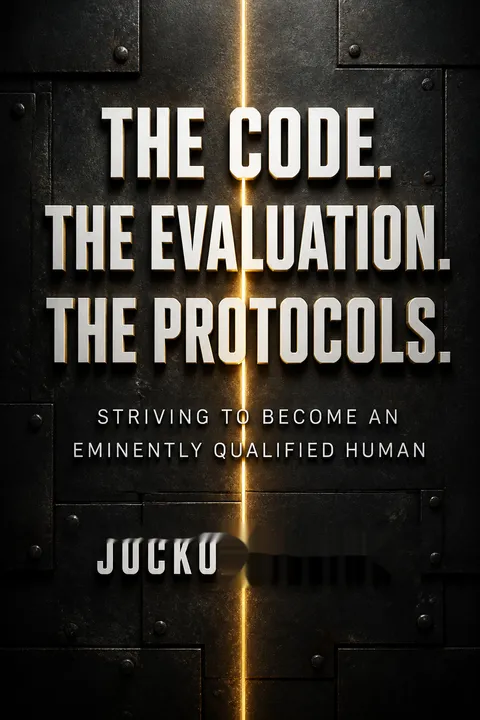
The Code. the Evaluation. the Protocols receives mixed reviews. Many praise its practical approach to self-improvement and discipline, finding it a valuable guide for personal growth. Readers appreciate Willink's no-nonsense style and actionable advice. However, some criticize the book for being overly simplistic, repetitive, or lacking depth. The evaluation system and protocols for handling various life situations are highlighted as useful features. While some find the book inspiring and life-changing, others feel it falls short compared to Willink's previous works or offers little new insight.
People Also Read







Glossary
The Code
Personal standards for conductA proposed set of ten commitments covering physical health, intellectual development, time, money, goals, work, humility, emotional control, service to others, and preparedness. The book presents it as a demanding starting point rather than a fixed universal rule. Readers can adapt it to their own lives and use it to clarify what they are trying to practice.
The Path
One’s ongoing route of growthThe book’s name for the continuing process of pursuing personally important goals and becoming the person one wants to be. Its direction differs across people, but it involves repeated choices that build capability and resist distractions such as fear, ego, and immediate gratification. It is not a destination or a permanent state of achievement.
The Code Evaluation
A self-assessment across lifeA system for reviewing progress against the Code’s standards across areas such as health, development, work, character, relationships, and preparedness. It asks a person to compare effort with their own capacity rather than rank themselves against other people. The assessment depends on honest judgment and should be repeated as capacity and circumstances change.
Eminently Qualified Human
A person continually developingThe book’s ideal for someone striving to develop across the important dimensions of life and embody the Code. It does not describe a final status that can be permanently achieved. The phrase refers to a continuing commitment to assess one’s conduct, improve where possible, and recognize that strengths in one area can weaken when attention shifts elsewhere.
The Protocols
Guides for difficult situationsA collection of step-by-step responses for challenges including breakups, death, money problems, betrayal, workplace stress, apologies, illness, addiction, trauma, and uncertainty. They emphasize assessment, deliberate action, routines, and support. The book also directs readers toward professional help when a health or psychological problem requires it, so the protocols are not presented as substitutes for care.
FAQ
What's "The Code. The Evaluation. The Protocols" about?
- Author's Intent: The book by Jocko Willink, with contributions from Dave Berke and Sarah Armstrong, aims to guide readers in becoming an "Eminently Qualified Human" through discipline and self-improvement.
- Core Structure: It is divided into three main sections: The Code, The Evaluation, and The Protocols, each focusing on different aspects of personal and professional development.
- Main Themes: The book emphasizes the importance of setting goals, maintaining discipline, and following a personal code to achieve one's highest potential.
- Practical Guidance: It provides actionable advice and protocols for dealing with various life challenges, from personal development to handling crises.
Why should I read "The Code. The Evaluation. The Protocols"?
- Self-Improvement Focus: The book offers a comprehensive framework for personal growth and achieving excellence in all areas of life.
- Actionable Advice: It provides practical steps and protocols to handle common life challenges, making it a useful guide for real-world application.
- Discipline Emphasis: Jocko Willink's emphasis on discipline as a path to freedom can inspire readers to adopt a more structured and purposeful approach to life.
- Universal Relevance: The principles outlined are applicable to anyone seeking to improve their physical, mental, and emotional well-being.
What are the key takeaways of "The Code. The Evaluation. The Protocols"?
- The Code: Establish a personal code to guide your actions and decisions, focusing on health, personal development, and relationships.
- The Evaluation: Regularly assess your progress in key areas of life, such as health, personal and professional development, and character.
- The Protocols: Implement specific strategies to overcome challenges like breakups, financial issues, and personal betrayals.
- Continuous Improvement: Embrace the idea that becoming an "Eminently Qualified Human" is an ongoing journey without a final destination.
What is "The Code" in Jocko Willink's book?
- Personal Guidelines: "The Code" is a set of principles that guide individuals in maintaining discipline and striving for excellence.
- Key Components: It includes commitments to physical health, mental development, time management, financial prudence, and humility.
- Customization: While the code is a starting point, it can be modified to fit individual needs and circumstances.
- Purpose: Following the code helps individuals set high standards and work towards their ideal selves.
How does "The Evaluation" work in the book?
- Self-Assessment Tool: "The Evaluation" is a system for grading oneself on adherence to "The Code" and progress in personal development.
- Key Areas: It covers health, personal and professional development, character, relationships, and preparedness.
- Honesty Required: The evaluation requires a brutally honest self-assessment to be effective.
- Continuous Process: It emphasizes that improvement becomes more challenging over time, requiring increased effort and discipline.
What are "The Protocols" in Jocko Willink's book?
- Crisis Management: "The Protocols" provide strategies for dealing with specific life challenges such as breakups, death, financial issues, and betrayal.
- Step-by-Step Guidance: Each protocol offers a series of steps to help individuals navigate and overcome these challenges.
- Emotional Control: Many protocols emphasize the importance of detaching from emotions to make rational decisions.
- Action-Oriented: The protocols encourage taking immediate action to get back on "The Path" towards becoming an "Eminently Qualified Human."
What is "The Path" according to Jocko Willink?
- Journey of Growth: "The Path" is the journey one takes to become what they want to be, who they want to be, and what the world needs them to be.
- Discipline Leads to Freedom: It is described as a path of discipline that ultimately leads to personal freedom and fulfillment.
- Individual Yet Universal: While "The Path" is unique to each person, many of its elements are common to everyone striving for excellence.
- Continuous Pursuit: It is a lifelong journey with no endpoint, focused on daily improvement and action.
How can I find "The Path" as described in the book?
- Self-Reflection: Begin by asking yourself what you care about, who you want to be, and what matters most to you.
- Goal Setting: Write down what you need to do to achieve your goals and identify the steps required to follow "The Path."
- Internal Awareness: Recognize that "The Path" is already in your head, waiting for you to follow it.
- Immediate Action: Start walking down "The Path" without hesitation, focusing on making the right choices daily.
How do I stay on "The Path"?
- Daily Discipline: Implement unmitigated daily discipline in all aspects of life to stay on "The Path."
- Overcome Obstacles: Fight against laziness, ego, and distractions that try to pull you off "The Path."
- Make Right Choices: Focus on making small, consistent choices that align with your goals and values.
- Resilience: Accept that falling off "The Path" is part of the journey, and take immediate action to get back on track.
What does it mean to be an "Eminently Qualified Human"?
- Mastery in Life: An "Eminently Qualified Human" is someone who has achieved mastery in every facet of life, reaching their full potential.
- Living The Code: This person consistently lives by "The Code," striving for excellence in health, personal development, and relationships.
- Continuous Growth: They understand that the journey never ends and are committed to daily improvement and action.
- Self-Evaluation: Regularly assess their progress and make necessary adjustments to stay on "The Path."
What are the best quotes from "The Code. The Evaluation. The Protocols" and what do they mean?
- "Unmitigated Daily Discipline in all things. It is the only Way." This quote emphasizes the importance of consistent discipline as the foundation for achieving personal freedom and success.
- "Without an objective, the objective will not be reached." Highlights the necessity of setting clear goals to achieve desired outcomes.
- "The Path is how you become what you want to be, who you want to be, and what the world needs you to be." Describes "The Path" as a journey of self-discovery and fulfillment.
- "Being eminently qualified isn’t a status we achieve, or a conclusion we reach." Reminds readers that personal growth is a continuous process without a final endpoint.
How does Jocko Willink suggest handling setbacks or falling off "The Path"?
- Self-Assessment: Conduct an honest self-assessment to understand why you fell off "The Path."
- Immediate Action: Take corrective measures and implement them ruthlessly to get back on track.
- Professional Help: Seek professional help if the setback involves health or psychological issues.
- Resilience: Accept that setbacks are part of the journey and focus on regaining momentum quickly.
About the Author
Other books by Jocko Willink




Download PDF
Download EPUB
.epub digital book format is ideal for reading ebooks on phones, tablets, and e-readers.








