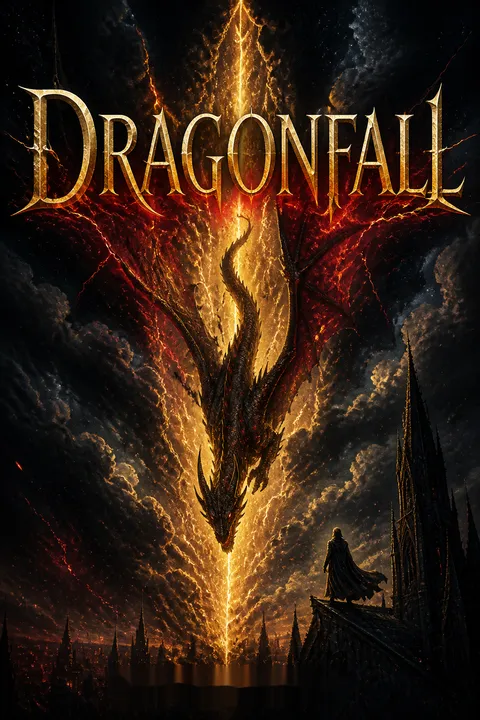


Plot Summary
Prologue
A future archivist assembles this history from Everen2 and Arcady’s1 accounts, recovered visions, and testimony from those who survived. The Archivist warns that entering another person’s memories can alter the one who witnesses them, a risk familiar to every Seer.
The account is therefore not a dry official record but a braided recollection, shaped by memory, magic, and the fear that the world’s history may turn back on itself.
The frame makes memory an active force rather than a neutral storehouse. The Archivist’s warning about emerging changed anticipates a story in which characters repeatedly absorb one another’s power, pain, and perspective. It also complicates certainty: visions, official histories, and private recollections all offer partial accounts, often shaped by the needs of whoever preserves them. By presenting the book as a reconstructed record, the frame asks readers to notice how history is made, and how easily a supposedly complete account can conceal the living people inside it.
Everen Enters the Storm
Everen,2 the only male dragon born in three centuries,2 has spent his life expected to become a Seer and rescue his starving kind. When his visions fail, he steals the Archivist’s7 key and finds a prophecy describing a storm and golden signal on the Night of Locked Tombs.
His sister Cassia4 follows, warning that the crossing may destroy him, but Everen2 dives into a vast tear between worlds. The passage strips away his dragon body and leaves him injured in a human tomb. There he finds Arcady,1 an unfamiliar person beside a glowing seal. The prophecy has brought him to the human world, but neither the purpose nor the cost of his arrival is clear.
Everen’s crossing begins as an act of agency and desperation, yet it is already shaped by the expectations he hopes to escape. He treats prophecy as a route to self-worth, then chooses the most literal and dangerous interpretation when ordinary signs fail him. The transformation into a smaller, injured body makes the cost immediate: the future he wants to command has taken away his physical power. His decision is brave, but also a protest against a family that has turned his birth into a public obligation.
Arcady Takes Another Name
Arcady1 enters Vatra’s Locked Tombs disguised as a priest, carrying the promise she made her dying grandmother.17 She opens the coffin of Barrow Eremia,16 the disgraced scholar blamed for a plague that killed a fifth of the population, and retrieves his unusual dragonstone seal. Her grandmother’s17 notebook explains how to replace her own identity with that of a dead noble child.
Arcady1 performs the spell, names herself Arcady Dalca,1 and sees a storm open above the tomb. She believes the new name will let her apply to university and investigate the trial that condemned her grandfather.16 When she wakes, she is ravenous and sees a shadow of wings, unaware she has called Everen2 across the Veil.
Arcady’s new identity is both a practical disguise and an attempt to reclaim a future denied by class and stigma. The tomb holds the family history she cannot publicly acknowledge, so opening it means confronting the very shame she hopes to escape. Her transformation does not erase her past; it gives that past a new instrument. The storm’s appearance reveals that private acts of self-invention can have consequences beyond the person who performs them, linking Arcady’s intimate ambition to Everen’s much larger crisis.
A Dragon Without Wings
After Arcady1 leaves the cave, Everen2 follows her scent into Vatra and is mistaken for a holy figure because of his strange features and priestly clothing. He discovers a green, crowded world unlike the volcanic island he left, but cannot regain his dragon shape or reach his sister4 reliably. He survives by accepting bread, finding dock work, and learning the city’s language.
A dream shows him and Arcady1 bound on opposite silver surfaces beneath a storm. At last, Cassia4 reaches him through a pond and confirms that an ancient dragon-human bond has begun. Since Everen’s2 magic and Arcady’s1 are sustaining it, neither can simply break free. Cassia4 urges him to find Arcady1 and complete the bond before the Feast of Flowers.
Everen’s first days in Vatra invert his inherited assumptions. He considers humans weak and dangerous, yet he must depend on their food, labor, and customs to survive. The bond is a biological and political problem before it becomes an emotional one, connecting two people whose societies remember each other through accusation. Cassia’s explanation supplies a goal, but also narrows Everen’s choices: he cannot recover his power alone. His homesickness and his contempt coexist, suggesting that the world he calls home may not be the only place capable of changing him.
Knives at the Lockshop
Arcady1 tests her new identity by buying a setting for Barrow Eremia’s16 seal, but her shapeshifting becomes unstable and drains her quickly. She needs help fixing the setting to her skin, so she seeks out Kelwyn,8 the fence who once taught her to pick pockets. When Everen2 finally finds her, he attacks in the fog, believing she caused his displacement.
Arcady1 wounds his forearm and pins him with a knife; he reverses their positions, then releases her when their touch sends his magic surging into her. Each bears the other’s matching injury, and a golden chime accompanies the exchange. Everen2 collapses from exhaustion. Arcady1 could kill him, but instead drags him to her lockshop and ties him up.
The first meeting turns abstract fate into a physical negotiation: every injury is shared, and every act of force risks harming both people. Arcady’s decision to take Everen home is not trust but calculation, an effort to keep a dangerous unknown where she can watch him. Yet her choice also breaks her usual rule of relying only on herself. Their matching wounds make the bond impossible to dismiss, while the stolen magic hints that mutual dependence may be more dangerous than either person’s weapon.
A Truce with Conditions
In the lockshop, Everen2 burns through his ropes but keeps his promise not to flee. He and Arcady1 agree to investigate the bond rather than attack each other, and she brings him to breakfast, where he admits his mother6 is a queen and that he wants to return home. Arcady1 needs money for university and proposes a theft that will require a capable partner.
She teaches Everen2 how to read a crowd, pick locks, and lift purses; he proves quick enough to earn his keep. When they test touching again, Arcady1 draws a little of his magic and ignites a candle without her seal. Everen2 realizes the bond lets her use his power, while their own remains diminished. They proceed together, wary of the cost.
The truce is built less on goodwill than on reciprocal need. Arcady converts the bond into a working arrangement, while Everen submits to being taught by someone he initially considers beneath him. Their lessons create a safer form of contact, one organized around skill rather than injury. Yet the candle test reveals a genuine imbalance: Arcady can access Everen’s power, and he experiences that access as a threat. The partnership thus begins with a question that remains morally unsettled: whether shared power can become intimacy without turning into possession.
Sorin Becomes the Knife
At the Citadel, Sorin,3 a silent acolyte raised by the Order of the Dragons, carries out her first major assignment for Head Priest Magnes.5 She poisons Karys Fall and watches the merchant heir die, then takes a stolen dragon relic from Sar Saunder Bane.
Sorin3 expects the work to bring peace and Magnes’s5 approval, but feels no relief afterward. Magnes5 later investigates reports of a red-haired being near the Locked Tombs. Through a memory spell, he makes the siren Mirel13 relive her encounter with Everen,2 revealing the dragon’s wings.
The memory pushes Mirel13 toward becoming a Starveling, a state caused when magic consumes its user. Magnes5 restores her with food and orders her to forget. Sorin3 sees his forbidden mind magic and accepts his explanation that Everen2 is a dangerous spirit.
Sorin’s discipline has been trained to resemble consent. She chooses the Order, yet her longing for Magnes’s approval makes each assignment feel like proof of belonging. Her first killing exposes the emotional cost of turning obedience into identity: completion does not bring the calm she expected. Magnes’s treatment of Mirel reveals how power can be exercised under the language of protection, with memory itself treated as a tool to manage risk. Sorin notices the contradiction but interprets it through the only framework she has been given, leaving doubt present but not yet actionable.
The Cinders Trial
Arcady1 takes Everen2 to Cinders, an underground gambling den, to prove he can work with the Marricks, the criminal crew she once left. She uses a fake bird-dropping trick to distract Sar Ikari Dwell14 and steals enough from the merchant to earn the crew’s interest.
During a card game, Everen2 secretly reads the other players’ hands and guides Arcady1 to a near-royal flush. When Dwell14 grabs her sleeve, Arcady1 touches bare skin and learns she can copy their face. Larkin9 agrees to join the planned theft of Widow Girazin’s dragon relic.
After leaving, Arcady1 and Everen2 find a Starveling beside a murdered stranger. Arcady1 explains that the plague-marked are blamed even when the Citadel’s neglect helped create the crisis. The danger makes their coming theft feel less like a game.
The Cinders sequence lets Arcady demonstrate competence while forcing her to reopen a relationship she had severed. Everen’s contribution is not brute strength but attention, a skill that makes them effective precisely because they read different kinds of evidence. The Starveling’s victim then punctures the glamour of their caper. Arcady sees the same society that condemns the marked also abandons them, so her criminal work sits uneasily between selfish survival and public care. The change of face is a practical trick, but it also echoes the deeper question of who gets to define a person.
The Cote Remembers
At the Marricks’ hideout in an abandoned wyvern cote, Arcady1 presents her plan to impersonate Dwell14 at Girazin’s auction. Larkin9 and the deaf artist Wren10 agree to help, though Larkin9 still resents Arcady1 for taking money meant for a Struck settlement. Wren10 has already crafted a convincing replica of the claw.
The old rooms stir Arcady’s1 memories of Lightfinger,11 the friend who taught her locks and died after a job went wrong. Arcady1 left the Marricks because Larkin9 refused to spend the crew’s reserve on Lightfinger’s11 healing, then stole money on her way out. That night, she tells Everen2 the full story and explains that the auction’s proceeds would fund university and a new life. Everen2 hears the grief beneath her ambition.
The Cote makes belonging tangible through rooms, objects, and shared routines, which is why Arcady’s return hurts more than a simple business negotiation. Her grievance with Larkin is not reducible to greed: the choice to save a larger community at the cost of one friend still feels like abandonment. By telling Everen about Lightfinger, Arcady risks having her private moral wound used against her. The confession changes their partnership from mere utility toward mutual recognition, while leaving intact the question Arcady cannot resolve: whether a person can justify sacrificing someone they love for a cause.
Three Teeth for a Ship
Magnes5 sends Sorin3 aboard a Jaskian ship to recover three dragon teeth hidden by Captain Tellreg.15 Tellreg15 fights back and admits the relics are intended for someone powerful, but will not name the buyer. Rather than kill Sorin,3 the captain15 cuts their own wrist and asks her to let the ship sink with them.
Sorin3 grants the request, scuttles the vessel, and escapes into the harbor with the teeth. Later, Magnes5 takes her to a forest tear in the Veil, where smoke forms a wolf-like wraith.
Sorin3 helps drive it back with dragonbone weapons, but Magnes5 uses another tooth to heal her wounds after deliberately inflicting pain to make his lesson unforgettable. He then orders her to obtain Girazin’s claw, insisting that the relics are essential to protecting the world.
Sorin’s assignment puts her face to face with a victim who refuses to fit the categories her training supplies. Tellreg’s choice to die on the ship complicates Sorin’s belief that a controlled death can be made clean by calling it service. In the forest, Magnes turns real danger into a justification for personal control, making care and coercion arrive in the same gesture. Sorin remains loyal, but her body remembers the pain that his explanations try to contain. The relics promise protection, yet their scarcity also gives the Order a reason to accumulate power and demand obedience.
The Red Tide Rises
As the auction approaches, Arcady1 and Everen2 rehearse the court dance required for Arcady’s1 disguise as Dwell.14 Their careful movements become intimate, and Everen2 nearly kisses her before Arcady1 pulls away, afraid of exposing her Struck marks and of wanting someone she expects to lose.
At the same time, the coast’s water turns crimson with a dangerous algae bloom, a red tide that has preceded a deadly plague wave before. Everen2 has seen the tide and knows the city is in danger, but neither can stop the other’s fear from taking hold.
Across these weeks, he has also met with Cassia4 and Queen Naccara6 through a forest pool. They reveal they knew where he was and insist he must complete his bond before the Feast of Flowers, as their dying island faces an impending eruption.
The dance gives the pair a temporary language of coordination, but its tenderness exposes what their plan cannot control. Arcady’s retreat is tied to shame and anticipated abandonment, while Everen’s restraint is burdened by a mission he has not disclosed. The red tide makes private desire feel almost indecent beside public danger, yet the threat also brings their worlds into the same frame. Meanwhile, the family’s concealment reframes Everen’s earlier leap: he has been guided by people who call his choices inevitable, leaving him to distinguish love from strategic use.
Magnes Faces the Wraith
Magnes5 takes Sorin3 into the forest to confront a larger tear in the Veil. A smoke creature resembling a wolf attacks her, but Sorin3 fights back while Magnes5 drives a stolen dragon tooth into its body and forces it through the breach. The creature’s claws mark Sorin,3 and Magnes5 makes her endure the pain before using another tooth to heal her.
He then explains that Girazin is selling relics and assigns Sorin3 to secure the claw. Sorin3 has already seen a winged being in Mirel’s13 memory and wonders whether it is truly a dragon, but Magnes5 calls it a deceptive spirit. His certainty steadies her, even as his methods unsettle her. At the auction, she watches him bid against Dwell14 for the claw and lose.
This episode sharpens the difference between danger and the authority that claims to manage it. The wraith is genuinely lethal, but Magnes uses the crisis to reinforce Sorin’s dependence on his judgment and his healing. Her uncertainty about Everen is therefore not merely theological; accepting that he may be a dragon would destabilize the moral map that makes her violence feel necessary. The auction adds another contradiction: Magnes wants the relic badly enough to spend an extraordinary sum, yet the public contest suggests he cannot simply command every outcome.
The Tower Opens
Arcady1 impersonates Dwell14 at Girazin’s party, with Everen2 posing as her guard and Larkin9 waiting in a borrowed carriage. After winning the auction, Arcady1 swaps Wren’s10 fake jewels for the real claw during a firework distraction. The disguise falters when the replica payment is tested, and guards attack. Everen2 reveals his preterit form, subdues the guards, and carries Arcady1 from the tower on injured wings.
On a beach, Arcady1 wakes beside the dragon2 she had trusted as a man. Though frightened, she returns to tend his wounds. Everen2 admits he is a dragon from another world and gives her the genuine relic he pickpocketed from the fight. Arcady1 recognizes that he saved her, but the revelation leaves every earlier kindness open to doubt.
The tower is the point where performance collapses under pressure. Arcady’s disguise has depended on controlling what others see, while Everen’s hidden body makes their relationship suddenly legible in a way neither can manage. His rescue does not erase the deception; instead, it creates an ethical ambiguity, because the act that proves his care also reveals the scale of what he concealed. Arcady’s return to treat his wounds is a choice made against fear, not an instant restoration of trust. The relic’s recovery gives them a reason to continue, but not yet a reason to believe each other.
A Dragon’s Family Plan
Back in Vatra, Arcady1 learns that Everen’s2 mother,6 Queen Naccara,6 and Cassia4 have been steering him toward a prophecy. They expect him to complete the bond with Arcady1 so he can draw on her magic and open the Veil for the dragons.
Their plan also requires him to make Arcady1 love him and then kill her, preserving the power they need. Everen2 resists the order but has not yet found a way to refuse it. Meanwhile, Sorin3 watches Magnes5 interrogate Girazin about the tower, using forbidden mind magic to inspect the memory.
When Girazin begins turning Starveling, Magnes5 forces Sorin3 to kill them. She obeys, horrified by the lesson that hesitation itself can be treated as guilt. The hidden agendas around both couples tighten before Arcady1 and Everen2 decide what their bond means.
The parallel plots reveal two systems that convert attachment into an instrument. Naccara treats Arcady’s love as a resource to be cultivated and spent; Magnes treats Sorin’s loyalty as proof that she can be shaped into a weapon. Neither relationship is simple villainy, because both leaders frame control as necessary to save a larger community. That justification is precisely what makes their methods dangerous. Everen and Sorin now face related questions: whether devotion can survive being commanded, and whether refusing a leader means betraying everyone the leader claims to protect.
The Bond Takes Hold
After returning to Arcady’s1 lockshop, Everen2 learns that Barrow Eremia16 was her grandfather16 and that she is marked from surviving the Strike. Arcady1 allows Everen2 to tend her injured thigh, exposing scars she has hidden from everyone.
Their guarded care becomes a kiss, and the pain of contact gives way to a rush of power. Their magic steadies, the bond completes, and Everen2 can once again reach his dragon form. He immediately retreats, overwhelmed by the fact that the bond now leaves him able to take Arcady’s1 magic.
When he later finds her dream journals, he discovers years of drawings that resemble his life and his homeland, including images from before their meeting. He mistakes these visions for evidence that Arcady1 deliberately summoned him and lashes out.
The completed bond is not a simple romantic reward. It restores capacity, but it also makes each person more vulnerable to the other’s power. Arcady’s decision to reveal her marks is a concrete act of trust; Everen’s retreat shows how quickly intimacy can reactivate fear of being used. The dream journals then turn a shared mystery into an accusation. Because both characters have been manipulated by people invoking fate, Everen reads evidence through the suspicion already taught to him. Their closeness has grown, but their capacity to injure one another has grown with it.
Dreams Become Evidence
Everen2 confronts Arcady1 with her journals and believes she has knowingly drawn him across worlds. In anger, he drains her magic and shifts into a more fearsome form, exposing the instruction he received to win her love and kill her.
Arcady1 understands that his original approach began with a plan to use her, even if his feelings later changed. She holds a small knife to his throat and orders him out, then rejects the bond as fully as she can. Everen2 leaves for the forest.
Arcady1 spends the night recovering her scattered drawings and prepares to sell the claw without him. Her ability to sense his presence remains, but the trust that made their partnership possible has fractured. The Feast of Flowers is approaching, and neither knows what the other will choose.
The confrontation demonstrates that remorse cannot undo the structure of a betrayal. Everen may now regret his original mission, but Arcady has learned that his early tenderness was inseparable from an intended killing. Her knife is a modest weapon against his strength, yet it restores her ability to set a boundary. The damaged drawings matter because they embody a private life she had not understood as evidence. By leaving, Everen loses access to the trust he wanted to earn; Arcady’s isolation returns, but now it is a conscious defense rather than an unquestioned survival rule.
The Veil Tears Wider
At the barrow hill, an assassin kills Ikari Dwell14 and the Jaskian guards during the claw sale, while Larkin9 escapes into the forest with the relic. The assassin asks where Arcady’s1 chaos god is, revealing that others know about Everen.2
Everen2 arrives and warns that the Veil is opening without his consent. Their shared magic swells, and he transforms into a full dragon, carrying Arcady1 to the forest clearing as dragons and smoke wraiths push through the tear.
Arcady’s1 magic drains until she becomes Starveling, reliving the fever in which her father18 died saving her from her mother’s transformation. Everen2 returns the stolen power. Arcady1 uses Barrow’s16 spell to close the breach, while Everen2 dives back into the storm and the dragons are driven to their world.
The climax refuses a clean victory. Arcady’s history of plague, family loss, and hidden guilt resurfaces exactly as the public crisis threatens to make her responsible for another catastrophe. Everen’s transformation makes him powerful enough to protect her, but not powerful enough to control what the bond has set in motion. Their survival depends on Arcady acting with knowledge inherited from the very relative whose name she has tried to clear. Closing the Veil protects one world while returning the dragons to another endangered one, so the choice is an intervention in fate, not a solution without cost.
Promises Cost Their Keep
As chaos spreads through the forest, Sorin3 pursues Larkin,9 who carries the claw, but cannot bring herself to kill someone who has spent years helping the Struck. She lets Larkin9 go after demanding that she leave Vatra, then carries the relic to Magnes.5 Arcady1 returns to Kelwyn8 and learns the sale money has vanished.
Larkin9 has left five wraithwright coins and a note, but also stolen Arcady’s1 original seal as insurance. Arcady1 demands that Kelwyn8 sign an oath before she finally destroys it, then abandons the lockshop that had become her home. She has enough money to attempt university, though far less than she planned. Sorin,3 meanwhile, commits to work as one of Magnes’s5 Eyes rather than leave the Order or continue killing for him.
Sorin’s mercy and Arcady’s departure are both acts of partial refusal, not clean liberation. Sorin breaks the immediate command to kill Larkin, but remains inside the institution that trained her; Arcady protects her future, but pays for it with the loss of a home and an old identity. The five coins turn a vast promised fortune into a narrower, more plausible beginning. Both women choose what they can still preserve after being used by powerful people. Their decisions suggest that moral agency often starts as a limited refusal rather than a triumphant escape.
Ammil Takes Flight
After the crisis, Magnes5 retreats to an abandoned tower and uses Girazin’s claw to restore his missing thumb. He reveals his true identity: Ammil, the former last male dragon, long believed dead after burning the archive and disappearing into legend.
He flies over Vatra in dragon form, stronger than he has been for centuries. Meanwhile, Everen2 has returned to Vere Celene and is imprisoned in a narrow cave, separated from his family and forbidden to speak with the other dragons. Cassia4 secretly supplies him with paper, and he writes letters to Arcady,1 unsure whether she will ever read them.
He believes the separation was necessary, though he cannot remember the whole vision that led him to accept it. A faint chime reaches him in the dark, leaving open the possibility that their connection has not entirely vanished.
The final revelations widen the scale of the conflict without undoing its intimate consequences. Magnes’s hidden identity shows that the Order’s present authority rests on a figure with a long, unstable past, while his restored body suggests the relic trade has armed a new danger. Everen’s confinement reverses his initial hunger for a heroic destiny: he has returned home, but not to freedom or acceptance. His letters preserve a relationship he cannot repair by force. The final chime offers hope without certainty, making connection an unfinished possibility rather than a promised resolution.
Analysis
Dragonfall makes history a contested resource. Loc’s official story labels Barrow Eremia16 the Plaguebringer, while Arcady’s1 family memory preserves a different man; dragon history likewise holds truths that human chronicles have erased. Neither archive is wholly trustworthy, because every account is shaped by fear, authority, grief, and the needs of survival. The book’s central political question is not simply who owns the past, but who gets to act on the version of the past that power has made official.
Arcady1 and Everen2 are linked by an ancient bond, but the story refuses to treat connection as automatically virtuous. Their magic can heal, communicate, and sustain them, yet it can also be stolen. Everen’s2 intended use of Arcady’s1 love makes intimacy a potential instrument of conquest. Arcady’s1 guardedness, in turn, protects her while making shared action difficult. The romance becomes meaningful not because attraction dissolves these dangers, but because each character must confront what they have done when affection and power overlap.
Sorin’s3 storyline offers a parallel study of obedience. Magnes5 provides purpose and care, but also controls knowledge and turns Sorin’s3 loyalty into a weapon. Her doubts arise through contact with specific people, including Tellreg,15 Mirel,13 and Larkin,9 rather than through abstract rejection of faith. The book suggests that moral change begins when the person called an enemy becomes particular enough to resist a convenient story.
Prophecy does not remove responsibility. It can guide action, but leaders also use it to narrow what others believe they are allowed to choose. The ending leaves the dragons’ return unresolved, Everen2 confined, and Arcady1 without the life she planned. What remains is the possibility of another choice. The novel’s deepest claim is that inherited catastrophe need not dictate every response, though refusing its script rarely comes without loss.
Review Summary
Dragonfall received mixed reviews, with some praising its queer representation, worldbuilding, and enemies-to-lovers romance, while others criticized its pacing, confusing narrative styles, and underdeveloped magic system. Many readers enjoyed the dragon-human dynamic and found the plot intriguing, but some felt the writing was clunky and the characters lacked depth. The book's LGBTQ+ inclusivity was appreciated, though some found it heavy-handed. Despite its flaws, many readers expressed interest in continuing the series, particularly due to the cliffhanger ending.
People Also Read



Characters
Arcady Dalca
The name-making thiefArcady is a clever, resourceful thief who has learned to treat information as both protection and currency. Born into the Eremia family16, she hides her history behind a borrowed noble identity while pursuing the education and access that were denied to her. Her survival of the Strike left her marked and wary of magic’s costs, and years of loss have taught her to keep affection at a distance. She is not an idealist untouched by self-interest: money, escape, and justice all matter to her, often at once. Her sharp humor and appetite for beautiful objects soften a fierce determination to decide for herself what her past means.
Everen Emberclaw
The stranded dragon princeEveren is the last male dragon born in centuries, raised under the expectation that he will become a Seer and save his people. Proud, curious, and quick to judge humans, he is also lonely beneath the authority attached to his birth. He has learned to measure himself through prophecy, which makes failure feel like a personal and communal catastrophe. In the human world he must learn ordinary skills, from language to lockpicking, and confront people as individuals rather than as the species that once betrayed dragons. His struggle is between inherited duty and the possibility of choosing what kind of power he wants to wield.
Sorin
The Order’s silent knifeSorin is a disciplined acolyte raised within the Order of the Dragons and trained to serve its Head Priest. She took a vow of silence and learned to communicate through Trade, making observation her chief instrument. Her loyalty to Magnes5 grows from gratitude, reverence, and a deep need to belong, but her missions force her to confront the human cost of obedience. Sorin’s care for her wyvern Jaculus12 reveals a capacity for attachment that her professional role tries to suppress. Her character is shaped by the tension between wanting to be useful and wanting to remain morally recognizable to herself.
Cassia
The Seer queen-in-waitingCassia is Everen’s2 sister, a skilled reader of the present and heir to the rule of Vere Celene. She is more cautious and politically disciplined than her impulsive brother2, but her care for him is genuine. Cassia has grown close to the archives and to Miligrist’s7 work, learning that leadership requires her to hold knowledge others may not be ready to bear. Her loyalty to the dragons shapes her decisions, sometimes at a cost to her trust with Everen2. She represents the difficult overlap between sibling affection and the responsibilities of a future queen.
Magnes
The priest with hidden powerMagnes is the Head Priest of the Order of the Dragons and Sorin’s3 mentor. He is composed, politically astute, and skilled at making private demands sound like sacred necessity. His concern about rifts in the Veil is real, but he also controls information, uses forbidden mind magic, and expects Sorin3 to accept dangerous assignments without question. His warmth toward her is part of their bond, which makes his authority difficult for her to examine clearly. Magnes embodies the unsettling possibility that sincere devotion to a cause can coexist with manipulation and a hunger for power.
Queen Naccara Emberclaw
The dragon queenNaccara rules the dragon pryde of Vere Celene and is Everen2 and Cassia’s4 mother. She is strategic, proud, and convinced that her people’s survival requires decisive action. Her love for her children is constrained by the demands of the throne and by the urgency of a world growing more dangerous. Naccara believes the human world can be reclaimed, and she expects her heirs to carry out the plans that might secure it. Her certainty gives her strength, but also limits her ability to recognize the people beyond her own community as more than obstacles or future subjects.
Miligrist
The ancient dragon SeerMiligrist is Vere Celene’s aged Seer and Archivist, one of the few dragons who remembers the human world before the banishment. She raised Everen2 with fierce, if often indirect, affection and guards the remnants of dragon history. Her visions make her valuable, but their ambiguity has taught her caution about claiming certainty. Miligrist understands that prophecy can guide people while also becoming a means of control. She carries the burden of what the dragons have lost and the fear of what they may still lose.
Kelwyn Crowl
The careful fenceKelwyn runs the Last Golden, a tidy antiques and pawnshop that serves as a front for his work fencing stolen goods. He taught Arcady1 to pick pockets when she was a frightened child and has remained one of her few dependable connections. Cautious and fond of secrets, he values profit but also makes room for loyalty, offering practical help when Arcady1 has little else. His habit of weighing risk gives him a grounded counterpoint to her ambition. Kelwyn understands that trust is never entirely separate from leverage, even when genuine affection is present.
Larkin Nash
The Marricks’ hard leaderLarkin leads the Marricks, a criminal crew whose thefts help support Struck communities. She is charismatic, shrewd, and accustomed to making decisions for the group, even when those decisions hurt individuals. Her conflict with Arcady1 comes from both business and a shared history shaped by a difficult choice. Larkin enjoys the comforts her work can buy and does not pretend that altruism is her only motive. She understands leadership as the burden of choosing who can be saved, but that principle can make her seem ruthless to the people who bear its cost.
Wren
The Struck artistWren is a gifted artist and forger in the Marricks, known for making convincing replicas of valuable objects. He is Struck, and communicates primarily through Trade, which he uses with expressive precision. His quiet attention makes him a perceptive judge of Arcady’s1 motives, though he rarely forces her to explain herself. Wren combines artistic patience with practical loyalty, and his work is essential to the Girazin plan. He also offers Arcady1 a reminder that her former crew’s bonds are not erased simply because she has left.
Lightfinger
Arcady’s lost confidantLightfinger was Arcady’s1 closest friend among the Marricks and an exceptional safecracker who helped sharpen her own skills. Arcady1 remembers them through small, vivid details: a grin, a gap between the teeth, and the private jokes they shared. Their friendship gave Arcady1 a rare experience of trust and chosen family. The loss continues to shape her suspicion of leaders who weigh one life against many, and her belief that closeness leaves people vulnerable.
Jaculus
Sorin’s wyvern companionJaculus is Sorin’s3 small, clever wyvern, rescued as a hatchling from a failed nest. He is fiercely protective and often rests against her like a living piece of armor. Their bond gives Sorin3 a source of uncomplicated affection in a life organized around secrecy and service. Jaculus also connects her to the dragon-shaped creatures at the center of the Order’s faith, complicating any simple division between human and dragon.
Mirel Denevin
The witness from Dragon’s HeartMirel is a siren at the Dragon’s Heart, accustomed to reading people and setting her own terms with clients. Her practical kindness toward Everen2 gives him an early glimpse of human life beyond labor and hostility. She is observant, independent, and more open-minded than his assumptions allow.
Ikari Dwell
The merchant’s maskDwell is a wealthy merchant with strong ties to Jaskian trade and an abrasive social manner that makes them easy for others to avoid. Their money and reputation make them valuable to Arcady’s1 plan, while their limited roots in Vatra help make impersonation possible. Dwell is a practical emblem of commerce crossing political borders.
Captain Tellreg
The guarded ship captainTellreg is a Jaskian captain who keeps their business private and trusts few people with the cargo aboard their ship. Their disciplined fighting skills and attachment to the vessel reveal a life built around hard-won independence. Their encounter with Sorin3 gives her a human perspective from beyond Loc’s old rivalries.
Barrow Eremia
The condemned scholarBarrow Eremia was a gifted scholar and Arcady’s1 grandfather, remembered publicly as the Plaguebringer who unleashed the devastating Strike. Arcady1 remembers a gentler man who taught her to observe the natural world without judging it. His unusual seal and unfinished magical work remain connected to the mystery of the plague and to Arcady’s1 effort to recover the truth about her family.
Jyosi Eremia
Arcady’s dying grandmotherJyosi is Arcady’s1 grandmother, called maire by her family. She researches Barrow’s16 seal and leaves Arcady1 the notebook and instructions that make a new identity possible. Her final request gives Arcady1 a reason to return to the tombs and confront the family history she has spent years avoiding.
Thand Eremia
Arcady’s scholarly fatherThand is Arcady’s1 father, called paire by his family, a self-taught scholar and maker who loved books and beautiful handiwork. His hopes for Arcady’s1 education help explain why she pursues the university so fiercely. His memory is bound to the family’s life before the Strike.
Plot Devices
Dragonstone seals
Magic tied to identityDragonstone seals hold and channel human magic, identify their owners, and are used to authenticate contracts. Arcady’s1 unusual family seal lets her replace her recorded identity with that of a dead noble child, giving her a route into education and court society. The seal setting she buys and has Kelwyn8 fit to her skin makes that new identity usable in public. Because seals can also be tracked or confiscated, they embody the way a person’s identity can be both a tool and a form of state control. The dragons’ connection to dragonstone exposes the hidden history behind human magic.
The dragon-human bond
Shared power and sensationAn ancient bond begins when Arcady’s1 tomb spell draws Everen2 through the Veil. It links their injuries and emotions, transfers magic through touch, and eventually allows them to communicate mind to mind. At first the bond is incomplete, leaving both with weakened and unpredictable magic. Completing it restores their power but also makes their bodies and choices more vulnerable to each other. The bond can be treated as a magical mechanism, but its changing meaning depends on whether Arcady1 and Everen2 act with trust or coercion.
The Veil and prophecies
A boundary under pressureThe Veil separates the human world from the dragons’ world and grows thin at particular times and places. Rips allow visions, magic, and dangerous wraiths to cross, while the dragons’ prophecies offer partial accounts of what may happen. Everen’s2 choice to follow one prophecy brings him to Arcady1, and later visions complicate his belief that he is acting freely. The Veil also reflects the book’s concern with borders: between worlds, species, histories, and the futures characters are told they must accept.
The Strike and Starveling
Magic with a bodily priceThe Strike is a plague that kills many and leaves survivors with dark marks, social exclusion, and a continuing fear of becoming Starveling. Magic requires energy; when a user’s reserves fail, hunger can consume reason and turn the person dangerous. Arcady’s1 marks make her vulnerable to suspicion even when she acts carefully, while the Starveling threat shapes public attitudes and Sorin’s3 work. The device links political neglect to bodily suffering: the state can blame marked survivors more easily than admit its own failures.
Dragon relics
Faith made into currencyBones, scales, teeth, and claws left by dragons are treated as holy objects, traded by collectors, and sought by the Order for their magical strength. Arcady1 plans to steal Girazin’s unusual claw because its sale could fund her education; the Order wants it to defend against rifts in the Veil. Wren’s10 replica makes the theft possible, while the real relic’s power disrupts the deception. Relics turn religious belief into an economic and political contest, exposing how reverence can become ownership and how practical survival can depend on selling pieces of the sacred.
Dragon Scales Series
Download PDF
Download EPUB
.epub digital book format is ideal for reading ebooks on phones, tablets, and e-readers.








