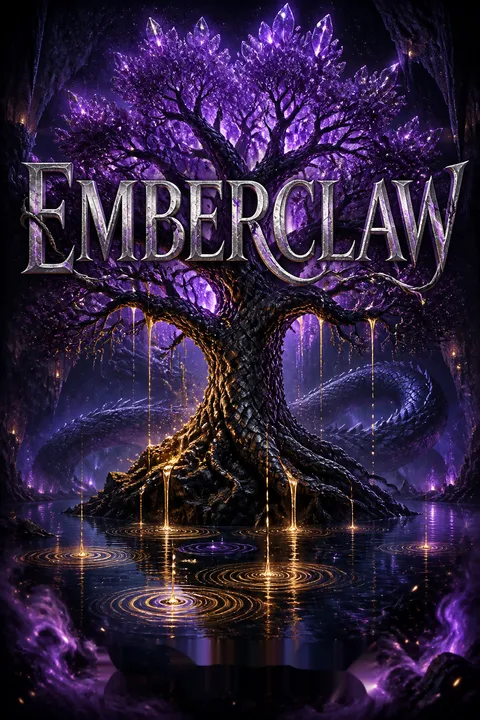


Plot Summary
The Chancellor's Convenient Death
Everen begins the story imprisoned in Vere Celene, the dragons’ island beyond the Veil, writing unsent apologies to Arcady in his thoughts. In Vatra, Magnes, Head Priest of the Order of the Dragons, smothers the dying Chancellor Yrsa after she discovers he has manipulated her for decades.
He presents her death as a peaceful illness, preserving his influence while Loc prepares for a new appointment. That same morning, Arcady Dalca reaches the Citadel University, wearing a manufactured identity and carrying a private purpose: to find proof that their grandsire, Barrow Eremia, was wrongly condemned as the Plaguebringer.
Yrsa was among those who condemned him. Her death removes the person Arcady most wanted to confront, leaving their search without its clearest target.
The novel opens with two forms of captivity: Everen is literally confined, while Arcady is enclosed by a false identity built to survive a hostile political order. Yrsa’s death makes institutional power feel intimate and physical. Magnes does not merely influence policy; he kills the person who might expose him, then controls the story of her death. Arcady’s arrival turns private grief into a research project, but the person they hoped to hold accountable is already beyond reach. The result is a mystery driven as much by missing testimony as by hidden evidence.
The Dreamer Stirs
From his cell, Everen’s visions reach beyond the present. He witnesses an ancient human and dragon bond, then sees human mages sever such bonds and use a luminous dragonstone tree to divide the worlds. A vast serpent sleeps in the storm between them, wounded and surrounded by the threat of waking. In the present, a tear opens over Vere Celene and smoky wraiths attack the dragon hunter Sidar.
Cassia, Everen’s sister, leads the first response with a small band of warriors. Their claws can destroy the creatures, but Sidar dies from her wounds, and her mate Pan’s grief spreads through the weyr. The danger has crossed into the dragons’ home, and Everen’s visions have given them only a little warning.
Everen’s vision turns the setting’s religious history into a material crime: human devotion to dragons is built over an older act of betrayal. The Dreamer gives that history an immediate consequence, since the wound in the serpent appears linked to the unstable boundary and the returning wraiths. Sidar’s death prevents this mythology from remaining abstract. The dragons can fight the creatures, but each victory costs a life they cannot replace easily. Cassia’s response also establishes a political reality: the surviving dragons are a small, strained community, not an invincible force waiting to reclaim the human world.
A Prince Without a Crown
After several further wraith attacks, Cassia pulls Everen from his prison and takes him before Queen Naccara. During a scrying at the pools, Everen and Cassia glimpse the Dreamer and learn that the wounded serpent must not wake.
Naccara accepts that Everen’s vision was true, but she still strips him of his title and orders him to fight the wraiths, scry for danger, and keep his findings secret. His return does not restore his place among the dragons.
At Glimmerhail, the dragons mourn Sidar, and Pan blames Everen for bringing the wraiths into their world. She invokes an ancient challenge. Everen defeats her and kills her when the challenge’s magic requires a death, leaving him victorious but further isolated from the community he hoped to save.
Everen’s release is conditional freedom. Naccara needs his visions, yet she refuses to let his insight become authority, revealing how threatened she feels by a son who may alter the future she has spent centuries governing. His loss of title recasts him from prophesied heir into a tool whose usefulness must be continually proved. Pan’s challenge makes grief politically dangerous: her accusation has emotional truth, even though Everen did not intend the wraiths’ return. Killing her ends the challenge but cannot settle that moral dispute. Everen learns that survival, obedience, and belonging are separate things.
A Scholarship with Strings
At the university, Arcady struggles to match classmates raised with tutors and access to magic, while secretly searching the censored archives for Barrow Eremia’s work. Professor Hayden’s alchemy lessons draw Arcady in, especially when the professor explains how metals combine and change.
Arcady’s new alchemy partner is Sorin, a reserved acolyte of the Order of the Dragons. Sorin has returned from months guarding the Veil in the forest because Magnes ordered her to watch Arcady and report on their unusual power.
At Chancellor Yrsa’s funeral wake, the Consul revives the University Trials, offering scholarships to the winners. Arcady enters because tuition threatens their new life. Meanwhile, the Marrick leader Larkin blackmails Arcady into finding Hayden’s research on an elixir that might help the Struck.
The university offers Arcady a genuine route toward knowledge, but every institution in this section carries a price. Their admission depends on a fabricated history, the scholarship competition turns danger into spectacle, and Larkin converts Arcady’s research into leverage. Sorin’s surveillance mirrors Arcady’s own performance of respectability, so both students move through the same halls concealing incompatible loyalties. The alchemy classroom briefly suggests a world in which careful inquiry can improve lives. Yet the elixir’s rumored promise also makes knowledge politically volatile: a cure for magic’s costs could redistribute power, not simply relieve suffering.
Fire Finds the Golden Thread
Arcady’s first weeks bring friends in Rahela Easel and the irrepressible Willem Ansel, but study cannot quiet recurring dreams of Everen. The dreams become real contact when Arcady wakes to find a faint golden connection between them. Everen is alive in Vere Celene, and their sleeping minds have reached across the Veil.
They exchange the missing truths of their earlier partnership: Everen admits he once intended to use Arcady’s magic to return home, while Arcady explains the harm his lies and burned drawings caused. They agree to a cautious truce. In the first Trial, Arcady cannot summon more than a weak flame until they call on Everen through the bond. His power shapes the fire into a dragon, and Arcady earns a place in the next round.
The renewed bond first appears as an involuntary emotional fact, not a clean reconciliation. Arcady and Everen can reach each other before either is ready to trust again, and the first Trial makes that intimacy useful without resolving its danger. Arcady’s success depends on accepting help while remaining aware that the same connection once enabled exploitation. Their truce is therefore a practice in bounded trust, not a return to innocence. The fire dragon also gives public form to a secret collaboration, though the witnesses see only an impressive student performance.
The Ward Gives Way
For the second Trial, Arcady and Sorin must defend themselves with a shared ward while Sorin attacks their opponents with an enchanted sword. Their partnership works: Sorin breaks through the opposing ward, and they advance. But the contest turns horrific elsewhere.
Lowe Balcil’s magic overwhelms him, he becomes a Starveling, and he attacks Willem and Edin Vayne before professors restrain him. Edin is injured saving Willem, and the tournament pauses under the shock. Sorin’s own warding practice has begun to unlock fragments of a forest escape she cannot remember.
During the duel, those fragments intensify, interrupting her attack. She regains control in time to win, but the experience convinces her that Magnes has tampered with her memories. Arcady sees her distress without yet knowing its source.
The Trial makes magic’s cost visible among people who usually assume wealth and training will protect them. Lowe’s transformation shatters the class myth that only the poor or Struck are vulnerable to becoming Starvelings. Sorin’s sudden memory fragments connect the public danger of uncontrolled magic to a private history of coercion. Her success requires bodily discipline, but discipline cannot keep buried knowledge buried forever. Arcady and Sorin win together before they become allies in any full sense, creating a practical bond that precedes the moral trust they will later need.
The Stag in the Snow
During the Spirit Moon break, Willem invites Arcady, Sorin, and Edin to his family’s hunting lodge. In the forest, they find a dying member of the Order of the Dragons, torn open by a creature that has left blight on the trees. Sorin gives the stranger a merciful death and secretly follows the tracks.
That night, a wraith possesses a stag and attacks Arcady and Everen, who has crossed back into the human world through their dream connection. Sorin kills the monster with an arrow and a dragonbone knife. Everen recognizes her as the guard who once threw a knife at him during the auction. Arcady realizes Sorin also stood at the barrow hill and in the forest clearing where Arcady became a Starveling. Sorin admits she has lived a hidden life.
The forest rearranges the relationships established at the university. Sorin’s composure is no longer merely shyness, and Everen’s return is no longer private dream contact. Their shared survival forces Arcady to see how much of Sorin’s apparent hostility was shaped by a concealed assignment. The dead Eye also makes the Order’s methods tangible: it has people watching dangerous places, but does not necessarily protect them. Sorin’s mercy killing, followed by her use of lethal skill against the stag, shows the unresolved distinction between violence imposed on her and violence she chooses to prevent harm.
The Head Priest Unmasked
Arcady and Everen restrain Sorin, then bargain instead of killing her. Their combined warding helps Sorin find and loosen the mental knot Magnes placed in her mind. Memories return: Magnes repeatedly found her when she tried to flee, erased her understanding of his identity, and forced her back into service.
Sorin names him as the one who trained and controlled her. Everen recognizes the name behind Magnes as Ammil, a dragon believed dead for centuries. Sorin also identifies Nalore Monastery, where the leylines meet in the Fangs, as the place Ammil has guarded.
In Vere Celene, Queen Naccara falls into a deep, unresponsive state after the wraith battles. Cassia takes up the Queen’s jewel as Regent, while keeping the revelation about Ammil from the dragons.
Sorin’s recovered memories change the story from a contest over hidden motives into a struggle against a specific architecture of control. Her escape is not simply a matter of courage; Magnes has repeatedly altered what she can know, making obedience feel like a choice. The alliance with Arcady and Everen gives her the conditions to examine that manipulation without surrendering her agency again. Meanwhile, Cassia’s regency parallels Sorin’s reclamation of selfhood: both women inherit authority in circumstances they did not choose. Cassia’s secrecy may stabilize her people, but it also repeats the political habit of deciding which truths others can bear.
A Bond Chosen Again
As Arcady and Everen investigate the tree, Sorin reveals that the University Trials are likely part of Ammil’s trap. Their research points toward Nalore Monastery, where the rivers and leylines converge. Arcady and Everen decide that their weakened, half-restored bond cannot meet what is coming.
They choose to complete it, exchanging blood and magic without the deception that marked their first bond. Their connection becomes whole, restoring their power and allowing Everen to carry Arcady into the sky in dragon form.
Before the final Trial, Sorin asks Arcady to help steal Professor Hayden’s research. In a concealed laboratory, they find Hayden’s work hidden in Barrow Eremia’s old lab, along with elixir made using scales from the dead dragon Glisten.
The completed bond is a choice made under pressure, but the narrative distinguishes that choice from the earlier bond formed without full knowledge. Arcady does not erase the history of being used; Everen must accept limits and make his power available rather than claim it. Their flight becomes an embodied test of trust, while the laboratory discovery complicates any simple celebration of their restored strength. The elixir’s ingredients expose how dragons remain material resources in a human system that once worshipped them. Barrow’s hidden laboratory also turns Arcady’s family history from distant accusation into an active inheritance.
The Seal Returns at Dawn
Before the final Trial, Sorin and Arcady plan to escape Vatra with help from Kelwyn, Arcady’s old friend and fence. But Larkin arrives first, demanding Hayden’s research and returning Arcady’s original seal.
Kelwyn reads the name Eremia on it and learns that Arcady hid their connection to the condemned Plaguebringer. He feels betrayed and refuses to shelter them again. Sorin admits the elixir can enhance magic but warns that it is addictive and still dangerous. With Ammil holding Everen and demanding Arcady’s presence, Arcady drinks the potion and turns back toward the Citadel.
In a dream, Everen has accepted Ammil’s invitation to cooperate, unaware that Ammil intends to use their bond. Arcady wakes to find him gone and hears Ammil’s threat: enter the final Trial or lose Everen.
Arcady’s original seal promises restoration, but its return instead breaks their closest human refuge. Kelwyn’s anger is not a rejection of Arcady’s vulnerability; it is a response to being kept outside the truth after years of providing shelter. The scene makes concealment costly even when it began as self-protection. Arcady’s decision to take the elixir is similarly compromised: it offers power but narrows judgment at the moment a clear mind matters most. Ammil’s threat exploits the pair’s deepest fear, while his apparent alliance with Everen reveals how readily hope can be weaponized.
The Trial Reaches Nalore
Arcady and Sorin enter the final Trial while the other students believe they are competing for medals. The elixir lets Arcady cross a violent river and burn through a wall of thorns, but the power makes them reckless. Their paths converge at Atrel, the ruined mountain village where Arcady once lived. At the last obstacle, Rahela is stranded on a collapsing bridge.
Arcady crawls out to help, and together they use magic to stabilize the gap long enough for all three to cross. Rahela takes the gold token and heads back toward Vatra. Arcady and Sorin continue to Nalore Monastery, where Edin appears with a dragonbone knife and reveals she serves Ammil. Sorin cannot stop the spell that takes control of her, and Ammil arrives in dragon form.
The final Trial turns academic achievement into a route through Arcady’s personal history and toward the political center of the danger. Atrel is not merely a waypoint: its ruins make Arcady’s past physically unavoidable. The bridge scene tests whether competition can give way to mutual aid, and Arcady’s rescue of Rahela costs time and carries real risk. Yet the elixir also exposes a flaw in Arcady’s confidence: power can postpone fear without improving judgment. At the monastery, Edin’s allegiance confirms that Ammil has embedded agents in the same institutions that promised students fair testing.
Ammil Repeats the Betrayal
Ammil binds Arcady and Everen to the dragonstone tree and explains that twelve years earlier he and Barrow tried to use it to heal the Dreamer. Professor Hayden and the three Chancellors were involved. The attempt failed, and the Strike followed; Ammil says Barrow was made the sole culprit because he was expendable.
Ammil now drains the Chancellors and the monks of Nalore to power a second attempt, killing the two remaining Chancellors in front of Arcady. He uses the human and dragon bond to direct the tree’s magic into the storm. Across the Veil, the Reek erupts and wraiths overwhelm Vere Celene’s defenses. Cassia leads the dragons into battle as their protective barrier fails and more of her people fall.
Ammil’s account overturns Arcady’s hope for a clean exoneration of their grandsire. Barrow was neither the sole villain condemned by history nor an innocent bystander; he participated in a dangerous attempt whose consequences were then concealed. That ambiguity is more painful than a simple revelation because it requires Arcady to distinguish love from denial. Ammil repeats the old violation in a new form, treating bodies, bonds, and institutions as fuel. His actions connect the plague, the dragonstone economy, and the collapsing Veil as consequences of a system that calls extraction necessary and hides who pays.
Two Souls Defy the Storm
Ammil’s spell draws Arcady and Everen into the storm, where he tries to close the Dreamer’s wound and bind the serpent to himself. His magic nearly dissolves their separate awareness, but Arcady reaches Everen through their shared bond and refuses to let him surrender. They join their power more completely than before, becoming a single spectral dragon in the storm.
Their challenge breaks Ammil’s control long enough for a wraith to strike him. When the cage around the corrupted wraiths begins to fail, Arcady and Everen release the creatures rather than preserve the weapon Ammil has made of them. The Dreamer turns Ammil and the rot into black stone and casts them away. The wraiths vanish from Vere Celene, and the Reek begins to settle.
The climax answers Ammil’s extractive logic with a form of power based on shared agency. Arcady and Everen do not defeat him by possessing a greater reserve of magic; they keep choosing each other when his spell tries to reduce them to instruments. Their fused awareness is dangerous, but it is not imposed in the way Ammil’s control is. Releasing the wraiths is the crucial reversal: the pair abandon the fantasy of mastering corruption and allow the Dreamer to contain it. The victory is therefore ethical as well as magical, though it does not erase the wounds left in either world.
The Cost of Returning
Back in the monastery, Sorin fights Ammil’s remaining hold over her, kills Edin during their struggle, and cuts Arcady and Everen free. Both survive, though the monastery’s monks have been drained to death.
Arcady learns that the Dreamer contains traces of Barrow, but its message is not absolution: the past cannot be undone, and Arcady must stop letting it poison what comes next. Arcady returns to Vatra, completes the Trial, and places second; Rahela wins first.
Professor Hayden privately confirms that Barrow asked her to testify against him, believing his conviction would begin a chain of events that could restore the dragons. Arcady later buries the original Eremia seal by their parents’ graves and chooses to live as Arcady Dalca. Sorin leaves the Order and stays in Atrel.
The aftermath refuses the comforting idea that revelation repairs history. Barrow’s role becomes more complex, but Arcady still has to live with the Strike’s deaths and the family name’s public meaning. Choosing to bury the seal is not denial so much as refusal to let inherited shame dictate every future action. Sorin’s decision to remain in Atrel similarly replaces a life organized around another person’s commands with a modest, self-authored beginning. The Trial’s scholarship gives Arcady a path back to study, but the real measure of resolution is that both characters choose where to go after coercion has ended.
Vere Celene Returns
At dawn, the Veil ripples instead of tearing, and Everen carries Arcady above the clouds to the Edge Isles. The island of Vere Celene emerges from the sea, with the carved dragon head of the Lady visible once more. Cassia leads the surviving dragons toward Vatra, not Queen Naccara, whose condition remains uncertain.
Loc has lost its Consul, and Professor Hayden’s wife, Sar Ansel, is poised to help form an emergency government. Humans and dragons now face the same unsettled political future. Arcady and Everen decide not to hide their bond; together they fly toward the city, making their partnership visible as the world changes. The final image is not peace secured, but two people choosing to meet the next danger side by side.
The return of Vere Celene resolves the book’s central separation without pretending that reunion is equivalent to reconciliation. Dragons reappear in a human world already destabilized by the loss of its rulers, and old fears will quickly become political claims. Cassia’s leadership offers a different possibility from Naccara’s isolation, but the future remains contingent. Arcady and Everen’s public flight is a deliberate counterimage to the hidden bonds and secret histories that shaped the old order. They cannot guarantee harmony, but they can make cooperation visible and therefore imaginable to those watching below.
Epilogue
Two years after Vere Celene returns, the dormant dragon eggs begin to hatch. Dozens of young dragons emerge into a community waiting to welcome them. The Twelfth Archivist, who has gathered the story from records, visions, and the participants themselves, closes the account as a personal history rather than a dry chronicle.
Everen has taken up the work of recording what happened, while Arcady has secretly begun writing their own part. Their story is not finished, but the birth of a new generation gives the reunited worlds a future beyond survival.
The eggs’ hatching supplies a concrete answer to the dragons’ fear of extinction, but it does not function as a guarantee that their political return will be peaceful. The new generation matters because it changes survival from a dwindling count into a responsibility shared across time. The Archivist’s framing also revises who has the right to narrate history: official records preserved power, while this account gathers intimate memories and disputed truths. Arcady’s decision to write their own version suggests that recovery includes authorship. The book ends with continuity, not closure, and places hope in lives that will inherit the consequences of the adults’ choices.
Analysis
Emberclaw makes the control of history inseparable from the control of bodies. The human government condemns Barrow Eremia as the Plaguebringer, suppresses his work, and turns dragon remains into a source of magical power. Ammil’s private scheme repeats that logic on a larger scale: he treats the Chancellors, monastery monks, Sorin, Arcady, and Everen as instruments in a project he calls repair. The novel’s central question is therefore not whether magic can heal, but who decides what may be spent in its name.
Arcady’s investigation begins as a pursuit of vindication. The evidence instead reveals a more difficult inheritance: Barrow participated in the attempt that preceded the Strike, yet also believed the experiment might restore a damaged world. Arcady must hold both facts without letting guilt become a substitute for understanding. Their decision to bury the original seal marks a shift from demanding that the past certify their identity to choosing how to live in its aftermath.
Sorin’s arc makes coercion psychologically specific. Magnes does not control her only through commands; he repeatedly erases the memory that would let her interpret her own resistance. Recovering that memory restores the conditions for choice, but does not instantly remove fear or dependence. Her later decision to stay and fight matters because she makes it with knowledge of the danger, not because obedience has been renamed courage.
Everen, meanwhile, must relinquish the fantasy that prophecy absolves him from responsibility. He and Arcady succeed when their bond becomes reciprocal and explicit, not when one partner yields to the other’s supposed destiny. The return of the dragons leaves the political conflict unresolved, but changes its terms. Humans and dragons must now negotiate openly, with the living evidence of old harm beside them. The ending’s hope rests not on perfect harmony, but on shared power, contested memory, and the possibility of making different choices.
Review Summary
Emberclaw received mostly positive reviews, with readers praising its world-building, character development, and satisfying conclusion to the Dragon Scales duology. Many found it an improvement over the first book, particularly enjoying the magical university setting and trials. The romance between Arcady and Everen was well-received, as was Sorin's character arc. Some criticism focused on pacing issues and a rushed ending. Overall, readers appreciated the unique take on dragons, queer representation, and the emotional depth of the story.
People Also Read






Characters
Arcady Eremia, living as Arcady Dalca
The self-made scholarArcady is a resourceful thief turned university student, driven by a need to understand the past and earn a place in a society that routinely excludes the poor and the Struck. Their wit and practiced charm help them enter privileged spaces, but secrecy is also their reflexive protection. Arcady is ambitious about magic and scholarship, not simply as a route to status but as a way to test the official story of their family. Their relationship with Everen exposes both their longing for intimacy and their fear of being used. Across the story, Arcady learns to accept help without surrendering judgment and to define a future that is not dictated by inherited blame.
Everen Emberclaw
The exiled dragon seerEveren is a young dragon raised under the weight of prophecy and the expectation that his existence must serve dragonkind. He is brave, proud, and accustomed to believing that sacrifice is the price of fulfilling his role. His time with Arcady challenges that certainty: he learns that care cannot be demanded as a duty, and that a human’s trust is not a resource to spend. His sensitivity to fate gives him insight, but it also tempts him to mistake a vision for permission. Everen’s central struggle is to remain accountable when fear and destiny offer him excuses to act alone.
Sorin
The guarded priest-warriorSorin is an acolyte of the Order of the Dragons whose reserved manner conceals years of discipline, combat training, and uncertainty about her faith. She has learned to measure safety through obedience and to make herself useful before asking what she wants. Her time away from the Citadel gives her room to imagine a life outside the Order, while study and friendship reveal capacities beyond violence. Sorin is observant, practical, and slow to trust, but not devoid of tenderness. Her care for her wyvern Jaculus and her growing curiosity about Arcady show the person her training has not erased.
Magnes
The masked Head PriestMagnes leads the Order of the Dragons and holds unusual influence over Loc’s government. He presents himself as a disciplined guardian of the Veil, skilled at making his authority seem necessary to public safety. His attention to Sorin combines approval with control, rewarding her service while shaping the limits of what she can know. Magnes is patient, strategic, and adept at turning institutions into instruments of private purpose. His certainty that he understands the world’s dangers makes him especially dangerous to those who depend on him for protection.
Cassia
The heir who must leadCassia is Everen’s sister and the heir to Vere Celene’s throne. She is a capable scryer and a practical leader, accustomed to balancing affection for her brother against the duties of succession. Her visions let her experience human lives from within, giving her a more complicated understanding of the people her mother distrusts. Cassia values stability, but her loyalty does not make her unquestioning. She must learn to lead a frightened, diminished community without treating secrecy as the only form of protection.
Queen Naccara
The embattled dragon queenNaccara rules Vere Celene with a fierce commitment to dragon survival. Her long reign has been shaped by loss, scarcity, and fear of repeating the disasters associated with the previous last male dragon. She is a formidable mother but a guarded one, often placing political duty ahead of emotional closeness. Her distrust of humans comes from a history she considers existential, though it narrows the possibilities she can imagine for her people.
Kelwyn
Arcady's steadfast refugeKelwyn owns the Last Golden antique shop and has long provided Arcady with food, shelter, practical advice, and a market for stolen goods. He is warm without being sentimental, expressing care through meals, small repairs, and a willingness to help. His kindness has boundaries: he expects trust to be mutual, even when he gives Arcady room to keep secrets. Kelwyn represents the ordinary human ties Arcady risks while pursuing dangerous truths.
Larkin Nash
The Marricks' hard bargainLarkin leads the Marricks, a criminal gang whose thefts also support Struck communities. She is clever, forceful, and willing to use leverage when she believes a cause cannot wait. Her concern for the Struck is real, but her methods can blur the line between solidarity and control. Larkin and Arcady share a history of collaboration, betrayal, and practical affection, making their conflicts more painful than a simple contest between allies and enemies.
Wren
The honest art forgerWren is a former Marrick and skilled art forger who communicates through Trade after surviving the Strike. He carries both the vulnerability of a Struck person and the careful instincts of someone who has lived by deception. Wren treats Arcady as family even when he must deliver Larkin’s demands. His compassion is practical: he wants possibilities for people like himself, but he understands how easily hope can be exploited.
Professor Hayden
The searching alchemistHayden is a gifted alchemist and one of Arcady’s instructors, known for making difficult principles vivid and treating experimentation as a discipline of patience. She is a parent, a scholar, and a person with a complicated history in Loc’s political upheavals. Her work on magical transformation draws Arcady’s intellectual admiration even as it raises uncomfortable questions. Hayden’s professional integrity is tested by the pressure to keep dangerous research hidden.
Rahela Easel
The generous competitorRahela is a well-connected second-year student whose warmth makes her a natural bridge between classmates. She is curious about magic and eager to pursue knowledge beyond Loc, especially through her family ties in Myria. Beneath her sociability is a serious, competitive student who works hard and can summon courage even when frightened. Her friendship with Arcady offers a rare connection not founded on blackmail or duty.
Willem Ansel
The restless heirWillem is a wealthy student, the child of Professor Hayden and diplomat Sar Ansel. He is charming, impulsive, and drawn to drink, games, and whatever promises to break the monotony of inherited privilege. His easy confidence can disguise insecurity about living up to his brilliant parents. Willem’s friendships matter deeply to him, though he sometimes needs others to show him where his carelessness has caused harm.
Edin Vayne
The polished contenderEdin is a talented senior student with the composure and confidence of someone accustomed to achievement. Professors recognize her ability, and her family’s position gives her access to a world Arcady has had to enter by artifice. Yet Edin is not only a polished competitor; she acts decisively when others are in danger and keeps private pain behind a controlled exterior. Her ambition is shaped by both privilege and personal estrangement.
Miligrist
The fading dragon seerMiligrist is Vere Celene’s aged Seer and one of the few dragons who remembers life in the human world. She has spent much of her existence recording visions and trying to interpret prophecies without mistaking them for certainties. Her fading ability to see the future unsettles her sense of purpose. She serves as a source of history and counsel, but her own past choices show the limits of even careful custodianship.
Pan
The grieving dragon warriorPan is a seasoned dragon warrior and the mate of Sidar. Her fierce devotion makes loss feel like a force that must find a target. She is brave, direct, and unwilling to disguise her anger, even when grief pushes her toward a destructive choice.
Jaculus
Sorin's loyal wyvernJaculus is Sorin’s small green wyvern, rescued and raised by her. He is quick, affectionate, and alert to her moods, often staying close when she feels most alone. His loyalty gives Sorin a relationship built on care rather than command.
Plot Devices
The Veil
The boundary between worldsThe Veil separates the human world, the Lumet, from Vere Celene, the dragons’ home. It can open into a dangerous storm, and tears in it allow wraiths to cross. The boundary is also tied to the balance of magic, the dragonstone tree, and the sleeping Dreamer. Everen’s first crossing and later return depend on his bond with Arcady, making the Veil both a physical barrier and a measure of their connection.
The Dragonstone Bond
Shared magic and consequenceA human seal made from dragonstone channels magical ability and records identity. Arcady’s connection with Everen allows power and emotion to pass between them, but touch can cause pain and the bond can alter how much magic each can use. Their connection also reaches across the Veil through dreams. Its changing strength makes intimacy inseparable from risk, and it ultimately gives them a way to act together where neither could succeed alone.
The University Trials
Competition concealing a trapThe revived Trials test students first on unfamiliar magic, then on a cooperative ward-and-sword duel, and finally on a dangerous journey through natural obstacles. The scholarship gives Arcady a reason to enter despite the risks, while the public competition distracts Loc during a political transition. The Trials also reveal the students’ abilities and relationships under pressure. Their route ultimately leads toward Nalore Monastery, where the contest’s apparent purpose gives way to a much larger scheme.
The Elixir
Power with a hidden costProfessor Hayden’s alchemical preparation temporarily heightens magical focus and reduces the immediate cost of spellcasting. Magnes gives it to Sorin to improve her performance in the Trials, and Arcady later takes it when facing an urgent threat. Its effects blur the user’s sense of limits, and it contains dangerous ingredients, including Pollen and dragon material. The elixir therefore embodies the story’s central tension between healing magic’s harms and creating new forms of dependence.
Dragon Scales Series
Download PDF
Download EPUB
.epub digital book format is ideal for reading ebooks on phones, tablets, and e-readers.








