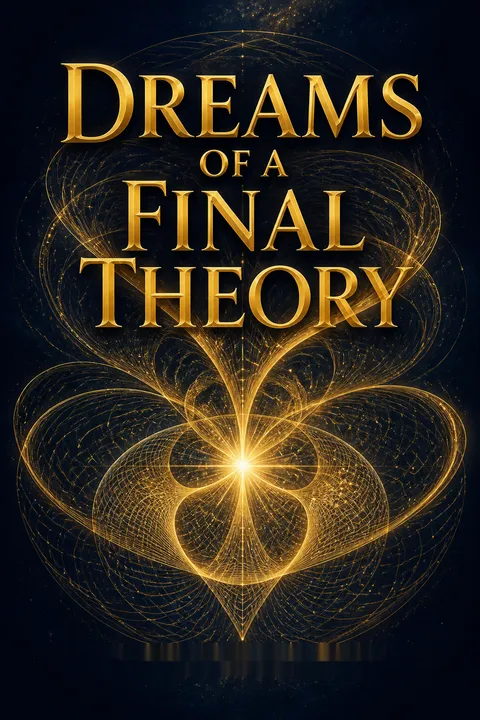


Key Takeaways
Follow explanations toward fundamental laws, without expecting science to end
A search for convergence. Weinberg calls a final theory the set of deepest physical laws from which other universal principles can, in principle, be explained. It is not a master formula for predicting every event, nor a finish line for research. The idea grows out of a long history: ancient thinkers proposed basic substances, but modern science took shape when Galileo, Kepler, and Newton made quantitative laws central to explanation.
A narrower kind of finality. Newton’s laws connected falling objects with planetary motion and made a comprehensive physical explanation seem possible. Yet a theory can explain why a phenomenon must behave as it does even when no one can calculate every detail. A final theory would end one particular chain of explanation, not the investigation of complex phenomena.
The distinction between a basic explanation and a complete prediction is essential. A map of fundamental rules can explain why a system is constrained without telling anyone how to calculate every consequence. That distinction also keeps the ambition from becoming grandiose: physics may seek the deepest laws without claiming to replace every other discipline. The open question is whether the explanatory chain truly converges, or whether each apparently fundamental account will reveal a deeper layer. Weinberg treats convergence as a research hope grounded in past progress, not as a demonstrated fact.
Use reductionism to map nature, not to dictate every scientist's work
A chain in a piece of chalk. In Thomas Huxley’s famous lecture, chalk was evidence of ancient seas and tiny fossil organisms. Weinberg follows the material further: chalk is calcium carbonate; its chemical properties depend on atoms and electrons; those in turn depend on quantum mechanics and the elementary-particle framework. The point is not that every question about chalk can be answered by studying particles, but that the levels of explanation connect.
Nature, not a work plan. Weinberg’s reductionism is the view that higher-level principles depend on deeper ones, ultimately physical laws. It is not a command that chemists abandon chemistry or biologists stop studying organisms. A physicist may describe the foundations, while specialists use concepts suited to the questions they can actually solve.
This argument separates two claims that are often mistakenly fused: that one level depends on another, and that the lower level is the only worthwhile place to work. The first is a claim about how nature is organized; the second is a decision about research, skill, and purpose. The chalk example makes the dependency vivid because the same object invites geological, biological, chemical, and physical questions. Its weakness as a general argument is that a chain of dependence does not by itself show which level will provide the most useful explanation for a particular problem.
Separate universal laws from historical accidents and emergent patterns
Laws do not write history. The laws of physics may explain how calcium, carbon, and oxygen behave, but the existence of chalk on Earth also depends on a particular planet, ancient seas, and organisms that built shells. Likewise, the laws governing evolution do not explain why a particular comet struck Earth when it did. Weinberg argues that scientific explanation must distinguish repeatable features of nature from the contingent history that produced a specific world.
Higher levels still matter. Temperature and entropy, central concepts in thermodynamics, arise from the collective behavior of many particles. Their foundations can be described statistically, yet they remain useful concepts in their own right. Complexity may make exact calculation impossible, and chaos can amplify tiny differences in initial conditions. Fundamental laws therefore do not erase the need for higher-level science.
The distinction between law and history guards against two opposite errors. One is to treat every observed arrangement as inevitable; the other is to conclude that a contingent history has no scientific explanation. A useful account can identify the rules of change while admitting that initial conditions shaped the outcome. Emergent concepts add another layer: they can be grounded in more basic processes without becoming dispensable. The practical test is whether a lower-level description clarifies the question at hand. If it does not, using it alone may obscure rather than deepen understanding.
Use quantum mechanics for its predictions, not as a shortcut to mysticism
A different description of nature. Quantum mechanics represents a system with a wave function, a mathematical object used to calculate probabilities for measurement outcomes. Heisenberg’s uncertainty principle says that certain pairs of properties, such as position and momentum, cannot both be specified with unlimited precision. In the Copenhagen account Weinberg describes, the wave function changes continuously and predictably between measurements, while measurement outcomes are probabilistic.
Interpretation is not instruction. Physicists can use quantum mechanics successfully without agreeing on what a measurement means or why probabilities arise. Weinberg discusses competing interpretations, including the idea that quantum histories branch, but finds no reason to treat quantum uncertainty as a special opening for human free will or spiritual intervention. The interpretive problem remains real, especially when the universe itself is the system under study.
Quantum theory is a reminder that predictive success and conceptual clarity do not always arrive together. Its mathematics can be precise even when ordinary language struggles to describe what the mathematics represents. That gap makes the theory easy to recruit for claims about consciousness or spirituality that its calculations do not establish. A disciplined reader can acknowledge the unresolved measurement problem without treating every interpretation as equally supported. The useful boundary is clear: quantum mechanics changes what physics can predict, but it does not automatically settle questions about agency, meaning, or the mind.
Judge theories through the exchange between evidence and theory
An anomaly needs interpretation. General relativity explained Mercury’s already-known extra orbital precession of 43 seconds per century beyond Newtonian predictions. Weinberg argues that this retrodiction was stronger evidence than the celebrated 1919 eclipse measurement of light bending, whose analysis faced substantial experimental uncertainties. Data do not arrive labeled as decisive: theories help identify which discrepancies matter, while experiments constrain which theories survive.
Confidence can wobble. The electroweak theory gained attention after Gerard’t Hooft showed that its troubling infinities could be handled consistently, before new experimental support arrived. Later, measurements of light through bismuth seemed to conflict with a prediction. A different experiment at Stanford supported the predicted effect, and subsequent work strengthened confidence. The history is not a simple contest in which predictions always win; it is a continuing negotiation among evidence, calculation, and theoretical coherence.
This account offers a more realistic picture of scientific judgment than the slogan that experiments simply prove or disprove theories. Instruments require calibration, results need interpretation, and theory shapes the search for relevant effects. That does not make evidence subjective in the sense of being arbitrary. It means that reliability is built through independent checks and competing methods. Weinberg’s emphasis on theoretical coherence is persuasive, but it also calls for humility: a beautiful explanation can focus attention on the right anomaly, yet it can also encourage researchers to discount inconvenient measurements for too long.
Let beauty guide the search, but require evidence to keep it honest
Beauty means constraint. For Weinberg, a beautiful physical theory is not merely elegant notation. It combines simplicity of ideas with a sense of inevitability: its basic principles leave little room for arbitrary adjustment. Symmetry, the idea that laws remain unchanged under specified changes of viewpoint, gives theories this rigidity. Einstein’s general relativity looked compelling because its core account of gravity as space-time curvature tightly constrained what the theory could say.
Aesthetic judgment can mislead. Mathematicians developed curved-space geometry long before Einstein used it to describe gravity, and group theory later helped organize particle families. Such cases suggest that mathematical structure can anticipate physics. But beauty is no guarantee: Kepler’s elegant attempt to relate planetary orbits to geometric solids failed, and the genetic code proved messier than many researchers expected. The search needs taste, but nature gets the final vote.
Aesthetic judgment functions here less like decoration than like a heuristic for compression: a theory that explains many results with few arbitrary choices is worth serious attention. That makes beauty a practical guide when experiments are scarce. Yet the guide is historically trained, not infallible. Physicists may learn to recognize structures that have worked before, then mistake familiarity for necessity. The strongest use of beauty is therefore selective: it helps generate and compare theories, while independent evidence and the possibility of revision prevent aesthetic conviction from becoming a substitute for testing.
Do not confuse what can be observed with everything that is real
Evidence depends on theory. In the late nineteenth century, Walter Kaufmann measured cathode rays more accurately than J. J. Thomson, but interpreted them only as a ratio between electric charge and mass. Thomson inferred a new particle, the electron, and pursued further tests that strengthened the claim. Weinberg uses the contrast to criticize positivism, the demand that scientific theories concern themselves only with directly observable quantities.
Inference can reach the unseen. Atoms, quantum wave functions, and quarks are not all observed in the same direct way as a visible mark on a detector. Their credibility comes from the network of explanations and successful tests in which they participate. This does not mean any unobservable idea deserves belief. The connectedness of science provides a filter: a claim that cannot fit with established physical knowledge carries a much heavier burden of evidence.
The important lesson is not that observation is irrelevant, but that observation is never interpretation-free. Instruments produce traces; scientists use established models to decide what those traces indicate. This makes realism more sophisticated than a simple belief in invisible entities: a proposed entity earns credibility by doing explanatory work across many lines of evidence. The same logic can become conservative, however. A tightly connected framework may screen out genuine anomalies if its boundaries are treated as permanent. Good scientific judgment must preserve both the value of coherence and the possibility that a stubborn observation signals a real break.
Treat string theory as a candidate, not a discovered final answer
A possible bridge to gravity. String theory began as an attempt to understand strong nuclear interactions. Its equations unexpectedly included a massless particle with the properties of a graviton, the proposed carrier of gravitational effects. This suggested that strings might provide a quantum framework for gravity and avoid the infinities that trouble earlier attempts. The theory’s strings are tiny extended objects whose different vibration patterns would appear as different particle species.
Promise without a decisive test. By the early 1990s, string theory had produced many mathematically consistent possibilities, not one confirmed description of our universe. It had no detailed prediction that could decisively test it, and its characteristic energies were far beyond existing accelerators. The anthropic principle, which explains observed conditions by noting that observers can exist only where conditions permit life, offered one possible response to apparent fine-tuning, but Weinberg regarded that reasoning as unsatisfying and speculative.
String theory illustrates how a research program can be intellectually fertile before it becomes empirically decisive. Its mathematical structure may reveal constraints that older theories could not accommodate, especially when gravity and quantum mechanics must coexist. But mathematical consistency is not the same as evidence that a theory describes nature. The anthropic principle adds a selection effect: observers necessarily find themselves in a universe compatible with observers. That observation is logically useful, but without a clear account of the range and distribution of possible universes, it explains less than it may appear to.
Expect fundamental laws to explain nature, not to assign humans a cosmic role
Final is not ultimate. A final physical theory might be so logically constrained that changing one of its constants would make the theory inconsistent. Weinberg calls this kind of status logical isolation. Even then, the theory might not explain why there is a universe or why these laws exist at all. Nor would it end science: questions about turbulence, biology, galaxies, and the brain would remain.
No moral message in the equations. Weinberg argues that the steady demystification of the heavens and of life has offered no evidence for an interested God, a special human status, or a built-in moral code. The laws of nature may be beautiful, but beauty is not proof of purpose. The book’s view is austere: people may create purposes in human life, but fundamental physics does not promise one.
The argument distinguishes explanation from significance. A physical account can make the world more intelligible without telling people what to value, and that boundary can be clarifying rather than nihilistic. It also prevents a common category error: treating fine-tuned conditions or mathematical elegance as direct evidence of intention. Still, the inference from scientific silence to a godless worldview is not compulsory. It depends on what kinds of evidence are considered relevant to religious belief. The strongest conclusion is narrower: physics, by itself, does not establish that humanity occupies a privileged place in nature.
Defend costly experiments by naming the question only they can answer
The collider had a scientific target. Weinberg’s case for the Superconducting Super Collider centered on electroweak symmetry breaking: the unexplained reason that the weak and electromagnetic forces, despite a shared underlying framework, appear so different. The planned Texas machine would collide protons at energies intended to reveal a Higgs particle or evidence of new strong forces. Its projected tunnel was about 53 miles long, and the estimated cost exceeded $8 billion.
Science also depends on public choices. The project faced disputes over expense, regional benefit, and competing scientific priorities. The House of Representatives terminated it in 1993, after roughly $2 billion had been spent, despite work already underway. Weinberg saw the cancellation as more than a lost instrument: it threatened the capacity to pursue fundamental questions. His broader point is that the value of basic research cannot always be measured by immediate applications, even though those applications may emerge unpredictably.
Large instruments turn abstract curiosity into a public argument about opportunity cost. A strong case must therefore explain both what the machine can resolve and why the answer matters, rather than relying on prestige or vague promises of future benefits. The SSC story also shows that scientific merit does not decide funding alone; institutions weigh budgets, jobs, geography, and political timing. Weinberg is right that research can produce value not visible in advance, but that uncertainty cuts both ways. Public support is more defensible when projects state their goals, alternatives, and risks plainly.
Analysis
Weinberg’s deepest contribution is not a prediction about which equation will finish physics. It is a picture of scientific explanation as an ordered but unfinished enterprise. Explanations connect levels of nature, while history, complexity, and emergence prevent those connections from becoming a fantasy of total calculation. That distinction gives the book its balance: reductionism is a claim about dependence, not a proposal to abolish chemistry, biology, or the human sciences.
The strongest parts are the historical cases. Mercury’s orbit, the contested eclipse measurements, and the electroweak theory show that evidence never interprets itself. Theory identifies what may matter; experiment can embarrass theory; and standards of coherence affect which claims researchers pursue. Weinberg’s account is especially valuable because it makes scientific judgment visible without collapsing it into either mechanical rule-following or social fashion.
His defense of theoretical beauty is compelling but should be read as a disciplined preference, not a truth detector. Simplicity and rigidity help distinguish explanatory structure from a list of facts, yet the history he gives also shows that elegant expectations can fail. Aesthetic confidence works best when institutions preserve routes for disconfirmation, replication, and competing approaches.
The book’s most debatable commitment is that the explanatory arrows ultimately converge on fundamental physics. It is plausible that chemical and biological regularities depend on physical processes. But dependence does not settle whether explanations at higher levels are reducible in every important sense, or whether higher-level concepts capture causal organization that fundamental laws alone do not illuminate. Weinberg acknowledges much of this practical complexity, though his metaphysical confidence remains stronger than his operational argument.
Finally, the SSC debate makes the philosophy concrete. A theory of nature depends not only on intellectual ingenuity but also on collective decisions about instruments, money, and patience. The unfinished project becomes part of the book’s central uncertainty: nature may have a final theory, but human beings must decide whether to keep asking for it.
Review Summary
Dreams of a Final Theory receives mixed reviews, with many praising Weinberg's clear explanations of complex physics concepts and his passionate argument for a unified theory. Readers appreciate his insights into the history and philosophy of science, as well as his critique of philosophy's role in physics. Some find the book outdated or challenging for non-experts. Critics note Weinberg's dismissal of religion and philosophy, while others value his honesty and reductionist approach. The book's advocacy for the Super Conducting Super Collider project adds historical interest.
People Also Read







Glossary
final theory
deepest explanatory physical lawsWeinberg’s name for the most fundamental physical principles, from which other universal physical laws could be explained. A final theory would end the search for deeper laws of this kind, not scientific research as a whole. It would not necessarily let scientists calculate every complicated event or explain historical accidents.
reductionism
nature’s hierarchy of explanationsIn Weinberg’s use, the view that scientific principles depend on deeper principles, with physical laws providing the most fundamental known explanatory level. It is not a prescription that every scientist should work on particles, or that the concepts and methods of chemistry, biology, and other fields should be abandoned.
wave function
quantum state descriptionA mathematical description of a quantum system. Its values allow physicists to calculate probabilities for possible measurement outcomes, such as finding a particle in a particular location. In the account discussed by Weinberg, the wave function evolves continuously between measurements, while measurement results are probabilistic.
complementarity
limits on simultaneous descriptionsA principle associated with Niels Bohr stating that some ways of describing or measuring a quantum system exclude other descriptions. The uncertainty relation between position and momentum is one example: a measurement that establishes one quantity precisely limits what can be known about the other.
spontaneous symmetry breaking
symmetric laws, asymmetric outcomesA situation in which the equations governing a system have a symmetry, but the particular state realized by the system does not display that symmetry. A magnet can point in one direction even though the underlying laws do not privilege that direction. Weinberg uses this idea to explain why weak and electromagnetic forces appear different.
renormalizable
infinities absorbed into constantsA property of certain quantum field theories in which mathematical infinities arising in calculations can be canceled by redefining a limited number of quantities, such as particle masses and charges. In Weinberg’s account, renormalizability helped make quantum electrodynamics and the standard model mathematically useful, though he notes that its role changes if these theories are only low-energy approximations.
standard model
theory of three fundamental forcesThe framework Weinberg describes for elementary particles and the electromagnetic, weak, and strong interactions. It unifies the weak and electromagnetic forces and describes the strong force through quarks and gluons. In the book’s account, it does not include gravity and leaves important features, including the mechanism of electroweak symmetry breaking, unexplained.
string theory
fundamental vibrating stringsA proposed framework in which elementary particles appear as different vibration states of tiny one-dimensional strings. It drew interest because its mathematics includes a particle with the properties of a graviton and appeared to avoid some infinities in quantum gravity. Weinberg presents it as a possible route to a final theory, not as an experimentally established account of nature.
anthropic principle
observer-based selection effectThe reasoning that observers can find themselves only in conditions compatible with their existence. Weinberg discusses it as a possible way to understand why some physical constants appear suitable for life, especially if many regions or universes have different conditions. He regards the idea as speculative and insufficient without a clear account of those possible conditions.
FAQ
What's Dreams of a Final Theory about?
- Exploration of fundamental laws: The book delves into the quest for a "final theory" in physics, aiming to unify all fundamental forces and particles.
- Interplay of science and philosophy: Weinberg examines how philosophical ideas have influenced scientific thought, particularly in the search for beauty and simplicity in physical laws.
- Personal reflections: The author shares his journey as a physicist, highlighting the challenges and triumphs in understanding the universe.
Why should I read Dreams of a Final Theory?
- Accessible insights: Weinberg writes in a way that is comprehensible to those without a scientific background, making complex ideas approachable.
- Unique perspective: As a Nobel laureate, Weinberg offers valuable insights into the scientific process and the nature of theoretical physics.
- Engaging writing style: The book combines personal anecdotes with scientific discourse, keeping readers engaged and informed.
What are the key takeaways of Dreams of a Final Theory?
- Beauty in science: Weinberg emphasizes that beautiful theories often reflect deeper truths about nature and are more likely to be correct.
- Interconnectedness of principles: The book illustrates how various scientific concepts are linked, suggesting that understanding one area can illuminate others.
- Role of experimentation: Weinberg highlights the importance of experimental validation in confirming or refuting theoretical predictions.
What are the best quotes from Dreams of a Final Theory and what do they mean?
- “The dream of a final theory inspires much of today’s work in high-energy physics.”: This quote encapsulates the central theme of the book, emphasizing the ongoing quest for a comprehensive understanding of the universe.
- “The beauty of present theories is an anticipation, a premonition, of the beauty of the final theory.”: Weinberg believes that the elegance of current theories hints at a deeper, more beautiful truth waiting to be discovered.
- “The laws of nature are as impersonal and as free of human values as the rules of arithmetic.”: This underscores the objective nature of scientific inquiry, independent of human emotions or moral considerations.
What is the significance of a "final theory" in physics according to Dreams of a Final Theory?
- Ultimate unification: A final theory aims to unify all fundamental forces and particles, providing a comprehensive framework for understanding the universe.
- Resolution of current impasses: It addresses the limitations of existing theories, which often fail to explain certain phenomena.
- Philosophical implications: The concept raises questions about the nature of reality and our place within it, prompting deeper philosophical inquiry.
How does Steven Weinberg define "beauty" in scientific theories in Dreams of a Final Theory?
- Aesthetic appeal: Beautiful theories exhibit simplicity and elegance, often leading to more profound insights into nature.
- Logical completeness: A beautiful theory is logically consistent and inevitable, where every part fits together seamlessly.
- Guiding principle: The sense of beauty in a theory can guide scientists in their research, helping them to identify promising avenues of inquiry.
What role does experimental evidence play in Dreams of a Final Theory?
- Validation of theories: Experimental evidence is crucial for confirming or refuting theoretical predictions, ensuring that science remains grounded in reality.
- Historical examples: Weinberg provides anecdotes, such as the eclipse expeditions testing general relativity, to illustrate the interplay between theory and experiment.
- Challenges of interpretation: Experimental results can sometimes be ambiguous, requiring careful interpretation and sometimes leading to conflicting conclusions.
What challenges does Steven Weinberg identify in the search for a final theory in Dreams of a Final Theory?
- Complexity of nature: The universe's complexity makes it difficult to formulate a single, unified theory that accounts for all phenomena.
- Experimental limitations: The search often requires experiments at energy levels beyond current technological capabilities.
- Philosophical debates: The concept raises philosophical questions about the nature of scientific inquiry and the limits of human understanding.
How does Steven Weinberg view the relationship between science and philosophy in Dreams of a Final Theory?
- Interconnected disciplines: Physics and philosophy are deeply intertwined, as both seek to understand the fundamental nature of reality.
- Critique of reductionism: While reductionism has merits, it can oversimplify complex phenomena, and Weinberg encourages a balanced approach.
- Encouragement of dialogue: Ongoing dialogue between physicists and philosophers can enrich our understanding of both fields.
What is the significance of the Super Collider in Dreams of a Final Theory?
- Pursuit of high-energy physics: The Super Collider represents a major investment in exploring fundamental questions about particle interactions.
- Symbol of scientific ambition: It symbolizes the ambition to push the boundaries of knowledge and seek answers to unresolved questions in particle physics.
- Impact on future discoveries: Weinberg argues that it could lead to breakthroughs in understanding electroweak symmetry breaking and force unification.
How does Steven Weinberg address the concept of God in Dreams of a Final Theory?
- Impersonal nature of laws: The laws of nature are impersonal and do not imply the existence of an interested God.
- Critique of religious interpretations: Weinberg critiques attributing divine purpose to natural laws, emphasizing empirical evidence over theological implications.
- Existential reflections: Understanding the universe may lead to a sense of insignificance, posing emotional challenges but also offering clarity.
What does Steven Weinberg mean by "the unreasonable effectiveness of mathematics" in Dreams of a Final Theory?
- Mathematics in physics: Mathematics describes physical phenomena with surprising accuracy, often predicting outcomes disconnected from empirical reality.
- Historical context: Mathematical concepts have found applications in physics, illustrating the deep connection between the two fields.
- Philosophical implications: This effectiveness raises questions about the nature of mathematical truths and their relevance to the physical world.
About the Author

Download PDF
Download EPUB
.epub digital book format is ideal for reading ebooks on phones, tablets, and e-readers.








