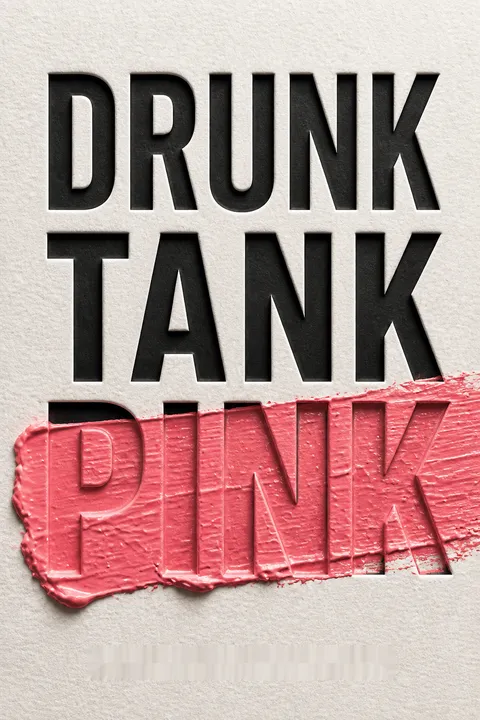


Key Takeaways
Treat surroundings as active ingredients, not passive background.
Small cues can steer us. In the book’s opening case, researcher Alexander Schauss reported that men who stared at bright pink briefly showed less strength than after looking at blue. The effect inspired pink holding cells, but later studies found mixed support, a useful warning against treating a striking result as settled fact. The larger idea is more durable: cues are features of the mental, social, or physical environment that can shift thought and behavior without deliberate attention.
Three worlds shape conduct. Names and symbols operate inside the mind, other people shape the social space between us, and colors, rooms, and weather form the world around us. These influences are not destiny, but they can tilt ordinary judgments and actions. Once noticed, some can be used deliberately, while others can be redesigned or treated with skepticism.
What's striking is the book's insistence that context is not scenery. A pink room, a name on a résumé, or the presence of watching eyes can become part of the decision itself. That perspective encourages a practical question: what features of the setting are quietly doing work? It also invites restraint. A cue can matter without being a universal lever, and a memorable story can outgrow the quality of its evidence. The strongest use of this idea is not to engineer people as if they were machines, but to inspect conditions before blaming character.
Choose names with care, because strangers use them as evidence.
Names carry social baggage. A name can suggest age, ethnicity, or family background before anyone meets its bearer. In a résumé experiment using applications with identical qualifications, fictional applicants with white-associated names received callbacks on 10 percent of applications, compared with 6.5 percent for applicants with Black-associated names. Better qualifications also helped the first group more. The result shows how a seemingly small cue can open or narrow the first gate to opportunity.
Ease also shapes impressions. Researchers who examined lawyers found that, among those with four to eight years of experience, 12 percent with easily pronounced names were partners, compared with 4 percent with harder-to-pronounce names. The study does not prove that pronunciation alone caused promotions, and a name cannot determine a life. It does suggest that decision-makers may mistake familiarity or ease for competence when evidence is incomplete.
Names are unusually consequential because they are both personal and public: a person carries one, while institutions repeatedly use it to sort applications, records, and introductions. The findings make a case for auditing selection procedures, especially where decision-makers see only a résumé or form. They also complicate advice to parents to pick the most conventional option. A name can smooth one interaction while carrying other costs, and the burden of bias belongs to the person making the judgment, not to the person whose name triggers it.
Use labels cautiously: they can redraw what people think they see.
Categories sharpen perception. English uses one common word, blue, for light and dark shades; Russian distinguishes them with separate terms. In color-matching experiments, Russian speakers were faster when the options crossed that linguistic boundary. The label did not change the color, but it made a distinction easier to notice.
Social labels can distort evidence. In a study, students judged the same ambiguous fourth-grader differently after hearing that her family was wealthy or working class. The favorable label led them to emphasize her strong answers; the unfavorable one made mistakes seem more representative. In another experiment, wording a car collision as a smash rather than a hit made people estimate higher speeds, and some later recalled broken glass that was never shown. Labels help organize complexity, but they can also smuggle expectations into perception, memory, and evaluation.
Labels are useful because people cannot process every detail of a complex world from scratch. Their danger lies in the false confidence they create: once a category is supplied, ambiguous evidence can seem clearer than it is. This matters in classrooms, interviews, and legal settings, where observers often encounter incomplete information. A careful evaluator can separate the observation from its interpretation: what was actually seen, and what did the label encourage the observer to infer? That small pause does not eliminate bias, but it makes the hidden step more visible.
Symbols quietly import their associations into the next decision.
Meaning travels through symbols. A swastika is a simple geometric design, but its adoption by the Nazi Party gave it associations powerful enough to provoke anger decades later. Symbols acquire their force from what people connect them to, and they can activate those connections even when attention is elsewhere. In one experiment, people briefly exposed to an Apple logo generated more creative uses for ordinary objects than people exposed to an IBM logo.
Money shows the double edge. In experiments described in the book, reminders of money encouraged people to work independently, but also made them less likely to help or donate. Counting bills before a task reduced reported physical and social pain. National flags and religious symbols likewise prompted different responses depending on a person's identity and existing associations. A symbol is not a fixed command: the same emblem can signal solidarity, threat, virtue, or exclusion to different people.
Symbols are efficient because they compress a large history into a quick visual cue. That efficiency is also why their effects can be hard to notice: a person may respond to the meaning without consciously recalling the image. The practical implication is to ask what a symbol represents to the people who encounter it, rather than assuming its meaning is universal. This is especially important in public institutions and organizations, where one group's emblem of belonging may be another group's reminder of danger or exclusion.
Make responsibility visible when other people could assume someone else will act.
Presence changes behavior. At Newcastle University, a picture of watching eyes near an anonymous coffee payment box was associated with nearly three times as much payment as a picture of flowers. Even a suggestion of observation can make people consider how their actions appear to others.
Crowds can help or hinder. People often perform familiar or simple tasks better when observed, while an audience can disrupt difficult tasks. In emergency experiments, students were much less likely to help a person apparently having a seizure when they believed several other people could also respond. The researchers called this diffusion of responsibility: each potential helper feels less personally accountable when responsibility is shared. People also unconsciously mimic one another, which can make an interaction feel more comfortable. The social setting can supply energy, connection, hesitation, or an excuse to wait.
The same social presence can strengthen performance and weaken intervention, so the useful question is not simply whether other people are nearby. It is what role the situation assigns them. A clearly identified person asked to act may be less likely to wait for the crowd than an anonymous observer in a group. Likewise, an audience can energize a practiced performer while unsettling a novice. Social design works best when it clarifies responsibility and matches the demands of the task, rather than assuming that visibility always improves behavior.
Treat culture as a lens that trains attention, not a national stereotype.
Perception has a cultural history. The Müller-Lyer illusion makes one line appear longer than an identical line, but the effect was weaker among people whose surroundings contained fewer rectangular buildings and straight lines. Familiar environments had trained some viewers to interpret the drawing using perspective. In image studies, American participants focused more on a central object, while Chinese participants paid more attention to its background and struggled when the object appeared in a new setting.
Culture shapes practical thinking, too. Guugu Yimithirr speakers commonly use cardinal directions rather than left and right, encouraging a different way of tracking space. In Brazil, children who sold goods on the street solved certain money calculations more accurately than schoolchildren who had not learned through commerce. Such examples reveal learned strengths and habits, not fixed abilities shared by every member of a country or group.
Culture is easiest to miss when its habits feel like common sense. The examples make perception itself look learned, but they do not justify treating individuals as predictable representatives of a national label. Within-group variation, migration, and changing environments all matter. A better use of cultural comparison is diagnostic rather than categorical: it reveals that a familiar way of noticing or reasoning is one workable pattern, not the only natural one. That recognition can widen the range of explanations available in a meeting, classroom, or cross-cultural encounter.
Treat social reactions as motive-shaped, not as pure readings of character.
Other people activate competing needs. In the book's account of Abraham Maslow's model, people seek basic survival, safety, belonging, esteem, and personal fulfillment. These motives can alter decisions without becoming conscious plans. Male chess players adopted riskier strategies when facing attractive women, and skateboarders took more risks in the presence of an attractive female observer. The studies connect social presence with mating motives and risk, not with a simple change in skill.
Warmth can be selective. Oxytocin, a hormone associated with bonding, increased trust toward strangers in one experiment, but other findings described in the book show stronger warmth toward in-group members than outsiders. Conversely, a partner's photograph reduced women's reported pain during a laboratory task. Social connection can reassure and comfort, yet group attachment can also sharpen boundaries. Interpreting behavior requires noticing which relationship or motive the setting has activated.
This account is valuable because it avoids portraying social influence as merely intellectual. Bodies, relationships, and perceived threats all shape judgment. Yet biological explanations should not be mistaken for inevitable scripts: a hormone or attraction cue can tilt behavior, but it does not erase choice or social norms. The in-group example is especially important because trust is not automatically an ethical good when it is distributed unevenly. A careful account of social behavior asks both who feels protected and who is left outside that circle.
Match color to the task, because red can help or hurt.
Color effects depend on context. Blue-green light helped night-shift sawmill workers feel more alert, and their error rate reportedly fell from 5 percent to 1 percent by the fourth day. The light affected their body clocks, much as natural daylight does. Blue streetlights were also credited with reduced crime in Glasgow and parts of Japan, though the book notes that visibility or the suggestion of police presence could explain some of the change.
Red sends mixed signals. In studies of schoolwork, exposure to red lowered performance on tasks requiring effortful problem solving, while other experiments found that red could improve vigilance on proofreading or memorization tasks. Red clothing also increased ratings of romantic attractiveness and appeared to benefit some athletes in competition. Color is therefore a poor universal shortcut: its effect depends on the task, the associations people bring, and the bodily response it elicits.
Color is a good example of why environmental advice should be task-specific. A cue that increases vigilance may be useful for checking details and costly during creative problem solving. The reported results also range from controlled experiments to real-world observations, which do not support the same level of causal certainty. Designers and educators can treat color as a testable feature of a setting, not a guaranteed treatment. Measure the outcome that matters, and check whether the apparent benefit persists beyond an initial or highly specific situation.
Choose restorative places: crowding and noise tax attention, while nature renews it.
Crowding carries costs. In university housing studies, residents in high-density buildings were less likely to return lost letters or contribute milk cartons than students in less crowded housing. Separate research described children exposed to persistent highway noise as having more difficulty distinguishing similar-sounding words and lower reading ability. These settings can affect more than comfort; they can also make cooperation and concentration harder.
Nature offers a counterweight. Patients whose hospital rooms looked onto trees recovered about a day sooner, on average, than matched patients facing a brick wall, and they received fewer negative nursing notes and fewer strong painkillers. The book explains this through attention restoration theory: natural settings can engage attention without demanding the constant effort required by busy urban surroundings. Where possible, seek quiet, space, and a view of nature when rest or sustained focus matters.
The strongest implication is that well-being is partly a design problem. A quiet room, manageable density, or view of trees may support capacities that people are otherwise expected to supply through willpower. That insight matters for housing, schools, hospitals, and workplaces, where environmental burdens are not distributed equally. At the same time, nature should not be romanticized as a substitute for medical care or adequate housing. The findings point toward supportive conditions, not a cure-all, and the book's hospital comparison is persuasive without establishing that every natural view produces the same benefit.
Expect heat to inflame, sunshine to simplify, and cold to seek comfort.
Weather shifts judgment and behavior. In a study of Major League Baseball games, pitchers retaliated after a teammate was hit more often on hotter days: the reported rate rose from 22 percent at 55°F to 27 percent at 95°F. A separate roadside experiment found more frequent and longer horn honks as temperatures climbed. Heat may add discomfort or bodily arousal that is then interpreted as anger, though neither explanation makes aggression unavoidable.
Mood changes what gets noticed. Shoppers in a Sydney study remembered small objects more accurately on rainy days than on sunny ones, while financial markets tended to rise more on sunny days. The book also links winter darkness with seasonal depression and describes how physical warmth can ease feelings of social coldness. These are tendencies, not forecasts for a particular person. Weather can tilt attention, mood, and risk perception without dictating a response.
Weather is a useful reminder that judgment is embodied: the same person may feel and decide differently under a changed physical load. The examples also show why mood should not be treated as a transparent report about the world. A sunny mood can encourage optimism, while discomfort can heighten threat detection. Still, links between climate and social outcomes are vulnerable to cultural and economic confounds, a concern the book acknowledges in discussing regional crime. Weather belongs in the explanation, but rarely deserves to be the whole explanation.
Analysis
The book's unifying move is to shift explanation away from isolated traits and toward the interaction between a person and a cue-rich setting. Its three-part map, inner cues, social cues, and environmental cues, is memorable because it spans scales without claiming that one mechanism explains everything. A name can carry demographic associations; a symbol can activate learned meaning; a crowd can redistribute responsibility; a room can tax attention. The result is a practical theory of situated behavior: people are not simply choosing from a neutral world, because the world helps construct the options that feel obvious.
The narrative strength comes from contrasts. Pink cells promise a tranquilizing shortcut, then inconsistent findings complicate the legend. A flag can promote national ideals or aggression. Red can impair complex test performance but assist vigilance. These reversals make the central claim more credible than a list of one-way effects would. They also imply a disciplined method: identify the cue, identify the association or bodily process it may activate, and ask whether the effect holds in the particular setting.
The main limitation is evidential unevenness. The book moves between experiments, observational data, anecdotes, and proposed causal stories. A laboratory priming effect may be small or temporary, while a real-world association may reflect several variables at once. The narrative format can make an effect feel more settled than its design warrants, especially when numbers are memorable. The most responsible reading treats findings as hypotheses for understanding and design, not as universal laws.
The broader contribution is ethical as well as psychological. If settings alter judgment, institutions cannot place every burden on individual virtue. Hiring procedures, emergency protocols, classrooms, and public spaces can either amplify bias or reduce the occasions on which it operates. But environmental design also carries power: the same knowledge that supports better lighting or clearer responsibility could be used to manipulate. Awareness should therefore lead not only to clever influence, but to transparent design, fairer procedures, and humility about how much any single cue can explain.
Review Summary
Drunk Tank Pink receives mixed reviews. Some praise its fascinating insights into human behavior and unexpected influences, while others criticize its superficial treatment of complex topics and lack of scientific rigor. Positive reviewers find the book engaging and thought-provoking, highlighting its exploration of environmental, social, and cultural factors shaping decisions. Critics argue it oversimplifies research, makes sweeping generalizations, and lacks proper citations. Many readers compare it to similar pop psychology books, with some finding it less compelling than works by authors like Malcolm Gladwell or Dan Ariely.
People Also Read







Glossary
Drunk Tank Pink
A proposed calming pinkA vivid pink hue studied by Alexander Schauss for possible effects on strength and aggression. Reports of calmer behavior in pink-painted holding cells helped popularize the idea, but subsequent research found mixed support. In the book, the color introduces the broader question of how seemingly minor environmental cues may influence behavior.
Nominative determinism
Names linked to outcomesThe proposed tendency for a person's name to be associated with, or sometimes related to, life outcomes and interests. Names can carry demographic information and cultural associations that affect how others respond. The book treats this influence as subtle and probabilistic, not as proof that a name determines a person's destiny.
Name-letter effect
Preference for one's lettersA reported preference for letters that appear in one's own name over letters that do not. The book describes research in which people selected their own name letters more often and notes examples involving donations. It presents the effect as one possible influence, rather than a reliable explanation for major life decisions.
Fluent and disfluent names
Names easy or hard to processFluent names are relatively easy to pronounce, while disfluent names are harder for a particular listener to process. The book describes studies linking name fluency with evaluations of political candidates, lawyers, and new stocks. Fluency may create a sense of familiarity or ease, but the reported associations do not establish that pronunciation alone causes success.
Priming
A cue prepares related thoughtsPriming occurs when exposure to a cue makes associated ideas or responses more accessible, influencing what a person thinks, feels, or does afterward. The cue may be noticed or may pass without conscious awareness. In the book, examples include symbols, colors, and social identities that shape judgments in later tasks.
Chameleon effect
Unconscious social mimicryThe chameleon effect is the tendency to unconsciously imitate another person's movements, expressions, or mannerisms. The book describes experiments in which participants mirrored an interaction partner and reported smoother interactions when the partner subtly matched their behavior. Mimicry can help create rapport, although obvious imitation may be interpreted differently.
Social facilitation effect
Audience changes task performanceThe social facilitation effect describes how the presence of other people can improve performance on familiar or straightforward tasks. Related research in the book shows that an audience can hinder difficult or unfamiliar tasks, a pattern also called social inhibition. The effect depends on the task and the performer's experience, rather than audience presence always helping.
Diffusion-of-responsibility principle
Shared presence weakens personal dutyThis principle describes how each person's felt responsibility to help can decline when several potential helpers are present. In experiments involving a staged seizure, participants responded more often and faster when they believed they were the only witness. The principle helps explain bystander inaction, especially when the situation is ambiguous and others appear unconcerned.
Individualism and collectivism
Different weights on self and groupIndividualism emphasizes personal autonomy and distinct identity, while collectivism places greater weight on interdependence, group harmony, and shared obligations. The book uses these terms to explain cultural differences in attention, conformity, and interpretation. They describe broad patterns, not fixed traits of every person within a culture.
Frame switching
Shifting between cultural lensesFrame switching is the ability of bicultural people to interpret situations through one cultural framework or another. A reminder associated with a culture can make its habits of explanation more accessible. The book illustrates this with bicultural students whose interpretation of a character's behavior changed after exposure to culturally linked images.
Attention restoration theory
Nature replenishes directed attentionAttention restoration theory proposes that demanding environments deplete the effortful attention used for tasks such as reading or decision-making, while natural settings can offer engaging but less demanding stimulation. The book connects this idea to studies of hospital recovery, children's well-being, and performance after exposure to natural scenes.
Context reinstatement
A place recalls linked experienceContext reinstatement is the return to a setting associated with an earlier experience, which can bring related memories or responses back to mind. The book describes location-dependent memory experiments and connects the idea to drug relapse, suggesting that cues in a familiar environment can reactivate past associations.
Seasonal affective disorder
Season-linked depressive symptomsSeasonal affective disorder, or SAD, is a pattern of depressive symptoms that recur during particular seasons, commonly the darker winter months. The book links the condition to seasonal changes in light and the body's circadian rhythm, and describes blue-green light therapy as one approach intended to mimic aspects of daylight.
FAQ
What's Drunk Tank Pink about?
- Exploring Hidden Influences: Drunk Tank Pink by Adam Alter examines the unexpected forces that shape our thoughts, feelings, and behaviors, such as color, names, and social cues.
- Three Worlds of Influence: The book is divided into three sections: the world within us (mental cues), the world between us (social influences), and the world around us (environmental factors).
- Real-World Applications: Alter uses real-life examples and studies to illustrate how these forces impact our daily lives and decision-making processes.
Why should I read Drunk Tank Pink?
- Understanding Human Behavior: The book offers insights into psychological mechanisms that drive behavior, valuable for those interested in psychology or self-improvement.
- Practical Applications: Alter provides actionable advice for applying these insights in various life aspects, from parenting to marketing.
- Engaging and Accessible: The writing is engaging, filled with anecdotes and research findings, making complex concepts easy to understand.
What are the key takeaways of Drunk Tank Pink?
- Power of Names: Names can influence life outcomes, with the concept of "nominative determinism" suggesting people are drawn to careers that align with their names.
- Influence of Colors: Colors affect emotions and behaviors, such as the calming effects of "Drunk Tank Pink" in prisons.
- Social Dynamics Matter: The presence of others can alter behavior, highlighting the importance of understanding social facilitation and inhibition.
What are the best quotes from Drunk Tank Pink and what do they mean?
- “Each of us is an ongoing product...”: This quote encapsulates the book's thesis that our behaviors are shaped by internal, social, and environmental influences.
- “Names convey so much information...”: Highlights how names carry cultural and social baggage, influencing perceptions and expectations.
- “The mere presence of other people...”: Emphasizes the powerful effect of social dynamics on behavior, often influencing us unconsciously.
How does Drunk Tank Pink explain the concept of nominative determinism?
- Definition and Influence: Nominative determinism suggests people gravitate towards careers that align with their names, impacting life choices.
- Research Examples: Alter provides examples like Dr. A.J. Splatt, a urologist, illustrating how names can subconsciously influence identities.
- Cultural Implications: Different cultures may place varying importance on names, affecting perceptions and potential life outcomes.
What role do colors play in shaping our behavior according to Drunk Tank Pink?
- Emotional Impact: Colors evoke specific emotions and behaviors, such as "Drunk Tank Pink" reducing aggression in prisons.
- Cultural Associations: Different cultures associate various meanings with colors, influencing reactions and behaviors.
- Practical Applications: Understanding color associations can help in contexts like marketing and design to promote desired behaviors.
How does Drunk Tank Pink illustrate the influence of social presence on behavior?
- Social Facilitation and Inhibition: Presence of others enhances performance on simple tasks but hinders complex ones, highlighting social dynamics.
- Real-Life Examples: Examples from sports and academics show how social presence affects performance, illustrating nuanced effects.
- Implications for Performance: Understanding these effects can help optimize environments for better performance and motivation.
What does Drunk Tank Pink say about the impact of social labels?
- Simplifying Complex Worlds: Labels help categorize the world but can lead to stereotypes and biases, affecting perceptions.
- Influence on Behavior: Labels affect self-view and interactions, influencing decisions and expectations.
- Cultural Variations: Different cultures use labels differently, affecting social dynamics and behavior, highlighting the need to mitigate biases.
How does Drunk Tank Pink address the concept of social mimicry?
- Definition and Role: Social mimicry is the unconscious imitation of behavior, fostering social bonds and improving interactions.
- Research Findings: Studies show mimicry enhances rapport and connection, playing a crucial role in social cohesion.
- Practical Implications: Understanding mimicry can improve social skills and relationships, guiding interactions in various contexts.
What are the implications of Drunk Tank Pink for understanding prejudice and discrimination?
- Prejudice as a Safety Mechanism: Fear of difference can lead to prejudice, perceiving others as threats to safety.
- Research on Implicit Bias: Subtle cues can trigger biases, often operating unconsciously, complicating efforts to address them.
- Cultural Context: Prejudice is rooted in cultural norms, emphasizing the need for inclusive and equitable communities.
How can the insights from Drunk Tank Pink be applied in everyday life?
- Awareness of Influences: Recognizing hidden forces helps make informed decisions in personal and professional contexts.
- Harnessing Environmental Cues: Designing environments with color and layout can promote desired behaviors and well-being.
- Improving Social Interactions: Understanding social presence and mimicry can foster stronger connections and communication.
What is the "culture of honor" discussed in Drunk Tank Pink?
- Regional Cultural Differences: The "culture of honor" in the southern U.S. values personal honor and reputation highly.
- Impact on Behavior: This culture leads to aggressive responses to insults, as individuals defend their honor.
- Research Findings: Studies show how this cultural backdrop influences behaviors, such as excusing violence in defense of honor.
About the Author


Download PDF
Download EPUB
.epub digital book format is ideal for reading ebooks on phones, tablets, and e-readers.








