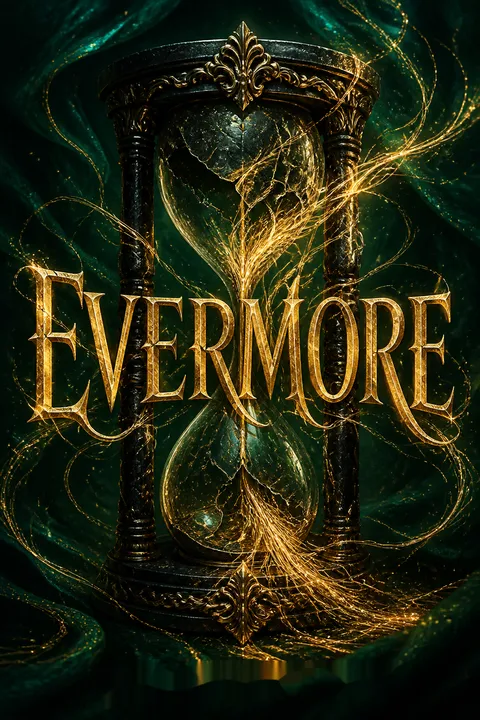


Plot Summary
Prologue
Two days before Paesha returns home, Thorne waits outside Alastor’s office while the Keeper of Lost Things exposes his scheme. Paesha confronts the boy Thorne paid to steal her memories, then learns Thorne’s true name is Reverius Hawthorne Noctus, god of memory and keeper of the realms.
To save her from Alastor’s claim, Thorne gives Alastor the name he needs: Ezra Prophet, his own twin. Alastor takes Paesha, and Thorne cannot follow because of their bargain. Vesalia then imprisons Thorne in an hourglass, collecting the time he owes her.
The prologue turns a romantic betrayal into a problem of power and consent. Thorne believes his deceptions protected Paesha, but the scene shows that he has made choices for her and hidden the costs. Alastor exploits this secrecy, forcing Thorne to expose Ezra’s identity and then invoking a bargain to separate the pair. Vesalia’s hourglass makes the consequences physical: Thorne’s habit of managing other people’s lives has left him trapped by his own promises. The setup also establishes the book’s central question: can love become protective without becoming another form of ownership?
Home After the Veil
After breaking the veil, Paesha and Archer cross into a reunited world whose ruined city has been remade in gold and marble. The magic that brought them home has drained her, but she presses on until she reaches the Syndicate house and sees Quill, the nine-year-old ward she fought to return to. Paesha must tell her that Deyanira and Orin are dead.
Quill runs away, and Paesha collapses from exhaustion before she can comfort her. Two days later, she finds Quill’s door locked and learns the child has been shutting herself away, overwhelming the household with emotions she cannot control. Paesha’s homecoming therefore begins not with relief, but with grief she had hoped to spare her family.
Paesha’s return tests the promise that home can repair what danger has broken. Her first duty is not to celebrate survival but to tell a child an unbearable truth. This reverses the usual rescue fantasy: reaching safety does not end the crisis, because the people left behind have suffered in her absence. Quill’s locked door gives grief a physical boundary, while Paesha’s exhaustion exposes the cost of arriving too late to share it. The scene establishes that care here means telling the truth and staying present, even when the protagonist has returned with little strength to give.
Shadows at the Door
Paesha draws Quill out with a dance in the meadow and reminds her that sorrow and anger need not control her actions. When Quill lashes out, Paesha’s magic surges after her, splintering the child’s bedroom door and exposing shadows that appear to belong to Alastor. The episode frightens the household and forces Paesha to explain the gods, Thorne’s deception, and the deaths behind her return.
Archer, grieving his twin Harlow, admits how little he can feel beyond anger. Quill reaches for his hand and steadies him, briefly bringing laughter back into the house. Then Aeris, the Goddess of Renewal who has become close to Quill, arrives to take the child exploring. Paesha refuses to hand Quill over to a god she does not trust.
This episode makes power inseparable from emotional regulation. Quill’s ability to influence feeling is not malicious, but its effects are real: a child’s distress can overwhelm adults and fracture a door. Paesha’s response avoids both indulgence and punishment; she offers comfort while insisting that feelings do not excuse cruelty. Archer’s grief complicates that lesson, since his pain is neither a threat nor a problem Quill can simply erase. Aeris’s arrival introduces an alternative source of comfort that Paesha cannot accept at face value. The family must learn to care for one another without surrendering judgment to a god.
Time Breaks in the Orphanage
At the orphanage in Stirling, Paesha finds caretakers and children unconscious because young Reuben tried to quiet a crying baby with magic he could not control. While the household works out how to wake them, a crack opens in the entrance floor and Quill falls toward a dark pit.
Archer instinctively freezes time, holding her suspended as Paesha reaches for the volatile shadows inside her. With Archer’s strength nearly spent, Paesha directs the shadows gently enough to pull Quill to safety.
The power drains Archer, and a strange bond begins linking him, Paesha, and Quill. Thorne arrives as the damaged house is restored. Paesha confronts him about his lies, but the argument turns dangerous when Alastor invokes her unpaid bargain and binds her to him.
The rescue joins three forms of power that operate differently: Reuben’s accidental influence, Archer’s time-stopping ability, and Paesha’s emerging shadows. None is safe merely because its bearer means well. Archer’s response saves Quill but nearly empties him, while Paesha’s control depends on trusting power she fears. The bond that forms in the crisis complicates the rescue, turning a voluntary act of care into a lasting connection. Alastor’s binding then reveals the political stakes hidden inside their magic: bargains do not merely protect or punish, they define who is allowed to choose.
Alastor Claims the Huntress
Alastor takes Paesha to the Vale and demands that she produce the final name promised in their bargain. She refuses to let him command her thoughts, but his Remnants force her through painful memories, including her childhood with an absent, addicted father and her first dealings with the Maestro.
The voices of dead women begin to crowd her mind, especially a presence called Sylvie, who turns Paesha’s history with Thorne into evidence that love only makes her easier to control.
Thorne tries to learn how to free Paesha, while his allies discover that Alastor’s influence is worsening her condition. Thea reaches Paesha with a forged-metal escape plan, but the deeper danger remains: Alastor can compel Paesha’s body, and her own power is still beyond reliable control.
Captivity is most effective here because it attacks Paesha’s ability to interpret her own past. Alastor does not need to invent pain; he rearranges memories until her childhood abandonment and romantic betrayal seem to prove the same rule. The voices exploit that collapse, offering certainty where Paesha has none. Sylvie’s revenge feels persuasive because it grows from genuine injury, not simple villainy. At the same time, Thea’s attempt to reach Paesha shows that solidarity can cross a prison’s boundaries, even if it cannot yet break them. The section asks whether memory can be reclaimed when another person controls its meaning.
The Forgotten Bargain
Paesha learns that Alastor wants Thorne to enter the Forgotten and retrieve Irri, the lost goddess Alastor loves. Thorne initially refuses because he believes the realm will keep him from ever returning, and he will not trade his existence for Paesha’s release. Paesha uses his longing to persuade him to accept a new bargain: they will enter together, and bringing Irri home will end Paesha’s binding.
Ezra breaks into the Vale and shoots at Paesha, but Alastor stops the arrow and drives the twins away from her. Thorne tears open a path into the Forgotten. He warns Paesha that no one has returned from it, but she steps through with him, choosing the danger over continued captivity.
The bargain reverses the familiar rescue pattern. Thorne’s instinct is to sacrifice himself alone, while Paesha insists on entering the danger herself. Yet her choice is not uncomplicated agency: she uses the tenderness he has earned and hides her deeper plan from him. The scene makes trust both necessary and dangerous, with each character withholding something for a reason they consider protective. Ezra’s arrow establishes that the brothers’ conflict remains immediate, not merely historical. The Forgotten becomes the consequence of their competing loyalties: a place where Thorne’s old choices are stored and where Paesha may have to decide whether freedom means leaving him behind.
A Hand Reaches Back
In the Forgotten, Paesha and Thorne encounter lost souls, including Jasper, who chose the realm rather than continue serving Ezra under magical compulsion. Paesha’s memories begin to fade, and Thorne spends power shielding her mind.
When a creature made from forgotten things attacks, Paesha runs ahead and finds Irri, who has lost much of herself in the realm. Irri recognizes Paesha’s eyes and agrees to return with her. Thorne’s power opens a way home, but the creature swallows him before Paesha can escape.
Though the voices urge her to leave him, Paesha chooses to turn back. She tears Thorne free, carries him through the portal, and fulfills the bargain that releases Alastor’s marks. They return battered, alive, and no longer bound to Alastor.
The Forgotten literalizes the danger of being erased: its inhabitants lose memories until their identities blur, and its landscape is built from stories nobody remembers. Thorne’s attempt to protect Paesha is caring, but it also risks consuming his remaining strength, repeating his habit of deciding that his life is the price of hers. Paesha’s decisive return changes that pattern. She does not forgive his history or accept his authority; she chooses not to let the voices dictate her response. Saving Thorne is therefore neither submission nor absolution. It is an act she claims as her own, and it secures her freedom from Alastor’s bargain.
The King and His Son
Back in the mortal cities, Paesha and her allies discover that the reunited world is still being reshaped by gods. Archer resists the royal life he believes his father denied him, but Paesha encourages him to visit Aldus without promising that he will accept the crown.
The meeting softens their estrangement: Aldus welcomes his son, and Archer begins to imagine a future that includes him. Their fragile reconciliation is interrupted when Willard stabs Aldus in the marketplace.
Archer freezes time long enough to hold his dying father, then kills Willard when the world resumes. The council recognizes Archer as Aldus’s heir but insists that an unmarried king cannot take the throne. Grief now comes with a political deadline, and Archer must choose whether to accept a crown he never wanted.
Archer’s return to Aldus is a choice to risk disappointment rather than live indefinitely with an unanswered question. Their brief reconciliation cannot repair lost years, but it gives Archer a real relationship to mourn instead of an imagined one. Willard’s assassination turns that private healing into public obligation. Archer’s use of time magic lets him remain with his father, but it cannot prevent death; the power grants presence, not control. The marriage requirement then converts grief into a constitutional crisis, showing how institutions can demand that the bereaved become symbols before they have finished being sons.
A Mother in the Doorway
After Aldus’s death, Paesha discovers that Aeris has visited the Syndicate house with a man from Paesha’s childhood: her father, now sober. He identifies Aeris as Paesha’s mother, revealing that the goddess abandoned her as a child. Paesha rejects both parents’ claim on her and asks Tuck to make sure her father is safe without inviting him back into her life.
On the rooftop, Thorne tells her the larger truth he has concealed: he and Ezra once agreed to test whether Paesha would love Ezra, and Thorne removed Ezra’s memories to keep him from acting on their bargain. Paesha realizes that even her recent love story was entangled in a wager about her final life. She asks for space, and Thorne finally lets her decide what comes next.
Aeris’s return threatens to recast Paesha’s life as the consequence of divine lineage, but Paesha refuses to let ancestry dictate intimacy. She can wish her father safety while still ending their relationship. Thorne’s confession is more painful because it reveals that his protection was built on a wager whose stakes were Paesha’s life. His motives may have included love, but the arrangement denied her informed choice. By asking for space, Paesha draws a boundary that neither blood nor soul-bond can override. Thorne’s willingness to respect it is the first evidence that he may be learning to love without managing her decisions.
A Crown Needs Two
Ezra ambushes Paesha with Unmade Guardians, but Archer reaches her and Thorne joins the fight. Ezra reveals that Archer’s Treeis bond connects him to Paesha and Quill, making him ineligible to marry under the kingdom’s law. Without marriage, he cannot inherit Aldus’s throne. Rather than let Ezra define their future, Paesha offers to marry Archer so he can rule and protect the people.
Minerva devises a legal escape: the ceremony will appear to be a marriage while the vows create a political alliance, not a husband-and-wife bond. Archer and Paesha take the crowns, satisfying the council. Thorne watches, believing he has lost Paesha. Afterward, Archer tells him the truth and urges him to trust Paesha’s own heart.
The Treeis bond, initially formed through emergency and care, becomes a constitutional obstacle when the kingdom demands a conventional marriage. Paesha’s offer is a practical act of loyalty, not a romantic choice, and Minerva’s legal ingenuity lets them satisfy the institution without surrendering their private autonomy. Thorne’s exclusion from the plan is deliberate: his grief helps sell the ceremony as genuine to anyone watching. The deception is emotionally costly, but it also marks a shift from gods’ bargains to human strategy. Paesha and Archer use law as a tool rather than accepting its first interpretation as fate.
The Fates Set Their Price
Believing Paesha has married Archer, Thorne seeks help from the Fates, whose condition is that Archer take the throne. He and Minerva fulfill it, but the Fates refuse to promise any aid. Thorne then brings Death into their realm, forcing them to appear, yet leaves when he realizes their interest in the Mad Queen may be part of a larger design.
He gathers the gods at Archer’s council table. Minerva identifies how the Fates used a vision about the Huntress to turn Ezra and Thorne against each other, weakening the balance while hiding their own ambitions. The gods vote to oppose them, though the alliance is fragile. Paesha is still plagued by voices, and the newly crowned ruler now faces a conspiracy older than her own life.
Thorne’s plea shows how far he has moved from private control toward collective accountability: he seeks help from institutions he once treated as obstacles. But the Fates’ refusal exposes the limits of bargaining with those who define the rules. Their demand for Archer’s crown is not proof of benevolence; it may be part of the same manipulation that produced the crisis. Minerva’s reasoning reframes the prophecy as an instrument that shaped the behavior it supposedly predicted. The gods’ vote matters, but it does not erase their complicity. They must act against the Fates while admitting that divine authority has repeatedly made mortals pay for godly fear.
A Garden Goes Silent
Aeris seizes Quill in the castle garden, and Archer pulls the child free before Aeris stabs him through the heart. Paesha cannot save him; the Treeis bond breaks as he dies beside her and Quill. In the first hours of grief, Paesha turns on Aeris. With Minerva holding the goddess in place, Paesha kills her and absorbs her power, becoming a goddess herself.
The garden withers under the force of Quill’s sorrow, while Paesha’s new strength makes vengeance seem like the only action left. She mourns Archer with Quill, then enters the council as a queen who intends to make the gods answer for the lives they have taken. Her family has lost its anchor, and grief has become political force.
Archer’s death is the novel’s sharpest refusal of magical rescue. His time power, royal status, and bond cannot reverse a blade through the heart. His choice to save Quill remains his own, but its cost falls on the people he loves. Paesha’s killing of Aeris turns grief into power, though not into relief; becoming a goddess does not restore the person she has lost. The withered garden makes the emotional consequence visible, while the council transforms private mourning into public action. The danger is that justice and revenge now share the same fuel, and Paesha must decide what her new power will build or destroy.
The Child Behind Fate
Paesha confronts the Fates with the gods who have chosen to stand beside her. Minerva explains that the Fates engineered the prophecy and sought to control the power that sustains the gods. Then she reveals Quill’s hidden nature: the child can conceal threads from the Fates’ sight, which is why they never anticipated her bond with Paesha and Archer.
Protected by Quill’s presence, Paesha attacks the loom and locates the thread tying the dead women’s voices to her soul. She breaks it. Winter, Sylvie, and the other presences fall silent, and Paesha binds the Fates to their loom, restricting their ability to manipulate mortal lives. She also takes the key to the Noctus Gate, leaving the Fates imprisoned by rules of their own making.
The revelation about Quill changes the meaning of the story’s most intimate relationship. Her bond with Paesha is not merely emotional support; it gives her a capacity the Fates cannot predict. Paesha’s victory depends on more than overwhelming power. She must distinguish her own identity from the voices without denying the women whose lives shaped her. Breaking their shared thread grants silence, but it also ends their influence over her. Her punishment of the Fates mirrors their earlier coercion, yet differs in purpose: she limits their capacity to control others rather than claiming their power for herself.
The Keeper Gives Up Power
After Paesha’s victory, Thorne asks her to marry him freely, and she accepts. Before they can settle into peace, Ezra takes hostages from the Underground and forces Paesha to meet him at Misery’s End. Thorne arrives with Vesalia and Minerva. Knowing that the conflict between the twins has kept the realms unstable, he offers Vesalia nearly all his power.
The transfer weakens both brothers and restores balance to the divine order. Paesha’s shadows restrain Ezra and his Unmade Guardians, while Vesalia freezes Ezra in a single moment, neither killing him nor allowing him to act. Thorne survives with only enough power to remain immortal. He gives up the office that defined him so the cycle of their rivalry can finally end.
Thorne’s sacrifice answers the book’s central moral problem without pretending that love alone can repair structural harm. His power has enabled him to protect Paesha, but also to manipulate her life and sustain his contest with Ezra. Giving it away removes the means by which he could continue to decide the realms’ direction. Paesha’s independent action is essential: she restrains Ezra, while Vesalia’s bargain addresses the imbalance. The resolution is collaborative rather than a single lover saving the other. Thorne’s reduced status becomes a consequence he accepts, not a punishment Paesha imposes, and their future can begin without his former sovereignty.
Requiem Remembers Itself
In the months after Ezra is frozen, Paesha uses her power to restore Requiem without repeating Aeris’s mistake of imposing beauty from above. The crooked streets, old ironwork, and familiar shops return, while unsafe buildings and hunger are addressed with the people who live there.
Thea organizes reconstruction, Elowen anchors the household, and Quill grows up surrounded by family rather than divine expectation. Paesha and Thorne continue their partnership, and the city builds memorials to Archer and Harlow, including an image of Archer with the knitting he never mastered.
Quill leaves a coin there. The grief remains, but the family carries it into a city made livable again. Paesha ends the story not as a weapon of prophecy, but as a ruler who chooses what to renew.
Rebuilding Requiem provides a practical test of Paesha’s new authority. Aeris had treated renewal as permission to remake a city according to her own taste; Paesha instead preserves local character and lets residents participate in repair. This distinction turns the novel’s magical conflict into a question of governance: power is not benevolent simply because it produces something beautiful. The memorials also refuse a false cure for grief. Archer remains absent, but his place in the family is made visible rather than hidden. Paesha’s rule begins with a different measure of success: people can remain themselves and still live more safely.
Epilogue
Ten years later, Thorne still searches for the objects Paesha moves around their home, until she reveals that she borrowed his quill and ink to write the story of their lives together. She gives him the book as a record of memories he can no longer preserve with his former power.
He responds by showing her the chipped teacup he had kept among their shared mementos, now inscribed with his devotion. Their teasing continues, but it rests on a quieter foundation: a household full of chosen family, a life no longer governed by prophecy, and the time to remember each other in their own words.
The epilogue makes memory a shared practice rather than Thorne’s divine possession. Paesha writes their history, while Thorne preserves the teacup that once symbolized her habit of treasuring what others overlook. Neither controls the whole story alone. Their domestic teasing gives the romantic resolution a useful scale: peace is not an abstract treaty but a life in which they can disagree about clutter, borrow objects, and return to one another without a prophecy forcing the reunion. The missing key to the Noctus Gate hints that their ease still contains secrets, but the ending treats intimacy as durable enough to hold them.
Analysis
Evermore treats power less as a measure of strength than as the ability to make choices for other people. Thorne’s love is genuine, but his long practice of concealing information and arranging outcomes turns protection into control. Paesha’s resistance is therefore not a rejection of love; it is a demand that love leave room for refusal. Her deepest victories occur when she acts from that distinction: she returns for Thorne in the Forgotten, refuses to surrender Quill to the gods, and ultimately faces the Fates on her own terms. The book also asks what memory owes to the dead. Paesha’s Remnants preserve the voices of women harmed across earlier lives, but their memories do not automatically provide moral clarity. They offer warnings shaped by real injury and can still urge destructive choices. Paesha’s freedom comes when she recognizes the voices without allowing them to replace her judgment. Her later rebuilding of Requiem extends the same principle from the self to the city: restoration should preserve history and involve the people who live with its consequences.
Archer’s role gives the story its clearest measure of chosen family. His loyalty is not a divine prophecy or a bargain; it is repeatedly enacted through small acts of care and, finally, the decision to protect Quill. His loss cannot be repaired by new powers. Instead, the characters honor him through memory, public service, and a home that continues to make room for his absence.
The ending rejects a simple return to the old order. Thorne gives up most of his sovereignty, Paesha assumes responsibility without surrendering her identity, and the Fates lose the freedom to manipulate mortal lives. Peace is not presented as the absence of grief or danger. It is a form of shared accountability, built when no single person or god is allowed to call coercion love, prophecy, or renewal.
Review Summary
Evermore concludes Paesha's story and The Never Sky series with intense emotion, complex characters, and masterful world-building. Readers praise the found family dynamic, dual POV, and Miranda Lyn's ability to break and mend hearts. The book features meddling gods, plot twists, and a satisfying end to Paesha and Thorne's journey. While some felt overwhelmed by new plot elements, most found it a fitting finale. Themes of love, betrayal, and redemption resonate throughout, with Paesha's strength and growth highlighted. Overall, fans consider it a bittersweet but beautiful end to the series.
People Also Read
Characters
Paesha Vox
The defiant HuntressA dancer, thief, and survivor who learned early that dependence could become a trap. Paesha loves through action: she returns for Quill, steadies Archer in grief, and notices when the poor are being pushed aside. Her instinct is to resist anyone who claims authority over her, yet she is also drawn to love and belonging, which makes betrayal especially destabilizing. The struggle between self-protection and attachment shapes her choices throughout the story. She wants to protect her chosen family without letting gods turn that devotion into another bargain. Her sharp humor is both a weapon and a shield, but her deepest strength lies in continuing to choose for herself.
Thorne Noctus
The secretive Salt lordA controlled, observant man whose cultivated composure hides a long history with Paesha. He values order, remembers small details, and often tries to solve danger by planning several moves ahead. Those qualities make him an effective protector and a dangerous manipulator: he can mistake keeping someone safe for deciding what they should know. His attachment to Paesha is intense, but the story tests whether he can honor her agency instead of treating love as permission to intervene. He is drawn to the idea that loyalty can endure every loss, yet must learn that devotion is meaningful only when the other person remains free to refuse it.
Archer Bramwell
The loyal cardsharpPaesha’s quick-witted companion is a gambler, thief, and natural reader of people. His humor keeps difficult rooms from collapsing into silence, but it does not erase his grief for his twin sister. Archer distrusts gods because their games have cost him people he loves, and he resists any future that seems chosen for him. His instinctive generosity is clearest with Quill, whom he treats as family without asking for recognition. Beneath the swagger is a man trying to decide whether accepting responsibility means surrendering the freedom he has built for himself.
Quill Vox
The fierce young wardPaesha’s nine-year-old ward is affectionate, perceptive, and far more powerful than she understands. Quill experiences other people’s emotions with unusual intensity, so grief and anger can become forces she projects rather than feelings she simply carries. Her misbehavior is often rooted in fear, confusion, and a child’s struggle to regain control. She adores Paesha, befriends Archer, and clings to people who make her feel safe. Quill needs boundaries as much as comfort, because the adults around her must help her remain a child without denying the scale of her abilities.
Alastor
The Keeper of Lost ThingsA calculating god who turns bargains, information, and hidden motives into instruments of leverage. Alastor can be cruel, but his actions are shaped by grief and an enduring attachment to those he has lost. He sees people as pieces in a long contest because he has learned to distrust unprotected tenderness. Paesha is both useful to him and difficult to control, a combination that unsettles his usual certainty. His dealings with Thorne reveal a character who may oppose him in one moment and cooperate in the next, depending on what each believes the price of failure will be.
Ezra
Thorne’s dangerous twinThorne’s identical twin is a powerful, analytical god who treats possible futures as problems to be prevented. He believes that intervention can avert catastrophe, and his confidence in that belief makes him willing to manipulate others without their consent. Ezra’s rivalry with Thorne is intimate as well as cosmic: each understands the other’s strengths and knows where to inflict the deepest wound. He is not motivated by simple chaos. He sees himself as the one willing to make ruthless decisions so that existence can continue, even when his certainty blinds him to the harm those decisions cause.
Aeris
The goddess of renewalAeris presents herself as a gentle, grandmotherly goddess and becomes a trusted presence in Quill’s life. She believes in change and restoration, but her confidence in her own vision can make other people’s wishes seem secondary. Her polished kindness is difficult for Paesha to trust, while Quill responds to the attention and comfort she offers. Aeris’s role raises a useful question about benevolence: whether a power that repairs a place or soothes a child is truly generous if it also shapes their choices without permission.
Minerva
The stern voice of reasonAn ancient goddess who looks frail but commands attention through exact judgment and dry humor. Minerva values reason, yet she understands that logic without compassion can become another form of control. She studies the consequences of divine schemes and is willing to oppose powerful gods when their authority harms mortals. Her relationship with Thorne resembles that of a demanding elder who cares enough to challenge him. Minerva’s protection of Quill and Paesha is practical rather than sentimental: she helps them see the rules clearly, then expects them to decide what those rules are worth.
Tuck
The blunt god of knowledgeA broad, scarred man with a dry wit and a gift for knowing what others have missed. Tuck serves Thorne as a trusted ally but refuses to become a silent instrument of his plans. He often punctures tension with humor, then offers the clearest account of what a magical threat can do. His loyalty is durable because it is active: he challenges, advises, and protects rather than merely agreeing. Tuck’s friendship gives the immortal politics a human scale, especially when he chooses to stand beside people who have little power.
Althea
The inventive chosen sisterUsually called Thea, she is a resourceful craftswoman and Paesha’s sister by choice. Her ability to shape metal supports an instinct to build practical solutions, from hidden structures to safe places for people in need. Thea is optimistic without being naïve; she believes a community can be made stronger through shared work. Her loyalty sometimes pushes her to exhaust herself, because helping others feels more urgent than caring for her own limits. Paesha’s concern for her reveals how their friendship has grown into mutual protection rather than one-sided rescue.
Elowen
The household’s steady motherElowen is the warm, capable matriarch of Paesha’s chosen household. She offers children shelter, food, and steadiness without pretending that care can erase grief. Her affection is expressed through ordinary acts: making tea, keeping the household together, and telling Paesha when she needs to rest. Elowen’s patience has limits, especially when Quill’s uncontrolled emotions strain everyone in the house. She anchors the group not by wielding magic but by creating a dependable home in which people can be imperfect and still belong.
Irri
The lost goddess of broken thingsIrri is a goddess whose quiet music and drifting attention make her difficult to read. She is closely loved by Alastor and associated with what is broken, misplaced, or forgotten. Her fragmented manner does not mean she lacks perception; her observations often land with an accuracy that others miss. Irri embodies the possibility that repair is not the same as returning something to its former shape. Even when she cannot explain what she knows, her songs and half-remembered images help the others recognize that a hidden connection may still exist.
Sylvie
The vengeful inner voiceSylvie is one of the presences that speaks through Paesha’s turbulent inner world. Her perspective is sharp, wounded, and suspicious of anyone who offers love while holding power. She urges Paesha to read protection as possession and to turn old pain into retaliation. That advice is dangerous, but it grows from a recognizable need: no one should be allowed to repeat the same injury without consequence. Sylvie’s presence embodies the difficulty of distinguishing a warning worth hearing from a grievance that has begun to dictate every choice.
Levanya
The quiet past-life guideLevanya is a composed, compassionate presence who offers Paesha moments of calm when the other voices grow overwhelming. Her memories carry the perspective of a leader who valued peace without confusing it with passivity. She does not demand that Paesha forgive or forget; instead, she helps her find a clear space from which to choose. Levanya represents a form of strength that is neither domination nor surrender, and her quiet guidance gives Paesha an alternative to the cycle of anger and retaliation.
Vesalia
The goddess of timeVesalia is a theatrical goddess who treats time as both power and currency. She enjoys controlling the terms of an encounter and rarely offers help without calculating what she will receive. Her bargains can appear petty beside the struggles of the central characters, but they have lasting force. Vesalia’s composure conceals ambition and an awareness of how much power can be gathered by waiting. She represents the unsettling fact that a seemingly secondary debt can become decisive when the larger balance of authority begins to fail.
Aldus
The grieving mortal kingAldus is an aging king whose grief and political failures have left him isolated from the people he should protect. His affection for his family is real, though he has not always known how to act on it in time. He faces a difficult inheritance: a kingdom divided between privileged Silk and struggling Salt, and a son who has good reason to distrust him. Aldus’s desire to repair their relationship is sincere, but the story refuses to make reconciliation erase the years of absence that came before it.
Harlow
Archer’s fearless twinHarlow is Archer’s twin sister, a gifted thief whose skill with daggers is matched by her protective loyalty. She is clever about using other people’s assumptions, but her charm does not make her careless about the people she loves. Harlow encourages Archer to embrace his abilities and reminds him that family can be chosen as well as inherited. Her influence remains present in the way Archer handles danger, grief, and affection, giving his memories of her a life beyond loss.
Deyanira
The formidable Death’s MaidenDeyanira is a formidable woman tied to the duties of Death’s Court and part of Paesha’s history. She has a sharp survival instinct and little patience for being managed by powerful men. Her presence in Paesha’s past helps explain why the mortal world and the realm of Death are bound together in the story.
Death
The keeper of the afterlifeDeath rules a court beyond ordinary mortal life and is less theatrical than the title suggests. He has a personal connection to Paesha’s circle and approaches his responsibilities with an unexpected steadiness. His presence reminds the gods that their bargains and rivalries exist within limits, even when they behave as if they are absolute. Death is also a careful partner, attentive to the cost of crossing boundaries between realms.
The Maestro
The crime lord who bargainsThe Maestro is a crime lord who used magical bargains to control the vulnerable, including Paesha and Thea. He recognized Paesha’s talent and offered opportunities that came with hidden costs. His polished theatrical manner disguises a transactional view of people: he treats affection, shelter, and work as tools for obtaining obedience. The Maestro’s influence helps explain Paesha’s lasting suspicion of anyone who calls coercion a gift.
Jasper
The gentle former cookJasper is a kindly cook whose loyalty and care for others survive even after he is drawn into divine conflict. He finds purpose in feeding people and in keeping small routines alive. His choice to seek quiet rather than continue under another’s command reflects a practical understanding of what peace can mean.
Willard
The Silk courtierWillard is a privileged courtier whose polished manner conceals resentment and a readiness to exploit weakness. His disdain for the Salt and his personal history with Harlow make him a reminder that mortal cruelty can flourish without divine power.
The Fates
The weavers of possibilityThe Fates work through a loom that represents possible futures and the threads connecting lives. They speak as a collective, making them difficult to approach as individuals. Their apparent neutrality gives them enormous influence, since gods and mortals alike treat their pronouncements as warnings about what must happen. They are distant, exacting, and accustomed to being obeyed. Their presence raises the question of whether foreseeing a future is the same as having the right to shape it.
Plot Devices
The Remnants
Past lives made presentThe Remnants are Paesha’s shadowy power, which grows after she takes stolen magic and returns through the broken veil. They can shield, attack, and respond to her feelings, but at first she cannot reliably direct them. Voices and visions of women from earlier lives mingle with the magic, turning memory into both a source of strength and a threat to Paesha’s sense of self. The device makes the cost of repeated lives tangible: past suffering remains active inside the present. Paesha’s struggle is not simply to gain control of the shadows, but to distinguish her own choices from the grievances they carry.
Divine bargains
Promises become restraintsGods and mortals bind agreements through spoken terms, marks, and magical consequences. A bargain can save someone, compel obedience, demand time, or make a promise impossible to break. The danger lies in the wording and in what one party understands at the moment of agreement. Paesha’s dealings with Alastor and Thorne show how protection can conceal coercion when the person paying the price does not know the full terms. Bargains also give the characters a strategic language for resisting gods, because exact terms and loopholes can matter as much as raw power.
The Treeis bond
A family forged in crisisThe Treeis bond links Paesha, Archer, and Quill through a magical connection formed when they use their powers to save one another. It carries protection and feeling across the three, but it also affects royal succession and marriage law. The bond is not presented as an uncomplicated gift: it creates obligations none of them fully understand and makes their relationships visible to gods who want to exploit them. Its emotional force comes from the fact that the connection reflects a family they have already chosen, while its political consequences threaten to turn that family into a tool.
The Quoralis
A channel through the distanceThe golden Quoralis book lets Paesha and Thorne exchange written messages across distance. It survives attempts to burn or tear it apart, making it difficult for Paesha to sever the connection while she is angry with him. The book can carry apologies, explanations, and invitations, but it cannot make trust automatic. Its importance lies in the difference between access and intimacy: Thorne can reach Paesha through the book, yet she must decide whether his words deserve attention. The object keeps their emotional conflict active without forcing them into a face-to-face reconciliation.
The Noctus Gate
A passage to divine powerThe Noctus Gate connects Etherium to the source of the gods’ power and requires a key held by the Fates. Its weakening reflects the larger instability in the realms, while its access makes it a possible means of altering who holds divine authority. The gate gives the characters a concrete focus for a conflict otherwise described through prophecy and cosmic balance. Its key becomes leverage, but the story emphasizes that power cannot be repaired merely by possessing a tool. The gods must also confront the choices and rivalries that made the imbalance dangerous.
Download PDF
Download EPUB
.epub digital book format is ideal for reading ebooks on phones, tablets, and e-readers.








