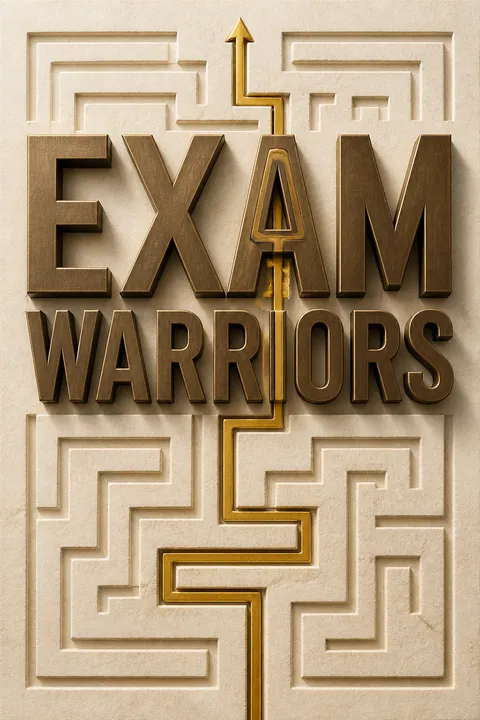


Key Takeaways
Treat an exam as a snapshot of preparation, not a verdict on you.
A limited measure. Modi compares exams with festivals: both invite anticipation, preparation, and shared participation. The point is not that exams are always joyful, but that they need not be faced as solitary catastrophes. Family, friends, and fellow students are part of the experience, and preparation gives students something concrete to rely on when nerves rise.
A life beyond results. The book distinguishes a test of current preparation from a judgment of a person’s potential. It recalls A.P.J. Abdul Kalam, who narrowly missed becoming a fighter pilot and went on to become a celebrated scientist. One result may matter, but it cannot contain the whole story of a life.
What's useful here is the shift from identity threat to a bounded task. In psychology, a challenge feels more manageable when it is interpreted as something to meet rather than proof of personal inadequacy. The festival comparison also restores a social dimension to exam season, which can otherwise feel isolating. Still, reframing cannot erase unequal stakes, family pressure, or the consequences of a poor result. The strongest reading is not that exams are harmless, but that their importance should not be confused with a complete measure of a student.
Study to understand what you can use, not merely what earns marks.
Knowledge has a longer life. The book argues that marks should follow learning, not replace it. A patient chooses a doctor for competence, not for a transcript; similarly, useful knowledge and skill matter beyond the score on one paper. Studying only likely questions can produce narrow preparation, leaving a student vulnerable when an unfamiliar question appears.
Learn for transfer. The goal is to understand ideas well enough to apply them in a new context. That approach makes learning more rewarding in itself and gives students a stronger foundation for later choices. The book warns that incomplete understanding can be more damaging outside school than a disappointing exam result.
This distinction resembles the difference between memorizing a route and learning how to navigate. Knowledge that can be retrieved and applied under changed conditions is more robust than a list of rehearsed answers. Education research often calls this transfer, and it depends on understanding relationships among ideas, not just recalling isolated facts. Marks still matter in systems where access to courses depends on them. The practical balance is to meet the assessment requirements while refusing to let likely test questions define the boundaries of learning.
Measure progress against your past self, not the student beside you.
Make improvement visible. Comparing scores with classmates can produce complacency when others do worse, overconfidence when they do better, or frustration when results are similar. The book instead asks students to identify their own next improvement: stronger vocabulary, faster problem-solving, or better concentration. A simple record of a target and current ability can make that progress easier to notice.
Use strengths as anchors. Confidence need not mean believing that every answer is known. It can come from recognizing preparation, abilities, and personal resources, then using them to address weaker areas. The book also warns students not to be governed by exam-season rumours when steady preparation gives them better grounds for judgment.
Self-comparison makes progress more diagnostic: it asks which skill changed, rather than where a student ranks in a shifting group. This connects with mastery-oriented learning, where effort is directed toward competence rather than status. It also avoids treating confidence as bravado. However, private progress measures should not become a reason to ignore useful feedback or external standards. A student can track personal growth while still asking whether the improvement meets the demands of the subject and examination.
Build a flexible study schedule around your real energy and abilities.
Time is not identical. The book distinguishes clock time, the same twenty-four hours for everyone, from effective time, the portion a person can use well. Managing time is therefore also a way to direct personal abilities. Students are encouraged to plan their days, assign study periods, and make important tasks part of a routine rather than repeatedly deciding when to begin.
Plan, then adapt. A schedule should reduce the pressure of holding every task in mind, but it should leave room for changes. The book cautions against radically changing habits during exam season. A timetable is useful when it supports a student’s existing working style, not when it becomes a rigid test of obedience.
A schedule can act as an external memory system: once commitments are written down, attention is less occupied by repeatedly reconsidering them. The distinction between available hours and usable attention is also important, since fatigue and competing demands make time uneven in practice. Flexibility is not a loophole; it is part of good planning because unexpected tasks are normal. At the same time, a timetable cannot create more capacity than a student has. Realistic plans should protect sleep and include breaks rather than treating every unallocated minute as wasted.
Treat sleep and recovery as part of your study plan.
Rest supports recall. Long study sessions require intervals in which the mind can unwind. The book recommends taking breaks through music, a walk, time with family or pets, deep breathing, or relaxation practices such as Shavasana. It also describes sleep as essential to feeling alert and recalling information, rather than as time stolen from preparation.
Choose calm deliberately. Yoga is presented as one way to support steadiness during exam season. The book includes postures, breathing exercises, and meditation, with guidance to practise carefully and seek instruction where needed. Its central practical point is simple: preparation needs both concentration and recovery. A tired student may spend more hours with a book while getting less from them.
Recovery is not the opposite of effort; it helps make effort sustainable. Sleep supports memory consolidation, while brief changes of activity can relieve attentional fatigue. The book’s range of suggestions matters because relaxation is individual: one student may settle with a walk, another with quiet breathing. Yoga and breathing practices may help some people feel more composed, but they are not universal remedies, and the instructions include health cautions for particular postures. Rest should be adapted to the person, not turned into another performance demand.
Keep physical play in your preparation, rather than treating it as lost time.
Movement can refresh study. The book urges students to make room for outdoor games, even during intense preparation. Playing offers a break from sitting with books and gives the mind a chance to reset. Modi points to benefits such as improved circulation, coordination, stamina, and concentration, as well as the teamwork and fellowship that games can build.
Return with more focus. The argument is not that sport replaces study, but that an all-study routine can become saturated and less effective. A short game or run, including on the day before an exam, can provide a useful change of pace. The book also contrasts digital games with playing outdoors, emphasizing that screens cannot substitute for the experience of moving and interacting with friends.
This advice treats the student as a whole person rather than a study machine. Movement changes physical state, interrupts monotony, and creates social contact, all of which can support a return to focused work. The book’s emphasis on play also resists the assumption that every enjoyable activity must be earned only after perfect preparation. Access and circumstance matter, though: not every student has safe outdoor space, free time, or equal opportunity to join sports. The underlying principle is to include restorative movement in whatever form is feasible.
Use exam technique to present your knowledge clearly and honestly.
Remove avoidable friction. Prepare stationery and required documents the evening before, check the examination rules, and arrive early. Read the paper and its instructions carefully. Students can start with easier questions or use another order that suits them, return to difficult questions later, and leave time to review answers, especially calculations and data.
Make answers legible. Organization, clear handwriting, and sensible use of space help an examiner follow the response. Presentation supports content, but it does not replace it. Nor should shortcuts replace learning: the book rejects cheating because it undermines the purpose of assessment, risks serious consequences, and can become a habit. Honest work is the basis for knowing what has actually been learned.
The practical sequence reduces small sources of stress before they compound: missing materials, rushed reading, and getting trapped on one question. Clear presentation also respects the examiner’s limited attention, much as good communication does in any professional setting. Yet technique has limits. Neatness cannot compensate for weak understanding, and strict rule-following can vary across boards, so students should check their own examination instructions. The ethical argument is broader than avoiding punishment: honest assessment gives students and teachers more reliable information about what needs improvement.
After submitting, stop replaying the paper and turn toward what comes next.
Close the mental loop. Students often continue taking an exam after it has ended, comparing answers with friends and replaying uncertain moments. The book warns that this can consume time, weaken confidence, and distract from preparation for the next paper. Reviewing work later may be useful when there is a clear learning purpose, but endless speculation cannot alter a submitted answer.
Redirect attention. Modi describes finishing the 2012 Gujarat election and then turning to other tasks, including work on an upcoming summit and an irrigation project. He uses the story to illustrate a deliberate shift from a completed event to responsibilities still within reach. The student’s equivalent is to rest briefly, then return attention to the next useful action.
This is a lesson in controlling attention after control over an outcome has ended. Repeatedly discussing uncertain answers can feel like problem-solving, but it often produces no new information. A deliberate transition protects energy for the next task. The distinction is between reflection and rumination: reflection asks what can be learned, while rumination circles around what cannot now be changed. A short, planned review may serve the first purpose, but comparison for its own sake usually does not.
Use the post-exam pause to explore places, people, and work beyond school.
Learn by entering the world. The book encourages students to travel, try unfamiliar settings, take up hobbies, and volunteer in community service. Reading about a place or a problem is different from meeting people and experiencing it directly. Such encounters can broaden perspective and reveal interests that are difficult to discover inside a study routine.
See the country firsthand. Modi invites young people to explore India’s landscapes, historical sites, and cultural variety, including less familiar places near home. He recalls the tradition of cousins gathering after exams and points to exchanges between states as a way to encounter different communities. The wider message is to use a break not only to recover, but also to experience life beyond the examination timetable.
Direct experience can challenge assumptions that remain invisible when learning stays abstract. Travel and volunteering offer encounters with different routines, needs, and perspectives; they can make civic belonging concrete rather than merely declarative. Exploration need not require a long trip or significant expense. A nearby neighbourhood, local organization, or unfamiliar public place can also expand a student’s frame of reference. The book’s invitation is strongest when understood as curiosity and contact, not as a claim that travel alone guarantees wisdom.
Choose a future by what you want to contribute, not only by its title.
Let purpose guide choice. The book contrasts wanting to become a prestigious kind of person with wanting to do something worthwhile. It says career choices should reflect interests and strengths, rather than only family expectations, peer pressure, fashionable trends, or fantasies of status. Modi notes that he was not even a class monitor as a student, using his own path to question the idea that a young person must predict a grand title early.
Make opportunities. Students are urged to see that interests can lead to many kinds of work. A passion for sport, for instance, might connect with playing, coaching, journalism, management, or equipment-making. The advice is to consider the difference one hopes to make and stay open to less conventional routes.
This approach shifts career choice from identity consumption to agency: the question becomes what problems or activities merit sustained effort. That is especially useful when young people feel pressured to choose a life based on a narrow list of prestigious labels. Still, intrinsic interest does not eliminate material constraints, family responsibilities, or unequal access to training. A sound decision joins contribution and curiosity with practical information about the paths available. The book’s emphasis on creating opportunities is most empowering when paired with that clear-eyed planning.
Name the people behind your success, then thank them directly.
Achievement is shared. The book asks students to recognize the many people whose work supports their education: parents, siblings, teachers, school staff, drivers, cooks, shopkeepers, and the people who produce food or build school facilities. Some help is visible at home; other contributions are easy to overlook because they happen in the background.
Support without pressure. In letters to parents and teachers, Modi asks adults to encourage students without loading them with unreasonable expectations. Parents are urged to listen and guide children toward choices based on their interests and strengths. Teachers are described as facilitators who can nurture inquiry as well as teach what is in the textbook. Gratitude, in this account, means noticing interdependence and responding with respect.
This closing insight widens achievement from an individual score to a network of care and labor. Naming that network can make gratitude more concrete than a general feeling, and it can help students notice work that social status often renders invisible. The advice to adults is equally important: support is not the same as controlling a child’s ambitions. Gratitude should not become an obligation to repay every kindness through obedience. At its best, it deepens recognition while leaving young people room to develop their own direction.
Analysis
Exam Warriors is a practical guide for students facing board examinations, organized as short, direct lessons rather than a continuous memoir or a formal study system. Its central argument is that exams deserve preparation but not the authority to define a person. Modi builds that argument through familiar comparisons, personal anecdotes, student-facing activities, advice to families and teachers, and a substantial yoga section. The breadth is part of the book’s purpose: it treats examination stress as a problem involving study habits, attention, family expectations, ethics, health, and the meaning of future work.
The book’s most persuasive move is to shift the student’s attention toward what remains controllable. Learning broadly, scheduling realistically, preparing materials, choosing a question order, sleeping, and moving on after submission are concrete actions, not simply encouragement to feel calm. Its attention to the social environment is also valuable. Parents can unintentionally turn care into pressure, while teachers can shape whether education rewards inquiry or only scores. The repeated invitation to reflect through activities makes the book interactive, although the strongest advice can be extracted without completing every exercise.
Its limits follow from its motivational form. The festival metaphor may soften anxiety for some students, but it cannot make every examination fair or reduce its real consequences. The recommendation to focus on knowledge over marks is ethically attractive, yet marks can determine access to educational opportunities. Similarly, confidence and relaxation are not entirely matters of attitude; students face different resources, health conditions, and family circumstances. A careful reading preserves the book’s encouragement while avoiding the implication that a student can simply think away structural pressure.
The most durable model is therefore balanced: take preparation seriously, keep the result in proportion, and treat education as larger than the test. Exams are moments of assessment, not complete descriptions of ability or worth. The book’s call to explore, serve, practise gratitude, and choose work by interest and contribution places academic effort within a broader life, giving students a reason to prepare without making preparation their entire identity.
Review Summary
Exam Warriors receives mostly positive reviews, with readers praising its practical advice for students facing exams. Many appreciate the interactive elements, yoga tips, and uplifting messages. Parents and teachers find it useful for guiding children. Some reviewers note that the content is more suitable for younger students. While a few criticize it as simplistic or politically motivated, most find value in its stress-reduction techniques and life lessons. The affordable price and engaging format are frequently mentioned as positives.
People Also Read








Glossary
Exam Warrior
Student facing exams bravelyThe book’s name for a student approaching examinations with preparation, courage, and perspective. An Exam Warrior is encouraged to manage pressure, pursue knowledge, use personal strengths, and remember that a test is only one part of life. The term emphasizes agency and steadiness rather than treating students as helpless victims of exam anxiety.
effective time
Time used productivelyThe book’s distinction between the fixed twenty-four hours in a day and the amount of time a person can use well. Effective time depends on how a student directs attention and abilities. Planning a routine is presented as a way to make important work more manageable, while retaining flexibility for changes.
Suryanamaskara
Twelve-part sun salutationA sequence of twelve linked yoga positions described in the book as a way to refresh the mind and energize the body. The sequence combines movement with breathing and alternates which leg leads in one of its positions. The book attributes benefits including flexibility, strength, endurance, and concentration, and cautions against practice in some health conditions.
Nadi Shodhana Pranayama
Alternate-nostril breathingA breathing exercise also called Anulom Vilom in the book. Sitting comfortably, the practitioner breathes through one nostril at a time, alternately closing the other, and repeats the pattern for several rounds. The book associates the practice with reduced anxiety and improved concentration, and advises people with cardiac problems or hypertension to avoid retaining the breath.
Dhyana
Focused meditation practiceA meditation practice described in the yoga section as sustained contemplation intended to settle an agitated mind and develop awareness. The book’s method involves sitting comfortably with an erect spine, noticing the breath, and directing attention to a point between the eyebrows before returning attention to breathing and the surroundings.
FAQ
1. What’s "Exam Warriors" by Narendra Modi about?
- Student Exam Guide: "Exam Warriors" is a motivational and practical guide for students facing exams, written by India’s Prime Minister Narendra Modi.
- Holistic Approach: The book covers not just exam strategies, but also mental well-being, time management, and the importance of a positive attitude.
- Interactive Elements: It includes activities, exercises, and yoga asanas to help students manage stress and improve performance.
- Letters to Parents and Teachers: The book also addresses parents and teachers, offering advice on how to support students during exam time.
2. Why should I read "Exam Warriors" by Narendra Modi?
- Practical Exam Tips: The book provides actionable advice and mantras to help students prepare for and approach exams with confidence.
- Focus on Well-being: It emphasizes the importance of mental health, rest, and physical activity, making it more than just an academic guide.
- Inspirational Stories: Real-life examples and anecdotes from Modi’s own experiences and from Indian history inspire resilience and a growth mindset.
- Family and Teacher Guidance: It offers valuable insights for parents and teachers to create a supportive environment for students.
3. What are the key takeaways from "Exam Warriors" by Narendra Modi?
- Celebrate Exams: Treat exams as festivals to be celebrated, not feared.
- Preparation Over Perfection: Exams test your current preparation, not your worth as a person.
- Mindset Matters: A positive, relaxed, and warrior-like attitude is crucial for success.
- Holistic Success: Knowledge, self-discipline, rest, play, and gratitude are all essential for true achievement.
4. What are the main "mantras" or principles in "Exam Warriors" by Narendra Modi?
- 25 Mantras: The book is structured around 25 "mantras" or principles, each offering a unique perspective on exam preparation and life.
- Examples Include: "Exams Are Like Festivals—Celebrate Them!", "Be a Warrior, Not a Worrier!", "Compete—with Yourself", and "To Cheat Is to Be Cheap".
- Practical Activities: Each mantra is accompanied by activities to reinforce the lesson and encourage self-reflection.
- Focus on Growth: The mantras promote self-improvement, resilience, and lifelong learning.
5. How does "Exam Warriors" by Narendra Modi suggest students manage exam stress and anxiety?
- Celebrate, Don’t Fear: View exams as opportunities for growth rather than threats.
- Relaxation Techniques: Use laughter, relaxation, and positive self-talk to reduce anxiety.
- Yoga and Rest: Incorporate yoga, adequate sleep, and breaks to maintain mental and physical health.
- Support Systems: Rely on family, friends, and teachers for encouragement and perspective.
6. What unique advice does "Exam Warriors" by Narendra Modi give about learning and knowledge?
- Pursue Knowledge, Not Just Marks: Focus on understanding and enjoying learning, rather than memorizing for grades.
- Knowledge Is Permanent: Skills and knowledge last longer than exam results and are more valuable in life.
- Revision and Recall: Use mind maps, acronyms, and discussion to reinforce learning.
- Embrace Curiosity: Explore beyond textbooks and seek to understand the world.
7. How does "Exam Warriors" by Narendra Modi address time management and self-discipline?
- Effective Time Management: Treat time management as ability management—plan your day to maximize your strengths.
- Personalized Schedules: Create a flexible timetable that suits your unique rhythm and needs.
- Avoid Last-Minute Rush: Prepare in advance and avoid drastic changes to your routine during exams.
- Balance and Flexibility: Allow for dynamic changes and breaks to maintain productivity.
8. What role does technology play in "Exam Warriors" by Narendra Modi’s exam preparation philosophy?
- Technology as a Tool: Use technology for learning, research, and connecting with others, but don’t let it become a distraction.
- Tech-Free Time: Designate periods and spaces without gadgets to focus on studies and relationships.
- Smart Use: Leverage educational apps and online resources to enhance understanding.
- Balance Is Key: Enjoy technology, but prioritize real-life experiences and interactions.
9. How does "Exam Warriors" by Narendra Modi incorporate yoga and physical activity into exam preparation?
- Yoga for Mind and Body: The book includes detailed instructions for yoga asanas and pranayama to boost concentration and reduce stress.
- Physical Play: Encourages outdoor games and physical activity to refresh the mind and body.
- Holistic Health: Emphasizes that good health, stamina, and calmness are essential for exam success.
- Daily Practice: Recommends making yoga and exercise a regular part of life, not just during exams.
10. What guidance does "Exam Warriors" by Narendra Modi offer to parents and teachers?
- Support, Don’t Pressure: Parents and teachers should encourage and accept children, not burden them with unrealistic expectations.
- Quality Time: Spend positive, supportive time with students, especially during exam season.
- Listen and Guide: Be attentive to students’ needs and help them make choices based on their interests and strengths.
- Promote Adventure and Curiosity: Inspire children to step out of their comfort zones and pursue new experiences.
11. What are some of the best quotes from "Exam Warriors" by Narendra Modi and what do they mean?
- "Exams are like festivals—celebrate them!": Encourages students to approach exams with joy and anticipation, not dread.
- "Be a warrior, not a worrier!": Inspires courage and resilience in the face of challenges.
- "Knowledge is permanent—pursue it": Reminds students that true learning lasts beyond exams.
- "To cheat is to be cheap": Stresses the importance of integrity and honesty in all endeavors.
12. How does "Exam Warriors" by Narendra Modi encourage self-discovery and life beyond exams?
- Experience Life Fully: Urges students to travel, volunteer, and try new hobbies after exams to broaden their horizons.
- Aspire to Do, Not Just Be: Focus on making a difference rather than chasing titles or positions.
- Gratitude and Service: Recognize the contributions of others and give back to society.
- Continuous Growth: View each exam and life event as a stepping stone to new journeys and opportunities.
Download PDF
Download EPUB
.epub digital book format is ideal for reading ebooks on phones, tablets, and e-readers.








