

Key Takeaways
Treat fasting as a supervised reset, then protect gains with lasting food change
The two-part proposal. Fuhrman argues that a medically supervised fast gives the body a break from digestion, while a healthier diet afterward prevents the old pattern from returning. Fasting is not presented as a stand-alone cure: the eating plan before and after it is part of the treatment. His opening story follows a young figure skater who fasted for 46 days after a severe leg injury, regained the ability to walk, and later placed third in a world professional championship. The story explains Fuhrman's conviction, but one person's recovery cannot establish that fasting caused it or that the result is typical.
The practical boundary. The book is not a guide to fasting alone. It explicitly says prolonged fasts require a qualified physician, and that illness and medication make professional care essential.
What's compelling is the distinction between an intensive intervention and the conditions needed to sustain its effects. That logic appears in many areas of medicine: an acute treatment can create an opportunity, while everyday behavior shapes the longer-term trajectory. The skater's story makes the idea vivid, but vividness is not verification. Injury recovery can have multiple causes, and a dramatic outcome cannot reveal how often the same approach fails. The useful question is therefore not whether a single story is inspiring, but what controlled evidence supports the intervention and for which patients.
Build meals around whole plants, not the rich, refined foods Fuhrman blames
The food pattern. Fuhrman recommends a diet centered on vegetables, fruit, beans, and whole grains, with little or no meat, dairy, added oil, sweets, or heavily processed food. His proposed menu puts vegetables at the center and treats animal foods, if eaten, as occasional small additions. He argues that whole plant foods provide fiber and a range of protective nutrients that refined foods and animal products lack. The book also warns that a vegetarian diet based mainly on white bread, pasta, and packaged substitutes misses the point: the goal is whole foods, not merely avoiding meat.
One nutrient exception. For people avoiding all animal products, Fuhrman recommends monitoring vitamin B12 and considering a supplement. His dietary percentages and claims of disease prevention reflect his 1995 program, not a prescription suited to every person.
The strongest transferable idea is food quality, not the promise that one precise ratio works for everyone. A plate built from minimally processed plants tends to bring fiber and variety along with it, rather than asking people to reconstruct a food's benefits from isolated supplements. That is a useful public-health frame because it changes the default meal, not just a nutrient target. Yet individual needs vary, and a restrictive diet can create problems if it is poorly planned. The book's emphasis on B12 hints at this tension: a plant-centered pattern needs attention to specific nutrients, not faith in a label.
Distinguish fasting adaptation from starvation, and let a clinician judge the boundary
Fuel changes during fasting. Fuhrman defines a total fast as abstaining from calories while drinking water. He describes the body first using stored carbohydrate, then producing ketones from fat. As the brain uses more ketones, the body needs less glucose made from protein, a change he calls protein sparing. In his account, this shift occurs after roughly two to three days. He distinguishes this adaptation from starvation, which he defines as continuing after the body's usable reserves become dangerously low.
Supervision is essential. The book says most of its patients fast for one to four weeks, but duration varies, and certain medical conditions or medications can make fasting inappropriate. It warns against self-directed prolonged fasts and discusses monitoring blood pressure, hydration, electrolytes, and the gradual return to food. These cautions are central, not fine print.
The distinction between a normal metabolic adaptation and a dangerous complication is clinically important, but it is not a line a reader can reliably locate by willpower or body size. Ketone production describes a fuel shift; it does not establish that a prolonged fast is safe or therapeutic for a particular person. This is where the book's insistence on supervision matters most. In practical terms, monitoring is not a bureaucratic obstacle to a natural process. It is how clinicians detect when an individual response departs from the expected pattern.
Ask whether care changes disease causes or merely suppresses symptoms
Fuhrman's central critique. The book argues that many chronic illnesses persist because treatment focuses on symptoms while the habits that contributed to illness remain unchanged. It contrasts medication that lowers blood pressure with approaches intended to address diet, weight, and cardiovascular risk. A person who repeatedly exposes the body to a harmful pattern, Fuhrman suggests, cannot expect symptom control alone to remove the underlying problem.
A necessary qualification. The book does acknowledge that drugs and surgery can be lifesaving in emergencies and useful in other circumstances. Its criticism is aimed chiefly at using symptom relief as the whole plan for chronic disease. The distinction is useful, but Fuhrman's broad claim that conventional treatment generally fails to address causes is too sweeping. Many effective care plans combine risk reduction, symptom management, and necessary medical treatment.
The cause-versus-symptom distinction is a strong prompt for better clinical conversations: what is a treatment changing, what is it controlling, and what remains unaddressed? But the distinction should not be turned into a false choice. Symptom relief can prevent suffering and complications, while modifying an underlying risk can take time or may not reverse established damage. The most useful version of Fuhrman's challenge is additive: ask whether prevention and behavior change belong alongside treatment, rather than assuming that medication is either a cure-all or inherently futile.
For heart disease, examine dietary reversal evidence without dismissing standard care
A contrast in diets. Fuhrman argues that modest fat reduction is not enough to reverse heart disease. He points to the Lifestyle Heart Trial, in which a very low-fat, plant-based diet was combined with exercise and stress management. The book reports that most participants in the intervention group showed reversal of coronary artery narrowing after a year, while many in the comparison group, following less intensive advice, worsened. Fuhrman also presents patient stories in which fasting and dietary change coincided with less angina or lower blood pressure.
What the evidence can show. The trial supports studying intensive lifestyle change; it does not prove that fasting is needed, that every blockage can be reversed, or that bypass surgery and medication are generally useless. The book's strong attacks on standard care go beyond what these examples establish. Heart symptoms and treatment decisions require qualified medical care.
The book's valuable contribution here is its insistence that lifestyle treatment be tested at a meaningful intensity. A comparison between a modest change and a comprehensive program can reveal that small adjustments may not produce large effects. But a study of diet, exercise, and stress management cannot isolate fasting as the active ingredient, and improvement in a measured artery is not identical to proving fewer deaths or complications. Translating research carefully means preserving the positive signal without expanding it into a verdict against treatments that address different risks.
In type 2 diabetes, reduce dietary strain without changing medication on your own
The author's model. Fuhrman distinguishes type 1 diabetes, in which insulin production is deficient, from type 2, in which the body becomes less responsive to insulin. He argues that excess body fat and a rich diet can increase the burden on insulin regulation, and recommends weight loss and a plant-centered, low-fat eating pattern. He describes patients whose blood sugar improved as their diet changed, sometimes allowing medication reduction under his care. The book presents fasting as an option for selected type 2 patients after dietary change and weight loss, but says people with type 1 diabetes should not undertake a prolonged fast.
Medication requires oversight. The book's cases do not justify stopping insulin or other treatment independently. Changes in food intake can alter medication needs, and low blood sugar can be dangerous. Any adjustment belongs with the treating clinician.
The important distinction is between improving the conditions that affect glucose regulation and assuming that medication itself is the disease. Nutrition, body weight, and activity can matter greatly, but diabetes is heterogeneous, and a treatment that suits one patient's physiology may be unsafe for another. Fuhrman's case histories make potential improvement imaginable; they do not establish the likelihood or durability of remission. The safest practical lesson is to make lifestyle change part of clinical management, with glucose monitoring and medication decisions coordinated by the care team.
Investigate food triggers in autoimmune disease without treating one theory as universal
A proposed pathway. Fuhrman describes autoimmune disease as immune activity directed against the body's own tissues. He proposes that poorly digested food proteins and increased intestinal permeability may contribute to immune reactions in some patients. He uses rheumatoid arthritis to illustrate the idea: immune complexes, formed when antibodies attach to substances they recognize, may lodge in tissue and contribute to inflammation. The book cites a controlled study in which patients with rheumatoid arthritis followed a short fast and then a vegetarian diet; the intervention group showed improvements across several measures over a year.
Individual responses vary. Fuhrman also describes excluding foods that appear to provoke symptoms. This is a reason to investigate diet with professional guidance, not proof that all autoimmune disease begins in the gut or that a fast can replace established treatment. The book's drug-risk warnings are substantial, but medication decisions still require a physician.
This section is strongest when it treats the digestive tract as a possible participant in immune health rather than a universal explanation for autoimmunity. Food reactions can be real, and structured observation is more informative than assuming every patient has the same trigger. The controlled rheumatoid arthritis study gives the dietary approach a stronger basis than anecdotes alone, but it tests a package of interventions, not every proposed mechanism. A useful clinical standard is to demand both plausible biology and reproducible patient outcomes before turning an explanatory model into a general rule.
Track headache triggers, but do not mistake every skipped-meal symptom for hypoglycemia
Look for patterns. Fuhrman argues that some recurrent headaches may be associated with caffeine, particular foods, or frequent use of pain medication. He challenges the tendency to label fatigue, headache, and anxiety after a delayed meal as hypoglycemia without measuring blood sugar at the time. He recommends dietary changes and removing possible triggers, while acknowledging that persistent or severe headaches need medical evaluation. The book also offers a highly restrictive food plan for migraine sufferers, which it says can be broadened after symptoms improve.
Avoid a single explanation. Fuhrman interprets some symptoms during fasting or dietary change as withdrawal or detoxification. That interpretation is not established merely because symptoms occur while eating is delayed. Headaches have multiple possible causes, and a symptom pattern is a clue to investigate, not a diagnosis or evidence that toxins are leaving the body.
The useful move is to replace an automatic label with observation: when does the headache occur, what preceded it, and what else is happening? A simple record of symptoms and exposures can help a patient and clinician identify patterns without prematurely banning many foods. The caution is that broad elimination diets can narrow nutrition and create misleading associations when several foods are removed at once. Headache research and care require attention to individual patterns, medication use, and warning signs, not a universal detox explanation.
Treat dramatic fasting recoveries as cases to test, not universal cures
A wide range of claims. Fuhrman recounts improvements in conditions including asthma, fibroids, skin disease, and inflammatory bowel disease. He also clearly says that cancer should not generally be expected to respond to fasting, and repeatedly insists that prolonged fasts require medical supervision. These boundaries matter because the book's case histories can otherwise make the intervention sound broadly curative. A patient's improvement is a reason to ask what happened, not proof of the cause or a forecast for other patients.
Separate evidence types. The book combines personal stories, clinical observations, population comparisons, proposed mechanisms, and controlled studies. Those forms of evidence are not interchangeable. The case histories can generate testable questions, while well-designed trials are needed to determine who benefits, what risks occur, and whether results last. The strongest reading keeps the questions and leaves the certainty behind.
The book's narrative power comes from putting identifiable patients where abstract medical debates often leave them out. That makes overlooked interventions visible, especially when patients report that standard care has not solved their problem. Yet stories are particularly vulnerable to selection effects: recoveries are memorable, failures less likely to appear, and other treatments or natural changes may explain improvement. The disciplined response is neither dismissal nor adoption. It is to convert compelling cases into research questions and assess benefits against risks before making clinical claims.
Analysis
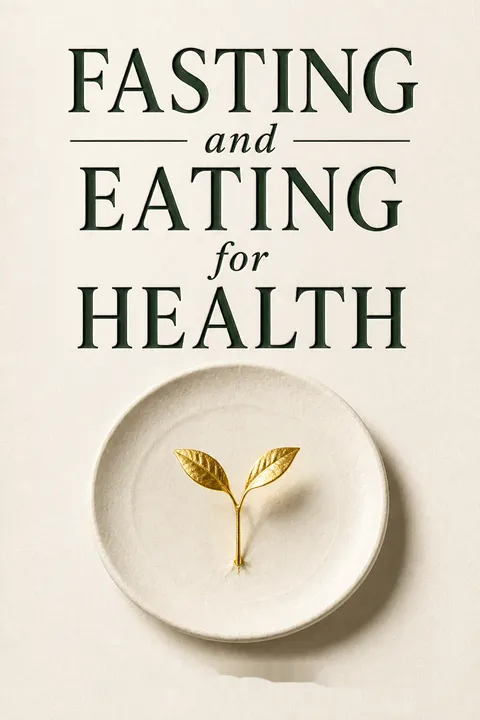
Fasting and Eating for Health is a 1995 medical argument built around one linked prescription: use a supervised fast as an intensive intervention, then maintain health through a whole-food, plant-centered diet. Its chapters move from a personal origin story and a theory of fasting, through nutrition and disease mechanisms, to case-based discussions of headaches, heart disease, diabetes, autoimmune illness, weight, and other conditions. The book's central insight is not simply that fasting may affect physiology. It is that an acute intervention cannot compensate for returning to the habits the author believes helped produce illness.
The adaptation preserves that argument while separating it from the book's confidence in its own explanations. Fuhrman brings together several kinds of evidence: anecdotes from his practice, population comparisons, mechanistic hypotheses, and controlled studies. The strongest claims are those supported by studies of dietary patterns, such as the trial of intensive lifestyle change in heart disease and the fasting-plus-diet study in rheumatoid arthritis. Even there, results from a combined intervention cannot establish that fasting alone produced the benefit, nor guarantee the same result for every patient.
The book also uses terms such as toxins, detoxification, and gut leakage in a broad causal story. These ideas should not be mistaken for proof that symptoms during fasting represent healing, or that chronic disease has one nutritional explanation. Its critique of symptom-focused care is useful when it encourages clinicians and patients to discuss prevention and diet. It becomes less reliable when it portrays medication and surgery as largely ineffective or implies that chronic diseases are generally reversible through one program.
Safety is inseparable from the author's own account. The book warns against self-directed prolonged fasting, notes contraindications, and emphasizes physician oversight. That caution deserves more weight than the promotional language around dramatic recoveries. The most responsible reading is as a historically situated challenge to diet-blind care, not as a do-it-yourself treatment manual or a substitute for contemporary medical evaluation.
Review Summary
Fasting and Eating for Health receives mixed reviews. Some praise its insights on fasting's health benefits, while others criticize its repetitive content and lack of practical advice. Readers appreciate the medical perspective but question the extensive claims about fasting's healing powers. Many find the book informative but note it focuses more on promoting a plant-based diet than fasting itself. Critics argue the information is outdated and anecdotal, while supporters find it life-changing. Overall, the book sparks interest in fasting but leaves some readers wanting more detailed guidance.
People Also Read








Glossary
Therapeutic fasting
Medically supervised abstinenceIn Fuhrman's usage, therapeutic fasting means voluntarily abstaining from calories, usually taking water only, for a period intended to support recovery. He distinguishes it from juice-based plans and insists that prolonged fasts be supervised by a qualified physician. The book presents it as a clinical intervention, not a self-directed cleanse or a replacement for medical evaluation.
Toxicosis
Retained bodily wastesFuhrman uses toxicosis to describe the accumulation of substances he considers disruptive to normal cellular function. These include waste produced inside the body, excess nutrients, and substances taken in through food or medication. He uses the concept to explain symptoms and chronic disease, but it is not a standard diagnosis that independently proves a particular illness is caused by retained toxins.
protein sparing
Reduced protein breakdownProtein sparing is the metabolic adaptation Fuhrman describes during fasting. As the liver produces ketones from stored fat and the brain uses more of them for fuel, the body needs less glucose made from protein. This reduces, but does not eliminate, protein breakdown. The book presents the change as part of the body's adaptation to fasting, not as proof that a prolonged fast is safe for every person.
Immune complexes
Antibody-bound substancesImmune complexes form when antibodies bind to substances the immune system recognizes, such as foreign proteins or cellular debris. Fuhrman discusses them in his account of autoimmune disease, proposing that complexes may collect in tissues and contribute to inflammation. The term describes an immune process; its presence alone does not establish the cause of a particular autoimmune condition or show that dietary change will treat it.
Lifestyle Heart Trial
Intensive lifestyle intervention studyThe Lifestyle Heart Trial, led by Dean Ornish and cited by Fuhrman, studied people with coronary artery disease assigned to an intensive program involving a very low-fat plant-based diet, exercise, and stress management. The book reports that most participants in the intervention group showed regression in coronary narrowing after a year. Because the intervention combined several changes, the trial does not isolate fasting as a cause of improvement.
China-Oxford-Cornell Project
Population diet and disease studyAlso called the China Project in the book, this large population study compared diet and disease patterns across regions of China. Fuhrman cites it to support his argument that diets with fewer animal foods and more plant foods are associated with lower rates of several chronic diseases. Population comparisons can reveal important associations, but they cannot by themselves prove that one food or nutrient caused a health outcome.
About the Author
Other books by Joel Fuhrman


Download PDF
Download EPUB
.epub digital book format is ideal for reading ebooks on phones, tablets, and e-readers.








