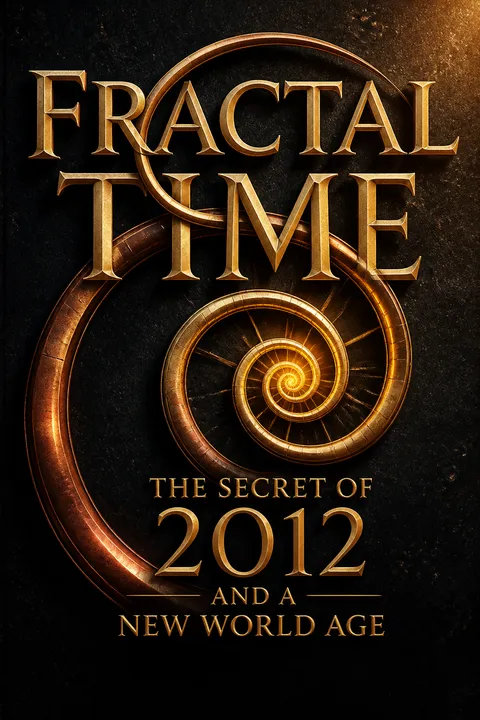


Key Takeaways
Read December 21, 2012 as a calendar boundary, not a doomsday deadline
A cycle's ending. The Maya Long Count marked December 21, 2012 as 13.0.0.0.0, the completion of a cycle that began in 3114 BCE and lasted about 5,125 years. Braden treats the date as the close of one world age and the beginning of another, not the planet's destruction. He connects it to a rare alignment involving the sun and the Milky Way's equator, while stressing that any transition would unfold over years, not overnight.
A date, not a verdict. The book draws on traditions that anticipate upheaval, but its own framing leaves room for gradual change and human choice. The date has passed without a demonstrable, alignment-driven global rupture, a useful reminder to distinguish a calendar's cultural significance from a reliable forecast.
What's valuable here is the shift from apocalypse to transition: endings can be understood as changes in institutions, assumptions, or ways of life rather than the end of existence. The Mayan date is a real calendrical completion, but the claim that it predicts a physical or spiritual turning point is a separate interpretation. The distinction matters because a meaningful symbol can organize reflection without functioning as an astronomical warning system. The date's passage without a clear global transformation also illustrates why specific predictions should be evaluated by observable outcomes, not by how compelling their symbolism feels.
Treat time as fractal: similar conditions recur, but outcomes remain open
Patterns within patterns. Braden uses fractal time to describe cycles that repeat in broadly similar ways across different scales. A cycle may carry conditions resembling those of an earlier period, but the later event need not be identical. The book's central distinction is between predicting a situation's ingredients and predicting exactly what people will do with them.
A warning, not a script. Braden links the surprise attack on Pearl Harbor in 1941 with a 1984 period of nuclear tension and the attacks of 2001. He presents these as different expressions of recurring conditions, not copies of one event. In his model, recognizing a pattern can prompt preparation or a changed response, while the outcome remains uncertain.
This is the book's most useful conceptual distinction. Forecasting conditions rather than exact events resembles scenario planning, where analysts identify vulnerabilities and plausible pressures without claiming to know the precise crisis that will follow. Such forecasts can be actionable if they specify observable indicators and lead to sensible preparation. The risk is that broad descriptions such as conflict, instability, or surprise can be matched to many events after the fact. A pattern becomes more informative when its definition is clear before the outcome, and when failed predictions count as evidence too.
Compare world-age traditions without mistaking resemblance for proof
Many maps of time. Braden places the Maya account of a 5,125-year world age within a larger cycle of roughly 25,625 years, divided into five ages. He compares this scheme with Hopi stories of successive worlds, Aztec accounts of successive suns, and the Vedic sequence of four yugas, or world ages. These traditions differ in their details and in how long their cycles last, but Braden sees a shared theme: periods of decline and upheaval give way to renewal.
A striking setting. The Maya Long Count, the Dendera zodiac, and other ancient records are presented as evidence that earlier cultures tracked long astronomical cycles. Braden treats the parallels as clues to a common understanding of time, while acknowledging that interpretations and dates vary.
Comparative mythology can reveal how different societies make sense of catastrophe, renewal, and historical change. Similar stories may reflect shared human concerns, cultural exchange, or recurring experiences such as flood and famine. They do not, by themselves, establish a common astronomical theory or prove that each tradition describes the same event. The book's comparison is most compelling as a study of how cultures turn time into a moral narrative: decline warns against arrogance, while renewal makes change imaginable. That interpretation can be meaningful even when the claimed scientific agreement remains unverified.
Use fractals to notice resemblance, not to assume one universal code
Nature repeats shapes. A fractal is a pattern whose smaller parts resemble the larger form, though they are not exact copies. Braden points to branching structures such as rivers, lightning, and leaves to explain how simple rules can produce intricate forms at many scales. He argues that similar patterns might also describe cycles in history and personal life.
A second key. The book pairs fractals with the golden ratio, a mathematical proportion related to the Fibonacci sequence. Braden treats this ratio, approximately 0.618 in one form, as a timing rule for when patterns recur. He uses it in his proposed model of time, but examples of fractal forms in nature do not establish that the golden ratio governs every natural process or historical cycle.
Fractal geometry is a powerful way to describe certain complex forms, and self-similarity helps explain how local rules can generate large-scale structure. The leap from that observation to a universal timetable for human events is much larger. The golden ratio appears in some biological and geometric contexts, but it is not a master proportion for all of nature. Keeping the mathematics separate from the metaphysical claim preserves what is genuinely illuminating: patterns can recur at different scales, yet their resemblance does not automatically reveal a shared cause or a predictable schedule.
Treat the Time Code's forecasts as hypotheses, not dependable calendars
A pattern-finding tool. The Time Code Calculator starts with a seed event, such as an attack or a personal loss, and a chosen cycle length. Braden applies the golden ratio to estimate when comparable conditions may recur. He describes three uses: projecting a past pattern forward, searching backward from a future date, and estimating recurring personal experiences.
Examples and limits. For a seed in 1941, the calculator identifies 1984 and 2001 as periods associated with surprise-attack conditions. Braden also applies it to cycles associated with the world wars and the 1929 economic crash, finding later dates that he interprets as moments of risk. The examples are suggestive, but the choice of seed, cycle, and description of matching conditions can shape the result.
The method has an intuitive appeal: it converts a vague sense of history repeating into a repeatable procedure. But repeatability of calculation is not the same as predictive validity. A strong test would define the event categories and dates in advance, compare the results with random or competing models, and record misses as carefully as apparent hits. Without those safeguards, a flexible pattern-finding method can produce convincing matches by selecting a suitable seed after the fact. The calculator is safer as a prompt to examine risks than as a basis for decisions about when a crisis will occur.
Separate environmental evidence from the book's proposed galactic trigger
A physical forecast. Braden compares conditions around 2012 with two dates generated by his model: 1155 BCE and 13,824 BCE. He argues that these periods showed reduced magnetic intensity, increased solar energy, warming, and melting ice, and suggests similar changes were relevant to the modern world. He also discusses a possible magnetic pole reversal, but concludes that the records he uses do not indicate one immediately before or after 2012.
A causal claim. The book links these environmental changes to Earth's position in larger astronomical cycles and to a period of solar activity expected around 2012. That is distinct from the documented existence of climate variation, solar cycles, and changing magnetic fields. The proposed connection between a galactic alignment and those effects is not established by the examples presented.
The distinction between observing environmental change and explaining its cause is essential. Climate, solar activity, and geomagnetic fields are legitimate subjects of measurement, but correlation across selected historical dates cannot show that a galactic alignment drives them. The book's forecast of a 2012 solar maximum also did not land on that year: solar cycle 24 reached its maximum around 2014. This does not make long-term environmental monitoring less important. It does show why causal explanations and time-specific predictions need independent evidence, rather than being inferred from a compelling historical analogy.
Use personal cycles as prompts for reflection, not as proof of fate
A life pattern. Braden describes his parents' separation when he was 11 and says that around age 17.8 he experienced relationships marked by loss and betrayal. He interprets the later experience as a recurrence of the emotional conditions of the earlier one. The calculator also applies the same cycle logic to positive experiences, such as success and accomplishment.
A practical reading. The useful question is not whether a calculation guarantees that a relationship will fail. It is whether an earlier hurt has shaped expectations, choices, or reactions in ways that might repeat. Braden argues that noticing a pattern can help someone prepare and choose differently. His personal story illustrates the idea, but it does not independently demonstrate that emotional events follow a mathematical cycle.
The personal application is strongest when translated into psychological self-inquiry. Early experiences can influence later expectations about trust, belonging, or rejection, and those expectations may affect how a person interprets new relationships. That does not require a cosmic timetable. It does require curiosity about recurring behavior and a willingness to test one's interpretation against the present situation. Numerical predictions can create confirmation bias, especially when ordinary disappointments are read as proof that a cycle has returned. Reflection is useful; treating a date as destiny can make the pattern harder to change.
Choose cooperation during crises; a cycle cannot choose for you
The human decision. Braden presents the Hopi Prophecy Rock as a map of two paths: one associated with imbalance and hardship, another with a more life-supporting way of living. A connecting path represents the possibility of changing direction. This supports his central ethical message: even if conditions repeat, human responses need not. He urges cooperation over competition when resources are scarce and circumstances are stressful.
A wider claim. The book also promotes the Global Coherence Initiative, which proposes that shared emotional focus may affect Earth's magnetic field. It invokes heart-based emotion and a double-slit experiment to support the importance of observation and attention. The initiative's moral invitation to cultivate calm and care is distinct from the stronger scientific claim that collective feelings alter planetary fields.
The call to cooperate is persuasive without requiring the book's most speculative physics. Disaster research and social science repeatedly show that shared threats can produce mutual aid as well as competition, depending on institutions, trust, and access to resources. A focus on care may help people regulate stress and coordinate action, even if it does not alter the planet's magnetic shield. Quantum experiments concern physical measurement and do not establish that human consciousness can freely shape large-scale events. The practical lesson is still substantial: collective attention can change behavior, and behavior can change how communities weather a crisis.
Analysis
Fractal Time is a hybrid of spiritual interpretation, popular science, historical pattern-finding, and personal guidance. Its narrative begins with Braden's fascination with patterns, moves through ancient calendars and modern physics, and ends with a moral appeal for cooperation. That progression makes an abstract subject feel consequential: an ancient date becomes a test of how civilization responds to uncertainty.
The book's central distinction between recurring conditions and fixed outcomes is more defensible than its forecasting machinery. People and societies do encounter recurring pressures, including competition over resources, economic instability, and conflict. Recognizing those pressures can support preparation. But the Time Code Calculator does not establish a reliable predictive method. Its results depend on chosen seed events, selected cycle lengths, and broad labels for what counts as a match. The book presents examples as confirmation without the controls needed to assess how often the method misses or how well it performs against chance.
A similar boundary separates real scientific concepts from the book's extensions of them. Fractal geometry describes self-similar patterns, and astronomy studies long cycles. Neither fact demonstrates that social history follows a phi-based schedule. Nor does quantum measurement show that focused human emotion determines planetary events. The book itself states that it is not peer reviewed, an important qualification given its blending of scientific findings with spiritual claims. Its durable value is therefore less as a forecast of 2012 than as a prompt to examine repetition and agency. The end-date narrative encourages readers to ask which inherited patterns deserve to continue, and which responses deepen a crisis. That question survives the failure of a literal doomsday expectation. A skeptical reading need not dismiss the book's ethical invitation: prepare for observable risks, remain cautious about grand causal explanations, and treat uncertainty as a reason for cooperation rather than fatalism.
Review Summary
Fractal Time by Gregg Braden explores cyclical patterns of time, blending quantum physics, ancient wisdom, and spirituality around the December 21, 2012 Mayan calendar ending. Reviews are polarized: supporters praise its paradigm-shifting concepts about electromagnetic human emotions affecting reality and time's fractal nature, finding it inspirational and well-researched. Critics dismiss it as pseudoscience with selective evidence, dubious mathematics, and leaps in logic that don't withstand scrutiny. Many note its relevance has faded post-2012. Readers appreciate discussions of choice points, repeating historical patterns, and optimistic messaging, though some find the material dated, poorly supported, or overly complex.
People Also Read





Glossary
Fractal Time
Self-similar cycles of timeBraden's term for the idea that conditions in time recur in patterns resembling earlier ones, across different scales and with potentially greater intensity. The concept treats history as similar to a fractal form: patterns repeat without reproducing events exactly. It is the book's proposed model, not an established scientific account of historical prediction.
Time Code Calculator
A cycle-pattern estimatorBraden's method for estimating when conditions associated with a past or future event may recur. It uses a selected seed event, a chosen cycle length, and the golden ratio. The calculator has three modes for projecting conditions forward, searching backward from a target date, and considering personal experiences. Its predictions depend on how events and matching conditions are selected.
Golden ratio
A mathematical proportionA proportion approximately equal to 1.618, or to its reciprocal, approximately 0.618. The book connects it to the Fibonacci sequence and argues that it governs patterns in nature and the timing of cycles. The ratio is a standard mathematical concept, but its use as a general rule for historical events is Braden's proposed application.
Doctrine of World Ages
Cycles of civilizational changeBraden's label for traditional accounts that divide time into successive ages, each ending in major change and giving way to a new period. He compares Maya, Hopi, Aztec, and Vedic traditions, while proposing that astronomical cycles underpin these transitions. The traditions vary in their accounts, chronology, and meaning.
Choice points
Moments for changing directionBraden's use of a term associated in the book with physicist Hugh Everett III. A choice point is a moment when circumstances are understood to make a different outcome possible through a change in human decisions or focus. The book applies this idea to personal patterns and collective crises, rather than treating the future as fixed.
Global Coherence Initiative
A collective emotion projectAn initiative described in the book as combining monitoring of Earth's magnetic field with efforts to cultivate emotional coherence among people. Its proponents propose a two-way relationship between human emotional states and planetary magnetic fields. The book presents the project as a way to study that possibility and encourage coordinated, heart-focused responses.
Tzolkin
The 260-day sacred calendarA 260-day cycle that Braden describes as part of the Maya system of timekeeping. The Tzolkin was intermeshed with a 365-day calendar, and their combined cycles helped structure longer counts. Braden interprets the calendar within a broader cosmology of recurring ages, while its calendrical role is distinct from his claims about predicting modern events.
About the Author
Other books by Gregg Braden

Download PDF
Download EPUB
.epub digital book format is ideal for reading ebooks on phones, tablets, and e-readers.








