

Key Takeaways
Protect human capacities instead of treating them as defects to engineer away.
Divinity, in daily life. Braden uses “divinity” to mean the human capacity to move beyond perceived limits. He associates it with intuition, empathy, imagination, forgiveness, and self-acceptance, rather than with religious membership alone. Artists and engineers, he says, often describe creativity as something that arrives through them, not something they manufacture by force. The book’s central wager is that these capacities are not embarrassing imperfections to eliminate, but part of what makes human life valuable.
A story of expanded limits. Braden recounts Tibetan monks whose meditation reportedly produced brain-wave readings beyond the 40 Hz ceiling once accepted in some accounts. He treats this as evidence that human capacities can exceed expectations. The broader lesson is to question assumptions about human potential, while distinguishing an inspiring example from proof of extraordinary powers.
The ethical force of this idea does not depend on accepting a supernatural definition of divinity. Empathy, creativity, and judgment are meaningful human capacities even when explained through ordinary biology and culture. Framing them as worth cultivating helps resist a narrow view of progress measured only by speed or efficiency. The useful test is not whether a trait is uniquely human, but whether a proposed intervention strengthens people’s agency and relationships. At the same time, the monks’ reported brain-wave readings cannot establish the book’s broader claims about hidden capacities; possibility should invite investigation, not substitute for it.
Rewrite inherited self-stories, but do not mistake influence for destiny.
Experience shapes response. The book argues that beliefs about the self influence everyday choices, from relationships and food to responses to illness. Braden connects this idea to epigenetics, the study of how conditions around a cell can affect gene activity without changing the DNA sequence itself. He also describes how maternal stress during pregnancy can affect a child’s development, citing research on families displaced by war.
The past is not a sentence. Braden’s point is that early hardship may influence later reactions without fixing a person’s future. The book encourages examining the story a person tells about their own worth and abilities, then acting in ways that support a healthier one. It presents this as a route to change, not a promise that thought alone can erase trauma or disease.
This is strongest when it treats self-understanding as one influence among many. A person’s narrative can shape attention, choices, and willingness to seek support, while early stress may have biological and developmental effects. Neither point means that people can simply choose away illness or trauma. That distinction matters because overly strong mind-over-body claims can place unfair blame on those who remain unwell. The practical value lies in combining agency with compassion: a person can revise beliefs and seek help without being told that every outcome reflects a failure of attitude.
Separate DNA’s real storage potential from Braden’s proposed sacred code.
A real capability, then a leap. Researchers have stored digital information in DNA and retrieved it, establishing that DNA can serve as a dense information-storage medium. Braden uses this research to introduce a much more speculative claim about human origins. He converts the atomic masses of the elements in DNA into numbers, maps those numbers to Hebrew letters through gematria, and interprets the resulting pattern as a sacred statement about the divine being embodied in humans.
The method matters. Braden gives odds of roughly one in 234,256 that the short letter pattern would arise by chance. But DNA storage research does not establish that this specific translation is a message. The interpretation depends on choices about numbers, language, and letter mapping. The book presents the result as evidence of intention; readers should understand it as a spiritual interpretation, not a standard genetic finding.
The boundary between discovery and interpretation is crucial here. Showing that information can be written into DNA demonstrates a technical possibility. It does not demonstrate that an ancient message was written there. A convincing decoding would need rules fixed before the result is known, a clear reason to select those rules, and a way to distinguish meaningful patterns from the many alternatives a flexible system can produce. The spiritual reading may still hold personal meaning for readers. Its meaning, however, should not be confused with evidence that genetics has identified a creator or a message encoded in the human genome.
Practice self-regulation before outsourcing every difficult function to technology.
A simple calming routine. Braden presents the body as a form of “soft technology,” meaning a living system that adapts and regulates itself. His practical example is heart-brain coherence, a state he says can be encouraged by focusing attention near the heart, breathing out longer than breathing in, and sustaining a positive feeling such as gratitude for several minutes. The book cites studies associating this practice with changes in stress-related measures and immune markers.
Train capacities, do not just admire them. Braden also discusses visualization and mirror neurons, which respond during some observed and imagined actions. He argues that repeated mental practice can support physical and emotional responses. These ideas make a case for practicing attention, breathing, and emotional regulation. They do not establish that imagery can cure disease or replace professional medical care.
The useful contribution is practical: attention and breathing offer low-cost ways to pause, notice emotional states, and prepare for deliberate action. A living body is not merely a passive machine awaiting upgrades, and habits can support well-being. But a neural response to imagined action does not mean the brain treats imagination and reality as identical in every respect. Nor does a change in a biomarker prove a broad health benefit. Such practices are best understood as potential supports for regulation, not as guarantees or substitutes for evidence-based treatment.
Let witnessed achievement expand possibility, not replace evidence.
A barrier becomes a benchmark. In 1954, Roger Bannister ran a mile in 3 minutes, 59.4 seconds, breaking a barrier that had long seemed unreachable. Forty-six days later, John Landy ran it faster. Braden uses the sequence to show how seeing a comparable person succeed can alter what others believe is possible. The example supports a grounded point: role models can change expectations, encourage effort, and make unfamiliar goals feel attainable.
Inspiration has limits. The book extends this logic to stories of yogic feats, remote viewing, and dramatic healing. Those episodes may inspire readers, but witnessing a claim is not the same as independently verifying it. The sound lesson is to use examples of achievement as invitations to explore human capacity, while keeping the evidence for each extraordinary claim open to scrutiny.
Social learning helps explain why visible examples matter. A difficult goal can seem less abstract when someone with comparable resources demonstrates a route toward it. Bannister’s record is especially useful because it connects belief to training and performance, rather than requiring supernatural explanations. Yet the book also places athletic achievement beside claims of paranormal perception and miraculous healing. The same psychological power that inspires can make dramatic stories persuasive before they are adequately checked. A careful reader can preserve the motivational lesson while asking what was measured, who verified it, and whether other explanations were considered.
Judge technology by what it restores, and what it asks humans to surrender.
Three different thresholds. Braden describes transhumanism as using technology to move human beings beyond ordinary biological limits. He distinguishes prosthetics and implants that restore or extend function, synthetic bodies intended to replace natural bodies, and proposals to copy consciousness onto computer systems. These are not ethically identical. A device that helps someone regain movement is different from a system designed to replace human judgment, intimacy, or creative work.
A warning story. Braden recounts an Indigenous man at Chaco Canyon who said his ancestors built machines after forgetting powers they once possessed. The story works as a parable: tools can serve human needs, but dependence can also narrow what people practice. The book urges readers to ask whether a technology supports human capability or displaces it.
This distinction avoids the false choice between rejecting technology and welcoming every innovation. Assistive devices can expand independence and participation, while systems that collect sensitive data or substitute for human decisions raise different questions. A helpful evaluation asks who benefits, who controls the system, what alternatives remain, and whether people can opt out. The parable of machines mirroring forgotten abilities is evocative, but it should not be read as a literal account of history. Its value is as a prompt to notice what skills and relationships a tool encourages people to practice.
Require meaningful consent before altering the biology future generations inherit.
Power requires guardrails. The book’s central case is the 2018 announcement that a Chinese scientist had gene-edited twin embryos, with the stated aim of changing their susceptibility to HIV. The experiment drew broad condemnation and raised questions that extend beyond its claimed purpose: who decides which traits should be changed, how risks are assessed, and whether the future child can consent?
History sharpens the concern. Braden links embryo editing to eugenics, the effort to shape populations by favoring some traits and suppressing others. He cites forced sterilization in the United States and Nazi Germany’s persecution and killing of people deemed undesirable. His warning is about compulsion, arbitrary ideals of perfection, and unequal access. The ethical distinction between treating disease and designing preferred traits deserves careful, public scrutiny.
The core concern is sound even without the book’s broader claims about a coordinated transhumanist program. Decisions affecting embryos can shape people who cannot consent, and unequal access could make a technology’s benefits available mainly to the affluent. A useful framework separates somatic treatment, which affects an individual, from heritable editing, which may affect descendants. It also distinguishes preventing severe disease from selecting traits to meet social preferences. Caution need not mean a blanket ban on biomedical innovation; it means transparent evidence, independent oversight, meaningful consent where possible, and serious attention to who bears the risks.
Protect attention from fear-driven information that turns neighbors into enemies.
The mind as a battlefield. Braden calls fifth-generation warfare a struggle shaped by information and perception rather than conventional weapons. He uses “the Dangerous Game” for the process by which misleading stories, social-media silos, and fear can erode trust and divide communities. He identifies three pressure tactics: present one doctrine as unquestionable reality, stir fear or guilt, and insist there is no alternative.
Build room to check. The book’s suggested response is to examine original research and records, seek more than one perspective, and question claims that demand immediate compliance. It invokes the Gulf of Tonkin reporting as an example of a distorted account used to support policy. The practical lesson is not to distrust every source, but to slow down before letting alarming information dictate belief or action.
The account captures a real vulnerability of information systems: personalized feeds can repeatedly reinforce existing views, while emotionally charged claims travel quickly. Media literacy is therefore more than collecting sources; it includes checking whether independent sources rely on independent evidence. Skepticism must also apply to congenial claims, not only to messages from institutions or political opponents. Otherwise, distrust becomes another silo. A useful habit is to distinguish documented events, interpretation, and speculation, then update beliefs when stronger evidence appears.
Keep human agency at the center of every technological choice.
Choose the kind of progress. Braden reads the World Economic Forum’s Great Reset and related 2030 plans as signs of a drive toward a digitally integrated society, with AI and surveillance increasingly shaping daily life. He fears that biological monitoring and genetic modification could weaken privacy, sovereignty, and human distinctiveness. Those claims about a unified agenda are the author’s interpretation, not established by the existence of the plans alone.
A practical decision rule. The book closes by urging people to care for their bodies, nurture empathy and creativity, question pressure to adopt new systems, and choose tools that do not diminish human agency. Readers can apply that principle without accepting every prediction: ask whether a technology is safe, voluntary, proportionate, and accountable, and whether it gives people more meaningful choices.
The strongest ending is a civic principle: technological progress should be judged by how it distributes power and preserves meaningful choice, not simply by novelty. That standard applies to implants, data systems, and ordinary software alike. It also avoids the trap of treating “natural” as automatically safe or “artificial” as automatically harmful. The book’s forecast of a near-term hybrid society and its account of elite intent are much less secure than its ethical questions. Readers can take those questions seriously while demanding evidence for claims about motives and outcomes.
Analysis
Pure Human is a spiritual argument about technology, told through a chain of stories and claims about biology, history, and public policy. Its organizing idea is clear: human beings should not accept the premise that they are defective systems awaiting technological repair. The book’s most durable contribution is ethical rather than scientific. It asks readers to distinguish restoration from replacement, convenience from dependency, and genuine consent from pressure disguised as inevitability. Its stories, from Bannister’s mile to the Indigenous account at Chaco Canyon, make that question emotionally legible.
The scientific scaffolding is much less reliable. Human chromosome 2 does contain evidence of an ancestral chromosome fusion, but that finding does not disprove evolution or demonstrate deliberate intervention. The proposed DNA message relies on a flexible numerical and linguistic mapping, not a validated method of reading genetic information. Research on DNA data storage shows that information can be encoded in DNA, not that the human genome contains a spiritual text. Similarly, neural activity during observation or imagery does not show that the body cannot distinguish imagined events from lived ones, and cardiac neurons do not establish independent consciousness or paranormal intuition.
The text also presents disputed claims about AI, vaccines, climate policy, alien warnings, and international institutions with more certainty than its evidence warrants. For example, findings from cultured cells cannot by themselves establish lasting genomic changes in vaccinated people. These leaps matter because readers may mistake a precautionary argument for a demonstrated conspiracy or a speculative hypothesis for scientific consensus.
A stronger version of the book’s case would not need those leaps. Irreversible interventions, surveillance, unequal access, and the substitution of automated judgment for human judgment are legitimate concerns on their own. The adaptation’s practical reading is therefore to preserve agency, ask who benefits and who bears risk, and demand evidence and consent, while treating the book’s metaphysical and political claims as claims to assess rather than facts to inherit.
Review Summary
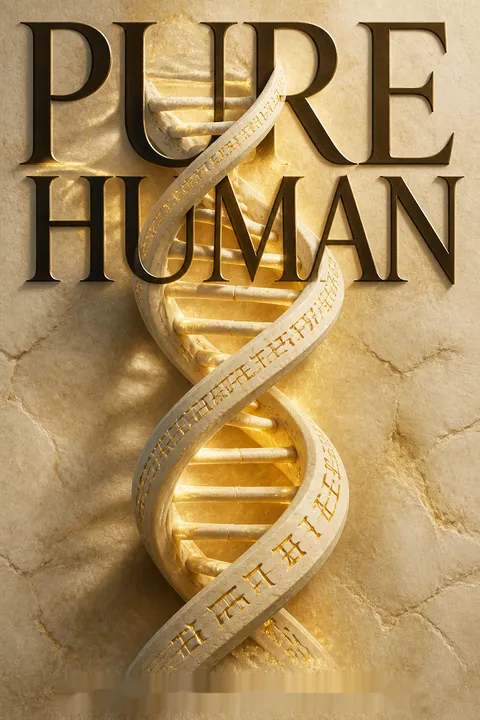
Pure Human by Gregg Braden receives mostly positive reviews (4.46/5), with readers praising its message about human divinity and warnings against transhumanism. Supporters appreciate the exploration of innate human capacities, heart-brain coherence practices, and critiques of technological overreach. Critics note the book feels evangelical, relies on questionable scientific claims (particularly DNA encoding theories), and uses fear-based messaging despite warning against such tactics. Some find it repetitive or unclear in focus. Overall, readers view it as thought-provoking and timely regarding AI and humanity's future, though requiring critical evaluation.
People Also Read



Glossary
Divinity
Capacity beyond perceived limitsBraden uses divinity to describe the human capacity to transcend limits that a person or society has come to accept. He associates this capacity with intuition, creativity, empathy, forgiveness, self-acceptance, and healing. The term functions as both a spiritual idea and an argument for treating human potential as something to cultivate rather than replace.
Transhumanism
Technology beyond natural biologyThe book defines transhumanism as a philosophy that seeks to extend or transform human capacities through technology, including implants, artificial intelligence, synthetic organs, and genetic engineering. Braden presents it critically, especially where it aims to replace biological functions or alter inherited traits. The term also covers a wide range of views, from restorative prosthetics to speculative ideas about uploading consciousness.
Epigenetics
Environmental effects on gene activityEpigenetics studies how factors such as a cell's environment can influence which genes are active, without changing the underlying DNA sequence. Braden uses the concept to argue that life experience and surroundings can affect biological responses. Epigenetics describes mechanisms of gene regulation, but does not mean that every belief or emotion directly rewrites genes or can reverse illness.
Soft technology
The body's adaptive living systemsBraden's phrase for the functions of living cells and neural systems, which he compares to engineered technologies. He points to biological capacities such as adaptation, self-regulation, repair, and information processing as capabilities that artificial systems try to imitate. The metaphor is meant to encourage respect for biology, although it does not establish that the body outperforms machines in every relevant task.
Heart-brain coherence
Coordinated heart and brain rhythmsIn the book, heart-brain coherence is a state of physiological coordination encouraged by focusing on the heart area, slowing the breath with a longer exhale, and sustaining a positive feeling such as gratitude. Braden describes it as a practice that may support regulation and cites studies of related physiological measures. The term does not establish supernatural communication or guaranteed medical outcomes.
Gematria
Interpreting letters through numbersGematria is a traditional interpretive method in which letters are assigned numerical values and words with related totals may be explored for symbolic connections. Braden applies a numerical mapping based on elements in DNA to Hebrew letters, then interprets the resulting pattern as a sacred message. This is a spiritual reading method, not an accepted technique for decoding genetic information.
Fifth-generation warfare
Conflict through information and perceptionBraden uses this term for conflict conducted through information, narratives, and public perception rather than primarily through physical weapons. In his account, misinformation and fear can weaken trust within communities and influence social choices. The concept helps frame risks of propaganda and algorithmic amplification, but does not mean that all disagreement or media influence is part of a coordinated campaign.
The Dangerous Game
Division that undermines social trustBraden's label for a process in which fear-based or misleading narratives encourage people to distrust, shame, or turn against one another. He argues that weakened social bonds make people more willing to surrender decision-making to outside authorities. The phrase organizes his critique of polarization and information manipulation; it is not the name of a formally established scientific framework.
About the Author
Other books by Gregg Braden




Download PDF
Download EPUB
.epub digital book format is ideal for reading ebooks on phones, tablets, and e-readers.








