

Key Takeaways
Treat words as emotional levers, not magical commands to the universe.
Words shape attention. Braden’s central claim is that language can change how people interpret experience, feel, and respond. He invokes linguist Benjamin Lee Whorf, whose work suggested that a language’s structure influences its speakers’ view of the world. The book’s example is Hopi descriptions that emphasize events as unfolding processes rather than fixed objects. That interpretation of Hopi has been disputed, but the broader practical point remains: the labels used for a problem can narrow or widen the ways it seems possible to address it.
Use words deliberately. Braden presents prayers, chants, and mantras as verbal prompts that can call up feelings such as safety, courage, or care. Their value need not depend on accepting every spiritual claim attached to them. A phrase can serve as a chosen frame for meeting a difficult moment.
The strongest version of this idea is not that words control reality, but that they help organize attention. Calling an event a temporary setback rather than a permanent defeat can change which options come to mind, even if the facts remain unchanged. This connects the book’s spiritual vocabulary to cognitive reframing, the practice of testing alternative interpretations of stressful events. Language does not determine thought in a simple, mechanical way, and people can think beyond the words their language supplies. Still, repeated phrases can become useful cues for a different response, especially when they carry personal meaning.
Pair a chosen phrase with breath, feeling, and three minutes of attention.
Make recitation embodied. Braden’s practical method begins with learning the code and its context. Then shift attention toward the heart area, breathe more slowly, and invite a feeling such as gratitude or care. Read or repeat the phrase for at least three minutes, silently or aloud, and notice changes in the body and emotions. The named Quick Coherence Technique combines heart-focused attention and slower breathing with an attempt to evoke a positive feeling. The book proposes that this prepares a person to absorb a phrase more fully.
Track your own response. The exercise is not a test with a correct result. Notice whether tension, fear, or calm changes, without demanding an instant transformation. The practice can be repeated at different times of day, including during stress.
The method combines elements that are independently familiar in contemplative practice: paced breathing, focused attention, emotional imagery, and repetition. Its practical strength is that it gives an unsettled person a sequence to follow rather than asking for vague calm. The body check also encourages observation over self-judgment. The book’s explanations about special heart neurons and a direct channel to the subconscious go beyond what the exercise itself establishes. A reader can test whether the routine feels useful without accepting those mechanisms as proven. For severe or persistent distress, a brief ritual should complement, not replace, appropriate care.
Borrow refuge from a tradition, a teaching, or a caring community.
Protection can be internal. The protection section gathers material from several faiths: Psalm 91, the Buddhist Prayer of Refuge, the Lord’s Prayer, and the Gayatri Mantra. Their traditions differ, but Braden reads them as ways to rehearse trust and orient attention toward something larger than immediate danger. The Buddhist prayer names three refuges: the Buddha’s example, the Dharma or teaching, and the Sangha, the community. In this interpretation, protection includes a path to follow and people among whom one need not face hardship alone.
Choose a phrase that fits. Psalm 91’s shelter imagery and the Gayatri Mantra’s appeal for clarity offer different emotional entry points. Braden recommends repetition with focused attention, not merely reciting words automatically. The codes can function as anchors when fear makes thinking feel scattered.
This section’s range is a strength: one person may find comfort in scripture, another in a communal commitment, and another in a repeated sound. The Buddhist refuge is especially practical because it distributes support across a model, a body of teaching, and a social network. That is more robust than relying on solitary willpower. At the same time, spiritual language should not be mistaken for physical security. If a danger is concrete, refuge may also require leaving, seeking help, or making a safety plan. The phrase can support action, but it cannot substitute for it.
Let sacred claims comfort fear without mistaking metaphor for proof.
Fear seeks reassurance. Braden groups many anxieties beneath deep concerns about abandonment, worth, and nonexistence. To address the last, he presents teachings from the Katha Upanishad, the Pyramid Texts, the Bhagavad Gita, and the Essene Gospel of Peace. Each offers a different image of an enduring essence beyond bodily death. Their shared role in the book is to give a frightened person a way to imagine continuity rather than annihilation.
Separate belief from evidence. Braden also invokes conservation of energy, which says energy changes form rather than disappearing. That physical principle does not demonstrate that an individual soul or consciousness survives death. The sacred passages are best understood as spiritual teachings and sources of meaning, not as conclusions established by physics. Repeating one may still ease fear, while leaving the ultimate question open.
The distinction between consolation and proof matters here. A religious account can give a person a meaningful place to stand without functioning as a scientific explanation. Conservation of energy concerns measurable physical quantities in physical systems; it does not establish personal survival after death. Keeping those categories clear protects both scientific reasoning and spiritual practice. The passages also offer a useful psychological function: they make room to contemplate mortality without treating fear as a problem that must be solved by certainty. Comfort need not depend on pretending that a contested metaphysical claim has been verified.
Name grief honestly; acceptance begins where pretending stops.
Loss changes the mourner. Braden argues that grief is not a defect to correct quickly. A relationship shapes the person who participates in it, so a death or other profound loss changes the mourner’s world and sense of self. The book presents grief as an experience each person must undergo, even when others offer support. Its code from the Buddhist nun and poet Otagaki Rengetsu acknowledges both the impermanence of life and the particular pain of being the one who remains.
Allow the feeling. Braden contrasts denying grief with accepting it, arguing that feeling the absence is part of healing. The Pavamana Mantra gives that movement a ritual form, turning from confusion and sorrow toward calm. The point is not to hurry toward peace, but to make space for what the loss means.
Rengetsu’s contribution is not a clever solution to grief. It is the plain recognition that understanding impermanence does not make bereavement painless. That distinction helps prevent spiritual ideas from becoming a demand to grieve correctly. Contemporary grief approaches also emphasize that mourning is not a uniform sequence with a fixed timetable; people may move between acute pain and ordinary life in uneven ways. The book’s invitation to acknowledge loss is valuable, provided acceptance is not treated as a deadline or as resignation. Naming pain can be the beginning of adaptation, not evidence that someone has failed to move on.
Release the demand that love remain unchanged, not the love itself.
Attachment can intensify pain. Braden uses the Buddhist idea commonly summarized as losing what one clings to. He explains this through the three marks of existence: impermanence, suffering, and non-self. In his account, suffering grows when people expect relationships and circumstances to stay fixed. Non-self means loosening the idea of an isolated, permanent ego and seeing oneself as connected to a wider world.
Do not confuse release with indifference. Braden explicitly distinguishes nonattachment from denying grief or pretending a person did not matter. His image of life favors harmony over perfect balance: relationships and circumstances shift, and wellbeing depends partly on adapting to that movement. The practical invitation is to cherish a bond without requiring it to remain exactly as it was. This can soften the struggle against change without erasing the importance of what has been lost.
The distinction between attachment and care is essential. A person can love deeply while recognizing that another person cannot be possessed or kept unchanged. This resembles the difference between valuing a relationship and making one’s entire sense of safety depend on controlling its future. Yet nonattachment can be misapplied as emotional withdrawal, particularly when someone uses spiritual language to avoid vulnerability. The book’s clarification helps: the aim is to reduce the demand for permanence, not to suppress affection. Grief and love can coexist, and adaptation need not diminish the bond’s significance.
Train attention to find beauty without denying what hurts.
Beauty is a chosen focus. Braden presents the Navajo Beauty Prayer as a way of placing beauty around oneself and making it a guide for living. In the account of Mother Teresa, a flower growing in discarded material becomes an example of finding life and dignity in a harsh setting. The lesson is not that suffering is secretly pleasant. It is that attention can notice something valuable even when pain is also present.
Use the choice carefully. The book argues that seeking beauty can shift a person’s emotional perspective and restore a sense of agency. Its Vedic mantra to Shiva offers a related image of strength through transformation: what must change can make room for a new expression of the self. Together, these ideas present resilience as a choice of orientation, not a claim that circumstances are easy or fair.
Attention is selective, and deliberately noticing beauty can counter the way distress makes threat dominate awareness. The practice is most humane when it expands perception rather than edits reality. A flower does not cancel deprivation, and appreciation should never be used to silence someone describing harm. This is where the book’s insight benefits from an ethical boundary: beauty can help a person endure or act, but it is not a substitute for changing preventable conditions. Properly used, the practice adds a source of meaning alongside pain instead of asking pain to disappear.
Recover your capacity to love before seeking another person to complete you.
Watch for gradual depletion. The Gospel of Thomas parable of the woman and the jar describes a woman carrying meal that leaks away unnoticed until she reaches home and finds the container empty. Braden interprets the jar as a person and its contents as capacities for love, trust, and compassion. Repeated compromise or betrayal, he suggests, can make someone less willing to offer those qualities without noticing the change.
Bring love back into view. The book argues that attraction to another person can sometimes reflect qualities someone has disowned or lost confidence in themselves. It also presents forgiveness as a way to release the burden of hatred, not as an excuse for wrongdoing. Eva Kor, a Holocaust survivor, described feeling freed from pain after choosing to forgive a Nazi doctor. Forgiveness remains personal; safety and boundaries still matter.
The jar is a memorable image for how self-protection can become so habitual that a person stops noticing what it costs. Its interpretation should be held gently: difficulty trusting is not proof that someone has failed to love themselves, and attraction is not always a projection of lost traits. Kor’s story shows that forgiveness can be empowering when it is freely chosen. It should not become a moral obligation imposed on survivors or a reason to resume unsafe contact. Recovery may include forgiveness, anger, distance, support, or some combination of them.
Turn chosen words into strength by making a decision and acting.
Choice gives strength direction. Braden connects inner strength with the ability to choose how to respond. He highlights the mantra Om Namah Shivaya as an invocation of transformation, interpreting Shiva not only as a destroyer but also as a force that makes change possible. In this reading, strength means releasing a limiting self-image and choosing a different course, rather than simply enduring more.
Use declarations as prompts. The book’s Power Codes are the short phrases “I am” and “I will.” Braden treats them as ways to state a present identity or chosen outcome, followed by attention to the feeling associated with it. His account ties these words to a Universal Field that reflects consciousness, a metaphysical claim not established by quantum physics. The practical value is clearer when the declaration helps specify an intention and prompts a concrete next step.
A declaration can help turn an abstract wish into a decision: saying that a person is choosing recovery, or will make a difficult call, focuses attention on agency. That resembles implementation planning, in which an intention is linked to a specific action. The book’s claims that consciousness alters a universal field draw on interpretations of quantum experiments that do not show people manifesting life outcomes through thought. Separating the useful behavioral prompt from the unsupported physics makes the practice sturdier. Words may guide action, but action and circumstances still shape what follows.
Remove the poison first; answers to every question can wait.
Act on urgent harm. In the Buddhist Parable of the Poison Arrow, a wounded man refuses treatment until he learns who shot him, why, and other details. The Buddha’s point, as presented here, is that the man may die while chasing answers that are not needed to remove the arrow. Braden uses the story to examine procrastination: people can delay a necessary decision by demanding a complete explanation first.
Start with the immediate problem. In a harmful relationship, for example, a person may not need to understand every detail of the other person’s past before taking a step toward safety. The parable does not mean that information is always irrelevant. It asks whether the unanswered question is essential to the next action, or merely postponing it.
The parable is a sharp antidote to analysis used as avoidance. It asks a practical question: what must be handled now to prevent further harm? That question is useful in health, relationships, and work, where delay can narrow options. But not every apparent arrow should be removed without diagnosis. Medical decisions, legal risks, and complicated interpersonal situations can require informed advice. The lesson is not to act impulsively; it is to distinguish information needed for a safe next step from certainty that no human being can obtain. Urgency and care belong together.
Analysis
The book is best understood as a practical anthology organized around five human pressures: protection, fear, loss, strength, and love. Its governing proposition is that inherited words can act as emotional instruments. A prayer, mantra, or parable gives an experience a frame, and repetition may help a person inhabit that frame long enough to respond differently. The book’s narrative movement is from ancient traditions to a modern ritual of breath, attention, and recitation, then outward to choice and action.
Its most durable contribution is the combination of emotional specificity and accessibility. Instead of prescribing one universal sacred vocabulary, it places Buddhist, Christian, Hindu, Navajo, and Egyptian materials beside one another, letting readers find language that resonates. The stories do more than decorate the advice: Rengetsu’s grief, the leaking jar, and the poisoned arrow make abstract ideas about impermanence, self-loss, and procrastination easier to recognize in ordinary life.
The evidentiary strength varies. Slow breathing, focused attention, repetition, and personally meaningful ritual are plausible tools for shifting a moment’s emotional tone. The book’s claims about genes, the heart’s special neural role, and quantum observation are much less secure as explanations of how these practices work. In particular, physics does not establish that thoughts manifest desired life events or that conservation of energy proves personal survival after death. The useful adaptation is therefore neither wholesale acceptance nor wholesale dismissal: keep the practices and ethical insights, while distinguishing spiritual belief, psychological utility, and scientific evidence.
That distinction also protects the book’s humane themes. Acceptance should not become pressure to stop grieving, forgiveness should not erase accountability, and beauty should not excuse preventable suffering. Read with these boundaries, the codes become prompts for reflection rather than guarantees. Their promise is modest but meaningful: words may help someone find a steadier next response when circumstances cannot be instantly changed.
Review Summary
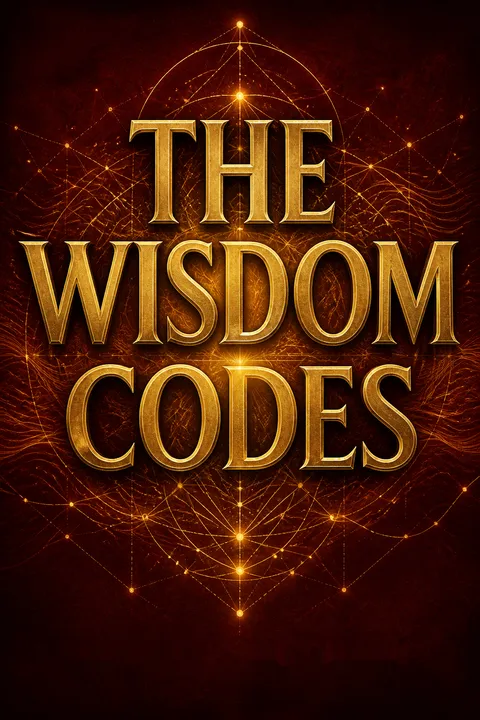
The Wisdom Codes receives overwhelmingly positive reviews, with readers praising its insightful exploration of spiritual practices and teachings. Many appreciate Braden's thorough research, diverse wisdom sources, and the book's practical applications for meditation and personal growth. Readers find the historical context and explanations of religious texts particularly valuable. Some view it as a reference book for life's challenges, while others describe it as life-changing. A few critics find it less engaging than Braden's previous works, but overall, it's highly recommended for spiritual seekers.
People Also Read








Glossary
Wisdom Codes
Meaningful phrases for emotional supportBraden’s name for prayers, mantras, chants, hymns, and other inherited language used to meet difficult emotional states. He presents the words as prompts that can evoke feelings such as safety, strength, or acceptance when spoken with attention and personal meaning. Their proposed benefit is emotional and spiritual; the term does not establish that the phrases directly alter external events.
Quick Coherence Technique
Breathing and positive-feeling practiceA two-part practice attributed to the HeartMath Institute. First, a person focuses attention near the heart and slows the breath. Second, the person tries to evoke a regenerative feeling such as appreciation or care. Braden recommends using this state before repeating a wisdom code. The practice is intended to support emotional regulation and focused reflection.
psychophysical coherence
A state of body-mind harmonyThe book’s term for a condition of coordinated emotional and physiological functioning that it associates with slower breathing, heart-focused attention, and positive feelings. Braden presents coherence as a state that can help someone approach a wisdom code with less stress. The term describes the book’s framework and should not be read as proof of every proposed mechanism involving the heart.
three marks of existence
Buddhist account of lived experienceA Buddhist teaching presented as impermanence, suffering, and non-self. Impermanence means that conditions change. Suffering is connected, in the book’s explanation, to clinging to what cannot remain fixed. Non-self points toward loosening identification with a separate, permanent ego. Braden uses the teaching to frame grief and encourage adaptation without denying affection or loss.
Power Codes
Brief declarations of chosen intentBraden’s label for the phrases “I am” and “I will,” which he presents as concise declarations of identity or intended outcome. He recommends stating a clear aim while cultivating the feeling associated with it. The book also connects these phrases to a Universal Field, but that metaphysical account is distinct from the practical use of declarations to clarify intentions and prompt action.
Universal Field
Proposed connective energy of realityBraden’s spiritual and metaphysical model of an underlying field that connects all things and reflects human beliefs and consciousness in lived experience. He uses this model to interpret the Power Codes and quantum physics. The book’s use of the term is broader than established physical descriptions of fields, and quantum experiments do not demonstrate that intention can manifest chosen life outcomes.
FAQ
What's "The Wisdom Codes" by Gregg Braden about?
- Ancient Words for Healing: "The Wisdom Codes" explores how ancient words, prayers, and mantras can rewire our brains and heal our hearts. Gregg Braden delves into the power of language to influence our emotional and physical well-being.
- Collection of Wisdom: The book is a compilation of revered prayers, mantras, chants, and hymns from various spiritual traditions, designed to provide reassurance, protection, and healing.
- Practical Application: Braden offers a modern-day manual for using these ancient words to navigate life's challenges, emphasizing their timeless relevance and transformative potential.
Why should I read "The Wisdom Codes"?
- Emotional and Spiritual Growth: The book provides tools for emotional healing and spiritual empowerment, making it valuable for anyone seeking personal growth.
- Ancient Wisdom in Modern Times: It bridges ancient spiritual traditions with contemporary science, offering insights into how words can influence our biology and emotions.
- Practical Techniques: Readers can learn practical techniques to apply these wisdom codes in their daily lives, enhancing their ability to cope with fear, loss, and other challenges.
What are the key takeaways of "The Wisdom Codes"?
- Power of Words: Words have the power to influence our genes and emotions, as supported by scientific studies and ancient wisdom.
- Timeless Wisdom: The book emphasizes the timeless nature of spiritual traditions and their relevance in addressing modern-day challenges.
- Self-Regulation: By consciously applying these wisdom codes, individuals can rewire their brains and choose how they respond to life's extremes, becoming masters of their destiny.
How does Gregg Braden suggest using the wisdom codes?
- Heart/Brain Coherence: Braden recommends creating coherence between the heart and brain to optimize the effectiveness of the wisdom codes. This involves focusing on the heart and activating positive feelings.
- Repetition and Affirmation: The power of the codes comes from their repetition and doing so in the affirmative, imprinting them on the subconscious mind.
- Practical Steps: The book provides a step-by-step guide to familiarize oneself with the codes, shift focus, and notice changes in the body and emotions.
What are some of the wisdom codes mentioned in the book?
- Psalm 91: Known as the Prayer of Protection, it offers reassurance and safety in times of danger.
- Buddhist Prayer of Refuge: This code provides spiritual protection and is used until enlightenment is attained.
- Gayatri Mantra: A Vedic mantra that addresses personal protection and the clearing of obstacles.
What is the significance of the "I Am" and "I Will" power codes?
- I Am: This power code claims the truth of the moment and is linked to the biblical revelation of God's name to Moses, emphasizing existence and presence.
- I Will: It affirms empowerment to choose an outcome, as demonstrated by Jesus in the Bible, declaring the existence of an outcome already present.
- Manifestation: Both codes are used to manifest desired outcomes by declaring them with clarity and nonattachment.
How does "The Wisdom Codes" relate to modern science?
- Neuroscience and Biology: The book discusses how words can change the brain's wiring and influence gene expression, supported by recent scientific discoveries.
- Quantum Field: Braden connects the wisdom codes to the concept of a universal field of energy, aligning ancient spiritual insights with modern quantum physics.
- Consciousness and Creation: The book suggests that consciousness is a creative force, and our words and thoughts can shape our reality.
What are the best quotes from "The Wisdom Codes" and what do they mean?
- "A single word has the power to influence the expression of genes..." This quote highlights the profound impact words can have on our physical and emotional states.
- "I know nothing in the world that has as much power as a word." Emily Dickinson's quote underscores the transformative potential of language.
- "Words can light fires in the minds of men." This quote by Patrick Rothfuss emphasizes the inspirational and motivational power of words.
How does Gregg Braden address the concept of fear in "The Wisdom Codes"?
- Universal Experience: Fear is recognized as a universal emotion, with the book exploring its different manifestations and underlying causes.
- Ancient Reminders: The wisdom codes remind us of our eternal essence, helping to alleviate the fear of annihilation and nonexistence.
- Scientific Support: The book references scientific studies that show how words and thoughts can influence our perception of fear and stress.
What role does loss play in "The Wisdom Codes"?
- Inevitable Experience: Loss is presented as a natural and inevitable part of life, with the book offering wisdom codes to help navigate grief and healing.
- Energy and Emptiness: The book explains how the loss of a loved one creates an emotional vacuum, and how wisdom codes can help fill that void with healing.
- Path to Healing: By embracing grief and loss, individuals can discover a deeper capacity for love and personal growth.
How does "The Wisdom Codes" explore the theme of love?
- Primal Force: Love is described as a primal force that can preserve or destroy lives, with the book emphasizing its healing power.
- Choice of Love: The book highlights the importance of choosing love in the presence of hurt, transforming pain into personal growth.
- Forgiveness and Healing: Love is linked to forgiveness, with the book illustrating how forgiveness can free individuals from the burden of past hurts.
What are the parables included in "The Wisdom Codes" and their significance?
- The Woman and the Jar: This parable illustrates the gradual loss of self-love and the importance of reclaiming lost parts of oneself.
- The Poison Arrow: It emphasizes the practical benefit of addressing life's challenges immediately, rather than waiting for preconditions that may never be met.
- Storytelling Power: The parables demonstrate the power of storytelling to convey wisdom and life lessons, resonating with the human brain's natural affinity for stories.
About the Author
Other books by Gregg Braden




Download PDF
Download EPUB
.epub digital book format is ideal for reading ebooks on phones, tablets, and e-readers.








