

Key Takeaways
Treat a state line as a political boundary, not just a map mark
Geography shapes citizenship. Medicaid covers upward of 70 million Americans, but its federal-state design lets states set many of the rules. Terrie, a mother who had relied on Medicaid in several states, said Georgia ended her coverage after she took a part-time job, even though she could not afford private insurance. A prescription for her visiting grandmother cost $190 because Medicaid would not travel across state lines. John stayed in Michigan rather than risk losing care for a chronic illness, while Daphne injured herself waiting to return to New York for treatment unavailable under North Carolina’s stricter rules.
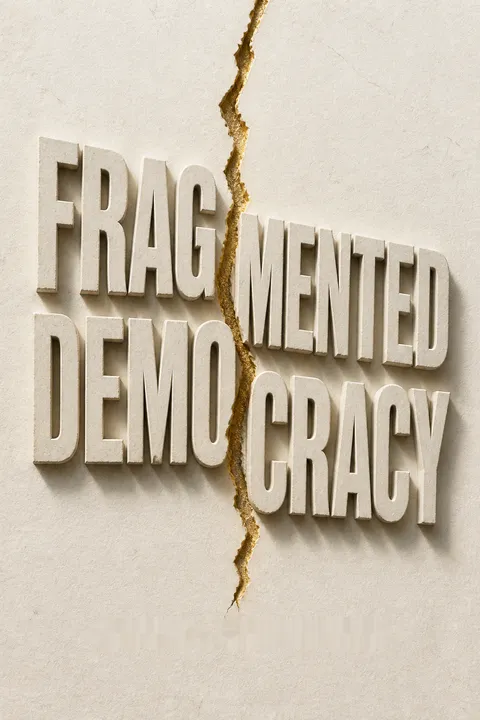
Variation has political consequences. Their stories show how a national program can make people’s access to care, ability to move, and sense of influence depend on where they live. Michener calls this fragmented democracy: geographic differences in policy also produce unequal experiences of citizenship.
What's striking is how constitutional structure becomes legible through ordinary logistics: a prescription that cannot cross a border, or a move that threatens essential care. This is a useful corrective to accounts of citizenship focused only on formal rights. People also judge belonging through whether public institutions remain dependable when they travel, work, or seek opportunity. Yet a uniform national rule would not automatically solve every problem. The deeper test is whether local discretion is paired with a reliable baseline of access and meaningful recourse.
Judge Medicaid by the political lessons its daily administration teaches
Gratitude and criticism coexist. Beneficiaries often described Medicaid as lifesaving, then recounted what it would not cover or how eligibility rules could change. Kay’s premature son faced enormous medical costs, and Medicaid covered care that her family’s private insurance could not. His eligibility depended on narrowly defined birth details, which Kay experienced as a matter of luck. Other interviewees described losing dental coverage, struggling to reach caseworkers, or finding that a medication was suddenly excluded.
Policy teaches through experience. Michener identifies two recurring lessons: government may lack the resources to meet basic needs, and its support may be unreliable. These are not simply abstract opinions about politics. They arise from specific encounters with coverage decisions, paperwork, waiting, and denial. Beneficiaries often connected those encounters to doubts that political action could change the system.
The distinction between policy benefits and policy experience is powerful. A program can improve health while its administrative burdens teach people that public institutions are difficult to reach or trust. This helps explain why satisfaction surveys can miss politically consequential frustration: a person may be deeply grateful for coverage and still feel abandoned by its rules. The argument also invites care in interpreting cynicism. Disengagement may reflect an accurate reading of limited influence, not apathy or deficient civic knowledge.
Trace participation through policy, place, and the institutions connecting them
A multilevel map. Michener’s Contextualized Feedback Model of Political Participation combines three approaches: individual characteristics, policy feedback, and the effects of social context. It adds federalism as a larger institution shaping state, county, and neighborhood settings. Those settings influence how policies are designed and administered, which in turn affects people’s political capacity: their willingness and ability to act within the conditions they face.
Participation is broader than voting. The model includes electoral activity, but also appeals inside public agencies, local community involvement, and advocacy for policy change. Lucy’s experiences illustrate the links: local bureaucratic relationships, state Medicaid rules, and neighborhood institutions all shaped how she understood government and what she did in response. The framework treats policy as both an outcome of politics and a force that helps produce future political behavior.
The model’s strength is its refusal to treat context as background scenery. A person’s response to a policy depends partly on which level of government controls it, where implementation occurs, and what nearby institutions make possible. This resembles ecological approaches in public health, where individual outcomes emerge from interacting layers rather than one isolated cause. The framework is also demanding: its many levels can make causal claims difficult to test. Michener’s combination of interviews, administrative records, and surveys helps, but does not erase that challenge.
A national program can still ration health by ZIP code
Fragmentation has a history. Medicaid grew from a long tradition of leaving poverty relief and much health care to states and localities. The program began in 1965 with broad state discretion, and federal rules expanded over time without eliminating local variation. In 2012, the Supreme Court made the Affordable Care Act’s Medicaid expansion optional for states. By June 2017, nineteen states had not expanded, leaving many poor adults in a coverage gap.
The differences are concrete. In 2010, Medicaid financed 69 percent of births in Louisiana, compared with 26 percent in Massachusetts. Adult coverage also varied sharply: some states offered no dental care, while others imposed spending caps or co-payments. Medicaid’s federal matching formula gives poorer states more federal support, but the book shows that this has not erased geographic disparities in services or eligibility.
The historical account complicates the familiar claim that decentralization naturally produces useful policy experimentation. Variation can support innovation, but in health care it also means that similar needs receive different responses across borders. The key question is not whether every state must administer programs identically. It is which decisions are safe to localize, and which require a common minimum. When the resource at stake is timely medical care, a policy experiment can impose costs on people who had no meaningful choice about where they live.
Track Medicaid cuts because they can quiet beneficiaries’ political voice
The overall pattern is negative. In survey analyses, Medicaid beneficiaries were less likely than comparable non-beneficiaries to vote, register, or participate in the political activities measured. The estimated differences were about five percentage points for voting and registration and six points for participation. These results remained after several statistical checks, including matching respondents with similar measured characteristics.
State policy changes matter. Beneficiaries in states that had recently reduced Medicaid benefits were roughly four to nine percentage points less likely to vote, register, or participate than those in states without such reductions. Expansions were associated with more registration and participation; a broader range of optional services was associated with more voting. These are observational findings, not definitive proof of causation, but they show that the Medicaid-to-politics relationship varies with state policy choices.
The findings sharpen the idea of policy feedback: the political effect is not simply a consequence of enrolling, but of the conditions under which people receive support. A cut can signal that government is unreliable, while an expansion can make public action seem more responsive. Still, the evidence should not be mistaken for a universal law. Participation depends on parties, mobilization, health, and local organizations too. The practical implication is to assess social programs not only by enrollment and spending, but also by whether their design leaves recipients more able to be heard.
Count bureaucratic appeals as political action, not mere paperwork
Resistance can be personal. Michener calls particularistic resistance the actions people take to challenge decisions they view as harmful to their own access to public benefits. A beneficiary might press a supervisor, file a complaint, or request a fair hearing. Shana’s husband lost Medicaid and stopped filling an expensive epilepsy prescription; after a seizure nearly caused him to bite off part of his tongue, she still felt that challenging the decision might achieve nothing.
Appeals are rare and locally shaped. Between 2004 and 2011, only about 86 of every 100,000 New York beneficiaries and 26 of every 100,000 Florida beneficiaries initiated Medicaid fair hearings. County education, racial composition, staffing, and hearing delays related differently to appeals in the two states. Low appeal rates therefore do not necessarily mean that decisions are fair. They can also reflect the time, knowledge, and confidence required to challenge an agency.
This broadens the definition of political voice in a valuable way. A hearing request may concern one household, yet it forces a public agency to justify how it distributes a vital resource. It also exposes a measurement problem: standard participation surveys rarely count this kind of action, although it can have immediate consequences for health and security. At the same time, appeals cannot substitute for collective representation. A system that requires each person to contest decisions individually may reward those with the most time, literacy, and institutional confidence.
Do not separate health benefits from the neighborhoods delivering them
The local setting enters the policy experience. Interviewees connected Medicaid to clinics, offices, and hospitals in their neighborhoods. Daphne avoided a crowded health center near a shelter and areas she associated with robbery and drug use. Mabel contrasted a well-run suburban welfare office with a crowded, deteriorated office in Chicago, where she could not bring herself to wait for help.
Disorder sharpened the political effect. In a survey of Chicago adults across 343 neighborhood clusters, Medicaid had a negative relationship with political participation overall. Among beneficiaries, those who perceived the most neighborhood disorder were less likely to participate than those who perceived little disorder. Perceived social cohesion, by contrast, did not significantly alter Medicaid’s relationship with participation in these analyses. The study suggests that neighborhood conditions can intensify policy’s political effects.
The chapter links two subjects often studied separately: social policy and neighborhood inequality. A clinic is not just a service point; its location, surroundings, and treatment of visitors become part of what government feels like. This insight also cautions against judging a people-focused program without considering the places where people encounter it. The evidence is suggestive rather than conclusive: perceptions of disorder can reflect different experiences and the survey covers one city. Even so, the proposed mechanism is concrete and worth testing elsewhere.
Build advocacy across states without letting federalism split the coalition
Beneficiaries can become advocates. In Iowa, Riley used an online group to connect Medicaid recipients, relatives, and providers, then helped organize attendance at legislative hearings and contact with representatives. Kay, a nurse and mother of a disabled child, testified against a proposed privatization plan and eventually moved her family to Minnesota because she judged its Medicaid system more reliable. In Florida, Frank pushed for expansion online but struggled to coordinate organizations with different priorities.
Federalism both equips and divides. Advocates used experiences in other states as evidence, found several levels of government to approach, and built local networks. Yet elected officials could shift blame to another level, and fragmented state systems made it difficult for organizations to represent beneficiaries with very different experiences. Public-benefits lawyers sometimes turned individual cases into broader pressure for administrative change, including a Pennsylvania effort that helped restore access for about 200,000 people.
The advocacy stories show that political capacity is not fixed: networks, accessible communication tools, and a concrete threat can help beneficiaries become organizers. They also reveal the cost of depending on exceptional individuals, especially people already managing illness, caregiving, and financial strain. Advocacy organizations face a related tension: statewide or national messages can unite people, but may flatten differences that matter locally. Durable representation requires both coordination across jurisdictions and structures that give affected people real authority, rather than occasional invitations to tell their stories.
Analysis
The book’s central contribution is to show that federalism is not only a way to distribute authority. It also distributes the political consequences of public policy. Medicaid makes that argument unusually tangible because coverage is essential, administration is frequent, and state discretion is extensive. A person does not need to understand constitutional law to learn what federalism means. A denied prescription, a clinic that feels unsafe, or a move that threatens treatment can teach that access depends on geography and that government is divided in ways that are hard to influence.
The book also expands what counts as participation. Voting is only one channel. Appeals, complaints, neighborhood engagement, and policy advocacy reveal political agency in places where conventional measures may record withdrawal. This is an important conceptual move because apparent disengagement can coexist with intense negotiation with public institutions. The same person may distrust elections yet spend hours trying to preserve medical care.
The evidence is strongest as a layered account rather than as a single causal estimate. Interviews identify mechanisms and give beneficiaries interpretive authority. Survey analyses show patterns across larger samples, while administrative records reveal county variation. Together, these methods make a persuasive case that policy context matters. They cannot establish that every observed association is caused by Medicaid, or that the patterns extend unchanged beyond the states, periods, and populations studied. That limitation supports further inquiry, not dismissal.
The normative challenge is to distinguish productive local adaptation from unequal exposure to risk. Federalism can create learning, access points, and policy models. But when basic care varies sharply by residence, local flexibility can become a way to normalize unequal citizenship. The book’s most useful test is therefore practical: does decentralization improve responsiveness while protecting a dependable floor of care and voice? If that question is not asked, policy debates may count dollars and enrollees while missing how institutions shape people’s capacity to participate in the democracy that governs them.
People Also Read









Glossary
Contextualized Feedback Model of Political Participation
Links policy, place, and participationA framework that combines individual characteristics, public policy, and social context to explain political participation. It emphasizes how federalism shapes state, county, and neighborhood settings, which affect policy design and implementation. Those experiences influence political capacity and can shape voting, agency appeals, community activity, and policy advocacy.
Political capacity
Ability to act politicallyA person’s ability or willingness to take political action in relation to their position within the political system. It includes factors such as political knowledge, efficacy, resources, and attitudes, while emphasizing that institutions and policy experiences shape those factors. It is political engagement understood in context.
Particularistic resistance
Individual challenges to agency decisionsAction taken by a policy beneficiary to oppose a government decision perceived as harmful to their own interests or access to resources. Examples include asking for supervisory review, filing a complaint, or requesting an administrative fair hearing. It is political action, though it usually seeks an individual remedy rather than coordinated policy change.
Policy feedback
Policies reshape political behaviorThe process by which public policies influence later politics, rather than functioning only as outcomes of political decisions. Policies can distribute resources, create interests, shape interpretations of government, and affect participation. Michener emphasizes that feedback is conditional: beneficiaries’ political responses can differ according to how policies are designed and experienced in particular places.
Federal Medical Assistance Percentage
Federal share of Medicaid costsThe Federal Medical Assistance Percentage, or FMAP, determines the share of eligible Medicaid expenditures paid by the federal government and the share paid by a state. Federal matching rates vary across states, with poorer states generally receiving a larger federal share. This funding arrangement recognizes differences in state resources but does not eliminate geographic differences in Medicaid access or services.
Section 1115 waiver
Permission for Medicaid experimentsA waiver under Section 1115 of the Social Security Act that allows a state to test changes to its Medicaid program that would otherwise require federal approval or conflict with ordinary program rules. States have used waivers for varied designs, including managed care, private insurance approaches, cost sharing, and eligibility changes. These waivers can expand state flexibility while increasing differences among programs.
Fragile Families and Child Well-Being Study
Survey of urban familiesA longitudinal study following nearly 5,000 children born in large U.S. cities and interviewing their parents at multiple points. Michener uses its third wave, collected in 2001 and 2004, to examine Medicaid enrollment and political participation. Its unusually large number of low-income respondents and Medicaid beneficiaries supports comparisons, though the sample is not nationally representative.
Chicago Community Adult Health Study
Survey of Chicago neighborhoodsA household survey of 3,105 adults, organized across 343 Chicago neighborhood clusters and conducted between 2001 and 2003. Michener uses it to examine how Medicaid, perceived neighborhood conditions, and political participation intersect. Its detailed neighborhood measures provide unusual analytical depth, while its focus on one city limits how broadly the results can be generalized.
Download PDF
Download EPUB
.epub digital book format is ideal for reading ebooks on phones, tablets, and e-readers.








