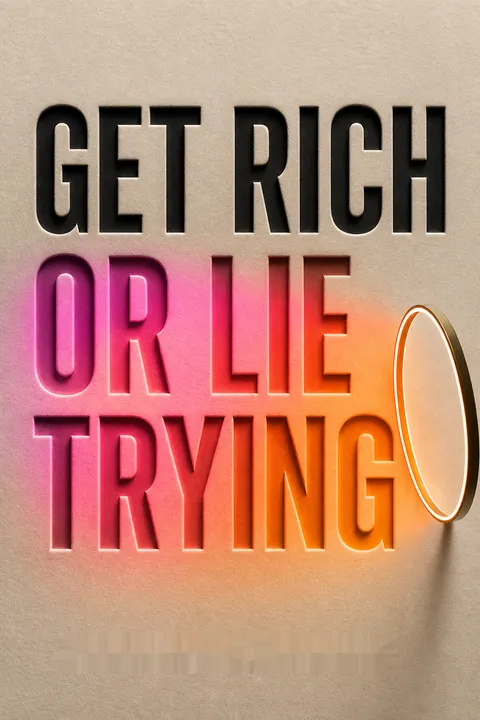


Key Takeaways
Read online hustle as a response to blocked opportunity, not a character flaw
The hustler's appeal. Brown opens with the contrast between 50 Cent, whose story of surviving violence helped sell his music, and Soulja Boy, who used mislabeled LimeWire files, MySpace, and YouTube to find an audience without a record company. His viral song and dance showed how online attention could become a route to money. The shift is from overcoming hardship to engineering visibility, sometimes through deception.
Ambition under pressure. Brown links that promise to young people told that education and aspiration could overcome class barriers, then facing insecure work, debt, and pressure to display success. He does not excuse fraud. He asks why shortcuts seem persuasive in a culture that treats wealth as proof of personal worth.
What's striking is the book's refusal to frame online deception as merely a moral defect. It puts individual choices inside a labor market where secure routes to status and income feel increasingly narrow. That is a useful distinction: explanation is not absolution. The account also complicates the language of aspiration, which can turn structural barriers into a personal failure to want success badly enough. Still, precarity does not make every hustle inevitable. The central question is how systems make dishonesty profitable, and who has the power to change those incentives.
Count the labor behind every effortless brand deal
Hype has workers. Fashion Nova built its online presence by gifting or paying women to model clothes, tag the brand, and create promotional posts. Millions of aspiring customers posted in hopes of becoming ambassadors, supplying marketing material whether or not the company selected them. The brand reportedly earned $294 million in 2018 and had more than 20 million Instagram followers by 2021.
The supply chain is less glossy. The clothes are made in an industry tied to pollution and labor abuse. The Garment Worker Center reported wage theft in 85 percent of factories it encountered and an average wage of $5.50 an hour, compared with California's $13.25 minimum wage at the time. Cheap fashion and free online promotion conceal who pays for the low price.
Fashion Nova makes visible a familiar economic split: consumers and creators generate value, while the brand controls the customer relationship and captures much of the return. This resembles platform work, where flexibility and visibility can coexist with weak bargaining power. The influencer may receive clothing or a commission, but the aspiring poster often supplies labor for no guaranteed reward. That does not mean every gifted product is exploitation. It does mean that a brand's empowerment language should be weighed against who gets paid, who bears production costs, and who can negotiate.
When beauty pays, algorithms can push bodies under the knife
A marketable look. Fashion brands favor a narrow, highly recognizable aesthetic: exaggerated curves, a small waist, full lips, and often racially ambiguous features. Aga, a Polish-born influencer, gained attention after styling herself with dark makeup and Afro hairstyles to fit that image. The practice, called blackfishing, involves presenting oneself as Black or mixed-race through appearance, often for social attention or commercial opportunity.
The risk is real. Cherrise traveled to Istanbul for cosmetic procedures promoted through Instagram. After a botched operation, she developed necrosis, the death of body tissue. Clinics also offered discounts to influencers who could attract similar customers. These examples show how edited images and brand incentives can make invasive surgery look like a routine career investment, while concealing complications and conflicts of interest.
The commercial pressure here is not simply that people compare themselves with idealized images. Appearance becomes a form of labor when access to sponsorship depends on looking a certain way. That connection helps explain why cosmetic changes can feel like rational investments, even when their risks are substantial. At the same time, the analysis should preserve individual agency: people may choose surgery for reasons beyond income or social media. The sharper concern is that marketing blurs personal choice with professional necessity, while the people promoting procedures may be rewarded for minimizing risk.
Selling access to yourself pays, but the audience sets the price
Intimacy becomes work. Suzie McFadden first pursued traditional media jobs, then grew an Instagram following by posting sexualized photographs. Her account rose from 3,000 to more than 500,000 followers, most of them men. She used Patreon and OnlyFans to sell more personal images and messages, earning money partly by giving lonely subscribers attention as well as content.
Live performance has its own bargain. Ebenezer, known as Ebz, had been homeless in Los Angeles before earning donations from livestream viewers who watched him endure racist abuse and conflict. He valued the income and chance to share his music, while recognizing that quarrels attracted more money than peaceful streams. These cases show how creators can gain flexibility and income while remaining dependent on an audience's appetite for access and spectacle.
Digital sex work and livestreaming complicate the usual division between private life and paid labor. The creator sells content, but also attention, affect, and a sense of personal connection. In sociology, this resembles emotional labor in service jobs, with the added complication that the worker's social life can also become the workplace. Online platforms can offer more control than traditional intermediaries, yet they do not guarantee privacy, stable income, or the ability to set audience behavior. Autonomy is real, but it is not the same as security.
Before joining a work-from-home scheme, ask who pays whom
A business with a bill. Rose joined It Works!, a network marketing company that sold health products through self-employed distributors. She faced joining costs, monthly website charges, and automatic product orders, while making no meaningful income. The company's own disclosure reported that 85.94 percent of distributors earned less than $1.60 a day. Recruitment, rather than ordinary product sales, was central to many participants' hopes of earning more.
Recruitment can disguise the customer. LuLaRoe sellers bought stock, with an average initial deposit of about $5,000. The company's reported median bonus in 2016 was just $526 for the year, even as the business generated billions in sales. When inventory failed to sell, sellers could be left with debt and unwanted clothing. A real product does not automatically make a sales structure fair.
A useful test for these schemes is to follow the money rather than the motivational language. If participants pay recurring fees, buy inventory, and must recruit others to approach a meaningful income, they may function more as customers than as independent entrepreneurs. Behavioral economics helps explain why people stay: sunk costs, social belonging, and the hope that effort will soon pay off. But the distinction matters. Direct selling is not inherently fraudulent; the warning signs are opaque earnings, pressure to purchase, and rewards that depend more on expanding the network than on satisfied customers.
Treat luxury trading feeds as advertisements until proven otherwise
The lifestyle is the pitch. Elijah Oyefeso presented himself as a wealthy young trader, but his income came from directing people to risky trading platforms. He reportedly received £40 to £80 for each signup, while recruits were encouraged to deposit at least £250. Some were teenagers. The book also describes Samuel Leach's trading courses, where applicants expecting jobs paid fees instead; the company had only one full-time employee at the time Brown interviewed him.
Commissions change the advice. Contracts for difference let customers bet on price movements without owning the underlying asset, and the book describes them as high-risk products. The cryptocurrency boom added another route for influencers to monetize hype, including new coins promoted to followers. A polished feed may show wealth, but it does not establish trading skill, independent returns, or unbiased advice.
The central problem is information asymmetry: the promoter knows whether a post is an advertisement, how commissions work, and what the product risks, while the follower may see only a success story. Financial regulation exists partly to reduce this imbalance, but social media lets promotion travel through personal trust before scrutiny catches up. A skeptical reader should ask for independently verified performance and clear disclosure of compensation. That standard should not imply all traders or crypto projects are scams. It simply refuses to treat luxury imagery as evidence.
A polished storefront proves nothing about what customers receive
Low entry, low assurance. Dropshipping lets an online seller list goods without holding stock; a supplier ships directly to the customer after an order. Joel Contartese used Shopify and viral Facebook posts to sell novelty products through Shopolis. He said the business reached $500,000 in monthly revenue, but customers complained that orders never arrived. Trustpilot showed a 98 percent poor rating, and Shopify eventually shut the store down.
The tactic can be repeated. Joel described copying promotional videos, gaming Facebook's sharing systems, and moving to new store names when a business was closed. One later toy store reportedly made $2 million in December, leaving some parents without gifts they had ordered. The ease of setting up a shop can reduce the cost of entry, but it does not prove that the seller has reliable products, delivery, or customer service.
The story exposes a gap between digital appearance and operational capacity. A template can make a one-person storefront look established, while the actual costs of inventory, shipping, and support remain unresolved. This is not unique to dropshipping; the same mismatch appears whenever marketing scales faster than delivery. The platform's tools can enable legitimate small businesses, so ease of use is not itself evidence of fraud. The practical distinction is whether the seller takes responsibility for the transaction after the click, especially when supply chains are distant and accountability is easy to shed.
Separate public witness from personal branding when causes go viral
Hashtags can mobilize. Black Lives Matter began with Alicia Garza's response to the killing of Trayvon Martin. Patrisse Cullors turned its central message into a hashtag, which spread widely after Michael Brown was killed in Ferguson. Social media helped circulate video evidence, share information, and organize people to attend protests.
Attention can also distort. The same platforms reward individual accounts, hot takes, and personal followings. Brown describes influencers attaching social justice messages to self-promotion, including using a victim's name or image to draw attention to unrelated content. Black Twitter's language can also create enormous commercial value: a Popeyes campaign built around a viral exchange with Wendy's was estimated to generate $65 million in attention. Visibility can serve a cause, but reach alone is not collective action or proof of impact.
The important distinction is between amplification and organizing. A post can help people notice an injustice, but durable change usually also requires coordination, resources, and institutions capable of acting on demands. Platform metrics privilege the visible individual, while movements often depend on less visible collective labor. Criticism of influencer behavior should not erase the genuine mobilizing value of digital networks or assume that every public statement is cynical. The better question is whether attention directs people toward the affected community and concrete work, or mainly increases the poster's own standing.
Judge online success by control, not audience size
Creators rent their reach. Influencers depend on platforms whose algorithms, moderation decisions, and payment rules they do not control. Accounts can lose distribution or be demonetized, and creators may have to rebuild if a platform suspends them. In 2020, YouTube reported $19.6 billion in advertising revenue, while Facebook reported $86 billion in total revenue. The companies earn from the attention creators and users supply.
The deeper promise is unequal. Brown connects the influencer boom to insecure work, declining prospects for many millennials, and pressure to display wealth. He notes that anxiety among British women aged 18 to 24 rose from 8 percent in 2008 to 30 percent in 2018. The pandemic drove more people online, but did not make online income reliable. Followers can create opportunity; they do not guarantee ownership, bargaining power, or security.
Audience size is a weak proxy for power. A creator may attract attention yet lack control over distribution, customer data, or the terms of payment, while the platform owns the infrastructure and sells access to advertisers. This is a classic distinction between labor and capital: creators produce value, but ownership determines who can set the rules and capture durable returns. The book's structural argument is strongest when it treats online work as varied rather than uniformly deceptive. Some creators do build stable careers, but exceptional success stories cannot establish that the route is broadly attainable.
Analysis
Brown's central argument is not that every influencer is a fraud. It is that digital platforms make attention economically valuable, then invite ordinary people to compete for it under conditions that reward self-promotion, exaggerated success, and sometimes outright deception. The book traces a continuum: a teenager learns to engineer viral music discovery; fashion customers provide unpaid promotion; sellers finance multi-level marketing businesses; aspiring traders recruit customers to risky products; and influencers turn political causes into personal brands. The acts differ in harm and legality, but share a common structure: visibility is the scarce resource, and the person seeking it often bears the risk.
The strongest analytical move is to connect these cases to labor and ownership. Influencers may appear to be independent entrepreneurs, but brands and platforms frequently control the audience relationship, distribution systems, and payment terms. The creator supplies content, identity, and emotional availability without the protections normally associated with employment. Meanwhile, the book shows how economic insecurity and status consumption make the offer of rapid mobility compelling. This helps explain why a bad bet can feel rational to someone with few good options.
The argument is also most persuasive when it keeps moral judgment and structural explanation in tension. Financial desperation can explain why people join schemes or exaggerate their success, but it does not erase the harm done to followers, customers, or recruits. Conversely, the visible examples of scammers do not establish that all creator work is exploitative, or that social media cannot help people organize, earn, and find community. Case-driven reporting is especially good at revealing mechanisms and human costs, but less suited to measuring how common each mechanism is.
The final implication is sharper than a warning to be more skeptical online. The problem is not simply that audiences sometimes believe false claims. It is that the business model can profit from attention whether that attention comes from trust, envy, outrage, sexual display, or conflict. Better disclosure and consumer protection matter, but a deeper response would also ask who owns the platforms, who carries the risk, and how workers can share in the value they create.
Review Summary
Get Rich or Lie Trying is praised for its insightful exploration of the influencer economy, revealing the dark side of social media fame. Readers appreciate the well-researched content and engaging writing style. The book covers various topics, including MLMs, fast fashion, and cryptocurrency. Some criticize the author's perspective on certain issues, like BLM and sex work. Overall, it's considered an eye-opening read about the pitfalls of influencer culture, though some felt it could have delved deeper into certain areas. The book's relevance to modern society and its examination of capitalistic influences are frequently highlighted.
People Also Read








Glossary
blackfishing
Performing Blackness for attentionA social media practice in which a non-Black person uses makeup, hairstyles, editing, or other styling to appear Black or mixed-race. In Brown's account, the practice can track a commercial beauty aesthetic and help someone attract followers or brand work. It is criticized for borrowing racial appearance while avoiding the lived experience and discrimination attached to that identity.
NovaBabe
Fashion Nova brand ambassadorFashion Nova's label for selected women who promote the company on social media. Ambassadors tag the brand and model its clothes, sometimes receiving gifted items, payment, or commission through discount codes. The book contrasts those selected few with many aspiring customers who post photos in hopes of recognition and effectively supply promotional content without guaranteed compensation.
IRL streaming
Livestreaming everyday lifeA form of livestreaming in which a creator broadcasts ordinary activities in real time rather than presenting a carefully edited video. Viewers can comment, donate, and sometimes influence what the streamer does. The book describes how this interaction can create an audience and income, while also rewarding conflict, humiliation, or risky behavior.
micro-influencer
Creator with a modest followingA social media creator with a comparatively small audience, often around 10,000 followers or fewer in the examples Brown discusses. Brands and clinics may value these creators because their followers see them as relatable and trustworthy. That closeness can make their recommendations commercially effective, particularly when payment, gifts, or other incentives are not clearly disclosed.
network marketing
Direct selling through recruited distributorsA sales model in which individuals join as distributors and sell products, often earning commissions from their own sales and from people they recruit. In the companies described by Brown, participants may also pay joining fees, recurring charges, or buy inventory. The key concern is whether earnings depend on genuine customer demand or on continually expanding the recruitment network.
dropshipping
Selling without holding inventoryAn online retail arrangement in which a seller lists products but does not keep them in stock. After a customer orders, the seller sends the order to a supplier, who ships the item directly to the buyer. Software can automate much of the process, lowering the barrier to opening a shop, but it does not guarantee product quality, delivery, or customer support.
contract for difference
Bet on an asset's price movementA financial contract that lets a customer speculate on whether an asset's price will rise or fall without owning the asset itself. Brown describes these products as risky and notes that influencers sometimes promote trading platforms without making their commission arrangements clear. Customers can lose money even when the promoter earns income for signups.
manufactured sharing
Engineered spread of online postsA tactic described by Brown's dropshipping subject in which posts are made to spread through coordinated or concealed sharing rather than ordinary paid advertising. The posts can appear in followers' feeds while remaining difficult to see on the celebrity or public page associated with them. The tactic seeks viral reach and can violate a platform's rules.
pump and dump
Hype, sell, leave others holding lossesA market manipulation tactic in which promoters generate excitement around an asset, often a little-known cryptocurrency, to raise its price. People who hold it early can then sell at the inflated value, leaving later buyers exposed when the price falls. Brown discusses social media as a tool for organizing and amplifying this kind of hype.
FAQ
What's Get Rich or Lie Trying about?
- Exploration of Influencer Economy: The book investigates the rise of influencers and how they monetize their online presence, focusing on the stories of individuals navigating this digital landscape.
- Ambition and Deceit: It examines how ambition can lead to deceit in the pursuit of fame and fortune, highlighting the blurred lines between authenticity and performance.
- Cultural Critique: Symeon Brown critiques late-stage capitalism, illustrating how social media has become a platform for exploitation and unrealistic aspirations.
Why should I read Get Rich or Lie Trying?
- Insightful Analysis: The book offers a deep understanding of modern hustle culture and the pressures faced by millennials and Gen Z in the influencer economy.
- Real Stories: Brown shares compelling narratives from various individuals, making the book relatable and engaging for readers interested in online success stories.
- Cultural Relevance: As social media shapes our lives, this book helps readers navigate the complexities of online fame and the potential pitfalls of chasing clout.
What are the key takeaways of Get Rich or Lie Trying?
- Influencer Culture's Impact: The book emphasizes how influencer culture affects personal identity and societal values, often leading to ethical compromises.
- The Illusion of Success: Brown illustrates that many influencers present a curated version of reality, warning against the dangers of comparing oneself to these portrayals.
- Economic Exploitation: The author discusses how the gig economy and influencer marketing can exploit vulnerable individuals, highlighting the need for awareness and caution.
What are the best quotes from Get Rich or Lie Trying and what do they mean?
- "Get rich or lie trying...": This quote encapsulates the central theme, suggesting deceit as a common strategy in the pursuit of wealth and fame in the digital age.
- "The pressure to dress for success...": Reflects societal expectations on individuals to project an image of success, often misaligned with reality.
- "Influencing may soon be the internet’s most saturated hustle.": Highlights the competitive nature of the influencer market, leading to unethical practices and a lack of authenticity.
What are the main themes explored in Get Rich or Lie Trying?
- Ambition vs. Ethics: The book explores the tension between personal ambition and ethical behavior in the influencer economy.
- Identity and Authenticity: Brown examines how social media shapes personal identity and the concept of authenticity, impacting mental health.
- Economic Inequality: The author addresses wealth disparities exacerbated by the digital economy, critiquing the exploitation of marginalized groups.
How does Get Rich or Lie Trying relate to the gig economy?
- Gig Economy Dynamics: The book discusses how the gig economy has transformed traditional employment, creating new opportunities and forms of exploitation.
- Self-Employment Illusion: Brown critiques the notion that gig work equates to entrepreneurship, revealing cycles of low pay and instability.
- Influencer as a Job: Illustrates how influencing has become a viable career path, often lacking security and benefits of traditional employment.
What are some examples of exploitation in the influencer economy discussed in Get Rich or Lie Trying?
- Fake Followers and Engagement: Highlights how influencers buy fake followers to inflate popularity, leading to a cycle of deceit.
- Pyramid Schemes: Discusses influencers promoting multi-level marketing schemes that exploit followers, benefiting primarily those at the top.
- Unregulated Cosmetic Surgery: Shares stories of influencers promoting dangerous procedures without oversight, reflecting risks in pursuit of idealized appearances.
How does Get Rich or Lie Trying address the concept of authenticity?
- Authenticity in Question: Challenges the idea of authenticity in the influencer economy, suggesting many personas are curated rather than genuine.
- Impact on Mental Health: Discusses how maintaining an authentic image can lead to mental health struggles, with influencers compelled to project perfection.
- Cultural Commentary: Critiques societal obsession with authenticity, arguing it can lead to inauthentic behaviors despite being valued.
What role does social media play in shaping the narratives in Get Rich or Lie Trying?
- Platform for Expression: Social media serves as a primary platform for sharing stories and aspirations, amplifying voices and creating expectations.
- Influence on Behavior: Examines how social media shapes behavior, encouraging validation through likes and followers, distorting self-worth.
- Cultural Shifts: Discusses how social media has transformed cultural norms around success and ambition, prioritizing fame over traditional success measures.
How does Get Rich or Lie Trying reflect on the future of work?
- Changing Employment Landscape: Suggests the future of work will involve more gig and freelance opportunities, presenting both opportunities and challenges.
- Need for Regulation: Advocates for better protections and regulations for gig workers, especially in the influencer economy.
- Evolving Definitions of Success: Reflects on how success is redefined in the digital age, with social media influencing perceptions of achievement.
What is dropshipping, as discussed in Get Rich or Lie Trying?
- Business Model Overview: Dropshipping is a retail method where a store doesn't keep products in stock, purchasing items from a third party for direct shipping.
- Challenges and Risks: Highlights issues like long shipping times and customer dissatisfaction, discussing ethical implications of selling without quality control.
- Profit Potential: Despite challenges, dropshipping can be lucrative, as illustrated by Joel's ventures, often at the cost of customer trust.
How does Get Rich or Lie Trying address the issue of mental health?
- Pressure to Succeed: Discusses mental health implications of hustle culture, where individuals feel pressure to portray success online.
- Impact of Social Media: Highlights how comparison to curated personas affects self-esteem and mental well-being, encouraging reflection on social media relationships.
- Need for Authenticity: Advocates for authenticity, suggesting embracing one's true self can alleviate pressures associated with influencer culture.
Download PDF
Download EPUB
.epub digital book format is ideal for reading ebooks on phones, tablets, and e-readers.








