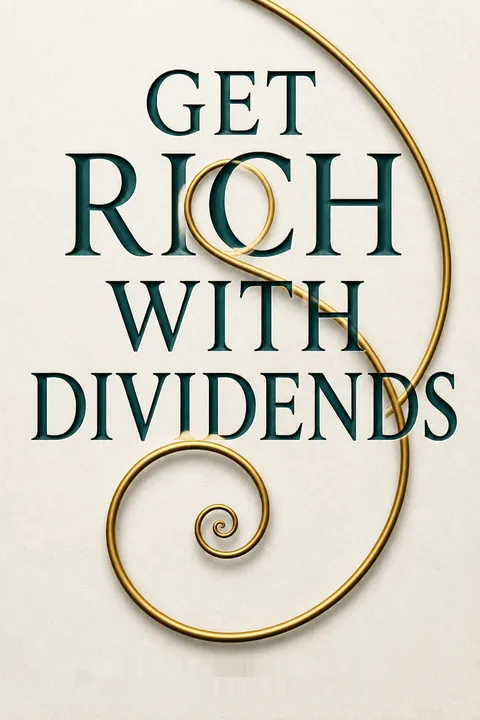


Key Takeaways
Build wealth by owning profitable businesses that steadily return cash to shareholders
Cash matters more than glamour. The book argues that investors should own real businesses, not just chase exciting ticker symbols or hope to sell shares to a more optimistic buyer. Dividends provide a tangible part of a company’s cash flow, and reinvesting them buys more ownership. In figures cited from Ned Davis Research, $100 invested in the S&P 500 at the end of 1929 grew to $4,989 by 2010 through price gains alone, or $117,774 with dividends reinvested.
Boring can beat thrilling. The book contrasts Johnson & Johnson with failed dot-com company eToys. From late 1998 to late 2011, Johnson & Johnson returned about 8.6% annually with dividends reinvested, while the S&P 500 returned about 2% annually over that period. The point is not that every dividend payer wins, but that a durable business can compound wealth without a spectacular story.
A cash distribution makes the connection between business performance and shareholder return unusually visible. It can also discipline investors to evaluate a company as an operating enterprise rather than as a moving price chart. Still, a dividend is not an extra return detached from the business: cash paid out is no longer available for investment, and the share price can adjust when the dividend is distributed. The useful lesson is to assess the whole enterprise and its total return, not to assume that a payout alone makes a stock attractive.
Use yield, dividend growth, and cash coverage as a screen, not a promise
Three inputs shape the plan. The book’s 10-11-12 System aims for an 11% yield on the original investment after ten years and a 12% average annual total return over that decade. Its model starts with roughly a 4.7% dividend yield, assumes about 10% annual dividend growth, and generally looks for a payout ratio no higher than 75%. It also assumes stock-price growth near the S&P 500’s historical average of 7.48% annually.
Those are assumptions, not guarantees. The author uses different starting yields and growth rates to model weaker, flat, or declining markets. A lower starting yield can still build wealth, but may not meet the system’s income target. The important practical use is as a screening framework: compare yield with credible growth and financial capacity, rather than buying a stock because one number looks impressive.
The system is memorable because it turns an investment thesis into observable inputs. Its weakness is that the inputs are not independently controllable: a high yield may reflect genuine value or a market expectation of trouble, while past dividend growth may not persist. The 7.48% price-growth assumption also comes from historical averages, not a forecast. The framework is most useful as a way to ask disciplined questions, not as a machine that can reliably deliver the stated outcomes.
Reinvesting dividends can turn flat prices into accumulating ownership
More shares create a larger income base. When dividends are reinvested, each payment buys additional shares, which can produce additional dividends. In one book example, a $10,000 holding with a 4.7% starting yield and 10% annual dividend growth grows to about $20,993 after ten years even if the share price never rises. The mechanism is not a rising quote, but a growing number of shares and a growing payout per share.
Lower prices can help during accumulation. If the company remains financially sound while its share price falls, each reinvested dividend buys more shares. That can improve long-term results, but only if the dividend continues and the business recovers or remains viable. A falling price caused by lasting business damage is not a bargain merely because reinvestment buys more shares.
This is a powerful behavioral reframing: a temporary price decline can be less alarming to someone accumulating shares than to someone planning to sell soon. It resembles systematic investing, where regular purchases reduce dependence on choosing one perfect entry point. The crucial distinction is between volatility and impairment. Reinvestment can exploit lower prices, but it cannot repair a business whose cash generation is collapsing or whose dividend is being financed unsustainably.
Treat a long dividend streak as evidence, not immunity from failure
A record is a useful filter. In the book, a Dividend Aristocrat is an S&P 500 company that has raised its dividend for at least 25 consecutive years. Dividend Champions also have a 25-year record but need not belong to the S&P 500. Dividend Achievers have at least ten consecutive years of increases. These lists broaden the search beyond companies selected for a high current yield alone.
Streaks can end. The book reports that usually fewer than 10% of Aristocrats failed to raise dividends in a year, but F.N.B. Corp. illustrates the risk: after 35 years of annual increases, it stopped raising its payout in 2008 and cut it in 2009. Lists also create survivorship bias because companies that fail to keep raising dividends disappear from the group being measured.
A long record is a kind of revealed operating history: the company has repeatedly found room to return more cash through changing economic conditions. That is informative, but it does not establish why the company succeeded or whether its industry remains sound. Survivorship bias matters especially here because a list of current winners can make the strategy look safer than it was for investors who held companies that were later removed. A streak should prompt closer analysis, not replace it.
Test dividend safety against cash generation, not polished earnings
Follow the cash. A payout ratio compares dividends paid with the resources available to pay them. The book prefers operating cash flow or free cash flow over net income, since accounting expenses such as depreciation can reduce reported earnings without using cash in that period. Free cash flow subtracts capital spending from operating cash flow. For many ordinary companies, the author generally seeks a ratio of 75% or less, while noting that utilities, REITs, and MLPs can differ.
Watch for sudden deterioration. Vulcan Materials’ free-cash-flow payout ratio reached 100% in 2006, then dividends exceeded free cash flow in 2008. The company cut its quarterly dividend in 2009. Meredith Corp. offers the counterpoint: it reported a large net loss in 2009 but still generated about $181 million in operating cash flow, enough to cover its dividend.
Cash-based analysis is a sensible check against earnings that reflect accounting judgments rather than immediate cash movement. But no single ratio is a universal safety gauge. Capital spending can be essential to a company’s survival, working capital can swing sharply, and industries have different financing needs. A useful review therefore asks whether cash generation is repeatable, whether debt obligations compete with dividends, and whether the payout remains affordable through a weak business cycle.
Read a dividend raise as management's commitment, not a guarantee
A payout creates accountability. Unlike an announced stock-buyback authorization, a dividend increase establishes an expectation that management will keep distributing cash. The book argues that this can signal confidence in future cash flow and attract shareholders seeking long-term income. It also notes research suggesting dividend-paying firms tend to have more persistent earnings than firms that do not pay dividends.
The signal has limits. A buyback can reduce the number of shares and raise earnings per share without increasing the company’s total profit. The book describes Jarden suspending its dividend to fund a large repurchase, which was expected to lift earnings per share and could benefit executive compensation. Yet a buyback is not inherently bad, and a dividend raise does not prove the company is healthy. Cash coverage and business prospects still matter.
A recurring payout can operate like a commitment device: management gives up some discretion over cash and faces reputational costs if it later reverses course. That may help restrain wasteful acquisitions or idle cash hoarding. But commitment can become rigidity if the business needs capital or conditions change. Buybacks can also be shareholder-friendly when shares are undervalued. The stronger question is not which payout method is always superior, but whether management allocates each dollar in owners’ long-term interests.
Match dividend stocks to long horizons and diversify beyond yield
Time determines suitability. The author advises against using stocks for money needed within about three years because even established dividend raisers can fall sharply. Genuine Parts, for example, lost roughly half its share price from its 2007 peak to the 2008-2009 lows, before recovering. The book presents ten years or more as a better horizon for the compounding strategy, since the effect of reinvestment takes time to build.
Spread the risks. The author’s example portfolio held 18 positions across banks, consumer companies, energy, insurance, health care, REITs, technology, telecom, utilities, and other areas. Its average yield was 5.3%, with individual holdings ranging from 3.1% to 9.9%. The point is to avoid concentrating in the highest-yielding stocks or a single sector.
A long horizon gives a portfolio more time to recover from declines, but it does not make individual companies safe or guarantee a recovery. Diversification reduces the damage that one business or sector can cause, while time horizon connects investment risk to the date when money is needed. Dividend income can feel stable even as the underlying capital fluctuates, so investors should distinguish dependable cash flow from dependable account value.
Treat high-yield structures as specialized risks, not free income
Structure explains the payout. The book discusses REITs, MLPs, BDCs, closed-end funds, and preferred stocks as alternatives that can offer higher yields. REITs own real estate, while many MLPs operate energy pipelines and pass much of their income to investors. BDCs finance private companies. Preferred stocks often pay fixed distributions and rank ahead of common shares if a company is liquidated, but usually lack dividend growth. Closed-end funds trade like stocks and can sell below or above the value of their holdings.
Higher payouts have trade-offs. These investments can be tied to one sector, exposed to economic cycles, or accompanied by complicated tax reporting. MLP distributions may be treated as return of capital, which defers tax while reducing the investor’s cost basis. A high yield should lead to questions about its source and sustainability, not an assumption that the market has overlooked easy income.
These structures show that yield is partly a product of legal and tax design, not simply a reward for choosing a better company. That makes them useful tools for some portfolios, but harder to compare directly with ordinary stocks. Investors can mistake a distribution that includes returned capital for income earned by the business. Complexity itself is a cost: if the tax treatment, leverage, or business model is not understood, the headline yield is an incomplete measure of value.
Foreign dividends add currency, timing, and governance risk
A local raise may shrink in dollars. An American depositary receipt, or ADR, represents shares of a foreign company but trades in the United States. Its dividend reflects both the company’s local-currency payment and the exchange rate. The book’s Corpbanca example shows local dividends rising from 2008 to 2009 while U.S. ADR holders received less in dollars because the peso’s value changed.
Payments and protections vary. Foreign companies may pay dividends once or twice a year rather than quarterly, and their payouts can fluctuate. Political, regulatory, accounting, and currency risks differ across countries. Foreign governments may withhold taxes, though the book describes U.S. tax credits that can apply in some situations. The author treats foreign stocks as possible diversifiers, but cautions against making them the core of a portfolio simply because their yields look high.
Foreign shares add a second source of return and risk: the business itself and the currency in which it earns and distributes cash. That exposure can diversify a portfolio, but it can also make an apparently rising local dividend uneven for a U.S. investor. The investor should distinguish company policy from the dollar amount received. Country-level rules and reporting quality also deserve scrutiny, since a familiar ticker symbol does not make the underlying market familiar.
Sell calls only when capped upside fits your plan
Options exchange flexibility for cash. A covered call means owning shares and selling another investor the right to buy them at a set price by a set date. The seller receives a premium, but may have to sell the shares at that price even if the market rises higher. The strategy can suit an investor seeking current income, but it can interrupt a long-term plan to keep reinvesting dividends in the same company.
Puts create a buying obligation. Selling a put earns a premium in exchange for accepting the possibility of buying shares at a specified price. The seller should want the stock at that price and have enough cash to pay for it. If the business deteriorates and the stock falls far below the strike price, the premium offers only limited protection.
Option premiums are compensation for accepting a contingent obligation, not a free bonus for holding a stock. Covered calls make the opportunity cost visible: income arrives now, while some future gains are surrendered. Put selling can be a disciplined way to set a purchase price, but only when the buyer is financially prepared for assignment and further losses. The strategy is less passive than the book’s core approach and requires attention to positions and expiration dates.
Keep costs low, reinvest efficiently, and inspect fundamentals periodically
Small frictions compound too. The book favors reinvesting dividends through a broker when it is free, rather than automatically enrolling in company plans that charge setup, purchase, or reinvestment fees. A direct plan may still make sense when it offers a meaningful discount on shares and its other fees do not erase the benefit. The author also discusses holding ordinary dividend stocks in tax-deferred accounts, while noting that MLP and other return-of-capital tax treatment can make account choice more complex.
Review without constantly trading. The suggested routine is to check company sales, earnings, cash flow, payout ratio, and dividend policy at least annually, more often if warning signs emerge. A dividend cut directly undermines the reason for owning a dividend raiser. Tax rules described in the book date to 2012, so they should not be treated as current tax guidance.
The approach pairs low maintenance with continued responsibility. Minimizing fees protects compounding, while periodic review helps distinguish ordinary market noise from a damaged business. The best cadence is not necessarily the same for every company: a cyclical firm or a rapidly worsening payout ratio may warrant closer attention than a stable utility. Tax efficiency also depends on current law and individual circumstances, so dated examples are useful as concepts, not as instructions.
Analysis
The book’s durable contribution is its practical behavioral argument: investors can replace frantic prediction with a repeatable process built around business cash, dividend history, reinvestment, and infrequent review. Its stories about dot-com speculation and unglamorous companies make that shift concrete. The central mechanism is also easy to understand. A growing payout reinvested over time can increase share ownership, while a cash distribution gives investors a visible measure of what the business is returning.
The numerical ambition requires more caution than the process. The 10-11-12 target depends on modeled inputs, including sustained dividend growth and a historical average for share-price appreciation. A backtest or illustration cannot establish that a future portfolio will achieve those results. Results based on companies that survived long enough to enter dividend-raiser lists can also understate the experience of investors who owned companies that later cut payouts or disappeared. Dividend history is informative, but it is not a guarantee of future cash generation.
The book’s stress on payout ratios and cash flow is valuable, though neither metric should be treated mechanically. Capital requirements, debt, cyclicality, and accounting conventions vary by industry. Similarly, dividend yield alone cannot establish cheapness or safety. A very high yield may signal a falling share price or doubts about the business. Investors also need to evaluate diversification, valuation, taxes, and whether the capital is needed soon.
The strongest reading is therefore not that dividends reliably deliver a fixed return, but that disciplined investors can use them as one evidence-rich component of a long-term strategy. The book is especially useful for explaining why reinvestment and patience matter. Its specific return targets and tax discussion belong to the 2012 context and should be separated from its broader lessons about cash generation, risk, and investment behavior.
Review Summary
Get Rich with Dividends receives mixed reviews, with an average rating of 3.88/5. Readers appreciate the clear explanation of dividend investing strategies and compounding effects. Some found it informative and engaging, while others criticized repetitiveness and lack of depth. The book is praised for its beginner-friendly approach but criticized for potentially oversimplifying complex topics. Several reviewers note its focus on the US market may limit applicability elsewhere. Despite some criticisms, many readers found value in the long-term investment strategy presented.
People Also Read








Glossary
Perpetual Dividend Raiser
Consistent annual dividend increaserThe book’s general label for a company that has increased its dividend year after year. It includes companies with different lengths of records, from newer raisers to firms with decades of increases. The term describes a historical pattern, not a guarantee that the company will continue raising its dividend.
10-11-12 System
Dividend-growth investment modelThe book’s screening and projection approach seeks an 11% yield on the original investment after ten years and a 12% average annual total return over that period. Its example assumptions include a starting yield near 4.7%, dividend growth around 10% annually, a payout ratio generally below 75%, and stock-price appreciation based on a historical market average. These are modeled targets, not assured outcomes.
Dividend Aristocrat
S&P 500 dividend streakIn the book’s 2012 description, an S&P 500 company qualified as a Dividend Aristocrat after raising its dividend for at least 25 consecutive years. The index also used market-capitalization and trading-liquidity requirements. Membership can change when companies stop increasing dividends or fail other index criteria.
Dividend Champion
Twenty-five-year dividend raiserA company listed by the DRiP Resource Center as having raised its dividend for at least 25 consecutive years. Unlike a Dividend Aristocrat, a Champion did not need to belong to the S&P 500 or meet its index size and liquidity requirements. Smaller companies could therefore appear on the Champions list.
Dividend Achiever
Ten-year dividend raiserA company that has increased its dividend for at least ten consecutive years and meets the relevant list’s liquidity requirements. The book presents Achievers as a broader group than Dividend Aristocrats, with a shorter minimum record. Its description and list references reflect the book’s 2012 publication context.
Dividend Contender
Ten-to-twenty-four-year raiserA company on the DRiP Resource Center list that has increased its dividend for 10 to 24 consecutive years. The book uses Contenders to include companies with substantial but not yet 25-year dividend records, without the same index-membership restrictions applied to Dividend Aristocrats.
Dividend Challenger
Five-to-nine-year raiserA company that has raised its dividend for five to nine consecutive years, as described in the book’s account of the DRiP Resource Center lists. Challengers have a shorter record than Contenders or Champions, so the book treats their higher growth potential alongside a greater chance that the pattern may not persist.
Payout ratio
Dividend coverage measureA comparison of dividends paid with a company’s earnings or cash generation. The book favors operating cash flow or free cash flow as the denominator when evaluating whether cash is available to sustain a dividend. A high or rapidly rising ratio can signal limited room to maintain or increase payments, though appropriate levels vary by industry.
Yield
Dividend relative to priceThe annual dividend per share divided by the share price, expressed as a percentage. An investor’s yield based on the purchase price changes when the company changes its dividend, not merely when the market price moves. A new investor buying at a different price receives a different current yield.
Return of capital
Distribution reducing cost basisA distribution generally treated as a return of part of an investor’s capital rather than current dividend income. As described in the book, it is often not taxed in the year received and instead reduces the investment’s cost basis, which can increase the taxable gain when shares are sold. Actual treatment depends on the investment and applicable tax rules.
American depositary receipt (ADR)
U.S.-traded foreign share receiptA security traded in the United States that represents shares in a foreign company. Its price and dividend are expressed in U.S. dollars, even though the underlying company operates and pays dividends in another currency. Exchange-rate changes can therefore make the dollar payout rise or fall independently of the company’s local-currency dividend.
Covered call
Call sold against owned sharesAn options position in which an investor owns shares and sells a call giving another party the right to buy those shares at a specified strike price by a set expiration date. The seller receives a premium but may have to sell the shares if the option is exercised, limiting gains above the strike price.
Dividend Reinvestment Program (DRIP)
Automatic dividend share purchaseA plan that uses dividend payments to buy additional shares of the company or fund. It can increase an investor’s share count without requiring a separate cash purchase. The book notes that company-run plans may charge fees, while some provide share-purchase discounts; a broker may offer reinvestment with lower costs.
FAQ
What's "Get Rich With Dividends" about?
- Focus on Dividend Investing: "Get Rich With Dividends" by Marc Lichtenfeld is centered around a proven system for earning double-digit returns through dividend investing.
- 10-11-12 System: The book introduces the 10-11-12 System, which aims to generate 11% yields and 12% average annual returns over ten years.
- Long-Term Wealth Creation: It emphasizes the power of compounding dividends and the importance of reinvesting them to build significant wealth over time.
- Practical Guidance: The book provides practical advice on selecting dividend stocks, setting up a portfolio, and understanding the nuances of dividend growth and payout ratios.
Why should I read "Get Rich With Dividends"?
- Proven Strategy: The book offers a tested strategy for achieving financial independence through dividend investing, which is particularly appealing in uncertain economic times.
- Comprehensive Guide: It covers everything from the basics of dividend stocks to advanced strategies like using options to enhance returns.
- Easy to Implement: Lichtenfeld's system is designed to be simple and requires minimal time commitment, making it accessible for both novice and experienced investors.
- Long-Term Benefits: By following the book's advice, readers can potentially secure a stable income stream and grow their wealth significantly over the long term.
What are the key takeaways of "Get Rich With Dividends"?
- 10-11-12 System: Focus on achieving 11% yields and 12% average annual returns over ten years through strategic dividend investing.
- Importance of Compounding: Reinvesting dividends is crucial for maximizing returns and building wealth over time.
- Stock Selection Criteria: Emphasizes the importance of yield, dividend growth, and payout ratio when selecting stocks.
- Diversification and Risk Management: Highlights the need for a diversified portfolio to mitigate risks and enhance returns.
What is the 10-11-12 System in "Get Rich With Dividends"?
- Yield, Growth, and Returns: The system aims for a 4.7% starting yield, 10% annual dividend growth, and 12% average annual total returns over ten years.
- Stock Selection: Focuses on selecting stocks with a reasonable payout ratio, strong dividend growth, and a solid starting yield.
- Long-Term Strategy: Designed for investors with a long-term horizon, allowing compounding to significantly increase wealth.
- Flexibility: While the system provides guidelines, it allows for adjustments based on individual circumstances and market conditions.
How does "Get Rich With Dividends" suggest selecting dividend stocks?
- Yield and Growth: Look for stocks with a starting yield of at least 4% and a dividend growth rate of 10% or higher.
- Payout Ratio: Ensure the payout ratio is 75% or lower to maintain dividend sustainability.
- Company Fundamentals: Focus on companies with strong earnings, cash flow, and a history of raising dividends.
- Diversification: Build a diversified portfolio across different sectors to manage risk and capture growth opportunities.
What are Perpetual Dividend Raisers according to "Get Rich With Dividends"?
- Consistent Dividend Growth: These are companies that have a long history of raising dividends annually, often for decades.
- Stability and Reliability: They are typically well-established, financially stable companies with predictable cash flows.
- Outperformance: Historically, Perpetual Dividend Raisers have outperformed the broader market with less volatility.
- Investment Appeal: They are attractive for investors seeking steady income and long-term capital appreciation.
How does "Get Rich With Dividends" address market volatility?
- Reinvesting Dividends: In volatile markets, reinvesting dividends allows investors to buy more shares at lower prices, enhancing long-term returns.
- Focus on Income: The book emphasizes income generation through dividends, which can provide stability even when stock prices fluctuate.
- Historical Performance: Dividend stocks, especially Perpetual Dividend Raisers, have historically outperformed during market downturns.
- Long-Term Perspective: Encourages a long-term investment horizon to ride out market volatility and benefit from compounding.
What role do taxes play in "Get Rich With Dividends"?
- Dividend Tax Rate: As of the book's publication, qualified dividends are taxed at a lower rate of 15%, which can impact net returns.
- Foreign Taxes: Discusses the implications of foreign taxes on dividends from international stocks and the use of tax credits.
- Tax-Deferred Accounts: Recommends holding dividend stocks in tax-deferred accounts like IRAs to maximize compounding benefits.
- Return of Capital: Explains how certain distributions, like those from MLPs, can be tax-deferred, affecting investment strategy.
What are the best quotes from "Get Rich With Dividends" and what do they mean?
- "The ideas in this book are one of the most important gifts you can give to yourself or your children." This highlights the transformative potential of dividend investing for financial security.
- "Compounding is like a machine." Emphasizes the power of reinvesting dividends to exponentially grow wealth over time.
- "You have to put some work into it—although much less than with most other investing strategies—and you have to have patience." Stresses the simplicity and long-term nature of the 10-11-12 System.
- "The strongest endorsement of the 10-11-12 System that I can make is this: I’m using it for my investments and for my kids’ money as well." Demonstrates the author's confidence and personal commitment to the strategy.
How does "Get Rich With Dividends" suggest using options to enhance returns?
- Covered Calls: Selling covered calls on dividend stocks can generate additional income, boosting overall returns.
- Risk Management: The strategy involves no risk to principal, only opportunity risk if the stock price rises significantly.
- Volatility Advantage: Selling options on volatile stocks can yield higher premiums, increasing income potential.
- Investor Suitability: Best suited for investors seeking current income rather than those focused on long-term wealth accumulation.
What are the potential risks of investing in foreign stocks according to "Get Rich With Dividends"?
- Currency Fluctuations: Dividends from foreign stocks can be affected by changes in currency exchange rates, leading to inconsistent payouts.
- Political and Economic Risks: Foreign investments may be subject to political instability and economic uncertainty, impacting returns.
- Regulatory Differences: Varying accounting and regulatory standards can pose additional risks compared to domestic investments.
- Dividend Frequency: Many foreign companies pay dividends less frequently than U.S. companies, affecting cash flow for income-focused investors.
What is the importance of diversification in "Get Rich With Dividends"?
- Risk Mitigation: Diversifying across sectors and geographies helps reduce the impact of any single investment's poor performance.
- Consistent Returns: A diversified portfolio is more likely to include sectors that perform well in different market conditions.
- Income Stability: Spreading investments across various dividend-paying stocks can provide a more stable income stream.
- Long-Term Growth: Diversification allows investors to capture growth opportunities in different industries and regions, enhancing overall returns.
Download PDF
Download EPUB
.epub digital book format is ideal for reading ebooks on phones, tablets, and e-readers.








