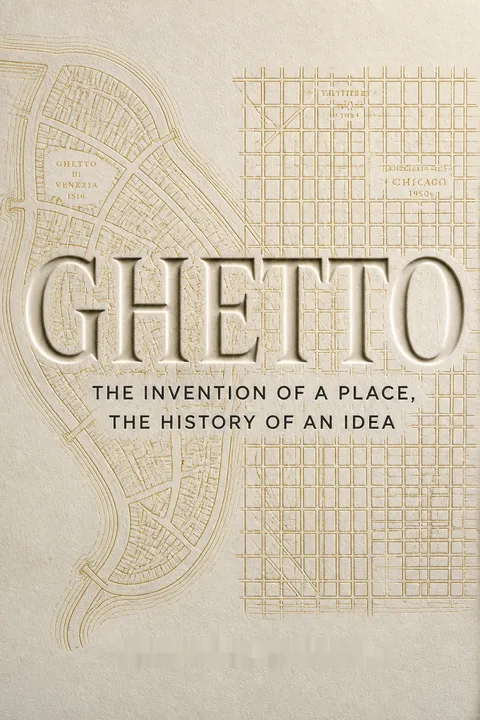


Key Takeaways
A ghetto is not simply poverty; it is space structured by unequal power.
The word has a history. The term comes from Venice, where in 1516 authorities confined Jews to an island associated with a copper foundry. Earlier Jewish quarters could be voluntary or semi-voluntary; Venice made residence there compulsory. The walls restricted movement, yet residents maintained communal institutions and a cultural life. A ghetto, in this account, is not just a poor neighborhood or a place where one group lives together. It is a space shaped by unequal power, often through restrictions imposed from outside.
Conditions can differ sharply. The history matters because ghettos have varied in how much residents could move, govern themselves, and flourish. Treating every segregated or impoverished district as the same kind of place erases those differences, and obscures who made the boundaries and what they were meant to accomplish.
What's striking is that a historical definition does more than tidy up terminology. It shifts attention from a neighborhood's appearance to the institutions that made it and the choices residents retain within it. That is a useful move in any study of inequality: visible outcomes rarely reveal whether separation came from preference, coercion, or both. The definition also demands comparison rather than analogy by slogan. Its limit is that no single test can capture every case; researchers still need to specify which group's boundaries, whose authority, and what form of restriction they are examining.
Do not confuse Venice's restricted Jewish quarter with Warsaw's machinery of destruction.
The same name concealed a rupture. When Hitler described Nazi ghettos as a return to Catholic-era practice, he presented a new policy as an old one. The earlier Jewish ghettos imposed restrictions and hardship, but residents could sustain family, religious, educational, and commercial life. Nazi ghettos were built with far greater speed and enclosure, using modern communications and barriers such as barbed wire. Race, not religious practice, determined who was trapped, and conversion offered no escape.
A changing policy became catastrophic. Nazi officials first concentrated Jews in occupied Polish cities with expulsion in view; the ghettos were not originally conceived as a fully formed extermination plan. Their function changed as conditions worsened and Nazi policy radicalized. Starvation, disease, forced labor, deportation, and mass murder turned these spaces into part of a process of annihilation.
What's important here is not to rank suffering, but to preserve distinctions that explain how persecution works. Historical labels can lend an oppressive policy a veneer of familiarity, making unprecedented violence seem like ordinary administration. The comparison also warns against assuming that a shared feature, such as enforced residence, makes two institutions equivalent. At the same time, emphasizing difference should not minimize the coercion and deprivation in earlier ghettos. Precise comparison can hold both truths: these were different systems, and neither should be romanticized.
Trace the hidden housing rules before blaming residents for neighborhood decline.
A boundary can be invisible. In 1944, Virginia Dobbins bought a home on a white Chicago block and arrived to find neighbors dismantling its plumbing. The house was later burned and flooded, while police declined to provide special protection. Violence was only one tool keeping Black families in crowded districts. Restrictive covenants were private agreements that barred Black people from buying or renting covered properties. Real estate associations promoted exclusion, and local institutions, including some churches, helped organize it.
Exclusion produced its own alibi. In Chicago, more than 80 percent of the restrictions examined applied to people with at least one Black great-grandparent. With housing blocked, overcrowding and deterioration followed. Those visible conditions were then used to portray Black residents as the cause of neighborhood decline. The Supreme Court eventually barred courts from enforcing discriminatory covenants, but the earlier damage had been shaped by organized policy, not simply by market preference.
This history is a strong example of how institutional rules can hide behind apparently private decisions. A deed restriction looks less dramatic than a wall, but a network of contracts, professional standards, and intimidation can confine people just as effectively. The resulting conditions then appear to confirm the prejudice that produced them. This is a general problem of causal reasoning: observers mistake an outcome of exclusion for evidence that exclusion was warranted. Accountability therefore requires examining the rules and gatekeepers, not only the neighborhood statistics they helped create.
Count cultural life alongside deprivation when describing a segregated community.
Bronzeville was more than a slum. In Black Metropolis, sociologists Horace Cayton and St. Clair Drake described Chicago's Black Belt as both a product of forced segregation and a world of churches, businesses, clubs, family networks, and cultural life. They used Bronzeville to convey how many residents understood their community, rather than reducing it to its hardships. The contrast in density was stark: the Black population was about 90,000 people per square mile, compared with roughly 20,000 among whites.
Pride did not make segregation fair. Residents could build institutions and find solidarity while still facing inferior services, overcrowded housing, and exclusion from jobs and homes elsewhere. Cayton and Drake rejected the idea that Black neighborhoods formed naturally in the same way as immigrant enclaves. Their account also gave unusual attention to women across social classes, including workers, business owners, and community leaders.
What's valuable is the refusal to choose between a deficit portrait and a celebratory one. Communities can generate meaning, mutual aid, and art under conditions that remain unjust. Ethnographic attention to residents' own categories makes that complexity visible, while comparison of housing and employment conditions reveals the limits imposed from outside. There is a further caution: cultural vitality should not be used to excuse inadequate services or to imply that people prefer confinement. Nor is any community a single voice. A strong account makes room for pride, conflict, and unequal power at once.
Treat powerlessness as an institutional system, not a defect in residents.
Kenneth Clark widened the frame. His research on Black children's responses to segregated schooling contributed evidence cited in Brown v. Board of Education. By the 1960s, he was studying Harlem as a place where schools, agencies, property, and economic decisions were often controlled by people outside the community. He described this as a colonial relationship: residents were expected to depend on institutions that they had little power to direct. In Youth in the Ghetto, he argued that more social services alone could not overcome that lack of control.
Problems reinforced one another. Dark Ghetto linked poor schools, joblessness, drug addiction, weak political influence, and family strain rather than treating any one as the root cause. Clark urged immediate improvement of Harlem's schools, even while desegregation remained distant. His approach was more systemic than an explanation based on individual character, though its emphasis on pathology sometimes left less room for everyday agency and women's experiences.
Clark's framework is useful because it treats power as something built into ordinary organizations, not merely as personal hostility. A school can reproduce inequality through low expectations; a social agency can offer help while leaving residents dependent on outside decisions. This institutional view also clarifies why adding services without transferring authority may have limited effects. Yet a system-level diagnosis can become too totalizing if every behavior is read as evidence of powerlessness. Attention to institutional constraints should sharpen, rather than replace, attention to how residents act, organize, and disagree.
Read race and class together as the postindustrial city rearranges opportunity.
Wilson tracked a changing divide. In The Declining Significance of Race, William Julius Wilson argued that civil rights gains and new professional opportunities helped some Black people enter corporate and government work, while many others faced shrinking prospects. As the Black middle class left poor neighborhoods, poverty became more concentrated and social contact with working and professional role models declined. His point was not that race no longer mattered, but that class increasingly shaped different experiences within Black America.
Jobs moved, and access narrowed. The spatial mismatch hypothesis describes a gap between where low-income residents live and where jobs are located. As firms and retail work moved toward suburbs, workers without cars faced longer, more difficult commutes. Wilson's later work defined a high-poverty area using a threshold of 40 percent of residents below the poverty line. Critics including Douglas Massey and Nancy Denton stressed that ongoing racial segregation still shaped which communities absorbed concentrated poverty.
Wilson's lasting contribution is to show that race and class can change their relationship without one simply replacing the other. A more differentiated Black middle class may experience opportunity differently, while its departure can alter the institutions available to those who remain. The spatial mismatch idea makes geography part of labor-market analysis: a vacancy is not a real opportunity if a worker cannot reach it. But a poverty threshold can flatten crucial differences between neighborhoods. Race-neutral measurement is analytically convenient, yet it risks obscuring the policies and discrimination that produced unequal locations.
Do not mistake tougher policing for a solution to conditions it helps reproduce.
Control changed over time. The Black neighborhoods described by Cayton and Drake had serious hardships, but police were not as central to daily life as they became in later decades. The book traces a shift toward more intrusive policing and punishment, especially as the War on Drugs expanded. It reports that nearly one in five Black men in their thirties had served time in prison, as had 60 percent of Black male high-school dropouts, many from a small number of inner-city areas.
This is not a Nazi analogy. The contemporary Black ghetto is not equivalent to a Nazi ghetto. Its controls are more varied, and some residents have sought protection from violence and drug markets. But focusing primarily on crime can turn social problems into targets for surveillance and incarceration while neglecting schools, jobs, housing, and health. The key historical question is not only who lives in a place, but how institutions govern it.
The distinction between protection and domination is essential. Communities facing violence have legitimate reasons to want safety, so a critique of punitive control should not dismiss that need. The harder question is whether public authority delivers reliable protection while respecting residents, or substitutes broad suspicion and punishment for investment and trust. A high incarceration rate records more than individual choices; it also reveals how institutions respond to concentrated disadvantage. Still, the book's long historical arc should not imply that every policing practice has the same purpose or effect. Local experience and institutional differences matter.
Build connected support for children, but do not mistake one school for a neighborhood cure.
Canada sought a full-course response. The Harlem Children's Zone linked early-childhood education, parenting classes, after-school programs, counseling, and schooling within a defined area. Its founder, Geoffrey Canada, believed that isolated services could not outweigh the pressures children faced elsewhere in their neighborhood. Early results from the Promise Academy's middle-school classes were poor: many students entered several years behind, and the eighth-grade class was later discontinued. The decision disappointed families who had trusted Canada's promise of support.
Early investment showed promise. Children who attended the HCZ's Harlem Gems prekindergarten program made marked gains in language measures. A study found that Promise Academy schools, rather than the broader package of community services, accounted for the strongest academic effects; nearby siblings did not show the same gains. The model depended on unusual funding and leadership, making its results difficult to separate from its specific circumstances or reproduce at national scale.
The HCZ illustrates both the appeal and the risk of place-based reform. Coordinated services can reduce the gaps between institutions that families must otherwise navigate alone, and early support can reach children before school deficits widen. But a successful school is not automatically evidence that a whole neighborhood has changed. Families may use education as a route out, not as a reason to remain and rebuild local institutions. Evaluation should therefore distinguish student achievement, neighborhood spillovers, and long-term mobility. Private funding can enable experimentation, but it cannot guarantee equitable public provision.
Evaluate mobility and reform over generations, while protecting people now.
Short studies can miss long effects. Moving to Opportunity randomly offered housing assistance to families in several high-poverty areas, allowing researchers to compare outcomes for families given different kinds of vouchers and those not selected. Early reports found little average improvement in children's school performance, leading some observers to question whether neighborhood conditions mattered. Yet moving itself can disrupt relationships and support networks, making short-term results difficult to interpret.
Age and safety changed the picture. Later findings described in the book found health benefits for adults and stronger long-term outcomes for children who moved before age thirteen. Those younger children were more likely to attend college and earned 31 percent more than comparison children. These findings do not prove every mobility program will work, but they caution against judging a multigenerational problem by a brief follow-up. Immediate safety and support still matter, even when broader economic gains take longer.
This is a useful lesson in causal inference and policy time horizons. Random assignment can strengthen a comparison, but it cannot make every consequence immediate or remove the disruption caused by relocation. A program may improve health before it changes earnings, or help young children more than adolescents. That argues for measuring several outcomes over time rather than declaring victory or failure from a single score. The opposite danger is also real: invoking generational change can excuse weak programs indefinitely. Long follow-up should complement near-term accountability, not replace it.
Analysis
The book's central achievement is conceptual: it turns the ghetto from a label for a visibly poor district into a question about how space is made, governed, and lived in. Its historical sequence is not a simple story of decline. Venetian and Roman restrictions, Nazi confinement, Chicago's housing barriers, Harlem's institutional powerlessness, Wilson's concentrated poverty, and Canada's neighborhood intervention differ in purpose and consequence. Keeping those differences visible makes the term more explanatory and less stigmatizing.
The scholarly narrative also shows that concepts are shaped by who has access to evidence and whose experience counts as expertise. Myrdal's moral account gained authority, but his limited treatment of Northern segregation left an explanatory gap that Cayton and Drake's fieldwork could have helped fill. Clark connected social psychology to institutions; Wilson made economic restructuring and class differentiation central. Each framework illuminated mechanisms while risking a different blind spot. A major strength of Duneier's account is that it treats intellectual disagreements as consequential for policy, not as abstract academic disputes.
The book's strongest caution is against single-variable explanations. Housing exclusion, employment, schooling, family life, neighborhood ties, and policing can reinforce one another, so a narrow intervention may improve one outcome without changing the system. Yet a comprehensive account can make action feel impossible, while a long historical view can weaken pressure for measurable near-term results. The most defensible approach is layered: protect people now, test targeted interventions honestly, and address the institutions that shape opportunity over time.
The final argument is also about language. Calling any high-poverty area a ghetto can erase the specific history of racial restriction and outside control. But preserving a historically specific meaning requires careful comparison, not an assumption that every Black neighborhood has the same degree of segregation or deprivation. The concept is most useful when it identifies a mechanism, clarifies a comparison, and leaves room for residents' agency and internal differences.
Review Summary
Ghetto by Mitchell Duneier explores the history and sociology of the term "ghetto" from its origins in 16th-century Venice to modern-day America. Readers find the book informative but sometimes dense and academic. Many appreciate Duneier's analysis of how sociologists have studied and defined ghettos, particularly in relation to African American communities. Some criticize the book's narrow focus on Black ghettos, while others praise its thought-provoking insights. Overall, reviewers consider it a valuable contribution to understanding race, poverty, and urban segregation in America.
People Also Read









Glossary
Ghetto
Power-shaped restricted spaceIn this book, a ghetto is more than a poor or ethnically concentrated neighborhood. It is a space where a group is restricted or segregated through unequal power, often by outside institutions. The term also draws attention to variation: residents may retain different degrees of movement, autonomy, cultural life, and security across historical settings.
Bronzeville
Chicago's Black communityCayton and Drake use Bronzeville to describe the cultural and social world of Chicago's Black Belt as residents experienced it. The name emphasizes community institutions, pride, and everyday life, rather than treating the area only as a segregated slum. It does not imply that housing exclusion, overcrowding, or unequal services were harmless.
spatial mismatch hypothesis
Jobs and homes are separatedThe spatial mismatch hypothesis links unemployment among low-income urban residents to the growing distance between where they live and where jobs are located. As employment moved toward suburbs, workers in segregated neighborhoods often lacked cars or direct public transit. Distance and commuting costs could therefore restrict access to jobs even when openings existed.
principle of cumulation
Conditions reinforce one anotherGunnar Myrdal's principle of cumulation describes social conditions as interdependent: employment, housing, health, education, and family stability can each affect the others. A change in one factor may produce further changes elsewhere, for good or ill. The principle rejects explanations that treat a complex social problem as the effect of one isolated cause.
concentration effects
Disadvantage compounds locallyWilliam Julius Wilson uses concentration effects to explain how concentrated poverty can shape opportunity beyond the disadvantages of individual households. When working- and middle-class residents leave, neighborhoods may lose job connections, role models, and institutions that once supported residents. Social isolation and reduced resources can then intensify one another.
social work colonialism
Outside control of community servicesKenneth Clark's term for a relationship in which social services operating in a Black community are directed or controlled by outsiders who assume they know what residents need. Even well-funded programs can reproduce dependency when local people lack authority over priorities and decisions. Clark used the concept to criticize paternalistic control, not the provision of help itself.
Moving to Opportunity
Housing-voucher mobility studyMoving to Opportunity was a federal housing experiment in which families in high-poverty public housing areas were randomly offered different kinds of rental vouchers or remained in a comparison group. Researchers studied the effects of moving to lower-poverty neighborhoods. The book emphasizes that outcomes varied by age and measure, and that relocation can disrupt support networks as well as change neighborhood conditions.
FAQ
What's Ghetto: The Invention of a Place, the History of an Idea about?
- Exploration of the term "ghetto": The book traces the historical evolution of the term "ghetto," from its origins in the Venetian Jewish quarter to its modern association with African American neighborhoods.
- Historical context and significance: Duneier highlights the importance of understanding the ghetto's history, including Jewish experiences and parallels with African American struggles during the civil rights movement.
- Contemporary implications: The author argues that the ghetto remains a relevant concept for discussing race, poverty, and urban life, despite its negative connotations today.
Why should I read Ghetto: The Invention of a Place, the History of an Idea?
- Insightful historical analysis: Duneier offers a comprehensive examination of the ghetto's history, essential for understanding current social issues related to race and urban living.
- Connection to contemporary issues: The book links historical events to present-day realities, making it relevant for readers interested in social justice, urban studies, and racial dynamics.
- Engaging narrative style: Duneier's writing is accessible and engaging, making complex sociological concepts understandable for a broad audience.
What are the key takeaways of Ghetto: The Invention of a Place, the History of an Idea?
- Historical evolution of ghettos: The book illustrates how the concept of the ghetto has transformed over time, from Jewish segregation to African American urban life.
- Impact of segregation: Duneier highlights how segregation has shaped marginalized communities, leading to systemic issues like poverty and social control.
- Need for historical awareness: The author stresses the importance of remembering the ghetto's legacy to inform current discussions about race and urban policy.
What are the best quotes from Ghetto: The Invention of a Place, the History of an Idea and what do they mean?
- “The ghetto can no longer be simply defined as a segregated area in which most blacks live.” This quote emphasizes the evolving nature of ghettos, suggesting they are now spaces of social control rather than just residential segregation.
- “Ghettos can get lost.” Duneier points out that the historical context of ghettos, particularly the Jewish experience, is often overlooked in contemporary discussions about race and urban life.
- “The only way to interest whites in joblessness among black adults or even poverty among black children was to focus on programs that would also help whites.” This quote reflects the challenges of addressing racial inequality and the need for inclusive policies that benefit all communities.
How does Mitchell Duneier connect the ghetto to contemporary issues in Ghetto: The Invention of a Place, the History of an Idea?
- Systemic issues of poverty: Duneier argues that the ghetto represents systemic poverty and social control affecting marginalized communities today.
- Historical parallels: He draws connections between the historical experiences of Jews in ghettos and the current realities faced by African Americans, emphasizing the need for historical awareness.
- Critique of social policies: The book critiques contemporary social policies that fail to address the root causes of poverty and segregation, advocating for a nuanced understanding of the ghetto's legacy.
What is the historical origin of the term "ghetto" in Ghetto: The Invention of a Place, the History of an Idea?
- Venetian roots: The term "ghetto" originates from a Venetian island where Jews were forced to live in the 16th century, marking the beginning of enforced segregation.
- Spread across Europe: The concept expanded to other European cities, where Jews faced similar restrictions, leading to a complex history of both suffering and cultural flourishing.
- Reappropriation by African Americans: The term was later adopted by African Americans to describe their own segregated neighborhoods, particularly during the civil rights movement.
How does Ghetto: The Invention of a Place, the History of an Idea address the concept of social control in the ghetto?
- Intrusive policing: The book describes how ghettos have become hyper-policed areas, where residents face constant surveillance and control, particularly through practices like stop-and-frisk.
- Impact on community dynamics: This social control creates an environment of fear and mistrust, further isolating residents from broader society and limiting their opportunities for upward mobility.
- Historical continuity: Duneier argues that the mechanisms of social control in contemporary ghettos echo those of the past, highlighting the need for reform in policing and social policies.
What role do restrictive covenants play in the formation of ghettos according to Ghetto: The Invention of a Place, the History of an Idea?
- Mechanism of segregation: Restrictive covenants were legal agreements that prevented black families from moving into certain neighborhoods, effectively creating and maintaining ghettos.
- Impact on housing: These covenants contributed to the overcrowding and deterioration of black neighborhoods, as they limited housing options and economic opportunities for African Americans.
- Historical context: Duneier discusses how these practices were part of a broader system of racial discrimination that shaped urban landscapes and continues to affect communities today.
How does Ghetto: The Invention of a Place, the History of an Idea critique the War on Drugs?
- Increased control and surveillance: Duneier discusses how the War on Drugs has led to heightened police presence and control in ghetto neighborhoods, often exacerbating tensions between residents and law enforcement.
- Impact on community dynamics: The book highlights how drug policies have contributed to the destabilization of families and communities, leading to cycles of incarceration and poverty.
- Call for alternative approaches: Duneier suggests that instead of punitive measures, there should be a focus on community-based solutions that address the root causes of drug-related issues.
What are the main arguments presented by William Julius Wilson in Ghetto: The Invention of a Place, the History of an Idea?
- Declining significance of race: Wilson argues that class factors have become more significant than race in determining the life chances of African Americans, particularly in urban settings.
- Structural forces over individual agency: He emphasizes that the challenges faced by ghetto residents are largely due to structural changes in the economy, rather than individual failings or cultural deficiencies.
- Need for race-neutral policies: Wilson advocates for policies that address poverty without explicitly focusing on race, believing that such an approach would garner broader support and ultimately benefit disadvantaged communities.
How does Ghetto: The Invention of a Place, the History of an Idea relate to contemporary discussions on race and poverty?
- Relevance to current policies: The book’s analysis of historical and structural factors provides a framework for understanding contemporary issues related to race and poverty, making it relevant to current policy debates.
- Intersectionality of race and class: Duneier’s exploration of how race and class intersect in shaping the experiences of ghetto residents resonates with ongoing discussions about social justice and equity.
- Call for comprehensive solutions: The author advocates for holistic approaches that address both individual and systemic issues, reflecting a growing recognition of the complexity of urban poverty.
What solutions does Ghetto: The Invention of a Place, the History of an Idea propose for addressing ghetto issues?
- Holistic community programs: Duneier emphasizes the importance of integrated services that address education, employment, and social support to create sustainable change in ghetto communities.
- Policy reforms: The book advocates for reforms in housing, education, and criminal justice that consider the unique challenges faced by ghetto residents, aiming for equitable access to resources.
- Community engagement: Duneier highlights the need for community involvement in developing and implementing solutions, ensuring that programs are tailored to the specific needs of residents.

Download PDF
Download EPUB
.epub digital book format is ideal for reading ebooks on phones, tablets, and e-readers.








