

Key Takeaways
A story of being outgunned can move markets more than forensic truth
Miami changed the story. In 1986, two armed bank robbers fought eight FBI agents in Miami. The agents fired 140 rounds; two died, three were permanently injured, and others were wounded. The public lesson became that police were outgunned by criminals with high-capacity weapons. That account helped police departments seek new pistols, although the agents had also been poorly prepared and some carried semiautomatic pistols and shotguns. The FBI emphasized its revolvers, which made a simple, powerful explanation easier to tell.
Perception created demand. The shootout did not single-handedly cause the Glock’s success, but it gave agencies a vivid reason to reconsider revolvers. The book’s central story is how one Austrian pistol became an American fixture through a mix of design, timing, marketing, and public anxiety.
The Miami episode shows how institutions turn complex failures into usable stories. A single explanation, inadequate firepower, was easier to act on than a harder review of training, equipment choices, and decision-making. That simplification helped police agencies make a change, but it also shows why dramatic events can distort policy: the most visible feature of a crisis may not be its main cause. The useful question is not whether the new pistol was better in some respects, but whether the story used to justify adoption accurately identified the underlying problem.
Design around constraints, then let manufacturing make the advantage scalable
Start with requirements. Gaston Glock had little experience designing firearms when he learned Austria’s Army wanted a replacement for its aging sidearm. He asked military and technical experts what the pistol needed to do: hold more ammunition, stay light, tolerate harsh conditions, and have fewer parts than competing models. Glock incorporated their guidance, including a grip angle that felt natural to aim and a design without a conventional external safety lever.
Build for the factory. The Glock 17 used a polymer frame and was designed for computer-controlled production. It weighed 661 grams and had 34 components, compared with far more parts in several rivals. In a 10,000-round test, it had one malfunction, below the Army’s disqualification threshold. The outcome was not simply an inventor’s flash of genius: expert input, procurement politics, and production economics all mattered.
This is a strong example of design as a system rather than a lone act of invention. The product, manufacturing method, and customer requirements reinforced one another: fewer parts could simplify assembly and maintenance while supporting lower costs. The less romantic account of Glock as a coordinator of expertise is also instructive. Crediting the founder alone hides how innovation depends on people who identify constraints, test prototypes, and translate a concept into a reliable process. A product’s origin story can be inspiring while still being incomplete.
Win police trust first, and the civilian market follows
Professionals supplied proof. Glock’s American strategy targeted police departments before ordinary buyers. The 1986 Miami controversy prompted many agencies to examine semiautomatic pistols. Police liked the Glock’s high capacity, manageable weight, simple maintenance, and consistent trigger. Jacksonville’s firearm director, John Rutherford, recommended it after comparing a dozen models. His detailed report circulated widely, giving other departments evidence and a ready-made case for switching.
Training doubled as sales. Glock sent instructors to agencies, held seminars, and gave prospective users hands-on experience. Departments could exchange old handguns for new Glocks, which lowered the cost of conversion. Police adoption gave the brand credibility with civilians, while used police weapons returned to the retail market. The strategy echoed Samuel Colt’s earlier approach: public contracts and endorsements helped make a firearm familiar to individual buyers.
The police market functioned as both a customer base and a credibility engine. A buyer who sees a product in professional use can infer that it has been tested, even if that inference exceeds what the available evidence proves. Training also reduces the distance between trying a product and choosing it, while trade-ins solve a budget problem for agencies. The strategy is effective because it aligns institutional purchasing with consumer signaling. It also makes procurement choices influential well beyond the original public contract.
An inaccurate scare story can become a product's best campaign
Plastic sparked alarm. In 1986, columnist Jack Anderson reported that Libya was buying Glock pistols that terrorists could smuggle through airport security. The gun’s plastic frame made the story plausible to many readers, but the pistol still contained substantial metal. Tests by federal aviation and firearms agencies found it identifiable on X-ray. A fully metal Heckler & Koch pistol also passed the airport test that inspired the alarm, suggesting poor screening mattered more than Glock’s materials.
Outrage brought attention. Politicians proposed bans, newspapers repeated the hijacker claim, and agencies requested samples. The resulting law prohibited firearms that could not be detected, but it did not affect the Glock. Meanwhile, police and civilian interest increased. The controversy introduced a previously obscure Austrian brand to a national audience and turned the feature critics feared into a point of fascination.
The episode captures a feedback loop in which attention can be valuable even when it is hostile. The more a product is framed as forbidden, dangerous, or technologically unusual, the more potential customers may want to inspect it for themselves. That does not mean public criticism always helps a company, or that the concern was frivolous: airport screening failures deserved attention. The key distinction is between investigating an actual vulnerability and allowing a vivid label to stand in for the test results.
Glock became both the cop's tool and the outlaw's icon
The brand entered culture. Police departments made the Glock a recognizable working gun, while movies, television, novels, and rap lyrics gave it a second identity as a weapon of villains and street toughness. In the 1990 film Die Hard 2, Bruce Willis described a fictional Glock as a nearly undetectable porcelain gun made in Germany. Those details were wrong, but the scene gave the pistol its first major Hollywood appearance and kept the brand in conversation.
Visibility fed meaning. Glock’s austere black design looked modern and utilitarian, unlike the polished steel and wood associated with older handguns. Its name became shorthand for a tough pistol. The contrast between police use and criminal imagery did not weaken the brand; it made the gun feel culturally charged and instantly recognizable.
A brand can become more powerful when it escapes the company’s control. Glock benefited from police adoption, but popular culture supplied a more dramatic, less factual identity. The inaccurate movie line mattered because audiences remembered the image and the name, not the correction. This is a useful distinction between product performance and symbolic value. The same visibility can build familiarity, provoke fear, and create desire at once, leaving the brand with meanings that no single marketing department could fully manage.
A simpler trigger reduces handling friction, but raises training stakes
Ease has a tradeoff. Unlike many semiautomatic pistols, the Glock has no external thumb safety or hammer to operate. Its trigger contains a safety mechanism, and the pistol is ready to fire when the user presses the trigger. Police departments valued the straightforward operation, especially during stressful situations. The trigger also had a relatively light, consistent pull, which could help less experienced shooters aim more accurately.
Simple is not foolproof. The same design made careless handling dangerous. Washington, DC, experienced more than 120 accidental discharges in the decade after adopting Glocks, with some officers and civilians injured or killed. Investigations pointed to rushed hiring, inadequate firearms training, and unsafe handling, not just the pistol. Other incidents involved users placing a finger on the trigger before they intended to fire. The book’s recurring lesson is that a design can reduce one kind of error while making another more consequential.
The Glock’s safety debate is a case study in human factors. Removing a control can prevent confusion about whether that control is engaged, but it also shifts more responsibility to consistent habits and training. A reliable design cannot compensate for an organization that gives novices too little practice. Conversely, blaming every mistake on users can excuse a manufacturer from examining foreseeable misuse. Safety is therefore not a property of the device alone. It emerges from the interaction among design, instruction, supervision, and context.
Restrictions can create scarcity, panic buying, and new product niches
The ban reshaped the market. The 1994 federal assault weapons law limited magazines to ten rounds, while allowing existing guns and magazines to remain legal. Before the deadline, Glock accelerated production and stockpiled high-capacity magazines. Once the limit took effect, those grandfathered magazines became scarce and more expensive. Buyers rushed to purchase them, and the company’s police trade-ins later brought more pre-ban equipment back into circulation.
Constraints invited redesign. The law also helped create demand for compact pistols with magazines holding ten rounds or fewer. Glock introduced smaller models known as Pocket Rockets, which were easy to conceal and soon faced heavy demand. The regulation did not simply reduce one product category; it altered incentives for manufacturers and consumers. The book argues that restrictions can produce outcomes opposite to their stated purpose when buyers fear a deadline and firms can adapt quickly.
This illustrates the difference between regulating a feature and reducing demand for the underlying capability. A legal limit can create a rush to acquire grandfathered products, while encouraging manufacturers to shift toward designs that fit the new rules. Those responses do not prove that regulation is futile, but they do show why effects need to be assessed across time and across the whole market. A policy can succeed on its narrow legal terms and still generate substitutions that complicate its broader goal.
A public safety posture can conflict with a company's profit strategy
Glock played both sides. The company cooperated with police departments and, in 1997, joined other manufacturers in voluntarily supplying trigger locks after negotiating with the Clinton White House. That agreement helped avoid proposed legislation requiring locks. Yet Glock also used police trade-ins to acquire pre-ban guns and magazines for resale, sometimes while municipalities were publicly suing firearm makers over the spread of guns.
Politics had commercial consequences. Glock rejected the broader 2000 agreement that Smith & Wesson signed with the federal government, which included new safety and sales commitments. Gun owners viewed Smith & Wesson’s deal as a betrayal, and the company’s sales fell sharply. Glock’s refusal protected its standing with consumers and the NRA, while helping it gain market share. The contrast reveals a company willing to cooperate when it judged the trade useful, but unwilling to accept commitments it believed would cost more than they gained.
The tension here is not simply hypocrisy versus principle. Companies operate among customers, regulators, employees, and political organizations whose demands conflict. Glock’s choices show how consumer loyalty can punish compromise more immediately than it rewards public safety measures. They also reveal that voluntary action can be a negotiating tool rather than evidence of a stable corporate ethic. Evaluating a company therefore requires looking beyond its public statements to incentives, transactions, and the costs it is willing to accept.
Separate a gun's worst-case capacity from its ordinary crime footprint
The risks are uneven. A high-capacity pistol can allow a shooter to fire more rounds before reloading, a consequential advantage in mass attacks such as Killeen, Virginia Tech, and Tucson. But the Glock’s image as a leading criminal weapon did not match early federal trace rankings. In 1990 and 1991, the Glock 17 ranked last among eighteen commonly traced handgun models; older revolvers and inexpensive pistols appeared far more often.
No single statistic settles the debate. The book also notes that police fired more rounds per incident after semiautomatics became common, while total police shootings fell as crime declined. It presents the possible danger of capacity without claiming that the pistol alone caused broader crime trends. Firearm availability affects the potential lethality of violence, but the prevalence of a model, training, criminal behavior, and social conditions all shape what happens.
Good risk analysis separates frequency from severity. A product may be uncommon in routine crime yet still matter greatly in rare, catastrophic events. Conversely, a capacity feature that increases worst-case harm does not by itself explain changes in overall crime. These are different questions and require different evidence. The book’s strongest contribution is resisting both easy narratives: that the gun is uniquely responsible for violence, and that its design has no meaningful effect when a shooter intends mass harm.
A durable product can outlast the chaos of its company
The business was turbulent. Gaston Glock built a highly profitable global company, but its history included conflict with star salesman Karl Walter, complex offshore ownership structures, and an attack on Glock himself. A Luxembourg court convicted financial adviser Charles Ewert and accomplice Jacques Pecheur in connection with an attempted murder plot. In the United States, former executives Paul Jannuzzo and Peter Manown were accused of or admitted to financial misconduct. Allegations about tax arrangements remained contested.
The pistol kept selling. Even as leadership relationships fractured and legal investigations accumulated, Glock continued supplying police, civilian buyers, and military customers. The book closes on that contrast: a product whose design and manufacturing system were strong enough to sustain the business through serious internal disorder. Commercial success, however, does not prove that a company is well governed or that its conduct deserves approval.
The company’s endurance points to a distinction between organizational resilience and organizational health. Standardized production and a powerful brand can keep output moving even when leaders distrust one another or controls fail. That resilience is commercially valuable, but it can also conceal fragility until a crisis reaches customers, regulators, or successors. The episode cautions against treating sustained sales as a proxy for sound governance. A product can work well while the institution responsible for it remains ethically and financially unsettled.
Analysis
Glock’s rise is not a simple story of a superior invention defeating inferior rivals. It is a case of fit among product design, manufacturing economics, institutional demand, and cultural timing. The Miami shootout supplied an emotionally legible problem. The Glock 17 supplied a practical answer for police agencies seeking more ammunition, simpler handling, and lower maintenance. A carefully constructed sales system then reduced adoption costs and made police use visible to civilian buyers. Controversy, film, and music enlarged the brand’s symbolic value beyond the gun’s technical qualities.
The book’s most useful analytical distinction is between a weapon’s capability and the social meaning attached to it. Glock’s magazine capacity could matter greatly in a mass shooting, yet its dramatic criminal reputation did not align neatly with early crime-trace data. Neither fact cancels the other. Policy debates become confused when the rare worst case is treated as representative of ordinary use, or when low frequency is used to dismiss severe consequences.
The account also shows how feedback loops shape markets. Public criticism produced attention; police adoption produced legitimacy; regulation created scarcity and product redesign; and consumer identity made the brand harder to dislodge. The effects were not all planned, but the company repeatedly found ways to benefit from them. This suggests a broader lesson for business history: strategic success is often a combination of deliberate choices and favorable conditions that are only recognized afterward.
Finally, the book refuses to make commercial achievement a moral verdict. Glock made a durable, widely adopted product and built an extraordinary business. Its leaders also pursued profit aggressively, resisted some safety commitments, and operated amid serious allegations and internal misconduct. The result is neither a celebration nor an indictment. It is a portrait of how a single product can reshape an industry while reflecting the contradictions of the society that buys it.
Review Summary
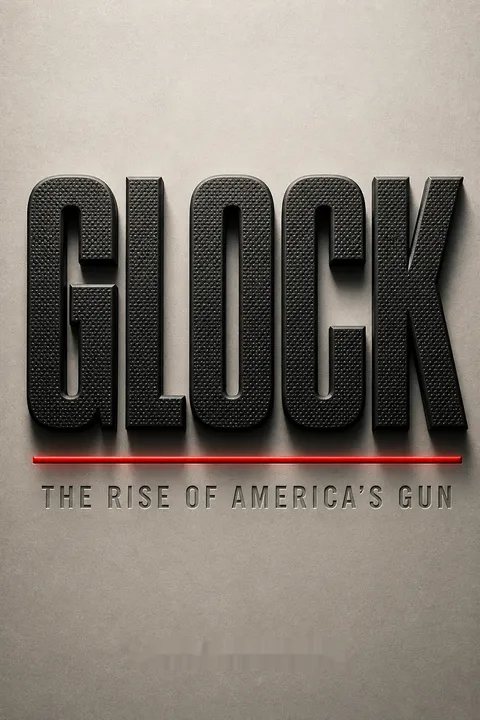
Glock: The Rise of America's Gun is widely praised for its balanced, engaging account of the iconic pistol's history and impact. Readers appreciate the book's exploration of Glock's engineering, marketing, and cultural significance. Many found it surprisingly entertaining, with elements of business, politics, and even scandal. Some critics felt it lacked technical depth or perpetuated gun myths. Overall, reviewers recommend it as an informative read for both gun enthusiasts and those interested in American gun culture and politics.
People Also Read









Glossary
Safe Action
Integrated trigger safetyGlock’s trigger system, which combines a trigger safety with internal mechanisms that block firing unless the trigger is deliberately pressed. It avoids a conventional external thumb safety and is intended to reduce accidental discharge if the pistol is dropped. Its straightforward operation was a selling point for police agencies, while the light trigger pull made training and careful handling especially important.
New York Trigger
Heavier trigger optionA Glock trigger modification developed after the New York State Police requested a firmer pull. It uses a different trigger assembly and spring to increase resistance to about eight pounds, compared with the standard pull of roughly five pounds. The modification addressed concerns that the standard trigger was too easy to press, particularly for officers carrying a loaded pistol.
Pocket Rockets
Compact Glock pistolsA nickname for Glock’s compact and subcompact pistols introduced in the mid-1990s, including the nine-millimeter Glock 26 and .40-caliber Glock 27. Their shorter barrels and grips made them easier to conceal than full-sized service pistols. They were marketed for civilian self-defense and concealed carry, and their popularity grew alongside expanding concealed-carry laws.
Glock KB (Ka-Boom)
Barrel pressure failureA term used for a catastrophic failure in which a Glock pistol’s barrel or slide ruptures after excessive pressure builds. The book describes a possible cause: exposed lead bullets can leave deposits in the barrel’s polygonal rifling, narrowing its bore and increasing pressure. Glock advised users to use jacketed or plated ammunition and warned against certain reloaded ammunition.
Glock Shooting Sports Foundation
Glock-owner competition programA company-sponsored organization that runs shooting competitions for Glock owners. Members pay an annual fee to participate in events at ranges around the country. The program builds customer loyalty by turning ownership into a shared activity for individuals and families, while keeping participants connected to the brand and its products.
Download PDF
Download EPUB
.epub digital book format is ideal for reading ebooks on phones, tablets, and e-readers.








