


Plot Summary
Prologue
A voice from an old spell speaks through Nicholina, an ancient witch who fears being left alone. She calls herself part of a nest, but her promise of protection curdles into a plan: enter Lou's weakened body, feed on the grief of Lou's friends, and deliver her to her mother, Morgane.
Nicholina's companions warn that the dead should not remember, a fragment of verse that will return as a threat. For now, she believes possession will give her a home forever.
The opening makes loneliness more than a wound: it becomes Nicholina's justification for consuming other people. Her nest imagery turns community into a resource, and her tenderness toward the idea of belonging is already fused with predation. That contradiction prepares the reader to see possession not as a sudden horror but as the logical end of a self that cannot tolerate loss. The warning about the dead remembering introduces memory as a force that can outlast both bodies and control.
Shelter in the Ruined Church
Reid, Lou, Coco, and Beau reach a deserted coastal church after days without enough food or sleep. Their spectral white dog follows, while Lou shivers, stares without blinking, and insists on continuing toward Chateau le Blanc to confront Morgane. Father Achille recognizes the fugitives from their wanted posters, yet offers stew and a place to rest instead of summoning the Chasseurs.
His welcome unsettles Reid, who expects the Church to punish witches rather than shelter them. Coco withdraws into grief over Ansel, and Reid tries to comfort her, but neither can agree whether to turn back for missing allies. When Beau notices Lou behaving unlike herself, Reid dismisses his concern, leaving the change unexplained.
The church offers a first, practical counterexample to the moral systems that have shaped Reid and Lou. Achille does not absolve their crimes or ask for their stories; he gives hungry people food because he can. Reid, trained to sort people into sinner and protector, cannot easily accept kindness without suspicion. Meanwhile, grief has made Lou difficult to recognize even before anyone understands its cause. The scene makes care concrete and provisional: a bowl of stew cannot repair the group, but it interrupts the assumption that every institution must respond with violence.
Célie's Unwanted Inheritance
Célie arrives at the church after secretly following the fugitives, bringing stolen money, a letter about King Auguste's plans, and a locket taken from her father's vault. Reid tries to send her home, but Célie refuses, explaining that Morgane imprisoned her with the corpse of her sister Filippa. Coco recognizes the locket as La Petite Larme, her own mother's mirror, and opens it with a drop of blood.
Its reflection reveals Lou's altered appearance, though the group does not yet understand why. Célie also reports a monstrous figure near the lighthouse, where her carriage was wrecked. Father Achille identifies it as a cauchemar, a creature feared by villagers, and Reid decides to warn it before a mob arrives.
Célie's arrival converts private trauma into chosen participation. She is still frightened, but she refuses the safe performance of returning to polite society after what Morgane did to her. The locket introduces a distinction between appearance and truth that will govern the coming crisis: a reflection can disclose what loyalty, affection, and ordinary sight miss. Reid's decision to help the suspected monster also signals a change in his moral reflex. He begins to judge the threatened creature by its actions, not by the category assigned to it.
The Cauchemar Is Thierry
At dawn, the group enters the lighthouse before villagers can burn it. Broken mirrors and the creature's frightening attacks turn the climb into a struggle, and the cauchemar sends each person into a private nightmare. When its hood falls away, Reid recognizes the battered figure as Thierry St. Martin, a friend tortured by Morgane.
Lou, however, keeps trying to kill him and flees when Reid stops her. Coco uses her own blood to subdue Lou, then La Petite Larme exposes a terrible truth: Nicholina has taken control of Lou's body. Reid had mistaken Lou's coldness and strange appetite for grief. The group escapes through a hidden tunnel as villagers storm the lighthouse, carrying unconscious Lou and the injured Thierry.
The revelation recasts earlier unease as evidence that love and familiarity can be manipulated by a body that looks unchanged. Reid's recognition of Thierry restores a shared history, while Lou's attack shows how completely Nicholina can distort the group's bonds. Coco's blood is both weapon and diagnostic tool, forcing the friends to confront that saving Lou may require harming her apparent body. The lighthouse's broken mirrors echo the group's broken confidence in perception: what they see is not false, exactly, but it is no longer sufficient.
A Murder of Crows
With Nicholina bound, the group heads toward the Wistful Waters, but she steals magic from a crow and multiplies it into a cloud of attacking birds. Reid's wind magic cannot hold them back. A dragon bursts from the smoke, burns the crows, and transforms into Zenna, a member of the traveling troupe, with Seraphine beside her.
Thierry explains that Morgane captured him and his brother Toulouse, tortured them, and took them to Chateau le Blanc; he escaped without finding Toulouse. Zenna refuses to delay her rescue mission, so Thierry goes with her. Before she leaves, she confirms that Morgane's forces are gathering at the Chateau, while Reid's smaller party continues north with the captive Nicholina.
The dragon's arrival provides spectacular rescue without resolving the group's divided obligations. Zenna's choice to prioritize Toulouse over Lou is not indifference; it is an assertion that love does not make one person's emergency the center of every other person's life. Reid must accept that allies have separate attachments and limits. Thierry's survival also turns the danger from rumor into testimony. Morgane's violence is no longer an abstract threat to the future, but a pattern already inflicted on people the group knows.
Three Pearls, One Kiss
The party searches fishing villages for black pearls needed to enter the Wistful Waters. Célie's hidden hemlock injection alarms Reid, who learns that she carries it because she fears witches, not because she plans to attack him. In the last village, a shop appears where no stall stood before. Madame Sauvage offers three pearls, but rejects money and demands favors.
Her first price is a kiss between Coco and Beau; their reluctant kiss quickly reveals the attraction both have denied. Reid receives seeds and a sticky bun in exchange for his own future obligation. Madame Sauvage then releases Nicholina from her control, warning the group to go. They leave with the pearls, but not with certainty about what they have promised.
The bargains make intimacy and obligation exchangeable, exposing how often these characters disguise desire as practicality. Coco and Beau's kiss does not create their feelings; it removes the protection of denial. Célie's injection complicates Reid's wish to be trusted, since her fear is grounded in real violence rather than prejudice alone. Madame Sauvage's seeds appear trivial beside the pearls, but their unresolved purpose gives the bargain a longer horizon. The scene insists that every favor has a future, even when its cost is not yet legible.
The Broken Heart's Gate
At the fogbound entrance to L'Eau Mélancolique, the mist forms Le Cœur Brisé, the guardian of the waters. Coco recognizes him as Constantin, the legendary lover once thought dead, and explains that the waters revived him after his leap from the cliffs. He accepts the pearls, but only Reid, Coco, and Lou may continue; humans cannot safely enter.
Constantin sends Beau and Célie away and requires the others to drink from the waters and reveal their truths. Reid and Coco comply, then help the sleeping Lou drink. The still surface opens into separate visions, and Reid finds himself alone in a landscape where the waters demand more than a simple confession.
Constantin embodies the cost of surviving through someone else's power: he is alive, but his life is bound to the place that revived him. The waters' admission test shifts the group's task from finding a cure to accepting exposure. That distinction matters because Lou's possession has already made secrecy dangerous. Separating Beau and Célie also removes the human characters from a trial designed for those connected to magic, while leaving their absence as a source of pressure rather than protection.
The Water's False Cure
Reid's vision shows Lou threatening a child on an altar and asks him to face his own capacity for violence. He admits that he has killed for people he loved, including acts that served loyalty as much as justice, and the vision releases him. In the water, Lou regains her natural appearance and her health, but Nicholina is still inside her.
When Lou and Reid confront the guardian, Nicholina breaks through long enough to admit she can do great evil. The waters allow them into their depths, yet they do not cast her out. Reid carries the resisting Lou beneath the surface, believing that the water may still offer the only chance to save her.
Reid's test punctures the comforting division between the noble hunter and the monstrous witch. His self-recognition does not make him innocent; it makes him more capable of choosing what to do next. The waters restore Lou's body but not her autonomy, separating physical healing from moral or psychic repair. That failure prevents the magical setting from becoming an easy solution. Love can carry Lou into the water, but it cannot perform the inner struggle for her.
Ansel's Final Lesson
Below the surface, Lou and Nicholina are swept through memories, including the death of Nicholina's son Mathieu and the moment Lou failed to protect Ansel. Nicholina weaponizes Lou's guilt over the boy's death, but Ansel appears as a presence within the memory and helps restrain her. He reminds Lou that she must finish the struggle herself.
Lou kills Nicholina's embodied memory with a knife, then enters a vision of home where Ansel waits among the people she loves. She finally accepts that he needs to leave and lets him go toward peace. When the vision dissolves, Lou kicks upward toward life, carrying grief without allowing it to keep Ansel beside her.
Lou's victory depends on distinguishing guilt from responsibility. She cannot undo the words that wounded Ansel or the events that killed him, but she can stop making his memory serve as punishment. Nicholina's own history reveals a parallel: her love for Mathieu once began as care, then became an inability to accept loss. Lou breaks that pattern by releasing Ansel rather than possessing him through grief. The scene makes mourning an action, not a cure: she chooses separation because love requires it.
A Pattern's Cost
Lou and Reid surface together, but Constantin's body lies dead on the shore, killed by La Voisin. Morgane arrives with Josephine and captives Beau and Célie, threatening to kill them unless Lou surrenders. Reid casts a powerful pattern to protect the group, and the spell makes him collapse.
When Lou wakes him, he has forgotten her and his own life with her; Morgane has also lost the memory that Lou is her daughter. Angelica emerges from the waters, revealing herself as Coco's mother and confronting Josephine, her twin sister. Their blood bond prevents either from killing the other. Angelica drives Josephine away and leads the survivors toward the Oracle's city.
Reid's spell buys safety by cutting into the very continuity that makes his relationship with Lou meaningful. The cost is not simply forgetfulness; it turns his chosen protection into an injury Lou must live beside. Morgane's matching amnesia offers a tactical reprieve, but it does not erase her capacity for violence. Angelica's entrance enlarges the conflict from family feud to ancient political history, while her blood bond with Josephine makes intimacy itself a constraint neither sister can escape.
The Oracle's Bargain
Angelica brings Lou, Coco, and their companions to Le Présage, the dry city beneath the sea, where the melusines prepare a formal welcome. The Oracle Isla tests Lou at dinner, exposing her as ordinary rather than magically exceptional, then reveals the reason for summoning them. Angelica's ring, which Lou once possessed and Morgane now keeps at Chateau le Blanc, contains the sea witch's power.
Isla will allow her people to aid the coming war only if Lou retrieves it. Before they leave, the Oracle's magic changes Lou into the Maiden, revealing that she can assume one of the Triple Goddess's forms. Lou must return to her mother's castle with Reid, who remains unable to remember her.
Isla's insult attacks the heroic self-image Lou does not possess, but the demand that follows grants her a role precisely because she is not exceptional in the expected way. Her value lies in access, relationships, and the capacity to act under pressure. The ring makes power material and contested: Angelica's identity and the melusines' freedom are tied to an object hidden in an enemy's treasury. Lou's transformation widens her abilities while making the question of who she is newly unstable.
The Treasury's Hidden Door
The group returns to Chateau le Blanc while Reid treats Lou and Coco as enemies, though Jean Luc follows Célie and helps keep him from acting on every suspicion. Lou uses new land magic to conceal the party, then leads them through her childhood home. Manon discovers the intruders but does not raise an alarm, despite her grief and loyalty to Morgane.
At the treasury, Lou struggles against an enchantment that recognizes her as the new Dame des Sorcières. Célie applies her knowledge of locks to guide her through it. Célie finds Angelica's ring among the treasure, while Reid secretly recovers a Balisarda. The group escapes, and Lou gives the ring back to Angelica.
The heist tests whether Lou's inherited authority can serve a home that no longer feels like hers. The treasury's lock is both obstacle and examination: power alone does not open it, so Lou needs Célie's practical expertise and willingness to trust another person. Manon's silence offers a fragile alternative to obedience, though it does not yet make her an ally. Reid's recovered sword complicates the group's safety, restoring his old identity's weapon while leaving the newer bonds he cannot remember unresolved.
A Kiss Without Memory
On the journey back, the group stops at an inn, where a game of truth or dare turns into a strained attempt to reach Reid. He admits little, but alcohol loosens his control, and he asks Lou why she smells familiar and why he feels drawn to her. Lou explains that he chose to forget their love, but she refuses to let their closeness become a substitute for clear consent.
When Reid later asks her to show him how they used to be, she slows the encounter and lets him choose each step. Their intimacy gives him a real, present experience of trust, even though it does not restore his memories. Coco meanwhile challenges her own fear of loving Beau.
The romantic tension is ethically complicated because Reid's body remembers what his mind cannot. Lou's restraint prevents their history from becoming a claim on his present consent. She offers intimacy as a sequence of decisions rather than proof that he owes her a relationship. Coco's refusal to rely on Beau for her happiness follows a similar logic: affection matters, but it cannot replace self-authorship. Both women begin to imagine love as a choice made in the present, not merely a bond imposed by the past.
The Trial Beneath the Sea
Angelica gives the group three chalices of water, and their visions reveal the danger awaiting them in Cesarine. Reid sees the conclave weighing his mother Helene Labelle's fate as King Auguste plans to use her as bait. Father Achille argues against the execution, but Auguste declares that she will burn in three days and expects Lou, Reid, and their allies to come for her.
The friends decide to enter the city openly rather than risk slipping past the guard. Jean Luc will pretend to capture them, placing them near Helene in custody, while Coco escapes to summon their allies. The plan depends on the king believing Jean Luc's loyalty is intact.
The vision turns private rescue into a public trap. Auguste understands that Helene's life can draw her son into danger, and he relies on spectacle to convert political insecurity into collective fear. Achille's dissent matters because it shows that institutional authority is not uniform, even when the conclave is compromised. The plan accepts vulnerability as a tool: the group will let the state name them criminals so they can reach the person it has imprisoned. That decision leaves little room for improvisation.
The King's False Capture
At Cesarine's harbor, Jean Luc presents the bound party as his captives, and Célie performs the part of a frightened aristocrat. Auguste arrives with hemlock syringes and strips Jean Luc of his captaincy, then orders him to inject the prisoners. Jean Luc cannot fake obedience under the king's scrutiny, so Lou and Reid accept the poison rather than expose him and risk losing access to Helene.
The Chasseurs carry them to the Tower, where a cage built from the silvered wood of Reid's lost Balisarda prevents Lou's magic from reaching its lock. Lou heals Reid's broken fingers and clears the poison from his body, but their escape route remains closed.
The capture plan fails not because its logic is foolish but because loyalty has visible limits under coercion. Jean Luc's survival instinct and his public rank collide, while Lou and Reid choose to protect him by accepting the injection. The Tower then literalizes the conflict between Reid's past and present: the weapon he lost has become the material of his prison. Lou can heal his body, but healing does not automatically create freedom. Their skills are real, yet each is blocked by a different form of authority.
Hellfire at the Stake
The Chasseurs drag Lou and Reid to a public pyre, where Auguste announces their execution. Beau, disguised as Father Achille, and their allies arrive as the city erupts into battle. A spark sets the platform alight, and Coco's tears fall as rain, revealing that her grief had created the black fire and her love can quench it.
Reid sees a memory of choosing Lou and pulls the colored pattern that restores his lost past. The rain extinguishes the Hellfire, but Lou has absorbed the pain of the burns meant for the others. She emerges from the wreckage alive and radiant, while Reid remembers their marriage and runs to her.
The execution turns emotion into public force. Coco's grief has been dangerous because it was sealed inside her, but the rain appears when she risks mourning openly; love does not erase loss, yet it changes what loss can do. Reid's restored memory is likewise an act of recognition, not a magical return to innocence. He remembers the choices that made him Lou's partner. Lou survives by carrying others' pain, a power that makes her luminous but also exposes the danger of self-sacrifice as a habitual form of love.
The Chasm Splits Cesarine
Morgane rallies witches against the mixed force of Chasseurs, werewolves, and melusines. Lou uses her new power to clothe her allies in spider silk armor, while Zenna attacks in dragon form and Claud commands the trees against Morgane's borrowed control. Reid focuses on evacuating civilians instead of pursuing the queen.
Amid the battle, Claud intervenes directly to save people, and the earth opens beneath him, splitting Cesarine and stranding Lou and Célie opposite Reid, Coco, and Beau. Morgane takes Célie as a shield. Lou rejects her mother's claim that she is alone, then traps Morgane briefly and uses Célie's hemlock injection to weaken her before killing her with a blade.
The battle tests whether power can be used without reproducing the violence it opposes. Lou's magic protects allies, while Reid repeatedly turns from vengeance to civilian rescue. Claud's intervention saves lives but carries an enormous cost, and the chasm makes the limits of divine rescue physical. The final confrontation is intimate rather than triumphant: Lou's declaration of love for her mother does not excuse Morgane's harm, but it acknowledges the grief of losing the mother she wanted. Killing Morgane ends the threat without resolving that grief.
A Kingdom Rebuilt
After Morgane falls, Lou crosses the vine bridge and reunites with Reid. The city counts its losses: Ismay and Victoire are dead, while Madame Labelle survives with help from Babette. Thierry and Toulouse find refuge with Blaise's family, and Zenna and Seraphine remain with them as they grieve Claud's disappearance.
Father Achille and Jean Luc organize aid, while Célie receives Reid's Balisarda and a chance to help rebuild the Chasseur order. At Pan's patisserie, Reid returns the mother of pearl ring he had kept and offers to buy Lou sticky buns. The surviving friends imagine a life at Chateau le Blanc, though grief remains part of what they must carry.
The resolution refuses to equate victory with repair. The kingdom has lost family members, its institutions are damaged, and Claud's fate remains uncertain. What changes is the way survivors organize care: Achille and Jean Luc coordinate relief, Célie is trusted with responsibility, and Beau and Coco can consider a future without asking one person to heal the other. The ring and sticky buns return the story to intimate objects, but their meanings have shifted. Home is no longer safety granted by a parent; it is a life built among people who choose one another.
Epilogue
At Chateau le Blanc, Lou and Reid marry beneath a pear arbor, surrounded by friends, family, witches, werewolves, and melusines. Coco, Beau, Célie, and the others help make the ceremony theirs, while a picture of Ansel rests in the front row.
Madame Sauvage arrives and asks Reid about the seeds he was supposed to plant. Lou casts them into the earth, and pear trees spring up through the grove. Ansel watches the celebration, then sees his mother and father waiting for him. He leaves his friends to join them, finally able to move on.
The wedding completes the book's movement from possession toward chosen attachment. Lou's family is not a perfect restoration of what she lost; it is a community assembled from survivors who have learned to share power and grief. Ansel's departure keeps the celebration from pretending that love can hold the dead indefinitely. Madame Sauvage's pear trees offer an image of care with a future: the seeds require planting, and their growth changes a damaged place. The ending grants joy, but treats it as something cultivated rather than bestowed.
Analysis
Gods & Monsters asks what happens when the roles that once organized a person's identity stop working. Reid has been trained to call obedience virtue, but the Church's violence forces him to distinguish institutional loyalty from moral responsibility. Lou inherits an immense authority that is not simply hers to wield; her new power is bound to land, ancestry, and communal consequence. Their romance becomes a series of choices under pressure, not a magical exemption from conflict. Reid's amnesia makes that distinction literal: Lou cannot rely on shared history to secure his love, and he must encounter her as a person in the present.
The novel also treats grief as an active force. Coco's sorrow burns a city, then her tears help extinguish it; Lou's mourning for Ansel becomes a decision to release rather than possess him. Nicholina offers the darkest counterexample, turning fear of loneliness into the urge to occupy another life. These contrasts make the book's emotional argument unusually concrete. Love is not proven by refusing loss. It is shown through care that does not claim ownership.
Finally, the political resolution is deliberately unfinished. The Church, Crown, and covens have all used purity and protection to excuse coercion. Their institutions must be rebuilt by people who have crossed old boundaries: a priest who shelters fugitives, a Chasseur who chooses civilians over rank, and an aristocrat who insists on acting for herself. The ending does not erase the dead or restore a spotless world. It offers a fragile alternative, a community whose future depends on reciprocal work. The pear trees make that promise visible: seeds can grow, but only after someone chooses to plant them.
Review Summary
People Also Read






Characters
Louise le Blanc
The irreverent witch heirLou, a quick witted witch raised within the powerful le Blanc coven, survives by turning fear into audacity. Her humor is more than a shield; it lets her test who can withstand her honesty and who only wants her obedient. She loves fiercely, but her instinct to protect others can become self erasure, especially when she believes her own life is the price everyone else should pay. Her struggle is to distinguish sacrifice from care and inherited power from personal choice. Lou's relationships with Reid, Coco, and the found family around her give her a way to imagine belonging that does not require submission to her mother.
Reid Diggory
The conflicted huntsmanReid is a former Chasseur captain shaped by discipline, religious certainty, and a childhood spent fighting to be valued. He tends to turn uncertainty into rules and action, which makes him courageous in danger but slow to recognize when a rule protects cruelty. His love for Lou forces him to examine the difference between duty and conscience, and his attachment to his family complicates his wish to be a righteous man. Reid's restraint is often mistaken for coldness; beneath it is a powerful fear of losing the few people he trusts. He is at his best when he uses his strength to protect others without deciding for them.
Coco
The grieving blood witchCoco is a skilled Dame Rouge, a thief, and one of Lou's closest companions. Her magic draws on blood and emotion, making her power inseparable from the feelings she tries to contain. She is blunt, practical, and deeply loyal, yet grief has taught her to treat vulnerability as a liability. Her history with her family and her complicated affection for Beau test her belief that she must make herself happy alone. Coco's sharpness keeps others alive, but her growth depends on discovering that accepting love need not mean surrendering agency or responsibility.
Beauregard Lyon
The defiant crown princeBeau is Reid's half brother and the crown prince of Belterra, raised among privilege without feeling secure in his place. He uses vanity, teasing, and theatrical confidence to control how others see him, but his jokes conceal real devotion to the people he considers family. His relationship with Coco is sharpened by mutual attraction and mutual suspicion, while his bond with Reid carries the frustrations of brothers who have learned to survive in different ways. Beau wants to be useful rather than merely protected. His humor softens tense moments, but his loyalty becomes clearest when danger leaves no audience to impress.
Célie Tremblay
The porcelain rebelCélie is an aristocrat and Reid's longtime friend, accustomed to etiquette, family expectations, and being treated as fragile. Her manners are genuine, but they are also a form of control in a world that often denies her choices. Trauma has made her wary of witches and of her own vulnerability, yet she refuses to retreat into the sheltered life others prescribe for her. Célie's practical intelligence, courage, and knowledge of locks prove as valuable as magic or weapons. Her relationship with Jean Luc grows alongside her insistence that affection must not become another form of guardianship.
Morgane le Blanc
The formidable witch matriarchMorgane is Lou's powerful mother and the feared leader known as La Dame des Sorcières. She sees herself as responsible for the survival of her people, a conviction that allows her to justify terrible costs to individuals and families. Her authority depends on control, performance, and an ability to make sacrifice sound necessary. Morgane's relationship with Lou is charged with both longing and refusal: she wants a daughter who fulfills a destiny, not necessarily one free to define herself. She embodies how love can be distorted when a person treats people as instruments of a collective cause.
Nicholina le Clair
The unnerving old witchNicholina is an ancient witch whose strange humor and interest in old spells make others uneasy. She is affiliated with the elder witches and carries a history shaped by loss and dependence on those who promise protection. Her language often turns people into prey or possessions, revealing how she has learned to understand closeness through control. Nicholina is a figure of frightening persistence, but her motives are not simple malice. She fears isolation and mortality, and that fear shapes the bargains she makes with powerful people.
Ansel
The earnest young initiateAnsel is a young Chasseur initiate who becomes one of Lou's most trusted friends. He is gentle, loyal, and often underestimated because he lacks the authority or confidence of older fighters. His instinct is to help, even when he doubts that he has much to offer. Ansel's friendship with Lou gives her a relationship ungoverned by romance or power, one built on humor, candor, and the simple wish to matter. He also becomes a measure of the group's conscience: his vulnerability makes the costs of their decisions impossible to treat as abstract.
Madame Helene Labelle
Reid's fiercely loving motherHelene Labelle is Reid's mother, a witch with poise, intelligence, and a deep understanding of the danger her son faces. She is warm without being sentimental and can meet Reid's guardedness with both affection and clear judgment. Her history with the Church and the Crown has taught her how quickly love becomes leverage in political hands. Helene wants Reid to live beyond the duties that have defined him, even when protecting him requires difficult choices. She brings a maternal perspective to a story where many forms of family have failed or become coercive.
Jean Luc
The duty bound captainJean Luc is a respected Chasseur captain and Célie's closest companion. He is controlled, proud, and deeply committed to the institution that gave him purpose, even as its rules increasingly conflict with his conscience. His protective instincts toward Célie can slide into overreach, and she forces him to see that care is not the same as control. Jean Luc's relationship with Reid combines rivalry, old affection, and shared loyalty. He measures himself by service, which makes moral compromise costly, but he can still choose people over rank when the distinction becomes unavoidable.
Claud Deveraux
The irreverent forest godClaud is a divine figure associated with the wilderness, its creatures, and its unruly cycles. He approaches danger with humor and apparent ease, but his power is bounded by ancient laws rather than available on demand. His friendship with the group is real, though it does not make him their servant or guarantee rescue. Claud's presence challenges Reid's inherited understanding of divinity and gives Lou an ally who recognizes her power without claiming ownership of it. He represents a natural order that can shelter, punish, and remain indifferent to human preference.
Isla
The demanding sea oracleIsla rules the melusines' hidden city and is known as an oracle whose knowledge reaches beyond ordinary sight. She is beautiful, vain, politically shrewd, and unwilling to disguise contempt as kindness. Isla values the survival of her people above the comfort of visitors, so her offers of aid come with demands. Her treatment of Lou tests whether the young witch can act without needing praise or proof of exceptional worth. Isla is not simply an ally or an adversary; she is a sovereign with interests that may overlap with the surface world without being ruled by it.
Angelica
The ancient water witchAngelica is an original witch whose life and power are bound to the Wistful Waters. She has the bearing of a courtly woman and the perspective of someone who has watched generations repeat their mistakes. Her calm can look like distance, especially when other people need immediate explanations or affection. Angelica is connected to the old conflict between witches who draw power from blood and those who live by the land's rhythms. Her choices are shaped by guilt, duty, and a belief that the next generation deserves freedom she did not secure for herself.
Josephine
The calculating elder witchJosephine is an ancient Dame Rouge and a powerful political force among the blood witches. She values survival, influence, and the continuation of her people, and she is willing to make cold calculations in their name. Unlike Morgane's theatrical authority, Josephine tends toward blunt pragmatism. Her family bonds are inseparable from old grievances and questions of loyalty. She sees compromise as weakness when it threatens her position, but her confidence rests on an assumption that power can keep every relationship under control.
Constantin
The waters' broken guardianConstantin is the supernatural guardian of L'Eau Mélancolique, a man whose legendary past has made him both warning and guide. He is proud, sardonic, and aware of the irony in his own history. His connection to the waters gives him authority over who may enter, but it does not make him omnipotent. Constantin recognizes in Reid the danger of confusing devotion with entitlement, and he pushes the group to face truths rather than search for shortcuts. His presence links the current conflict to the old wounds that shaped the war between witches and the Church.
Father Achille Altier
The contrarian priestAchille is a priest whose shabby parish and abrasive manner conceal a serious moral independence. He offers fugitives food even when sheltering them could destroy his standing with the Church. Achille distrusts grand claims of divine authority and prefers evidence, procedure, and mercy in the immediate situation. His relationship with Reid begins in suspicion but is shaped by a shared willingness to question institutions. He is a counterpoint to religious leaders who use faith to excuse cruelty, showing how conviction can support dissent rather than obedience.
Thierry St. Martin
The wounded troupe friendThierry is a member of Troupe de Fortune with a gift for projecting his voice and communicating beyond ordinary speech. He is close to his brother Toulouse and to the performers who have become his family. His courage is quiet rather than showy; even when exhausted or injured, he is determined not to abandon those still in danger. Thierry carries the emotional residue of imprisonment and separation, but he remains capable of accepting help. His presence makes the group's larger conflict personal and gives Zenna a reason to act.
Toulouse
Thierry's missing brotherToulouse is Thierry's brother and fellow member of Troupe de Fortune. His relationship with Thierry is marked by loyalty and the shared history of performers who rely on one another. Though he is less prominent in the opening movements, his absence shapes the group's choices and gives the rescue effort a human center beyond the central romance. Toulouse belongs to the network of friends and allies whose varied gifts make the wider resistance possible.
Zenna
The theatrical dragonZenna is an imposing performer with a dragon's strength and a theatrical streak. She is fiercely protective of Seraphine and the members of Troupe de Fortune, yet she judges priorities according to her own obligations rather than automatically following Lou's plans. Her confidence can seem imperious, but it is grounded in responsibility for people she loves. Zenna's dragon form embodies the scale of power available to the group, while her choices remind them that even overwhelming strength cannot be everywhere at once.
Seraphine
The dragon's steadfast maidenSeraphine is Zenna's companion and a member of the traveling troupe. She is brave, loyal, and willing to fight beside Zenna rather than remain safely behind. Her relationship with Thierry is affectionate and protective, while her bond with Zenna gives her a clear place within the group's found family. Seraphine's courage is practical: she helps with rescues, carries weapons, and acts when others are threatened. She supports the larger alliance without losing her own judgment or identity.
Manon
The grieving coven sisterManon is one of Lou's sisters within the le Blanc coven and carries grief over the choices that shaped her relationship with Gilles. She is disciplined and loyal to the family structure in which she was raised, even when that loyalty conflicts with what she knows is right. Manon's restraint often conceals fear and regret rather than certainty. Her connection to Lou is complicated by their shared history and by Morgane's authority. She represents the difficulty of changing sides when guilt makes a person feel that they have already gone too far.
King Auguste
The self righteous kingAuguste is the king of Belterra and the father of Reid and Beau. He uses public ceremony, religious language, and punishment to hold the Crown's authority together. His confidence masks a deep need to control the story his subjects tell about him and the kingdom. He treats family members as heirs, threats, or instruments more readily than as people with independent loyalties. His political conflict with the witches reflects a larger system in which fear is repeatedly presented as proof that harsher rule is necessary.
Philippe Brisbois
The ruthless ChasseurPhilippe is a senior Chasseur who values force, discipline, and the authority of the Crown. He is quick to treat dissent as disloyalty and witches as enemies beyond negotiation. His relationship with Jean Luc exposes the difference between rank and moral leadership. Philippe is dangerous not because he is unpredictable, but because he believes violence is justified whenever it serves an institution he respects.
Violette and Victoire
Reid's spirited half sistersViolette and Victoire are young daughters of King Auguste and Reid's half sisters. They are bold, curious, and far less obedient than the court expects, particularly when Reid is in danger. Their affection for him is direct, with little of the political calculation that governs their father. The twins offer Reid a glimpse of the sibling bond he might have had under different circumstances, while their presence reminds the group that children often bear the cost of conflicts adults claim to control.
Plot Devices
Golden and white patterns
Magic with a priceWitches and Reid perceive magic as patterns that can be pulled into effects, but every working demands a cost. Reid's golden patterns express his developing ability to use magic, while Lou's later white patterns connect her to the land and the legacy of the Dame des Sorcières. The patterns enable escape, disguise, healing, and defense, but they also reveal limits: some magic cannot undo another witch's work, and power can exhaust or injure its user. The system makes a character's intention consequential rather than symbolic.
L'Eau Mélancolique
Truth beneath the surfaceThe Wistful Waters require travelers to drink and acknowledge what they reveal. They expose desire, fear, memory, and self deception, and their visions force Reid and Lou to recognize truths they would rather avoid. The waters can heal and restore, but they do not automatically solve possession or grief. Their danger is psychological as much as physical: a traveler can be overwhelmed by memory or drawn into the water's depths. The test becomes the hinge between bodily restoration and the harder work of choosing what to do with pain.
La Petite Larme
A mirror that exposesThe locket contains a mirror made from the Wistful Waters, and it opens only when touched by blood connected to its magic. Its reflection does not merely show a face; it reveals a more truthful image than ordinary sight can provide. Coco uses it to identify that Lou's apparent transformation is not simply illness or grief. The mirror also establishes the larger role of reflected truth in the book, preparing the group for the waters' later examination of their inner lives.
Angelica's Ring
Power hidden in plain sightThe simple ring is more than a protective charm. It holds Angelica's power and is tied to the melusines' ability to leave their underwater world. Lou's history with the ring gives her access to Morgane's treasury, while Isla makes its return a condition of aid. Retrieving it therefore turns a personal heist into a diplomatic obligation. The ring's modest appearance contrasts with its political importance, and the return establishes that alliances require recognizing what was borrowed or taken from others.
Coco's black fire
Grief made elementalCoco's grief creates a black fire that spreads beneath Cesarine and cannot be put out by ordinary means. The danger makes her feel responsible for everyone trapped in its path, even though the fire began as an expression of loss rather than deliberate harm. At the execution, her tears become rain and extinguish the flames. The device makes grief materially dangerous without treating it as evil, and it gives Coco a transformation from shame and isolation toward public mourning and renewed responsibility.
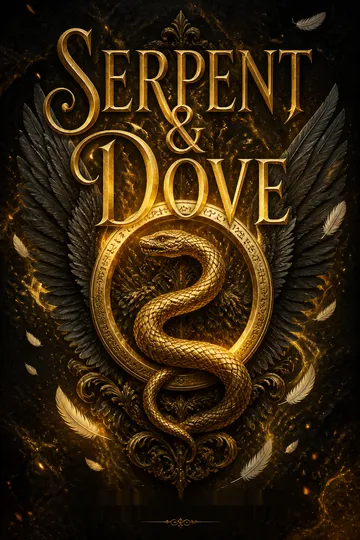
Serpent & Dove Series


About the Author
Other books by Shelby Mahurin


Download PDF
Download EPUB
.epub digital book format is ideal for reading ebooks on phones, tablets, and e-readers.








