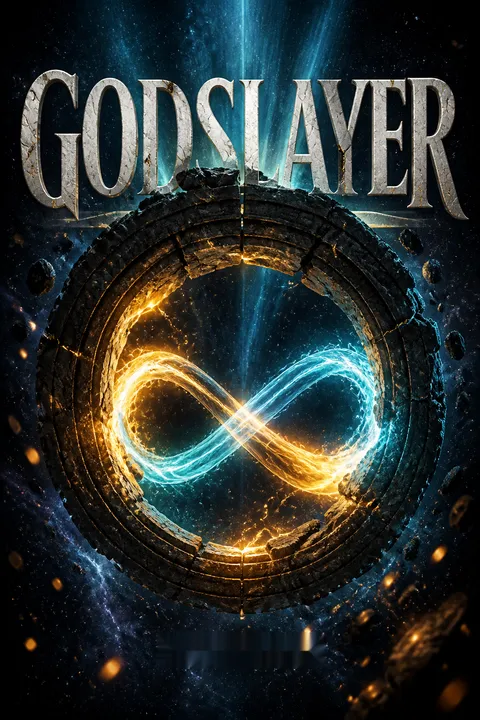


Plot Summary
Delta's Last Order
On their last night in Delta City, augment Tyse Saarinen knows the god Delta has given him no way to report back and suspects the assignment is a trap. Its target is Finn Scott, the former Extraction Master who fled Tau City with Spark Maidens at his side. Tyse hides the order from Clara Birch, telling her they are investigating attacks instead.
He also keeps secret his ability to see other worlds and steal their spark. Clara senses that he no longer wants to take orders blindly and offers to make a plan with him. The next morning they leave the city together, carrying supplies for a mission neither fully understands. Clara believes their partnership will protect them; Tyse knows Delta expects him to hunt Finn.
The mission begins with a split between intimacy and information. Tyse protects Clara by withholding the target, but that protection repeats the very structure he resents in Delta: one person controls what the other is allowed to know. His suspicion is justified, yet secrecy makes their partnership vulnerable before it has even been tested. Clara, by contrast, defines loyalty as shared action rather than obedience. Their departure therefore carries two stories at once: a hunt imposed by a god, and a couple trying to decide whether trust can survive the truth about why they are traveling.
The Cost of Crossing
In a sealed train tunnel, Tyse finds the hidden dimensional controls but cannot make sense of their crowded readings. Clara recognizes that each world has its own frequency and helps him isolate their destination, Tau City's factory dimension, numbered 702.
She supplies the spark that lets Tyse force a passage through. The crossing lasts twelve minutes, though Clara experiences it as a blur, and it leaves her pale and too weak to stand. Tyse searches neighboring worlds for a source of energy, finds a cave filled with blue crystals, and draws spark from them into her.
She revives. Back in the tunnel, the pair encounter white worker-bots loading crates, proof that this supposedly ruined line is still operating. Clara's discovery and her cost make their partnership indispensable, but dangerously unequal.
Crossing is presented not as a convenient portal but as a bodily transaction. Clara's power makes Tyse's travel possible, while the exhaustion afterward exposes the hidden price of their new abilities. Their method depends on cooperation, but the unequal consequences threaten to turn Clara into equipment rather than a partner. Tyse's decision to replenish her from the crystal cave shows care, yet it also begins a pattern in which he decides what risks are acceptable on her behalf. The scene makes discovery inseparable from consent: learning how the worlds connect matters, but so does asking who pays for the connection.
Delta's Harvest Floor
Curiosity leads Clara and Tyse into a tower beyond the bot station. Its control room reveals a city much like Tau, except its canal is black and its streets hold no visible spark. A recorded announcement calls the women and girls home for a scheduled harvest.
Through the monitors, Clara watches families attach clear tubes to their daughters and mothers; anyone who misses the deadline collapses in the street and is carried away by bots. The factory stores the collected spark in vast tanks, while drained women lie beneath them, alive but near death.
Clara understands that Delta's civilized city is powered by the same human extraction she escaped, carried out far more often and on a much larger scale. Tyse abandons his assigned hunt and boards a cargo train with her to seek a world beyond the gods' reach.
The factory turns the familiar language of care into an instrument of coercion. Families hurry home not for a meal but to prepare their own bodies for extraction, while the word harvest disguises the violence as routine maintenance. Clara's earlier life in Tau looked privileged beside this system, but the revelation does not restore her faith in its institutions. It instead widens her moral frame: a familiar ritual can be less brutal than another and still remain exploitation. Tyse's refusal to continue Delta's mission is a meaningful act of agency, though his proposed escape is not yet a solution for the people left behind.
The Book in Every Tower
Elsewhere on the line, Finn Scott and rebel Jasina Bell continue destroying Extraction Towers, hoping to end the sacrifice system they fled in Tau City. At an abandoned station, floodwater blocks their path and forces Finn to carry Jasina.
Inside the Extraction Master's quarters, they find the same scholarly history of the Godslayer and his Courtesan in every tower they have visited. The city beyond is wrecked and empty, its canal dark and its Maiden Tower sealed. A damaged control system announces a twenty-one-day reset, so the pair explore the hidden dormitory rather than leave.
Jasina discovers that she is pregnant, then realizes the endless, carefully prepared beds cannot have been built for the handful of Chosen girls she knew. Finn suspects the cities are factories that produce people for spark.
Finn and Jasina's campaign against the towers begins to resemble the institution it opposes: they act on a strong moral conviction but know little about the system they are dismantling. The repeated book is a material clue that their private romance has already been converted into public mythology. Jasina's pregnancy changes the stakes from abstract rebellion to a future they might build, while the empty dorm turns that hope into unease. Its scale suggests that the girls' lives were organized for a purpose larger than the ritual they understood. Their curiosity is no longer academic. It threatens the story they have been taught about themselves.
Xi Names the Game
When Finn and Jasina uncover a working Looking Glass, its screens show a woman emerging from a pod who resembles Clara. The factory's god, Xi, catches them searching and brings them into his tower.
He explains that the cities on the train line are factories, that women generate spark, and that rival gods compete for control of it in the Game of Gods. Tau City's old god is dead, he says, and its rulers had been trying to grow a replacement. Finn learns that Tyse is Delta's champion and has been sent to kill him.
Xi offers to augment Finn so he can survive that confrontation. Jasina resists Xi's manipulation, but Finn stays to learn more. Before long, she discovers she is carrying Finn's child, giving his choice consequences beyond his own survival.
Xi's explanation does not replace one clean truth with another. It gives Finn and Jasina a map, but it comes from a ruler who openly treats people as assets and is trying to recruit Finn. The revelation that their cities are factories makes the old moral vocabulary unstable: gods, rebels, sacrifice, and freedom all take on new meanings when spark is a resource in a larger contest. Finn's desire to understand is genuine, but Xi can exploit it because Finn has been raised to mistake status for knowledge. Jasina's resistance recognizes that information can also be a recruitment tool.
RhoXi's Velvet Cage
Xi takes Finn and Jasina through a tower door into RhoXi, a dazzling upper city of glass towers, restaurants, and effortless transport. Finn accepts Xi's offer to undergo augmentation, believing it will let him protect Jasina and confront Tyse.
While Finn undergoes tests and the first procedures, Jasina joins a book club with Lilika, Veyra, Maelis, and Elsha, and begins imagining a home there. Their welcome turns brittle when Jasina admits she is pregnant and the women insist she is not exceptional.
Lilika disappears, and the others answer every question with the city's slogan about every spark having a purpose. Jasina realizes their friendship has been staged and returns to find RhoXi's pleasant rooms gone, replaced by the ruined factory city. Xi has separated the couple and used comfort to keep them compliant.
RhoXi weaponizes the desires that Tau City's hierarchy cultivated: beautiful clothes, attentive service, friendship, and the promise of a secure family life. Jasina's wish to belong is not foolish; the city makes belonging feel tangible before revealing that it is conditional. Finn's choice is more complicated. He wants knowledge and the capacity to protect his family, but Xi offers both through a process Finn cannot fully supervise. Their separate experiences show how power adapts its methods to individual needs: it recruits Finn through mastery and draws Jasina in through community.
Epsilon's Needle Arena
As Tyse and Clara ride toward Epsilon, a squad of augmented men stops their train and demands payment for crossing its territory. Tyse jumps them through several dimensions to escape, but the unstable route leaves Clara unable to breathe in some worlds.
She is suddenly pulled back into the attackers' hands. Tyse follows through the veil and reaches Epsilon's territory, where the damaged god takes them prisoner. Epsilon orders Luther, his twitching technician, to unspool Clara's spark and thread it into Tyse, effectively attempting to augment him again.
He then forces Tyse into a cage fight, promising Clara's survival only if Tyse wins. The arena's crowd chants for Epsilon and then for a new god, while Tyse's combat instincts take over. Clara, restrained nearby, is forced to watch the man she loves become harder to recognize.
Epsilon converts intimacy into a technology of control. Clara's spark is not merely taken from her; it is made the condition of Tyse's survival, so each of them becomes both hostage and instrument to the other. Tyse's instinctive competence keeps him alive but also gives Epsilon a spectacle to exploit. The arena's chants blur the line between entertainment and ritual, echoing the Extraction ceremonies the protagonists thought they had escaped. Their predicament makes the central ethical problem concrete: devotion can sustain resistance, but a system can also use devotion to make people accept escalating harm.
Clara Names the Dead
As Epsilon drains Clara to fuel Tyse's treatment, she is drawn into a sea of spark and a fleet of ghostly godships carrying the women harvested across the factories. Each woman holds only a small light, the remnant of a life that was taken for power. Clara recognizes that her own glowing symbols are names and memories, and she gives each woman one, making their suffering visible instead of anonymous.
She finds Haryet, another Tau girl who crossed through the tower doors, and learns that crossing left them marked by a shard of the Source. In the arena, Tyse discovers he can enter other worlds and unspool people for their spark. He returns that stolen energy to Clara, keeping her alive, but each rescue deepens his dependence on killing.
Clara's vision counters the factory's logic by treating each harvested woman as a person rather than a unit of energy. Naming cannot reverse their deaths, but it restores a form of relation the system tried to erase. The Source is therefore both cosmology and ethical demand: power is not simply extracted from matter, because its history remains attached to lives. Tyse's new ability creates a dark mirror to Clara's remembrance. She preserves individual identities; he can take the spark that sustains them. His motives remain protective, yet the repeated necessity of violence threatens to make protection indistinguishable from consumption.
Jasina Sees the Trap
Finn's procedures leave him stronger but increasingly exhausted and detached, while Jasina notices that her new friends vanish one by one and that Finn returns from Xi's care unlike himself.
Xi brings her back to the factory and reveals the real purpose of their bond: he has linked women to male fighters so their spark powers combat. Finn is placed opposite the husbands of Jasina's former book-club companions, with Jasina feeding his strength through the connection.
He kills the men in the match, but Xi remains standing and claims the victory as a step toward controlling the Game of Gods. When Xi threatens the future of Jasina's unborn child, she draws on the child's spark and sends it to Finn. The act keeps him fighting, but leaves the child's fate uncertain.
Xi's staged community and the arena are parts of one design: women are made to supply power, while men are trained to compete for the right to wield it. Jasina's role changes from an observer who mistrusts the system to an active participant whose choices can alter a fight. Her intervention is an act of agency, but it is not liberating in any simple sense. She must use the very resource the system exploits, and the cost falls on a life she hoped to protect. Finn's victory over individual opponents cannot resolve the structure that arranged the match.
The Versi Comes Home
At Epsilon's arena, Tyse survives repeated fights by stealing spark from people in other worlds, then giving it to Clara when Epsilon drains her. The cycle grows harder to sustain, and Epsilon's mutants overwhelm him.
Clara, still bound and nearly empty, realizes Tyse is not asking her for more power to fight; his biological weapon, the VersiStrike, is trying to return to his hand. She spends the last of her own spark to activate its recall. The weapon flies through the laboratory wall and reaches Tyse, who uses its upgraded systems to purge the arena's unregistered attackers.
He hunts down Luther and displaces Epsilon into another dimension, then clears the factory. Tyse finds Clara critically injured and carries her away. Her survival is uncertain, and Tyse has been changed by everything he did to keep her alive.
The weapon's return resolves a planted feature of Tyse's augment, but the decisive insight belongs to Clara. She reads the connection between Tyse, his weapon, and their shared history when brute force and raw energy have failed. Her final act is therefore not passive sacrifice; it is diagnosis and choice under extreme constraint. Yet the victory is deliberately costly. Tyse has killed to feed Clara, Clara has spent herself to restore his weapon, and the factory has been cleared without undoing the violence that produced it. Escape becomes possible, but recovery is not guaranteed.
Epilogue
On the cargo train, Tyse cradles a limp Clara while his upgraded Versi is ready in his hand. Finn arrives carrying a similarly unresponsive, red-haired Jasina. Neither man recognizes the other at first, but both see the damage they have helped cause. Tyse lets Finn sit beside him rather than threaten him.
The train departs with both couples injured and their futures unresolved. As it moves, Tyse remembers Myra persuading him to buy the PhaseTether mod before their deployment, the weapon that later let him remove Epsilon from the fight. His thanks to his dead teammate carries the grief of a life he can no longer recover.
The final image replaces a clean victory with an uneasy recognition between two men who have each become dangerous in the name of protecting someone. Finn and Tyse do not reconcile or explain themselves; they share the narrow space of a cargo train while carrying the women whose survival has governed their choices. Myra's remembered purchase gives the escape a human history, showing that a small act of friendship can matter long after its giver is gone. The book ends with motion rather than resolution. The couples are together, but neither safety nor innocence has been restored.
Analysis
Godslayer makes the body the primary territory on which politics is fought. Spark is extracted from women, threaded into soldiers, stored in towers, and traded among gods, so the fantasy machinery never floats free of its human cost. The societies differ in ceremony and technology, but each tries to turn people into dependable sources of power. Their systems are most effective when exploitation looks like privilege, duty, or care. Tau's pageantry, Delta's orderly harvest, and Xi's luxurious RhoXi all offer distinct disguises for control.
The novel's two couples respond to this machinery through loyalty, but loyalty is not portrayed as automatically virtuous. Tyse kills across worlds to keep Clara alive; Clara accepts pain to protect him. Finn risks transforming himself to shield Jasina, and Jasina makes a choice that may cost their unborn child. These acts are moving because they are voluntary, but they also reveal how coercive systems colonize love: the people who care most become the easiest to threaten. Devotion can preserve agency, yet it can also make sacrifice seem like the only available form of agency.
The contrasts between Clara and Tyse sharpen that problem. Clara names the dead and carries their memories, while Tyse learns to take spark from living people and becomes frighteningly capable of doing so. Their abilities embody opposing responses to dehumanization, remembrance and appropriation, though neither can remain entirely pure. Finn and Jasina face a related choice as they learn that rebellion alone does not make them understand the world they are changing. Their effort to build a future is repeatedly interrupted by institutions that define what futures are possible.
The ending refuses the reassurance of a completed victory. Epsilon is removed and his factory cleared, but Clara and Jasina are left gravely weakened, while Tyse and Finn arrive at the same train carrying the consequences of their choices. The train becomes a fragile interval between systems, not an escape from them. What the book leaves its characters with is not innocence, but responsibility: they must decide what their power is for after discovering how easily protection can become another name for possession.
Review Summary
Godslayer receives mostly positive reviews, with an average rating of 4.29 out of 5. Readers praise the intricate world-building, complex characters, and intense storytelling. The audiobook version is highly recommended for its full cast narration. Some criticize the confusing plot elements and pacing. Many express excitement for the next installment in the series. Themes of fantasy, technology, and romance are prevalent. A few readers found the story overwhelming or struggled to connect with characters, but most appreciate the unique blend of sci-fi and fantasy elements.
People Also Read





Characters
Tyse Saarinen
The reluctant augmentA former Sweep soldier, Tyse is physically formidable and trained to turn instinct into action, but he distrusts the gods who treat him as a weapon. His affection for Clara makes him attentive and protective, while his fear of losing her can drive him toward choices he would otherwise reject. He wants to know what his revived augment abilities mean, yet also worries that curiosity will make him easier to control. Tyse's defining tension is between the soldier who obeyed systems built into his body and the partner trying to choose his own loyalties. He values directness and shared responsibility, even when he struggles to practice them himself.
Clara Birch
The spark-born partnerClara is a former Spark Maiden from Tau City who meets upheaval with curiosity, emotional candor, and a strong instinct for partnership. She is not trained as a soldier, but she learns quickly, asks practical questions, and refuses to accept a role as a decorative accessory to Tyse's mission. Her spark is central to the worlds' systems, though she initially understands it as a small talent for making glowing designs. Clara wants affection without losing her agency, and her loyalty is active rather than submissive: she expects honesty and contributes to decisions. Her attention to other people's stories and suffering makes her a counterweight to the dehumanizing logic surrounding spark.
Finn Scott
The disgraced heirFinn grew up as the privileged son of Tau City's Extraction Master, educated for a ceremonial duty whose human cost he did not fully confront until he abandoned it. He is curious about history and systems, though his upbringing encouraged him to accept status rather than question it. His relationship with Jasina draws out a more candid, protective side, while his old attachment to Clara remains entangled with guilt over the choice that separated them. Finn wants to become useful through knowledge, not merely inherit authority. His central psychological struggle is whether a desire to protect others can be separated from the power to decide for them.
Jasina Bell
The rebel strategistJasina is a sharp, practical rebel who learned to read social rules as tools, first while spying within the Pledge system and later while traveling beside Finn. She prizes self-reliance, but is also capable of imagining a quieter future as a partner and mother. Her confidence can turn into suspicion when she senses that others are deciding her fate without her. Unlike Finn, she often recognizes manipulation through its emotional texture before she can explain its mechanics. Jasina's courage is not fearlessness; she notices when fear or fatigue is changing her judgment and tries to adapt. She wants to belong without surrendering the power to choose who she becomes.
Xi
The ambitious godXi is a strategic ruler who presents himself as patient, informative, and generous, especially when he wants someone to accept a bargain. He understands that comfort and knowledge can persuade more effectively than force, and he uses both to draw Finn and Jasina into his plans. His interest in the Game of Gods is inseparable from his appetite for influence and control. Xi can explain the machinery of the world while withholding the purpose behind his own actions, making his candor difficult to trust. He sees people as powerful assets, but his confidence in that view leaves him vulnerable to the agency he tries to manage.
Epsilon
The brutal factory rulerEpsilon governs a damaged factory territory where augmented fighters and human bodies become material for his experiments. He is theatrical, volatile, and fascinated by the limits of augmentation, treating suffering as evidence that a process is working. His scarred appearance and unstable methods make him a stark contrast to the polished gods, but his underlying logic is familiar: power justifies using people. Epsilon can be cruelly perceptive about what others value, then turn that knowledge into leverage. His fixation on creating a more capable weapon makes him dangerous not only because of his strength, but because he views consent as an obstacle to experimentation.
Delta
Tyse's distant godDelta rules the city where Tyse was raised and gives him the mission to hunt Finn, then declines to provide a way to report back. He values order and presentation, maintaining a beautiful city while concealing the system that sustains it. His relationship with Tyse is transactional: he recognizes the augment's usefulness but does not treat him as an equal. Delta's reserve and self-interest leave Tyse to interpret the mission without guidance, an absence that becomes as consequential as a direct command.
Anneeta
The young godlingAnneeta is a childlike godling connected to the dangerous spark economy of Tau City. Clara cares for her during their escape, while Tyse regards her as a potential danger as well as someone they must keep alive. Her presence complicates the distinction between innocent child and powerful being: she is vulnerable, but the systems surrounding her have already made other people pay for her survival.
Haryet
The remembered MaidenHaryet is a former Tau City Spark Maiden whose creativity and crossing between worlds connect her to Clara's understanding of spark. Her talent for shaping spark into thread marks her as more than a victim of the Extraction system. She represents the emotional continuity between Clara's old life and the realities she uncovers beyond it.
Myra
Tyse's irreverent teammateMyra is a fellow Sweep augment remembered for her blunt humor, practical instincts, and habit of preparing for contingencies others dismiss. She challenges Tyse rather than flattering him and treats equipment as a way to keep the team alive. Her stories and advice influence how he understands danger, even when he once mocked her theories. Beneath the teasing, she is a loyal comrade whose presence shaped Tyse's idea of what a team owes its members.
Luther
Epsilon's twitching technicianLuther is Epsilon's unstable assistant, responsible for operating the equipment used to drain and thread spark. His sing-song fixation on needles and dolls makes him seem ridiculous until his work proves lethal. He wants recognition and approval from Epsilon, and his eagerness to follow orders turns him into an instrument of cruelty.
Lilika
Jasina's first RhoXi friendLilika is the warm, socially skilled member of Jasina's book-club circle who introduces her to the routines and pleasures of RhoXi. Her polished friendliness makes the group feel welcoming, though the city's social world carries expectations Jasina cannot yet read. Through Lilika, Jasina glimpses how companionship can become part of a larger system of influence.
Veyra
The outspoken club memberVeyra is a forceful presence in Jasina's new social circle, quick to dominate a conversation and display the status her marriage gives her. Her confidence can be entertaining, but it also makes her part of the group's pressure to conform. She reflects a culture in which personal identity is often measured through a husband's power.
Maelis
The rehearsed young wifeMaelis is the youngest-seeming member of Jasina's book club, quiet and careful in a way that makes her compliments feel practiced. Her repeated use of the city's motto suggests how thoroughly its values have entered everyday speech. She offers Jasina a glimpse of how conformity can appear gentle rather than openly coercive.
Elsha
The group's sharp-tongued skepticElsha speaks with a snobbish sharpness and is quick to puncture Jasina's assumptions about her place in RhoXi. Her jokes and dismissals make social hostility visible where the rest of the city performs welcome. She is a reminder that exclusion can be enforced by peers as well as rulers.
Joreth
The praised augmentJoreth is Lilika's husband, admired in the social circle for his strength and his standing in the augmentation program. His reputation helps show how RhoXi turns physical power into social currency.
Donal Oslin
The false god candidateDonal is the man Finn's family and the Tau City Matrons sought to transform into a godling. Jasina knows him from the Pledge system and its Rebellion, making his role a personal link between her past and the machinery hidden beneath the city.
Aldo Scott
Finn's compromised fatherAldo is Finn's father and predecessor as Extraction Master. Finn's memories of him complicate the idea that family affection excuses complicity, and his choices help explain why Finn struggles to separate inherited duty from moral responsibility.
Stayn
The Tau City pursuerStayn is an authority figure in Tau City who pursues Clara and the escapees. His presence makes the danger of leaving the city's established order immediate and gives Tyse a reason to use his augment abilities to protect the group.
Plot Devices
Spark
Power with a human costSpark is a blue, life-linked energy that women in the factory dimension can cultivate and that gods use to power systems and augmentations. The societies in the story give it different meanings: Tau City disguises its extraction as a ceremonial competition, Delta's factory drains women on a schedule, and the Source cave holds spark in crystal form. Clara's ability to produce and channel it makes her essential to Tyse, but also exposes her to repeated exploitation. The substance is not only fuel. Its connection to individual lives makes every use a moral decision and ties the world's magic to the people who bear its cost.
Dimensional veils
A map through layered worldsTyse's augment display lets him perceive adjacent worlds as overlapping spaces identified by frequencies. With Clara's spark, he can strengthen a frequency enough to cross between them; without her, he can still reach through and take spark. The device turns travel into a question of bodily compatibility and risk, since Clara can survive in only a few of the worlds Tyse finds. It also gives the story a way to connect the couples' separate journeys and to make Tyse's actions consequential beyond the world he can see directly.
Augmentation and the Versi
A soldier's body becomes contestedAugmentation threads spark through a soldier's body, adding enhanced reflexes, perception, and combat systems. The VersiStrike is a biological weapon linked to its augment, with functions that can return it to its owner and identify targets. Tyse already carries an earlier form of this technology, while Epsilon's attempts to re-thread him and Xi's procedures on Finn push their bodies and loyalties in different directions. The device makes strength inseparable from surveillance and control: a god can use an augment's capabilities, but the weapon and its safeguards can also preserve traces of the soldier's own agency.
Extraction factories
Ritual conceals industrial exploitationThe Extraction system presents itself as a religious ceremony in which a chosen young woman enters a tower, while the underlying factories cultivate and harvest female spark. Each city disguises the process differently, from Tau City's rare public ritual to Delta's scheduled tube harvests and Xi's artificial pods. Finn and Jasina's sabotage initially targets the towers, but the factory structure reveals that the towers are only the visible edge of a broader production system. The device links the protagonists' childhoods, their rebellion, and the gods' competition for power.
The Game of Gods
Rival gods recruit human championsThe Game of Gods is a contest among rulers seeking control over factories, spark, and the worlds connected to them. Xi recruits Finn as a champion, while Delta deploys Tyse against him; Epsilon pursues his own experiments and territorial aims. The phrase gives political shape to events that first seem like separate journeys, attacks, and betrayals. Its game metaphor also exposes the imbalance between rulers and people: the gods call humans pieces, but the relationships among Finn, Jasina, Tyse, and Clara repeatedly disrupt the plans made for them.
About the Author




Download PDF
Download EPUB
.epub digital book format is ideal for reading ebooks on phones, tablets, and e-readers.








