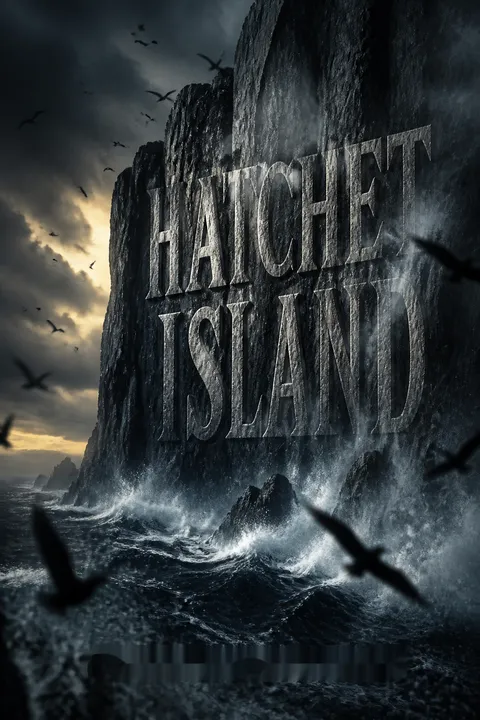


Plot Summary
Prologue
A young birding prodigy has returned to Maine after a summer on Baker Island left him unable to sleep. On a March drive north, a black BMW follows him until he pulls over, then he resumes his journey and deliberately stops his car halfway across the Penobscot Narrows Bridge.
He leaves a revolver beneath the passenger seat, climbs over the rail, and falls into the river. The scene offers no explanation for his despair, only the terrible contrast between his sudden relief and the people trying to stop him.
The opening makes a private crisis visible in the starkest possible way, while withholding its cause. The young man’s decision to leave the gun behind matters: this is not a confrontation or an impulsive reach for a weapon, but a carefully chosen exit from a life that has become unbearable. His brief recovery and the lie he tells his mother complicate the idea that distress announces itself plainly. By setting the suicide before the main investigation, the novel plants a human consequence that will later become evidence, history, and a source of guilt.
The Selkie in the Fog
Maine game warden Mike Bowditch is kayaking with Stacey Stevens, the former partner he has recently begun seeing again, when she shares an urgent message from her old friend Kendra Ballard. Maeve McLeary, the seabird restoration project’s demanding director, has been absent from Baker Island for two nights, and local lobstermen have grown hostile.
Kendra asks them to bring Mike’s badge and gun. As they paddle offshore, shots carry over the water. Then a fast motorboat nearly swamps them in the fog. Stacey recognizes it as the Selkie, Maeve’s boat, but Maeve neither stops nor answers the island’s calls. Her unexplained flight changes a welfare visit into a search for what has gone wrong at the refuge.
The summons joins two fragile forms of trust: Kendra’s faith that Stacey will come, and Stacey’s still tentative reunion with Mike. The Selkie’s passage makes absence more unsettling than simple distance. Maeve is physically close enough to be seen, yet refuses the ordinary obligations that define her leadership. Mike’s presence also shifts the scene from private concern to public responsibility, since the badge and gun suggest that Kendra expects more than a conversation. The island begins as a place the characters love, but the unanswered call turns that landscape into an enclosure.
Six Puffin Pairs
At Baker’s rocky edge, Hillary Fitzgerald, the young intern, refuses to let Mike and Stacey ashore without authorization. She has a shotgun, but handles it carelessly, and does not know Kendra has asked for help.
Kendra arrives with a cane and overrides the restriction, explaining that Maeve is missing and the situation has become desperate. The crew’s strained welcome reveals another problem: only six pairs of puffins are nesting, compared with the twenty-seven Stacey remembers from her internship.
The researchers cross to the cookhouse by skiff, where Mike notices a bullet hole and learns that the project has been under threat for months. A struggling colony and a fearful staff make the island’s isolation feel less like refuge than exposure.
Hillary’s guardedness is not merely a personality clash. On an island where access is tightly controlled, the question of who may enter becomes a question of who has authority when the person in charge disappears. Kendra’s choice to admit friends over her intern’s objection shows how crisis weakens the very protocols meant to protect a vulnerable place. The dwindling puffin count gives that emergency a longer horizon: the immediate danger is human, but the colony is already failing under environmental pressure. The birds are not scenery; their reduced numbers make every conflict over the project consequential.
The Watcher Offshore
Kendra tells Mike and Stacey that threats followed Maeve’s support for restricting some Gulf waters to protect endangered right whales. Someone has shot up observation blinds and buildings, and introduced weasels to prey on nesting birds.
Funding has also weakened after a major donor died, while Maeve’s drinking and erratic absences have alarmed her staff. Garrett Meadows, the third researcher, describes a silent photographer who watches the crew from a launch called the Spindrift.
In his blind, Mike also confronts lobster captain Bear Goodale and sternman Chris Beckwith, who taunt Garrett with a Confederate flag and racially charged mockery. Bear eventually lowers the flag, but Garrett insists the harassment is ordinary. Mike leaves unsure whether his intervention helped or made Garrett’s next encounter worse.
The threats arrive through different channels, but all exploit the island’s dependence on access and attention. Weasels attack the birds directly; vandalism attacks the workers’ sense of safety; funding pressure threatens the colony’s future; and the photographer turns observation into a form of intrusion. The harassment of Garrett adds a social danger that the project’s environmental mission cannot absorb or solve. Mike’s impulse to confront the lobstermen is morally clear but operationally uncertain: protecting someone in the moment may expose him to retaliation later. The scene refuses to treat good intentions as equivalent to effective protection.
A Shot Across Spruce
Before Mike and Stacey leave, Hillary reports that Maeve has called and plans to return, claiming she has been raising money. Kendra remains wary, and Stacey admits that the island no longer feels like the place where her first conservation work began.
As they paddle to Spruce Island, she tells Mike that guilt over her mother’s flying accident drove her away from her parents and from him. They reconnect physically, then spend the evening camping as a storm rolls in.
Stacey also reveals that Evan Levandowski, the gifted young birder pictured in the cookhouse, died by jumping from the Penobscot Narrows Bridge. Kendra believes Maeve had contacted him that morning. At 3:42 a.m., a gunshot sounds from Baker. A boat anchored nearby refuses their call for help, then leaves in the fog.
The interlude gives the investigation emotional stakes before violence confirms them. Stacey’s account of her mother’s crash shows how guilt can turn love into accusation, then into flight; her renewed closeness with Mike depends on acknowledging that pattern rather than pretending it never happened. Evan’s suicide quietly links that history of guilt to the island’s present. The unidentified boat converts an intimate night into a threshold: the couple have found their way back to one another, but the sound from Baker draws them back toward a danger they cannot yet name. Their happiness is real, not a reprieve that cancels the alarm.
The Cut Skiff Line
At first light, Mike and Stacey cross rough, fogbound water toward Baker, following their compasses and the scent of storm petrels. No researcher answers Stacey’s whistle. The skiff is missing, its rope cut, and the camp appears abandoned.
Mike finds a spent shotgun shell, then discovers the marine radio smashed inside the cookhouse and a bloody-faced weasel beneath the stove. Hillary’s tent has been disturbed, her earplug lies in the grass, and blood marks the place where someone dragged her away.
In the outhouse, they find her body posed with binoculars around her neck. Kendra lies nearby with defensive injuries and the shotgun that may have killed her. Garrett is gone. Stacey leaves by kayak to seek help while Mike stays to protect the scene.
The scene turns the island’s ordinary tools into a grammar of violence. A missing skiff could mean escape, rescue, or forced removal; a broken radio means someone wanted the island cut off from help. The staged bodies transform the researchers’ own work of watching birds into a grotesque performance for an unseen audience. Mike’s procedural instinct to preserve evidence competes with Stacey’s need to find her friend, and neither response is emotionally simple. The refuge has been designed to keep people at a distance from the birds. That same remoteness now gives an attacker time, cover, and control.
The Word Faceless
Mike searches the island, then encounters Maeve arriving in the Selkie. Unable to hear him clearly without her hearing aids, she mistakes him for an intruder and calls the Coast Guard before learning he is a warden. He tells her that Kendra and Hillary are dead and Garrett is missing.
Marine Patrol officer Rick Spinney arrives before the Coast Guard, followed by the state police team led by Detective Steve Klesko and Detective Delphine Cruz. Garrett is soon found adrift in the missing skiff, injured and hypothermic.
He has little memory of the attack, but repeatedly describes his assailant as faceless. During the investigation, Mike connects the victims’ staged poses to the strange photographer watching the refuge, while Kendra’s earlier account brings Evan Levandowski’s suicide back into view.
The arrival of institutions does not immediately restore order. Maeve’s hearing loss produces a dangerous misunderstanding, while the Coast Guard, Marine Patrol, state police, and county sheriff each bring different authority and different assumptions. Garrett’s survival offers relief, but his fragmentary recollection supplies an image rather than an identity. The faceless figure is psychologically effective because it strips the attacker of individuality while making the act of looking itself feel threatening. Evan’s return to the investigation gives the opening suicide a new shape: the case is no longer only about who attacked the staff, but about what the refuge and its powerful connections may have concealed.
Maeve’s Last Dive
Maeve remains on the water while detectives secure Baker, and Mike learns she has been drinking heavily and blaming herself for the island’s troubles. As he and Klesko question the circumstances around the killings, Maeve walks to the island’s eastern edge with a backpack filled with stones.
Mike reaches her too late to stop her from falling into the sea. He dives after her, finds her on an underwater ledge, and frees her from the weighted bag, but Klesko helps bring her back unconscious and the rescue fails.
Once the immediate response ends, Mike tracks the attacker’s route to the abandoned lifesaving station. There he finds a concealed mooring that appears only at a particular tide and recovers one of the missing phones, evidence that the killer knew Baker’s coastline intimately.
Maeve’s death makes guilt an action rather than a confession. She has spent decades treating the colony as an extension of herself, so its collapse and the deaths of her staff become inseparable from her own sense of failure. Mike’s dive is a genuine attempt to save her, but it cannot undo the choices that preceded it. The hidden mooring gives the investigation a different kind of answer: the killer’s access was not luck but preparation. The contrast is sharp. Maeve’s despair turns inward, while the attacker has learned to use the island’s geography as an instrument against others.
Ayers Island’s Polished Shore
On Ayers Island, Mike and Klesko question Justin Speer, the photographer who admits he secretly photographed the Baker researchers as an art project. His wife, Brenna, confirms his alibi but hints that the island’s residents conceal more than they admit.
The detectives learn that the wealthy photographer Clay Markham and his wife, Alyce, have supported Maeve’s project. Before Mike can press them, a bee sting sends Klesko into anaphylactic shock. Stacey arrives with an EpiPen, but Mike has already opened Klesko’s airway with an emergency tracheotomy, keeping him alive until the medicine and air ambulance arrive.
Delphine Cruz takes over the investigation. As Mike and Stacey remain on the island, he notices that Maeve’s boat had been near Spruce during the storm and begins to question what she did before returning.
Ayers Island’s cultivated beauty complicates the investigation: a recreated village can appear generous while masking dependencies between residents and their wealthy patrons. Speer’s artistic rationale may explain his surveillance, but not whether it crossed into violence. The medical emergency then disrupts the detective team and rearranges authority; Mike’s practical competence and Stacey’s medical training become more consequential than their formal ranks. Their successful intervention also echoes the book’s central ethical problem: preserving life is demanding even when the person at risk is flawed or implicated. Mike’s suspicion grows not from a single revelation, but from gaps in the stories told by people who control the island.
Evan’s Photograph
Stacey learns from Ayers residents that Maeve visited Clay and Alyce Markham before returning to Baker. The Markhams confirm that Maeve asked them for more funding, which they refused, but conceal how long she stayed.
Mike recognizes Evan’s clothes in the cookhouse portrait as the same clothes worn by Markham’s young assistants. He calls Evan’s mother and learns Maeve arranged a photography course for him with Markham after his Baker internship. Mike suspects Evan was sexually exploited, then emailed Maeve about it before his suicide.
He believes Maeve later used that knowledge to pressure the Markhams for money. The theory gives a possible motive for the attack: someone was sent to Baker expecting to find Maeve, but found her staff instead. Mike and Stacey follow Clay toward his secluded studio.
The portrait changes function as Mike reinterprets it. What first seemed to be a memorial becomes a record of access: the boy was brought from the refuge into the orbit of a famous patron under the promise of mentorship. This is not proof by itself, and the uncertainty matters. The novel shows how institutions of art, charity, and conservation can create asymmetries of power while describing themselves as benevolent. Maeve may have believed she could trade access for support without consequence. Mike’s theory is therefore about more than a hidden crime; it concerns the moral cost of treating vulnerable people as leverage in a worthy cause.
The Quarry Studio
Mike and Stacey shadow Clay Markham across the exposed sandbar to his studio on Hatchet Island. There they find the boot prints that match the tracks on Baker and hear Clay comforting Chris Beckwith, Bear Goodale’s scarred sternman.
Beckwith admits no crime, but Clay urges him to overwrite his memories, revealing an intimacy that changes Mike’s suspicions. Mike enters with his gun drawn. Clay blocks his path, Beckwith grabs Kendra’s missing blackthorn cane, and a struggle begins.
Stacey stays with Clay when he collapses with a suspected heart attack, while Mike pursues Beckwith through the studio. Beckwith dives into the flooded quarry pond and attacks Mike when he reaches the dock. Mike shoots him in the shoulder, but Beckwith escapes into the water and swims toward the harbor.
The quarry studio brings the novel’s images of death into physical space. Its darkroom, old industrial remains, and flooded pit make art and violence seem uncomfortably adjacent, but the decisive clue is relational: Clay’s tenderness toward Beckwith resembles care while also carrying the authority of someone who can shape another person’s memory. Mike must act before he has a complete confession, while Stacey faces a separate ethical test beside the man she suspects. Their divided tasks reveal their partnership as practical rather than ornamental. Each trusts the other to choose correctly when neither choice offers emotional comfort.
Alyce Fires the Shot
Mike pursues the wounded Beckwith toward the harbor, where the sternman tries to climb aboard the Persuader. A gunshot drops him into the water. Alyce Markham stands on the wharf with a valuable shotgun, claiming she fired to protect Bear.
Mike believes she killed Beckwith to prevent him from implicating the Markhams. He detains Alyce and tells her that Clay’s connection to Evan, Maeve’s demand for money, and the cane in the studio point toward a murder plot aimed at Maeve. The target was absent, so Kendra and Hillary became casualties, while Garrett was left alive to be suspected.
Later, investigators find photographs of Evan and Beckwith beneath Clay’s studio floor, including images that suggest both young men were exploited. Beckwith’s belongings also connect him to the disguise used at Baker.
The final shooting closes one avenue of testimony while opening another through material evidence. Alyce’s claim of protection is plausible enough to complicate the moment, but her intervention also benefits the people most threatened by Beckwith’s knowledge. Mike’s account of the plot is a reasoned reconstruction, not a courtroom verdict; the photographs and physical traces are what give it evidentiary weight. The case exposes how the language of mentorship and patronage can conceal coercion, and how a powerful household can make exploitation appear private. The victims at Baker were not the intended target, yet the plan treated their lives as expendable obstacles.
The Picture Goes Dark
Clay survives surgery and is confined to bed, while Alyce faces a manslaughter charge and the investigation continues through the evidence found in the studio. The publisher withdraws Clay’s book of staged child portraits, and galleries face pressure to remove his work.
At Kendra’s funeral, Mike sees Steve Klesko recovering and Rick Spinney attending despite his own professional troubles. Stacey and Mike return to his home, where she sits beside Shadow, the wolf hybrid Mike has taken in, and he considers the engagement ring he has bought.
He does not propose that evening. Instead, he photographs Stacey laughing beside the wolf. On his phone, he finds his earlier snapshot of Shipbreaker, the image associated with the Markhams, and deletes it.
The ending offers neither a neat legal conclusion nor a return to innocence. The Markhams’ reputation begins to erode, but the formal consequences remain unresolved, just as the losses cannot be repaired by a successful investigation. The funeral restores the story to intimate relationships: Kendra’s parents grieve, Stacey carries the loss of her friend, and Mike confronts the limits of what he could save. His ring represents a future he is considering rather than one he has secured. Deleting Shipbreaker is a smaller but decisive act. Mike no longer wants to preserve an image whose beauty depended on ignoring the human cost within it.
Analysis
Hatchet Island treats observation as both a scientific necessity and a moral risk. The researchers watch birds closely because survival depends on what they can see: nesting behavior, shifting food sources, predators, and changes in the Gulf. Justin Speer borrows that posture for art, photographing the observers without their knowledge. The murderer takes the same logic further by arranging human bodies as images. Across these scenes, looking is never neutral. It can produce knowledge, but it can also convert another person into material.
The novel’s ecological crisis is concrete rather than abstract. Warming waters bring unsuitable fish; puffin pairs dwindle; a predator is introduced to the island; funding disappears as the project falters. These pressures expose the limits of a conservation ethic built around one charismatic colony and one charismatic director. Maeve has protected the birds through extraordinary labor, but her control and secrecy leave her staff with little room to question her. The project’s vulnerability is partly environmental and partly institutional.
Power moves through patronage as well as law. The Markhams can finance research, employ island residents, control access to property, and hire attorneys. Maeve’s attempted use of damaging information to secure support does not erase her responsibility for bringing a young intern into Clay’s sphere. The novel is careful to show how good causes can reproduce exploitative arrangements when leaders believe their ends justify private compromises. Evan’s story makes that moral failure more devastating than a simple villain’s secret.
Mike’s investigative method also has an ethical tension. His imagination connects the portrait, the tides, and the hidden landing before hard evidence confirms his suspicions. Yet the case repeatedly tests whether insight can be separated from projection. Stacey helps him trust emotional perception without treating it as proof; Klesko and Cruz insist that suspicion be tested. Their combined approaches allow intuition to generate questions while evidence earns conclusions. By the end, Mike’s deleted photograph marks a small rejection of aesthetic distance. He can no longer admire an image without asking what suffering it conceals.
Review Summary
Hatchet Island receives mostly positive reviews, with readers praising its atmospheric Maine setting, well-developed characters, and gripping plot. Many appreciate the shift to a coastal island setting and the focus on endangered seabirds. Some find the political elements and character development less satisfying. Fans of the Mike Bowditch series generally enjoy this installment, though a few consider it not the strongest in the series. The book's vivid descriptions, suspenseful storyline, and evolving relationships between characters are frequently highlighted as strengths.
People Also Read




Characters
Mike Bowditch
The tracking wardenA Maine game warden and investigator, Mike reads terrain, animal behavior, and human evasions with the same patient attention. He is brave, sometimes to the point of recklessness, and his instinct to intervene can outrun procedure. A violent injury has left him more vulnerable than he likes to admit, while his care for a rescued wolf reveals how strongly he bonds with beings he cannot fully control. His relationship with Stacey carries old hurt and renewed trust. Mike’s central tension is between imagination, which helps him see connections others miss, and discipline, which keeps suspicion from becoming certainty.
Stacey Stevens
The fieldwise partnerStacey is a pilot, biologist, EMT, photographer, and skilled sea kayaker whose competence can unsettle people who expect her to be less capable. She once worked on Baker Island and still feels loyalty to the people and purpose she found there. Guilt over her mother’s flying accident drove her to anger and flight, affecting both her family and her relationship with Mike. Therapy has helped her distinguish responsibility from self-punishment. She is direct, emotionally perceptive, and willing to act under pressure. Her connection with Mike is shaped by a shared history, but she insists on being treated as an equal rather than as someone he must protect.
Maeve McLeary
The embattled seabird mentorMaeve founded and directs the Maine Seabird Initiative, building a puffin colony through persistence and methods that challenged conventional opinion. She is brilliant, intensely committed, and accustomed to controlling the details of her work. Her staff admire her achievements but also feel the strain of her demands and independence. Maeve’s life is bound to Baker Island so tightly that threats to the colony threaten her sense of self. Financial pressure, ecological decline, and political conflict test the conviction that personal force can hold a fragile project together.
Kendra Ballard
Maeve’s island deputyKendra manages the daily work of the seabird initiative, from survey data to intern schedules, and has spent years working closely with Maeve. Stacey’s former college roommate, she is practical, loyal, and usually capable of keeping a strained operation moving. Her cane and sharp humor coexist with the burdens of living on a remote island where work rarely ends. Kendra knows the project’s weaknesses and the people who depend on it, but her devotion to the colony makes it difficult for her to step away.
Hillary Fitzgerald
The guarded internHillary is a gifted student and former model whose beauty makes others underestimate her intelligence. As a Maine Seabird Initiative intern, she handles fieldwork and studies the birds while navigating the charged social world around the island. She is more observant than her playful manner suggests, and she wants a life that does not reproduce Maeve’s exhaustion. Her changing ambitions reflect a young person revising an idealized view of conservation work after encountering its personal costs.
Garrett Meadows
The isolated ornithologistGarrett is a Black graduate student in ornithology who joins the island project after another position falls through. Educated, courteous, and deeply knowledgeable about birds, he brings both scientific skill and an awareness of how few people on the island share his background. He tries to defuse harassment rather than invite conflict, a strategy that protects his daily routine but leaves others unsure how much danger he faces. His careful work and gentle manner make him a trusted observer, even as his isolation complicates that trust.
Evan Levandowski
The gifted young birderEvan is a teenage birding prodigy and accomplished wildlife photographer whom Maeve brings to Baker Island. His extraordinary talent places him among adults who treat him as both a promising student and a useful symbol for their work. He is young enough to depend on their judgment while ambitious enough to seek opportunities beyond the refuge. His photograph in the cookhouse preserves the contrast between his visible promise and the private difficulties that others fail to understand.
Clay Markham
The celebrated photographerClay is a wealthy, famous photographer whose unsettling images have repeatedly provoked public controversy. He has made his home on Ayers Island, where he employs a small circle of assistants and cultivates a deliberately eccentric manner. His generosity and charm can make him seem warm, but he is also accustomed to directing people and shaping the stories told about him. His power comes not only from money or celebrity, but from his ability to make exploitation look like artistic access.
Alyce Markham
The island’s exacting patronAlyce is Clay’s wife and the practical architect of the Markhams’ island estate. She is a capable organizer, a generous host on her own terms, and a sharp judge of other people’s motives. Her history with Clay is long and complicated, held together by affection, shared ambition, and a willingness to manage the consequences of his behavior. Alyce prefers control to improvisation and understands that money, lawyers, and carefully chosen disclosures can shape how a scandal unfolds.
Chris Beckwith
The scarred sternmanChris works as sternman aboard Bear Goodale’s lobsterboat and is marked by severe scars across his face. He is caustic, volatile, and difficult to read, using mockery to keep others at a distance. His history with the Markham household and his connection to the islands give him a knowledge of the coastline that outsiders lack. Beneath his aggression lies a damaged relationship to his own past and a longing to be accepted by the people who once controlled his opportunities.
Steve Klesko
The methodical detectiveSteve is a seasoned Maine State Police detective, a close friend of Mike, and a new father. He relies on evidence and established procedure, resisting theories that get ahead of what can be proved. His professional steadiness coexists with a habit of carrying other people’s burdens and neglecting his own needs. His partnership with the newer Detective Cruz tests his ability to earn trust across different experiences, while his friendship with Mike allows for frank disagreement without erasing respect.
Delphine Cruz
The evidence-first investigatorDelphine is a sharp state police detective who comes to Maine from Massachusetts and approaches the case with disciplined skepticism. She is direct, alert to racial bias, and unwilling to confuse a plausible story with proof. Her guarded manner is partly professional caution: she wants colleagues to demonstrate competence before she relies on them. As she takes a leading role in the investigation, she balances Mike’s intuition with the need to test every inference against physical evidence.
Rick Spinney
The fraying marine officerRick is a Marine Patrol officer who once earned a reputation for courage and skill on the water. Recent disciplinary trouble, marital strain, and career setbacks have hardened him into someone more reactive and resentful. He knows the local fishing fleet and island residents well, but his judgment is increasingly compromised by anger. His history with Mike includes mentorship and mutual respect, which makes Mike’s changing view of him more painful than a simple professional disagreement.
Justin Speer
The watching photographerJustin is Clay Markham’s photographic assistant and a self-conscious theorist of art, observation, and the uncanny. He secretly photographs the Baker researchers, believing their unguarded reactions are more truthful than posed images. His intellectual monologues can sound perceptive or self-serving, and his need to explain his art often obscures the simpler question of what he actually did. He has lived within the Markham household long enough to understand its rules, even as he claims to have outgrown his mentor.
Brenna Speer
The guarded new motherBrenna is Justin’s wife, a former art student and new mother who has given up painting after deciding she lacked the talent she wanted. She speaks carefully and notices the small power arrangements governing life on Ayers Island. Her intelligence is easy to miss if one mistakes quietness for naivety. She understands that residents depend on the Markhams, but she also knows the household’s secrets are not shared equally.
Bear Goodale
The affable lobster captainBear is a large, often drowsy lobster captain from a family of unconventional islanders. His genial manner can coexist with poor judgment, especially when he treats racial provocation as harmless fun. He is less naturally cruel than his sternman, but that difference does not absolve him of the damage he permits. Bear’s affection for his family and the people around him complicates the easy labels others place on him.
Pat Santum
The combative sheriffPat is Lincoln County’s newly elected sheriff, a retired Navy officer who favors forceful declarations and public displays of authority. He is quick to settle on a suspect and treats uncertainty as a weakness, creating friction with the state police investigators. His political instincts shape the way he presents the case to the public. His single-parent history and charitable work give him a private dimension that sits uneasily beside his rigid public posture.
Skip Ayers
The island’s old saltSkip is a working lobsterman whose family has lived on Ayers Island for generations. He speaks plainly, knows the local water, and distrusts the polished world the Markhams have built around him. His practical generosity offers Mike and Stacey a view of island life that is neither wealthy performance nor conservation idealism.
Charley Stevens
Stacey’s pilot fatherCharley is Stacey’s father, a lifelong pilot and mentor to Mike. Warm, observant, and fond of Maine sayings, he offers guidance without pretending to be flawless. His crash with Ora remains a defining family wound, and his relationship with Stacey is shaped by the patience required to live beyond it.
Ora Stevens
Stacey’s clear-eyed motherOra is Stacey’s mother, a wise and determined woman who uses a wheelchair after a plane crash. She accepts the limits of her condition without allowing others to define her entirely by it. Her calm perspective helps Stacey and Mike distinguish love from control, and regret from responsibility.
Logan Cronk
Shadow’s young caretakerLogan is an eleven-year-old boy entrusted with caring for Mike’s wolf hybrid while Mike is away. He is earnest and imaginative, hoping to form a bond with Shadow, and sometimes reads more meaning into the animal’s behavior than Mike thinks is safe. His devotion gives Mike a glimpse of the vulnerability involved in caring for a wild creature.
Shadow
The untamed companionShadow is a large wolf hybrid rescued by Mike from an abusive home and kept in a secure enclosure. He trusts Mike more than other people, but remains a wild animal rather than a domesticated pet. His presence tests Mike’s belief that care does not mean ownership or complete understanding.
Plot Devices
Baker Island’s isolation
A refuge turned trapBaker Island’s dangerous currents, limited landing points, weak cell coverage, and dependence on a small skiff shape nearly every stage of the mystery. The staff cannot casually leave, while rescuers must cross open water in fog and storms. The marine radio is their dependable link to the mainland, so its destruction delays help and leaves the scene vulnerable. The island’s ecology also creates practical obstacles: gulls attack intruders, nesting areas constrain investigators, and unexploded ordnance complicates searches. Isolation is not simply atmosphere. It gives the attacker time, restricts witnesses, and makes every route on or off the island matter.
The hidden mooring
A concealed route ashoreA short line holds a dark mooring ball beneath the surface near Baker’s abandoned lifesaving station. It becomes visible only at a narrow point in the tide, allowing a boat to land without using the researchers’ normal approach. Mike finds it while tracking the attacker’s route. The device turns the island’s tidal pattern into evidence of planning and local knowledge, and it clarifies how someone could reach the refuge unseen. Its discovery also leads to one of the missing phones, helping establish that the attacker knew more than the obvious paths around Baker.
The posed photographs
Watching becomes threatJustin Speer’s photographs establish the story’s repeated concern with who watches whom. He secretly captures the researchers observing birds, making their ordinary work feel unnerving. The killer’s staging of the victims extends that visual logic into violence, turning bodies into images for an unknown viewer. The device makes photography both a clue and an ethical problem: a camera can preserve evidence, but it can also strip a person of agency and turn suffering into spectacle. Clay Markham’s controversial work deepens that connection, while the eventual evidence of his private images shows how art can become a cover for abuse.
Evan’s portrait
A memorial becomes evidenceA photograph of Evan Levandowski hangs apart from the other images in the Baker cookhouse. At first it seems to memorialize the gifted young birder, but Mike notices that Evan wears the same clothes as the Markhams’ assistants and stands against a background of trees absent from Baker. The portrait prompts questions about where it was taken and how Evan became connected to Clay Markham. Once Mike contacts Evan’s mother, the image helps him reconstruct the photography course Maeve arranged. Its meaning shifts from remembrance to a trace of the access that may have exposed Evan to harm.
The changing tide
A clock made of waterThe tide governs landings, currents, visibility, and escape. Stacey uses it to plan the crossing from Spruce Island, and Mike later reasons that the hidden mooring can only work at a particular stage of the tide. On Ayers, a sandbar joins the islands at low water, giving Clay a route to his studio that is invisible at other times. The timing of the tide therefore links seemingly separate locations and provides a practical means of movement. In this story, the sea is both geography and clock: its changing level can hide a path, reveal a clue, or turn a short crossing into a dangerous one.
Mike Bowditch Series
Download PDF
Download EPUB
.epub digital book format is ideal for reading ebooks on phones, tablets, and e-readers.








