

Key Takeaways
Treat stress as a signal, then strengthen the system carrying it.
Stress is information. Gladstar presents stress as a normal biological response that becomes harmful when it is constant. Anxiety, pain, and sleeplessness can be warnings that something is out of balance, not merely nuisances to suppress. Her smoke-alarm analogy makes the distinction clear: quieting an alarm can help in the moment, but it does not locate the smoke. The nervous system, in her account, receives information, interprets it, and coordinates the body's response.
Care for the whole person. The book argues for addressing physical symptoms alongside emotional strain, daily habits, relationships, and a person's sense of meaning. Medication and other conventional treatment can have an important role, especially in serious illness, while supportive practices may contribute to resilience.
The signal model encourages curiosity instead of treating every symptom as an enemy. It also resembles modern stress research, which examines how repeated demands affect the body's capacity to recover. Yet symptoms are not reliable diagnoses by themselves: a headache or panic episode can have many causes, and searching for a hidden emotional meaning can delay needed care. The strongest version of Gladstar's point is not that symptoms reveal one clear message, but that relief and investigation can proceed together. A symptom can be treated promptly while its context is assessed.
Build calm through repeated nourishment, rest, movement, and relationships.
Resilience takes practice. The book's central proposal is that nervous-system health is built through repeated support, rather than a single remedy taken after distress has peaked. Gladstar emphasizes nourishing food, restorative sleep, enjoyable movement, time outdoors, and caring relationships. Herbal remedies are part of this picture, not the entire picture. She acknowledges that natural approaches may work more gradually than medicines designed to rapidly reduce symptoms, and encourages small, manageable changes rather than dramatic overhauls.
Consistency beats intensity. A tea or daily walk can become a small act of care that is easier to repeat than a complicated health regime. The goal is not to eliminate every source of stress, which may be impossible, but to improve the ability to recover after demands accumulate.
This is a useful shift from chasing a perfect state of calm to building recovery capacity. In behavioral science, routines often succeed when they are feasible and repeatable, not when they depend on a burst of motivation. Gladstar's broad menu also makes room for individual preference: a walk, a shared meal, or a quiet ritual may each help someone feel steadier. The limitation is structural. Rest and healthy food are not equally accessible to everyone, so chronic stress cannot always be solved through personal habits. Individual practices matter, but social conditions matter too.
Match herbs to the kind of nervous-system strain, not a one-size cure.
Know the herb's role. Gladstar uses the term herbal nervine for an herb that affects the nervous system. She groups nervines by their main actions, while noting that a plant can fit more than one group. Nerve tonics are used over time to nourish and support; sedatives are used to ease tension and encourage rest; stimulants are intended to gently support energy rather than produce a sharp jolt. These are the book's herbal categories, not guarantees of a specific medical effect.
Examples differ. Chamomile and lemon balm appear in calming teas, oats in nourishing blends, and valerian in sleep or muscle-relaxation formulas. Feverfew is presented mainly as a longer-term preventive for migraines, not an instant fix. The practical lesson is to consider the problem, the person, and the herb's cautions before choosing.
The categories help readers ask a better question than which herb is strongest: what kind of support is being sought? That is a sensible way to organize a large materia medica, and it discourages treating sedating, energizing, and nutritive plants as interchangeable. Still, traditional categories do not map neatly onto standardized clinical effects. Plant species, growing conditions, extracts, and product quality can all change what a preparation contains. A reader can use the framework to guide discussion and research, but not as proof that an herb is effective or appropriate for a particular diagnosis.
Use recurring symptoms as clues, but let persistent distress trigger professional care.
Look for patterns. Gladstar connects anxiety and panic with possible contributors such as sustained stress, poor sleep, stimulants, and diet. She describes depression as potentially involving several forms of depletion, including lack of sleep, nutrients, light, or social connection. Headaches, too, may be associated with tension, missed meals, dehydration, allergies, or other factors. Her advice is to notice what precedes a symptom rather than assume that one remedy fits every case.
Know when to escalate. The book recommends counseling for difficult or recurring panic and consulting a medical or holistic practitioner when headaches persist or their cause is unclear. It distinguishes occasional low mood or anxiety from severe, long-lasting problems. That distinction matters: self-care can be supportive, but it cannot safely replace assessment when symptoms are intense, persistent, or disabling.
Tracking timing, sleep, food, and circumstances can reveal patterns that a rushed appointment may miss, and it gives patients a concrete way to describe what is happening. But a pattern is a hypothesis, not a diagnosis. A person should not infer that depression proves a nutrient deficiency, or that panic is simply a message from the body. Severe depression, suicidal thoughts, new neurological symptoms, or a sudden severe headache warrant prompt professional attention. The book's best practical contribution here is its insistence on looking beyond symptom suppression while remaining open to qualified care.
Feed the nerves with varied whole foods before reaching for supplements.
Start with the plate. Gladstar favors varied, minimally processed foods and eating in season. For nervous-system nourishment, she highlights dark green vegetables, whole grains, quality protein, nuts and seeds, sea vegetables, and fermented foods such as yogurt or miso. She discusses calcium and B vitamins as important nutrients, and describes spirulina and nutritional yeast as concentrated sources of nutrition. Supplements may help in some circumstances, she says, but ordinary food is her preferred foundation when it is available.
Notice individual response. The book advises paying attention to whether eating patterns leave someone depleted or comfortable, and seeking knowledgeable help when needed. It also urges reducing caffeine, excess sweets, alcohol, and highly processed foods, which Gladstar considers common irritants for a stressed system.
The food-first emphasis is more durable than chasing each new supplement trend. Fermented foods, varied plants, and adequate nourishment can support general health, although their effects on mood are not uniform and they are not stand-alone treatments for depression or anxiety. Some of the book's specific explanations, particularly the claim that sugar depletes nervous-system calcium, simplify complex physiology and should not be treated as established medical fact. The useful question is whether a person's overall diet supports energy and health, not whether one food can explain a complicated emotional condition.
Make recovery physical: walk, soak, rest, and reconnect with the outdoors.
Move stress out of the chair. Gladstar recommends enjoyable exercise, massage, herbal baths, and footbaths as ways to ease physical tension and make room for relaxation. Her own example comes from a painful divorce: she began running the same woodland path each day, found her mind quieter afterward, and felt comfort in seeing familiar trees and plants. The routine offered exercise, repetition, and contact with nature at once.
Touch can matter. After a car accident, she describes shoulder pain that continued even though the initial injury seemed minor. She later sought craniosacral bodywork and found the experience helpful. The story illustrates her view that physical discomfort and emotional strain can overlap, while also showing why different people may respond to different forms of care.
The woodland-running story works because it shows several supports converging in one ordinary routine: movement, predictability, attention, and a sense of connection. Environmental psychology studies how contact with natural settings can restore attention and reduce perceived stress, though that does not make nature a substitute for treatment. Massage and bodywork may ease muscle tension and create a valued experience of care, but claims about releasing hidden memories or treating trauma require more caution. The practical test is whether a safe, enjoyable activity helps someone function and recover, not whether it fits a single theory of healing.
Treat sleep and winter light as nervous-system maintenance, not luxuries.
Protect the rhythm. The book links poor sleep with greater stress and recommends steady routines, fewer late-night demands, less evening stimulation, and exercise that feels restorative. For people who feel depleted, it suggests making room for more rest rather than relying on caffeine to push through. Gladstar also describes seasonal affective disorder, or SAD, as a pattern of winter low mood associated with reduced sunlight, and recommends getting outdoors and bringing more natural light into daily life.
Light is one tool. The book cites light-box use at 10,000 lux for about 30 minutes a day as an option for SAD, alongside discussion of vitamin D and herbs. These are historical recommendations from the book, not personalized instructions. A clinician can help distinguish seasonal symptoms from other conditions and advise on an appropriate treatment plan.
Sleep and light are biological inputs, not merely lifestyle decorations. A predictable sleep schedule and daytime light exposure can support circadian timing, the internal clock that coordinates sleep and waking. The book's concrete light-box example makes a vague suggestion actionable, but light therapy is not appropriate in exactly the same way for everyone, and persistent depression deserves clinical assessment. Supplements also require care, especially when combined with medication. The broader principle is sound: examine daily rhythms as part of mental health, without assuming that a seasonal pattern has only one cause or one remedy.
Learn simple preparations, but treat herbal doses as individual and consequential.
Brew by plant part. Gladstar teaches the simpler's method, a flexible way to measure formulas by ratio: a part might mean a spoon, cup, or larger unit, as long as the same unit is used throughout. She distinguishes an infusion, in which hot water steeps leaves and flowers, from a decoction, in which roots or bark simmer longer. Tinctures are liquid extracts made by soaking herbs in a solvent, then straining and labeling the result.
Quality changes the result. She recommends fresh, fragrant herbs from trusted suppliers, careful labeling, and observing how a person responds. Her dosage discussion considers the herb, the individual, and the condition rather than treating a recipe as universal. The craft invites participation, but it does not remove the need for safety knowledge.
The preparation lessons make herbalism less mysterious and teach useful distinctions between plant parts and extraction methods. The ratio approach is also practical for scaling a blend without changing its proportions. However, a home recipe cannot guarantee consistent potency or purity, and traditional use is not a safety test. Herbs can interact with prescription medicines or be unsuitable in pregnancy and certain health conditions. That makes record keeping and cautious sourcing more than housekeeping. It is sensible to consult a pharmacist or clinician before using concentrated preparations, especially when treating an ongoing condition.
Keep herbs within a broader care plan, with safety and sourcing checked.
Complement, do not substitute. Gladstar explicitly allows for conventional medicine, counseling, massage, and other approaches within holistic care. She says natural therapies may support recovery alongside medical treatment, and acknowledges that serious, chronic disorders may require pharmaceutical intervention. That integrative stance is more useful than framing herbs and medicine as opposing camps.
Respect the risks. The book itself notes cautions for particular plants, including feverfew in pregnancy and kava when overused, and urges careful sourcing for threatened American ginseng. Its advice and dosing were published in an earlier era, so readers should not treat its recipes as current individualized medical guidance. Product quality, interactions, underlying conditions, and local conservation all belong in the decision.
The book's willingness to combine approaches is a strength: people often need symptom relief, ongoing treatment, and changes in daily life at the same time. Modern medication safety adds an important layer. St. John's wort, for example, is known to interact with many medicines, and kava has been associated with serious liver concerns. These risks make professional review especially important when a person uses prescriptions or has a chronic condition. Ethical sourcing also matters: an herb's usefulness to one person should not come at the cost of exhausting a vulnerable wild population.
Analysis
Gladstar's book is part herbal handbook, part lifestyle guide, and part argument for treating stress as a whole-person problem. Its organizing metaphor is resilience: the nervous system receives and responds to the world, so care should strengthen the person's capacity to recover, not simply mute every signal. The practical material ranges from teas and tinctures to food, sleep, movement, massage, and outdoor time. The recurring stories make the advice intimate rather than abstract, especially the account of running through a woodland during divorce and finding steadiness in a familiar route.
The book's most durable insight is its resistance to a single cure. It gives readers multiple entry points and recognizes that stress is shaped by ordinary routines as well as individual biology. Its herbal taxonomy and preparation instructions offer accessible ways to learn, but they can also make uncertain effects sound more settled than they are. The text includes spiritual explanations, strong nutritional claims, and dosing advice that should not be confused with current clinical guidance. Evidence for individual herbs varies, and herbal products can interact with medication or carry meaningful risks.
The most responsible reading preserves the book's integrative spirit while updating its standards of evidence. Teas, restorative routines, and time outdoors can be valued as supportive practices without claiming that they treat every disorder. Persistent anxiety, depression, insomnia, or pain deserves assessment, and urgent symptoms call for appropriate medical care. The book is strongest when it expands the menu of care and weakest when traditional explanations are presented as established mechanisms. Its lasting invitation is to notice what depletes a person, build repeatable sources of restoration, and choose remedies with both curiosity and caution.
Review Summary
Herbs for Stress & Anxiety receives mostly positive reviews, with an average rating of 4.28/5. Readers appreciate its concise information on herbal remedies for various conditions, including anxiety, depression, and insomnia. Many find it a useful primer on nervine herbs, with clear explanations and recipes. Some criticize repetitive content or question certain recommendations. Overall, readers value the book as an accessible guide to natural alternatives for managing stress and anxiety, though a few express skepticism about its scientific accuracy.
People Also Read






Glossary
Herbal nervine
Herb affecting the nervous systemGladstar uses this term for herbs that influence nervous-system function. She groups them by common actions, such as supporting and nourishing, calming, or gently stimulating. The categories overlap, and they describe traditional herbal use rather than guaranteeing a particular effect or serving as a medical diagnosis.
Nerve tonics
Nourishing nervous-system herbsIn the book, nerve tonics are herbs used to support and strengthen the nervous system, often over an extended period. Gladstar describes them as generally mild and nutritive, and includes herbs such as oats, chamomile, and hawthorn. The term reflects the book's herbal framework, not a standardized clinical category.
Nerve sedatives
Calming herbal remediesThis category refers to herbs Gladstar uses to ease tension, encourage sleep, and calm nervousness. Examples in the book include chamomile, hops, passionflower, and valerian. The label does not mean that these herbs are interchangeable with prescription sedatives or free of side effects and interactions.
Nervine stimulants
Gently energizing herbsGladstar uses this term for herbs intended to support energy and alertness without relying on the sharp stimulation she associates with caffeine and sugar. Her examples include ginkgo, peppermint, rhodiola, and eleuthero. These are traditional action categories, and an herb's actual effects depend on the preparation and the person using it.
Simpler's method
Flexible ratio measuringA way to measure herbal formulas by relative parts rather than fixed weights. A part can be any unit, such as a teaspoon or cup, provided the same unit is used for every ingredient in that formula. This makes it easier to scale a recipe while preserving its proportions.
Infusion
Steeping herbs in hot waterA tea-making method Gladstar recommends for leaves, flowers, and other delicate plant parts. Hot water is poured over the herbs, which are covered and left to steep. The book explains that long boiling can drive off aromatic compounds, so roots and tougher materials are generally prepared differently.
Decoction
Simmering tougher plant partsA preparation method used for dense materials such as roots, bark, twigs, and some seeds. The plant material is placed in water, brought to a low simmer, and cooked longer than herbs prepared as an infusion. The method is intended to extract constituents from parts that do not release them as readily through steeping.
Flower essences
Emotional flower preparationsThe book describes flower essences as liquid preparations associated with particular emotional states, such as fear, exhaustion, or grief. Gladstar presents them as subtle or energetic remedies, distinct from ordinary herbal teas and extracts. Their proposed energetic mechanism and clinical effectiveness are not established in the same way as conventional medicines.
Adaptogenic
Traditionally stress-supportingGladstar uses this term for herbs believed to help the body adapt to stress and support stamina or resilience. Eleuthero, ashwagandha, and rhodiola are examples in the book. The term comes from herbal and pharmacological traditions, but it does not by itself establish that a product treats a medical condition or is safe for every user.
FAQ
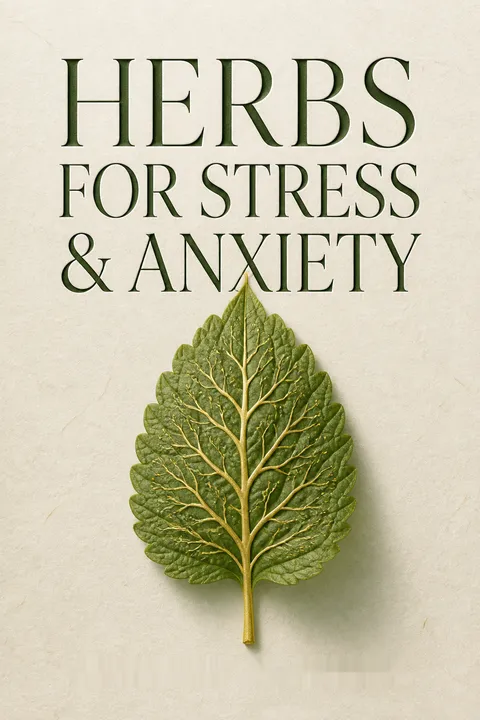
What's "Herbs for Reducing Stress & Anxiety" by Rosemary Gladstar about?
- Focus on Herbal Remedies: The book explores the use of herbs to alleviate stress and anxiety, emphasizing natural and holistic approaches.
- Understanding the Nervous System: It provides insights into how the nervous system functions and how it can be supported through herbal remedies.
- Practical Guidance: Readers are offered practical steps and recipes for creating herbal remedies at home.
- Holistic Approach: The book integrates lifestyle changes, such as diet and exercise, with herbal treatments to promote overall well-being.
Why should I read "Herbs for Reducing Stress & Anxiety"?
- Natural Solutions: It offers natural alternatives to pharmaceutical treatments for stress and anxiety, which can be appealing for those seeking holistic health options.
- Comprehensive Guide: The book covers a wide range of herbs and their uses, making it a valuable resource for anyone interested in herbal medicine.
- Practical Applications: With recipes and step-by-step instructions, readers can easily incorporate herbal remedies into their daily lives.
- Expert Author: Rosemary Gladstar is a renowned herbalist, providing credibility and depth to the information presented.
What are the key takeaways of "Herbs for Reducing Stress & Anxiety"?
- Herbal Efficacy: Herbs like chamomile, valerian, and lemon balm are effective in reducing stress and anxiety.
- Nervous System Support: Strengthening the nervous system is crucial for managing stress and anxiety.
- Holistic Health: Combining herbs with lifestyle changes, such as diet and exercise, enhances their effectiveness.
- Preventive Care: Regular use of herbs can serve as preventive medicine, promoting long-term health and resilience.
How does Rosemary Gladstar suggest using herbs to reduce stress and anxiety?
- Herbal Teas and Tinctures: The book provides recipes for teas and tinctures using herbs like chamomile and valerian.
- Daily Use: Regular consumption of herbal remedies is encouraged to build a resilient nervous system.
- Combination with Lifestyle Changes: Herbs are most effective when combined with healthy eating, exercise, and meditation.
- Specific Formulas: Gladstar offers specific herbal formulas for different symptoms, such as insomnia or panic attacks.
What are the best quotes from "Herbs for Reducing Stress & Anxiety" and what do they mean?
- "Stress is a fact of life, neither good nor bad; it’s how we respond to it that matters." This emphasizes the importance of managing stress through personal resilience and healthy responses.
- "Herbs, exercise, healthy eating habits, meditation, and cultivating healthy relationships can all fortify our nervous system." This quote highlights the holistic approach to health advocated in the book.
- "First the word, then the plant, lastly the knife." An ancient wisdom suggesting that natural remedies should be the first line of treatment before considering more invasive options.
What are some specific herbal remedies mentioned in "Herbs for Reducing Stress & Anxiety"?
- Chamomile Tea: Known for its calming effects, it is recommended for anxiety and insomnia.
- Valerian Tincture: Used for its sedative properties, particularly effective for sleep disorders.
- Lemon Balm Infusion: Suggested for its gentle calming effects and ability to relieve stress.
- Kava-Kava: Recommended for its ability to relax the body while enhancing mental clarity.
How does "Herbs for Reducing Stress & Anxiety" explain the role of the nervous system in stress and anxiety?
- Central Role: The nervous system is described as the body's link to the environment, interpreting and responding to stimuli.
- Stress Response: Stress and anxiety are natural responses to perceived threats, managed by the nervous system.
- Holistic View: The book suggests that the nervous system is not just physical but also a connection to consciousness and creativity.
- Supportive Therapies: Strengthening the nervous system through herbs and lifestyle changes is emphasized as a way to manage stress.
What lifestyle changes does Rosemary Gladstar recommend in "Herbs for Reducing Stress & Anxiety"?
- Healthy Diet: Emphasizes eating whole, natural foods and avoiding processed foods and stimulants.
- Regular Exercise: Encourages physical activity to relieve stress and improve overall health.
- Mindfulness Practices: Suggests meditation and relaxation techniques to enhance mental well-being.
- Social Connections: Highlights the importance of cultivating healthy relationships for emotional support.
What are the different categories of herbal nervines discussed in "Herbs for Reducing Stress & Anxiety"?
- Nerve Tonics: Herbs that strengthen and support the nervous system, such as oats and ashwagandha.
- Nerve Sedatives: Herbs that calm and relax the nervous system, like valerian and chamomile.
- Nervine Stimulants: Herbs that gently stimulate and nourish the nervous system, including ginseng and peppermint.
- Adaptogenic Herbs: Herbs that help the body adapt to stress, such as rhodiola and eleuthero.
How does "Herbs for Reducing Stress & Anxiety" address the preparation and use of herbal remedies?
- Simple Instructions: Provides easy-to-follow steps for making teas, tinctures, and capsules.
- Quality of Herbs: Emphasizes the importance of using high-quality, fresh herbs for effective remedies.
- Personalization: Encourages readers to adjust dosages and combinations based on individual needs and responses.
- Empowerment: Aims to empower readers to take an active role in their health through herbal medicine.
What are some common conditions addressed by herbal remedies in "Herbs for Reducing Stress & Anxiety"?
- Anxiety and Panic Attacks: Remedies include kava and lemon balm for calming effects.
- Insomnia: Valerian and hops are recommended for promoting restful sleep.
- Depression: St. John’s wort and lavender are suggested for their mood-lifting properties.
- Headaches: Feverfew and chamomile are used for their pain-relieving and calming effects.
How does "Herbs for Reducing Stress & Anxiety" integrate ancient wisdom with modern herbal practices?
- Historical Context: The book references traditional uses of herbs and ancient wisdom in healing practices.
- Modern Research: Combines historical knowledge with contemporary scientific studies on herbal efficacy.
- Cultural Practices: Discusses the use of herbs in various cultural contexts, such as Ayurvedic and Chinese medicine.
- Timeless Principles: Emphasizes the enduring relevance of natural remedies in promoting health and well-being.
Download PDF
Download EPUB
.epub digital book format is ideal for reading ebooks on phones, tablets, and e-readers.








