

Plot Summary
Prologue
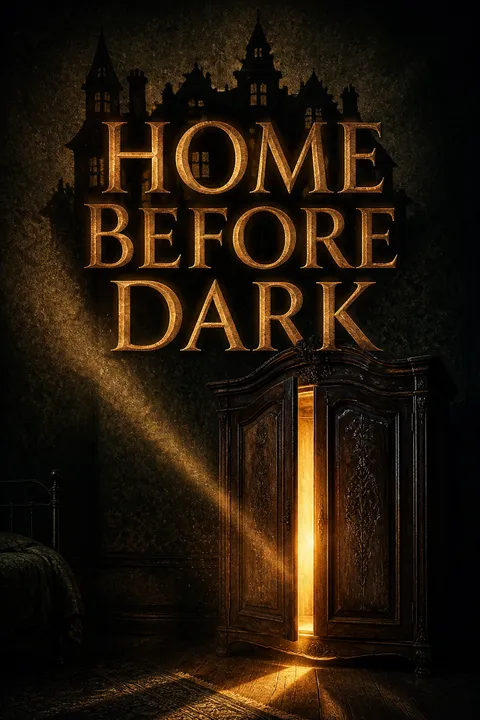
In 1995, five-year-old Maggie Holt asks her father to search her bedroom for ghosts. Ewan checks beneath the bed, in the closet, and inside the great armoire, finding nothing.
Maggie insists she has seen spirits, including a dark man who visits at night and warns that the family will die in Baneberry Hall. Ewan dismisses her fear as a child's imagination, but her certainty unsettles him.
The opening gives the haunting a child's scale before the novel turns it into public spectacle: a bed, a closet, an armoire, the places a parent checks to make a room safe. Ewan's practical reassurance cannot reach Maggie because she is not describing a story she has invented for attention. The scene also establishes the book's central problem of testimony. A child's conviction is easy for adults to label fantasy, especially when they already want a rational explanation. The warning gains force later, when both Maggie and her father have reason to doubt what they remember.
The Haunted House Inheritance
In a Boston lawyer's office, Maggie Holt learns that her dead father left her more than the royalties and notoriety attached to House of Horrors. He never sold Baneberry Hall, the Vermont estate where her family supposedly endured a haunting for twenty days, so the property now belongs to her.
Ewan had warned her near the end of his life that the house was unsafe, without explaining why. Maggie has spent adulthood denying the book's claims and resenting how they made her a public curiosity. Now she holds the keys to the place at the center of her family's silence. Her father's last warning makes the inheritance feel less like an asset than an unanswered question.
The inheritance turns an old family story into a physical obligation. Maggie has been able to reject the book while living at a distance from the place it describes; ownership removes that distance and makes avoidance costly. Ewan's warning is emotionally double-edged: it may be parental protection, but from a man who withheld the truth, it also sounds like another attempt to control what she knows. The keys therefore carry two kinds of weight, material and epistemic. Maggie inherits not just a house, but the right and burden to investigate the story that has defined her without her consent.
A Confession With Gaps
At lunch, Maggie presses her mother, Jess, about why the family fled Baneberry Hall. Jess finally explains that Ewan had struggled to sell publishers on fiction, so the couple staged a haunting to give his ghost story the appearance of nonfiction. The family's real circumstances, including the house's history and Maggie's night terrors, supplied material for the book, but the supernatural account was fabricated.
Jess also says the book's success and the strain of maintaining the lie helped end her marriage to Ewan. Then she offers to buy the estate so Maggie will not have to return. Her refusal to explain the warning Ewan gave on his deathbed convinces Maggie that the confession is incomplete, and she decides to go herself.
Jess's disclosure gives Maggie a plausible account of the public lie, but it does not repair the private one. Her parents' decision to conceal the truth was meant to protect Maggie from disappointment and scrutiny, yet it deprived her of the context she needed to understand both her family and her own childhood. Jess's offer to buy the house repeats the old pattern in gentler form: she is still trying to decide what Maggie should be allowed to face. Maggie's choice to return is thus not simply curiosity. It is an attempt to reclaim authorship over a history her parents converted into a product and a prohibition.
The Holts Buy Baneberry
Twenty-five years earlier, freelance writer Ewan Holt and his wife Jess tour Baneberry Hall with their five-year-old daughter. They need more room and cannot afford the grand, neglected estate at its assessed value, but the low price tempts Ewan.
Realtor Janie June Jones explains that the previous owners, Curtis and Marta Carver, suffered a murder-suicide there: Curtis killed their young daughter, Katie, then himself. Jess worries the tragedy will haunt their new home; Ewan argues they can build a happier life in it.
He is drawn to its eccentric rooms and hopes its history will revive his writing. Jess agrees, though reluctantly. On closing day, caretaker Walt Hibbets warns Ewan that the house holds more history than the Carvers could manage.
The purchase begins as a familiar economic gamble, but the bargain depends on the family discounting knowledge they cannot yet interpret. Ewan sees the house as space, inspiration, and a chance to restore his stalled career. Jess recognizes that a home's history can affect the people living in it even when they refuse to discuss it. Their disagreement establishes an asymmetry: Ewan's appetite for stories gives him momentum, while Jess is asked to absorb the risk of his decisions. The warning from Walt Hibbets functions less as proof of anything supernatural than as a test of the family's willingness to listen before entering a place with a violent past.
The House Starts Answering
After moving in, Ewan notices the chandelier lit when no one claims to have switched it on, hears unexplained noises, and finds a snake in the Indigo Room. The house's bells, once used to summon servants, ring without an obvious hand on their cords. Maggie says a girl is hiding in the armoire, while Ewan keeps treating her claims as make-believe.
A cut beneath Maggie's eye, caused when she falls on a gravestone in the woods, brings the family's first direct contact with the neglected Garson cemetery. Walt identifies the buried family and tells Ewan that the estate has witnessed repeated tragedies. The Holts remain, partly because they have spent nearly all their money on the house.
The early disturbances work because each can still be explained away in isolation. A faulty switch, an animal, a child's adjustment to a new home: Ewan and Jess have sensible interpretations available, and economic pressure makes those interpretations attractive. Yet each incident also narrows the space in which reassurance can operate. Maggie's fear is not merely a symptom of the move; she is the family member most willing to name what the adults are trying not to see. The cemetery makes the house's past materially present, turning local history from a realtor's disclosure into something their daughter can literally stumble over.
Letters Beneath the Floor
While repairing the kitchen ceiling, Ewan and Walt find a tin hidden above it, then discover a loose section of floor in the Indigo Room. Inside the tin are letters from Callum Auguste, a painter who planned to elope with Indigo Garson, William Garson's teenage daughter. The letters show Callum feared William had learned of their escape plan.
Ewan and Petra Ditmer, a sixteen-year-old neighbor who helps with Maggie, search the Bartleby records and find an account of Indigo's death by baneberries, along with a report that William had carried berries upstairs shortly beforehand. The authorities declared him innocent despite the witness account. Petra suspects he killed Indigo, and Ewan's interest in the house's history deepens.
The hidden letters give the house a documentary past that is more disturbing than its supernatural reputation. A young woman's private correspondence survives because someone concealed it, while public records preserve an official conclusion that may have protected a powerful man. Petra's indignation is not only historical curiosity; she recognizes how easily a girl's account can be discounted when it challenges authority. Ewan is drawn to the same evidence as a writer, but his interest carries a risk: he may treat other people's pain as material before understanding its consequences. The concealed floor and the contested record establish a pattern of truth being physically present yet socially suppressed.
The Sleepover Breaks Apart
Ewan and Jess invite Petra and her younger sister Hannah to stay overnight so Maggie can make friends. Maggie spends the evening distracted by presences her parents cannot see, then panics in her bedroom, convinced the armoire and the space beneath her bed contain threatening visitors. Hannah becomes frightened too. When she climbs onto the bed to help, Maggie punches her in the face, breaking her nose.
The girls leave, and Elsa Ditmer, their mother, takes the incident seriously. Ewan and Jess consult child psychologist Dr. Weber, who finds Maggie imaginative but not mentally ill and urges her parents to explain the Carver tragedy honestly. They tell Maggie what Curtis did to Katie. Maggie identifies Curtis as the dark figure she fears.
The sleepover converts Maggie's private fear into an injury another child can witness, making it harder for the parents to dismiss the matter as harmless imagination. Ewan wants professional help and explanation; Jess fears that labeling Maggie will isolate her further. Their disagreement reflects two kinds of parental protection, intervention and normalization, neither of which fully meets the child's need. Dr. Weber's advice points toward a crucial omission: Maggie has already absorbed the atmosphere of violence without being given its facts. The revelation that Curtis resembles her feared figure suggests that children make meaning from fragments, even when adults believe silence can shield them.
The Book's Nightmare
In the version Ewan later publishes, Baneberry Hall's disturbances intensify. Snakes spill through the kitchen ceiling, a body is discovered beneath the floorboards, and Ewan hears a dead man's warning through the house's bells. His research leads him to a pattern of young girls dying in the presence of their fathers. He concludes that Indigo's spirit is driving fathers to harm their daughters.
When Maggie is found with marks around her neck, Jess takes her away, fearing Ewan has hurt her. Ewan believes the house has taken control of him, then escapes with Jess and Maggie as the estate seems to attack them. This is the frightening narrative the public accepts, though Maggie will later learn it cannot be trusted as fact.
The horror story Ewan tells gives a supernatural shape to a family's inability to speak plainly about violence. Its repeated father-daughter pattern transforms parental love into a possible threat, while the house becomes a machine for replaying inherited harm. But the narrative's vividness is also a warning: a convincing story can make invented causality feel more coherent than an untidy truth. By labeling the passage as Ewan's published account, the summary preserves the tension between what readers witness and what his later confession revises. The book is both a cover story and a powerful instrument for controlling how others interpret Maggie.
Maggie Returns Alone
In the present, Maggie reaches Baneberry Hall with renovation tools and meets Dane Hibbets, Walt's grandson and the current caretaker. Dane says Ewan paid him and the Ditmer family for years, and returned to the estate once each July 15, the anniversary of the night the Holts fled. Maggie had believed her father never came back.
She also finds her childhood clothes and toys still in her room, while the armoire has been nailed shut. During her first night, an elderly Elsa Ditmer wanders into the house and mistakes Maggie for Petra, her missing daughter. The encounter gives Maggie her first physical evidence that the people in her father's story are real, and that the town's version of Petra's disappearance is unfinished.
The return visits puncture the clean story Maggie has built around her father's lie. Ewan did not simply abandon the house and its history; he maintained a private relationship with it, hidden even from his daughter. The untouched belongings make that secrecy tangible, preserving a childhood that Maggie had assumed was erased. Elsa's confusion adds a painful human cost to the mystery: Petra is not merely a name in a book but a daughter whose absence has continued to shape a family. The house's locked armoire becomes an image of the very method Maggie is resisting, an inaccessible space sealed by someone else's decision.
Petra Beneath the Kitchen
Maggie uncovers her father's Polaroids, including photographs of herself, Petra, Hannah, and the Carver house. Their details contradict her belief that Ewan invented everything. After a worker tests the water-damaged kitchen ceiling, plaster collapses and a canvas sack of human bones drops onto the table.
Police identify the remains as a young woman, and Hannah recognizes Petra's crucifix among the evidence. The body's location matches the hidden floor compartment Maggie has read about in House of Horrors. Chief Alcott warns that the discovery makes Ewan look guilty. Maggie is left with a harder question than whether the book was true: if her father lied about the haunting, what did he actually do to Petra?
The discovery shifts the story from disputed memory to forensic fact, but the fact does not immediately clarify responsibility. Petra's remains confirm that the house concealed a crime, while the Polaroids demonstrate that Ewan's narrative incorporated real people and moments. This mixture makes evidence destabilizing rather than reassuring: every verified detail lends credibility to the surrounding fiction. Hannah's recognition of the crucifix restores Petra's identity to the remains, resisting the reduction of a person to a mystery object. Maggie's loyalty to her father now collides with the need to treat his possible guilt seriously, a conflict made sharper by the very evidence he left behind.
A Sister's Twenty Four Notes
Maggie searches the Gazette archives with reporter Brian Prince and finds that Baneberry Hall has accumulated a long record of deaths, especially involving girls. She also learns that Petra disappeared on July 15, the same night her family left. Hannah explains that she wrote notes demanding to know where Petra was, leaving one for Ewan each year when he returned.
She once saw him enter the estate shortly after Petra vanished and suspected he was hiding the body. Hannah also says Petra had been sneaking out to meet a boy. Separately, child psychologist Dr. Weber confirms that young Maggie truly believed she saw the figures described in House of Horrors. The facts multiply, but they still point in incompatible directions.
This investigation exposes how institutions and families can collaborate in uncertainty without explicitly agreeing to deceive. The police accepted that Petra had run away, the newspaper turned a haunting claim into a headline, and Ewan's annual visits went unexplained. Hannah's notes are a private archive of grief, repeated because no public process answered her question. Dr. Weber's testimony complicates Maggie's skepticism without proving a supernatural cause; belief itself is a real part of Maggie's childhood, whether or not its objects existed. The section's contradictions are structural, not incidental. Each new source offers evidence while also revealing the limits of what that source can know.
The Haunting Was Staged
Maggie confronts Hannah, who admits entering Baneberry Hall to take antiques and sell them online after her mother's illness created money problems. The missing letter opener, teddy bear, ringing bells, and record player were part of Hannah's attempts to frighten Maggie away from the house.
Hannah also reveals a concealed entrance behind the ivy, reached through a hidden door. That discovery explains how someone could enter without disturbing the locked gate or windows.
The explanation settles some of the modern disturbances, but it cannot account for Maggie's childhood memories or every strange event. Then an old photograph places Dane in the house during the summer Petra vanished, wearing a shirt Maggie recognizes. Her search shifts from Hannah's tricks to Dane's connection with Petra.
Hannah's confession offers a satisfying rational answer, but only to the events she actually caused. Her actions emerge from need and resentment rather than a desire to harm Maggie: she wants access to a valuable house and believes fear will protect that access. The hidden entrance gives the building a practical Gothic mechanism, showing how architecture can generate apparent impossibility. Yet the solution is deliberately incomplete. Hannah can explain the staged disturbances, not the entire history of Maggie's perceptions. The novel therefore refuses the easy comfort of one master explanation. In this section, skepticism becomes more precise, distinguishing a proven hoax from questions that remain open.
Dane's Old Photograph
The photograph leads Maggie to realize Dane was Petra's secret boyfriend. Chief Alcott has already told Maggie that Dane once served prison time for a severe assault, a fact he never disclosed when she hired him. When Maggie confronts him with the image, Dane admits he knew Petra but denies killing her. He tries to stop Maggie from contacting police, knocks her phone away, and pursues her through the house.
Maggie escapes into the Indigo Room, where police removed the floorboards above the hidden body compartment. Dane fails to notice the opening and falls through to the kitchen below. The police take him for treatment and questioning, leaving Maggie still unsure whether her father was responsible for Petra's death.
Dane's past transforms flirtation and practical partnership into a problem of trust, but the story avoids treating a criminal record as proof of murder. His attempt to control Maggie's actions is incriminating because it repeats the secrecy and coercion that have defined the investigation. Maggie's escape depends on knowing the house's damaged architecture better than Dane does, a reversal of the earlier power dynamic in which men controlled access to the truth. His fall is not a solution to the mystery; it merely removes an immediate threat. The uncertainty left behind makes the father's account, and the mother's silence, newly urgent.
A Father's False Confession
After Dane is taken away, Jess arrives from overseas and gives Maggie a letter Ewan wrote for her. It explains that the haunting in House of Horrors was invented to disguise Petra's disappearance and secure a book deal. Ewan says he and Jess returned from a motel to find Petra dead at the stairs, with Maggie injured and repeating that she had not done it.
He assumed Maggie had pushed Petra, hid the body beneath the Indigo Room floor, and built the haunting story to prevent police from searching. His annual visits were acts of guilt. Jess admits she helped conceal the body because she believed their child had caused Petra's death. The letter explains the lie, but not the actual killing.
Ewan's letter is at once confession, defense, and another act of interpretation. He owns the fabrication and the concealment, yet his account still treats his child's guilt as an assumption rather than knowledge. His love for Maggie is genuine, but it becomes the rationale for a choice that denies Petra justice and binds the family to a destructive secret. Jess's complicity likewise emerges from fear rather than indifference, which does not erase its consequences. The revelation separates two questions that the earlier narrative had fused: who hid Petra, and who caused her death. The second remains unanswered, preventing the confession from functioning as a neat moral resolution.
The Visitor From the Armoire
Maggie recognizes Marta Carver, the local baker, as the woman who visited her childhood bedroom and became Miss Pennyface in her memory. Marta admits she entered the room to watch Maggie because she missed her own daughter. Petra caught her there on the night she died; in the struggle, Marta struck Maggie with her ring, and Petra fell down the stairs.
Marta fled and let Ewan believe Maggie was responsible. Now, fearing exposure, she has mixed poisonous baneberries into the pie she brought Maggie and tries to smother her. Maggie fights free and tumbles down the stairs. Elsa Ditmer, confused by Alzheimer's but suddenly present, pushes Marta down after her. Marta dies, and Maggie survives long enough to tell police what happened.
The final revelation replaces the inherited story of a monstrous child with the truth of an adult's panicked self-protection. Marta's grief helps explain her nightly visits, but it cannot excuse her fatal struggle with Petra or her later attempt to kill Maggie. Her maternal longing becomes possessive when she treats Maggie as a substitute for the daughter she lost. Elsa's intervention is especially charged because her impaired memory has made her seem helpless; in the decisive moment, she acts with clarity and force. The scene brings several motifs together, the armoire, the stairs, baneberries, and mistaken identities, showing how private grief can turn into harm when secrecy is allowed to harden.
The Cost of Telling
After treatment for baneberry poisoning and a fractured wrist, Maggie gives Chief Alcott the full account. Jess confesses that she helped conceal Petra's body, and pleads guilty to concealing a dead body while awaiting sentencing. Maggie forgives her, understanding that fear drove her parents' decision without excusing the damage it caused.
The police also learn that Hannah had been stealing from the estate, while Dane leaves town after his injuries and questioning. Elsa and Hannah later move away as Elsa's condition worsens. Maggie stays in Bartleby through the legal process, no longer trying to protect her father's reputation or escape the house's story. She can now distinguish what her family did from what Marta did.
The resolution refuses to equate forgiveness with absolution. Maggie can understand her parents' fear and still recognize that their cover-up prolonged harm for Petra's family and distorted Maggie's sense of herself. Jess's confession marks a change from protective silence to accountable speech, though a legal sentence remains pending. The distinction between explanation and excuse is central: love motivated the concealment, but love did not make it just. Maggie's recovered agency comes not from clearing her family of every wrong, but from naming each person's responsibility accurately. The truth does not restore what was lost; it gives the survivors a less falsified basis for grieving.
Epilogue
By autumn, Maggie and Allie have renovated Baneberry Hall in a deliberately plain style, stripping away the atmosphere that once made the house seem to advertise its own legend. Maggie remains until Jess's sentencing and considers writing her own account, not as a commercial ghost story but as a record she can control.
Public rumors still insist that Ewan was right about the haunting, while Hannah's online sales keep the house's objects circulating as curiosities. Maggie hopes to see Petra again, believing the young woman may have helped save her. At her father's typewriter, she begins a new story and accepts that the house's history cannot be erased simply by repainting its walls.
The epilogue declines the fantasy that truth can cleanly close a traumatic history. The house is remodeled, but the public continues to consume its legend, and the legal consequences of the family's choices remain active. Maggie's decision to write does not simply repeat Ewan's career; it reverses his central ethical failure by making her responsible for how the story is told. Her hope that Petra appeared to help her preserves a spiritual possibility without turning it into proof. The final act is therefore neither exorcism nor escape. Maggie chooses to live with uncertainty while refusing to let someone else's version define her again.
Analysis
Home Before Dark makes storytelling both its subject and its engine. Ewan's book does not merely mislead readers about Baneberry Hall; it alters the lives of people whose private grief becomes public entertainment. Maggie inherits the damage as a social identity, while the residents of Bartleby inherit a haunted-house reputation they did not choose. The novel's alternating timelines make that damage formal: the reader first encounters Ewan's elaborate account as a persuasive narrative, then watches Maggie test it against photographs, newspaper records, family testimony, and physical evidence.
The book is careful not to make skepticism synonymous with intelligence or belief synonymous with foolishness. Hannah really does stage some disturbances, and the hidden passage gives ordinary people access to spaces Maggie thought were sealed. Yet a rational explanation for one event cannot automatically explain every memory or historical pattern. This keeps uncertainty alive without allowing supernatural claims to excuse human choices. The decisive crime is not a ghost's act but Marta's attempt to preserve a private refuge after grief has narrowed her moral world. Ewan and Jess also cause lasting harm by treating concealment as protection. Their motives are recognizably parental, but the consequences fall on Petra's family and on Maggie, who grows up unable to distinguish her own memories from her father's invention.
The novel's deepest ethical question concerns who has the right to tell a story, and what responsibility follows when that story includes other people's pain. Ewan uses fiction to save his daughter in the short term, then lets the lie define her for decades. Maggie's eventual insistence on truth does not repair the past or restore the lost, but it separates compassion from denial. Forgiving her mother becomes possible only after she can name the wrongdoing clearly. The house remains unsettling because no renovation can erase what happened there, just as no compelling narrative can substitute for accountability.
Review Summary
Home Before Dark receives mostly positive reviews, averaging 4.04 out of 5. Readers praise its atmospheric haunted house setting, clever dual-narrative structure alternating between present-day Maggie and her father's memoir, and genuinely creepy moments. Many compare it favorably to The Haunting of Hill House. Common criticisms include an implausible, unsatisfying ending, an underdeveloped female lead, and pacing issues in the middle. While some found it genuinely frightening, others felt it lacked true horror. Most agree it's an entertaining, unputdownable thriller despite its flaws.
People Also Read










Characters
Maggie Holt
Daughter reclaiming her storyMaggie is an interior designer whose childhood notoriety comes from her father's bestselling account of a haunted house. She has spent years rejecting the book and guarding herself against people who approach her as a curiosity rather than a person. Her skepticism is not simple coldness; it is a defense built after a childhood in which adults withheld explanations and strangers presumed to know her. Maggie is observant, practical, and skilled at reading the physical history of buildings, yet her own memories remain uncertain. Her work and her investigation both reflect a wish to make hidden structures visible. She is driven by the need to separate her identity from a story she never chose.
Ewan Holt
Writer behind the legendEwan is Maggie's father, a gifted writer whose ambitions and financial troubles shape the family's move to Baneberry Hall. He is affectionate and attentive with Maggie, but his instinct to turn experience into narrative can override the needs of the people around him. He wants to be a successful writer and a good father, and the conflict between those desires becomes especially painful when he chooses secrecy as protection. Ewan's charm helps him persuade others, while his shame makes him retreat into silence. His influence on Maggie is lasting: she inherits both his appetite for stories and the need to decide what ethical storytelling requires.
Jess Holt
Mother guarding the familyJess is Maggie's mother and Ewan's wife during the family's time in Baneberry Hall. Practical, empathetic, and wary of the house's reputation, she recognizes the strain that Ewan's ambition and the estate's history place on their family. She wants to protect Maggie from fear and from the consequences of adult choices, but her protection can take the form of silence. Jess is not indifferent to other people's pain; she is often quick to feel it. Yet when confronted with a crisis, fear can make her prioritize her child above truth and justice. Her relationship with Maggie is shaped by long years of avoidance and the difficult possibility of honesty.
Marta Carver
Baker carrying old griefMarta is a respected Bartleby baker and the former owner of Baneberry Hall with her husband, Curtis. She is reserved in public and deeply protective of the private history that made her a familiar object of pity in town. Her grief has made her wary of attention and reluctant to revisit the house. Marta's life shows how a community can mistake quiet endurance for resolution. She is connected to Maggie through the house and its stories, but their relationship is burdened by incompatible needs: Maggie wants the truth, while Marta wants to escape the pain attached to it. Her kindness and her guardedness exist side by side.
Dane Hibbets
Caretaker with rough edgesDane is the contractor and caretaker who helps Maggie prepare Baneberry Hall for sale. He knows the estate and its grounds, carries local history through his family, and approaches Maggie as both a capable employer and a woman he finds intriguing. His easy confidence can shade into evasiveness, especially when his past becomes relevant. Dane is a practical person who understands the value of work and second chances, but he is also guarded about the choices that damaged his reputation. His relationship with Maggie moves between professional partnership and personal possibility, making candor essential to whether she can trust him.
Hannah Ditmer
Sister left with questionsHannah is Petra's younger sister and Elsa's surviving daughter. As a child, she is outspoken and eager to play; as an adult, she is blunt, self-reliant, and shaped by years of caring for her mother. Her sharpness protects a long-standing wound and a deep resentment toward the people who wrote about her family without giving her answers. Hannah is resourceful and capable of deception, but her actions arise from financial pressure and unresolved grief rather than simple malice. She is an important counterweight to Maggie: both have been trapped in other people's stories, but Hannah's response is to distrust anyone who promises that the truth will make things right.
Petra Ditmer
Missing sister and babysitterPetra is Elsa's elder daughter and Hannah's protective older sister. At sixteen, she is confident, observant, and willing to test the strict boundaries placed around her. She babysits Maggie and becomes involved in Ewan's curiosity about Baneberry Hall's history. Petra's independence distinguishes her from the adults who try to interpret or manage her life. She is more than the missing girl at the center of the mystery: her relationships, choices, and private hopes shape the memories of both the Ditmer and Holt families.
Elsa Ditmer
Housekeeper and motherElsa comes from a family that has worked in and around Baneberry Hall for generations. She is devout, modest, and attentive to the emotional lives of children, especially Maggie and her own daughters. Her German background informs a strong attachment to custom and faith, while her gentleness can make her seem easy to overlook. Elsa understands more about the house's history than she initially shares. In later life, Alzheimer's disrupts her memory and independence, placing Hannah in a demanding caregiving role.
Tess Alcott
Bartleby's determined police chiefTess Alcott is the local officer who first hears the Holts' account of the supposed haunting and later becomes police chief. As a young officer, she is inexperienced and eager to perform her duty; as an older investigator, she is frank, skeptical, and frustrated by the damage the book has done to her town. She carries some regret about how the original case was handled, but she also guards against being manipulated by another sensational story. Her role joins local memory to official investigation.
Brian Prince
Reporter who opened the storyBrian is the Bartleby Gazette reporter who first publicizes the Holts' claim and later owns and edits the paper. He is ambitious, persistent, and alert to the value of a story, sometimes mistaking persistence for impartiality. His coverage helps turn a local account into a national legend, and his later investigation revives questions the town would rather leave alone. Brian believes that records and interviews can uncover the truth, though his own role in making a family tragedy public complicates that confidence.
Indigo Garson
The estate's lost heiressIndigo is William Garson's only daughter and the young woman whose portrait and private letters become part of Baneberry Hall's history. She is remembered as beautiful, beloved by her father, and attached to an artist whose social position makes their relationship contentious. The surviving evidence suggests that Indigo's wishes were constrained by the power her father held over her. She becomes the center of a local story in which the gap between official judgment and private testimony remains difficult to close.
William Garson
Baneberry Hall's founderWilliam Garson is the wealthy lumberman who built Baneberry Hall in the nineteenth century. He is remembered as a powerful, possessive patriarch whose money and standing gave him unusual influence in Bartleby. His imposing likeness and the contradictory accounts of his family make him a figure onto whom later residents project their fears. William's legacy is inseparable from the estate's reputation, but the records leave questions about how much of that reputation reflects documented history and how much reflects legend.
Curtis Carver
A father in the house's pastCurtis is Marta's husband and Katie's father, a well-liked man whose family appears happy to outsiders. His history at Baneberry Hall becomes a crucial reference point for Ewan and Maggie as they try to understand the house's earlier tragedies. The contrast between his public reputation and the awful event associated with his family makes him a figure whose story resists easy judgment. His presence in the novel raises questions about how communities explain violence and how children absorb the danger adults conceal.
Katie Carver
The child at the centerKatie is Curtis and Marta Carver's young daughter. She is remembered as friendly, lively, and close to the Ditmer girls, who once came to Baneberry Hall to play. Her story shapes the house's reputation and becomes part of what the adults must decide whether to tell Maggie.
Callum Auguste
Artist who loved IndigoCallum is the painter who creates Indigo Garson's portrait and writes to her about a future together. His letters offer a private counterpoint to the public accounts of the Garson family. He is a struggling artist whose affection and limited social power shape the choices available to him.
Walt Hibbets
Longtime estate caretakerWalt Hibbets cares for Baneberry Hall during Ewan's time there and represents a family connection to the estate stretching across generations. He is practical, genial, and cautious about what he tells the new owners. His local knowledge gives Ewan access to the house's history, while his warnings show how much of that history residents prefer to leave unspoken.
Dr. Lila Weber
Child psychologist and listenerDr. Weber meets Maggie as a child and helps Ewan and Jess understand the intensity of her imagination. She is calm, perceptive, and attentive to how children interpret events adults have not explained. Years later, her recollection gives Maggie an outside perspective on the childhood experiences she cannot remember clearly.
Allie
Maggie's renovation partnerAllie is Maggie's longtime friend and business partner. She handles construction while Maggie designs interiors, and their shared work depends on frank advice and practical trust. Allie supports Maggie's independence but worries when the investigation places her in danger.
Janie June Jones
The estate's realtorJanie June is the realtor who shows Baneberry Hall to the Holt family. She knows the estate's public history and discloses the Carver tragedy, though her account leaves important details unexplained. Her brisk, sales-minded manner reflects the town's effort to treat a troubling past as just another property complication.
Carl
Maggie's stepfatherCarl is Jess's second husband and Maggie's stepfather. A real estate developer, he offers Maggie's mother a stable life after the divorce and later supports her practical decisions about Baneberry Hall. He remains mostly outside the family conflict surrounding the book.
Plot Devices
House of Horrors
A lie that becomes evidenceEwan's bestselling book presents the family's time at Baneberry Hall as a true haunting. Its mixture of real people, actual local tragedies, invented events, and concealed facts makes it both a cover story and a misleading archive. Maggie uses it to search the house, but each match between its pages and physical evidence makes her question whether she can trust her parents' denials. The book's public success also changes the lives of the Carvers and Ditmers, who never consented to become characters. Its central function is to make storytelling consequential: a narrative can protect a family from scrutiny while imposing a false identity on everyone it describes.
The Wall of Bells
A housewide signal systemThe old service bells in the kitchen once connected to rooms throughout Baneberry Hall. Their labels preserve the estate's former uses, and their unexpected ringing repeatedly gives the inhabitants reason to believe someone is moving through the house. In Ewan's account, the bells also become a means of communicating with a presence; in Maggie's present, Hannah exploits them to stage disturbances. The same object therefore carries both a practical explanation and a supernatural possibility. Its repeated use keeps the reader attentive to how identical evidence can support competing stories.
The Polaroid Camera
Images that test memoryThe camera and its photographs preserve moments from the Holts' stay and the Carvers' life in the house. Maggie finds images that contradict her assumption that her father invented every detail, including pictures of Petra, Hannah, and her own childhood. The photographs appear to offer objective proof, but their incomplete framing and uncertain chronology leave room for interpretation. They become investigative tools, emotional triggers, and clues to relationships hidden from Maggie. Their role is not to settle truth automatically, but to make denial more difficult by giving memory a physical form.
The Hidden Passage
A secret route into childhoodA narrow entrance concealed behind ivy leads through a staircase and directly into Maggie's childhood room, emerging behind the armoire. It allows people to enter Baneberry Hall without opening its visible doors or windows, explaining how some intrusions could occur unseen. The route also changes the meaning of Maggie's childhood memories: figures she thought were spirits may have been actual people visiting her at night. As a physical secret embedded in the house, the passage represents how adults could approach a child while the rest of the family believed her bedroom was secure.
The Garson History
A past that keeps returningBaneberry Hall's history includes Indigo Garson's relationship with Callum Auguste, disputed accounts of her death, the Carver tragedy, and other deaths recorded in the local newspaper. The family cemetery, letters, portraits, and town archives turn that history into clues Maggie and Ewan can examine. The poisonous baneberries connect the estate's name to its most disturbing stories. The history seems to repeat itself, especially through fathers and daughters, but the novel also shows how legend can exaggerate or distort real events. This device builds the haunting atmosphere while forcing the characters to distinguish documented history from inherited rumor.
Download PDF
Download EPUB
.epub digital book format is ideal for reading ebooks on phones, tablets, and e-readers.








