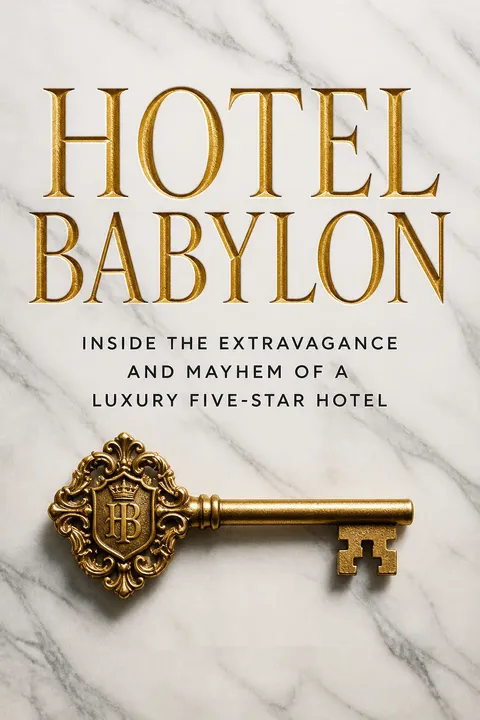


Key Takeaways
See Hotel Babylon as a stage where luxury depends on backstage chaos.
One day, many lives. The book compresses more than a decade of hotel work into one twenty-four-hour shift, from a receptionist arriving hungover to the discovery of a long-term guest who has died in her room. The hotel is fictional, and names are changed, but the narrator presents the incidents as accounts from his career. That structure lets breakfast orders, staff gossip, celebrity demands, theft, and emergencies crowd into the same working day.
The service beneath the shine. The grand lobby promises calm and care. Behind it are exhausted workers improvising around delayed rooms, angry guests, missing stock, and one another. The point is not simply that luxury hotels contain outrageous stories. Their polished image is something people must continually produce, often in conditions that are anything but polished.
What's striking is the shift's function as a miniature social world. By placing routine tasks beside absurd crises, the narrative shows how institutions depend on workers who absorb disruption without letting guests see it. This resembles ethnographic writing, where ordinary interactions reveal the rules of a culture more clearly than official statements do. The compressed day is vivid, though it can make exceptional incidents feel representative of every luxury hotel. The account is most persuasive as a portrait of one industry's pressures and contradictions, not as a statistical survey.
A room costing just over £10 to turn over can sit beside a £2,000 suite.
Luxury has a cost structure. The narrator estimates that preparing a room for another guest costs the hotel just over £10 a day. That figure includes cleaning, linens, utilities, toiletries, and the £3.50 chocolates left on the pillow. Elsewhere, the top suite is priced at £2,000 a night, before breakfast. The gap makes the hotel business's central arithmetic visible: guests pay not only for the physical room, but for scarcity, convenience, atmosphere, and the promise that every request can be handled.
Small extras add up. Afternoon tea costs less than a pound to assemble but sells for £11.75 per person. A glass of champagne costs under £2 at the bar and sells for £10.50. These margins help explain why staff track every drink, steer guests toward expensive choices, and treat high spenders as especially valuable.
The comparison clarifies that luxury pricing is not a transparent invoice for materials and wages. It is a price for access, status, and the expectation of attentive service, shaped by what customers will pay. That is standard in experience-based businesses, but the contrast also raises a useful question: how much of the premium reaches the workers who create the experience? The narrator's figures are memorable snapshots, not a full accounting. Still, they expose why management can lavish attention on one wealthy guest while tightly controlling small costs elsewhere.
Notice who cleans the room while the guest sleeps.
The labor is unevenly shared. Chambermaids earn about £4.50 an hour in the narrator's account, clean up after guests' most private messes, and often compete with bellboys over small tips. He describes workers finding used condoms, sex toys, and other unpleasant surprises, while guests may leave little or nothing. He also says chambermaids rarely advance beyond the same work, while management roles are more likely to go to trainees.
The kitchen has its own toll. The narrator recalls split shifts, punishing heat, bullying, and repetitive tasks such as shaping potatoes by hand. Housekeeping and kitchen staff keep the hotel's promise of effortless comfort, yet their work is physically demanding and largely hidden from guests. The narrator's account makes the contrast between visible hospitality and invisible labor hard to ignore.
This is a sharp portrait of emotional and physical labor, the work of managing both tasks and other people's feelings. Research on service work often notes that a smile can be part of the job, even when the worker has little control over pay, schedule, or customer behavior. The book makes that asymmetry concrete through room-cleaning and kitchen routines. Its broad claims about who can advance should be read as the narrator's experience, not a universal rule. The underlying question remains: does a service system recognize the people whose labor makes its comforts possible?
Overbooking turns room-count arithmetic into a receptionist's moral crisis.
The room exists twice. The hotel accepts early arrivals by selling access to a room before its previous occupant has checked out, effectively charging two guests around the same night. Reservations also overbook because cancellations are common and occupancy can shift repeatedly in a day. When the arithmetic goes wrong, the person at reception must face the tired, angry guest.
A lie becomes part of the repair. One arrival is told that the former guest has food poisoning, buying time to clean the room. Another is sent away after the receptionist packs his belongings without permission, believing he had checked out. The hotel offers a stay elsewhere and compensation, but the guest bears the disruption and the receptionist absorbs the confrontation. A routine revenue strategy becomes a human problem at the front desk.
Overbooking is a form of risk management: the hotel bets that some reservations will not arrive, then tries to protect revenue and occupancy. The book's scenes show how institutions often push the cost of that bet down the hierarchy, onto frontline staff and inconvenienced customers. Scripts can help employees stay composed, but they also turn misleading explanations into routine tools. The tension is not solved simply by condemning overbooking, which can keep rooms occupied and prices competitive. The harder question is whether the business takes responsibility when its forecast fails.
A concierge's useful connections can blur into a private shadow business.
Access has value. Tony, the concierge, knows restaurants, theatres, drivers, clubs, and suppliers across London. Guests rely on him to find hard-to-get tables and solve unusual requests. The book also describes commissions: Tony earns a cut on tickets and tours, while suppliers and business contacts offer perks or cash for access to hotel customers.
The line keeps moving. Some arrangements are openly commercial, while others involve private payments, discreet introductions, or services the hotel would not officially endorse. Tony's usefulness gives him influence, but also opportunities to profit beyond his formal role. His work shows how a luxury hotel sells more than rooms. It sells trusted access to a network, and the concierge may control the gateway.
The concierge functions as a broker, connecting people who need something with people who can provide it. Brokerage can create real value, especially when knowledge and trust are scarce. It can also create conflicts of interest when the person making a recommendation receives a commission that the customer cannot see. The book captures both sides without treating every referral as a scam. A practical lesson for customers is to ask how recommendations are selected. For employers, clear disclosure rules can preserve useful relationships without letting private incentives quietly steer service.
Hotel anonymity gives some guests permission to behave badly.
The room changes the rules. The narrator repeatedly sees guests act in ways they would not at home: taking property, running up large bills, inviting sex workers, using drugs, or treating staff as available for flirtation and sexual demands. A guest spends £850 calling premium-rate sex lines, then objects to paying. Another takes a room full of minibar drinks. Guests sometimes steal towels, food, or even furniture.
Money changes enforcement. Staff may tolerate behavior from regulars who spend heavily, while trying to remove people who seem to be soliciting inside the hotel. The result is not a consistent moral code so much as a shifting boundary between privacy, profit, and safety. The room offers seclusion, but staff still have to manage the consequences when private behavior spills into public space.
Anonymity can reduce the social friction that normally restrains behavior. In a hotel, guests are away from familiar communities, and staff are expected to remain discreet, which can make rule-breaking feel low-risk. The narrator's examples also reveal that discretion is distributed unevenly: a wealthy regular may receive indulgence where another person would be removed. That is a compelling account of incentives, although the book's broad generalizations about nationalities and customer types should be treated cautiously. Conduct is better explained by context and individual choice than by passport.
A missing Bombay Sapphire bottle reveals the hotel's informal economy.
Petty theft is routine. The hotel expects some losses in its pricing, from ashtrays and toiletries to drinks. Staff also describe helping themselves to alcohol, watering bottles, or serving a single measure while charging for a double. Some treat a drink taken during a shift as an informal perk, even though it is against the rules.
An audit changes the mood. When an outside auditor arrives to count stock, the bar staff become tense. The hotel has been losing miniature bottles of Bombay Sapphire, and management wants to identify the thief. The audit also checks forgotten charges and spills, showing that not every shortage is deliberate. The distinction between a shared workplace habit and theft is less clear to staff than it is to the ledger.
The bottle is a small example of how workplace norms can diverge from formal policy. If supervisors overlook routine pilfering, employees may come to see it as an earned benefit rather than misconduct. An audit interrupts that shared understanding by making the invisible countable. But monitoring alone does not explain why shortages happen or whether workers see the rules as fair. The book's scene is useful because it shows control systems meeting informal culture. Good accounting can protect a business, while transparent expectations and fair working conditions can reduce the incentives to evade it.
Remember Mrs Robertson when the hotel's comedy turns into care.
A routine becomes a warning. Mrs Robertson, a beloved older guest who has lived in the hotel for years, receives morning tea at 6:15 each day. When she does not answer her door, the receptionist and a room-service worker recognize that something is wrong. They enter and find that she has died. The worker who brought her tea is visibly shaken, and the receptionist takes a moment alone before returning to the desk.
The relationship was real. The book has spent the day turning hotel life into comic scenes of excess, deception, and absurd requests. This death changes the register. Staff may be tired, cynical, and quick with jokes, but repeated routines can create genuine attachment. A hotel is not only a transaction machine. For guests who stay long-term, it can become a home, and its workers may become the people who notice when the ordinary pattern breaks.
The ending gives emotional weight to a book otherwise propelled by farce. The daily tea delivery is both a service task and a relationship built through repetition, much like the small rituals that create belonging in care settings. The scene also complicates the idea that workers are merely cynical observers. Humor may help people tolerate distress, but it does not erase grief or responsibility. Mrs Robertson's death is not presented as a grand revelation; its force comes from the quiet disruption of a familiar routine.
Analysis
Hotel Babylon is strongest as a comic workplace portrait that doubles as an account of how luxury is made. Its organizing device, one compressed day, turns the hotel into a pressure chamber: service rituals, class divisions, commercial incentives, and personal crises collide without interrupting the flow of work. The receptionist's voice is central to that effect. He is funny, observant, sometimes cruel, and often implicated in the conduct he describes. He is not an impartial investigator standing outside the system. He accepts tips, drinks illicit alcohol, helps execute misleading explanations, and sometimes treats other workers with the same casual contempt he sees directed downward.
That complicity gives the book more texture than a simple expose. The hotel is neither a glamorous paradise nor merely a den of corruption. It is a business where attention is rationed according to likely revenue, where staff improvise around management decisions, and where small acts of kindness coexist with fraud, exploitation, and fatigue. The contrast between guests who spend thousands and workers who count coins is not incidental scenery. It shows how the service economy can make unequal treatment look like personal charm.
The book's vivid anecdotes are also its evidentiary limit. The narrator presents stories as true accounts, but names and the hotel are fictionalized, years are compressed, and the reader cannot independently assess every claim or stereotype. Its national caricatures and sweeping numerical claims are especially better read as occupational folklore than verified social science. That does not cancel its value. It clarifies the kind of truth on offer: experiential, comic, and structurally revealing, rather than systematic.
The most durable insight is that luxury depends on hidden labor and controlled visibility. Guests are invited to feel that every need is effortless, while staff absorb delay, embarrassment, risk, and emotional strain. The final death scene matters because it restores the human beings beneath the performance. A hotel can sell privacy and polish, but it cannot make its workers or guests stop being vulnerable.
Review Summary
Hotel Babylon receives mixed reviews, with an average rating of 3.61 out of 5. Many readers find it an entertaining and fast-paced look behind the scenes of a luxury hotel, appreciating the juicy gossip and outrageous stories. Some praise its humor and insight into the hospitality industry. However, others criticize it for being shallow, depressing, or lacking substance. The book's format, presenting various anecdotes as a 24-hour narrative, is both praised and critiqued. Overall, it's seen as a light, guilty pleasure read that may appeal to those interested in hotel secrets.
Glossary
pre-reg
advance room preparationShort for pre-registered. A guest's room and paperwork are arranged before arrival, often to allow an early check-in. The book notes that hotels may charge for the previous night to guarantee early access, and may sell that same room for the preceding night as well, creating a risk if the first guest has not left.
bumping
moving a booked guestThe practice of redirecting a guest with a reservation to another hotel because the original property has no room available. In the book, the hotel typically sends bumped guests to a nearby luxury competitor and offers compensation. Reservations staff choose whom to move, often favoring regulars, multi-night stays, or bookings important to business relationships.
tronc
pooled staff tipsA system for collecting and distributing gratuities among a group of hospitality workers. The narrator describes tips being pooled among restaurant staff, so a large cash tip received by one employee may be divided rather than kept individually. The term also explains why some workers try to conceal exceptional tips instead of contributing them to the pool.
ullage
stock loss from wasteThe shortfall in a bar's recorded stock caused by spills, over-pouring, breakage, or unrecorded drinks. The book distinguishes ordinary ullage from deliberate theft, though both appear in stock audits. Hotels monitor it because small losses accumulate, especially when expensive drinks are served and their use is not carefully recorded.
mise en place
pre-service food preparationA kitchen term for preparing ingredients and workstations before service begins. In the book, this includes chopping, portioning, and organizing what chefs need before a busy meal period. The preparation is essential to speed once orders arrive, but junior staff can be assigned repetitive and exhausting jobs as part of the process.
honour bar
self-service guest barA bar where guests serve themselves and record what they consume, without a bartender present. The hotel treats the arrangement as a convenient, homelike amenity, but the narrator says guests often forget or understate what they drink. The hotel raises prices to offset losses and occasionally sends staff to check the bar.
turndown
evening room preparationA housekeeping visit in the evening to prepare a guest room for bedtime. The book describes staff folding back the bedcover, adjusting lights and the radio, placing a breakfast order form and remote control, and leaving water or chocolates. The narrator questions whether many guests need or value the ritual, despite its role in signaling luxury.
About the Author
Other books by Anonymous








Download PDF
Download EPUB
.epub digital book format is ideal for reading ebooks on phones, tablets, and e-readers.








