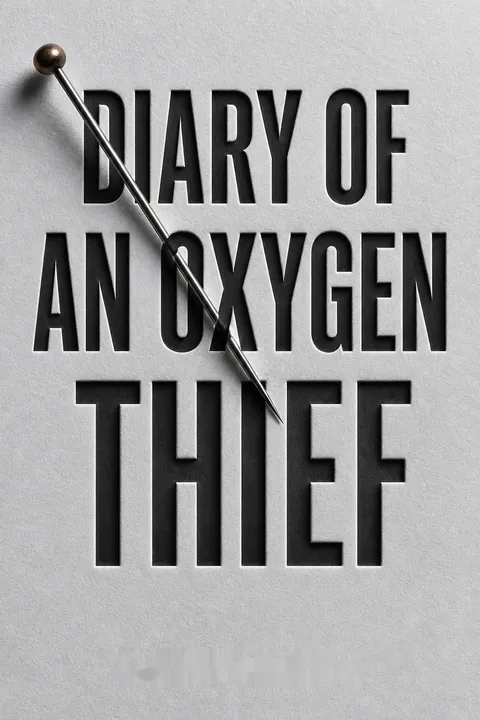


Plot Summary
Penelope's Victoria Park Night
The unnamed narrator admits that he deliberately used intimacy to wound women, but the pattern begins with Penelope Arlington, his partner of four and a half years. He loves her, yet resents his boredom, his drinking, and his belief that she has begun to despise him.
One Friday in a Victoria Park pub, he decides to force the separation she cannot bring herself to make. He mocks her appearance, performs the attentive expressions he has practiced on dates, and tells her he has been unfaithful.
Then, as if arranging the terms of a future punishment, he gives her instructions for how to retaliate. He returns to her bed that night and hears her crying. When she later leaves for a weekend with a colleague, his performance of control collapses into real jealousy and fear.
The scene makes cruelty feel less like a loss of control than a grotesque attempt to control the ending. The narrator is bored, ashamed, and afraid Penelope will reject him, so he engineers the rejection himself and tries to turn it into a game with rules he can dictate. His invitation to be punished exposes the need beneath the performance: he wants proof that he matters enough to provoke a response. But Penelope's departure gives him no mastery over what follows. The first wound he inflicts becomes the measure by which he later recognizes his own pain.
Jenny's Beer-Soaked Answer
After Penelope leaves, the narrator discovers heartbreak as a physical torment and decides other women should feel it too. His dates become experiments in earned trust: he listens to private stories, imitates tenderness, and waits until a woman is invested before withdrawing or humiliating her.
A virgin Irish teacher, vulnerable Lizzie, and Jenny, who throws beer in his face after he boasts about another conquest, each expose a different edge of the damage. Catherine, recently suicidal and raising a young son, resists the collapse he expects and keeps checking on him, which frustrates him more than anger would.
Meanwhile, his drinking expands into a full-time occupation, and paranoia makes him imagine Penelope has arranged accidents and strangers against him. A bicycle collision leaves him injured, but he still treats suffering as evidence of her revenge rather than his own unraveling.
His courtship routine is built from attention without reciprocity. He collects intimate details not to know the women but to calculate how much their eventual hurt will matter. That makes his apparent listening a form of surveillance, and his dependence on alcohol the private fuel for a public performance of charm. Jenny's anger briefly supplies the visible reaction he craves, while Catherine's continued concern defeats the script by refusing to become the wreckage he expects. His paranoid fantasies about Penelope also show how he converts guilt into persecution: imagining himself targeted is easier than admitting that his own choices have consequences.
The Pub Punch and AA
Before he can build a sober life, the narrator leaves a Kilkenny pub after his friend gropes a woman. She mistakes him for the culprit, slaps him, and he punches her. Five men beat him for striking a woman, and he accepts the punishment as a public reckoning.
He turns to Alcoholics Anonymous and remains sober, avoiding romantic relationships for five years while rebuilding his career in advertising. He and a creative partner win awards, but years of working together leave him resentful and afraid of his own anger.
A headhunter offers him a senior art-director position in St. Lacroix, Minnesota, and he accepts the move as an escape and a test of his new life. A month after arriving, he flies home to Ireland when his father becomes gravely ill; his father dies while he is there.
The assault is not presented as a clean conversion moment. The narrator has caused harm, suffered violence, and still narrates the episode through the rough arithmetic of deserved punishment. AA offers a different discipline: repeated accountability rather than one dramatic payment. His five years without intimacy show how sobriety initially means containment as much as recovery. The career move then tests whether he can use this restraint to build a life, or whether he is merely fleeing people and places that remind him of his past. His father's death arrives just as he is trying to prove that the new life is real.
Minnesota's Frozen House
In Minnesota, the narrator buys a Victorian house and earns well, but the work narrows to a punishing BNV car account while the climate and distance from London intensify his isolation. He hopes to leave, yet the house attracts no buyers, and his employer keeps assigning him demanding projects because he cannot easily resign.
During his first Christmas home after his father's death, he speaks at an AA meeting about having hurt women. A red-haired young attendee tells him that a Dublin-born photographer's assistant in New York has heard of him and has a dangerous effect on men.
He dismisses the warning as the rambling of a stranger. Months later, after two Minnesota winters and a stalled attempt to sell the house, a work trip to New York finally puts him in the photographer's path.
The house turns a career choice into a physical constraint: the narrator can earn enough to appear successful but cannot make the life feel like his own. His account of Minnesota is colored by homesickness and suspicion, so the reader sees the workplace through the same uncertain lens that later shapes his reading of Aisling. The AA visitor's warning supplies ominous preparation, but its source is too thin to settle anything. The narrator's dismissal matters because it shows how badly he wants to believe that the coming encounter is a gift, not a risk. The story leaves that ambiguity alive rather than resolving it for him.
Aisling Across the Atlantic
On a New York photo shoot, the narrator meets Aisling McCarthy, an Irish photographer's assistant connected to his home county through her uncle. He invites her to dinner, expecting an easy evening, but her intelligence and poise leave him eager to impress her.
They move between bars, kiss, and spend the night together at his hotel, though he is careful not to rush into sex after five years of celibacy. Back in Minnesota, he calls her and builds a future around their conversations.
At Christmas in Ireland, they meet again in Dublin and sleep together at the Shelbourne. Aisling later visits him in Kilkenny, but on New Year's Day she declines his plan to meet again. He hides his disappointment, then returns to Minnesota more emotionally dependent on the possibility of seeing her.
Aisling becomes more than a romantic prospect to him: she seems to connect his Irish past, his dead father, and the New York life he wants. That symbolic weight outruns what their actual meetings can support. His carefulness during their first night contrasts with the speed of his inner commitment; he treats a few encounters as the beginning of a shared future. The gap between experience and projection is central to his vulnerability. Yet the relationship is not simply imaginary: Aisling chooses to spend time with him. The uncertainty lies in what that intimacy means to each of them, a question he cannot tolerate leaving open.
Fanelli's Cold Table
After a young couple finally buys his Minnesota house, the narrator moves to New York, privately imagining that he has crossed the country to be with Aisling. When they meet at Fanelli's, she says she does not want a relationship, though she leaves open the possibility of friendship and future outings.
A nearby man's camera flashes during the conversation, and Aisling appears amused by the timing. The narrator cannot decide whether the flash is accidental or part of a plan, but it makes the rejection feel staged.
He tries to leave the door open by arranging another meeting, then spends a sleepless night replaying the encounter. Aisling calls him later, and he reveals how much he has invested in her, taking her sympathetic responses as signs that romance may still be possible.
The rejection is painful, but the flash transforms private disappointment into a question of audience and performance. The narrator's advertising career has trained him to notice images and staging, while his history of paranoia encourages him to connect ambiguous details into a plot. Neither faculty can be trusted alone. His decision to keep meeting Aisling shows how hope can become a method of self-exposure: each new appointment offers another chance to be chosen and another opportunity to be read. His interpretation of her sympathy as renewed possibility also reveals how little room he leaves for a boundary that does not promise a later reward.
The Exhibition and Chessboard
The narrator meets Aisling for dinner and later attends her photography exhibition, where a large double-exposed image of skaters impresses him and sharpens his jealousy of her artistic ambition. Her tall friend accidentally flicks Bailey's across him, but he suspects the encounter is part of a larger humiliation.
At lunch, Aisling apologizes for a cutting remark, then strikes him hard in the chest while turning him away from traffic. She takes him to a chess cafe, beats him, and protests when he ends the game by tipping over his king.
He leaves shaken, still hoping their meetings can return to romance. When Aisling invites him to meet her friends for a drink, he accepts, unaware that the evening will become the sharpest test yet of his ability to separate what he sees from what he fears.
Aisling's exhibition unsettles him because it gives her an identity independent of the role he has assigned her. He wants to be her lover and her guide into New York, yet her work reminds him that she has ambitions he cannot manage for her. The chess game makes this imbalance visible: he chooses to end a contest rather than remain inside a defeat he cannot control. Physical contact, photography, and mockery begin to blur together in his account, intensifying the possibility that he is being targeted while also exposing his habit of treating every slight as evidence. The invitation keeps hope alive just long enough to make the next encounter consequential.
The Lens at Cat and Mouse
At the Cat and Mouse, Aisling barely acknowledges him while a man in a Brazilian football shirt and other friends trade jokes at his expense. The man points camera equipment toward the narrator's body, mimics inspecting his groin, and uses a comb to draw attention to hair on his back.
Aisling and the group laugh. When the narrator tries to leave, two men hold him back; a photographer then fires a powerful flash as the crowd watches. He interprets the scene as a deliberate attempt to provoke him into a fight and refuses to attack anyone.
Aisling later has a pint of Coke passed to him, and he raises it without drinking, sensing the possibility of alcohol. The restraint preserves his sobriety, though he leaves with the belief that the humiliation was meant to become an image.
The climax concentrates the novel's conflicts into a single public scene: image-making, shame, masculine pride, and the narrator's fragile sobriety. The camera makes humiliation feel permanent, as though the people around him can turn his reaction into evidence against him. His refusal to strike back is not a triumphant conquest of anger; it is a narrow act of self-preservation under pressure. The Coke matters because he knows that a drink could undo the life built through AA, even when offered by someone he loves. His reading of the event remains uncertain, but his restraint is concrete. He does not give the crowd the violent ending he fears they want.
A Story Without Closure
Afterward, the narrator tries to understand whether Aisling's friends staged the barroom scene for a photographic project or whether his paranoia has given ordinary cruelty a design. He develops several competing explanations, including a publishing scheme and possible interference from his former employer, but cannot prove any of them.
Writing this account becomes his way to place his version beside the images he fears Aisling may possess. He remains sober, attends AA meetings regularly, and describes a French girlfriend who knows about his history and urges him toward therapy.
He does not claim that the book has settled the score or that he has forgiven Aisling. His final position is unresolved: he is alive, still waiting to see whether her photographs will appear, and trying not to make revenge the next chapter.
The ending refuses the clean balance the narrator once sought. Writing gives him a means to testify, but it cannot certify that his theories are true or force Aisling to answer them. That limitation is ethically important: the narrator's earlier cruelty depended on treating his own interpretation of other people as unquestionable. Now he exposes his interpretations to the reader while admitting that some may be false. Sobriety supplies a practical boundary against retaliation, not a cure for obsession. The open ending leaves him with an unfinished conflict, but also with a different task: to live without converting uncertainty into permission to harm.
Analysis
The novel's central mechanism is reversal. The narrator begins by treating another person's pain as proof of his own power, then experiences heartbreak as a bodily force he cannot command. His later suffering resembles the harm he once inflicted, but the symmetry is imperfect. Penelope's departure, Aisling's rejection, and the Cat and Mouse humiliation do not establish a cosmic system of deserved punishment. That belief is the narrator's preferred moral arithmetic, a way to make arbitrary pain feel legible.
Alcohol complicates this self-account. It enables his cruelty, but sobriety does not instantly make him trustworthy or emotionally mature. He stops drinking and attends AA, yet remains capable of turning affection into obsession and uncertain details into elaborate conspiracies. The book's first-person form makes that instability structural: readers receive the same scenes through a man who can name his distortions but cannot always escape them. His candor creates intimacy while his self-interpretation demands scrutiny.
Photography sharpens the conflict between experience and representation. The narrator fears that a camera can take control of his image, just as he once tried to control women's feelings by scripting their reactions. Writing becomes his counter-image, an attempt to make his account public before someone else's version fixes him in place. But the book does not resolve the uncertainty by proving his theories. Instead, it leaves a harder lesson: confession can acknowledge harm without granting the confessor final authority over what happened. His most meaningful change is not the recovery of innocence, but the effort to remain sober and nonviolent while living with an unanswered story.
Review Summary
Diary of an Oxygen Thief received mixed reviews, with an overall rating of 2.69 out of 5. Some readers found it intriguing, dark, and thought-provoking, appreciating its unique perspective and writing style. However, many criticized it as boring, poorly written, and overly edgy. Critics described the protagonist as misogynistic and unlikeable, with the book lacking plot and character development. Some readers felt deceived by the viral hype, while others praised its psychological insights. The book's controversial content and anonymous authorship sparked debate among readers.
People Also Read




Characters
The narrator
Sober but suspicious observerAn unnamed Irish art director, the narrator is intelligent, funny, self-dramatizing, and sharply observant, especially when reading faces and social behavior. His alcoholism and need to control intimacy lead him to use attention as a weapon, while shame makes him both confessive and self-protective. He wants to understand the emotional harm he has caused, yet he often turns uncertainty into elaborate explanations that flatter or defend him. AA gives him routines and a community, but sobriety does not immediately quiet his jealousy, paranoia, or hunger for recognition. His story depends on this contradiction: he is willing to expose his ugliness, but readers must still judge how much of his account is insight and how much is invention.
Aisling McCarthy
Irish photographic assistantAisling is a young Irish photographer's assistant living in New York, with roots in Dublin and family ties to the narrator's hometown. She is socially assured, attentive, and artistically ambitious, and she appears comfortable moving between work, friendship, and romance. Her looks and manner make a powerful impression on the narrator, who reads her as both familiar and elusive. She represents a world he wants to enter, but she has her own career, friendships, and history beyond his expectations. Because the story comes through his account, her motives remain difficult to separate from his projections. She is not simply a romantic ideal in his telling; her independence repeatedly exceeds the role he wants her to play.
Penelope Arlington
Longtime partnerPenelope is the narrator's partner for four and a half years and the person whose patience and affection make his cruelty especially consequential. He remembers her as caring, beautiful, and attentive, while also resenting what he takes to be her growing judgment of him. Her reluctance to end the relationship becomes a fear he tries to manage through provocation. Penelope's character is filtered almost entirely through the narrator's guilt and longing, so her inner life remains less visible than the effects he believes he has had on her.
The narrator's father
Distant paternal anchorThe narrator's father is a practical, emotionally important presence in his Irish family. The narrator remembers him as the one parent who offered affection, but also recalls a childhood moment when his father dismissed a plea for attention. That contradiction shapes the narrator's ideas about trust and abandonment without fully explaining his later choices. His death leaves the narrator grieving from abroad and gives the move to America a sharper emotional cost.
The narrator's mother
Grieving family centerThe narrator's mother is left to manage the practical and emotional weight of family life after her husband's death. Her phone call summons her son home, and their shared first Christmas without his father brings them into a quieter, more vulnerable relationship. She is not deeply characterized beyond these moments, but her presence anchors the narrator's life in Ireland and makes his distance from home tangible.
Catherine
Resilient former dateCatherine is a single mother who has recently left a live-in relationship and has spoken openly about emotional crisis. The narrator sees her vulnerability as an opportunity to hurt her, but she does not respond according to the collapse he expects. Instead, she continues to check on him, an act of ordinary concern that he finds difficult to accept. Her steadiness exposes the gap between his desire to control another person's pain and the other person's capacity to respond on her own terms.
Jenny
Unflinching former dateJenny is one of the women the narrator dates while drinking. When he boasts about another conquest, she throws beer in his face and leaves. Her anger gives him the dramatic reaction he has been seeking, while exposing how little he understands the people he tries to provoke.
Graham
Minnesota agency bossGraham is the creative director who recruits the narrator to the Minnesota agency and becomes his boss there. He is described as personable and supportive, though the narrator suspects the company wants to keep him tied to demanding work and a house he cannot sell. Graham's role reflects the narrator's difficulty distinguishing institutional pressure from personal persecution. He offers opportunities and stability, but those advantages become part of the narrator's sense of entrapment.
Red-haired AA attendee
Unheeded warningA young woman at an Alcoholics Anonymous meeting in Kilkenny, she approaches the narrator after hearing him speak about hurting women. She describes a Dublin-born friend in New York who behaves similarly toward men and warns him to be cautious. The narrator dismisses her as unreliable, making her brief appearance an early test of his willingness to hear information that disrupts his hopes.
Tom Bannister
Family financial adviserTom Bannister is a financial adviser known to the narrator through his father. His connection to the narrator's family also links him to Aisling, helping make their first meeting feel unusually fated to the narrator. He remains a peripheral figure, but that shared connection becomes part of the meaning the narrator assigns to their relationship.
Plot Devices
Alcoholics Anonymous
Daily restraint and repairAA provides the narrator with meetings, sponsors, shared experience, and practical rules for getting through craving one day at a time. It is not presented as a cure for every pattern that fueled his drinking: sobriety leaves him celibate, lonely, and vulnerable to obsession. The meetings also connect separate stages of his life, from his decision to stop drinking in Ireland to the warning about Aisling and the support he seeks in New York. At the climax, the habits he has learned help him resist both violence and alcohol. The device makes recovery visible as repeated action rather than a single revelation.
The narrator's retrospective account
Uncertainty under confessionThe story is presented as the narrator's personal record of his past, written from a later moment when he is sober and living in New York. He openly admits to manipulation, self-pity, and paranoia, but those admissions do not make every interpretation reliable. He offers several explanations for Aisling's conduct, including a photographic project and a possible workplace scheme, while conceding that events may have been random or misunderstood. This structure asks readers to separate observable actions from inferred motives. The narrator's honesty is meaningful, but it is not the same as certainty, and the gap between the two drives the book's suspense.
Photography and the flash
Private pain made visibleCameras first appear as part of Aisling's work and later become a source of unease for the narrator. Unexpected flashes at social meetings lead him to suspect that someone is recording his emotional reactions. At the Cat and Mouse, a man uses camera equipment to mock him, and a professional flash turns the encounter into something that feels staged. The narrator fears that photographs could fix his humiliation in a form he cannot control, so his act of writing becomes a competing record. The device links his advertising career, Aisling's artistic ambitions, and his deeper fear of being reduced to an image.
The Minnesota house
A material trapThe Victorian house in St. Lacroix begins as proof that the narrator has succeeded: he has a prestigious job, a mortgage, and the appearance of a settled life. When he decides he wants to leave, the house will not sell, and its payments make resignation feel dangerous. His employer's demanding assignments deepen the sense that he is stuck, while the severe winters make the city feel increasingly remote. The house turns an emotional wish to escape into a practical problem with deadlines and money attached. Its eventual sale enables the move to New York, but it cannot guarantee that the life he wants there will be waiting.
About the Author
Other books by Anonymous








Download PDF
Download EPUB
.epub digital book format is ideal for reading ebooks on phones, tablets, and e-readers.








