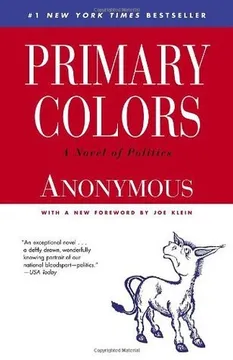


Plot Summary
Harlem Changes Henry’s Course
Henry Burton,1 a Black former congressional aide who left Washington disillusioned, joins Governor Jack Stanton2’s Harlem visit to an adult literacy class. When student Dewayne Smith recounts how his school hid his dyslexia until graduation, Stanton2 weeps, then connects Dewayne’s struggle to his uncle Charlie,10 a decorated veteran who could not read.
Henry1 recognizes political skill in Stanton2’s emotional candor, but also something more difficult to dismiss: the governor2 seems genuinely moved. Stanton2 invites Henry1 onto his plane to New Hampshire, where an undeveloped presidential campaign is beginning.
At the airport, Henry1 meets Stanton’s wife, Susan,3 who has just scolded her husband2 for neglecting a local party leader. Before dawn, Henry1 accepts a place on the campaign, attracted by its promise of consequential work.
Stanton’s gift is not simply empathy, but the ability to make another person’s experience feel politically consequential without stripping away its private pain. Henry recognizes that the performance is effective, yet his own tears prevent him from reducing it to technique. His recruitment begins in this uncertainty: he wants public work worthy of history, but the evidence he trusts is bodily and immediate. Susan’s anger introduces the counterweight to Stanton’s emotional fluency. She understands that sincerity cannot excuse disorganization, and Henry is joining both the inspiring candidate and the machinery required to contain him.
Learning Stanton’s Weather
On the road, Henry1 watches Stanton2 absorb policy from governors, staffers, and local officials, then carry useful ideas between states. Deputy attorney general William Johnson12 explains an Alabama program linking truancy to driver’s licenses; Stanton2 later recommends it to New Hampshire legislators, winning their interest.
His informal apprenticeship also reveals limits: Stanton2 guards his private life, mismanages time, and expects staff to anticipate his needs. At headquarters, strategist Richard Jemmons5 warns that old scandals may surface, while media consultant Arlen Sporken15 insists the operation is ready.
Henry1 sees the campaign gaining local endorsements one conversation at a time, but its central rival remains Orlando Ozio, the powerful New York governor whose indecision keeps donors and party leaders waiting. Stanton2’s warmth builds loyalty; his improvisation leaves the staff guessing.
The campaign’s early strength comes from circulation: Stanton listens, remembers, and moves information from one jurisdiction to another. His politics treats government as a practical network rather than a set of slogans, and Henry finds this more alive than congressional vote-counting. Yet the same personal intensity that makes Stanton persuasive also makes him hard to manage. He delegates emotional labor without offering much self-disclosure, drawing Henry into intimacy while keeping him at a professional distance. Richard’s warnings expose the campaign’s blind spot: a candidate can understand public motives with astonishing precision and still fail to anticipate what his own past has left exposed.
Ozio Sets the Trap
Ozio sends his son Jimmy to inspect Stanton2’s small campaign, then arranges a meeting in Albany that leaves Stanton2 looking like a junior candidate seeking permission to campaign in New York. A Wall Street Journal reporter soon hears that Stanton2 offered to join Ozio’s ticket.
Stanton2 improvises a denial, correctly sensing that Ozio is using praise to smother his candidacy, but his team has no firm intelligence about what is happening. He chooses a carefully limited criticism of Ozio at a New Hampshire university forum, then fails to deliver it, unwilling to let his rival define him as hostile.
At year’s end, Ozio delays until the New Hampshire deadline passes, then withdraws. His exit releases money and attention to Stanton,2 but the episode teaches Henry1 how quickly a campaign can be made to look weak before voters know its name.
Ozio’s power lies less in a clear policy alternative than in controlling the timing and interpretation of events. Stanton is forced to respond to a rival who can remain uncommitted while making everyone else appear subordinate. His retreat at the university forum is not simple cowardice: he fears that attacking Ozio will make the campaign’s identity reactive. But political restraint has a cost when the audience cannot see the reasoning behind it. Henry learns that strategic judgment and visible strength are not the same thing, a distinction that will haunt the campaign whenever Stanton’s private calculations fail to reach the public.
The Front-Runner Takes Shape
With Ozio gone, donations surge and Stanton2’s New Hampshire visits draw larger crowds. Henry1 grows close to Daisy Green,4 Sporken15’s sharp, irreverent junior partner, while Richard5’s crude humor and strategic suspicion become fixtures of the staff’s long days.
In the first televised debate, Stanton2 initially lets his rivals damage themselves, then intervenes when Charlie Martin mocks his lack of opposition. Stanton2’s defense of people facing economic hardship wins the room, and the press begins treating him as a serious contender.
Afterward, a Los Angeles Times investigator asks Henry1 whether Stanton2 was arrested at a 1968 Chicago antiwar protest. Stanton2 admits he was detained, then tells Henry1 the record was meant to be erased. The campaign’s first major success is immediately shadowed by a question its staff cannot answer.
The debate demonstrates how Stanton’s compassion can become forceful when he stops treating it as a private virtue and uses it to challenge an opponent. His appeal is neither pure policy nor mere charm; it depends on making suffering visible without allowing it to become abstract. Henry’s relationship with Daisy offers a different kind of attention, one based on reciprocal candor rather than the candidate’s magnetism. The Chicago question punctures the campaign’s sense of control. Its danger is not yet the arrest itself, but the realization that Stanton’s public story has been assembled from incomplete knowledge, including by the people closest to him.
The Scandal Becomes the Campaign
The press confirms Stanton2’s 1968 detention and learns that a senator helped secure his release. Soon, Cashmere McLeod,19 Susan3’s hairdresser, sells a story alleging an affair with the governor.2 Susan3 rejects the accusation as fabricated, but Richard5 argues that the team must investigate its own candidate before reporters do.
She authorizes a confidential operation led by Olivia Holden,6 Stanton2’s former chief of staff, whose erratic manner conceals a formidable memory for Mammoth Falls history. Henry1 discovers how little he knows about the governor2’s local relationships, including the meaning of his late-night trips to a barbecue restaurant.
As Chicago and Cashmere19 dominate coverage, Stanton2’s support stalls. A planned interview becomes essential, while the campaign’s confident public persona gives way to emergency meetings, press logistics, and growing fear of what else may emerge.
The scandal shifts the campaign’s center of gravity from what Stanton proposes to whether anyone can know him. Susan’s refusal to debate Cashmere’s claim protects the marriage and the candidate’s public posture, but it also suppresses uncertainty inside the staff. Richard’s demand for opposition research recognizes that loyalty without knowledge is not protection. Libby’s arrival brings a local memory the national operation lacks, making the campaign’s geography suddenly personal. Henry’s shock is especially revealing: he has mistaken professional proximity for knowledge. The crisis exposes how political intimacy can be carefully staged while the candidate’s actual past remains distributed among people no one thought to ask.
The Tapes Turn Back
Cashmere19 plays phone recordings that seem to capture Stanton2 arranging private meetings. At Olivia Holden6’s monitoring station, Henry1 recognizes one supposedly sexual exchange as a New Year’s Eve call between himself and the governor,2 spliced to sound like a conversation with Cashmere.19
Libby6 traces the scheme to attorney Randy Culligan, who admits he altered the recording after she threatens him. Daisy4 then plays a fabricated exchange between Cashmere19 and television host Ted Koppel on Nightline, exposing how easily a voice recording can be assembled into apparent proof.
The stunt briefly rallies the exhausted staff, but the damage persists because some of Cashmere19’s claims are not invented and the public has already seen Stanton2 look guilty. The campaign wins an argument about the tape, not trust in its candidate.
The forged recording turns Henry from observer into raw material: his ordinary call can be edited into evidence of another man’s affair. The episode makes the media crisis epistemic as well as political. A recording feels like fact because it carries a voice, yet its meaning can be manufactured by selective cuts. The campaign answers manipulation with a counter-demonstration, but that victory cannot establish Stanton’s innocence in every matter. The staff mistakes disproving one artifact for repairing a public relationship. Their temporary elation reveals how badly they need the scandal to be wholly false, because a mixed truth would demand judgment rather than tactical rebuttal.
The McCollister Claim
As Stanton2’s New Hampshire numbers fall and illness forces him home, barbecue owner William McCollister17 tells Henry1 that his teenage daughter Loretta18 believes the governor2 fathered her pregnancy.
Stanton2 insists he is not the father, then sends Henry1 and Howard Ferguson9 to press the family for an amniocentesis, presenting the invasive test as a way to protect everyone. Howard9 intimidates William17 with legal language and the promise of financial help; Henry1 stays silent, ashamed of his complicity.
Stanton2 returns to New Hampshire while the campaign continues to sink, and his staff debates whether the next move can restore public confidence. The allegation is not a simple tabloid invention: it touches a trusted friend, a vulnerable teenager, and the possibility that Stanton2 crossed a boundary even if he did not father the child.
This crisis strips away the campaign’s convenient division between false scandal and real policy. William McCollister approaches Henry as a friend seeking help, but the campaign turns that trust into leverage. Henry’s silence is a choice, even though Howard performs the intimidation, and he knows it. Stanton’s denial may be factually true, yet truth about paternity cannot settle the question of conduct. The episode shows how power changes the moral meaning of assistance: money and medical care can become instruments of control when offered by the person who may have caused the harm. Henry’s loyalty begins to feel like participation.
A Narrow New Hampshire Survival
Stanton2 recovers enough to return north, where volunteers and friends arrive from across the country to help him through the final week. He abandons the polished campaign routine, works factory gates and shopping malls, and speaks candidly to shipyard workers about jobs that cannot be restored and the education they will need instead.
In the last debate, he challenges Lawrence Harris8 for asking struggling families to sacrifice without addressing their immediate needs. The argument lands with voters, though Charlie Martin’s warning that Stanton2 is damaged goods remains potent.
On election day, Stanton2 takes 29 percent to Harris8’s 38, far better than the campaign feared. The loss keeps him alive, but Henry1 sees that personal encounters, not advertising, have carried them through.
Stanton’s recovery is built not on erasing the scandal but on returning to the kind of contact through which voters first trusted him. He offers no easy promise to restore the shipyard, and that refusal gives his appeal a seriousness missing from standard campaign reassurance. The result is both defeat and reprieve: the numbers deny him victory while rejecting the assumption that scandal has already ended his candidacy. Henry’s account emphasizes embodied political work, the candidate standing still long enough for strangers to test him. The campaign survives because its earlier relationships have not vanished, even when polling and headlines say they should.
Picker Gives Blood
Stanton2 carries his campaign into the southern primaries and attacks Harris8’s proposals on Social Security, Medicare, and energy taxes. After a tense radio exchange with Stanton,2 Harris8 suffers a serious heart attack and falls into a coma.
His wife asks former Florida governor Fred Picker7 to continue the campaign, and Picker7’s public blood donation becomes a striking appeal for civic responsibility. He rapidly attracts national attention by rejecting attack ads and urging politicians and voters to lower the temperature.
Stanton2 suspends campaigning to pray for Harris,8 then returns to find Picker7 occupying the moral space his own scandals have emptied. The rivalry is unsettling because Picker7 seems less like a conventional opponent than a rebuke to the campaign’s increasingly defensive methods.
Picker’s blood donation turns a private act of bodily vulnerability into a public symbol, contrasting sharply with the campaign’s efforts to manage evidence and appearances. His appeal is persuasive precisely because it appears to refuse the ordinary machinery of persuasion. Stanton’s prayerful response to Harris’s crisis shows a genuine capacity for restraint, but it cannot control the story’s direction. The new competitor therefore functions as both political threat and ethical mirror. Henry and the staff must ask whether Picker’s calm is durable conviction or a temporary performance, while confronting the possibility that the public wants less combat than the campaign has learned to provide.
New York Turns Hostile
In New York, Mayor Richmond Rucker’s promised Brooklyn crowd fails to appear, leaving Stanton2 to refuse a speech to an empty plaza and walk Fulton Street instead. The day deepens Henry1’s sense that the campaign is using him as a capable intermediary without giving him real authority.
He also meets Reverend Luther Charles,13 an old associate of Henry’s grandfather,13 who challenges his choice to serve a white Southern governor and forces him to reconsider the family history he has avoided. Meanwhile, tabloid coverage of the McCollister18 allegation intensifies, and Picker7’s appeal grows.
Stanton2’s team tries to return to neighborhood events, but hecklers and protesters meet him with accusations rather than questions. New York makes the campaign’s private doubts public spectacle and leaves Henry1 unsure where his own loyalties belong.
The failed Brooklyn event gives physical form to the campaign’s loss of control: the mayor can preserve his own political script while Stanton is left facing an empty public space. Luther’s challenge makes Henry’s race and inheritance impossible to treat as background. His work has offered access to power, but it also reproduces a service relationship he has not fully examined. The tabloid storm intensifies that fracture by making personal scandal the public language of the campaign. Henry is no longer only asking whether Stanton can win; he is asking what his own labor means when the candidate’s needs repeatedly outrank his judgment.
The Debate That Connects
David Adler arranges a televised debate between Stanton2 and Picker7 on Geraldo Rivera’s show. Instead of trading attacks, the two governors discuss taxes, education, and government spending, revising and testing ideas in front of the audience.
An elderly viewer asks whether the country can have both men, and the exchange briefly makes cooperation seem more persuasive than combat. Stanton2 is energized, but the New York primary still goes to Picker7 by two to one.
Adler’s arrival sidelines Daisy,4 whose media work is reduced, and Richard5 retreats from the campaign; Susan3 asks Henry1 to stay. Henry1 feels the cost of his own silence toward Daisy4 and the distance opening between them. The campaign has found a better public conversation, but not a way to recover its momentum.
The debate offers a rare image of political disagreement without ritualized contempt. Stanton thrives because he can turn policy into an exchange rather than a test of dominance, while Picker’s willingness to engage lends the format credibility. Yet the audience’s response does not translate into electoral recovery. The gap between an affecting moment and measurable support is one of the book’s central political frustrations. Internally, the same pattern repeats: Henry remains loyal to Stanton while neglecting Daisy’s professional and emotional position. The campaign’s public failure and Henry’s private failure arise from a shared habit of postponing difficult truths until circumstances force them into view.
The Dustbuster Finds the Truth
After the New York defeat, Libby Holden6 asks Henry1 to help investigate Picker.7 They learn of a questionable development contribution, then hear from former state trooper Reggie Duboise that Picker7 used cocaine while governor and once had a sexual encounter with dealer Lorenzo Delgado.
The evidence is morally complicated, not a clean proof of corruption. Libby6 also confirms that Jack2 is not Loretta McCollister18’s child’s father, though the circumstances remain troubling, and reveals that the family doctor, Beauregard Hastings, is Jack2’s biological father.
When Libby6 presents the Picker file, Jack2 and Susan3 immediately discuss how to release it. Libby6 refuses, reminding them that Jack2 once opposed dirty tricks. She leaves the meeting devastated by their readiness to destroy Picker,7 and Henry1 soon learns she has killed herself.
Libby’s investigation is designed as a test of the people she has served, not merely a search for exploitable material. The discoveries resist easy moral sorting: Picker’s conduct is serious, but the available evidence also records weakness, recovery, and restraint. Jack and Susan’s immediate turn toward disclosure confirms Libby’s fear that loyalty has become permission. The revelation about Jack’s parentage further exposes how much the campaign’s family stories conceal, while the paternity result resolves biology without resolving the ethical unease. Libby’s death makes the cost of this judgment irreversible. Henry must now carry a truth that cannot be converted into a campaign tactic without betraying her.
The Final Choice Stays Open
At Libby6’s funeral, Henry1 finds Daisy4 and finally tells her he loves her; she accepts his apology and asks him to build a life beyond campaign crisis. That night, Henry1 accompanies Stanton2 to Picker7’s home, where Stanton2 gives him the sole remaining copy of the investigation and apologizes for gathering it.
Picker7 admits his past drug use, explains that fear about his health and exposure drove his campaign, and decides to withdraw. The next morning he publicly confesses, then praises Stanton2 for not using the file against him.
Stanton2 abandons his own plan to quit and reorganizes the campaign, with Richard5 returning as manager. Henry1 nevertheless tells Jack2 that Libby6’s test has been failed and proposes helping William Johnson12 in Alabama. Stanton2 insists he stay. The story ends before Henry1 answers.
The ending refuses a clean moral settlement. Stanton protects Picker from the file, but only after Libby’s death has made the cost of weaponizing it impossible to ignore; Picker’s withdrawal does not erase the campaign’s earlier conduct. Henry and Daisy achieve a different kind of resolution by making candor, rather than professional usefulness, the condition of intimacy. Yet Henry’s future remains suspended between service and self-determination. Stanton’s plea is emotionally authentic, which makes it harder to dismiss, but its sincerity does not answer Henry’s objection. The final choice belongs to the reader’s unresolved judgment of whether effective leadership can justify the compromises it continually demands.
Analysis
Primary Colors treats campaigning as a form of intimacy conducted under unequal conditions. Stanton2’s talent lies in making strangers feel that he has listened to them, and Henry1’s first encounter with the governor2 is persuasive precisely because the emotional response is real. Yet the campaign gradually reveals the cost of confusing access with knowledge. Henry1 can anticipate Stanton2’s needs and recognize his moods while remaining ignorant of the parts of his life that most threaten the campaign. That gap makes loyalty dangerous: service can turn into complicity before the aide1 admits that a choice has been made.
The novel’s media plot is not simply a contest between truth and falsehood. The forged recording is false, the affair is not wholly invented, the McCollister18 allegation fails as a paternity claim, and the conduct surrounding it remains troubling. Each new fact asks whether the campaign can preserve a useful distinction between what is technically disproven and what is ethically wrong. Libby6’s investigation makes that question personal. She has spent years protecting the Stantons,2 but when they consider using Picker7’s compromised past, she recognizes that affection has become an exemption from judgment. Her refusal gives Henry1 a standard that political calculation cannot absorb.
Picker7’s rise offers a countermodel to Stanton2’s political craft, but not a simple moral alternative. His call for calm draws power from an apparent rejection of manipulation, yet ambition and private fear still shape his campaign. Stanton2 understands the emotional theater of politics more deeply and believes public office can improve lives, but he also depends on the very appetite for risk that makes him vulnerable. The final exchange leaves Henry1 unable to settle the problem by choosing a flawless candidate. He must decide whether the possibility of useful leadership justifies the compromises required to reach it, and whether he can remain loyal without surrendering the right to judge.
Review Summary
Primary Colors receives mixed but generally positive reviews, averaging 3.63/5. Readers praise its insider portrayal of a presidential campaign, widely recognized as based on Bill Clinton's 1992 run. Many appreciate the political authenticity, memorable characters, and morally complex ending. Common criticisms include a slow start, an underdeveloped central romance, and content that feels dated given today's political climate. Reviewers frequently compare it favorably to the film adaptation, with some noting the book offers greater character depth and a more ambiguous, thought-provoking conclusion.
People Also Read



Characters
Henry Burton
The searching aideA Black political operative in his early thirties, Henry begins the story after leaving congressional work that made compromise feel like a substitute for achievement. He wants to participate in something consequential, and Stanton2’s instinctive connection with ordinary people draws him back into politics. Henry is observant and capable, but his professional discipline often becomes an excuse not to state what he believes. His relationships with Stanton2, Daisy4, and the campaign force him to examine where loyalty ends and complicity begins. His family history and racial identity complicate the role he has learned to perform beside powerful white politicians. Henry’s defining question is not whether he can serve, but whether service can remain honorable when it requires him to silence his own judgment.
Jack Stanton
The magnetic governorThe governor of a small Southern state, Jack Stanton is a physically imposing, emotionally expressive politician with an extraordinary memory for people and an appetite for public life. He listens with such concentration that strangers often feel recognized, then uses what he learns to connect policy to lived experience. His instincts are powerful, but his disorganization and trust in friends create vulnerabilities that staff must manage. Jack loves the mechanics of campaigning and believes government can materially improve people’s lives. He is also dependent on admiration and unusually reluctant to inspect the damage caused by his own appetites. The tension between sincere public concern and personal self-indulgence makes him difficult for Henry1 to classify or abandon.
Susan Stanton
The campaign’s hard centerSusan is Jack2’s wife, a law professor, and a central force in his political operation. Her precision counters his improvisation: she tracks obligations, reads people’s motives, and intervenes when his charm threatens to become an excuse for carelessness. She is intelligent, funny, and unsentimental about the demands of campaigning, yet her commitment to Jack2 is profound. Susan can turn a public crisis into a disciplined performance, but that control also makes her difficult to read. She is both partner and strategist, often carrying the consequences of choices Jack2 has made without consulting her. Henry1 respects her competence and senses the emotional cost hidden beneath it, even when she keeps that cost private.
Daisy Green
The candid media strategistDaisy is a gifted political advertising specialist whose intelligence shows in her plain speech, sharp editing, and resistance to professional posturing. She works under Arlen Sporken15 but increasingly contributes ideas that shape the campaign’s response to scandal. Her humor makes her seem casual, while her attention to other people is exacting. With Henry1, she wants a relationship that can survive disagreement and ordinary life, not just the intimacy produced by exhaustion and crisis. Her commitment to the campaign is genuine, but she refuses to confuse being useful with being valued. Daisy’s combination of vulnerability and professional self-respect exposes the emotional evasions Henry1 has learned to mistake for neutrality.
Richard Jemmons
The abrasive strategistRichard is a brilliant Democratic strategist whose manic speech, sexual bravado, and abrasive humor conceal a serious instinct for political danger. He sees how scandals might develop before the rest of the staff can admit they exist, and repeatedly urges the campaign to investigate its own weaknesses. His bluntness makes him difficult company, but it also cuts through the euphemisms that protect the candidate2 and the staff from uncomfortable facts. Richard believes in Stanton2 while resisting the sentimental language surrounding him. He understands campaigns as both craft and combat, and knows that his own attachment to politics is not entirely healthy. His loyalty is strongest when he is allowed to remain candid.
Olivia Holden
The volatile truth keeperOlivia, known as Libby, once served as Jack Stanton2’s chief of staff and remains closely tied to the couple2 and their long political history. Large, eccentric, and startlingly forceful, she has an exceptional memory for personal details and an instinct for locating hidden vulnerabilities. Her theatrical manner can make her seem purely chaotic, but she is often the clearest person in the room about what is at stake. Libby’s loyalty is intimate rather than ideological: she protects the Stantons2 because she loves them, and she expects them to meet a high standard in return. Her history with the campaign gives her an unusual authority, as both its most fearless defender and its sharpest moral critic.
Fred Picker
The calm challengerA former Florida governor who reenters national politics unexpectedly, Fred Picker presents himself as a quieter alternative to the usual campaign machinery. He is intelligent, self-contained, and capable of speaking to television cameras with unusual ease, yet his manner is less forceful away from them. Picker’s appeal rests on a desire to lower political hostility and make public life feel more honest. He is not a conventional policy technician, but he can engage seriously when another candidate2 treats him as a partner rather than a prop. His public composure conceals a complicated relationship with ambition and the past, making him a genuine challenge to both Stanton2’s methods and the campaign’s assumptions.
Lawrence Harris
The earnest professorA former New Hampshire senator and Dartmouth professor, Harris runs a disciplined campaign built around fiscal restraint and long-term responsibility. His intellectual confidence gives him credibility with voters who want substance, but it can also make him seem detached from immediate economic pain. He treats the race partly as a test of ideas and partly as an opportunity to remain influential in public life. His contrast with Stanton2 is central: Harris offers rigor and sacrifice, while Stanton2 emphasizes practical help for people struggling now.
Howard Ferguson III
The quiet fixerHoward is an old friend of Jack2’s and a senior campaign figure whose opinions are difficult to read. He says little in meetings, but his calm, economical manner gives him influence over logistics and difficult negotiations. He can be loyal without being transparent, which makes Henry1 uncertain about the precise limits of his authority. Howard represents the campaign’s colder operational side, where relationships become problems to be managed and appearances are treated as strategic assets.
Uncle Charlie
The family’s quiet witnessCharlie is Jack2’s lifelong companion and a familiar presence in the Stanton2 household and campaign. Taciturn and practical, he rarely explains himself, but his ease with Jack2 reveals years of shared history. His identity is bound less to public ambition than to loyalty and routine. Charlie’s presence gives Henry1 glimpses of the private world that Jack2 otherwise keeps carefully controlled.
Momma Stanton
Jack’s irrepressible motherKnown simply as Momma, Mary-Pat Stanton is Jack2’s affectionate, outspoken mother and one of the campaign’s most vivid supporters. She carries her small-town life into political events without trying to sound polished, and her warmth can lift a dispirited room. Her humor and appetite for people make her a natural campaign presence. Beneath her comic exuberance is a sturdy loyalty to family and a hard-earned familiarity with disappointment.
William Johnson
The Alabama reformerWilliam Johnson, Jack2’s friend and Alabama deputy attorney general, is a former college basketball player who became a lawyer and public servant. He values education and practical programs, including one that uses school attendance requirements to reduce truancy. His friendship with Jack2 began in law school, where the two argued about race, responsibility, and political duty. Johnson is skeptical of the barriers facing Black candidates in the South, but he remains committed to public work.
Luther Charles
The uncompromising preacherLuther is a Black political activist and preacher who once belonged to Henry’s grandfather13’s circle. He is theatrical, provocative, and keenly alert to the racial bargains hidden beneath polite political language. His history with Henry1’s family gives his criticisms both personal force and old resentment. Luther wants political power to serve Black communities directly, and distrusts alliances that ask Black operatives to provide legitimacy without sharing authority.
Lucille Kauffman
Susan’s forceful confidanteLucille is Susan3’s longtime friend and an informal presence in the campaign’s inner circle. She has strong opinions about staff, messaging, and the candidate2, and often pushes herself into decisions without being asked. Her certainty can be useful when others hesitate, but she lacks the tact and perspective that make influence effective. Lucille’s place in the campaign depends on personal history as much as professional contribution.
Arlen Sporken
The genial media consultantArlen is a Southern media consultant whose liberal convictions and easy charm make him a useful public face for the campaign. He is energetic, sociable, and eager to reassure the team, sometimes before he has fully assessed a problem. His instinct favors broad party unity, while Richard5 and Daisy4 are more willing to confront specific strategic weaknesses. Arlen’s position illustrates how political consultants must balance their own networks with the candidate2’s needs.
Leon Birnbaum
The numbers interpreterLeon is Stanton2’s longtime pollster, a small, restless man who translates voter responses into language and strategy. He is most articulate in private sessions with the governor2, where he tests phrases and explains how people react beneath conscious reasoning. Leon’s work is precise, but he knows polling cannot measure everything that matters in a campaign. His numbers can clarify a trend without explaining the intensity that produces it.
William McCollister
The trusted barbecue ownerKnown locally as Fat Willie, William owns a popular barbecue stand and has a longstanding friendship with Jack Stanton2. He is proud of his family and business, and approaches Henry1 with restraint even when facing a deeply personal problem. His decency makes him difficult for the campaign to treat as a political obstacle. Through him, the story shows how public power reaches into ordinary lives that cannot simply be managed away.
Loretta McCollister
Willie’s vulnerable daughterLoretta is William McCollister17’s teenage daughter, growing up amid the social world of her family’s barbecue business. Her situation places her at the center of adult decisions and public scrutiny she did not create. The little that Henry1 learns about her makes clear how easily powerful people can speak about a young person without giving her control of the story.
Cashmere McLeod
The hairdresser in the headlinesCashmere is Susan Stanton3’s hairdresser, a working woman whose connection to the governor2 becomes a subject of national attention. She enters a world of lawyers, reporters, and campaign strategists with far fewer resources than they possess. Her public image is shaped by competing accounts and sensational coverage, illustrating how quickly a person can be reduced to a political symbol.
Jennifer Rogers
The composed press aideJennifer is a young press aide who handles difficult personalities with composure and keeps working through the campaign’s disorder. She is perceptive without making a show of it, and her steadiness earns the confidence of colleagues who might otherwise dismiss her as another junior staffer. Her connection to Libby6 reveals a tenderness that contrasts with Libby6’s public bluster.
Don O’Brien
The Senate’s seasoned judgeA veteran Democratic leader, Don O’Brien is large, politically shrewd, and more comfortable in a small office than a grand public room. He enjoys stories and human detail, but his warmth does not soften his judgment. O’Brien sees political discipline as a form of respect for voters and worries that Stanton2’s recurring troubles may reveal a deeper appetite for risk.
William Larkin
Henry’s former employerLarkin is the congressional leader Henry1 served before leaving Washington. Cool, controlled, and skilled at counting votes, he represents the procedural politics Henry1 found exhausting. He is not portrayed as incompetent; rather, his talent for managing small victories and compromises offers little of the inspiration Henry1 hopes to find in public life.
Henry’s mother
The composed parentHenry’s mother is affectionate and calm, with a preference for emotional steadiness over confrontation. Her response to the end of her marriage shaped Henry1’s sense of what can be accepted without being fully understood. She is not cold, but her composure can leave him feeling that important differences have been smoothed over rather than faced.
Henry’s father
The absent scholarHenry’s father is an academic who left the family when Henry1 was a child and built a life through university appointments abroad. He is intellectually serious and attentive to racial identity, but distant from the daily responsibilities of fatherhood. His sparse correspondence carries an intensity that contrasts with the restraint of Henry’s mother23.
Jackie Stanton
The family’s steady sonJackie is Jack2 and Susan Stanton3’s school-age son. He attends public school and prefers ordinary interests such as computers and games to the political urgency surrounding his parents2. His presence gives the family a point of contact with life outside the campaign, without making him responsible for its ambitions.
Plot Devices
The listening campaign
Turns attention into loyaltyStanton2’s handshakes, attentive listening, and ability to remember personal details are not decorative habits. They let him move between intimate encounters and public policy, making voters feel that their lives have entered the campaign’s calculations. Henry1 learns to interpret these gestures as both political craft and genuine appetite for human contact. The device drives early support, gives Stanton2 an advantage in town meetings, and later provides a way back to voters when advertising and press coverage become hostile. Its weakness is that personal connection cannot guarantee public trust once scandal changes the meaning of every gesture.
New Hampshire retail politics
Measures trust face to faceThe campaign’s repeated visits to homes, diners, factories, schools, and malls give the novel a practical measure of political support. Stanton2 learns from questions that polls cannot fully register, while Henry1 watches local relationships become endorsements and volunteers. This method requires time and physical presence, so it becomes harder once press buses and national scandal dictate the schedule. The eventual vote shows its limits and its value: direct encounters do not secure victory, but they preserve a constituency that the campaign’s collapse had seemed to erase.
The press feeding frenzy
Makes scandal self-expandingThe reporters first pursue Stanton2’s conduct, then begin covering the campaign’s response to their own coverage. That shift traps the staff in recursive media management: interviews, schedules, spin rooms, and counterstatements become the story, while policy disappears. The device turns the Chicago arrest and Cashmere McLeod19’s allegations into a continuing test of character even when individual claims are disputed. Its influence extends beyond newspapers and television into supermarket tabloids, jokes, and public suspicion, making factual rebuttal insufficient to restore the candidate2’s reputation.
Edited recordings
Make voices look like proofThe Cashmere19 recordings exploit the authority people assign to a familiar voice. One apparently incriminating passage is assembled from a conversation between Stanton2 and Henry1, while other claims remain entangled with real personal history. The campaign answers by having Daisy4 demonstrate how easily a recording can be fabricated, but that counterattack cannot establish the truth of every allegation. The device sharpens the novel’s concern with evidence: what listeners hear may be genuine, manipulated, or both, and political urgency often forces people to act before they can know which.
The Picker dossier
Tests loyalty against restraintLibby6 and Henry1 gather accounts of Picker7’s business dealings, past drug use, and private relationships so the Stanton2 campaign can understand the rival before opponents weaponize his history. The findings are morally mixed rather than conclusive, which makes the dossier a test of the investigators as much as of Picker7. Jack2 and Susan3 consider releasing it; Libby6 rejects that course and gives the material to Picker7 instead. The file concentrates the book’s central dilemma: political research can protect a campaign, but the same knowledge can become a weapon that destroys a person.
About the Author
Other books by Anonymous







Download PDF
Download EPUB
.epub digital book format is ideal for reading ebooks on phones, tablets, and e-readers.








