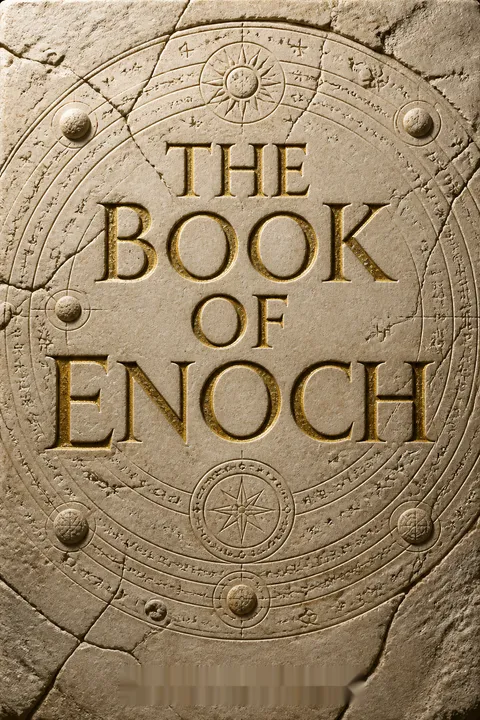


Summary Unavailable
This book is not suitable for a summary (it may be a textbook, workbook, cookbook, reference book, or collection). However, you can still explore the FAQs, about author, and other metadata below!
Key Takeaways
When celestial power ignores boundaries, its fallout becomes everyone's burden.
A breach spreads outward. The Watchers are heavenly beings who abandon their assigned place, swear together to descend to earth, and take human women as wives. Their children, the giants, consume what people have gathered, then turn on humanity. The earth itself is pictured as crying out over the bloodshed. This is not merely a story about private desire: the angels' misuse of power damages an entire world. God sends Enoch to announce their judgment, orders Azazel bound, and warns Noah of the coming flood.
Repair requires judgment. The visions promise a cleansed earth where oppression ends and righteousness can take root. The catastrophe is framed as a response to corruption, not as an accidental disaster.
The story's scale makes a useful ethical point: powerful actors can externalize the costs of their choices onto people with far less power. Its supernatural explanation also creates a tension. Blaming rebellious angels can make human violence seem imported from elsewhere, even though the text repeatedly condemns human oppression and wrongdoing. The strongest reading keeps both levels in view: corrupting influence may be part of the story's worldview, but people remain responsible for what they do with power, knowledge, and desire.
Knowledge is not innocent when its use trains people in domination.
Teaching has consequences. The Watchers disclose skills and secrets that the text associates with growing corruption. Azazel teaches metalworking for weapons and the making of shields; other angels teach charms, astrology, and ways to read signs. These revelations accompany violence, exploitation, and the giants' destruction. The book therefore treats knowledge as morally consequential, not automatically beneficial.
The warning has an edge. One passage also blames writing materials for enabling sin, even though Enoch's own mission depends on writing warnings and preserving wisdom. The larger distinction seems to be between knowledge used to dominate and instruction used to guide people toward righteousness. The text does not offer a neutral technology test; it asks what a teaching makes possible and whom it serves.
This distinction remains valuable wherever expertise increases someone's capacity to affect others. A tool can amplify care or coercion, and technical competence alone cannot decide between them. The text's suspicion of particular arts can also be read critically: it risks treating unfamiliar knowledge as corrupt simply because it is powerful. Its more durable question is about stewardship. Who controls a capability, who bears its costs, and what moral limits govern its use?
Read creation's rhythms as a rebuke to human disorder.
The heavens keep time. Enoch is told to study the sun, moon, stars, seasons, and trees. Their regular courses are presented as signs that creation follows appointed patterns, while human beings break faith with their duties. The astronomy section describes the sun's and moon's paths in detail and sets out a 364-day year, with four additional days marking the seasons. Within the book, cosmic order serves as a moral comparison, not just a calendar lesson.
Disorder becomes a warning. A vision of a sinful age imagines the luminaries straying from their courses, rain failing, and harvests arriving out of season. These are ancient religious cosmology, not modern astronomical or meteorological claims. Their narrative force is that social wrongdoing threatens the conditions people rely on.
The link between social conduct and environmental stability gives the visions unusual reach: injustice is not confined to private morality but damages shared conditions of life. At the same time, the book's cosmic calendar belongs to its own historical understanding of the heavens. Treating it as present-day science would confuse its function. Its enduring insight is symbolic and ethical: a society can disrupt the patterns that sustain it, even when the stars themselves do not literally change course.
Keep victims visible when powerful people seem beyond judgment.
The dead are not forgotten. In Enoch's tour of the afterlife, he sees separate places where the spirits of the dead wait for judgment. One is the spirit of Abel, murdered by his brother Cain, whose plea continues to call attention to the crime. Elsewhere, prayers from the righteous and the blood of the murdered rise before God. The visions turn suffering into testimony: a killing does not become insignificant simply because the victim is gone.
Rank offers no exemption. The books of the living are opened, and kings, wealthy people, and other powerful figures face judgment for oppression. Their possessions cannot erase what they have done. The righteous, meanwhile, are promised vindication and a restored place on earth.
The image of a record that outlasts the victim speaks to a basic problem of justice: institutions often privilege the living, the influential, and the well-documented. Here, remembrance itself becomes a moral act. The vision also offers a kind of cosmic accountability that cannot be independently verified, and its certainty may feel troubling to readers who reject divine judgment. Even so, the narrative insists that power does not make harm disappear, a principle that can support earthly efforts to preserve testimony and seek redress.
Measure rule by justice, not riches, weapons, or inherited rank.
Authority faces a test. The Parables introduce the Son of Man, a chosen figure associated with righteousness, wisdom, and judgment. In the visions, he brings hidden deeds to light and strips kings and powerful people of their standing when they have oppressed the righteous or trusted in wealth and force. His authority is not presented as self-created: it comes from the Lord of Spirits, who appoints him to judge.
The reversal is deliberate. The powerful who seemed secure lose their place, while the righteous gain peace and a dwelling in a renewed world. The book imagines legitimate rule as answerable to a moral order beyond the ruler's own interests. It does not present political status or material success as proof that someone deserves to govern.
The figure of a judge beyond ordinary power gives the oppressed a vivid counter-image to rulers who seem untouchable. It also asks a question relevant to any theory of authority: what standard can evaluate a leader when the leader controls the local rules? The text answers with divine justice. Its apocalyptic solution, however, is forceful and absolute. Readers can preserve its insistence on accountability without assuming that every political conflict can be settled by a final, perfectly certain verdict.
Make every leader account for each life placed in their care.
The shepherds are audited. In Enoch's animal vision, people appear as sheep, while their rulers are shepherds entrusted with the flock. A heavenly observer is told to record how many sheep each shepherd destroys. The shepherds repeatedly kill more than they were authorized to, and the written record is eventually presented for judgment. The image makes negligence and abuse measurable rather than vague: each leader's actions leave a trace.
Entrusted is not owned. The shepherds' failure leads to the flock's suffering, the destruction of its house, and a period of dispersion. The vision later shows a new house and a restored community. Its central political claim is that governing is a delegated responsibility, and that leaders are accountable for what happens to those in their charge.
The ledger gives the allegory a striking administrative dimension. It does not only condemn bad intentions; it counts outcomes and compares conduct with a stated obligation. That makes the story resonate with modern ideas of oversight, audits, and public accountability. The flock metaphor has limits, since it can portray ordinary people as passive and leaders as their only possible guardians. Still, its sharpest point survives: authority is custody, not ownership, and a leader's record should be judged by the lives affected.
Do not let present suffering define the righteous person's final worth.
Fortune is not the verdict. The epistle addresses righteous people who suffer while wrongdoers prosper. It rejects the idea that a painful life proves moral failure, or that wealth and comfort demonstrate divine approval. Other visions describe the dead waiting for judgment, the earth and Sheol returning what they hold, and the righteous rising into renewed life. The promised reversal answers a difficult question running through the book: what if justice does not arrive before death?
Hope is linked to conduct. The righteous are urged to keep to peaceful and upright paths, while the rich who exploit others are warned that their gains will not protect them. The promised future is not a reward for status; it is a vindication of lives marked by justice.
This teaching offers moral shelter when visible outcomes seem to reward cruelty. It separates a person's worth from their immediate social position, a distinction that can protect the vulnerable from interpreting hardship as deserved. Yet delayed justice can become dangerous if it is used to discourage action against present abuse. The book itself condemns oppression, so its hope is strongest when it sustains resistance and solidarity rather than replacing practical efforts to change the conditions causing suffering.
Transmit moral wisdom as a practice, not a prediction of catastrophe.
Warnings become an inheritance. Enoch repeatedly instructs his son Methuselah to preserve books and pass their wisdom to future generations. His message includes visions of coming judgment, but it also gives direct guidance: love righteousness, reject violence, avoid deceit, and do not trust riches acquired through oppression. The final sections return to the family story through Noah, whose survival is tied to a future beginning after the flood.
The story looks forward. Enoch's visions divide history into symbolic periods of decline, destruction, and renewed righteousness. Their purpose is not merely to forecast events; they press each generation to decide what kind of life it will pass on. A warning matters most when it changes conduct before disaster, rather than becoming a spectacle watched from a distance.
The chain from Enoch to Methuselah to later descendants makes preservation part of the book's moral argument. Wisdom is not a private possession; it is meant to shape a community over time. That model also invites discernment. Prophetic timelines and vivid disasters can command attention, but their ethical force should not depend on readers accepting every prediction literally. The practical core is more durable: inherit teachings, test how they direct behavior, and pass on habits of justice rather than fear alone.
Analysis
The Book of Enoch is best read as a collection of visions and instructions rather than a single, smoothly unfolding argument. Its sections shift from the Watchers' rebellion to heavenly journeys, calendrical teaching, symbolic history, and a final moral testament. Enoch, the ancestor who speaks across these genres, supplies continuity: he sees hidden realities, records them, and passes them to descendants. That literary device makes written memory a central form of resistance to corruption.
The work's governing contrast is between order and transgression. Celestial bodies obey their courses; the Watchers violate theirs; rulers misuse delegated power; and the righteous are asked to keep faith even when their society does not. This structure joins cosmic, political, and personal ethics. Injustice is not a local inconvenience but a rupture in the world that calls for repair. The visions of judgment answer the problem of unpunished violence by imagining a tribunal before which status and wealth cannot prevail.
That answer is emotionally powerful, but not morally uncomplicated. The book sometimes depicts judgment through destruction, collective punishment, and intense confidence about who is righteous or wicked. Such certainty can console victims and expose the arrogance of elites, yet it can also harden divisions or make vengeance appear sacred. Its strongest ethical contribution is therefore not the fantasy of infallible enemies, but the insistence that actions leave a record and that rulers owe care to those under them.
Historically, 1 Enoch is an ancient Jewish work attributed in the narrative to Enoch, not a text that should be assumed to have been written by the biblical patriarch himself. It is outside the biblical canon for most Jewish and Christian communities, though it is canonical in the Ethiopian Orthodox Tewahedo Church. The edition presented here supplies little historical or textual context, so its astronomical system should be understood as part of an ancient religious cosmology. Readers gain most by holding its layers together: imaginative myth, social protest, ancient cosmology, and practical exhortation.
Last updated:
Report IssueReview Summary
The Book of Enoch receives mixed reviews, with many finding it fascinating for its ancient origins and insights into pre-biblical mythology. Readers appreciate its exploration of angels, demons, and apocalyptic themes, noting connections to biblical texts. Some view it as important for understanding Christian origins, while others see it as non-canonical and potentially misleading. Critics point out inconsistencies and repetitive sections. Overall, it's considered an intriguing historical document that provides context for biblical narratives, though its authenticity and spiritual value are debated.
People Also Read
Glossary
Watchers
Rebellious heavenly beingsThe Watchers are angels assigned to watch over the world. In the book's account, a group led by Semjaza leaves heaven, takes human wives, and fathers giants. Their actions bring violence and corruption, and the visions describe their confinement and judgment. Other Watchers are portrayed as faithful heavenly beings who observe and serve God.
Son of Man
Heavenly judge and delivererThe Son of Man is a righteous, chosen figure revealed in Enoch's visions. He is associated with wisdom, judgment, and the overthrow of oppressive rulers, and the righteous place their hope in him. The text presents him as appointed by the Lord of Spirits. In some passages, the figure is closely associated with the Elect One.
Elect One
Chosen agent of judgmentThe Elect One is the figure chosen by the Lord of Spirits to judge wrongdoing and establish the righteous. The Parables describe him as bringing hidden deeds to light, defeating the confidence of powerful sinners, and giving the righteous hope. The title overlaps in meaning with descriptions of the Son of Man in the book.
Lord of Spirits
Sovereign judge of allThe Lord of Spirits is a repeated title for God in the Parables. He rules over earthly and heavenly powers, sees hidden actions, appoints the Elect One, and judges the righteous and wicked. The title emphasizes sovereignty over spirits, angels, rulers, and the whole created order.
heavenly tablets
Celestial records of deedsThe heavenly tablets are records shown to Enoch in visions. They contain knowledge about the world and its appointed order, as well as accounts of human deeds and future events. Their presence supports the book's claim that conduct is witnessed and remembered, even when earthly authorities fail to recognize wrongdoing.
Sheol
Realm of the deadSheol is the realm associated with the dead. In Enoch's visions, spirits wait in distinct places before judgment, and Sheol is also described as returning the dead when the Elect One appears. The book uses this setting to imagine both the persistence of victims' claims and the eventual vindication of the righteous.
Parables
Visions of judgment and hopeThe Parables are the second major section of the presented book. They contain visions of heavenly realities, the judgment of rulers and sinners, the fate of the righteous, and the revelation of the Son of Man and Elect One. Their symbolic scenes connect present injustice with a future reversal under divine authority.
FAQ
What's "The Book of Enoch" about?
- Ancient Text: "The Book of Enoch" is an ancient Jewish text attributed to Enoch, the great-grandfather of Noah. It is considered an apocryphal work, meaning it is not included in the canonical Bible.
- Five Sections: The book is divided into five main sections: The Book of Watchers, The Book of Parables, The Astronomical Book, The Dream Visions, and The Epistle of Enoch.
- Themes and Content: It covers themes such as the fall of the Watchers (angels), visions of heaven and hell, astronomical phenomena, and prophecies about the end times.
- Influence: Despite its exclusion from the Bible, it has influenced Christian and Jewish thought, particularly in the areas of angelology and eschatology.
Why should I read "The Book of Enoch"?
- Historical Insight: It provides a unique perspective on Jewish thought and beliefs during the Second Temple period, offering insights into early Jewish mysticism and apocalyptic literature.
- Cultural Influence: The text has significantly influenced Christian theology, especially in the development of concepts about angels and demons.
- Literary Value: It is a fascinating piece of literature with vivid imagery and complex narratives that explore themes of morality, divine justice, and cosmic order.
- Theological Exploration: For those interested in religious studies, it offers a deeper understanding of the development of religious ideas that are not found in the canonical texts.
What are the key takeaways of "The Book of Enoch"?
- Watchers' Fall: The book details the fall of the Watchers, angels who descended to Earth, took human wives, and taught forbidden knowledge, leading to chaos and the birth of giants.
- Divine Judgment: It emphasizes the theme of divine judgment, where both angels and humans are held accountable for their actions, leading to eventual punishment or salvation.
- Prophetic Visions: Enoch's visions include detailed descriptions of heaven, hell, and the future, providing a prophetic outlook on the fate of the world and humanity.
- Moral Lessons: The text underscores the importance of righteousness and the consequences of sin, serving as a moral guide for its readers.
What are the best quotes from "The Book of Enoch" and what do they mean?
- Judgment and Righteousness: "And behold! He cometh with ten thousands of His holy ones To execute judgement upon all." This quote highlights the theme of divine judgment and the ultimate triumph of righteousness.
- Cosmic Order: "Observe ye everything that takes place in the heaven, how they do not change their orbits." This reflects the book's emphasis on the order and predictability of the cosmos as a reflection of divine will.
- Hope for the Righteous: "And the righteous shall arise from their sleep, And wisdom shall arise and be given unto them." This quote offers hope and assurance of reward for the righteous in the afterlife.
- Condemnation of Sin: "Woe to you, ye sinners, for ye persecute the righteous." This serves as a warning against sin and the persecution of the righteous, emphasizing the moral teachings of the text.
Who are the Watchers in "The Book of Enoch"?
- Fallen Angels: The Watchers are a group of angels who descended to Earth and took human wives, leading to the birth of the Nephilim, or giants.
- Forbidden Knowledge: They taught humans various forbidden arts, including weapon-making, enchantments, and astrology, which led to widespread corruption.
- Divine Punishment: Their actions led to their eventual punishment by God, who sent the flood to cleanse the Earth and imprisoned the Watchers.
- Symbolic Role: The Watchers symbolize the dangers of transgressing divine boundaries and the consequences of imparting forbidden knowledge.
What is the significance of Enoch's visions in "The Book of Enoch"?
- Heavenly Journeys: Enoch's visions include journeys to the heavens, where he witnesses the divine throne, the angelic hierarchy, and the cosmic order.
- Prophetic Insights: His visions provide prophetic insights into the future, including the coming of the Messiah and the final judgment.
- Moral and Ethical Lessons: The visions serve as moral and ethical lessons, emphasizing the importance of righteousness and the consequences of sin.
- Theological Themes: They explore theological themes such as the nature of God, the role of angels, and the fate of the soul, contributing to the development of Jewish and Christian eschatology.
How does "The Book of Enoch" describe the end times?
- Final Judgment: The book describes a final judgment where the righteous are rewarded, and the wicked are punished, emphasizing divine justice.
- Messianic Prophecies: It includes prophecies about the coming of a messianic figure who will establish a kingdom of righteousness.
- Cosmic Catastrophes: The end times are marked by cosmic disturbances, such as the shaking of the heavens and the melting of mountains.
- Restoration of Order: Ultimately, the book envisions a restoration of divine order, where peace and righteousness prevail.
What role do angels play in "The Book of Enoch"?
- Heavenly Messengers: Angels serve as messengers of God, conveying divine revelations and instructions to Enoch.
- Judgment Executors: They are depicted as executors of divine judgment, punishing the Watchers and the wicked.
- Cosmic Guardians: Angels are portrayed as guardians of cosmic order, overseeing the movements of celestial bodies and natural phenomena.
- Moral Exemplars: They serve as moral exemplars, contrasting with the fallen Watchers and highlighting the importance of obedience to divine will.
How does "The Book of Enoch" address the concept of sin?
- Origin of Sin: The book attributes the origin of sin to the Watchers, who introduced forbidden knowledge and practices to humanity.
- Consequences of Sin: It emphasizes the severe consequences of sin, including divine punishment and the eventual destruction of the wicked.
- Moral Responsibility: Humans are depicted as morally responsible for their actions, with a clear distinction between the righteous and the sinners.
- Redemption and Hope: Despite the prevalence of sin, the book offers hope for redemption through righteousness and adherence to divine commandments.
What is the Astronomical Book in "The Book of Enoch"?
- Celestial Phenomena: The Astronomical Book, also known as the Book of Heavenly Luminaries, describes the movements of celestial bodies and their significance.
- Divine Order: It emphasizes the divine order and regularity of the cosmos, reflecting God's control over creation.
- Calendrical System: The text provides a detailed calendrical system, including the solar and lunar cycles, and their impact on earthly events.
- Symbolic Meaning: The celestial phenomena are often interpreted symbolically, representing moral and spiritual truths about the universe and humanity.
How does "The Book of Enoch" influence modern religious thought?
- Angelology and Demonology: The book has significantly influenced Christian and Jewish angelology and demonology, shaping beliefs about angels, demons, and spiritual warfare.
- Apocalyptic Literature: It is considered a foundational text in the genre of apocalyptic literature, influencing later works such as the Book of Revelation.
- Theological Concepts: Concepts such as the final judgment, the Messiah, and the resurrection of the dead have been shaped by its teachings.
- Cultural Impact: Its themes and narratives continue to inspire religious and cultural works, contributing to ongoing discussions about morality, justice, and the divine.
What is the Epistle of Enoch in "The Book of Enoch"?
- Moral Exhortation: The Epistle of Enoch is a moral exhortation to Enoch's descendants, urging them to live righteously and avoid sin.
- Prophetic Warnings: It contains prophetic warnings about the consequences of sin and the coming judgment, emphasizing the need for repentance.
- Wisdom Literature: The epistle is considered a piece of wisdom literature, offering guidance on ethical living and spiritual growth.
- Eschatological Themes: It explores eschatological themes, including the fate of the righteous and the wicked, and the ultimate triumph of good over evil.
About the Author
Anonymous is a designation used for works without a known or credited author. This attribution is common for traditional stories, religious texts, and some officially published works. The Book of Enoch falls into this category, as its true authorship is uncertain. While traditionally ascribed to the biblical figure Enoch, scholars generally believe it was composed by multiple authors over several centuries. The anonymous nature of the text adds to its mystique and has contributed to ongoing debates about its origin, authenticity, and significance in religious and historical contexts.
Other books by Anonymous




Download PDF
Download EPUB
.epub digital book format is ideal for reading ebooks on phones, tablets, and e-readers.








