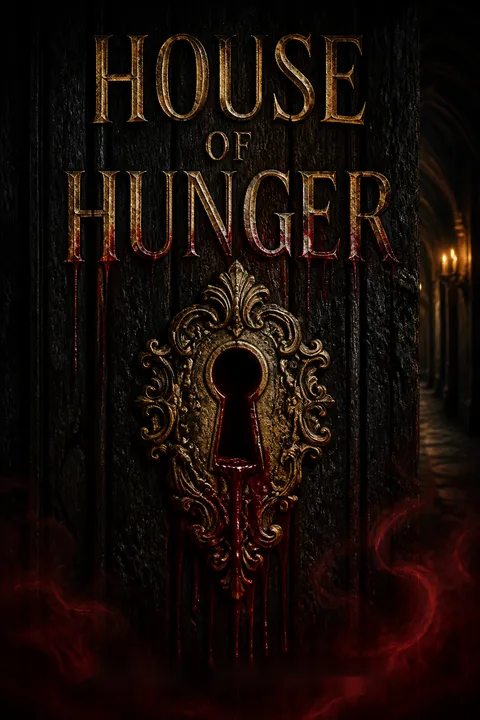


Plot Summary
Prane's Scarlet Exit
Marion Shaw scrubs floors for the scornful Lady Gertrude and returns each day to a freezing shack shared with Raul, her sick, addicted older brother. Her only escape is imagining the night train that carries the North's wealthy Houses beyond Prane's smog. At noon, she and Agnes, a match-factory worker and former pickpocket, read the matrimonial advertisements for amusement.
One printed in scarlet seeks a young woman to serve as a bloodmaid, a companion who supplies a northern noble with blood. Marion sees a chance to escape exhausting work and poverty, while Agnes sees a degrading bargain. At home, Raul takes the advertisement from Marion and mocks her ambition, but he does not stop her from keeping it.
The advertisement gives Marion a possible future, but it also names the price: her body will become an asset traded to the wealthy. Her hope is not simple vanity. Prane offers her a choice between labor that grinds her down and a dangerous contract that promises security. Agnes's objection supplies the counterweight Marion resists: escaping poverty may mean accepting a different form of ownership. Raul's illness and dependence make the decision more intimate, because leaving would also mean refusing the family duty that has narrowed Marion's life.
Blood on the Teacup
That night Marion takes the advertisement to the Night Embassy, where Thiago, a northern Taster who recruits bloodmaids, tests her by drawing a little blood and drinking it. He declares her taste unusually rich and offers to place her with Lisavet, Countess of the House of Hunger. The proposed contract promises food, lodging, and a substantial pension after years of service.
Marion hesitates because Raul is ill, but the offer makes a life beyond the slums feel possible. Thiago gives her a ticket and a day to decide. The choice is not yet secure: her brother still depends on her, and the House's rules, risks, and true costs remain largely unknown to her.
Thiago turns Marion's blood into a commodity before she has even entered the North. His tasting makes her desirable to the Houses, while the pension translates that desirability into the language of opportunity. The exchange is unsettling because it offers genuine material escape through an arrangement that treats a person as a product. Marion's hesitation shows that she understands leaving will wound her ties to Prane, but deprivation has already made those ties costly. The offer does not create her ambition; it gives that ambition a route and a price.
Raul Burns the Ticket
Marion quits Lady Gertrude's service by overturning a jar of leeches over her employer, then tells Agnes she is leaving for the North. Agnes condemns the choice, and the two part in anger. At home, Raul finds Marion's ticket and throws it into the stove. When he attacks her for trying to leave, Marion shoves him; he falls against the stove and badly cracks his skull.
She sees him bleeding on the floor but walks away rather than remain trapped in a home where he has repeatedly hurt her. At the station, Thiago finds her injured and without a ticket. He buys her another, and Marion boards the night train, carrying grief and guilt into the dark.
Marion's escape begins with two acts of refusal, one directed at an employer who humiliates her and one at a brother whose need has become coercive. The injury she causes Raul is accidental, but leaving him is a deliberate choice, and the distinction does not spare her guilt. His claim over her blood echoes the larger system waiting in the North: care and possession are made to sound alike. The replacement ticket lets her leave, but it cannot erase what she has done or settle whether survival can be separated from betrayal.
Accepted by Hunger
The night train carries Marion across violent northern storms and through a landscape she has never seen, past starlit skies and lavish dining cars. At its remote coastal stop, she and Thiago cross marsh water by boat to the House of Hunger, a vast mansion on an island. Countess Lisavet initially questions why a new bloodmaid has arrived without a request, but lets her blood be tasted.
The bite leaves Lisavet laughing and breathless, and she accepts Marion into her household. Marion receives a private room, where she finds a bloodied tooth and the word wretch carved beneath the bed. Soon she meets Irene, the protective senior bloodmaid, the sharp-tongued twins Evie and Elize, and Mae, a silent child ward.
The train makes the North feel like another world, but its luxury is already threaded with blood: even its speed depends on blood fuel. Marion arrives expecting comfort and finds a House whose beauty carries signs of previous suffering. The tooth and carved warning are concrete evidence that her room has a history the household will not explain. Her acceptance is immediate, based on Lisavet's appetite rather than Marion's character, while the other bloodmaids offer a first glimpse of solidarity within a system designed to rank them.
Lessons in Submission
House Mother Demelsa explains that Marion must remain inside, obey Lisavet, and reserve her blood and body for the Countess. The contract promises a pension if Marion completes her indenture in good standing; Marion signs despite her unease about the tooth beneath her bed.
Tutor Geoffrey begins teaching her northern history, while Madame Boucherie uses a riding crop to force etiquette lessons into her memory. Marion also learns that bloodmaids are ranked, with Cecelia holding the favored First position and Irene second.
Meals, baths, and lessons introduce Marion to a life of abundance, but each luxury comes with supervision and rules. She has escaped Prane's immediate poverty, yet she has entered a household where her freedom depends on another person's permission.
The contract makes the House's coercion legible as paperwork: the promise of a pension is real, but only if Marion meets conditions controlled by the Countess and her staff. The lessons likewise turn manners into bodily discipline, with pain used to teach her how to perform a role. Marion's signature is an exercise of agency made under severe constraint, not proof of free consent. Her new peers complicate the arrangement: they provide companionship, but their ranks also make intimacy competitive and tie security to favor.
The Fox Hunt Begins
On Marion's first night at court, she slips away from the revelers and meets a silent, mutilated jester before Sir Ivor, an envoy from the rival House of Fog, turns her into the fox in a drunken chase. The nobles hunt her through the House; Ivor corners her and tries to seize her, but Marion kicks his injured knee and escapes.
Hiding in Lisavet's quarters, she finds the Countess alone. Lisavet offers her food and lets her bleed directly into her mouth. She then reveals that Marion's blood carries memories, including the scene of Raul's injury and Marion leaving him. Marion is horrified by the intrusion, yet Lisavet escorts her safely back to the bloodmaids' rooms.
The court's game disguises predation as entertainment, and Marion discovers that the nobles' play can become physically dangerous when Ivor pursues her. Her escape depends on the instincts she learned in Prane, not the polish the House is trying to impose. Lisavet's protection is real, but so is her invasion of Marion's inner life: by tasting blood, she can turn memory into private knowledge. The resulting intimacy is unequal from its beginning, because the Countess can offer comfort and expose Marion at the same time.
The Shot She Withheld
Lisavet invites Marion on a fox hunt, gives her a horse and rifle, then points out a fox pup and the limping Ivor as possible targets. Marion fires, but deliberately misses Ivor and lets the pup escape. Lisavet is disappointed. Later she explains that Ivor is heir to the House of Hunger if she dies, and that his father wants her title and estate.
Ivor remains at court as an appointed envoy, so dismissing him could provoke political conflict. To demonstrate the obedience she expects, Lisavet makes Cecelia eat the heart of a quail she has dissected. Marion sees that favor in the House is not merely affection: Lisavet demands loyalty even when it requires violence.
The hunt forces Marion to confront the difference between belonging and obedience. She wants Lisavet's approval, yet refuses to kill a man simply because the Countess asks. Lisavet's political explanation gives Ivor's menace a structural source: he is not only personally cruel, but positioned to inherit power if Lisavet falls. Cecelia's forced display of loyalty offers Marion a warning about the cost of favor. The scene links hunting, bloodletting, and court politics through the same question: who is permitted to decide which lives are expendable?
First Bloodmaid, First Lover
In the weeks after the hunt, Lisavet keeps Marion at a distance, while Cecelia boasts of her own access and Irene grows visibly frail from repeated bleeding. Marion also sees Lisavet with Evie and Elize, and realizes her attachment has become jealousy. At a later gathering, Ivor challenges Marion to drink maudlum and then mocks her hesitation.
She turns the game against him, exposing his ambition to take Lisavet's House. Lisavet arrives, dismisses a group of prospective bloodmaids, and leads Marion into the garden maze. There she admits that Marion's blood and presence frighten her because they feel like an equal match. She offers Marion the First Bloodmaid rank. Marion accepts, and the two begin a passionate, secret relationship.
Marion's promotion appears to reward courage, but it also binds her more tightly to Lisavet's attention. By confronting Ivor publicly, she proves that she can defend herself and read political weakness; by accepting Lisavet's desire, she gains status as well as intimacy. Her jealousy of the twins exposes how quickly she has begun to measure love through exclusivity, even in a court built on shared bodies and unequal power. Lisavet's confession is emotionally persuasive, but her capacity to make Marion feel uniquely chosen will later matter as much as the sincerity of her feelings.
Cecelia's Breaking Point
After Lisavet makes Marion First Bloodmaid, Cecelia's position collapses. She begins cutting herself and saving blood for Lisavet, even pulling out teeth when the servants refuse to take her offerings.
One night she lures Marion into her room, strikes her, and threatens her with a bleeding needle, convinced that Marion has taken her place. Marion fights back and calls for help. Lisavet arrives, kisses Cecelia, then formally ends her tenure. The next morning, the servants strip Cecelia's room bare, and the House Mother says she has been sent to a northern sanatorium.
Marion inherits the room and finds the word wretch carved repeatedly into its furniture. The other bloodmaids grow wary of Marion, who has gained rank at the cost of Cecelia's place among them.
Cecelia's violence is frightening, but it grows from a system that teaches bloodmaids to interpret attention as survival. Her desperate offerings of blood and teeth show how thoroughly she has learned to answer rejection by making more of herself available. Lisavet's kiss before dismissal makes tenderness and punishment difficult to separate. Marion's promotion is therefore not a clean triumph: the empty room and repeated carving preserve the evidence of a former favorite whose story the House intends to erase.
Passages Behind the Plaster
As Marion and Lisavet become lovers, their nights remain bounded by Lisavet's departures before dawn. Marion follows her once but loses her in the House's concealed routes. Meanwhile, Irene's hair thins and her bruises deepen as the bloodmaids are made to supply more blood. During a game of fox and hound with Mae, Marion becomes trapped in a wardrobe and breaks through its back into a damp passage.
It leads to the library, where Geoffrey admits that the House contains old secret chambers. Demelsa interrupts and soon removes him from his post. After Marion's arm becomes infected, she develops a dangerous fever. Lisavet brings her blood from Evie to drink, but still keeps her hidden routes and nightly absences secret.
The secret corridors convert Marion's suspicion into a physical feature of the House: there are paths that connect its rooms while remaining invisible to those meant to obey its rules. Her romance with Lisavet intensifies her desire for access, but the Countess retains the power to decide what Marion may know. Irene's failing health makes the cost of the household's appetite visible in ordinary routines, while Geoffrey's removal shows that curiosity has consequences. Even care during Marion's fever comes through another bloodmaid's body.
The Wretch Below
After recovering, Marion searches Demelsa's locked files and discovers that earlier bloodmaids served far shorter terms than promised. Their records list large recruitment fees but no pensions, and letters to Cecelia were opened and never sent.
Following a hidden door from Lisavet's bedroom, Marion descends into caverns lined with specimens, torture tools, and cells. She finds Cecelia alive but aged into a starving prisoner called the Wretch. Lisavet arrives and drains her, visibly consuming her youth.
Marion escapes and tells Irene, Evie, and Elize what she saw. They agree to flee with Mae. Marion asks Ivor for money and offers evidence against Lisavet; he promises a check, but Marion must trust an enemy whose ambition is as dangerous as the Countess's hunger.
The paper trail and the dungeon expose two versions of the same violence. The files erase the bloodmaids economically, while the cells erase them physically; both systems make exploitation look like routine administration. Cecelia's transformation gives the carved word wretch its terrible meaning, turning an apparent private warning into a name imposed on a victim. Marion's plan now depends on collective trust, but her alliance with Ivor repeats the gamble that brought her north: she must accept help from someone who may value her only as leverage.
Ivor's Price of Escape
Marion and the bloodmaids prepare to escape, hiding money and jewels, while Elize insists on bringing her cat, Theodore. At dinner, Lisavet summons Marion alone and asks her to bleed. She has learned about the scheme through Marion's blood and rejects the sample, revealing that Ivor has told her everything.
Lisavet drugs Marion with maudlum on the needle, then threatens the others and forces Marion down to the caverns. Ivor is already dead, his body left in Lisavet's room, so the promised check cannot save them. Below, Marion finds Irene and the twins chained beside Cecelia. Lisavet explains that Marion's love made her easy to possess, then attacks her. The escape plan becomes a fight for immediate survival.
Marion's blood, previously the medium through which Lisavet reads memory, now becomes the channel by which resistance is detected. Her attempt to use political information against Lisavet fails because Ivor's interests never aligned with the girls' survival. The dinner invitation reverses the expected meaning of privilege: being brought to Lisavet's table is a trap, not an honor. Lisavet's claim that Marion chose her own vulnerability contains a partial truth about desire but evades the coercive conditions that shaped that choice.
Blood Against Blood
Lisavet drains Marion until Cecelia pulls her away with a chain, but Lisavet slashes Cecelia's throat. Marion stabs Lisavet in the side, takes the cell keys, and frees Irene, Evie, and Elize; they escape upward as Marion stays behind to find Mae. Lisavet hunts her through the House.
Thiago refuses to help, and the House Mother tries to kill Marion, but Mae slides Marion a cleaver, which she uses to kill Demelsa. In the ballroom, Marion kisses Lisavet to get close, then drives the House Mother's long needle into her throat. Lisavet gives Marion her ruby signet ring before dying. Marion reaches Mae and Theodore, and the survivors make their way toward the station.
The climax makes survival depend on breaking the roles the House has assigned: Cecelia resists her captor, Mae helps Marion, and Marion uses a killing tool meant to control her. Yet escape demands further violence, including the deaths of Cecelia, Demelsa, and Lisavet. Marion's final kiss is both a tactical choice and an echo of genuine attachment, refusing a simple division between love and harm. Lisavet's ring transfers wealth at the moment her authority ends, though no inheritance can restore the lives the House consumed.
Five Tickets South
Marion rows Mae and Theodore across the channel through a blizzard, reaching the station after midnight. Irene, Evie, and Elize have arrived ahead of them, and the five survivors reunite on the platform. They can initially afford only two tickets, but Marion presents the check she forged using Ivor's signature. The clerk notices her wounds and realizes the girls have escaped from the House.
Rather than expose them, he accepts the check and sells them five tickets south, explaining his choice through his concern for his own daughter. The women and Mae board together. Marion leaves behind the House of Hunger and carries Lisavet's ring, a source of money for their next life, while the train bears them away from the island.
The station clerk offers the first help in the story that does not demand blood, obedience, or intimacy in return. His decision rests on recognition: he sees the fugitives not as failed servants but as girls in danger, and his daughter makes that recognition personal. Marion's forged check and Lisavet's ring convert the House's wealth into a chance at safety, though neither can make the escape uncomplicated. The group leaves together, answering the novel's repeated pattern of abandonment with a practical act of mutual protection.
Analysis
House of Hunger builds its horror from an exchange that initially looks rational. Marion is poor, overworked, and responsible for a brother whose needs consume her wages; the North offers warmth, food, education, status, and a pension. The danger is not that these benefits are imaginary, but that they are attached to a system that makes a woman's body the payment and calls the arrangement a choice. The bloodmaid contract therefore echoes both domestic labor and aristocratic marriage: protection is offered, but the powerful party keeps control of the terms. Lisavet's hunger makes this structure personal. She can be a lover, a political ruler, a sick woman, and a predator without any one description cancelling the others. Her ability to taste memory gives intimacy a literal cost: Marion's private grief becomes available to the person she longs to trust. Their bond is emotionally real, but it cannot become equal while Lisavet controls Marion's rank, safety, and bodily autonomy. Marion's desire to be singularly chosen is not merely romantic weakness. It grows from a life in which security has always depended on someone else's willingness to keep her.
The other bloodmaids show the social consequences of scarcity. Cecelia's desperation and Irene's physical decline are not isolated flaws; they are predictable results of a household that makes affection and survival compete. The carved word wretch becomes a record of that process, a label left by someone who knows the House will rename and erase its victims. Marion's final escape matters because it shifts the story's unit of survival from the favored individual to a group. She cannot save everyone, but she rejects the logic that one girl's safety must be purchased by another's disappearance.
Review Summary
People Also Read









Characters
Marion Shaw
The slum-born aspirantA twenty-year-old maid from Prane, Marion is observant, proud, and hungry for a life not dictated by poverty. Years of work and street survival have made her quick to read danger and slow to trust comfort. She loves intensely, but often measures security through whether she is needed or chosen. Her attraction to women is natural to her, though economic dependence and social class shape the choices available to her. Marion's bluntness and ambition can appear selfish, especially to those who depend on her, yet both arise from an understandable refusal to accept deprivation as her permanent lot.
Lisavet Bathory
The starving CountessThe young Countess of the House of Hunger rules an old northern dynasty while living with a hereditary blood disorder that leaves her vulnerable and dependent on bloodmaids. Brilliant, self-possessed, and fascinated by memory, Lisavet can be tender in private and commanding in court. Her history has taught her to treat desire as something that must be managed through control, and her political position gives that impulse enormous force. She is drawn to beauty, daring, and people who challenge her, but her appetite for closeness exists beside a system that makes other people pay for her survival.
Raul Shaw
Marion's ailing brotherMarion's older brother is gravely ill, addicted to maudlum, and increasingly dependent on her wages. Once a handsome young man who helped keep the siblings alive after their parents died, Raul has become volatile and cruel. Marion still sees traces of the boy who protected her, which complicates her anger and makes separation painful. His need is genuine, but he uses kinship to justify control, exposing how family loyalty can become a burden when care flows in only one direction.
Agnes
The match-factory friendA former pickpocket and now a match-factory worker, Agnes shares Marion's noon break, cigarettes, and habit of mocking the matrimonial advertisements. Their history includes a brief romance, but they understand each other better as companions than lovers. Agnes is practical and suspicious of the North's promises, shaped by the same poverty that Marion hopes to escape. Her blunt warnings come from concern, though she cannot make Marion choose the life she considers safer.
Thiago
The blood-finding TasterA northern Taster, Thiago travels south to assess potential bloodmaids and place them with noble Houses for a fee. He is cultivated, sociable, and capable of seeming warmly protective, especially to someone newly arrived in his world. His fascination with rare blood gives his work the language of connoisseurship, while his business depends on turning young women's bodies into valuable acquisitions. He understands the customs and dangers of the North better than Marion, making his guidance both useful and difficult to trust.
Irene
The protective senior maidA Southern Isles native and the House's Second Bloodmaid, Irene is thoughtful, steady, and inclined to protect younger or more vulnerable people. She comes from a family that treated her blood and beauty as resources, giving her a clear-eyed understanding of how exploitation can be dressed as opportunity. Irene tries to preserve kindness among the bloodmaids, even when rank and competition make that difficult. Her care for Mae and her concern for Marion reveal a moral courage quieter than defiance but no less important.
Evie
The sharp-tongued twinOne of the House's twin bloodmaids, Evie is quick-witted, irreverent, and more comfortable using humor than admitting fear. She is an opera singer alongside her sister, Elize, and is accustomed to performing for powerful people. Evie's sharpness can conceal her vulnerability, especially when the House's demands threaten the bonds she relies on. She and her sister are close, but their shared position does not prevent rivalry or strain.
Elize
The tender-hearted twinElize is Evie's twin, an opera singer and bloodmaid whose gentleness makes her particularly attentive to others' distress. She is devoted to Theodore, her cat, and often tries to soften conflict rather than win it. Her affection for her sister is deep, though life in the House places pressure on their closeness. Elize's compassion is not the same as strengthlessness: she recognizes suffering even when acting against the House's expectations is frightening.
Cecelia
The favored First BloodmaidThe House's senior bloodmaid when Marion arrives, Cecelia is striking, proud, and accustomed to Lisavet's attention. She uses beauty and social confidence to secure her place, but her reliance on favor makes her position precarious. Her relationship with the Countess mixes intimacy, status, and fear, while her rivalry with Marion reflects the pressures built into the bloodmaids' ranking system. Cecelia is more complicated than the role of jealous rival suggests: she has learned to survive by making herself indispensable.
Mae
The silent child wardA young ward of the House, Mae is a quiet child who communicates mostly through gestures and watchful expressions. Her mother was a bloodmaid, and Mae's background places her among the House's dependents without giving her the protection of full membership. She clings to Irene and the other bloodmaids, enjoys fox-and-hound games, and forms a close attachment to Theodore. Mae's silence should not be mistaken for incomprehension; she notices far more than the adults assume.
Sir Ivor
The rival-house envoyAn envoy from the House of Fog, Ivor is charming when it serves him and cruel when he has an audience. His claim to the House of Hunger makes his presence politically consequential, while his ambition gives him reason to undermine Lisavet. He uses games, drugs, and social humiliation to test other people's limits. Ivor is skilled at making self-interest sound like strategy, so even apparent offers of help deserve scrutiny.
Demelsa
The House's strict matronKnown as the House Mother, Demelsa oversees the bloodmaids' daily lives, assigns their ranks, explains their rules, and keeps records of their service. Her composed manner and careful attention to protocol make her seem like a guardian of order. She understands the House's internal machinery and is invested in keeping it functioning. To Marion, Demelsa's measured authority is part of what makes the mansion feel safe at first, even when her rules limit the girls' freedom.
Madame Boucherie
The etiquette disciplinarianA severe, elderly tutor, Madame Boucherie trains bloodmaids in etiquette and courtly conduct through humiliation and pain. She believes hardship makes lessons memorable and expects her pupils to perform a role with precision. Her methods reflect the North's assumption that refinement can be beaten into someone, even as her teaching reveals how much discipline the Houses require from the women who serve them.
Tutor Geoffrey
The northern historianGeoffrey teaches Marion the history of the northern Houses and their shifting alliances. He is scholarly, patient, and pleased when a student asks genuine questions. His knowledge offers Marion a way to understand the politics surrounding Lisavet, though his lessons leave gaps around the House's most troubling history. He represents the limits of official education when the powerful decide which subjects may be safely discussed.
Theodore
Elize's wary catElize's white cat is an anxious, often indignant presence among the bloodmaids. He avoids strangers, tolerates affection on his own terms, and becomes a source of comfort for Elize and Mae. Theodore's ordinary needs and stubborn personality offer a small counterpoint to the House's elaborate rituals.
Plot Devices
Bloodmaid indenture
Luxury with a priceThe bloodmaid system recruits young women to supply blood to northern nobles, offering room, food, status, and a promised pension in return. Its marriage-like language conceals an employment arrangement with strict bodily and social restrictions. At the House of Hunger, rank and access to Lisavet's favor shape each girl's security, while the pension gives Marion a reason to believe the arrangement has a safe ending. The contract makes exploitation look chosen and orderly, even as the House controls the terms of service.
Blood and memory
Taste becomes surveillanceBlood carries sensory and emotional traces that Lisavet can experience when she drinks it. The ability gives bloodletting a second function beyond sustaining her health: it allows her to perceive memories and feelings that the bloodmaid may never have chosen to reveal. Early on, this power creates a private connection between Lisavet and Marion. Later, it makes secrecy and resistance difficult, turning intimacy into a channel of surveillance.
The night train
Passage between worldsThe blood-fueled night train connects industrial Prane with the remote northern Houses. Its elegant cars offer Marion her first encounter with northern wealth, while its dangerous route through storms emphasizes how far she travels from familiar life. The train also gives the story a practical measure of escape: reaching its station can mean leaving the House's jurisdiction, but only if the characters can secure tickets and survive the journey there.
Hidden House passages
Architecture conceals violenceSecret corridors run behind the House of Hunger's public rooms, connecting its formal life to spaces the bloodmaids are not meant to see. Marion first finds a damp passage by accident, then discovers that the deeper network leads to cells and a chamber filled with instruments and preserved remains. The concealed routes make the mansion's polished halls physically dependent on a hidden underside. They also let characters move unseen, so discovery and escape become questions of who knows the House's true layout.
Fox and hound
Play rehearses predationFox-and-hound games recur in the House, first as aristocratic entertainment and later as a game Marion shares with Mae. The court version turns Marion into prey for drunken nobles and gives Ivor cover to pursue her. In the bloodmaids' quarters, the same game becomes a bond between Marion and the child. Its changing meaning reveals how the House converts danger into spectacle, while also allowing its residents to reclaim a ritual for companionship.


Download PDF
Download EPUB
.epub digital book format is ideal for reading ebooks on phones, tablets, and e-readers.








