

Key Takeaways
Treat every interaction as a deposit into someone’s emotional account.
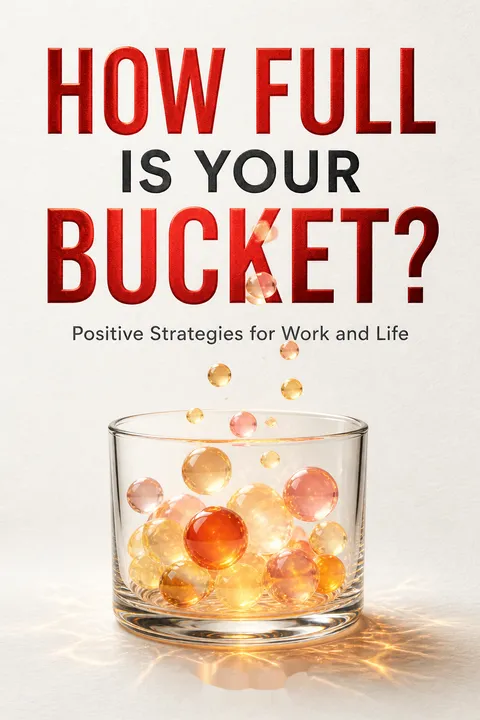
A simple daily metaphor. The book’s Theory of the Dipper and the Bucket describes an invisible bucket that represents a person’s positive emotions. Other people’s words and actions can fill it, leaving someone more energized and optimistic, or drain it, making them feel depleted. A dipper is the symbolic tool used to add to or take from another person’s emotional reserves.
The exchange runs both ways. The authors argue that filling someone else’s bucket can also lift the giver, while hurtful or dismissive behavior harms both people. The image turns an abstract idea into a practical question for ordinary encounters: did this interaction add encouragement, or remove it? The point is not that every exchange is profound, but that repeated small encounters shape relationships and working life.
What's useful about the metaphor is its symmetry: kindness is not framed as a sacrifice made only for someone else, but as a way of shaping a shared emotional climate. That aligns with the everyday observation that people often mirror the tone they receive. Still, the image should not become a demand to keep everyone cheerful. Honest disagreement, boundaries, and difficult feedback can serve a relationship even when they do not feel immediately uplifting. The bucket is best used to prompt care and awareness, not to label every discomfort as harm.
Protect people from relentless negativity, not merely dramatic harm.
Isolation can be devastating. The book opens with a Korean War prisoner-of-war account. Psychiatrist William Mayer reported that U.S. captives faced relatively little physical abuse, yet many died after losing the will to survive. The book gives the camp death rate as 38 percent, with about half of those deaths attributed to what the soldiers called “give up-itis.”
Relationships were deliberately weakened. Captors encouraged prisoners to report on one another, required public self-criticism, undermined loyalty, and withheld supportive letters while delivering distressing news. The result was emotional isolation and a collapse of mutual care. The story shaped Don Clifton’s interest in studying the effects of positive interactions. Its lesson is stark: an environment can damage people through accumulated social deprivation, even without a single spectacular act of violence.
The account makes a powerful case for treating social connection as part of human resilience, not as decoration around the “real” work of survival. Its extreme circumstances also require careful use. A difficult workplace or family conflict is not equivalent to captivity, and the analogy should not flatten differences in power or trauma. The transferable insight is narrower and stronger: sustained isolation and distrust can erode people’s ability to help one another. In organizations, that makes everyday respect and dependable communication practical safeguards, not merely matters of good manners.
Make appreciation routine before disengagement becomes the workplace norm.
Recognition is often missing. The book reports that 65 percent of surveyed Americans had received no workplace recognition for good work in the prior year. It also identifies feeling unappreciated as a leading reason employees leave. In the authors’ research, regular recognition and praise were associated with stronger productivity, engagement, customer satisfaction, and safety.
One encounter can travel outward. A study of 4,583 telecommunications call-center representatives found that three agents lost every customer they spoke with on a particular day, while seven retained and engaged every customer they served. The contrast illustrates how an employee’s emotional tone can shape a customer’s experience. Recognition need not be an expensive awards program. Timely, sincere acknowledgment can tell people that their contribution has been noticed.
The business case helps managers see appreciation as part of how service quality is produced, not a decorative perk. Recognition can make desired behavior visible and give colleagues a model to follow. The call-center example is vivid, though a single day’s results cannot establish that mood alone caused customer retention. Likewise, praise cannot compensate for low pay, unsafe conditions, or unfair workloads. It works best as one element of a credible workplace, where leaders also address the conditions that make good work possible.
Praise effort specifically, because criticism can erase early gains.
Feedback changes performance. In a 1925 classroom experiment, psychologist Elizabeth Hurlock divided children into groups that received praise, criticism, or no response after math work. Both praise and criticism initially improved performance. The criticism group then declined, while the praised students continued improving. By the fifth day, the book reports overall improvement of 71 percent for the praised group, 19 percent for the criticized group, and 5 percent for the ignored group.
Specificity matters. The result supports noticing successful work instead of making correction the default response. That does not mean hiding errors. It means giving people information about what is working, so they have a clear foundation for improvement. A comment that names a real contribution is more useful than vague approval, just as actionable correction is more useful than a general expression of disappointment.
The experiment captures an important asymmetry: criticism may briefly command attention, while encouragement can help sustain effort. That is compatible with learning environments in which clear feedback builds competence and confidence. The study is old and focused on children completing schoolwork, so its percentages should not be treated as a universal prediction for adults or every task. Its durable contribution is the practical question it raises: does feedback show someone how to succeed, or only signal that they have failed?
Keep positive exchanges ahead of negative ones, without worshipping a ratio.
Balance shapes relationships. The book describes John Gottman’s research on newly married couples. Researchers coded a 15-minute conversation for positive and negative interactions, then used the pattern to predict later divorce. The book reports 94 percent accuracy after a ten-year follow-up and identifies roughly five positive interactions for each negative one as a favorable pattern. It also cites workplace research associating stronger team performance with more than three positive interactions per negative one.
Use the numbers as a prompt. The authors warn against ignoring real problems in pursuit of relentless cheerfulness. Their account also describes a proposed upper limit, beyond which positivity might become counterproductive. The actionable point is not to count every smile or criticism. It is to notice whether appreciation and respect are frequent enough to keep inevitable correction from defining the whole relationship.
Ratios can make a fuzzy climate easier to discuss, but they risk turning human connection into an accounting exercise. Gottman’s findings concern observed behavior in a particular context, and team dynamics differ from marriages. The value lies less in a universal quota than in the contrast between a relationship dominated by criticism and one with a broad base of goodwill. Positive interactions make difficult conversations easier to hear, but they cannot make inaccurate criticism constructive or excuse unresolved conflict.
Use small moments to alter someone's story of themselves.
Ordinary moments accumulate. The book cites Daniel Kahneman’s estimate that people experience about 20,000 waking moments in a day. Most pass unnoticed, but memorable experiences tend to be strongly positive or negative. In one example, a struggling student named Brian Bennett later credited a teacher’s expression of care and belief in him as a turning point in his life.
Attention can be precise. Tammy, a working mother in another story, felt deflated when her boss reviewed eight areas for improvement without mentioning a recent achievement. Later, an executive greeted her by her preferred name and praised a specific contribution. That brief recognition changed the tone of her day. The lesson is not that a compliment solves every problem. It is that a small act can meet a person at a moment when it matters.
This focus on brief encounters connects emotional support to the way memory works: a small event can become a reference point people use to interpret their worth or their prospects. Such moments are powerful partly because they are specific and credible. Their importance should not be exaggerated into a claim that one encouraging remark reliably transforms a life. The more defensible point is that repeated attention creates a climate, while an unusually well-timed act can become a lasting piece of someone’s personal story.
Learn what makes each person feel genuinely recognized.
One reward can miss its target. Susan, a manager, expected a public ceremony to delight Matt, a top customer-service representative. Instead, he resented another trophy. After learning that Matt treasured his young daughters, she arranged for him to receive a portrait of them at the next event. This time, the recognition moved him deeply.
Recognition should fit its recipient. The authors argue that effective praise is individualized, specific, and deserved. Some people welcome public acknowledgment; others prefer a private note. A useful starting point is to ask what kind of appreciation feels meaningful, who the person most values hearing it from, and what contribution they are proud of. Naming the actual behavior also makes recognition believable. Generic praise may be pleasant, but it rarely shows that anyone paid close attention.
This principle resembles good design: learn about the person using the system instead of assuming one solution suits everyone. Asking about recognition preferences also reduces the risk that praise becomes an awkward performance for the giver. There is a useful caution, however. Personalization should respect privacy and avoid turning a manager into an amateur profiler. A straightforward question, paired with attention to what someone voluntarily shares, is often more respectful than elaborate gestures based on guesses.
Build close friendships where work otherwise drains people.
Connection supports commitment. The book says Gallup’s research on great workplaces found that having a best friend at work was linked to better safety records, higher customer satisfaction, and greater productivity. It also cites psychologist Ed Diener’s finding that people with high-quality social relationships report greater life satisfaction. The authors use “best friend” to mean a trusted, close colleague, not a mandatory workplace pairing.
Trust grows through repeated contact. Learn the names people prefer, make time to talk, and show interest in their goals. Positive early encounters can help acquaintances become friends, while repeated neglect or hostility makes closeness less likely. The book recommends supporting colleagues and becoming someone they can approach for encouragement. These relationships provide practical help as well as belonging, especially when work becomes frustrating or demanding.
Close workplace ties can function as social infrastructure: people who trust one another are more likely to share information, ask for help, and notice when a colleague is struggling. Yet friendship should be invited, not engineered. A workplace that prizes closeness can unintentionally marginalize people who prefer privacy or blur professional boundaries. The underlying goal is a culture with trust and mutual support, where friendship is possible without becoming a test of whether someone fits in.
Surprise people with thoughtful generosity, not just formal rewards.
Small surprises can carry weight. The book recounts a student, Brian Bennett, who received an unexpected reunion with a teacher who had encouraged him, followed by a gift from a celebrated athlete he admired. It also describes a Saks Fifth Avenue experiment in which sales associates gave small, unanticipated gifts to occasional customers. The authors report that both customers and employees responded positively, and that the program helped turn some occasional shoppers into regulars.
A gift need not be an object. Time, careful listening, an offer of help, or the trust involved in sharing something personal can also communicate regard. The key is that the gesture feels thoughtful rather than obligatory. Surprise can make an act more memorable, but size is not the measure of its meaning. A small gesture that fits the person can outlast a costly reward that feels impersonal.
Unexpected generosity interrupts the transactional feel of a routine exchange. It can signal that someone was remembered when no immediate reward was required, which makes the gesture feel unusually personal. The commercial example also raises a useful distinction: a gift can express care, or it can be a sales tactic. Recipients are sensitive to that difference. Surprise works best when the act fits an established relationship and does not create pressure to reciprocate.
Let steady support help people face what they cannot control.
Support can build a reserve. Tom Rath describes growing up in a family that looked for his interests and encouraged him to develop them. As a teenager, he learned that he had von Hippel-Lindau disease, a rare condition associated with recurring tumors. Later diagnoses required further monitoring and surgery. He says the encouragement around him helped him focus on what he could do, including learning about the condition and keeping up with medical checks.
The point is resilience, not cure. Rath presents his experience as an example of how sustained support can help someone respond to frightening circumstances without being consumed by them. The book’s strengths-based approach also appears in his family’s choice to encourage areas of natural interest rather than demand equal excellence in every subject. It does not suggest that positivity removes illness or guarantees a particular outcome.
The story is strongest when read as testimony about coping, not proof that encouragement determines medical outcomes. Serious illness involves biology, treatment access, and uncertainty that no emotional practice can control. Within those limits, support can help preserve agency: people may feel better equipped to seek information, follow through on care, and keep a life larger than their diagnosis. That distinction protects the insight from toxic positivity, the harmful idea that distress itself is a failure.
Stop dipping, notice what’s working, and track your positive impact.
Turn the idea into a habit. The book’s practical advice begins by catching behavior that mocks, embarrasses, or needlessly highlights another person’s flaws. Then redirect attention toward what someone did well. The authors suggest reviewing recent interactions and noticing whether they were mostly helpful or mostly draining. They also encourage accepting praise rather than brushing it aside, then passing appreciation along.
Make progress observable. The Positive Impact Test is a 15-question self-assessment about behaviors such as helping someone, using a colleague’s preferred name, and noticing excellent work. It is intended as a baseline for improvement, not a verdict on someone’s character. Other simple practices include writing specific thank-you notes and asking people what kind of recognition they value. Positivity becomes more credible when it is consistent, earned, and grounded in reality.
The strength of this advice is that it moves from sentiment to observable behavior. A person can pause before a cutting remark, name a real contribution, or check whether praise was welcome. Tracking can support reflection, though a score is only a proxy for relationship quality and should not become another performance target. The larger discipline is attention: notice the effect of an interaction, repair harm when needed, and make encouragement part of ordinary work rather than a staged event.
Analysis
How Full Is Your Bucket? is a brief, accessible blend of workplace advice, positive psychology, personal narrative, and metaphor. Its central move is to make emotional effects visible: an interaction either contributes to another person’s well-being or diminishes it, and repeated encounters shape a group’s climate. The bucket image is memorable because it links personal conduct with shared consequences. The book then builds its case through a progression from extreme psychological isolation, to workplace evidence, to family stories, and finally to practical habits.
Its strongest contribution is not the claim that praise is always beneficial. It is the insistence that attention should not be reserved for mistakes. The accounts of Tammy and Matt show why generic encouragement can fail: recognition matters when it identifies a real contribution and fits the recipient. The strengths-focused management figures sharpen that point by suggesting that being noticed for what one does well can reduce disengagement.
The research claims need more caution than the book’s brisk presentation sometimes allows. The prisoner account is an extreme case, classroom praise findings do not automatically generalize to every setting, and correlations between positivity and health do not establish that positive emotion alone causes longer life. The proposed interaction ratios are best read as memorable prompts, not universal laws or quotas. Modern readers should also resist using positivity to silence complaints about unfairness, workload, or harm.
The practical framework remains useful when applied with those limits in view. Prevent needless humiliation, recognize actual contributions, ask what forms of appreciation feel welcome, and make room for dependable relationships. The book’s lasting insight is that culture is not only built through policies and speeches. It is also built through ordinary encounters that tell people whether they are seen, valued, and safe enough to contribute.
Review Summary
How Full Is Your Bucket? receives mixed reviews, averaging 3.87 out of 5 stars. Many readers find it a quick, inspiring read with valuable insights on positivity and its impact on relationships and productivity. The bucket metaphor resonates with some, while others find it simplistic. Readers appreciate the scientific backing and practical applications, especially in work environments. However, some criticize its brevity, repetitiveness, and lack of depth. The book's focus on American examples and statistics is noted as a limitation by some international readers.
People Also Read








Glossary
The Theory of the Dipper and the Bucket
Model of emotional exchangesA metaphor for how interactions affect positive emotions. Each person has an invisible bucket that can be filled by supportive words and actions or drained by hurtful and dismissive behavior. The dipper represents the choice to add to or take from another person’s emotional reserves. The theory proposes that filling others can also benefit the giver.
bucket filling
Actions that encourage othersThe book’s term for words or actions that increase another person’s positive emotions and help them feel noticed or valued. It includes more than praise: time, listening, trust, friendship, and experiences suited to the individual can all contribute. The authors argue that bucket filling can also improve the giver’s emotional state.
bucket dipping
Actions that drain goodwillThe book’s term for behavior that reduces another person’s positive emotions. Examples include mocking someone, highlighting a weakness unnecessarily, or withholding support when it would matter. The concept also includes repeated patterns of neglect or criticism that weaken trust. The authors recommend noticing and reducing such behavior before trying to build a more positive climate.
magic ratio
Positive to negative interactionsThe book’s label for a pattern of roughly five positive interactions for each negative one in successful marriages, based on research described by John Gottman. It also cites workplace findings that associate higher positive-to-negative interaction rates with stronger team performance. The ratio is presented as a useful guide to balance, not as a rule for counting every encounter.
Positive Impact Test
Self-assessment of positive behaviorA 15-item assessment presented in the book to help readers reflect on how often they encourage and support others. Questions cover behaviors such as helping someone recently, praising a person, using preferred names, and noticing excellent work. The authors frame the result as a starting measure for personal improvement, rather than a fixed judgment of character.
Gallup Recognition Interview
Questions about recognition preferencesA set of questions intended to discover how an individual prefers to receive recognition. Topics include the person’s preferred name, interests, meaningful sources and forms of praise, and the best recognition they have received. Its purpose is to prevent managers and colleagues from assuming that the same public award, private note, or gift will motivate everyone.
gain score
Measure of improvement over timeA measure of progress based on a count, ranking, or rating that can be compared over time. In the book’s organizational guide, examples include improved meeting attendance, fewer complaints escalated to managers, more unsolicited customer compliments, or more thank-you notes. Gain scores are meant to show whether actions are producing observable improvement.
FAQ
What's How Full Is Your Bucket? about?
- Focus on Wellbeing: The book emphasizes the importance of wellbeing in both personal and professional life, using the metaphor of a bucket to represent emotional health.
- Five Elements of Wellbeing: It outlines five key elements that contribute to a thriving life: career, social, financial, physical, and community wellbeing.
- Positive Interactions: The central metaphor suggests that positive interactions fill the bucket, while negative experiences drain it, impacting our emotional wellbeing.
Why should I read How Full Is Your Bucket??
- Addressing Mental Health: The book tackles the urgent issue of mental health, making it relevant for today's challenges with rising anxiety and depression rates.
- Practical Strategies: It offers transformative strategies for improving workplace culture and individual wellbeing, leading to increased productivity and engagement.
- Research-Backed Evidence: The insights are grounded in extensive research conducted by Gallup, providing credibility and a solid foundation for the recommendations made.
What are the key takeaways of How Full Is Your Bucket??
- Interconnected Wellbeing Elements: The five elements of wellbeing are interdependent; improving one can positively affect the others.
- Importance of Positive Interactions: Simple acts of kindness can significantly impact both the giver and receiver, filling emotional buckets.
- Role of Managers: Effective management is crucial for fostering a culture of wellbeing, as managers directly influence employee engagement and satisfaction.
What is Gallup Net Thriving in How Full Is Your Bucket??
- Definition of GNT: Gallup Net Thriving (GNT) measures the difference between the best possible life and the worst possible life, using the Cantril Self-Anchoring Striving Scale.
- Two-Part Question: GNT is assessed through questions about current life satisfaction and future outlook.
- Importance of Measurement: Tracking GNT helps organizations understand employee wellbeing and make informed decisions to enhance workplace culture.
What are the five elements of wellbeing discussed in How Full Is Your Bucket??
- Career Wellbeing: Focuses on enjoying what you do every day, essential for overall life satisfaction.
- Social Wellbeing: Emphasizes meaningful friendships and social connections to enhance happiness and reduce stress.
- Financial Wellbeing: Involves managing money effectively to reduce worry and increase freedom in life choices.
- Physical Wellbeing: Highlights the need for energy and health to accomplish daily tasks and maintain a good quality of life.
- Community Wellbeing: Stresses the significance of feeling safe and satisfied with one's living environment, contributing to overall happiness.
How can organizations improve employee wellbeing according to How Full Is Your Bucket??
- Engagement Initiatives: Focus on engaging employees by creating a supportive environment that encourages open communication and feedback.
- Strengths-Based Approach: Implement a strategy that allows employees to utilize their natural talents, leading to higher satisfaction and productivity.
- Wellbeing Conversations: Managers should incorporate wellbeing discussions into regular check-ins, fostering trust and understanding of individual employee needs.
What are the risks to a net thriving culture in How Full Is Your Bucket??
- Employee Mental Health: Organizations must address mental health issues proactively, as poor mental health can significantly impact overall wellbeing and productivity.
- Lack of Clarity and Purpose: Without clear direction and purpose, employees may feel disengaged and uncertain about their roles, leading to lower morale.
- Poorly Skilled Managers: Ineffective managers can hinder employee engagement and contribute to a toxic work environment.
What is the Best Possible Life Scale in How Full Is Your Bucket??
- Two-Part Assessment: Consists of questions that gauge an individual's current life satisfaction and their outlook for the future.
- Predictive of Wellbeing: Responses help predict overall happiness, health, and the likelihood of experiencing negative emotions such as stress and anxiety.
- Global Standard: Used globally to measure Gallup Net Thriving across various populations, providing valuable insights into wellbeing trends.
What specific strategies does How Full Is Your Bucket? recommend for improving wellbeing?
- Practice Gratitude: Regularly express gratitude to others to fill both your own and others' buckets, fostering positive relationships.
- Engage in Positive Interactions: Actively seek opportunities for uplifting conversations and actions, such as complimenting colleagues or offering help.
- Set Personal Goals: Encourage setting specific, achievable goals related to each of the five wellbeing elements to focus on areas needing improvement.
How does How Full Is Your Bucket? address the impact of workplace culture on wellbeing?
- Workplace Environment Matters: A positive workplace culture can significantly enhance employee wellbeing, leading to better performance and lower turnover rates.
- Managerial Influence: Managers play a crucial role in creating a supportive environment, positively impacting employee morale and productivity.
- Collective Responsibility: Advocates for a collective approach to wellbeing, where everyone contributes to a positive culture, fostering a sense of community and belonging.
What are the best quotes from How Full Is Your Bucket? and what do they mean?
- "Each interaction is either a bucket filler or a bucket dipper." Emphasizes that daily interactions can enhance or detract from someone's emotional wellbeing.
- "What you do matters." Reinforces the idea that individual actions have significant consequences, encouraging responsibility for one's impact on others.
- "You can’t pour from an empty bucket." Highlights the necessity of self-care and personal wellbeing, reminding readers to nurture their own emotional health.
How can I apply the concepts from How Full Is Your Bucket? in my daily life?
- Daily Reflection: Practice daily reflection on your interactions and their impact on others to promote a positive environment.
- Set Intentions: Start each day by setting intentions to engage in positive interactions and fill others' buckets, leading to meaningful connections.
- Create a Supportive Network: Surround yourself with individuals who prioritize wellbeing and positivity, enhancing your own emotional health.
About the Author




Download PDF
Download EPUB
.epub digital book format is ideal for reading ebooks on phones, tablets, and e-readers.








