

Key Takeaways
Make readers inhabit a character before asking them to care
Build an emotional doorway. Frey separates three kinds of reader connection. Sympathy means feeling sorry for a character’s predicament. Identification means wanting the character to achieve a goal. Empathy means sharing the character’s felt experience. A character need not be admirable to earn these responses: readers can side with a criminal when he seeks justice for someone wronged, as Mario Puzo does with Don Corleone in The Godfather.
Put experience on the page. Concrete sensations help readers imagine the character’s world, while inner conflict lets them participate in difficult choices. Frey points to Carrie’s anxious anticipation of the prom and Henry’s fear in The Red Badge of Courage. The reader is not simply told what they feel, but brought close to the details and decisions that produce it.
What's valuable here is the distinction between caring about a person and endorsing that person's conduct. That distinction gives writers room to create morally compromised protagonists without forcing readers to approve of them. It also clarifies why sensory description matters: detail is not decoration when it lets an audience simulate a character's immediate experience. The limitation is that suffering alone does not guarantee attachment. Readers may feel manipulated if a character's hardship seems engineered only to demand pity. The strongest emotional access comes when vulnerability reveals a particular person, not just a device for eliciting concern.
Turn curiosity into anxiety by putting someone sympathetic under pressure
Raise a story question. A story question is an unresolved problem or prediction that makes readers want to know what happens next. A late-night knock at a rector’s door, for instance, prompts readers to wonder who has arrived and why. Curiosity can hook attention, but suspense deepens when a character readers care about faces a credible threat or loss.
Make the danger immediate. Frey’s suspense pattern is to introduce a question, put a sympathetic character in jeopardy, then create a deadline or obstacle. In Jaws, the shark threatens people while the sheriff must respond; in Gone with the Wind, Scarlett must escape Atlanta while also helping deliver a baby. A “lit fuse” means disaster is approaching on a clock, and the characters must act before time runs out.
This account usefully distinguishes an intriguing mystery from suspense. A reader can wonder about an unexplained event without feeling invested; anxiety requires a stake, a person exposed to it, and some uncertainty about the outcome. The deadline adds pressure because it makes delay consequential. Yet menace need not be physical, and the book is right to include social or personal losses. Writers can broaden their suspense by asking not only, “What might happen?” but also, “What valued possibility is about to disappear?” That question can sustain tension in quieter stories.
Give characters a driving desire, real competence, and revealing contradictions
Keep characters in motion. Frey warns against a protagonist who only suffers and waits to be rescued. Even a timid character becomes dramatically useful when a strong desire pushes them to act, make mistakes, and face consequences. Competence helps too: a sheriff who knows police work or a shark hunter who knows his quarry gives readers something specific to respect and anticipate.
Make the person distinctive. Characters become memorable through contrasts: a mismatch with their setting, an eccentric habit, or two sides that pull against each other. Frey calls a character’s central drive a “ruling passion,” the force that guides choices in a given situation. It can shift under pressure. Brody, a sheriff uncomfortable in the water, is an especially potent protagonist for a story about hunting a shark at sea.
The emphasis on agency is a useful correction to the idea that a sympathetic character must be passive or innocent. A protagonist earns attention by doing something under pressure, even when the action is flawed. Competence adds another kind of pleasure: readers can enjoy watching skill applied to a problem. Contradictions deepen both. In psychology and ordinary life, people rarely behave as one tidy trait; fiction can make that tension legible by forcing competing desires into a choice. Eccentricity works best when it reveals character, rather than functioning as a random quirk pasted on for color.
Use a premise to make every major event earn its place
State the story’s causal claim. Frey defines a premise as a brief statement of what happens to characters because of the story’s central conflict. It combines character, conflict, and conclusion. It is not the same as a theme, which is a recurring idea explored in the story, or a moral, which instructs the audience. A premise helps the writer see what the story is actually about beneath its surface events.
Test the sequence. In Frey’s example of a farmer trying to run an organic farm, a premise about economic pressure destroying idealism gives the events a clear direction. Crop failures and financial strain belong because they intensify that conflict. An unrelated episode that changes nothing can be cut. The question is not simply whether an incident is interesting, but whether it contributes to the story’s developing conflict and resolution.
A premise works like a compact causal model. It helps distinguish an accumulation of incidents from a plot in which each turn changes the conditions for the next. That makes it useful during planning and revision, especially when a draft feels busy but shapeless. The concept should not become a demand that every scene make the same point in an obvious way. Fiction can hold ambiguity, counterexamples, and unresolved tensions. A premise is most productive as a diagnostic question, not a slogan the story is required to prove at the expense of complexity.
Change the premise and discover a sharper, more ironic story
Treat the premise as a design tool. Frey demonstrates that one germinal idea can lead to very different novels. In the farm story, a version where idealism triumphs over dishonest neighbors is straightforward. Changing the premise so financial necessity erodes the farmer’s idealism creates a more difficult arc, with pressure gradually forcing him to betray his principles. The same situation now generates conflict, change, and irony.
Use the method on larger structures. Frey describes chain-reaction stories, stories where opposing forces compete, and situational novels in which one shared condition affects several characters differently. A novel can also contain several distinct stories, each with its own premise, or a main plot and a subplot whose conflicts intersect. Reconsidering the premise is therefore not just an editing trick. It can reveal which version of an idea has the richest consequences.
The premise shift resembles counterfactual design: hold the initial ingredients steady, change the governing pressure, and observe how the chain of choices changes. That is a practical way to generate originality without reaching for ever more elaborate plot machinery. It also highlights a valuable source of irony: a character can be defeated by the very circumstances they hoped to master. The caution is that a premise should not predetermine every response. If characters simply enact a thesis, they become illustrations. Their surprising choices are often what make the premise feel discovered rather than imposed.
Choose a narrator for its force, not its supposed limitations
Treat the narrator as a presence. Frey argues that narrative voice is not simply the author speaking directly. It is a constructed persona shaped by diction, tone, selection, and judgment. Specific details make a narrator sound more assured than vague generalities do. A voice can be comic, lyrical, scholarly, or intimate, but it should suit the story the reader has been invited to enter.
Avoid rigid viewpoint rules. Frey challenges the claim that first person is automatically more intimate or that third person cannot carry a vivid personality. Either can create closeness, color, or distance. What matters is execution and the reader’s expectations. If a novel needs a meaningful shift in viewpoint, the author can establish that possibility through its structure, such as a new section, rather than surprising readers without preparation.
This approach treats point of view as an artistic choice rather than a compliance exercise. A narrator shapes not only what readers know, but how they judge what they know; even a restrained voice carries a perspective through what it notices and omits. That makes voice a central part of meaning, not a layer of style applied afterward. Flexibility does not mean every shift will work. A change can confuse readers if it alters the book’s basic terms without a clear signal. The practical test is whether the shift creates an effect worth the adjustment in trust and attention.
Promise a kind of novel, then honor its rules and payoff
Establish the reader’s contract. Frey uses this term for the expectations created by a novel’s opening, genre, tone, narrator, and form. A mystery promises a crime and its investigation; a romance follows different conventions. These expectations can be bent, but readers need to understand what kind of experience they are entering. A reliable narrator, for example, presents events as fairly as the book’s chosen perspective allows.
Play fair with the tension. The contract also requires plausible character choices, relevant clues, and a climax that answers the problems the story has raised. An unexplained change in viewpoint, an accidental rescue, or a character behaving foolishly just to prolong the plot can feel like a breach. The reader need not predict the ending, but should be able to recognize it as a consequence of the story rather than a solution dropped in from outside.
The contract is a useful way to describe trust as a craft resource. Readers tolerate surprise when the story has taught them how to interpret its surprises; they resist feeling tricked when the rules change retroactively. Genre conventions can therefore function less like cages than shared shorthand. The challenge is that expectations vary across readers and traditions, so no writer can satisfy every imagined contract. The goal is coherence: establish a distinctive set of promises, then make the story’s turns feel both unexpected and earned within that world.
Treat criticism as material for a new draft, not a verdict
Learn to re-envision the scene. Frey calls the ability to “re-dream the dream” the capacity to imagine a written scene differently after receiving criticism. One of his workshop students improved by changing how scenes unfolded, while another struggled because the first version had become fixed in her mind. The practical challenge is to revise the underlying action, not merely polish sentences or discard the whole project.
Watch for seven recurring traps. Frey names timidity, imitating literary models before mastering craft, ego-writing that disregards readers, refusing to re-envision, losing faith, arranging life against writing, and failing to produce. They are different failures, but each can prevent a writer from learning or finishing. Workshop criticism is useful when it identifies a problem in the work; it is not a final judgment on the writer’s worth.
Revision depends on cognitive flexibility: the ability to loosen an initial mental picture and test another version. That is a more demanding skill than accepting edits, because it asks the writer to preserve the scene’s purpose while rebuilding its means. The book is persuasive in separating critique of a draft from judgment of its author. Its tougher advice about workshops is not universally suitable, however. Candor helps only when feedback is specific, competent, and delivered in a setting where the writer can use it. Harshness by itself is not a craft technique.
Protect writing hours as seriously as any paid profession
Give the work real time. Frey describes writers losing a day to small distractions: the newspaper, a phone call, errands, or one more cup of coffee. His remedy is to set writing hours and defend them. He compares learning fiction to training in other demanding professions: craft develops through sustained practice, study of novels, observation of people, and attention to detail.
Separate drafting from editing. Frey treats a first draft as a job to complete before the inner critic revises every sentence. He recommends measurable production goals; at three pages a day, he calculates, a 270-page draft takes about three months. He dismisses “writer’s block” as an excuse for not producing, and advises writers to keep moving rather than wait for perfect inspiration. The useful principle is consistency, not any one page quota.
The strongest insight is that a writing identity is built through repeated protected action, not through private ambition alone. Separating drafting from editing also reduces the friction of trying to invent and judge at the same moment. Yet the chapter’s deliberately combative treatment of writer’s block can oversimplify exhaustion, illness, caregiving, or fear that needs more than a reprimand. A schedule is a structure for making work possible, not evidence that every writer has identical time or capacity. Sustainable practice must fit a real life rather than pretend obligations disappear.
Write toward a truth you care enough to test in fiction
Find the pressure beneath the plot. Frey argues that passion gives a novel its reason to exist beyond competent entertainment. The writer should identify what matters deeply, then test a view of human nature through characters facing conflict. The story is not a sermon: its meaning emerges from what happens to people making consequential choices. Harriet Beecher Stowe’s response to the suffering of enslaved families, as Frey presents it, became the driving force behind Uncle Tom’s Cabin.
Join conviction to craft. Frey’s “100 percent guarantee” depends on desire, learning the craft, reliable feedback, rewriting, persistence, and actively pursuing publication. Those conditions describe a serious working practice, not certainty of fame or income. His larger claim is that writing can change how readers see other lives, while the act of writing can sharpen the author’s own observation. A strong vision gives technique something specific to serve.
This is the book’s most ambitious claim: fiction can carry ideas into feeling by making readers inhabit particular lives. That distinguishes dramatic storytelling from simply arguing a position. The strongest version of the claim does not require a novel to teach a single lesson; it asks the writer to care enough about a human question to explore its complications honestly. The guarantee of success deserves a narrower reading. Work and persistence improve a writer’s chances and control over the craft, but publication and commercial reward also depend on forces no author can command.
Analysis
Frey’s central proposition is that dramatic fiction is an engineered experience. Plot, character, sensory detail, viewpoint, and prose are not separate decorations. They cooperate to draw a reader into a fictional world, make that reader care about someone in it, and create uncertainty about consequential choices. The book’s strongest practical contribution is its insistence on causal design: a premise gives the writer a way to test whether scenes deepen the central conflict or merely occupy pages. Its discussion of sympathy, identification, and empathy also offers a more precise account of reader involvement than the vague instruction to make characters likable.
The book is deliberately aimed at writers of dramatic novels, not at all fiction. That boundary matters. Its advice favors legible goals, pressure, forward motion, and emotional access. Experimental, minimalist, or deliberately alienating work may seek different effects, and should not be judged by the same measure of immersion. Even within dramatic storytelling, a premise can become too controlling if the writer treats every character as evidence for a preselected conclusion. Ambiguity and contradiction can be part of the story’s truth, not defects to eliminate.
Frey’s best counsel therefore lies in the tension between structure and discovery. A writer needs enough design to make events consequential, but enough openness to let characters complicate the design. The same balance appears in his advice about revision: keep the story’s purpose in view, yet become willing to imagine its scenes differently. His final celebration of passion is most convincing when joined to that disciplined practice. Conviction supplies the question; craft creates the conditions in which readers can experience it rather than merely hear it asserted.
Review Summary
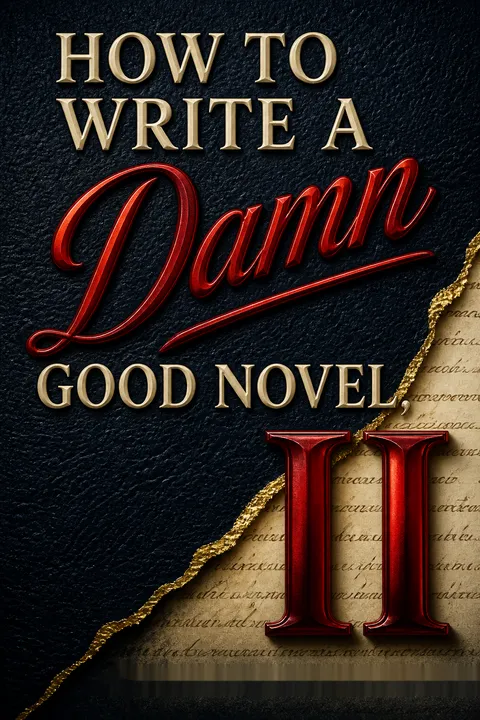
How to Write a Damn Good Novel, II receives mostly positive reviews, with readers praising its practical advice, engaging style, and focus on advanced writing techniques. Many find it useful for improving character development, plot structure, and overall storytelling. The book's emphasis on premise and avoiding common writing pitfalls is particularly appreciated. Some readers note that it works well as a standalone guide, while others recommend reading it alongside the first volume. A few criticisms include dated references and occasional repetitiveness.
People Also Read




Glossary
Fictive dream
Immersive fictional experienceThe state in which readers become absorbed in a fictional world and respond as though they are experiencing events alongside its characters. Frey says writers encourage this absorption through suggestive, concrete detail and emotional involvement. Sympathy, identification, empathy, and participation in a character’s inner conflict help deepen the experience.
Story question
Unresolved narrative curiosityA problem, prediction, or unexplained event that prompts readers to wonder what will happen or why something has happened. It need not be phrased as a literal question. An opening that introduces a late-night visitor, for example, invites curiosity about the visitor’s identity and purpose.
Premise
Causal statement of a storyA concise statement of what happens to the characters as a result of a story’s central conflict. Frey treats it as a guide for shaping events and evaluating whether complications contribute to the conclusion. He distinguishes premise from theme, a recurring idea explored in the story, and moral, a lesson it teaches.
Ruling passion
Character’s driving forceThe central desire or motivating force that shapes a character’s actions. It gives the writer a practical way to understand how the character may respond to a dilemma. A character’s active passion can change as circumstances change, although frequent shifts without a clear dramatic cause can make the story feel directionless.
Author/reader contract
Shared story expectationsThe expectations a novel establishes through its genre, opening, voice, tone, form, and treatment of events. Readers expect the story to honor the experience it appears to promise, while still allowing for meaningful surprise. Frey links the contract to fairness, plausible character behavior, relevant clues, and a satisfying resolution.
Re-dream the dream
Reimagine a scene in revisionThe ability to picture a scene or story anew after feedback reveals problems in its original form. Rather than merely polishing sentences or abandoning the work, a writer changes how the action unfolds while preserving its purpose. Frey presents this flexibility as a learnable skill essential to substantial revision.
Objective correlative
Visible cause of emotionThe concrete event or situation that enables readers to understand and feel a character’s emotional response. If a character grieves a relationship, showing the relationship can give readers grounds to experience the loss rather than only being told that grief exists. Frey uses the term to explain how dramatized circumstances make emotion legible.
Sympathy
Concern for a character’s plightA reader’s feeling of pity or concern for what a character is enduring. In Frey’s account, sympathy does not require the character to be morally admirable. A reader may feel concern for a flawed or criminal character when that person suffers deprivation, humiliation, danger, or another recognizable hardship.
Identification
Support for a character’s goalA reader’s desire for a character to achieve an objective. Frey distinguishes identification from sympathy: readers can feel sorry for someone without wanting that person to succeed. A character’s goal can earn support even when the character’s past behavior is objectionable, particularly if the goal is framed as worthy.
Empathy
Sharing a character’s feelingsThe reader’s imaginative experience of what a character feels, beyond simply feeling sorry for the character. Frey argues that specific sensory and emotional details can suggest the character’s immediate experience, helping readers feel a situation from within rather than observe it from a distance.
FAQ
What's "How to Write a Damn Good Novel, II" about?
- Advanced storytelling techniques: The book focuses on advanced techniques for dramatic storytelling, building on the basics covered in the first book.
- Character development: It delves into creating memorable characters, enhancing reader sympathy, and developing character arcs.
- Suspense and engagement: The book provides strategies for maintaining suspense and keeping readers engaged throughout the narrative.
- Premise and structure: It emphasizes the importance of a strong premise and how it guides the structure and development of a novel.
Why should I read "How to Write a Damn Good Novel, II"?
- Enhance storytelling skills: The book is ideal for writers who are familiar with the basics and want to advance their storytelling skills.
- Practical advice: It offers practical advice and techniques that can be directly applied to writing projects.
- In-depth exploration: The book provides an in-depth exploration of character development, suspense, and narrative voice.
- Proven methods: Written by James N. Frey, a seasoned author and writing teacher, the book shares proven methods for crafting compelling fiction.
What are the key takeaways of "How to Write a Damn Good Novel, II"?
- Premise is crucial: A strong premise is essential for guiding the story and ensuring all elements are relevant and cohesive.
- Character complexity: Characters should be dynamic, memorable, and capable of growth and change throughout the story.
- Suspense techniques: Effective suspense involves creating story questions and placing characters in situations of menace.
- Narrative voice: A strong narrative voice is vital for engaging readers and conveying the story's tone and style.
How does James N. Frey define "premise" in the book?
- Story's core statement: The premise is a statement of what happens to the characters as a result of the story's core conflict.
- Guides the narrative: It serves as a blueprint for the story, helping writers focus on relevant events and character actions.
- Types of premises: The book discusses chain reaction, opposing forces, and situational premises, each shaping the story differently.
- Proving the premise: Writers should ensure that the story's events effectively prove the premise, leading to a satisfying resolution.
What advice does James N. Frey give on creating memorable characters?
- Dynamic and driven: Characters should be dynamic, with strong desires and motivations that drive the story forward.
- Complexity and contrast: Memorable characters often have contrasting traits or dual natures, adding depth and interest.
- Sympathy and identification: Writers should aim to evoke reader sympathy and identification with characters to enhance engagement.
- Wacky and unique: Characters with unique or exaggerated traits can be particularly memorable and engaging.
How does "How to Write a Damn Good Novel, II" suggest maintaining suspense?
- Story questions: Introduce story questions early to pique reader curiosity and keep them engaged.
- Situations of menace: Place characters in situations of menace to create anxiety and apprehension in readers.
- Lighting the fuse: Use the "lit fuse" technique, where something terrible is set to happen, creating urgency and tension.
- Character stakes: Ensure that characters have high stakes, making their goals and conflicts compelling and suspenseful.
What role does narrative voice play according to James N. Frey?
- Engagement and trust: A strong narrative voice creates trust and engages readers, allowing them to immerse in the story.
- Tone and style: The voice sets the tone and style of the narrative, influencing how the story is perceived.
- Character and perspective: The narrator is a character, whether in first or third person, and should have a distinct personality.
- Flexibility in voice: Writers can switch between voices or perspectives if done thoughtfully and within the story's contract.
What are the seven deadly mistakes in writing according to the book?
- Timidity: Avoid being timid in writing; take risks and confront dramatic situations head-on.
- Trying to be literary: Focus on storytelling rather than imitating literary giants or being overly complex.
- Ego-writing: Write for readers, not for personal ego, ensuring the story is engaging and relatable.
- Failure to re-dream: Learn to re-dream the story during revisions, allowing for new perspectives and improvements.
How does James N. Frey suggest writers keep the faith in their writing journey?
- Persistence: Writers should persist through rejections and setbacks, maintaining belief in their work.
- Avoiding discouragement: Focus on the intrinsic rewards of writing rather than external validation or success.
- Commitment to growth: Continuously improve craft through study, practice, and feedback.
- Balancing life and writing: Organize life to prioritize writing, ensuring it remains a central focus.
What are some of the best quotes from "How to Write a Damn Good Novel, II" and what do they mean?
- "Premise is the fiction writer's chisel": This emphasizes the importance of a strong premise in shaping and guiding the story.
- "A writer can't be timid": Encourages writers to confront difficult situations and take creative risks for impactful storytelling.
- "Characters must be dynamic": Highlights the need for characters to have strong motivations and the capacity for growth.
- "Suspense is making the reader worry and wonder": Defines suspense as a key element in keeping readers engaged and invested in the story.
How does the book address the concept of "writing with passion"?
- Intrinsic motivation: Writing with passion involves a deep commitment to the story and its themes, beyond external rewards.
- Vision and truth: Writers should have a clear vision and confront truths about human nature and the human condition.
- Emotional impact: Passionate writing aims to move readers emotionally and leave a lasting impression.
- Personal satisfaction: Writing with passion provides intrinsic satisfaction and fulfillment, regardless of commercial success.
What is the "James N. Frey 100 Percent Guarantee of Success"?
- Commitment and mastery: Success is guaranteed for those who fully commit to writing and master the craft.
- Hard work and persistence: Writers must work hard, persist through challenges, and continuously improve their skills.
- Businesslike approach: Actively pursue publication and treat writing as a professional endeavor.
- Intrinsic rewards: Success is not only about publication but also about personal growth and satisfaction from the writing process.
About the Author
Download PDF
Download EPUB
.epub digital book format is ideal for reading ebooks on phones, tablets, and e-readers.








