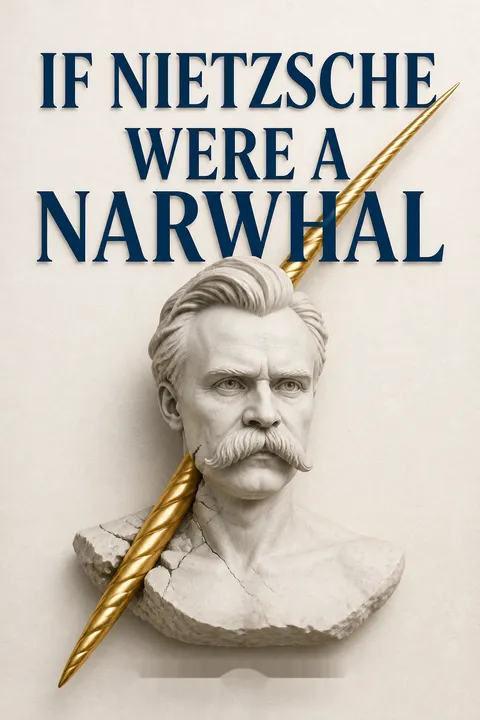


Key Takeaways
Treat intelligence as a bundle of abilities, not a ladder.
A slippery idea. The book opens with Nietzsche collapsing after seeing a coachman whip a horse, a vivid reminder that deep thought is not automatically a gift. Yet the story does not prove that intelligence caused his illness. The larger problem is definitional: researchers in artificial intelligence, psychology, and animal behavior do not agree on what intelligence is or how to measure it. In a survey of 567 AI experts, only a slim majority favored the same definition.
Different minds, different tools. The author argues that evolution did not select a single trait called intelligence. It shaped many abilities, such as learning, memory, imagination, and causal reasoning. Comparing species on one scale can hide the skills that matter in each animal's particular life.
What's useful here is the shift from ranking species to asking what a cognitive ability helps an animal do. A crow's tool use and a bee's navigation need not be weaker versions of human science; each is a solution to a different problem. The caution is that rejecting one universal score does not make comparison impossible. Carefully defined tasks can still reveal specific strengths and limits. The book's strongest position is not that all minds are equivalent, but that a single leaderboard confuses unlike capacities.
Use causal explanations, but remember that good outcomes can still be luck.
Why is not magic. The human tendency to ask why helps explain fire, farming, and medicine. But causal inference, the effort to identify what produces an event, can also generate confident mistakes. In medieval Europe, healers tried treating snakebites with a rooster's bare backside, believing it could draw out venom. Some remedies may have worked by chance; many did not. Testing a proposed cause against comparison groups is what separates a lucky cure from a reliable one.
Luck beats certainty. Investor Mike McCaskill lost money repeatedly before a lucky GameStop bet earned him $25 million. In a newspaper contest, cat Orlando's random stock picks beat professional fund managers and schoolchildren. The lesson is not that expertise never matters, but that complex explanations do not guarantee predictive power.
The distinction between knowing that two events travel together and knowing why one causes the other is central to science, but it is also a useful restraint on everyday certainty. A persuasive story about a market, a symptom, or a relationship can feel explanatory without predicting what happens next. The cat contest makes that gap memorable. Still, one contest cannot show that investing skill never matters. The more careful lesson is that results need repeated testing, and a lucky outcome should not be mistaken for proof of insight.
Language lets humans deceive beliefs, not merely redirect behavior.
More than mimicry. Animals can mislead: a plover may feign a broken wing to draw a predator away from its nest, and a male cuttlefish may imitate a female to approach a mate. The author distinguishes these tactics from human lying, which aims to make another mind believe something false. Theory of mind means modeling what someone else thinks or believes. Combined with language, it lets people invent claims about almost any subject.
Trust creates an opening. Russell Oakes posed as a qualified veterinarian, persuaded clients he could treat animals, and nearly killed a pony during surgery. People also tend to accept ordinary communication as true, a pattern called truth-default theory. Repeated, contradictory falsehoods can exploit that trust and make shared facts harder to establish.
The contrast between deceiving behavior and manipulating belief clarifies why human dishonesty can travel far beyond the immediate encounter. Language allows a false account to be repeated, elaborated, and passed between people who never meet the original speaker. Trust is not simply gullibility; it is also what makes everyday cooperation possible. The difficult implication is that fact-checking alone cannot repair every breach. When people disagree about which institutions or messengers deserve trust, correcting a claim may fail to restore a common picture of events.
Knowing death is inevitable adds foresight, not guaranteed wisdom.
Recognizing death differs. In 2018, an orca named Tahlequah carried her dead calf for seventeen days, drawing worldwide attention. Animals can respond to death and may recognize that a body has permanently stopped functioning. That is different from understanding that one's own death is inevitable. The author calls the latter death wisdom, or mortality awareness.
Foresight has a cost. Humans can mentally travel through time and imagine themselves in future situations, a capacity called episodic foresight. Some animals plan in narrower ways: scrub jays, for instance, store different foods for later meals. Human foresight can help with planning, but it also makes mortality imaginable. The book links that knowledge to grief, existential anxiety, and cultural efforts to create lasting meaning.
Tahlequah's behavior invites empathy, but it cannot by itself tell observers exactly what an orca understands about death. The distinction between recognizing a dead companion and anticipating one's own mortality helps prevent a different kind of mistake: treating every grief-like behavior as proof of humanlike reflection. The broader insight is that foresight is not an unqualified advantage. It can guide preparation while also making loss imaginable in advance. How much that awareness weighs on any individual remains difficult to establish from behavior alone.
Question moral certainty before it turns social rules into cruelty.
Norms are not moral codes. Animals follow social norms, patterns of expected behavior maintained by a group. A macaque that breaks a social expectation may make amends through a familiar reconciliation gesture. Humans also live by norms, but language and reflection let them turn expectations into explicit moral rules and defend those rules as right.
Reason can rationalize harm. The book contrasts animal fairness, such as capuchins rejecting unequal food rewards, with human systems that justified forced assimilation in Canadian residential schools. It also describes societies that punish homosexuality despite same-sex behavior being widespread among animals. The author argues that moral reasoning can formalize cooperation, but can also authorize violence against people cast as outsiders.
The distinction between an unspoken social expectation and a defended moral rule helps explain how conduct can acquire the authority of principle. Human moral reflection has a double capacity: it can expose a harmful norm, but it can also supply elaborate reasons to preserve one. The comparison with animals is provocative, not a demonstration that animal societies are uniformly fair; their hierarchies can exclude and injure, too. The sharper point is that moral vocabulary does not guarantee moral outcomes. A claim of righteousness deserves scrutiny, especially when its costs fall on a vulnerable group.
Ask what an animal experiences, not whether it thinks like a human.
Experience is the core. Consciousness, as used here, means subjective experience: there is something it feels like to see, taste, fear, or enjoy. The author uses a theater analogy: a spotlight represents conscious experience, while many other processes operate behind the scenes. Human minds can bring more kinds of thought into that spotlight, but this does not mean humans possess more consciousness than other animals.
Small brains may still feel. A disabled kea named Bruce used a pebble to clean his feathers, and bumblebees learned to move balls toward a target for food. These behaviors support arguments for flexible, intentional action. Some researchers infer that insects may have subjective experience, though the case remains uncertain and cannot be settled by behavior alone.
The theater analogy makes a useful distinction between having an experience and being able to reflect on that experience. It also shifts the ethical question from whether an animal can talk about pain to what evidence its behavior and nervous system provide. The hardest limit is the problem of other minds: private experience cannot be inspected directly, even in another person. Flexible behavior is suggestive, but it does not reveal precisely what a bee feels. Uncertainty is a reason for care in interpretation, not automatic dismissal.
Make distant consequences vivid and systems accountable.
The future feels faint. Prognostic myopia is the human ability to imagine future consequences without feeling them as strongly as present needs. A lawn seems like a small domestic choice, yet the book estimates that US lawns cover about forty million acres and consume roughly nine billion gallons of water a day. The cumulative cost is far removed from the pleasure of a neat yard.
Knowledge is not enough. The oil industry received warnings about carbon emissions decades before climate change became widely accepted, yet extraction continued. The same present-focused bias shapes everyday decisions: a person can understand that a late night will bring exhaustion and still choose one more song. Awareness alone does not make future harm emotionally urgent.
This concept explains why information campaigns often struggle against immediate rewards. A distant cost has to compete with concrete pleasures, routines, and livelihoods that are available now. The lawn example makes accumulation visible: individually modest choices can become large environmental pressures when repeated across millions of households. The analysis also points beyond personal discipline. When institutions reward short-term gains and leave long-term damage to others, asking individuals to care harder is insufficient. Durable responses must make future costs part of present decisions and accountability.
Human intelligence is exceptional, not proof that humans are winning.
Complexity can backfire. The Exceptionalism Paradox is the idea that human cognition can be extraordinary without making humans more successful or better. Amateur bungee jumper Eric Barcia used elaborate planning but misjudged how far his bungee cord would stretch and died. In another example, widespread DDT spraying nearly eliminated bedbugs, but resistant insects multiplied, while the pesticide persisted in the environment and entered human bodies.
Evolution has other winners. Bacteria vastly outnumber humans, and crocodilians have survived for tens of millions of years without humanlike reasoning. Evolution does not award points for complexity; a simple behavior can be effective enough to persist. The book's challenge is to judge cognition by what it does, not by how impressive it looks.
The paradox separates technological sophistication from biological success. A species can build powerful tools and still create conditions that threaten its own survival. Yet longevity and population size are not complete measures of value either: a long-lived lineage is not necessarily happier, wiser, or more ethically worthy. The comparison is strongest as a challenge to human vanity, not as a final scoring system. It asks readers to specify what counts as success before declaring that any species, human or otherwise, has won.
Measure progress by the pleasure it creates, including for animals.
Pleasure offers another yardstick. The author proposes judging life by the pleasure and misery experienced by conscious beings, rather than by technological achievement or species dominance. A well-cared-for flock of chickens may have food, safety, and social contact, while a person with exceptional intelligence may still live in misery. The comparison challenges the assumption that sophisticated thought automatically makes a life better.
Human power cuts both ways. People can improve animal lives, but industrial farming can confine chickens in conditions that prevent normal movement and social behavior. In the epilogue, the author describes rescuing slugs from his driveway while admitting that his own rules about which animals to protect are inconsistent. The science of animal minds informs ethical choices, but does not settle them.
Pleasure is a compelling common currency because it takes animal suffering seriously without requiring animals to share human ambitions. It also exposes how privilege can distort claims about whether humanity is thriving: one person's comfort says little about the average human experience. Still, pleasure alone may not capture every moral concern, such as agency, fairness, or cultural identity. The book presents a practical challenge rather than a complete ethical formula: when humans can foresee suffering and reduce it, claims of intellectual superiority carry little weight unless that capacity is used.
Analysis
The book's central move is to replace the ladder of intelligence with a set of questions about function, cost, and value. Instead of asking which species is smartest, it asks what particular cognitive skills enable, what harms they can produce, and whether the results improve the lives of beings that can experience them. Stories make that argument memorable: a cat's random stock picks outperform experts, an orca carries her dead calf, and a bumblebee solves a task outside its ordinary routine. These examples unsettle the assumption that human reasoning is the universal measure of mind.
The argument is strongest when it distinguishes capacities that are often conflated. Learning an association is not the same as understanding a cause; recognizing a dead body is not the same as anticipating one's own death; following a norm is not the same as defending a moral rule; and consciousness is not identical to self-awareness. Those distinctions give readers a richer vocabulary for interpreting animal behavior without turning every impressive action into proof of humanlike thought.
The book is less conclusive when it moves from individual examples to broad claims about species, evolution, or human extinction. Evidence for animal cognition varies in strength, and behavior rarely provides direct access to subjective experience. Likewise, the fact that human reasoning has enabled destructive technologies does not establish that intelligence itself is the cause; institutions, incentives, and unequal power shape how those tools are used. The argument benefits from treating these as interacting causes rather than a single cognitive flaw.
Its ethical proposal, to judge progress by pleasure and suffering, gives the critique a constructive destination. It is not a scientific finding that settles morality, but a value choice that places animals within the circle of concern. The lasting lesson is not that humans should imitate simpler minds. It is that cognitive power earns no automatic moral credit. Its worth depends on what it enables people to understand, prevent, and care for.
Review Summary
If Nietzsche Were a Narwhal explores human and animal intelligence, questioning human exceptionalism. Gregg argues that our cognitive abilities, while complex, may lead to our downfall. He discusses topics like deceit, morality, and foresight, comparing human and animal cognition. The book is praised for its accessibility, humor, and thought-provoking content, though some readers found it repetitive or disagreed with certain conclusions. Overall, it challenges readers to reconsider the value of human intelligence and its consequences for our species and the planet.
People Also Read



Glossary
Why specialist
Cause-seeking thinkerThe author's term for humans' strong tendency to ask why events happen and to seek causes behind what they observe. This ability supports science and technology, but it can also encourage false explanations when correlation is mistaken for causation. Other animals can learn useful associations without needing to identify underlying causes.
Diagnostic inference
Inference from reliable cluesA form of learning in which an animal uses a clue associated with an outcome to locate or predict that outcome. In the author's example, a dog can choose the shoe that rattles because it contains a treat. The dog may identify the treat correctly without understanding that the treat itself caused the sound.
Theory of mind
Modeling another mindThe ability to attribute beliefs, desires, intentions, or knowledge to another individual and use those mental states to predict behavior. The book presents theory of mind as crucial to human deception: a liar must anticipate what another person believes and try to alter that belief. Evidence for similar abilities in other species remains debated.
Tactical deception
Misusing an honest signalA deceptive act in which an animal uses a normally honest signal in a different context to mislead a familiar individual. A male mourning cuttlefish may display female-like coloration toward a rival male while retaining male coloration toward a potential mate. The tactic depends on adjusting the signal to the audience and situation.
Truth-default theory
Assuming messages are trueA theory associated with communication researcher Timothy Levine. It proposes that people generally accept incoming communication as truthful unless they have a reason to doubt it. This tendency can make ordinary cooperation and communication efficient, but it also creates opportunities for fraud, propaganda, and other forms of deception.
Minimal concept of death
Death as permanent nonfunctionThe book's term, based on philosopher Susana Monsó's account, for recognizing two basic features of death: bodily and mental functions have stopped, and the state is irreversible. An animal may acquire this understanding through experience with living and dead individuals without understanding that its own death is inevitable.
Death wisdom
Awareness of personal mortalityThe author's term for understanding that one's own death is inevitable. It depends on capacities such as explicit concepts of time and imagining oneself in future situations. The book argues that this awareness can support planning and cultural creation while also contributing to fear, grief, and existential distress.
Mental time travel
Revisiting or preliving eventsThe ability to project the mind backward to recall personal events or forward to imagine possible events. It supports planning by allowing someone to consider what could happen under different choices. The book describes some animal behavior that resembles future planning, while arguing that human mental time travel is more expansive.
Episodic foresight
Imagining specific future situationsThe capacity to construct a mental picture of a particular future event and consider possible outcomes. It differs from behavior driven by instinct, such as a bird storing food before winter without needing to imagine itself in winter. The author treats episodic foresight as one of the capacities connected to human mortality awareness.
Normative regularity
Socially maintained behavior patternsA term used for recurring patterns of behavior that a community maintains through social expectations and responses to violations. These patterns can regulate access, status, reconciliation, and cooperation in animal groups. The book distinguishes them from human moral rules, which can be explicitly stated, justified, and revised.
Qualia
Felt qualities of experienceThe subjective qualities of an experience, such as the taste of food, the feeling of pain, or the appearance of a color. Qualia are private: one person can describe an experience, but cannot directly inspect how it feels to another individual. The book uses the term to discuss consciousness in humans and other animals.
Prognostic myopia
Weak emotional grip of futuresThe author's term for humans' ability to imagine future consequences while feeling them less strongly than immediate needs and rewards. It helps explain why people may knowingly choose short-term pleasure or profit despite anticipating later costs. The book applies the concept to everyday choices and long-term environmental risks.
Exceptionalism Paradox
Complexity can undermine successThe author's term for the possibility that human cognitive abilities can be genuinely unusual yet fail to make humans more successful or better off. Complex planning and technology can produce remarkable achievements, but they can also generate self-harm, environmental damage, and threats to survival. Exceptional ability does not guarantee beneficial outcomes.
FAQ
What's If Nietzsche Were a Narwhal about?
- Exploration of Intelligence: The book explores how animal intelligence can illuminate human cognitive flaws and misconceptions, contrasting human and animal cognition.
- Nietzsche's Philosophy: It uses Nietzsche's existential thoughts to question the benefits of deep human thinking compared to animals' simpler existence.
- Cognitive Dissonance: Justin Gregg discusses how human intelligence can lead to existential crises, unlike animals who live in the moment.
Why should I read If Nietzsche Were a Narwhal?
- Unique Perspective: The book offers a fresh take on intelligence by comparing human and animal cognitive abilities, making it enlightening and entertaining.
- Philosophical Depth: It encourages reflection on intelligence, morality, and existence, deepening understanding of our place in the animal kingdom.
- Engaging Narration: Justin Gregg's accessible and humorous writing makes complex ideas about philosophy and animal behavior enjoyable.
What are the key takeaways of If Nietzsche Were a Narwhal?
- Questioning Human Exceptionalism: The book challenges the idea that human intelligence is superior, suggesting it often leads to anxiety and moral dilemmas.
- Animal Intelligence as a Model: It posits that animals may navigate life more effectively without existential burdens.
- Cognitive Skills and Morality: The author explores how human cognitive abilities shape moral frameworks, often justifying harmful behaviors.
How does If Nietzsche Were a Narwhal define intelligence?
- Lack of Consensus: The book highlights the confusion around defining intelligence, noting experts struggle to agree on a clear definition.
- Relative Rationality: Intelligence is proposed as adapting to the environment with limited knowledge, emphasizing practical over fixed traits.
- Cognitive Abilities: Intelligence encompasses problem-solving, learning, and social interaction, manifesting differently across species.
What is the significance of Nietzsche's thoughts in If Nietzsche Were a Narwhal?
- Existential Reflection: Nietzsche's philosophy explores the burdens of human thought, particularly finding meaning in suffering and existence.
- Cognitive Dissonance: The book illustrates Nietzsche's conflict between envying animal simplicity and recognizing human suffering.
- Moral Implications: Nietzsche's ideas on morality are examined in the context of human intelligence justifying violence, contrasting with animal instincts.
How does If Nietzsche Were a Narwhal address the concept of morality?
- Cultural Influence: Human morality is shaped by cultural contexts, making it subjective rather than universal.
- Animal Normativity: It contrasts human moral reasoning with simpler, less destructive animal social rules.
- Moral Complexity: Human moral systems can lead to violence and suffering, questioning the benefit of advanced moral reasoning.
What examples of animal intelligence are discussed in If Nietzsche Were a Narwhal?
- Crows and Pigeons: Studies show crows use tools and solve problems, while pigeons outperform humans in certain tasks, challenging human superiority.
- Chimpanzees and Bonobos: Their social behaviors, including cooperation and conflict resolution, illustrate complex social structures.
- Narwhals and Others: Narwhals are used as a metaphor for simpler, effective living without existential thought.
What is prognostic myopia as discussed in If Nietzsche Were a Narwhal?
- Definition: Prognostic myopia is the human tendency to focus on immediate needs, neglecting long-term consequences.
- Daily Life Examples: Personal anecdotes illustrate how immediate desires override rational decision-making.
- Broader Implications: It contributes to global issues like climate change, threatening survival due to short-sighted decisions.
How does If Nietzsche Were a Narwhal compare human and animal intelligence?
- Complexity vs. Effectiveness: Human intelligence is complex but not necessarily more effective for survival than simpler animal intelligences.
- Animal Intelligence Examples: Various species demonstrate problem-solving and social behaviors, suggesting simpler intelligence can be effective.
- Exceptionalism Paradox: Human intelligence, while unique, often leads to negative outcomes, challenging its perceived superiority.
How does If Nietzsche Were a Narwhal challenge traditional views of morality?
- Morality vs. Natural Behavior: Many human moral frameworks don't align with natural animal behaviors, questioning their validity.
- Cultural Variability: Moral beliefs vary across cultures, often socially constructed rather than universally true.
- Call for Reevaluation: Understanding animal behavior can lead to more compassionate and ethical human moral frameworks.
What insights does If Nietzsche Were a Narwhal provide about human success?
- Redefining Success: Success should not be measured by human achievements alone but by pleasure maximization for all beings.
- Consequences of Actions: Human actions often harm the environment and other species, questioning if intelligence leads to true success.
- Potential for Change: Despite challenges, there's hope for leveraging intelligence to create a more equitable world, emphasizing empathy and ethics.
How does If Nietzsche Were a Narwhal explore the relationship between intelligence and happiness?
- Existential Burden: Higher intelligence can lead to anxiety and existential dread, as seen in Nietzsche's life.
- Animal Contentment: Animals may experience straightforward existence, free from complex thought burdens, leading to different happiness.
- Cognitive Dissonance: Pursuit of meaning can lead to unhappiness, questioning the true value of intelligence.
Download PDF
Download EPUB
.epub digital book format is ideal for reading ebooks on phones, tablets, and e-readers.








