

Key Takeaways
Rewrite the stories that teach women to distrust their own authority
Stories set the limits. Blackie begins with a clash between two origin stories. In Genesis, Eve is cast as a disobedient cause of human suffering. In Celtic myths, women can create the land, carry wisdom, and decide who is fit to rule it. These stories do more than entertain: they shape what a culture considers natural, and what women can imagine for themselves. The memory of Boudica, the first-century leader who fought Roman rule, gives Blackie a historical, if imperfectly documented, example of female authority.
Reclaiming is not nostalgia. Blackie argues that women need stories in which they act, lead, and protect, rather than exist only as temptations or prizes in a man’s quest. New stories can make new roles imaginable, and help women recognize their capacity to shape the world.
What's striking is the focus on narrative as a form of social infrastructure. Stories teach people what to expect from authority, care, and gender before formal rules ever appear. That insight connects myth to modern debates about representation: seeing women in varied positions of agency can widen the roles audiences regard as possible. Yet inherited stories are not historical records, and Celtic traditions were diverse, changing, and not free of hierarchy. Their value lies less in proving a lost golden age than in supplying imaginative alternatives to a culture that has too often treated male power as inevitable.
Treat alienation as a broken relationship with place, not personal failure
The Wasteland is inside and outside. Blackie uses the term for both a damaged culture and the inner emptiness produced by living against one’s values. Her younger self looks successful on paper, with a neuroscience PhD and a senior corporate job, yet feels trapped commuting to work for a tobacco company. The security she chose has become a life she cannot inhabit.
The source matters. A spring in Connemara once seemed to promise abundance, but Blackie’s fear of crossing a field of bracken kept her from returning to it. A pump brought water to the kitchen, yet concealed the source. She connects that lost spring to the way modern comfort can hide dependence on the living world. The book links this severance to systems that treat women and nature as things to control or exploit.
The Wasteland gives personal distress a social and ecological setting. That can be clarifying: burnout is not always an individual failure of resilience when work, consumption, and daily routines conflict with a person's values. Environmental psychology also recognizes that damage to a home landscape can produce distress, not merely aesthetic disappointment. Still, a place-based account cannot explain every mental-health struggle, and leaving a harmful job or moving to the countryside is not available to everyone. The useful question is broader: where does daily life conceal dependence, and which relationships, human or ecological, have been neglected?
When your old life no longer fits, seek a new skin rather than a return
The Selkie loses home. In Blackie’s retelling of a Scottish and Irish seal-woman legend, a fisherman steals a Selkie’s sealskin, trapping her on land. She builds a life and loves her daughter, but the separation from her own element drains her. When her old skin is found, it has decayed; she cannot simply put it back on. She must undertake a difficult journey to find a different way home to herself.
Change requires choice. The story gives Blackie a metaphor for the protective identity she developed as a child around violence and fear. That tough shell helped her survive, but eventually kept her from living freely. The Call is the moment when a person recognizes the cost of continuing as before. Answering it does not mean knowing the destination. It means choosing movement over a familiar life that has become unlivable.
The Selkie story makes identity feel embodied rather than abstract: a skin is protection, belonging, and the ability to move through a particular world. That resonates with trauma-informed accounts of adaptation, where strategies that once ensured safety can become restrictive in new circumstances. The story also avoids the easy fantasy of returning to an untouched former self. Its limit is that transformation can sound like a solitary act of will, when safety, money, health, and supportive relationships shape what choices are possible. A new skin is not simply discovered; often, the conditions for trying one must be built.
Let grief expose what must change, but do not mistake crisis for cure
Transformation has a dark passage. Blackie draws on the Welsh story of Ceridwen’s cauldron, a year-long brew that gives a young man wisdom after he accidentally tastes three drops. Her pursuit of him ends in his death and rebirth as the poet Taliesin. The myth frames change as a process that breaks old forms rather than polishing them. Blackie also recounts the story of Mis, whose grief becomes a period of wildness and withdrawal before she finds a way back to community.
Do not rush the process. Blackie describes breakdown, grief, illness, and environmental despair as possible descents into a period when old identities no longer work. She warns against quick fixes and against becoming so absorbed in pain that life narrows to the wound. The dark may require time, support, and careful attention.
The book’s respect for grief counters a culture that often treats painful emotions as faults to eliminate quickly. Narrative therapy similarly asks how a person can understand distress in context rather than define the self by a diagnosis or crisis. But the stories should not be read as advice to avoid medical care or romanticize psychosis, depression, or trauma. A breakdown can be meaningful to the person experiencing it without being safe or beneficial in itself. The strongest version of the insight holds both truths: suffering may reveal a life that needs changing, and practical support can be essential while change takes shape.
Learn the place beneath your feet before claiming you belong
Belonging takes attention. For Blackie, rootedness is more than living in a beautiful landscape or having ancestral ties. It grows through learning a place’s weather, ecology, stories, and human history, and through taking part in its life. Her daily walks across Donegal bog turn unfamiliar plants into recognizable neighbors. The bog itself teaches her to notice where the ground is firm before stepping off the track.
A pilgrimage is not a straight line. Blackie describes her path through repeated departures, wrong turns, and returns. A labyrinth at Moya McGinley’s Irish retreat offers a fitting image: its winding route leads to the center without dead ends, then carries the walker back out. Rootedness can also be cultivated in a city. The London naturalist Viv Palmer notices and names the insects and wildlife around her home.
This account turns belonging from a sentimental feeling into a learnable practice. Attention to local species, seasons, and histories can deepen place attachment and make environmental change harder to ignore. The city example matters because it prevents rootedness from becoming a privilege reserved for rural residents. At the same time, deep attachment should not become a test of authenticity or a demand that people remain where they were born. Migration, displacement, and mixed identities are real. Belonging can be created through sustained care and learning, even when ancestry offers no simple map.
Recover feminine creativity without making motherhood the price of womanhood
Creativity is life-giving work. Blackie treats creativity not just as art, but as the capacity to make, nurture, and renew life. She traces this idea through women’s stories of creation and through her own return to knitting, gardening, herbal practice, and writing. Her conversation with writer Lucy Pearce complicates the familiar ideal of the self-sacrificing mother: Pearce describes a creative maternal identity that needs time for imaginative work as well as care for children.
There is no single female script. Blackie had no children and struggled with myths that equated womanhood with pregnancy and motherhood. She ultimately rejects that narrow measure. The book also discusses menstrual cycles as a possible rhythm for changing energy and attention, but presents this as one woman’s way of making sense of experience, not a universal rule for all women.
The most valuable move here is separating creativity from prestige. Making a meal, tending a garden, composing a poem, and developing a community practice can all involve the same generative impulse. The section also exposes how care work is praised while women’s independent ambitions are often treated as selfish. Its language of feminine energy, however, risks turning cultural patterns into biological destiny. Women differ in bodies, desires, and capacities, and many do not experience creativity through motherhood or menstrual cycles. The insight holds most strongly when treated as permission to define a life, not as a new standard of womanhood.
Restore balance by pairing feminine relational power with masculine discernment
The Grail is a relationship. In the Grail stories, the Fisher King’s wound leaves his kingdom barren. The Grail, carried by women, represents a life-giving feminine power; the spear stands for a wounded masculine force. Blackie reads the crisis as a failure of balance, not proof that one side should rule. In the tale of Gawain and Lady Ragnelle, the answer to what women want is sovereignty: the right to choose and govern their own lives.
Both principles matter. Blackie describes the feminine through qualities such as relationship, feeling, and care, and the masculine through focus, reason, and action. She argues that domination emerges when one set of qualities overwhelms the other. The repair begins with valuing women’s authority and building relationships in which neither person needs to control the other.
The emphasis on reciprocity is stronger than a simple reversal of the hierarchy. Systems thinking offers a useful parallel: a healthy system depends on feedback, interdependence, and limits, not on one function expanding without regard for the rest. The Ragnelle story makes sovereignty concrete as choice rather than abstract status. Yet gendered labels can blur the distinction between cultural training and innate traits. Care, rationality, courage, and cooperation are human capacities, not the property of one sex. The framework is most useful as a critique of imbalance, and least useful when it assigns fixed roles to women and men.
Bring your hard-won gifts back as practical care for community and land
Return is the point. Blackie’s journey is not meant to end in private self-discovery. The Eco-Heroine returns with skills and insight to serve a particular place and community. Her own work grows from learning local plants and stories, then sharing myth, writing, and creative practice with women. Other women in the book act through different gifts: herbalist Nikki Darrell teaches community plant medicine, while Londoner Jacqueline Woodward-Smith helps people notice urban wildlife and wildflowers.
Start where you are. The book asks readers to learn their local ecology and history, find the work they can offer, and take responsibility for their impact. Care may mean teaching, restoring a habitat, supporting a community, or simply noticing and protecting the small life nearby. No single dramatic rescue is required; repeated local acts can build a culture of stewardship.
This return from inner work to public contribution is a crucial corrective to self-help that treats personal growth as the final product. It also echoes community-based conservation, where local knowledge and participation can shape durable care for a landscape. The examples broaden stewardship beyond formal activism or rural living. Still, local action cannot replace policy, infrastructure, or corporate accountability. A person who picks up litter should not be asked to compensate for systems that produce it at scale. Personal responsibility gains force when it connects to collective organizing and institutional change.
Use elderhood to focus your power, tell the truth, and protect life
Age can sharpen purpose. Blackie presents the Cailleach, the Gaelic old woman who shapes and protects the land, as an image of elder strength. In the book’s account, she is not simply a frail figure at the end of life: she can be fierce, creative, and responsible for the wild world. Blackie connects this image to menopause as a transition that may loosen old roles and clarify what deserves a woman’s remaining energy.
Wisdom must travel outward. The peace activist Scilla Elworthy describes postmenopausal life as a time of focused service and mentoring. Her work with Rising Women, Rising World invites women to turn what breaks their hearts into practical initiatives. Blackie’s version of elderhood is not withdrawal from the world, but the ability to pass on knowledge, build alliances, and speak forcefully when life is threatened.
This portrait challenges ageism by treating later life as a source of public capacity rather than a period of quiet decline. It also usefully distinguishes fierce honesty from mere hostility: protection can require clear limits and direct speech. The model of mentoring networks connects personal experience to organizational resilience, since knowledge survives when it is shared rather than hoarded. Menopause is not experienced identically, however, and not every older woman has the health, time, or resources to take on new service. Elderhood is best understood as a valued possibility, not another obligation imposed on women.
Analysis
The book’s most distinctive move is to change the scale of the heroine’s story. Personal distress is not treated as a puzzle contained entirely inside the individual. Blackie connects the anxious worker, the neglected spring, the threatened bog, and the devalued feminine through a shared pattern of severed relationship. Her proposed repair is likewise relational: learn a place, recover stories that grant agency, develop one’s capacities, and return them to the community and more-than-human world. The result is less a conventional self-improvement program than a spiritual ecology of attention and responsibility.
The memoir gives this argument credibility because Blackie does not present a clean escape from modern life. She repeatedly leaves corporate work for land-based living, then recreates overwork through publishing, farming, and community projects. The recurrence matters. A change of scenery cannot by itself undo the habits and systems that produced exhaustion. Her account of finally breaking down on Lewis makes the journey nonlinear and embodied, while also showing how place can act as a demanding teacher rather than a soothing backdrop.
The book’s main tension is between the power of myth and the risk of treating myth as history. Celtic stories provide Blackie with images of women as rulers, healers, and guardians, but they cannot establish that ancient Celtic societies were egalitarian or that all women share one relationship to nature. The author’s strongest case does not require either claim. Myths can reopen imagination without being literal records, and feminine or masculine qualities can be understood as cultural patterns rather than biological destinies.
The practical test of the argument is whether belonging expands agency without becoming a new purity standard. Rootedness should not require rural residence, ancestral credentials, motherhood, or withdrawal from modern institutions. Blackie’s urban examples and her emphasis on local learning point toward a more inclusive answer: people can deepen attachment through attention and care wherever they live. The book is most persuasive when it turns that attachment into both intimate practice and collective responsibility, rather than suggesting that personal reconnection alone can repair structural harm.
Review Summary
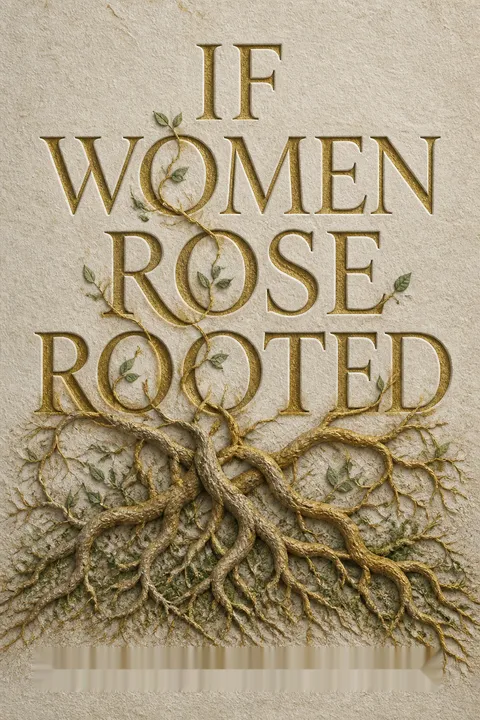
If Women Rose Rooted received mixed reviews. Many praised its exploration of Celtic mythology, feminine power, and connection to nature, finding it inspirational and life-changing. Critics appreciated Blackie's beautiful prose and personal journey. However, some found it repetitive, privileged, and exclusionary in its portrayal of womanhood. The book's emphasis on Celtic heritage resonated with some readers while others felt disconnected. Some reviewers criticized the author's writing style and wished for more focused content. Overall, the book sparked deep discussions about feminism, environmentalism, and personal transformation.
People Also Read


Glossary
Eco-Heroine’s Journey
A place-rooted path to serviceBlackie’s alternative to the individual, achievement-driven Hero’s Journey. It describes a process of recognizing cultural and ecological damage, answering a call to change, enduring a period of transformation, recovering undervalued forms of wisdom, and returning to serve a particular community and place. Its defining aim is not private triumph, but renewed belonging and responsibility within the web of life.
Wasteland
Inner and ecological disconnectionBlackie’s term for a condition that is at once cultural, personal, and environmental. The Wasteland is a society organized around domination, consumption, and separation from nature, alongside the emptiness people may feel when their lives conflict with their values. It describes not only damaged landscapes, but a loss of belonging, creativity, and responsibility.
Sovereignty
The land’s life-giving authorityIn the Celtic myths discussed by Blackie, Sovereignty is the power of the land, often personified as a goddess or woman. She grants the right to rule and expects the ruler to care for the land and its people. The concept joins political legitimacy to ecological responsibility, and also represents women’s authority to choose and shape their own lives.
bean feasa
Woman of knowledgeAn Irish term Blackie uses for the Wise Woman, a figure associated with healing knowledge, local plants, spiritual insight, and guidance. In the book, the bean feasa is not simply a herbalist or private healer. Her knowledge is rooted in a particular place and serves the wellbeing of individuals and the wider community.
dúchas
Ancestral belonging to placeAn Irish word that Blackie uses for a deep belonging to a particular place and community, often linked to lineage, shared responsibility, and local knowledge. It is more than residence or affection for a landscape. The term expresses a reciprocal bond in which a person is shaped by a place and also has obligations toward it.
solastalgia
Distress from environmental changeA term cited by Blackie for the distress people experience when their home environment changes or is damaged while they remain connected to it. It differs from nostalgia, which describes longing for a place left behind. In the book, solastalgia names the grief that arises when familiar landscapes and ecological relationships are altered or lost.
Otherworld
A parallel mythic realmIn the Celtic traditions Blackie explores, the Otherworld is a realm associated with deities, ancestors, spirits, wisdom, and transformation. It is often imagined as existing alongside the everyday world, accessible through particular places or times. Blackie treats it as a meaningful part of the stories through which people understand their relationship with land and life.
Cailleach
The land’s elder guardianA Gaelic figure usually translated as an old woman or hag, whom Blackie presents as a creator and protector of the land. In stories, the Cailleach may shape mountains, govern winter, and guard wild creatures. She becomes an image of elderhood as strength, ecological responsibility, and authority that persists despite attempts to dismiss or diminish it.
FAQ
What's If Women Rose Rooted about?
- Exploration of Feminine Identity: The book explores the relationship between women and the land, focusing on reclaiming feminine stories and identities that have been suppressed over time.
- Celtic Myths and Stories: Sharon Blackie uses Celtic mythology to illustrate the deep connections women have with nature and the wisdom these ancient tales offer.
- Journey of Transformation: The narrative follows the Heroine’s Journey, involving a descent into darkness, self-discovery, and a return to the light with newfound wisdom and strength.
Why should I read If Women Rose Rooted?
- Empowering Perspective: It offers a unique view on women’s roles in society, encouraging readers to reclaim their stories and identities.
- Connection to Nature: The book emphasizes reconnecting with the natural world as vital for personal and collective healing.
- Richly Layered Narratives: Blackie combines personal anecdotes with mythological stories, appealing to those interested in feminism, mythology, and environmentalism.
What are the key takeaways of If Women Rose Rooted?
- Reclaiming Stories: Women need to reclaim their narratives and understand their historical roles as guardians of the land and wisdom.
- The Heroine’s Journey: Blackie outlines a journey for women focusing on community, connection, and the feminine experience.
- Environmental Responsibility: Women’s empowerment is linked to environmental stewardship, advocating for sustainable practices and respect for nature.
What are the best quotes from If Women Rose Rooted and what do they mean?
- “We are bleeding at the roots...”: Highlights the disconnection from nature and its impact on women’s identities and well-being.
- “If we surrendered to earth’s intelligence...”: Suggests growth and strength come from reconnecting with the earth’s wisdom.
- “To change the world, we women need first to change ourselves.”: Emphasizes personal transformation as essential for societal change.
What is the Heroine’s Journey in If Women Rose Rooted?
- Distinct from Hero’s Journey: Focuses on community, connection, and the inner life of women, contrasting with the action-oriented Hero’s Journey.
- Stages of Transformation: Includes stages like the Call to Adventure, Descent into Darkness, and the Return, emphasizing personal growth.
- Emphasis on Relationships: Highlights the importance of relationships with other women, nature, and the self for healing and empowerment.
How does If Women Rose Rooted address environmental issues?
- Interconnectedness of Feminism and Ecology: Women’s empowerment is linked to environmental stewardship, advocating a holistic approach.
- Celtic Wisdom and Nature: Draws on Celtic myths emphasizing the sacredness of the land and women’s roles as its protectors.
- Call to Action: Encourages engagement with local environments, promoting sustainable practices for personal and planetary health.
What role do Celtic myths play in If Women Rose Rooted?
- Cultural Heritage: Serve as a source of wisdom and identity, celebrating feminine strength and connection to the land.
- Framework for Understanding: Illustrate historical roles of women as guardians of nature and wisdom, contrasting with modern narratives.
- Inspiration for Transformation: Act as guides for personal transformation, encouraging readers to reclaim their identities and power.
What is the significance of the title If Women Rose Rooted?
- Metaphor for Growth: Suggests women can achieve strength by reconnecting with their roots in nature, like trees rooted in the earth.
- Call to Reclaim Identity: Emphasizes reclaiming feminine narratives and identities for authenticity.
- Connection to Nature: Reflects the central theme of the relationship between women and the natural world for healing.
How does Sharon Blackie suggest women can reclaim their stories in If Women Rose Rooted?
- Engagement with Nature: Advocates spending time in nature to rediscover identities and cultural wisdom.
- Storytelling and Sharing: Emphasizes sharing personal stories as a means of reclaiming power and fostering community.
- Exploration of Myths: Encourages exploring myths for inspiration and guidance in reclaiming roles as wise and powerful beings.
What challenges do women face in If Women Rose Rooted?
- Cultural Narratives: Pervasive narratives depict women as inferior, hindering their ability to reclaim identities and power.
- Internalized Oppression: Women struggle with beliefs about their worth, preventing them from embracing their potential.
- Environmental Crisis: Addresses broader environmental challenges, suggesting women’s empowerment is crucial for sustainable practices.
How can the lessons from If Women Rose Rooted be applied in daily life?
- Mindful Connection to Nature: Cultivate a deeper relationship with nature through outdoor activities or time in green spaces.
- Community Building: Form supportive communities among women, sharing stories and fostering connections.
- Personal Reflection and Growth: Encourage self-exploration and reflection to confront narratives and reclaim identities.
What personal experiences does Sharon Blackie share in If Women Rose Rooted?
- Journey of Self-Discovery: Shares her struggles with identity and belonging, serving as a backdrop for the book’s themes.
- Connection to Place: Recounts her deep connection to landscapes, illustrating how they shaped her identity.
- Empowerment Through Community: Discusses building community and supporting women, highlighting the importance of connection.
About the Author
Other books by Sharon Blackie


Download PDF
Download EPUB
.epub digital book format is ideal for reading ebooks on phones, tablets, and e-readers.








