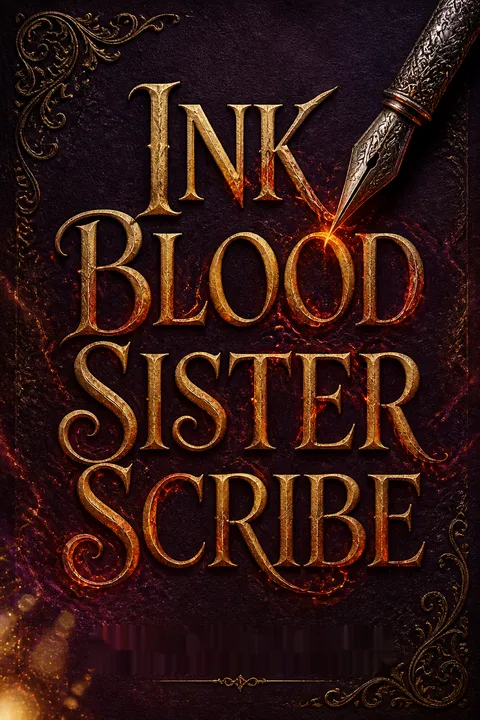


Plot Summary
Prologue
Joanna finds her father, Abe, dead in the snow-damp yard, a strange book resting beneath his hand. Its pages seem to drink the blood from his body, and its writing shifts beyond her sight.
Abe’s final note asks her to keep the book from her blood, bar her mother from the house, and send a message of love to Esther, the sister who left years ago. Joanna does not yet know what killed him or why he broke his own rule by taking the book outside. She only knows that his death has left her alone with a dangerous mystery.
The opening makes a private family loss the first evidence of a larger system: Abe’s death is not simply grief, but a rule-breaking event with material consequences. The unreadable book turns knowledge into a threat before the reader understands how magic works, while the unfinished note leaves Joanna with duties instead of explanations. Its most consequential instruction, keeping Cecily out, places family loyalty under immediate strain. The prologue also establishes a pattern that governs the novel: protection and secrecy may be intended as love, yet they leave the people being protected unable to judge the danger for themselves.
Esther Misses November
At an Antarctic research station, electrician Esther Kalotay is finishing a long winter alongside Pearl, a carpenter she has begun to love. Esther has spent ten years moving every November because her father warned that the people who killed her mother would find the family if she stayed still.
Now Abe is dead, and Pearl gives Esther a reason to risk remaining for the summer. At a welcome party, the smell of yarrow pulls her back toward childhood. In a public bathroom, she finds stubborn red marks at the mirror's corners. The sight changes her choice to stay from an act of hope into a possible danger: someone at the remote station is practicing magic.
Esther’s choice is not simple rebellion against a paranoid parent. She has built motion into a form of self-protection, leaving each place before attachment can become a liability. Pearl unsettles that system because affection makes staying feel like a life rather than a tactical error. The blood-marked mirror brings the danger into the same room as this new intimacy. The scene turns a private decision into a test of whether Esther can distinguish inherited fear from present evidence, a distinction her father never gave her enough information to make.
Joanna's Sealed World
Two years after Abe's death, Joanna Kalotay lives inside the Vermont house he hid behind magical wards, tending its collection and trying to reproduce its spells with her own blood. Her experiments keep failing. She sets the wards each night, remembers Esther through the postcards that arrive monthly, and resents her sister for not returning after their father died.
When a new card says Esther will remain in Antarctica another season, Joanna's mother, Cecily, reacts with alarm rather than relief. Meanwhile, a stray cat begins accepting food on the porch. Joanna's small attempts to care for it reveal how much she wants company, but even inviting a creature indoors feels like changing the boundaries Abe left behind.
Joanna's isolation is maintained by practices that genuinely protect her, which makes confinement difficult to name as harm. Her nightly warding is skilled, purposeful labor, but it also keeps her from testing a life outside the house. The postcards let her remain emotionally connected to Esther while preserving the distance that has hurt her. The cat offers a low-stakes rehearsal for welcoming another presence, yet Joanna treats even that choice as a potential betrayal of Abe. Her caution is not weakness; it is the learned price of living where every boundary carries magical force.
A Gun at the Gala
In London, Nicholas, the sheltered heir to a vast magical collection, has written a spell that makes water resemble a rare vintage wine for a wealthy patron's party. The guests praise the illusion while overlooking the blood and labor that Nicholas supplied. After he retreats to the balcony with Maram, his tutor and the Library's chief scholar, an armed stranger forces his way into their car and identifies Nicholas as the Library's Scribe.
Collins, Nicholas's bodyguard, fires, and the attacker collapses. The shot appears to save Nicholas, but the encounter leaves the Library on alert. Richard, Nicholas's uncle and its director, confines him to the estate and orders him to prepare truth spells for staff interrogations.
Nicholas's public invisibility is paradoxical: the guests admire the spell but not its maker, while the Library treats his talent as an asset to be managed. His resentment is sharpened by the bodily cost of producing magic, which the party's polished performance conceals. The apparent attack briefly gives him a concrete enemy, but it also allows Richard to tighten restrictions in the name of safety. The scene makes the central ambiguity of guardianship visible: care can be real and still function as control, especially when the person being protected has no independent account of the danger.
A Message Through Glass
Esther studies the marks and recognizes a mirror spell, then writes a question and holds it to the glass. After a long silence, a note and envelope emerge through the mirror. The unseen sender warns that Esther and her loved ones are in danger, urges her to go home, and provides a forged passport, plane tickets, and a vial of blood.
The sender also warns that others are watching. Esther cannot tell whether the message is rescue or bait, and the tickets require her to leave the station within days. Her hesitation deepens when her mother's old Spanish novel disappears from her room. Since Pearl knew its value, Esther begins to suspect the person she most wants to trust.
The mirror makes information physically transferable, but it does not make the sender trustworthy. Esther receives precisely what she needs to leave and no explanation she can use to evaluate the offer. The missing novel compounds that uncertainty by turning a cherished object into possible evidence of betrayal. Her dilemma is therefore not simply whether to obey a warning: it is whether to act without the context that would make action feel like her own. The scene also makes her old habit of leaving newly painful. This time she has a reason to stay, and an equally compelling reason to go.
Cecily's Blood Boundary
When Joanna visits Cecily, her mother asks to enter the old family home, then uses a spell to draw a blood boundary around the living room and trap her daughter inside. Cecily refuses to explain what she wants, so Joanna bargains: she will bring her mother home if Cecily ends the spell and lets Joanna watch her work. Cecily agrees, and Joanna blindfolds her for the drive through the wards.
In Esther's abandoned bedroom, Cecily finds a mirror and sends a blood-marked note and Esther's postcard through its surface. Joanna sees that the glass can carry messages, but her mother still will not name the person receiving them. The visit leaves Joanna with more evidence and less certainty about her mother's intentions.
Cecily's coercion repeats the family pattern of treating safety as permission to decide for someone else. Yet Joanna's bargain marks a change: instead of merely obeying or refusing, she sets conditions and claims the right to witness. Cecily's secret communication complicates her daughter's suspicion without resolving it. A message passing through a mirror is concrete proof that Cecily has a plan, but its destination remains hidden. The scene therefore distinguishes trust from access. Joanna can let her mother into the house without granting her full confidence, and can remain curious without surrendering judgment.
The Eye in the Jar
Maram secretly directs Nicholas to a book that can make solid objects passable, and Collins reads the spell so they can cross a concealed shelf into a hidden passage. In Richard's private study, Nicholas finds his own missing eye preserved in a jar, beside a draft spell linking a person's life to an object.
The spell's language points to a Scribe's eye, while the portrait behind Richard's desk contains a human bone in its frame. Nicholas realizes that the Library's supposed outside attackers may not explain his childhood injury after all. His uncle may have staged the kidnapping that cost him an eye, then used the injury to keep him dependent and frightened. Nicholas leaves with suspicion where trust used to be.
The hidden room turns architectural secrecy into psychological evidence. Nicholas has been taught to experience the Library's boundaries as protection, but the passage reveals that the same institution has built a private world specifically to exclude him. His preserved eye makes that exclusion bodily, not abstract: his dependence was purchased through an injury and then disguised as rescue. The scene does not immediately erase his affection for Richard. Instead, it makes affection harder to interpret, because genuine tenderness may have coexisted with deliberate violence. Nicholas's first act of insight is not escape, but learning that his memories have been arranged for him.
Trev Crosses the Mirror
Esther confronts Pearl over the missing novel, but the argument is interrupted when Trev, the friendly carpenter, lures Esther into the infirmary and locks the door. He draws a gun and attacks her. Pearl, injured in a staged skiing accident, wakes in time to strike Trev with a vase, seize his weapon, and shoot him.
Esther and Pearl push Trev's still-living body through a blood-marked mirror; the passage mangles him and kills him. To spare Pearl the memory of the shooting and the danger of explaining Trev's disappearance, Esther gives her a memory spell to read. Pearl accepts, forgetting the attack and Esther's confession of magic. Esther wipes the mirrors clean, destroys Trev's spellbooks, and leaves Antarctica alone.
The crisis converts Esther's fear of making loved ones targets into an immediate moral burden. Pearl acts decisively to save her, then must choose whether to retain a memory that could expose her to scrutiny and guilt. Esther's decision to erase that memory is protective, but it also repeats the family's habit of withholding truth in the name of care. Their intimacy survives in a promise Pearl will not remember, which means Esther's departure becomes both rescue and abandonment. Violence has not made Esther fearless; it has made her responsible for consequences she can no longer dismiss as hypothetical.
Two Scribes Board West
At Auckland airport, the blond man who attacked Esther years earlier captures her again and prepares to force her through a mirror. An invisible young woman tranquilizes the guard and a desk worker, then reveals herself and gets Esther onto a replacement flight.
On board, Esther finds Nicholas and Collins carrying the missing Spanish novel, which Maram sent them. The two travelers explain that magical books work through blood, and Nicholas recognizes what Esther's immunity and her father's yearly escape rule imply.
Esther is another Scribe, a person whose blood can create spells. The discovery gives her a power she never understood, but she first has to decide whether these strangers have rescued her or recruited her into another person's plan.
Esther's immunity has long been framed as absence, an inability to participate in the family magic. Nicholas's recognition reverses that meaning without making the reversal uncomplicated. A new identity can be liberating while also placing her in greater danger. The airport rescue adds another layer: Esther is repeatedly moved by people whose motives she cannot inspect, even when they save her. Her skepticism is therefore psychologically sound, not merely stubborn. The scene lets her enter a community of magic while preserving the question that has governed her life: whether belonging requires someone else to control the terms.
Homecoming with Strangers
Esther, Nicholas, and Collins avoid their planned flight to Vermont and travel instead to Boston, where Collins asks Lisa and Tansy, members of a book-collecting collective, for a car. Their home contains a practical heating spell, a sharp contrast to the Library's costly commissions. Esther checks her email and finds Pearl furious, frightened, and asking whether she is alive.
The trio drives north. Joanna answers their arrival with a rifle, then lets them in when Esther promises to explain. Nicholas describes the Library and its collection; Collins cannot yet explain his own silence. In the house, strangers sit at Abe's old kitchen table, and Joanna's protected world begins to admit people she never expected to meet.
The Boston collective offers a different model of magical life: shared resources, useful spells, and knowledge outside an institution's monopoly. Its modest heating rock quietly challenges the Library's assumption that power must be centralized to be preserved. Esther's email from Pearl shows that escape has not dissolved the obligations she left behind. At the house, Joanna must choose whether protection means keeping every stranger out or making room for people who may help her understand the books. The reunion does not instantly restore intimacy. It places the sisters in the same kitchen, where renewed connection must be built alongside fear and anger.
The Vampire Book
After the sisters share their separate accounts, Esther finally explains that Abe ordered her to keep moving so the Library could not find the family through her. Joanna admits how much his death and Esther's refusal to return wounded her; the sisters embrace in their father's bedroom and begin speaking honestly. The next morning, Nicholas examines the book Abe died holding.
He recognizes the Library's embossed tracking mark and a protective spell that drains anyone who adds blood to an active book. The volume is bound with human material and remains unfinished, which means it is linked to a living person's fate. Nicholas cannot yet identify that person, but Abe's death is no longer an inexplicable accident.
The sisters' reconciliation begins with an explanation, not absolution. Esther's reason for staying away is genuine, while Joanna's sense of abandonment is equally real; neither account cancels the other's cost. Nicholas's reading of the book gives that family grief a technical shape, but precision does not restore Abe or make his secrecy harmless. The living connection inside the volume points outward from the family, making the collection's danger systemic rather than isolated. Knowledge here has two effects at once: it relieves the burden of mystery and reveals that the mystery has been deliberately maintained.
Wards Taken, Silence Broken
Nicholas guides Esther through making blood ink and composing her first spell, using the sisters' childhood truck and a prayer for the dead as the ritual's personal anchors. When the pages dry, he binds them into a book. Before Joanna can read it to Collins, she discovers the wards missing from their basement shelf.
Collins admits that he stole them on Maram's instruction and will not return them until Joanna reads the spell. Joanna does so. The magic breaks Collins's Library silence, and he reveals that he joined the Library to protect a Boston collective Richard had threatened. He also admits that Maram has a plan to dismantle the institution and that she believes Richard has found another Scribe.
Esther's first spell is an act of authorship, but not a solitary one. Nicholas supplies technical knowledge, Joanna identifies the ritual that carries shared meaning, and Esther provides the blood and voice. The result frees Collins, yet his theft of the wards shows that liberation can arrive through another breach of trust. His confession reframes silence as an institutional technology, not merely a personal habit. The book's success proves Esther's capacity, while the conflict around it prevents power from becoming a simple solution. Making magic is inseparable from deciding who is allowed to speak and who bears the cost.
The Mother Behind Glass
Once the wards fall, Cecily reaches Joanna's house and explains that her own Library silence has broken. She tells how Esther's birth mother, Isabel Gil, became a Library recruiter under the name Maram, drawn by the chance to study spell-writing. Isabel learned that Richard had bound his life to a book and a Scribe's bone, and that his search spell hunted other Scribes.
She stole his life-book and arranged for it to be hidden in Vermont, then silenced herself, Abe, and Cecily to protect the plan. Cecily admits she once wanted the wards lowered to confront Richard and free her daughters, while Abe insisted Esther keep moving. The family now understands why secrets have shaped every generation.
Cecily's account revises the family's central story without making any adult wholly trustworthy. Isabel's ambition was genuine, her attachment to the Library was real, and her protective plan required deception that deprived Esther of a mother and Joanna of knowledge. Cecily's own love also operated through fear and coercion. The chapter's psychological force lies in separating motive from effect: good intentions do not erase the damage done by withholding choice. The sisters inherit not only magical books but a history of adults deciding which truths children could survive. Understanding that history creates responsibility without guaranteeing forgiveness.
The Path Turns Inward
Collins explains that Maram wanted the Vermont wards to fall so Richard's tracking magic could locate the life-book, and the group realizes the old closet mirror can carry people as well as messages once the wards are down. They wait for a reply from the Library. A note arrives, saying that the Library will soon be empty and directing them toward the next step.
Esther recognizes the phrase from her mother's novel and understands that the mirror is an escape route into Richard's house. She tests the vial of blood sent through the glass and finds that her hand passes through without harm. Nicholas confirms that he can cross too. Joanna stays behind as Esther and Nicholas prepare to enter a place built to keep them out.
The mirror's meaning changes as Esther learns to read it: first a channel for messages, then a possible exit, finally a route of deliberate return. Her mother's repeated language does not dictate a path so much as help Esther recognize one she can choose. The falling wards are frightening for Joanna, but they also expose how protection has made her home dependent on a single inherited ritual. Crucially, the plan is not a simple march toward danger. Esther and Nicholas use the Library's tracking mechanism against its owner, turning the system's own instruments into a map.
Back Through the Mirror
Esther and Nicholas step through the Vermont mirror and enter Maram's bedroom in the Library estate. The house is quiet, but the transformed bookshelf and a note show that Maram has prepared their passage. In the hidden mirror room, they follow the route to Richard's study. Instead of finding it empty, they find Richard standing beside Maram, who sits near his desk.
Richard knows Nicholas has brought the life-book and points a gun at Esther to force him to surrender it. Nicholas asks for answers about the staged attack, his eye, and Richard's history. Richard defends his actions as necessary for the Library, while Maram remains guarded. Esther watches her closely, sensing that the danger is not the only secret in the room.
The return through the mirror reverses the direction of the family story. Esther once fled each year to keep the Library from locating her; now she enters its center by choice, accompanied by someone who has also escaped its version of safety. Richard's gun restores physical coercion at the moment the protagonists have gained information, showing that knowledge alone does not neutralize power. Maram's constrained presence complicates the confrontation: she may have arranged the route, but she has not yet become fully legible to Esther. The scene suspends action while asking whether kinship can be recognized under threat.
Bone and Book Shatter
Richard's gun releases bees instead of bullets, giving Esther the opening to tackle him. Maram points Nicholas toward the human bone in the portrait frame, the object anchoring Richard's life. Nicholas shoots the bone with an unenchanted gun, cracking it. He and Esther then tear apart the life-book, which becomes vulnerable once its anchor breaks.
Richard rapidly ages and dies. In the aftermath, Maram confirms that she gave birth to Esther, though Esther answers with guarded gratitude rather than instant closeness. Nicholas kneels beside the uncle who raised him, unable to separate the tenderness he remembers from the violence he has uncovered. The Library's ruler is gone, but the people and institution he shaped remain.
The climax requires two kinds of action: Esther's embodied refusal to remain a hostage and Nicholas's precise attack on the material anchor of Richard's power. Neither inherited authority nor a single heroic gesture is enough; the life-book and bone must be broken together. Richard's death does not resolve the emotional contradiction of his care. Nicholas grieves a real attachment even as he rejects the coercion that sustained it. Maram's disclosure likewise opens a relationship rather than repairing one. The scene refuses the fantasy that destroying an oppressive structure automatically heals the people who survived it.
A New Kind of Inheritance
After Richard dies, Maram disappears, leaving Nicholas the Library estate, its accounts, and a note saying she must discover what she is apart from the institution. Nicholas begins trying to run the Library with Collins's help, while Esther returns to Vermont and keeps her promise to contact Pearl.
A spell that makes plants grow ringing golden fruit gives Pearl proof of magic, and their first video call begins a cautious reunion. Months later, Joanna flies to England for the first time. She enters the vast Library and joins Esther and Nicholas in a new book designed to undo Richard's spell confining magic to bloodlines. The novel ends as Joanna begins reading it, leaving the consequences of that experiment open.
The ending replaces a single ruler with a difficult question of stewardship. Nicholas inherits resources created through exploitation, but he and his friends must decide whether preservation can be separated from monopoly. Esther's reconnection with Pearl is smaller in scale yet equally important: it tests whether truth can support intimacy after a memory was deliberately erased. Joanna's journey from a hidden house to the Library marks a chosen expansion of her world, not a rejection of the books she loves. The final spell remains unresolved, making collective responsibility more important than a tidy guarantee of success.
Analysis
Ink Blood Sister Scribe treats magic as a material institution rather than an abstract gift. A spell requires bodies, labor, archives, and rules about who may read or write. That structure makes the Library's elegance morally unstable: preservation can safeguard rare knowledge, but its monopoly also converts people into infrastructure. Nicholas's blood supplies commissions; Collins's silence is contracted into his body; the Kalotay wards protect a collection by shrinking the lives of the people inside it.
The novel's three central figures begin from different forms of confinement. Esther moves constantly because her father gave her danger without its explanation. Joanna remains home because protection has become the most dependable work she knows. Nicholas stays inside the Library because love and security have been made indistinguishable. Their development is not a simple escape from these positions. Each must learn to act without complete certainty, while recognizing that inherited rules may contain both genuine wisdom and accumulated coercion.
Family love is therefore neither dismissed as manipulation nor allowed to excuse it. Abe's secrecy, Cecily's coercion, Richard's guardianship, and Maram's long strategy all arise from attachments entangled with power. The book asks whether care can remain ethical when it removes another person's ability to choose. Its answer is provisional: affection matters, but it cannot substitute for consent, explanation, or the chance to refuse.
The paired sisters supply the novel's most important correction to the idea of inheritance. Joanna hears magic; Esther can write it, though neither ability initially gives either sister a whole life. Nicholas's discovery that he is not alone likewise turns exceptional status into a question of responsibility. In the ending, the characters do not simply replace Richard and declare the system repaired. They begin a collective attempt to change the inheritance spell, with no guarantee of what will follow. The unfinished reading is fitting: ethical magic begins not when power is possessed, but when its makers accept shared authorship and uncertain consequences.
Review Summary
Ink Blood Sister Scribe received mixed reviews, with ratings ranging from 1 to 5 stars. Many readers praised the rich world-building, complex characters, and intriguing magic system centered around books. Some found the pacing slow, especially in the first half, but enjoyed the increased momentum in the latter part. Critics noted predictable plot elements and underdeveloped relationships. The story's themes of family, loyalty, and power resonated with many readers. While some found it captivating and immersive, others struggled to connect with the characters or found the writing style challenging.
People Also Read



Characters
Esther Kalotay
Restless electricianEsther is an electrician who has spent adulthood changing cities and countries, skilled at reading people but practiced at keeping them from reading her. Physical competence gives her a sense of control after a childhood shaped by dangers she was not allowed to understand. She is funny, sociable, and quick to act, yet intimacy unsettles the habits that have kept her mobile. Her bond with her younger sister Joanna remains central even through years of estrangement, while her relationship with Pearl offers a rare chance to stay. Esther's strength lies less in fearlessness than in learning when self-protection becomes another form of isolation.
Joanna Kalotay
Devoted book keeperJoanna has spent her life caring for a hidden collection of magical books, first beside her father and then alone. She is observant, meticulous, and emotionally candid, qualities that make her both a gifted caretaker and an easy target for guilt. The wards give her mastery over her small world, but also structure her loneliness and restrict her choices. She longs for closeness while fearing what intimacy might expose or endanger. Her relationship with Esther is full of affection, resentment, and shared history, while her connection to Cecily is strained by opposing ideas of safety. Joanna's curiosity repeatedly pushes against the limits she has inherited.
Nicholas
Sheltered Library heirNicholas is a young aristocrat raised inside the Library, surrounded by rare books, staff, and the consequences of his unusual abilities. He is clever, theatrical, exacting, and more lonely than his privilege suggests. His work demands blood, yet its financial rewards and social prestige often conceal the personal cost from others. He wants recognition as a creator rather than a resource, and he has been taught to confuse dependence with protection. Books, novels, and Sir Kiwi offer him refuge, but also a language for imagining other lives. Nicholas's curiosity is both scholarly and emotional: he wants to know how magic works, and whether anyone sees the person paying for it.
Abe Kalotay
Keeper of family booksAbe is Esther and Joanna's father, a warm, eccentric collector who treats magical books as objects to shelter rather than commodities to exploit. His devotion to preservation is mixed with deep fear, and he often responds to danger by withholding information from the people he loves. His daughters inherit both his care for the collection and the costs of his secrecy. Abe's tenderness is vivid in family rituals and memories, but his conviction that ignorance can protect his children leaves them to interpret his rules without the history behind them.
Cecily
Mother beyond the wardsCecily is Joanna's mother and Esther's stepmother, a practical, affectionate woman who builds a life beyond the hidden Vermont house. She values ordinary connection, open doors, and the possibility of a future not governed by Abe's collection. Her frustration can make her forceful, and her protective intentions sometimes lead her to take choices away from her daughters. She is also resourceful, socially capable, and deeply attached to both girls. Cecily's conflict with Abe is not simply over whether magic exists, but over what it means to live responsibly when protection itself has become a prison.
Maram Ebla
The Library's scholarMaram is the Library's chief scholar, a disciplined researcher who has spent years gathering texts and teaching Nicholas. She is precise, composed, and fiercely devoted to preserving magical knowledge. Her closeness to Richard and her investment in the institution make her difficult to read; she guards her private history as carefully as she studies the books. Maram's intellectual seriousness is accompanied by a strategic mind, and she is willing to move indirectly when direct speech is unavailable. Her role in Nicholas's education gives her a complicated mixture of authority, care, and professional obligation.
Richard
The Library's directorRichard directs the Library and serves as Nicholas's uncle and guardian. He is charming, cultivated, and accustomed to thinking in terms of institutional survival. His care for Nicholas is expressed through constant supervision, justified as necessary because of the dangers surrounding the Library. Richard's confidence in his own judgment makes disagreement feel to him like recklessness, and he can turn affection into leverage without treating the two as incompatible. He represents a form of authority that is most persuasive when it sounds reasonable, especially to someone raised to depend on it.
Collins
Guard with a conscienceCollins is Nicholas's large, blunt bodyguard, hired for his physical strength and ability to navigate a world of magic. His humor is dry, his patience limited, and his loyalty hard-won rather than automatic. He carries a history beyond the Library that he cannot initially discuss, which makes his silences especially frustrating to the people around him. Beneath his gruff manner is a strong attachment to friends and family, and an instinct to protect people who have little power over their circumstances. His relationship with Nicholas shifts from employment toward an uneasy, genuine friendship.
Pearl
Antarctic belovedPearl is an Australian carpenter at the South Pole station and Esther's partner. Tall, affectionate, and quick to notice emotional changes, she approaches relationships with more openness than Esther can easily return. She has lived with grief and responsibility from a young age, which gives her warmth a sturdy quality rather than naivety. Pearl wants honesty and shared commitment, but she also understands that love cannot substitute for another person's choice. Her bond with Esther exposes the cost of Esther's habit of leaving before she can be left.
Trev
Summer carpenterTrev appears at the Antarctic station as a friendly, flirtatious carpenter from Colorado. His easy manner and growing rapport with the summer crew help him move through Esther's world without attracting immediate suspicion. He functions as a reminder that familiarity can be cultivated as camouflage.
Lisa
Boston collective memberLisa belongs to a Boston group that shares and protects magical books outside the Library's control. She is hospitable, politically alert, and willing to help Collins while remaining clear about the limits of what her group can offer. Her practical home, including a useful heating spell, embodies a communal alternative to the Library's wealth and secrecy.
Tansy
Blunt collective elderTansy is an older member of the Boston collective, direct in speech and suspicious of Collins's former loyalties. Her dry humor does not erase her affection for him. She offers assistance without pretending that trust has already been repaired.
Sir Kiwi
Tiny steadfast companionSir Kiwi is Nicholas's small Pomeranian, fiercely devoted and cheerfully unconcerned with the grandeur of the Library. She grounds Nicholas through nightmares and follows him into unfamiliar places. Her comic boldness makes affection visible in a life where most relationships are constrained by duty.
Plot Devices
Blood-written spellbooks
Magic with a bodily costThe books contain spells activated when a reader adds blood and speaks the text aloud. Herbs, ritual, language, and a book's origin can shape the effect, but the blood is essential. Ordinary readers can use existing spells, while Scribes can compose new ones by supplying their own blood and mastering the recursive language. This system makes magic tangible and archival, but also means its power is carried through bodies. The Library's commissions hide that cost behind polished results, while the Kalotays' careful preservation treats each volume as both knowledge and a potential hazard.
The warding codex
A home erased from viewA small, rechargeable Latin codex allows Joanna's family to hide their Vermont property from sight, memory, and magical tracking. Joanna reads it nightly with her own blood, maintaining a barrier that protects the collection but also prevents ordinary contact with the outside world. Esther is immune to magic and therefore cannot be hidden by the wards in the same way, a fact that shapes the family's separation. The wards are not merely a defensive wall: when they are removed, people who knew the house can find it again and communication spells can operate across its boundary.
Blood-marked mirrors
Messages become passagewaysMirror spells connect separate rooms, letting people communicate and pass objects through a reflective surface. Blood marks activate the link and can remain until the spell is ended. Living bodies cannot safely cross an ordinary mirror spell, as Trev's mangled passage demonstrates, but Esther and Nicholas are immune to magic and can travel through the glass without injury. The Vermont wards initially limit what can pass from the other side. Once they fall, the mirror becomes a route into the Library, transforming a device for hidden communication into the means by which Esther and Nicholas return to confront Richard.
Silencing spells
Secrets enforced in the bodyThe Library uses magical nondisclosure spells to prevent employees from revealing protected information. Attempts to speak against the terms trigger coughing and choking, so silence is enforced physically rather than socially. Similar spells bind Cecily and Abe to an old agreement, making family secrets part of the same institutional technology as employee contracts. A newly written spell breaks Collins's silence, while Cecily can end the older spell she placed herself. The device dramatizes how an organization can make private loyalty and public employment feel identical, even when the people bound by the spell disagree with its purpose.
Richard's life-book
Life tied to bone and bookAn unfinished book uses a Scribe's blood and body materials to connect a person's life to a physical object. A separate human bone serves as the anchor, so both the book and the bone must be destroyed to end the life sustained by the spell. The Library's embossed tracking mark can also reveal a book's location to Richard, making the volume both a means of survival and a tool of pursuit. The device links the Library's appetite for Scribe bodies to its founder's refusal to accept mortality, and supplies the physical conditions for the final confrontation.
Download PDF
Download EPUB
.epub digital book format is ideal for reading ebooks on phones, tablets, and e-readers.








