

Key Takeaways
Make design thinking everyone's problem-solving skill, not a specialist service.
Innovation is a shared capability. Design thinking brings together close attention to users, collaboration across disciplines, practical experiments, and business judgment. It is not just a way for designers to make better products. The authors argue that organizations can use it to improve services, internal processes, decisions, and culture. Their research drew on more than 70 interviews and examples from organizations recognized for applying the approach at scale.
Practice matters more than slogans. Intuit trained nearly 10,000 employees, while SAP trained more than 20,000. Their efforts suggest that broader participation makes it easier to bring customer insight and creative problem-solving into everyday work. Yet the examples come mainly from organizations already selected for innovation, so they illustrate possibilities more clearly than they prove that training alone causes superior results.
The strongest move here is to treat innovation as a capability distributed across an organization, rather than a department’s deliverable. That resembles organizational learning: people build competence by repeatedly working on real problems, sharing what they discover, and adapting routines. It also challenges the assumption that creativity belongs to a small group of specialists. The case studies make this idea concrete, though a successful company’s adoption of design thinking does not establish that the method caused its success. Leaders should look for observable changes in decisions and customer outcomes, not just headcounts trained.
Investigate the situation before you invest in its apparent solution.
Reframe before building. Helsinki’s declining public swimming pool seemed to need renovation. The architect hired to redesign it instead found that the bus serving the pool stopped running before the hours when most people could swim. Restoring access addressed the underlying obstacle more directly than constructing a new facility. The example shows why observation of the whole situation can matter more than improving the most visible object.
Look for the job beneath the request. P&G’s team was asked to improve a mop. By observing how people cleaned, they noticed that users spent effort cleaning the tool after it had turned dirt and water into mud. That insight helped inspire the Swiffer’s disposable-pad approach. In both cases, understanding behavior changed the definition of the problem, and therefore the solution.
This principle connects design practice to systems thinking: an apparent defect may be produced by the relationships around it, not by the object itself. The Helsinki story is especially useful because the better answer is less technologically impressive than the proposed rebuild. That is a good corrective to organizations that reward visible projects over accurate diagnosis. Observation still needs discipline, however. A compelling anecdote can generate a hypothesis, but teams should test whether it holds across users and settings before treating one person’s experience as the whole problem.
Let successful experiments pull colleagues into innovation at scale.
Make participation attractive. The authors call the pull factor the emotional momentum that draws people into design thinking because they find the work engaging, useful, and empowering. At Intuit, hands-on work with prototyping and feedback proved more compelling to managers than a long presentation. The company developed internal Innovation Catalysts to help teams try the methods on actual business questions.
Show that small tests matter. One Intuit team questioned why customers had to buy software in bundles rather than individual seats. Quick tests with customers and call-center staff supported a change that added a reported $10 million in first-year sales. The book contrasts this kind of growing interest with pushing a program from above. Leadership support and resources still matter, but visible usefulness can give adoption momentum beyond a formal mandate.
The pull factor resembles diffusion through peer networks: people are more likely to try a practice when trusted colleagues demonstrate its value in familiar work. Experiential learning helps because participants do not merely hear claims about a method, they feel how it changes a task. The Intuit example also ties creative practice to a measurable business result. Still, a success story can be selectively remembered, and enthusiasm is not the same as evidence. Organizations need a way to share failed tests as openly as successful ones, or the pull may become pressure to perform innovation theater.
Fit the method to your culture instead of importing another company's playbook.
Culture shapes implementation. The book describes culture as the informal rules that teach people how to succeed and which behaviors are accepted. Its three culture types are expertise, participation, and authenticity. Expertise cultures prize demonstrated skill and individual achievement. Participation cultures emphasize inclusion and teamwork. Authenticity cultures organize around shared values, openness, and a sense of mission. Most organizations contain a mix, and subcultures can differ.
Adjust the conditions. In an expertise culture, design thinking may gain traction when recognized experts lead it and its results can be evaluated. A participation culture may respond better to broad involvement and shared recognition. An authenticity culture may value the method’s room for creativity and alignment with ideals. The authors recommend examining decision rights, roles, rewards, teamwork, and other cultural features before selecting how to introduce the practice.
This is a useful antidote to copying famous companies by surface resemblance. The same workshop can signal empowerment in one workplace and feel like a management fad in another, because people interpret methods through existing norms about authority, competence, and belonging. The three culture types provide a practical starting vocabulary, not a complete map of any organization. Actual cultures are often mixed, contested, and changing. Assessment should therefore include employees’ lived experiences, including dissenting voices, rather than relying solely on official values or executive descriptions.
Give people inclusion, learning, and room to speak before demanding creativity.
Creativity has human conditions. The authors use collective imagination to describe people’s shared capacity to collaborate, learn, and create. They connect it to three motivations: being included and taken seriously, developing competence, and expressing ideas without fear of rejection. These motives echo FIRO-Theory, a psychological account of interpersonal needs. In the book’s model, participation, the pursuit of knowledge, and free expression work together. One without the others leaves collaboration incomplete.
Design the conditions, not just the exercise. Listening invites participation; research and experiments help people learn; open expression lets unusual ideas surface. The authors note that many employees are trained to prefer predictable, safe paths, while meaningful innovation requires trying ideas that may fail. A team asked to take risks but punished for mistakes receives a contradictory message, regardless of what its innovation strategy says.
The connection between motivation and creative work is persuasive because idea generation is social as well as cognitive. A person may have a useful observation but withhold it if speaking carries a status or relationship cost. This links the book’s model to psychological safety, the shared sense that questions and mistakes can be raised without humiliation. Safety does not mean avoiding standards or criticism. It means making critique specific and useful, so openness supports learning rather than becoming a license for weak ideas.
Turn disagreement into inquiry before it hardens into organizational politics.
Treat conflict as information. Curious confrontation means facing competing views with a desire to investigate and learn, rather than to defeat the other person. The authors argue that design thinking can help teams listen, ask better questions, and focus on the problem they share. The Hunger Project repeatedly changed its approach to hunger after asking what its efforts had missed. Its inquiry shifted attention from food distribution toward political will, women’s power, and community-led development.
Make challenge constructive. Teams can ask what need is going unmet, what outcome they share, and whose perspective is absent. The book also describes Samsung teams working separately on similar challenges. Competition can produce multiple approaches, but it can also create duplication and a win-lose climate. The value depends on how clearly leaders define the purpose and manage the trade-offs.
This approach turns conflict from a personality contest into a source of diagnostic evidence. In negotiation, parties often argue over proposed solutions before identifying the interests beneath them. Inquiry can uncover those interests and reveal options that were invisible in the initial dispute. The method is not a substitute for power analysis: some people have far more authority to define the problem or reject a solution. For curiosity to be credible, leaders must make room for disagreement that challenges their own assumptions, not just disagreement that is easy to absorb.
Invite customers and overlooked colleagues into making the solution.
Share authorship of the outcome. Co-creation means involving people affected by a product, service, or organizational change in developing it. The participants may include customers, frontline employees, partners, and teams from different functions. Philips built a Co-Create program around real business challenges, training facilitators, coaches, and employees who learned by doing. Its sales teams used the approach with customers to explore problems before presenting products.
Make feedback consequential. Marriott invited guests to contribute ideas to its services and created a hotel environment where reactions could be gathered and displayed. Kaiser Permanente’s Nurse Knowledge Exchange brought patients into shift handovers, so they could help ensure information about their care was not missed. These examples show that participation is more than asking for opinions. It works best when people can see how their input changes a prototype, decision, or experience.
Co-creation can improve both the information available to a team and the legitimacy of its decisions. People closest to a service often notice workarounds that managers and specialists do not see. Involving them early can prevent solutions that are technically sound but impractical in use. Participation is not automatically representative, however. A workshop can privilege confident speakers, available customers, or people already aligned with management. Careful recruitment, accessible formats, and clear feedback about what input did or did not change help make inclusion substantive.
Make ideas visible, vivid, and testable in the places people work.
Turn abstractions into experiences. The book uses whole communication for verbal, visual, and other forms of expression that help people understand a problem and imagine a response. GE Healthcare designer Doug Dietz saw a child frightened by an MRI room and machine. He worked with children, parents, and hospital staff to redesign the experience as themed adventures. The account reports that sedation, once needed for more than 80 percent of children, fell to only two children per year at the hospital using the first redesigned machines.
Support the work materially. Open spaces, movable furniture, whiteboards, and simple prototyping supplies can make collaboration easier and ideas easier to examine. Autodesk’s flexible rooms and LEGO’s playful work environments illustrate how surroundings can reinforce creative behavior. Space alone does not make a team innovative; facilitation and a climate for candid participation determine whether the tools are used well.
The MRI example demonstrates a key advantage of storytelling and visualization: they make an emotional problem legible to people who might otherwise focus only on technical performance. This aligns with service design, which examines the full experience around an object, including interactions, settings, and feelings. The physical environment can cue particular behaviors, but open-plan design is not universally helpful. Some tasks require quiet or privacy. Effective spaces offer choice, so collaboration does not come at the cost of concentration or accessibility.
Leaders earn permission for change by practicing the behaviors they request.
Visible commitment carries weight. The authors find that design thinking gains credibility when leaders participate, listen, support experimentation, and make room for others to act. IBM’s company-wide initiative, launched in 2013, included training that reached more than 50,000 employees. Its approach connected people, places, and practices, rather than treating design thinking as a one-off workshop. Leaders also aligned it with the organization’s aim to improve the experiences it delivered.
Behavior beats endorsement. An executive who asks employees to take risks but punishes bad news teaches caution. A leader who invites critique and responds constructively makes experimentation more plausible. The book notes that programs can falter when executive sponsors leave, exposing the danger of depending on a single champion. Leaders need to distribute ownership, build internal capability, and connect the method to everyday decisions.
Leadership role-modeling matters because it reduces ambiguity about which values are real. Employees infer priorities from who gets promoted, what gets funded, and how mistakes are handled, often more reliably than from mission statements. The challenge is to turn executive sponsorship into institutional capacity: trained facilitators, recurring practices, and decision processes that survive leadership turnover. Otherwise, a popular program can remain a personality-driven campaign. The book’s emphasis on leaders learning the method themselves is a strong safeguard against asking others to behave in ways leaders do not.
Use purpose to connect customer value with the culture delivering it.
Make the promise operational. The book argues that purpose matters when it guides both what an organization offers and how its people work together. Johnson & Johnson connects its design work to a long-standing mission centered on people’s health and well-being, using care-centered design to make that commitment tangible in services and tools. The point is not simply to publish a worthy statement, but to translate it into choices employees and customers can experience.
Let purpose shape the craft. Eleven Madison Park reached the top of a global restaurant ranking in 2017 while involving staff in planning and changing its menu with the seasons. Its leaders treated collaboration and continual reinvention as part of the experience they wanted to deliver. Purpose can focus creativity, but it must remain specific enough to guide trade-offs. A lofty claim that does not change decisions is branding, not direction.
Purpose is most useful as a coordination device: it helps people decide which opportunities fit, what quality means, and whose needs deserve attention. In that sense, it connects strategy to daily work rather than serving only as an inspirational message. It also offers a test of authenticity. If an organization’s treatment of employees contradicts the value it promises customers, the promise becomes harder to believe. Purpose should therefore be judged by resource allocation and behavior, not solely by how moving the wording sounds.
Analysis
The book’s central contribution is a shift in scale. Design thinking is presented not merely as a toolkit for product development, but as a way to reshape how an organization notices problems, shares authority, learns, and relates to customers. The case studies make that claim vivid: the Helsinki pool needed an accessible bus, not a new building; the MRI needed a less frightening experience, not a better machine; and the Intuit examples show how small tests can expose neglected customer needs. These stories demonstrate the method’s range across products, services, and internal systems. Its most useful strategic advice is also its most easily ignored: implementation must fit the organization’s culture. Expertise-driven workplaces may need clear evidence and recognized competence; participation-oriented workplaces may need broad involvement; value-centered groups may need a visible connection to mission. This is more realistic than copying a celebrated company’s workshop format. It also makes design thinking a leadership challenge, since leaders control incentives, decision rights, and the consequences of failure.
The evidence has limits. The authors selected organizations already regarded as advanced users, then interviewed people connected to their work. Such cases are rich in mechanisms and practical detail, but they cannot isolate design thinking from leadership quality, investment, brand strength, or other causes of performance. Reported financial gains support plausibility, not universal causal claims. The book’s expansive language about design thinking solving nearly any problem should therefore be read as an invitation to apply human-centered inquiry, not as proof that one method fits every task.
A durable reading is to treat the method as an organizational learning system: investigate before committing, prototype to reduce uncertainty, include people with relevant experience, and examine whether outcomes improve. The cultural test is whether these behaviors survive beyond a charismatic champion or a branded initiative. When they become ordinary parts of decision-making, the organization has moved beyond training toward capability.
Review Summary
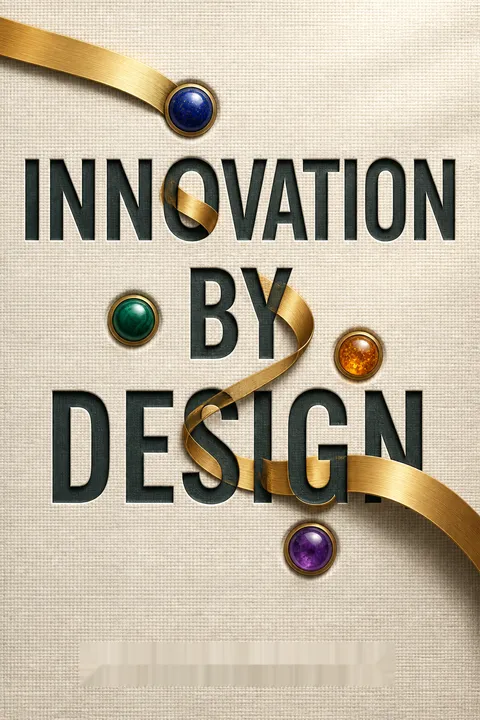
Innovation by Design receives mixed reviews, with an average rating of 3.58/5. Some readers find it lacks depth and originality, offering only surface-level knowledge and case studies. Others appreciate its insights into design thinking culture and its impact on organizational innovation. The book explores ten attributes of design thinking and emphasizes the importance of leadership commitment. Critics argue it repeats common management concepts, while supporters value its descriptive analysis of success stories. Overall, it's considered a general introduction to innovation culture, suitable for beginners but lacking specifics.
People Also Read









Glossary
Design thinking
Human-centered problem-solvingAn approach to solving problems that begins by understanding people and their circumstances, then combines collaboration, idea generation, simple prototypes, and feedback. The book presents it as useful not only for products and services, but also for business processes, customer experiences, and organizational culture.
Pull factor
Momentum toward participationThe emotional momentum that draws people into design thinking because they find it engaging, empowering, and useful. The book contrasts this pull with relying only on top-down direction. Successful experiences can encourage colleagues in other teams to participate, although leadership support and resources remain important.
Collective imagination
Shared creative capacityThe shared human capacity to collaborate, explore, learn, and create. The book links this capacity to participation, the pursuit of knowledge, and free expression. These are treated as interdependent motivations that help people contribute ideas and build on one another’s work.
Fifth Order of Design
Designing for awarenessThe authors’ proposed extension of design from communication, products, interactions, and systems toward the intentional development of awareness. It emphasizes understanding human motivation and learning while designing organizational cultures and systems, rather than treating culture as a side effect of structure or process.
Three culture types
Organizational motivation profilesThe book’s categories for describing common cultural preferences. Expertise cultures emphasize competence and individual achievement; participation cultures emphasize inclusion and teamwork; authenticity cultures emphasize shared ideals, openness, and purpose. They are interpretive profiles, not fixed labels, and real organizations may combine them or contain distinct subcultures.
Organizational empathy
Understanding colleagues’ experienceAn organizational attribute in which people can relate to and experience the emotions of others. It extends empathy beyond customers to colleagues, teams, and leaders. The book presents it as a way to improve collaboration across functions and to understand how people experience the culture in which they work.
Curious Confrontation
Inquiry through disagreementA way of facing competing ideas and mindsets with the intention of investigating and learning. Rather than avoiding conflict or trying to win it immediately, participants use listening, questions, and shared problem-solving to uncover what is missing and find a more useful response.
Whole communication
Multimodal meaning-makingThe use of verbal, visual, and other expressive forms to share ideas, feelings, and stories. In design thinking, it may include data, sketches, prototypes, or role-play. The purpose is to help people understand a problem, communicate its human effects, and explore possible solutions.
FIRO-Theory
Interpersonal needs modelA theory of interpersonal behavior developed by psychologist Will Schutz. As summarized in the book, it identifies three motivations in human interaction: feeling important, feeling competent, and feeling accepted. The authors connect these needs to participation, learning, expression, and people’s willingness to contribute in organizations.
Culture keys
Levers shaping behaviorA framework of organizational features that influence how people work and how a new practice is received. The book discusses factors such as power, goals, problem-solving, decision-making, conflict, rewards, hiring, roles, customer contact, teamwork, structure, and values. Examining them can help align design thinking with a particular culture.
FAQ
What's "Innovation by Design" about?
- Overview: "Innovation by Design" by Thomas Lockwood and Edgar Papke explores how organizations can leverage design thinking to drive change, generate new ideas, and deliver meaningful solutions.
- Focus on Design Thinking: The book emphasizes the importance of design thinking as a methodology for problem-solving and innovation across various industries.
- Cultural Transformation: It discusses how design thinking can transform organizational culture to be more innovative and collaborative.
- Practical Insights: The authors provide case studies and examples from leading companies to illustrate the successful application of design thinking.
Why should I read "Innovation by Design"?
- Comprehensive Guide: The book offers a thorough understanding of how design thinking can be applied to foster innovation within organizations.
- Real-World Examples: It includes case studies from companies like Intuit, GE, and Marriott, providing practical insights into successful design thinking implementation.
- Cultural Impact: Readers will learn how design thinking can influence and transform organizational culture, making it more conducive to innovation.
- Actionable Strategies: The book provides actionable strategies and frameworks that can be applied to any organization, regardless of size or industry.
What are the key takeaways of "Innovation by Design"?
- Design Thinking as a Tool: Design thinking is a powerful tool for solving complex problems and driving innovation.
- Cultural Alignment: Successful implementation of design thinking requires alignment with the organization's culture and leadership.
- Scalability: Design thinking can be scaled across organizations to engage employees at all levels and foster a culture of innovation.
- Empathy and Collaboration: Empathy and collaboration are central to design thinking, enabling organizations to better understand and meet customer needs.
How does "Innovation by Design" define design thinking?
- Problem-Solving Approach: Design thinking is defined as a creative problem-solving approach that focuses on understanding user needs and developing innovative solutions.
- Key Tenets: It involves identifying the right problem, empathizing with users, collaborating across disciplines, and prototyping solutions.
- Human-Centered: The approach is human-centered, emphasizing empathy and understanding of the user experience.
- Iterative Process: Design thinking is an iterative process that encourages experimentation and learning from failure.
What are the 10 attributes of design thinking organizations according to "Innovation by Design"?
- Design Thinking at Scale: Organizations use design thinking as a strategic element of innovation and culture.
- The Pull Factor: Emotional momentum that draws people to engage in design thinking.
- The Right Problems: Focus on identifying and solving the root causes of problems.
- Cultural Awareness: Understanding and aligning design thinking with organizational culture.
- Curious Confrontation: Embracing ambiguity and curiosity to manage conflict and disagreement.
- Co-Creation: Engaging diverse groups in collaborative problem-solving.
- Open Spaces: Creating environments that promote creativity and collaboration.
- Whole Communication: Using diverse communication methods to engage stakeholders.
- Aligned Leadership: Leaders role-model and support design thinking.
- Purpose: Organizations have a clear purpose that guides innovation efforts.
How does "Innovation by Design" suggest organizations scale design thinking?
- Leadership Commitment: Scaling requires strong commitment and support from leadership.
- Training and Development: Organizations should train employees at all levels in design thinking methodologies.
- Cultural Integration: Design thinking should be integrated into the organization's culture and processes.
- Tailored Approaches: Each organization should find its unique path to implementing and scaling design thinking.
What role does empathy play in design thinking according to "Innovation by Design"?
- Understanding Users: Empathy is crucial for understanding user needs and experiences.
- Foundation of Innovation: It serves as the foundation for creating meaningful and user-centered solutions.
- Organizational Empathy: Empathy extends beyond users to include understanding and collaboration within the organization.
- Improved Communication: Empathy enhances communication and collaboration, leading to better problem-solving.
How does "Innovation by Design" address the challenge of cultural transformation?
- Cultural Alignment: Successful design thinking requires alignment with the organization's existing culture.
- Leadership Role: Leaders play a crucial role in modeling and reinforcing the desired cultural changes.
- Empathy and Inclusion: Emphasizing empathy and inclusion helps overcome cultural barriers to innovation.
- Iterative Change: Cultural transformation is an iterative process that requires ongoing commitment and adaptation.
What are some real-world examples of design thinking in action from "Innovation by Design"?
- Intuit's Design for Delight: Intuit's journey to embed design thinking in its culture, leading to significant innovation and growth.
- Marriott's Co-Creation with Customers: Marriott's use of design thinking to engage customers in co-creating their experiences.
- GE Healthcare's MR Adventures: GE's transformation of the MRI experience for children through design thinking.
- Philips' Co-Create Framework: Philips' use of design thinking to drive strategic transformation and innovation in healthcare.
What are the best quotes from "Innovation by Design" and what do they mean?
- "Imagination is more important than knowledge." This quote emphasizes the value of creativity and imagination in driving innovation.
- "Design thinking is the glue between all disciplines." It highlights the integrative nature of design thinking in bringing together diverse perspectives.
- "True leaders don’t create followers. They create more leaders." This underscores the importance of empowering others through leadership.
- "Passion is caring deeply about something. Purpose is doing something about what you deeply care about." It reflects the book's focus on purpose-driven innovation.
How does "Innovation by Design" suggest organizations manage conflict and disagreement?
- Curious Confrontation: Encourages embracing curiosity and ambiguity to manage conflict constructively.
- Empathy and Listening: Empathy and active listening are key to understanding different perspectives and resolving conflicts.
- Collaborative Problem-Solving: Design thinking provides a framework for collaborative problem-solving and conflict resolution.
- Open Dialogue: Promotes open dialogue and communication to address disagreements and find common ground.
What future possibilities does "Innovation by Design" envision for design thinking?
- Business Megatrend: Design thinking is seen as a significant emerging business megatrend with transformative potential.
- Cultural Innovation: The book envisions design thinking as a tool for designing innovative cultures and organizations.
- Educational Impact: Design thinking has the potential to transform education by fostering creativity and critical thinking.
- Global Influence: The authors predict that design thinking will continue to expand globally, influencing various sectors and industries.
About the Author
Other books by Thomas Lockwood
Download PDF
Download EPUB
.epub digital book format is ideal for reading ebooks on phones, tablets, and e-readers.








