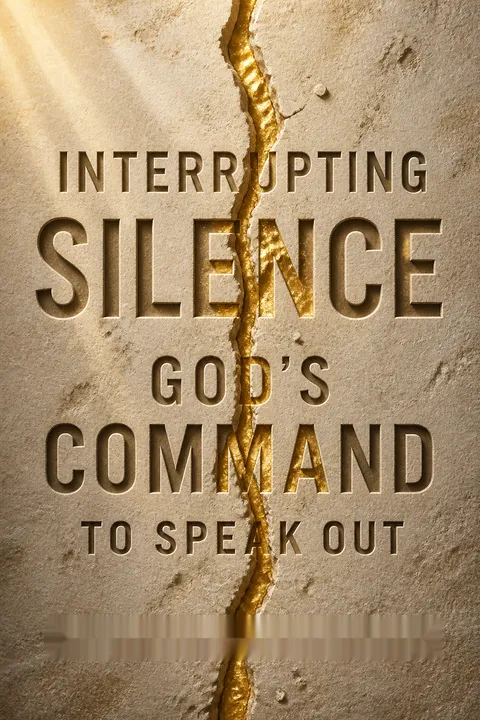


Key Takeaways
Treat silence as a political arrangement, not an empty space
Silence has a keeper. Brueggemann distinguishes reverent quiet from silence imposed to protect control. In the biblical stories, Pharaoh, royal priests, and even a crowd suppress speech that might unsettle who holds power. The same pattern appears in his modern examples: Martin Luther King Jr. connected opposition to the Vietnam War with racial injustice, challenging the idea that these issues could be kept apart. The book also names feminist, Black, queer, disability, and liberation movements as voices contesting inherited exclusions.
Speech is not automatically good. Brueggemann warns that breaking silence can also amplify destructive politics. The question is not simply who is speaking, but whose interests a silence serves and what a new voice makes possible.
What's striking is how silence can manufacture the appearance of agreement. Social scientists call one version of this pluralistic ignorance: people privately disagree but assume others accept the prevailing norm, so nobody speaks. Naming that dynamic helps explain why a first public objection can feel disproportionately disruptive. Still, speech alone does not redistribute power. It can expose a system, but durable change also depends on organization, protection for dissenters, and material leverage. The book's refusal to romanticize every insurgent voice is important: breaking silence is a democratic necessity, not a guarantee of justice.
Name suffering aloud to make an alternative future imaginable
A cry changes the story. In Exodus, enslaved Israelites groan under Pharaoh's labor regime, where debt and forced brickmaking leave them with little hope of escape. The text presents their cry as the point when suffering becomes publicly real rather than an accepted condition. Brueggemann reads this as a shift from being treated as disposable outsiders to recognizing a covenantal identity and a possible future. Their groaning is not a polished political program, nor is it even addressed directly to God. Yet the cry reaches God, who hears, sees, recognizes, and remembers them.
Pharaoh's rule is not eternal. The king's death exposes the false promise of permanent control. The slaves' speech begins the movement toward liberation, though it does not accomplish emancipation by itself.
The chapter's strongest insight is that articulation can change what people believe is normal. In trauma-informed practice, naming harm can restore a sense of reality after prolonged coercion or denial. The Exodus story gives that act a collective and political dimension: the sufferers are not merely reporting pain but rejecting the regime's account of their place in the world. There is also a useful limit to keep in view. Voice can open a door, but people trapped by debt or violence often need allies, resources, and institutional change before that opening becomes an exit.
Let prophetic truth challenge institutions that certify their own power
Amos speaks from outside. During the prosperous reign of Israel's King Jeroboam II, the prophet condemns a society built on exploited labor, unfair taxation, and conspicuous elite wealth. The priest Amaziah tells Amos to stop preaching at Bethel because the sanctuary serves the king. Brueggemann stresses the conflict: the temple claims religious authority while protecting the political order Amos denounces. Amos refuses the priest's authority to dismiss him, insisting that his message comes from a calling beyond the royal establishment.
Poetry can unsettle official reality. Brueggemann calls prophets poets because their vivid, startling language interrupts the approved explanations of power. The book compares their role with contemporary artists, organizers, and public advocates, while cautioning that dissent itself does not prove a speaker is right.
The image of the temple as royal media is a sharp reminder that institutions can make political interests appear sacred or inevitable. Contemporary sociology offers a related idea: institutions reproduce legitimacy by controlling which claims count as reasonable and who is recognized as a credible speaker. Amos's poetic form matters because metaphor can reveal contradictions that technical argument leaves hidden. Yet prophetic authority is difficult to verify, especially when a speaker claims divine sanction. A useful test is whether the critique makes concealed harms visible and whether its proposed future expands accountability rather than simply replacing one unchecked authority with another.
Confess what denial is doing to your body and relationships
Silence can turn inward. Psalm 32 describes a speaker who conceals guilt and becomes physically depleted. Brueggemann reads the bodily distress as the cost of sustaining denial and isolation. The psalm does not dwell on the offense itself. Its turning point comes when the speaker admits the wrong, stops hiding it, and addresses God. Forgiveness follows without a long negotiation, and the speaker moves from private anguish toward joy, testimony, and advice for others.
Honest speech needs a listener. Brueggemann connects this biblical pattern with pastoral counseling and Freud's attention to the liberating potential of speaking honestly. The point is not that every disclosure produces instant relief, but that truth can restore connection when it is received seriously rather than met with contempt.
This account anticipates a core therapeutic insight: experiences that remain unspeakable can continue to organize a person's emotions and relationships. A trustworthy listener makes disclosure less isolating and can help convert shame into responsibility. The theological framing adds that forgiveness is not self-manufactured; it is received from beyond the self. That distinction is valuable, though the psalm should not be turned into a medical claim that illness proves hidden guilt or divine punishment. Confession is most life-giving when it is voluntary, safe, and oriented toward repair, not extracted as a tool of control.
Listen when an outsider reveals the limits of your welcome
A mother challenges the boundary. In Mark, a Gentile woman approaches Jesus to seek healing for her daughter. Jesus initially answers through an image that puts Jewish children first and Gentiles in a lesser position. The woman does not accept the exclusion. She works within his food metaphor to argue that those outside the favored group can still receive what they need. Brueggemann reads her reply as a decisive interruption: Jesus accepts her argument, her daughter is freed, and the narrative moves toward healing and a later meal among Gentiles.
The outsider becomes a teacher. The episode suggests that even a revered leader can inherit narrow assumptions. The woman's urgent speech exposes those assumptions and widens the imagined reach of Jesus' ministry.
The story is powerful because the excluded person does more than request admission; she changes the terms of the debate. That resembles what contemporary organizational research finds about dissent: people closest to a policy's consequences often notice failures that insiders have normalized. The scene also raises a hard question about the burden placed on outsiders. Inclusion should not depend on a marginalized person being exceptionally eloquent, persistent, or useful as a teacher. The deeper institutional lesson is to build habits of listening before a crisis forces the most vulnerable person to argue for basic care.
Pair hope with practices that resist the systems silencing people
The boy's body bears the conflict. In Mark's story, a boy is rendered unable to speak, and his father asks Jesus for help after the disciples fail. Brueggemann draws on a sermon by African American scholar Michael Brandon McCormack, who interprets the boy's muteness as an image of how racism has restricted Black life and voice. The comparison shifts attention from blaming the child or his family to asking what power has caused the harm. Jesus restores the boy, while the disciples' failure is linked to their inability to imagine an alternative.
Prayer requires refusal. Brueggemann presents prayer as hope enacted, and fasting as possible abstention from the dominant culture's seductions. He notes that the phrase about fasting is absent from some manuscript evidence, so its presence in the passage is disputed.
The reading makes structural harm visible where a purely individual explanation might locate fault in the person suffering. That is a valuable interpretive move, especially when applied to racism as a system of policies and habits rather than only private prejudice. The analogy should remain an analogy, not a claim that disability is merely a metaphor or that healing is the measure of a person's worth. Nor should faith be made a prerequisite imposed on those facing oppression. The chapter's most useful challenge is directed at communities: hope needs disciplined practices and collective action, not just encouragement directed toward victims.
Persist when crowds mistake exclusion for the natural order
Bartimaeus refuses his assigned place. Near Jericho, the blind beggar hears Jesus approaching and calls for mercy. The crowd orders him to be quiet, perhaps seeing him as an interruption or a threat to the procession's order. He calls out again, louder, and Jesus summons him. Bartimaeus states what he needs, receives his sight, and joins Jesus' followers. Brueggemann treats the crowd as a force that can enforce silence even without a single leader directing it.
Maintenance is not restoration. The book distinguishes alms, which can sustain someone in hardship, from transformative mercy that restores the capacity to participate. Charity matters, but it cannot substitute for changing conditions that keep people dependent or excluded.
The crowd is a compelling figure for ordinary complicity: people may suppress a request simply because it disrupts a shared routine. Bartimaeus's persistence shows why access often requires more than a formal invitation; a person must be heard through the noise of those who manage the space. The distinction between relief and restoration also resonates with disability justice, which emphasizes access, agency, and participation rather than treating care as a favor. At the same time, the healing story should not imply that disabled lives are incomplete until cured. The social question is not only whether someone can see, but whether the community makes room for them.
Turn prayer into a repeated claim for material justice
The widow keeps petitioning. Jesus' parable in Luke features a vulnerable widow seeking justice from a judge who admits he cares neither for God nor people. He initially refuses her, but her repeated appearances finally make him grant her case. Jesus uses the story to urge persistent prayer and to keep disciples from surrendering to despair. Brueggemann reads the widow not as passive but as an example of faith expressed through continued action against an unjust arrangement.
Justice has an economic edge. The book connects her petition with Jubilee, the biblical vision of debt release, restored land, and social renewal. The parable does not spell out the widow's exact claim, but Brueggemann imagines justice as more than personal comfort: it could mean relief from the economic conditions that trap vulnerable people.
The widow's persistence links spiritual practice with political agency. Prayer here is not a way to avoid public struggle; it sustains people who must keep asking institutions to answer for injustice. The Jubilee connection sharpens that point by treating debt as a social arrangement that can be changed, rather than a private moral failure. A real tension remains in the parable's reassurance that justice comes quickly: many people wait far longer, and some never receive redress. The story is strongest as a summons to resist resignation and as a demand on communities to make justice less dependent on one person's endurance.
Read church rules against the inclusion the gospel proclaims
A church can enforce silence. First Corinthians 14 contains a command that women remain silent in church. Brueggemann sets it beside Paul's language in Galatians that distinctions of gender, status, and ethnicity are overcome in the baptized community, and beside Paul's named women coworkers. Scholars debate whether the silencing passage was added later, but Brueggemann argues that its influence matters regardless of authorship: churches have used it to restrict women's authority and participation.
Institutions can retreat from their ideals. The book describes how movements become more cautious as they formalize, then calls for Scripture to be read in context rather than treated as a flat rulebook. It points to church efforts to reinterpret tradition around women's leadership and LGBTQ inclusion, while noting that progressive communities can also silence dissent.
The chapter's contribution is not simply to identify a harmful verse, but to ask how communities decide which parts of their inheritance govern practice. Historical context matters, yet context alone cannot settle every ethical dispute. A responsible reading also examines consequences, compares passages, and gives affected people a genuine role in interpretation. The warning applies across ideological camps: a community that celebrates inclusion can still punish disagreement or protect its own status. The challenge is to make interpretive authority answerable to the lives of those who bear the cost of a rule.
Analysis
Brueggemann builds a theological argument through eight close readings rather than presenting a single political program. The repeated pattern is that silence protects an arrangement of power, a vulnerable person speaks, and that speech makes another future thinkable. Exodus supplies the master narrative: Pharaoh's economic order presents itself as permanent, but the enslaved community's cry exposes its human cost and draws divine attention. The later episodes vary the pattern. Amos challenges a temple aligned with monarchy; the psalmist confronts private concealment; a Gentile mother revises Jesus' assumed boundary; Bartimaeus outlasts a silencing crowd; and a widow makes prayer resemble a legal campaign for justice. The church itself is then shown capable of becoming the institution that suppresses the voices its own theology should honor.
The book's distinctive strength is its refusal to reduce silence to a private emotional problem. Debt, race, gender, religious authority, and public speech are connected as forces that shape whose suffering counts. Reading biblical figures through contemporary struggles also makes the texts ethically alive rather than safely historical. Brueggemann is particularly alert to bodies: the enslaved laborer, the distressed psalmist, the disabled boy, and the blind beggar reveal what abstract systems conceal.
That method carries risks worth holding alongside its power. Biblical narratives are interpreted through a contemporary political lens, and some claims about what a character represents remain interpretive rather than historically demonstrable. The comparison between a biblical boy's muteness and racial oppression is illuminating, but it must not collapse disability into symbolism. Likewise, the insistence on speaking can understate the danger of disclosure where authorities retaliate. Silence may be coerced, but it can also be a survival strategy. The most durable lesson is therefore not that everyone must speak at once. It is that communities must identify who is prevented from speaking, reduce the risks of being heard, and convert testimony into changes in power and material conditions.
Review Summary
Interrupting Silence receives mostly positive reviews, with an average rating of 4.15/5. Readers appreciate Brueggemann's exploration of biblical narratives on breaking silence and speaking out against injustice. Many find it thought-provoking and relevant to current social issues. The book is praised for its accessibility and suitability for group discussions. Some critics note that certain interpretations feel stretched or politically motivated. Overall, reviewers commend the book's timely message and its potential to inspire meaningful conversations about faith and social justice.
People Also Read





Glossary
YHWH
Israel's covenantal GodThe four Hebrew consonants used as the name of Israel's God. In Exodus, God tells Moses to use this name when announcing liberation from slavery. Brueggemann presents YHWH as the listener who hears, sees, recognizes, and remembers the suffering of the vulnerable, in contrast to rulers who treat their authority as absolute.
Jubilee
Debt and land restorationA biblical vision associated with Leviticus 25 in which debts are released, land is restored, and the land itself receives rest. Brueggemann uses Jubilee to describe economic repair for people trapped by predatory debt and dispossession. It gives the widow's demand for justice a material dimension beyond an individual favorable ruling.
counterdiscourse
Speech against dominant powerSpeech that arises against a society's prevailing account of reality and challenges the arrangements that account protects. In Brueggemann's argument, silence breaking often takes this form: people at the margins voice experiences and possibilities excluded by rulers, institutions, or public consensus.
prophetic poets
Unauthorised voices of critiqueBrueggemann's description of biblical prophets as poets who speak without the credentials or approval of royal and priestly authorities. Their charged imagery interprets lived conditions through the covenantal tradition and challenges exploitative economies and claims of political or religious ultimacy.
Pastoral Epistles
Letters to Timothy and TitusThe New Testament letters known as First Timothy, Second Timothy, and Titus. Brueggemann refers to them in discussing the church's institutional development and passages that restrict women's roles. Their presence in the tradition illustrates the tension between broad claims of equality and practices that accommodate prevailing social hierarchies.
originalism
Rule by original intentA method of interpreting a text by treating the original intent of its writers as decisive. Brueggemann applies the term to biblical interpretation as well as constitutional reading, arguing that a context-free, fixed reading can preserve old power arrangements. He advocates rereading Scripture in changing circumstances while remaining accountable to its central claims.
Torah
The Hebrew Bible's first five booksThe first five books of the Hebrew Scriptures, also called the Pentateuch. In Brueggemann's discussion, Torah includes commands concerning covenantal conduct and the Jubilee provisions for debt release and land restoration. These traditions provide a standard by which prophets can criticize economic practices that harm neighbors.
FAQ
1. What is "Interrupting Silence: God’s Command to Speak Out" by Walter Brueggemann about?
- Focus on Silence and Speech: The book explores the concept of silence, particularly the kind imposed by those in power to maintain control, and contrasts it with the biblical imperative to break silence in the pursuit of justice.
- Biblical Case Studies: Brueggemann examines various biblical stories where marginalized individuals or groups break silence, prompting divine or social transformation.
- Contemporary Relevance: The author draws parallels between ancient silencing and modern forms of oppression, urging readers to recognize and challenge silencing in today’s world.
- Theological Reflection: The book is both a biblical study and a call to action, emphasizing that God’s command is often to speak out against injustice, not to remain silent.
2. Why should I read "Interrupting Silence" by Walter Brueggemann?
- Timely Social Commentary: The book addresses urgent issues of power, oppression, and the need for courageous speech in both religious and secular contexts.
- Biblical Insight: Brueggemann offers deep, accessible interpretations of familiar and lesser-known biblical texts, making them relevant for modern readers.
- Empowerment for Action: Readers are encouraged to see themselves as potential silence-breakers, equipped to challenge injustice in their communities.
- Critical Engagement: The book invites critical thinking about the role of the church and individuals in perpetuating or challenging systems of silence.
3. What are the key takeaways from "Interrupting Silence: God’s Command to Speak Out"?
- Silence as a Tool of Power: Silence is often used by those in authority to maintain the status quo and suppress dissent.
- Breaking Silence is Transformative: When the oppressed break their silence, it can lead to personal, communal, and even divine action for justice.
- Biblical Precedent for Speaking Out: The Bible consistently sides with those who break silence in the face of injustice, from Hebrew slaves to prophetic voices.
- The Church’s Dual Role: The church can be both a silencing institution and a community of silence-breakers, depending on its alignment with power or the marginalized.
4. How does Walter Brueggemann define and distinguish types of silence in "Interrupting Silence"?
- Awe vs. Coercion: Brueggemann distinguishes between silence as reverence before holiness and silence as a result of coercion or oppression.
- Silence as Strategy: The book focuses on silence used strategically by dominant groups to suppress alternative voices and maintain control.
- Personal vs. Social Silence: He explores both externally imposed silence (by authorities) and self-imposed silence (due to shame, fear, or repression).
- Silence and the Status Quo: Silence is depicted as a mechanism for upholding unjust distributions of power and wealth.
5. What biblical stories and characters does "Interrupting Silence" use to illustrate breaking silence?
- Hebrew Slaves in Egypt: The groaning and crying out of the Israelites under Pharaoh’s oppression (Exodus 2:23) as the beginning of liberation.
- Prophets like Amos: Prophets who refuse to be silenced by religious and political authorities, speaking truth to power (Amos 7:13).
- The Syro-Phoenician Woman: A Gentile woman who challenges Jesus’ assumptions and expands his ministry by breaking silence (Mark 7:28).
- Bartimaeus and the Widow: Stories of marginalized individuals (the blind beggar Bartimaeus and the persistent widow) who persistently cry out for justice despite attempts to silence them.
6. How does "Interrupting Silence" by Brueggemann connect biblical silence-breaking to contemporary issues?
- Modern Parallels: The book draws connections between biblical silencing and modern forms of oppression, such as racism, sexism, and economic exploitation.
- Liberation Movements: Brueggemann references current movements like Black Lives Matter, feminism, and LGBTQ+ advocacy as examples of contemporary silence-breakers.
- Church and Social Justice: He critiques the church’s complicity in silencing marginalized voices and calls for active participation in justice movements.
- Political and Economic Systems: The book highlights how voter suppression, gerrymandering, and economic indebtedness are modern tools of silencing.
7. What is Brueggemann’s advice for individuals and communities who want to break silence?
- Recognize Silencing Mechanisms: Be aware of how silence is imposed, both externally and internally, and identify who benefits from it.
- Embrace Risk and Courage: Breaking silence often involves risk, but it is necessary for justice and transformation.
- Practice Persistent Advocacy: Like the widow in Luke 18, persistence in speaking out is crucial, even in the face of repeated refusals.
- Engage in Honest Prayer and Speech: Brueggemann encourages honest, even disruptive, prayer and public speech as acts of faith and resistance.
8. How does "Interrupting Silence" critique the role of the church as a silencing institution?
- Historical Complicity: The book documents how the church has historically silenced women, minorities, and dissenters to maintain order and privilege.
- Scriptural Justifications: Brueggemann examines problematic texts (e.g., 1 Corinthians 14:33–35) that have been used to justify silencing, and contrasts them with more inclusive biblical visions.
- Institutionalization and Power: He argues that as movements become institutions, they often compromise radical inclusivity for social respectability.
- Call for Reform: The church is challenged to return to its core gospel values, reimagine its practices, and become a community that empowers silence-breakers.
9. What are the main concepts and terms explained in "Interrupting Silence," and how are they important?
- Silence and Silencing: Central concepts, referring to both the act of not speaking and the active suppression of voices.
- Jubilee: The biblical idea of debt cancellation and restoration, used as a metaphor for justice and liberation.
- Originalism: Critiqued as a rigid, literalist approach to scripture that perpetuates silencing and resists reform.
- Baptismal Formula (Galatians 3:28): Used to argue for radical equality and the breaking down of social barriers in the church.
10. How does Brueggemann interpret the relationship between prayer and breaking silence in "Interrupting Silence"?
- Prayer as Political Act: Prayer is seen as a form of protest and advocacy, not just private devotion.
- Lament and Protest: Honest prayers of lament and protest are highlighted as biblical models for breaking silence before God and community.
- Persistence in Prayer: The parable of the persistent widow is used to illustrate the power of relentless, outspoken prayer in seeking justice.
- Prayer and Social Change: Brueggemann suggests that prayer can catalyze both personal transformation and broader social action.
11. What are some of the best quotes from "Interrupting Silence" by Walter Brueggemann, and what do they mean?
- “Silence is a strategy for the maintenance of the status quo, with its unbearable distribution of power and wealth.” — This highlights how silence serves those in power and why breaking it is necessary for justice.
- “The body knows that silence kills. When the silence is broken, the body may be restored and the body politic may be open to new possibility.” — Emphasizes the physical and communal consequences of imposed silence and the healing that comes with speaking out.
- “Prayer is a refusal to settle for what is.” — Suggests that prayer is inherently subversive, challenging the way things are and seeking transformation.
- “The breaking of silence by the testimony of the gospel often means breaking the silence among those who have a determined stake in maintaining the status quo.” — Points to the church’s responsibility to challenge internal and external silencing.
12. How does "Interrupting Silence" by Brueggemann suggest readers can apply its lessons in their own lives and communities?
- Identify Silenced Voices: Pay attention to who is being silenced in your context—whether in church, workplace, or society—and consider how to amplify their voices.
- Challenge Injustice: Use your voice to speak out against systems and practices that perpetuate inequality and oppression.
- Foster Inclusive Communities: Work to make your faith community or organization a place where all voices, especially those on the margins, are heard and valued.
- Continual Re-examination: Regularly re-examine traditions, scriptures, and practices to ensure they are not being used to justify silencing or exclusion.
Download PDF
Download EPUB
.epub digital book format is ideal for reading ebooks on phones, tablets, and e-readers.








