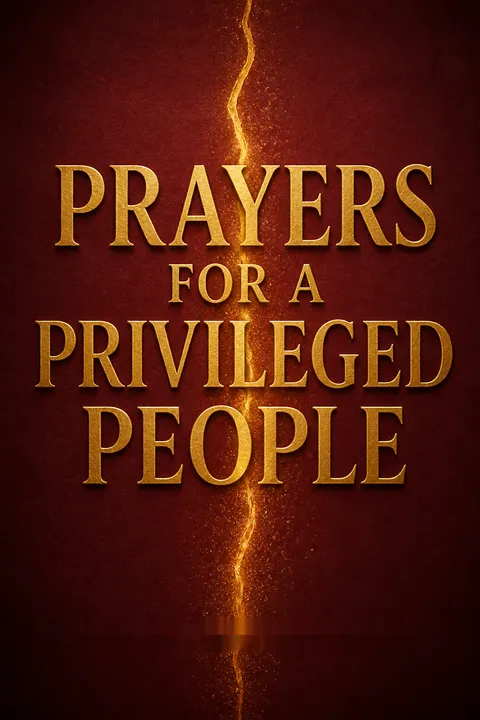


Key Takeaways
Let prayer expose privilege, then redirect your life beyond its comfort.
Prayer begins with exposure. Walter Brueggemann addresses affluent, mostly white Christian communities, including himself, as people whose security can make them guarded toward others. Prayer is not a retreat from that context. It is a practice of bringing desire, anxiety, hidden motives, and entitlement into the presence of God, where they can be challenged and changed.
The collection has a direction. Its six sections move from honest self-examination through gratitude, fear, attention to excluded neighbors, and a summons to serve, toward hope and praise. The prayers are tied to real occasions, from worship and Thanksgiving to war, elections, and labor disputes. The arc matters: prayer should leave people less enclosed by their advantages and more available to the needs of others.
The distinctive move is to treat prayer as moral attention, not simply private comfort. Social psychology describes how people can overlook advantages that feel ordinary to them; naming privilege makes those advantages visible enough to question. A shared ritual can give that recognition emotional weight and a communal audience. The risk is that confession becomes a substitute for repair, allowing privileged worshippers to feel chastened without changing institutions or habits. The prayers are strongest when self-examination becomes a concrete obligation toward neighbors, rather than an inward feeling of humility.
Receive prosperity as a gift, not proof that you deserve more.
Gratitude needs honesty. The prayers do not deny the goods of education, safety, family, or material comfort. They ask what happens when those goods are treated as earned entitlements. At Thanksgiving, the speaker remembers the welcome Indigenous people gave European settlers alongside the loss of their land, then places national ideals beside the country's flawed reality. Thankfulness alone cannot settle that contradiction.
Comfort creates blind spots. The collection notices affluent families protecting their children's futures while fearing that immigrants may claim a small share of their security. It also questions religious celebrations that endorse a well-ordered life without acknowledging who remains outside it. Gratitude becomes ethically serious when it recognizes dependence, history, and unequal access, and then loosens the impulse to guard every advantage.
This argument complicates a familiar virtue. Gratitude can increase generosity, but it can also reinforce the belief that success is deserved and that those who struggle have failed. Brueggemann's historical examples help interrupt that self-congratulation by placing present comfort inside a longer story of dispossession and exclusion. The useful test is whether gratitude makes a person more attentive to how goods are distributed. A limitation is that collective histories cannot be repaired by personal generosity alone. The insight therefore points beyond sentiment toward civic responsibility.
Do not mistake control for safety when violence shapes the world.
Power promises too much. These prayers confront the fear that follows terrorism, war, and political instability, along with the familiar response of seeking more weapons, surveillance, or control. The Hiroshima anniversary prayer recalls both the relief associated with the end of war and the burned cities, injured children, and lasting contamination caused by atomic bombs. A tool presented as security can also deepen the threat it claims to contain.
Anxiety is not proof of safety. Brueggemann places public confidence in governments beside the vulnerability of ordinary people and the Christian image of Jesus, whose power appears through mercy rather than coercion. The prayers do not pretend danger is imaginary. They ask whether fear is driving societies toward greater violence, and whether trust can make room for less brutal forms of protection and neighborly care.
The political insight is that security is not only a technical problem. It is also a story about what dangers matter, whose suffering counts, and what costs can be imposed in the name of protection. This resembles the security dilemma in international relations: one actor's defensive buildup can look threatening to another and provoke further escalation. The analogy does not settle what policies are justified, and vulnerability should not be romanticized. Still, the prayers usefully ask whether a strategy that multiplies fear and harm can honestly be called secure.
Lament honestly when suffering makes confident theology ring hollow.
Faith leaves room for protest. One prayer begins from the biblical promise that God provides for living creatures, then faces hunger, poverty, cancer, war, and death. Instead of explaining away the mismatch, it asks for patience to wait, urgency to care, and peace while answers remain incomplete. Other prayers speak from the confusion of war, where people cannot agree whether their nation is liberating or invading, or how peace might come.
Grief is not a failure. The collection names school killings, dictatorship, violence, and the absence of help in places of need. Its prayers address God even when divine silence feels real. They neither claim that every loss has a reason nor demand quick optimism. Lament becomes a truthful form of relationship: people bring anger, doubt, and sorrow into prayer instead of pretending they have resolved them.
This treatment resists a common mistake in religious language: using explanation to manage another person's pain. Trauma-informed care likewise emphasizes listening without forcing meaning onto suffering. Lament can preserve moral attention because it refuses to let violence become ordinary or acceptable. It also guards against a different danger, despair that treats protest as pointless. The text's balance of patience and urgency is important, though a prayerful response cannot replace practical aid, accountability, or treatment. Its contribution is to make honest grief compatible with continued responsibility.
Trace your comfort back to the people and systems carrying its cost.
Comfort has a supply chain. After coal miners die underground, the prayers picture people watching the news from warm homes heated by fossil fuels. They notice that consumers benefit, management expresses regret, and dangerous work continues. The scene makes distant labor visible inside ordinary convenience. A Labor Day prayer similarly questions euphemisms that disguise wage cuts and insecure work while many privileged people rarely perform physically demanding jobs.
Solidarity requires more than sympathy. The collection links labor conditions to health care, government rules, corporate decisions, and public indifference. It also asks readers to consider immigrant workers whose seasonal labor helps produce food they enjoy, even as those workers are treated as threats. The point is not to feel guilty for every comfort, but to notice the relationships behind it and support dignity, safety, and fair treatment.
This is an early form of supply-chain ethics: the consumer's experience is connected to workers who are easy to ignore. Modern systems make that connection difficult to see because production is dispersed across contractors, borders, and layers of management. The miners' deaths puncture that distance with a concrete human cost. Yet individual awareness has limits; safer workplaces depend on enforceable rules, organized workers, and institutional accountability. The prayer's moral attention is most useful when it helps readers identify those levers, rather than turning structural injustice into private guilt.
Let liberation stories challenge public power, not merely soothe private conscience.
Scripture has political consequences. The collection reads the Exodus story of escape from Pharaoh's forced labor as a living challenge to modern exploitative work. It also contrasts the emperor's census, used to count people for taxes and military power, with the vulnerable child at the center of the Christmas story. These are not simply scenes of ancient faith. They ask what kind of rule shapes public life now.
Justice tests civic ideals. Prayers about the State of the Union notice the poor, prisoners, unemployed people, and others left out of the ceremony. A prayer for a Supreme Court ruling against military tribunals gives thanks for legal restraint when liberty for some threatens justice for others. Across these cases, worship turns political language into a question of who receives dignity and protection.
Brueggemann's reading belongs to political theology, which asks how beliefs about divine rule shape judgments about human authority. Its strength is refusing to treat biblical liberation as a metaphor that ends at personal relief. The prayers connect worship to labor, immigration, courts, and war. That connection also demands careful application: sacred narratives can be used to bless opposing political agendas, and religious certainty can become coercive. The collection's emphasis on the vulnerable offers a moral test, but readers still need evidence, debate, and accountability to decide which policies serve them.
Treat spiritual calling as an interruption that sends you into risk.
A summons unsettles routine. The prayers portray people surrounded by advertising, political slogans, professional tasks, and messages designed to manage attention. Against that noise, biblical stories describe a voice that calls people by name and gives them difficult words to carry. The response is not instant certainty. People can mistake their own fear, ambition, or bias for the call, and may resist what it asks of them.
Witness is public work. Brueggemann describes preachers, poets, artists, and dissenters as possible bearers of a message that challenges settled arrangements. The privileged community is not asked merely to admire these voices. It is asked to listen, speak truth, and accept the discomfort of being sent beyond familiar interests. The prayers acknowledge mixed motives: people may care about justice while also wanting approval, security, and a quiet life.
The idea of calling can be understood as a disciplined interruption of habitual attention. In organizations, dissent often reveals information that routine procedures or status hierarchies suppress. Yet not every disruptive voice is trustworthy, and sincerity does not guarantee wisdom. Brueggemann's admission that a person may mix prophetic courage with self-interest is therefore crucial. It suggests a practical standard: test a claimed calling against its effects on vulnerable people, its willingness to face scrutiny, and whether it serves something larger than the speaker's status.
Practice hope through shared care while waiting for change.
Waiting need not mean passivity. The prayers repeatedly ask for justice, peace, and a better public order while admitting that change may not arrive on demand. They ask people to wait without cynicism, but also without abandoning care. In the meantime, daily bread matters: food, water, companionship, and practical help are treated as gifts to share, even with people regarded as enemies.
Small acts carry public meaning. Brueggemann points to modest biblical scenes, such as one person receiving care or a meal becoming enough for many, rather than measuring divine action only by grand victories. The church is asked to take people living amid violence and deprivation as a responsibility, not as a distant list of concerns. Such ordinary practices cannot solve every crisis, but they can resist isolation and make a different social order imaginable.
This account of hope combines future orientation with present practice. In social movements, a vision of a better order can sustain effort, while repeated local acts build trust and collective capacity. Shared food and care also make abstract solidarity tangible. The caution is that small gestures can be celebrated in ways that obscure the need for large-scale change. The prayers avoid pure quietism by naming public systems and collective responsibility, but readers should keep both scales in view: immediate relief for people in need and sustained pressure on institutions.
Let Easter hope face death without denying grief or complicity.
Renewal begins in the ruins. Easter, in this collection, does not make death seem harmless. The prayers remember murdered children, war victims, grieving families, and people abandoned by public institutions. They also recognize that communities can mourn violence while participating in cultures that produce it. Hope therefore cannot mean declaring the world repaired when it is not.
Memory can become movement. The prayer for Rosa Parks remembers her refusal to accept segregation while acknowledging that people who gained comfort from injustice may repent incompletely. Her story is placed within a continuing struggle for freedom and dignity, not treated as a finished victory. The prayers ask for new life in damaged places and for people to keep acting for justice. Praise emerges from grief without erasing the loss that gave rise to it.
The connection between mourning and action is psychologically and politically important. Public remembrance can preserve the reality of victims against narratives that minimize harm, while shared hope can keep grief from becoming resignation. The Rosa Parks example shows how a remembered act gains meaning through the unfinished work around it. There is a danger in making religious hope sound like a guarantee that history bends automatically toward justice. These prayers are more credible when hope is understood as a commitment people enact, not a prediction that absolves them from struggle.
Analysis
Prayers for a Privileged People is a collection of occasion-specific Christian prayers, but its deeper structure is an argument about what prayer does to a community. Brueggemann's six-part sequence moves from inward honesty to public recognition, then to calling and praise. The movement matters because it refuses to separate spiritual formation from economic and political life. Anxiety, money, war, immigration, labor, and national ceremony all become material for worship.
Its central tension is not simply privilege versus poverty. It is the conflict between gratitude for security and recognition that security can depend on exclusion, coercion, or unseen labor. The prayers rarely let worshippers claim a clean moral position. They can be victims of violence and participants in systems that injure others; they can seek justice while fearing the loss of comfort. This unstable moral standpoint gives the collection more force than a simple call to charitable feeling.
Form supports the argument. Repetition and communal address turn isolated unease into shared confession, while recurring contrasts between power and vulnerability, praise and lament, or certainty and waiting prevent easy resolution. The prayers do not offer a policy program. Their distinctive contribution is to reshape what a worshipping public notices and what it regards as faithful action.
That focus also sets a limit. Much of the language addresses privileged congregations from within, so solidarity with marginalized people can remain a practice of observation unless it includes their agency and leadership. Prayer can expose complicity and sustain commitment, but it cannot substitute for material redistribution, legal accountability, or the testimony of those harmed. Read with that distinction in mind, the collection is both devotional resource and civic critique: it asks worshippers to let their loyalties be rearranged by the people and realities their ordinary routines exclude.
Review Summary
Prayers for a Privileged People is highly praised for its thought-provoking and challenging prayers that address privilege and self-reflection. Readers appreciate Brueggemann's poetic and insightful writing, which confronts comfortable lifestyles and encourages a deeper engagement with faith. The book is seen as relevant for contemporary issues, especially for those in positions of privilege. Many reviewers found the prayers impactful, using them for personal devotions and church events. The collection is lauded for its ability to expand perspectives on self, world, and God.
People Also Read








Glossary
Collect for Purity
Opening prayer of confessionA traditional prayer used at the beginning of some Christian worship services. It asks God to know and cleanse the worshippers' inner lives so they can love God and worship faithfully. Brueggemann uses its successive phrases as prompts for reflection on desire, secrecy, thought, love, and praise.
Holy Regime Change
God's overturning of settled powerBrueggemann's phrase for divine action that unsettles established arrangements of authority and calls people into a different order. The change is not only a political transfer of power. It also challenges personal and communal habits tied to money, privilege, entitlement, and control.
Brick production
Exploitation under forced laborAn image drawn from the biblical account of enslaved Israelites making bricks under Pharaoh. Brueggemann applies it to contemporary systems that impose punishing production demands and cheap labor. The image makes economic exploitation a matter of faith and justice, and supports calls for fair wages, dignity, health care, and shared rest.
Salvation Oracles
Promises of help amid dangerA biblical term for declarations that God is present and will save people facing danger or distress. In this collection, such promises are prayed amid threats including illness, violence, economic fear, loneliness, and death. They are not used to deny danger, but to encourage forgiveness, change, and courageous action.
FAQ
1. What is "Prayers for a Privileged People" by Walter Brueggemann about?
- Exploration of Privilege and Prayer: The book is a collection of prayers that reflect on the realities of privilege, entitlement, and the responsibilities that come with them, especially in the context of American society.
- Contextual and Honest Prayers: Brueggemann offers prayers that are deeply rooted in specific social, political, and personal contexts, addressing issues like injustice, violence, anxiety, and gratitude.
- Movement from Self to God: The prayers trace a spiritual journey from self-awareness and confession to yielding to God’s transformative goodness and call to serve others.
- Subversive Spiritual Practice: The act of prayer is presented as a subversive activity that challenges the status quo of privilege and opens the heart to God’s future and the needs of others.
2. Why should I read "Prayers for a Privileged People" by Walter Brueggemann?
- Honest Engagement with Privilege: The book invites readers, especially those who recognize their own privilege, to reflect deeply and honestly on their place in the world and their relationship with God and others.
- Rich, Poetic Language: Brueggemann’s prayers are beautifully written, blending poetic language with theological depth, making them both moving and thought-provoking.
- Relevance to Contemporary Issues: The prayers address current social and political realities, such as immigration, economic disparity, violence, and national identity, making them timely and relevant.
- Spiritual Growth and Challenge: Readers are encouraged to move beyond self-interest, embrace vulnerability, and respond to God’s call for justice, mercy, and hope.
3. What are the key themes and concepts in "Prayers for a Privileged People" by Walter Brueggemann?
- Privilege and Entitlement: The book examines how privilege shapes our lives, prayers, and responsibilities, urging self-awareness and humility.
- Confession and Honesty: Many prayers focus on confessing personal and collective shortcomings, secrets, and anxieties before God.
- Social Justice and Solidarity: Brueggemann emphasizes the importance of justice, compassion, and standing with those who are marginalized or suffering.
- Transformation and Newness: The prayers often move toward hope, new beginnings, and the transformative power of God’s presence and future.
4. How is "Prayers for a Privileged People" by Walter Brueggemann structured?
- Six Thematic Sections: The book is divided into six sections, each tracing a different aspect of the spiritual journey—from opening the heart to God, to confronting the world’s dangers, to embracing hope.
- Contextual Prayers: Each prayer is tied to a specific context, event, or scriptural passage, making them both personal and communal.
- Progression of Spiritual Depth: The structure moves from self-examination and confession to engagement with the world’s pain, and finally to hope and praise.
- Liturgical and Everyday Relevance: The prayers are suitable for both worship settings and personal reflection, addressing both ordinary and extraordinary moments.
5. What is Walter Brueggemann’s approach to prayer in "Prayers for a Privileged People"?
- Context-Specific Prayer: Brueggemann insists that all prayer is shaped by the context of the pray-er, including their privilege, anxieties, and social realities.
- Honest and Vulnerable Language: The prayers avoid pious clichés, instead expressing raw honesty about fears, failures, and hopes.
- Subversive and Transformative: Prayer is seen as an act that resists the closed world of privilege, opening the heart to God’s disruptive newness and the needs of others.
- Communal and Personal: The prayers are written for both individual and collective use, encouraging solidarity and shared responsibility.
6. What are some specific issues and occasions addressed in "Prayers for a Privileged People" by Walter Brueggemann?
- National and Political Events: Prayers reflect on occasions like the State of the Union, Super Bowl Sunday, Labor Day, and post-election days.
- Social Injustices: Topics include immigration, economic disparity, violence, war, and the plight of coal miners and immigrants.
- Personal and Communal Struggles: The book addresses themes like anxiety, secrets, grief, and the challenge of leaving behind old patterns or places.
- Liturgical and Scriptural Moments: Many prayers are tied to the church calendar (e.g., Ash Wednesday, Epiphany, Easter) or specific biblical passages.
7. How does "Prayers for a Privileged People" by Walter Brueggemann address the concept of privilege?
- Self-Recognition of Privilege: Brueggemann openly acknowledges his own privilege and invites readers to do the same, without defensiveness or denial.
- Tension and Responsibility: The prayers explore the tension between enjoying privilege and recognizing its costs, especially in relation to those who are excluded or marginalized.
- Call to Yielding and Service: Privilege is not just confessed but is seen as a summons to yield to God’s purposes and to serve others with humility and generosity.
- Subversion of Entitlement: The book challenges the reader to move beyond entitlement toward a more open, just, and compassionate way of living.
8. What is the significance of confession and honesty in "Prayers for a Privileged People" by Walter Brueggemann?
- Naming Secrets and Failures: Many prayers focus on bringing hidden fears, failures, and desires into the open before God.
- Freedom through Truth: Brueggemann suggests that honest confession leads to freedom, healing, and a deeper relationship with God.
- Vulnerability as Strength: The prayers model vulnerability, showing that admitting weakness and need is a path to spiritual growth.
- Communal Honesty: The book encourages not just personal but collective confession, recognizing shared complicity in social wrongs.
9. How does "Prayers for a Privileged People" by Walter Brueggemann connect prayer with social justice?
- Prayer as Solidarity: The prayers express deep concern for the poor, the marginalized, and victims of violence, urging readers to stand with them in prayer and action.
- Critique of Injustice: Brueggemann’s prayers often critique systems of power, economic inequality, and nationalistic self-interest.
- Call to Action: Prayer is not separated from action; it is seen as a catalyst for justice, mercy, and transformation in the world.
- Hope for Newness: The prayers look forward to God’s future, where justice and compassion prevail over privilege and exclusion.
10. What are some of the most powerful prayers or quotes from "Prayers for a Privileged People" by Walter Brueggemann, and what do they mean?
- “We are mostly the kind of people who do well and who mean well… We sit in and enjoy our responsible entitlement that we have surely earned.” — This quote highlights the self-awareness of privilege and the need for humility.
- “Every time we pray, we engage in such a subversive activity and thereby align ourselves with the Easter power of God that surges among us and invites us to a different way in the world.” — This emphasizes prayer as a transformative, even revolutionary, act.
- “We are yours and find the truth before you makes us free for wonder, love, and praise—and new life.” — This line captures the liberating power of honest confession and belonging to God.
- “Move through our half measure of thanks and let us be, all through this day, more risky in acknowledging that we have nothing except what you give.” — This quote calls for deeper gratitude and dependence on God.
11. How can readers use "Prayers for a Privileged People" by Walter Brueggemann in their own spiritual practice?
- Personal Reflection: Readers can use the prayers for personal meditation, especially when grappling with issues of privilege, anxiety, or social responsibility.
- Worship and Community: The prayers are suitable for use in church services, small groups, or communal gatherings, fostering honest and relevant worship.
- Inspiration for Writing: The book can inspire readers to write their own context-specific prayers, addressing their unique situations and challenges.
- Catalyst for Action: The prayers can serve as a starting point for discussions and actions related to justice, compassion, and service in the wider world.
12. What are the key takeaways from "Prayers for a Privileged People" by Walter Brueggemann?
- Prayer as Honest Engagement: True prayer involves honest self-examination, confession, and openness to God’s transformative presence.
- Privilege Requires Responsibility: Recognizing one’s privilege is not enough; it calls for yielding to God’s purposes and serving others.
- Faith and Justice are Linked: Spiritual life and social justice are inseparable; prayer should move us toward compassion, justice, and hope.
- Hope in God’s Newness: Despite the realities of anxiety, violence, and injustice, the book affirms hope in God’s power to bring newness, healing, and joy.
About the Author
Other books by Walter Brueggemann
Download PDF
Download EPUB
.epub digital book format is ideal for reading ebooks on phones, tablets, and e-readers.








