

Key Takeaways
Treat Zen as a language to inhabit, not a puzzle to solve
The dragon is not a theory. The book opens with a man who collects dragon images and dreams of dragons, but panics when a real dragon visits. In Chinese tradition, the dragon can represent deep wisdom. The story warns that admiring spiritual ideas is not the same as meeting what they reveal about a person’s life and sense of self.
Practice makes the encounter personal. Ford presents Zen as learning to meet reality through meditation, koans, and everyday conduct. A koan is not merely an odd riddle to decode. Its purpose is to turn attention toward a matter of deep importance and invite a direct response. The language of Zen is learned by engaging it, not by collecting explanations.
The opening image makes an important distinction between interest and exposure. A person can become fluent in spiritual vocabulary while keeping its implications safely theoretical. Zen’s emphasis on practice makes understanding something closer to a skill than a possession: it develops through repeated attention and response. That does not make study irrelevant. Historical and textual knowledge can prevent shallow interpretations, but it cannot substitute for practice. The dragon also signals a useful caution: intensity alone is not proof of insight. A startling experience needs context, ethical grounding, and careful interpretation.
Let awakening expose suffering, then return you to the world
The Buddha’s search begins with ordinary facts. Siddhartha grows up protected from sickness, aging, and death. Seeing them, and then encountering a meditating mendicant, sends him into spiritual training. He leaves both refined meditation states and extreme fasting when neither resolves his question. His awakening does not end his obligations: he turns back toward other people and teaches a path for understanding suffering.
Zen takes shape through cultural meeting. Chinese stories deepen this inheritance. Bodhidharma answers an emperor’s question about religious merit with a refusal to validate the emperor’s ledger of good deeds. Huineng, an illiterate worker in a monastery kitchen, becomes a lineage ancestor after awakening through Buddhist teaching. The stories are historically uncertain, yet they express Zen’s insistence that insight is not a status earned by rank or privilege.
The narrative refuses two common shortcuts: that spiritual life means escaping the body, or that awakening is a private achievement. Siddhartha’s rejection of self-starvation makes the body part of the inquiry, while his return to teaching makes insight answerable to the world. The Chinese stories add a political dimension: spiritual authority can challenge imperial prestige and scholarly credentials. Their uncertain history matters, too. Such narratives can transmit a community’s ideals without functioning as literal biography, so readers should distinguish their formative power from proof of every detail.
See emptiness as relationship, not as nothingness or an excuse
Things are real without standing alone. The Heart Sutra’s teaching of emptiness does not mean that objects and people are unreal. It means they have no permanent, independent essence. A chair depends on materials, makers, and conditions; it can support someone and still change into ash. Human beings, too, are real within relationships and causes, yet no unchanging self exists outside them.
The insight must not erase responsibility. Ford warns against using boundlessness to excuse harm. A company cannot defend poisoning a harbor by saying that everything is part of nature. Emptiness does not cancel consequences. In this book, awakening means seeing interdependence more clearly and responding with care, not claiming that ordinary distinctions or suffering no longer matter.
This is a strong corrective to the idea that nonduality means everything is interchangeable or morally irrelevant. Interdependence can deepen responsibility: actions travel through relationships, even when no isolated actor or object has a fixed essence. The chair example helps because it holds two truths together, change and practical function. The harder test is social rather than metaphysical: can a person recognize a shared condition without flattening differences in power, harm, or need? The book’s harbor example usefully makes clear that insight cannot serve as an alibi.
Begin with the body: posture and breath make attention concrete
Zazen starts with how one sits. Zen meditation, or zazen, is practiced in several positions: cross-legged on cushions, kneeling on a bench, or seated in a chair. The practical aim is an upright, supported posture. Zen commonly keeps the eyes slightly open, with a relaxed gaze, so meditation remains connected to the room rather than retreating into a sealed inner world.
Return without blame. A simple breathing practice is to count breaths from one to ten, then begin again. Losing count is expected. Notice it, drop the self-criticism, and return to the breath. Counting is a support for attention, not a test. Breath may be followed naturally or with some gentle guidance, but the practice is not about forcing a special state. Walking meditation can carry the same attention into movement.
The instructions make a subtle point: meditation is not a disembodied mental technique. Posture, visual orientation, and breath shape the conditions in which attention occurs. That practical emphasis also makes the method adaptable. A chair is not a failure when it allows a person to sit steadily; accessibility serves the practice better than rigid imitation. Breath counting offers a small, repeatable exercise in recovering attention. Its value is not perfect concentration, but learning to notice distraction without converting it into a verdict about the self.
Use a koan to turn doubt into embodied inquiry
A koan is a public case, not a brainteaser. The term comes from a Chinese expression for a public record. In Zen, a koan is an inherited encounter or question used to open a student’s direct investigation. One famous case asks whether a dog has Buddha nature; the teacher answers with the Chinese word Mu, usually translated as no. Treating the answer as a simple doctrinal yes-or-no misses the practice.
Stay with the question. The student may work with Mu in meditation, bring it into daily perception, and explore it with a teacher. The related practice called huatou focuses on the living question before it settles into a fully formed answer. Whether the inquiry feels like a burning problem or a quiet curiosity, its aim is to unsettle habitual certainty and bring the question into the whole body and life.
Koan practice is distinctive because it uses language to expose the limits of language without simply discarding thought. The question is not an intellectual obstacle course; it presses a person to notice how assumptions organize perception. This resembles inquiry-based learning, where a problem changes the learner rather than merely producing a solution. But the method depends heavily on context. Without a skilled guide, a koan can be mistaken for a secret code, an invitation to perform cleverness, or a reason to suppress ordinary reasoning. The book’s insistence on lived engagement helps guard against those reductions.
Keep faith small, doubt alive, and determination steady
The three supports work together. Zen practice names Great Faith, Great Doubt, and Great Determination as essential qualities. Faith need not begin as certainty: Ford says even a modest belief that practice might help is enough to start. Doubt is not merely skepticism or hesitation. It is sustained wonder about the self, the world, and the assumptions that usually go unquestioned. Determination is the willingness to remain with that inquiry.
Mu concentrates the effort. The opening koan often used in Japanese-derived curricula asks about a dog’s Buddha nature and receives the answer Mu. A student is not meant to settle for its dictionary meaning or memorize a sanctioned response. In teacher meetings, follow-up questions test whether an insight is genuinely understood. The point is not to pass a spiritual exam, but to deepen contact with the question and its implications.
This trio avoids making practice depend on either blind belief or detached critique. Faith supplies enough trust to begin, doubt keeps the investigation honest, and determination sustains it when enthusiasm fades. The structure has an affinity with disciplined research: provisional commitment makes inquiry possible, while questioning checks premature conclusions. Still, spiritual authority can distort the balance if a teacher treats doubt as disobedience or demands faith in personal claims. The book’s emphasis on testing insight rather than receiving answers points toward a healthier standard: guidance should increase discernment, not replace it.
Pair open sitting with koan inquiry to avoid their opposite traps
Zen offers two complementary disciplines. Shikantaza means just sitting, a practice of open attention without chasing a particular result. Koan introspection gives attention a specific question to penetrate. The book describes the Chinese teachers Hongzhi and Dahui as skilled in different emphases, despite their reputation as opponents. Each warned against a one-sided practice: koan work can become clever verbal play, while quiet sitting can deteriorate into dullness or withdrawal.
The balance is lived, not theoretical. Sitting still supports koan inquiry by keeping it grounded in bodily presence. Koan questions, in turn, can prevent stillness from becoming an escape from difficult realities. Neither discipline guarantees awakening, and neither should be reduced to a technique for producing a pleasant mental state. Together they orient practice toward a more alert, responsive way of meeting experience.
The pairing is persuasive because the methods counterbalance each other’s characteristic excesses. Open attention can loosen fixation on answers, while focused inquiry can keep openness from becoming passive. The relationship resembles a useful distinction in education between receptive observation and active problem-solving: each corrects the blind spots of the other. Yet balance is not a formula that works identically for everyone. A person’s history, health, and temperament matter. The book’s strongest implication is not that every practitioner must adopt an identical mix, but that no single method should be mistaken for the whole path.
Make ethics part of awakening, because insight still has consequences
The precepts are guides, not loopholes. Zen’s sixteen bodhisattva precepts include commitments such as not killing, stealing, lying, or misusing sexuality. They can function as clear rules, especially when a person is lost or vulnerable. But they also invite difficult examination: what does not killing require when an injured animal is suffering, or what does truthfulness mean when a truthful answer could enable violence?
Compassion requires attention to particulars. The precepts are not an excuse to declare that all rules are meaningless because everything is empty. Nor are they mechanical commands that settle every conflict without judgment. They ask practitioners to consider relationships, consequences, and the needs of others. In Ford’s account, meditation and insight without ethical expression are incomplete, because actions remain part of the shared world.
This approach treats ethics as a practice of attention rather than a checklist that ends moral reasoning. Rules help prevent self-serving improvisation, while hard cases reveal where context and competing duties matter. That tension is especially important in spiritual communities, where claims of insight can be used to excuse misconduct. The book’s account makes a useful demand: any deep experience should be evaluated partly by how it shapes conduct toward others. The limitation is that personal discernment can still be biased, so compassion benefits from accountability and honest conversation, not private certainty alone.
Use the five ranks as a map, not a spiritual scorecard
Insight moves between vastness and particulars. Dongshan’s Five Ranks describe ways of experiencing the relationship between emptiness and ordinary life. The movement begins with a glimpse in which fixed boundaries fall away, returns to the distinct world of people and things, and explores how those perspectives inform action. Its fullest expression is not permanent absorption in emptiness, but ordinary participation without forgetting interdependence.
Do not mistake the map for a ladder. The stages can clarify common shifts in practice, including the temptation to cling to a vast, quiet experience or to become so absorbed in transcendence that other people’s suffering fades from view. But Ford cautions that experience is dynamic, not a guaranteed sequence. Washing dishes, caring for a child, or meeting a neighbor’s anger can all test whether insight is becoming part of a life.
Maps of inner development can help people name experiences that otherwise seem private and confusing. The Five Ranks are most useful when read as changing perspectives, not as a ranking of spiritual worth. That distinction reduces the incentive to claim advancement and keeps ordinary actions central. Developmental models in other fields face a similar problem: they can organize observations, then become rigid standards imposed on individuals. The book acknowledges this risk. Its emphasis on returning to ordinary relationships offers a practical check against turning a map of awakening into a new identity to defend.
Build a durable practice with a teacher, community, and patience
Consistency beats heroic resolutions. Ford recommends regular sitting, beginning with five or ten minutes several times a week and gradually building toward about half an hour most days. A local group can anchor the routine, and retreats offer more concentrated practice when they are possible. A qualified teacher matters especially for koan work, difficult experiences, and checking whether apparent insight is becoming integrated rather than performative.
The path includes dry seasons. Zen can expose boredom, grief, fear, and periods of spiritual aridity. Ford calls one form of this acedia, a listlessness that can arise when practice no longer feels rewarding. Some practitioners may also find meditation destabilizing; significant psychological concerns call for qualified mental health support alongside experienced guidance. Western Zen includes varied motives and communities, so a group need not be perfect, but it should serve practice rather than a teacher’s ego.
This practical ending resists the fantasy that transformation requires dramatic intensity. Small, repeated commitments are more sustainable than vows made in the afterglow of a powerful retreat. A teacher and community can provide feedback and continuity, but institutions are not automatically safe or wise. The book rightly treats titles as insufficient evidence of competence and encourages careful inquiry. Its caution about psychological vulnerability is also important: contemplative practice is not a substitute for clinical care. A durable path combines commitment with safeguards, and treats discouragement as a condition to understand rather than proof of failure.
Analysis
This book is both an introduction to Zen practice and an argument about how practice should be understood. Its central claim is not that koans contain hidden answers, but that they can make a person inhabit questions about identity, suffering, and reality. The narrative supplies historical stories, meditation instructions, ethical dilemmas, and personal teaching experience to show how that inquiry travels from the cushion into ordinary life.
The book’s most valuable conceptual move is to refuse several false oppositions. Emptiness does not negate the everyday world; it describes the world’s dependence and change. Awakening does not justify withdrawal; it deepens responsibility. Quiet sitting and koan inquiry are distinct, yet each can correct the other’s distortions. Rules matter, but ethical life requires discernment when rules collide. This relational approach helps explain why the book repeatedly returns to embodiment and conduct rather than treating insight as a private mental event.
Its use of lineage stories is also deliberately double-edged. The accounts of Bodhidharma and Huineng express Zen’s ideals, while the book acknowledges that their historical details are uncertain and that lineage narratives were shaped by institutional disputes. This honesty makes the stories more useful, not less: they can be read as inherited teaching devices without confusing cultural memory with documentary certainty.
A productive tension remains around verification. Koan teachers test students’ responses, yet authority can become opaque when answers are treated as secret knowledge. The book addresses this danger through warnings against performance, abuse, and inflated titles, but the broader lesson is that spiritual claims need external ethical scrutiny as well as experiential depth. Its strongest standard is therefore not attainment alone. It is whether practice yields greater intimacy with reality, clearer responsibility, and a more humane participation in shared life.
Review Summary
Introduction to Zen Koans receives high praise from readers, with an average rating of 4.15/5. Reviewers appreciate James Ford's scholarly approach, combining ancient texts with contemporary insights. The book offers more than just koan studies, covering Buddha's life and Zen basics. Readers find it informative for both beginners and experienced practitioners. Ford's personal experiences are woven modestly into the narrative, focusing more on Zen tradition. The book is praised for its readability, historical context, and ability to clarify Buddhist practices for a Western audience.
People Also Read







Glossary
Koan
Zen inquiry caseA koan is an inherited case, question, or encounter used in Zen practice to provoke direct investigation. The term derives from a Chinese expression for a public record. Rather than functioning merely as a riddle with a clever solution, a koan points toward a matter of deep importance and asks the student to engage it through meditation, reflection, and guidance.
Huatou
Question before answersHuatou is a form of koan practice common in Chinese and Korean Zen. The practitioner attends to the living question before it develops into a settled verbal answer. Questions such as who is experiencing this moment or what Mu means are held as sustained inquiry, not solved through discursive analysis. The practice uses doubt as energy for investigation.
Zazen
Zen seated meditationZazen means seated meditation in Zen. It emphasizes an upright, supported posture and attention to body, breath, and mind. Practitioners may sit cross-legged, kneel with support, or use a chair. In many Zen settings the eyes remain slightly open. Breath counting may support attention, while the broader practice is to notice experience and return without blame.
Shikantaza
Just sittingShikantaza, often translated as just sitting, is a Zen practice of open, alert sitting that does not aim to manufacture a special state or pursue a particular experience. It includes thoughts and sensations without chasing or suppressing them. Ford stresses that this openness must remain vivid and engaged, rather than slipping into dullness, passivity, or withdrawal from life.
Samadhi
Deep meditative steadinessSamadhi is a specialized term for deep collectedness or meditative absorption. In Zen it can refer to states of quiet and concentrated presence, and some traditions also associate it with awakening. Ford distinguishes these meanings: calm or blissful states may support practice, but they are temporary and should not be confused automatically with insight or ethical transformation.
Great Doubt, Great Faith, Great Determination
Three supports for practiceThis Zen formulation names three qualities that sustain serious inquiry. Great Faith is sufficient trust to engage the practice, not unquestioning certainty. Great Doubt is an embodied, persistent wonder about the self and reality, not mere skepticism. Great Determination is the energy and courage to stay with the inquiry through difficulty rather than seeking quick reassurance.
Five Ranks
Map of two perspectivesThe Five Ranks are a Zen teaching associated with Dongshan Liangjie. They explore the changing relationship between emptiness and the particular forms of ordinary life. The map moves through experiences of boundlessness, renewed encounter with distinct things, and increasingly integrated action. Ford cautions that the ranks are not a guaranteed sequence or a scale for judging spiritual worth.
Makyo
Unusual meditation experiencesMakyo refers to unusual images, voices, sensations, or perceptions that can arise during meditation or intense practice. Zen teachers generally advise practitioners not to treat such events as literal revelations or to become preoccupied with them. They may be acknowledged as part of experience, discussed with a knowledgeable guide, and allowed to pass without either fixation or denial.
Acedia
Spiritual listlessnessAcedia is a term Ford uses for a prolonged dryness or listlessness that can arise during sustained spiritual practice. It may resemble depression, though the book distinguishes the experience from simple laziness or temporary boredom. The practitioner may feel that practice has lost its reward or purpose. Ford recommends maintaining practice and staying in contact with a trusted teacher or spiritual adviser.
Five styles of Zen
Different practice orientationsThe Five Styles of Zen are a classification attributed in the book to the Chinese teacher Guifeng Zongmi. They describe different orientations, from practice for personal well-being and use within non-Buddhist spirituality to self-focused discipline, Buddhist awakening, and integrated practice-realization. The categories are not necessarily a hierarchy: each can serve as an entry point, though each has characteristic limitations.
FAQ
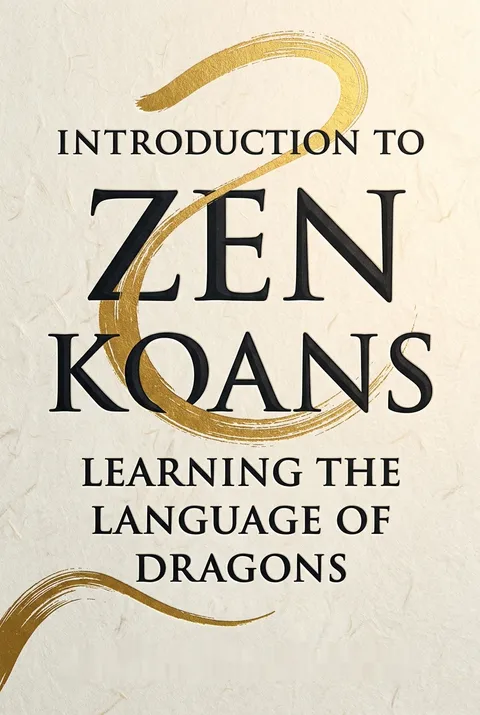
What's "Introduction to Zen Koans: Learning the Language of Dragons" about?
- Exploration of Zen Koans: The book delves into the history, nature, and practice of Zen koans, which are paradoxical anecdotes or riddles used in Zen Buddhism to provoke enlightenment.
- Integration of Zen Practices: It emphasizes the complementary paths of Silent Illumination and koan introspection, suggesting that both are essential for a holistic Zen practice.
- Healing Sectarian Divisions: The author, James Ishmael Ford, aims to bridge ancient sectarian divides within Zen by advocating for a unified approach to Zen practices.
- Modern Relevance: The book sets forth a path for Zen practitioners in the twenty-first century, making ancient teachings accessible and relevant to contemporary readers.
Why should I read "Introduction to Zen Koans: Learning the Language of Dragons"?
- Comprehensive Guide: It provides a thorough understanding of Zen koans, making it a valuable resource for both beginners and seasoned practitioners.
- Practical Insights: The book offers practical advice on how to introspect a koan and the transformation that occurs over time with such work.
- Encouragement and Inspiration: Ford's extensive experience as a Zen teacher shines through, encouraging readers to take up the koan path and discover the boundless in daily life.
- Healing and Transformation: It addresses the challenges and pitfalls of the Zen journey, offering guidance on how to navigate them for personal growth and spiritual awakening.
What are the key takeaways of "Introduction to Zen Koans: Learning the Language of Dragons"?
- Koans as a Path to Awakening: Koans are not just riddles but are tools for deep spiritual exploration and awakening.
- Complementary Practices: Silent Illumination and koan introspection are both vital and should be practiced together for a complete Zen experience.
- Historical Context and Modern Application: Understanding the historical development of Zen and its practices can enhance modern application and personal practice.
- Personal Transformation: Engaging with koans can lead to profound personal transformation, helping practitioners to live more fully and authentically.
How does James Ishmael Ford define a koan in "Introduction to Zen Koans"?
- Matter to be Made Clear: Ford describes a koan as a "matter to be made clear," emphasizing its role in revealing deeper truths.
- Universal Particular: He also refers to it as a "universal particular," highlighting its ability to point to something of deep importance.
- Invitation to Stand in Place: A koan invites practitioners to stand in a place of profound significance, challenging them to explore their own understanding.
- Beyond Simple Riddles: Koans are more than just questions or riddles; they are spiritual tools that guide practitioners toward enlightenment.
What is the significance of Silent Illumination in Zen practice according to the book?
- Balancing Serenity and Illumination: Silent Illumination involves balancing serenity with active illumination, preventing the practice from becoming either aggressive or murky.
- Rooted in Vipassana and Shamatha: It has roots in traditional Buddhist practices but also incorporates elements of indigenous Chinese meditation disciplines.
- Avoiding Quietism: The book warns against a one-sided attachment to Silent Illumination, which can lead to mere quietism without true engagement.
- Path to Awakening: When practiced correctly, Silent Illumination is a powerful path to awakening, revealing the interconnectedness of all things.
How does "Introduction to Zen Koans" address the challenges of Zen practice?
- Acknowledging Pitfalls: The book does not shy away from discussing the challenges and pitfalls that arise during the Zen journey.
- Guidance for Navigation: It offers guidance on how to navigate these challenges, emphasizing the importance of perseverance and open-hearted practice.
- Role of Doubt: Doubt is presented as both a hindrance and a tool, with the potential to drive deeper engagement and understanding.
- Community and Support: The importance of community and having a spiritual guide is highlighted as crucial for overcoming obstacles in practice.
What are some of the best quotes from "Introduction to Zen Koans" and what do they mean?
- "The language of Zen is the language of dragons." This quote emphasizes the mystical and profound nature of Zen teachings, likening them to the wisdom and mystery associated with dragons.
- "Koans are a medium of awakening." This highlights the transformative power of koans, which are designed to provoke deep insight and spiritual awakening.
- "Form is emptiness, emptiness is form." A central teaching in Zen, this quote from the Heart Sutra encapsulates the non-dual nature of reality, where form and emptiness are seen as one.
- "Sit down and become Buddha." This instruction underscores the simplicity and directness of Zen practice, where sitting meditation is both the means and the expression of enlightenment.
How does the book explain the relationship between form and emptiness?
- Interconnectedness: Form and emptiness are presented as interconnected, with each being an expression of the other.
- Beyond Duality: The book emphasizes moving beyond dualistic thinking to understand the non-dual nature of reality.
- Practical Implications: Understanding this relationship has practical implications for how practitioners engage with the world and their own experiences.
- Heart Sutra's Teaching: The Heart Sutra's teaching that "form is emptiness, emptiness is form" is a central theme, inviting practitioners to explore this profound truth.
What role does doubt play in koan practice according to "Introduction to Zen Koans"?
- Source of Energy: Doubt is seen as a source of energy that drives deeper engagement with koans and the spiritual path.
- Palpable Sensation: It is described as a palpable sensation that pervades thoughts, feelings, and even the physical body.
- Transformative Potential: When embraced, doubt can lead to profound insights and breakthroughs in understanding.
- Balancing Faith and Doubt: The book emphasizes the importance of balancing doubt with faith and determination for a fruitful practice.
How does "Introduction to Zen Koans" address the integration of Zen practice into daily life?
- Living Zen: The book emphasizes that Zen practice is not separate from daily life but is meant to be integrated into every aspect of living.
- Practical Application: It offers practical advice on how to bring the insights gained from Zen practice into everyday activities and interactions.
- Embodiment of Teachings: Practitioners are encouraged to embody the teachings of Zen in their actions, relationships, and work.
- Path to Wholeness: Integrating Zen practice into daily life is presented as a path to wholeness and authenticity.
What is the significance of the Heart Sutra in "Introduction to Zen Koans"?
- Central Scripture: The Heart Sutra is presented as a central scripture in Zen, encapsulating the essence of its teachings.
- Radical Assertion: It makes a radical assertion about reality, emphasizing the boundless nature of all things.
- Invitation to the Heart: The sutra invites practitioners to let its teachings enter their hearts, transforming their understanding and experience.
- Guide to Awakening: The Heart Sutra serves as a guide to awakening, offering profound insights into the nature of existence and the self.
How does "Introduction to Zen Koans" suggest practitioners approach the precepts?
- Dynamic Engagement: Practitioners are encouraged to engage with the precepts dynamically, understanding them as living expressions of the Way.
- Beyond Rules: The precepts are not just rules to follow but are invitations to explore the nature of reality and compassion.
- Interconnectedness: Understanding the precepts involves recognizing the interconnectedness of all things and the impact of one's actions.
- Path to Compassion: The precepts are seen as a path to cultivating compassion and wisdom, guiding practitioners in their interactions with the world.
Download PDF
Download EPUB
.epub digital book format is ideal for reading ebooks on phones, tablets, and e-readers.








