

Key Takeaways
Separate Islam from Islamism, then investigate the texts extremists invoke.
Jefferson as a guide. Beck opens with Thomas Jefferson’s 1765 purchase of an English Quran. Decades later, Jefferson and John Adams questioned a Tripoli envoy who defended attacks on American ships as religiously justified. Beck uses the story to argue that political leaders should study the beliefs of adversaries directly, rather than rely on reassuring summaries.
A crucial distinction. The book defines Islam as a religion followed by many kinds of people, and Islamism as a political project to govern society through Islamic law. It says some Muslims reject that project and work toward compatibility with individual liberty. Beck’s central claim is that understanding extremist movements requires examining the religious sources they cite, while keeping their beliefs distinct from those of every Muslim.
What's striking is the tension between the book's useful distinction and its polemical title. Separating a broad faith from a political ideology can prevent the actions of militants from being assigned to an entire population. Reading primary sources can also expose what leaders themselves say they intend. But a quotation from scripture does not, by itself, tell readers how representative a particular interpretation is, or how believers contest it. The strongest version of Beck's method would examine both the militants' readings and the range of Muslim responses, rather than treating one as the hidden truth of the other.
Treat apocalyptic belief as a recruitment engine, not just fringe theater.
Dabiq as a symbol. The book begins its account of ISIS ideology with the 2014 murder of American aid worker Peter Kassig near Dabiq, Syria. ISIS propaganda emphasized the location because a Hadith tradition describes a final battle there between Muslim forces and the armies of Rome. The group's online magazine also took the name Dabiq, turning a small town into a recurring sign of destiny.
A role in the ending. Beck argues that ISIS supporters saw themselves not merely as fighters but as agents bringing about the Day of Judgment. The book also describes Sunni and Shia traditions of the Mahdi, and the belief shared by both branches in Jesus's return. In this worldview, violence can be presented as part of a sacred script, not simply a tactic for territory or power.
Apocalyptic narratives can make sacrifice feel meaningful and can transform a military setback into a test of faith. That is a useful lens for understanding recruitment: a movement offers identity, purpose, and a story in which the recruit matters. The same lens also warns against assuming every adherent acts from the same motive. Belief in an end time is common across traditions, but it does not automatically produce violence. The key question is how leaders connect prophecy to immediate action, and how much practical power their organizations have to reward or punish followers.
See the Caliphate as a political program with a long history.
Faith and government entwined. Beck traces the Caliphate to the political community established by Muhammad in Medina, then follows the expansion of early Muslim rule after Muhammad's death. He describes caliphs as leaders with both political and religious authority, and sharia as a wide-ranging framework for Muslim life, not simply a list of criminal penalties. The book also recounts how Sunni and Shia traditions diverged over succession.
A lost institution. The Ottoman Caliphate ended when Turkey abolished the office in 1924. Beck presents its restoration as a recurring goal among modern Islamists, and ISIS's 2014 declaration of a new Islamic State as an attempt to revive that political ideal. The historical sequence helps explain why the word Caliphate can carry meaning beyond the territory a group controls.
The historical frame usefully shifts attention from a group's name to its governing ambition. A self-declared state seeks authority over law, education, taxation, and allegiance, which makes it different from a clandestine cell. Yet a historical lineage is not proof of an unbroken or universally shared program. Political institutions change meaning across centuries, and Muslims disagree over the legitimacy of specific claimants. The distinction between a symbol that recruits supporters and a durable state with administrative capacity is especially important when assessing what a revived Caliphate can actually accomplish.
Trace modern Islamist revival to defeat, foreign rule, and lost authority.
A search for causes. The book links modern Islamist movements to the decline of Muslim empires and European control in the Middle East. It describes Muhammad ibn Abd al-Wahhab's eighteenth-century call to return to early Islamic practice, joined to the political power of the Saud family. It then follows the end of the Ottoman Empire, the removal of the Caliphate, and the new borders imposed by European powers.
Different movements, related aims. Beck presents Hassan al-Banna's Muslim Brotherhood, founded in 1928, as a mass political movement seeking an Islamic social order. He also discusses Sayyid Qutb's militant influence and Iran's 1979 Islamic Revolution, which established clerical rule. The book portrays these movements as distinct routes toward restoring religious authority in public life, not as one centrally controlled organization.
This account takes political context seriously: humiliation, foreign rule, and a perceived loss of status can make restorationist movements compelling. It also resists treating militant ideas as spontaneous eruptions without history. The risk is turning a complicated regional story into a single reaction to decline. People can respond to colonialism and authoritarian rule through nationalism, reform, religious activism, or political violence. Context can help explain why an ideology gains traction without excusing its choices or making violence seem inevitable.
Recognize terror as a strategy for manufacturing the disorder extremists exploit.
Chaos as a method. Beck highlights the jihadist text commonly translated as The Management of Savagery. It recommends weakening public confidence in governments through sustained violence, then using the resulting insecurity to expand militant control. The book describes how Abu Musab al-Zarqawi's organization used attacks in Iraq, including sectarian violence against Shia Muslims, to deepen instability.
A staged campaign. Drawing on journalist Fouad Hussein's account of al-Qaeda planning, Beck presents a seven-stage strategy beginning with provoking Western intervention and ending with a hoped-for global victory. The plan predicted a Caliphate would emerge between 2013 and 2016, and ISIS declared one in 2014. Beck argues that this correspondence means the group's ambitions deserve attention, even when its ultimate forecast seems implausible.
The strategic insight is stronger than the claim that a forecast arriving near its scheduled date validates the whole plan. Violent organizations can benefit when states overreact, communities lose trust, or rival factions turn against one another. That makes the feedback loop worth studying. But a staged document is evidence of a plan, not proof that its authors control events or that each outcome was caused by their design. Analysts should distinguish a group's intentions, its capabilities, and the contingent political conditions that allow those intentions to matter.
Read jihad and sharia in context, not through slogans or isolated verses.
Terms with consequences. Beck disputes claims that jihad means only an inward moral struggle. He cites Islamic legal texts that also describe jihad as armed struggle, while acknowledging that some Muslims use the word for personal striving. He defines sharia as an encompassing religious and ethical path that can address family life, public conduct, and criminal law. In the book's account, its sources include the Quran, the Prophet's example and traditions, scholarly consensus, and reasoning by analogy.
Interpretation matters. Beck's thirteen disputed claims include whether Islam is inherently peaceful, whether Islamic law seeks political authority, and whether non-Muslims and women receive equal treatment under some interpretations. He uses Quranic passages, legal manuals, and polling to argue that these questions cannot be dismissed. The book's evidence is selected to expose hard-line readings, not to map every school of thought.
The useful habit here is to ask which source, interpreter, and historical context supports a claim. Religious vocabulary often carries several meanings, and political movements may select the meaning that serves their aims. That makes both blanket reassurance and blanket condemnation poor methods. Textual evidence can illuminate a movement's self-understanding, but a selected passage cannot establish what all believers think or how a tradition is practiced. Careful comparison of competing interpretations is not evasion. It is how religious and political arguments are assessed fairly.
Do not mistake poverty relief for a substitute for ideological analysis.
Beyond economic grievance. Beck challenges the idea that poverty, unemployment, drought, or anger at Western policy alone explains terrorism. He points to Osama bin Laden's wealth and to studies discussed in the book that found no simple relationship between poverty and terrorist activity. He also cites examples of recruits with education and middle-class backgrounds, arguing that material hardship cannot explain why some people embrace religious violence.
Ideas shape action. The book emphasizes that some militants describe their actions as service to God and seek rewards they believe await martyrs. In one example, a would-be attacker distinguishes anger from acting in the cause of Allah. Beck concludes that jobs or political concessions cannot by themselves answer a movement whose members understand violence as a religious obligation.
The distinction between grievance and ideology is important. People facing similar economic conditions do not all join violent movements, so material hardship alone cannot explain recruitment. At the same time, rejecting poverty as a complete explanation should not turn it into an irrelevant one. Economic and political conditions can shape who is vulnerable to recruitment, what organizations can offer, and where violence takes hold. A better account asks how ideology, social networks, state failure, and individual circumstances interact instead of choosing one cause and treating it as sufficient.
Take Iran's apocalyptic rhetoric seriously without treating prophecy as proof of intent.
A distinct Iranian setting. Beck describes Iran as a Shia-majority republic whose leaders draw on the tradition of the Hidden Imam, or Mahdi, who is expected to return. He argues that some Iranian officials connect political events and the country's nuclear program with that expectation. The book places these beliefs beside repeated Iranian threats against Israel and the controversy over whether Iran can be trusted with nuclear technology.
Rival camps within Islam. The account also emphasizes the conflict between Sunni and Shia powers, with Iran supporting Shia groups and Sunni extremists targeting them. Beck sees a danger that sectarian warfare, nuclear ambition, and end-times beliefs could reinforce one another. His warning is to assess leaders' stated commitments rather than assume that diplomacy alone proves they share conventional assumptions about risk.
A leader's worldview matters because it shapes what costs, risks, and victories mean to that leader. Taking religious language seriously can therefore improve security analysis. Still, rhetoric about prophecy and evidence of an operational decision to use nuclear weapons are different kinds of evidence. Treating them as interchangeable can produce the very misjudgments that careful analysis is meant to prevent. A sound assessment separates public statements, institutional incentives, technical capabilities, and verified policy choices, while remaining alert to beliefs that could alter conventional calculations.
Protect free criticism while refusing to turn Muslims into a suspect class.
Speech under pressure. Beck argues that accusations of bigotry can be used to discourage scrutiny of Islamist movements. He discusses the 2015 shooting at an event in Garland, Texas, where two gunmen attacked a Muhammad cartoon contest and were killed by police. He also points to earlier controversies over cartoons and the self-censorship of publishers, arguing that threats should not decide which ideas can be discussed.
A liberal principle. The book treats the freedom to criticize religion, including Islam, as essential to constitutional life. Its closing appeal also calls for supporting Muslims who resist coercion and violence. That combination matters: defending speech does not require endorsing every speaker or every claim, and criticism of a doctrine should not become a presumption of guilt against people who share a faith.
The strongest case for free expression is that unpopular ideas need protection precisely when they provoke anger. At the same time, criticism is more persuasive when it is specific, evidenced, and directed at claims or institutions rather than at a population. That distinction helps keep open debate from becoming a vehicle for prejudice. A society can protect offensive speech, investigate credible threats, and defend equal citizenship at once. Treating those aims as mutually exclusive weakens both public safety and the liberties the book wants readers to defend.
Defend constitutional pluralism and leave religious reform to Muslims themselves.
The book's prescription. Beck urges readers to study extremist beliefs, speak openly about them, and defend the constitutional system from religious authority imposed by force. He invokes George Washington's welcome to people of different faiths, while stressing civic loyalty and support for the country. He also argues that outsiders cannot reform Islam on Muslims' behalf.
Reform from within. The closing chapters name Muslim writers and advocates whom Beck sees as pursuing reform, and call for backing people who oppose coercion. His final image is of ordinary citizens refusing to follow a crowd toward catastrophe. The practical message is to protect religious freedom, support those facing persecution, and insist that public law remain accountable to citizens rather than imposed by a claimed divine authority.
The distinction between defending a constitutional order and dictating religious belief is central to the book's own appeal to liberty. Religious reform is more likely to endure when believers shape it through their own institutions and arguments. Yet civic loyalty should be a standard applied equally, not a special test imposed on one religious community. The book's case is most coherent when it protects Muslims' freedom alongside everyone else's, and least coherent when sweeping claims about Muslims risk undermining the very equal citizenship it invokes.
Analysis
This is a political polemic organized as a journey from Jefferson's Quran, through the history of Islamic empires and modern Islamist movements, to a call for action. Its central distinction, between Islam as a diverse faith and Islamism as a political program, is the most useful tool in the book. So is its insistence that militants' stated beliefs deserve examination rather than automatic dismissal. The narrative turns abstract debates about scripture into concrete political questions about law, sovereignty, recruitment, and freedom of speech.
The method also creates the book's main weakness. It relies heavily on selected translations, quotations from hard-line authorities, and polling to support broad claims about religious doctrine and Muslim populations. Those sources can show what particular actors believe and how they justify their actions. They cannot alone establish how representative those beliefs are, or settle disputes among interpreters. The book sometimes blurs its own distinction between Islamist movements and Muslims more generally, especially when it moves from extremist texts to claims about a faith's compatibility with freedom.
Its treatment of al-Qaeda's seven-stage plan is another revealing case. The timeline gives readers a memorable strategic model, but the arrival of a Caliphate within the projected window does not establish that the plan caused the events or that its final predictions are likely. The most durable lesson is therefore methodological: take ideological commitments seriously, but test claims against evidence about interpretation, capability, and actual behavior. Read as a warning about extremist political projects and the fragility of free expression, the book is forceful. Read as a comprehensive account of Islam, it is too selective to be definitive.
Review Summary
"It IS About Islam" receives mixed reviews. Some praise its research and critique of Islamic extremism, while others criticize it as biased and oversimplified. Supporters find it eye-opening and well-sourced, highlighting concerns about radical Islam. Critics argue it lacks nuance and context, potentially promoting Islamophobia. Many reviewers note Beck's controversial reputation but acknowledge the book's importance in discussing sensitive topics. The book's exploration of Islamic teachings and their relation to modern extremist groups sparks debate about religious interpretation and global security issues.
People Also Read






Glossary
Islamism
Political program grounded in IslamBeck uses Islamism to describe a political ideology that seeks to govern society through Islamic authority and law. In his account, it includes both violent organizations and political movements that pursue an Islamic state without using terrorism. The book distinguishes this ideology from Islam as a faith practiced by a much larger and more diverse population.
sharia
Islamic path and legal traditionSharia is the Islamic religious and ethical path that Beck describes as extending beyond criminal law into family, social, and public life. The book identifies the Quran, the Prophet's example and traditions, scholarly consensus, and reasoning by analogy as sources used in Islamic legal reasoning. Muslims and legal scholars differ over its interpretation and application.
jihad
Striving, including armed struggleJihad is an Arabic term used for striving or struggle. Beck focuses on its meaning in legal and militant texts as armed struggle connected to religious aims, while noting that Muslims also use it for personal moral effort. The book contests explanations that reduce the term to peaceful self-improvement, but its discussion reflects disputes over interpretation and context.
Caliphate
Rule by a caliphA Caliphate is a political community or state ruled by a caliph, a successor or leader associated with the Muslim community. Beck traces historical caliphates from the period after Muhammad's death through the Ottoman era, abolished in 1924. He presents restoration of the institution as a goal of some modern Islamist groups, including ISIS.
The Management of Savagery
Strategy for exploiting disorderThe Management of Savagery is a jihadist strategy text discussed by Beck. It argues that violence can weaken state authority and create insecurity, which militants can then exploit to build an Islamic state. The book uses the text to explain the strategic logic behind attacks intended to provoke disorder, rather than treating such violence as merely impulsive.
civilization jihad
Long-term social and political influenceBeck uses civilization jihad for the Muslim Brotherhood's alleged strategy of gradually influencing Western institutions and public life, distinct from attacks by armed groups. He presents dawa, or religious outreach, as one means in this campaign. The phrase is a contested characterization in the book, not a neutral label accepted across Muslim communities or scholarship.
abrogation
Later ruling supersedes earlier verseAbrogation is the interpretive principle that a later Quranic passage can supersede an earlier one in determining a ruling. Beck invokes it to argue that some passages presenting tolerance are overridden by later instructions concerning non-Muslims. Interpretations of which passages abrogate others, and how the principle should apply, vary among scholars.
umma
Community of Muslim believersUmma refers to the community of Muslims. Beck emphasizes that the term can describe a religious community with political significance, not merely a collection of individuals who share private beliefs. In the book's historical account, loyalty to the umma helped unite people beyond local tribal affiliations and shaped ideas about Muslim governance.
FAQ
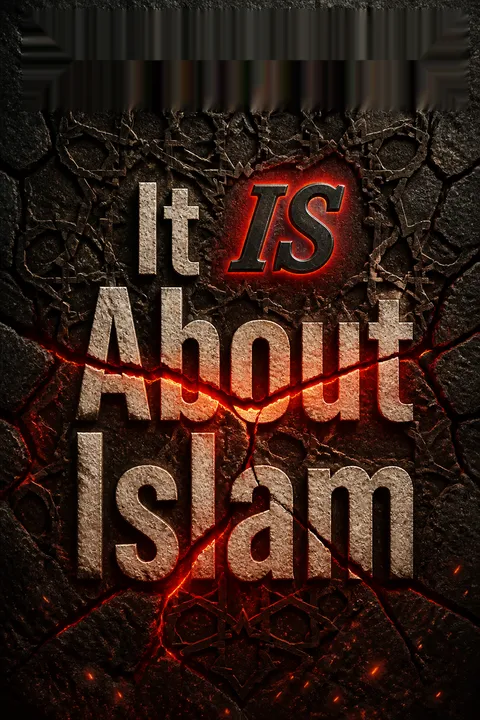
What's It IS About Islam about?
- Focus on Extremism: The book examines the connections between Islam and terrorism, focusing on groups like ISIS and Al-Qaeda, arguing that their ideologies are rooted in Islamic teachings.
- Islam vs. Islamism: Glenn Beck distinguishes between Islam as a religion and Islamism as a political ideology aiming to impose sharia law globally.
- Historical Context: It provides a historical overview of Islam, from its origins to the modern-day Caliphate, to explain contemporary conflicts.
Why should I read It IS About Islam?
- Understanding Terrorism: The book offers insights into the motivations behind terrorist attacks and the ideologies that fuel them, relevant for understanding global security issues.
- Challenging Narratives: Beck confronts political correctness in discussions about Islam, offering a perspective that may resonate with those frustrated by mainstream narratives.
- Informed Perspective: Reading this book provides a perspective that challenges commonly held beliefs about Islam and its relationship to violence.
What are the key takeaways of It IS About Islam?
- Political Nature of Islam: Beck argues that Islam is inherently political, advocating for a Caliphate and submission to a holistic political ideology.
- Jihad as Warfare: The book clarifies that jihad is a call to arms against non-believers, not merely a peaceful internal struggle.
- Sharia Law's Role: It discusses sharia law's significance in Islamic governance and its implications for non-Muslims, emphasizing its global aspirations.
What are the best quotes from It IS About Islam and what do they mean?
- “Islam is the religion of war.”: This quote from ISIS leader Abu Bakr al-Baghdadi underscores the book's argument that jihad is fundamental to Islam.
- “Fight against those who believe not in Allah.”: A Quranic quote illustrating the book's assertion that violence against non-believers is sanctioned within Islamic texts.
- “The recompense of those who wage war against Allah and His Messenger is only that they shall be killed or crucified.”: Highlights the severe consequences outlined in Islamic law for opposing Islam.
How does Glenn Beck define jihad in It IS About Islam?
- Jihad as Warfare: Beck defines jihad primarily as a military struggle against non-Muslims, emphasizing its aggressive nature.
- Religious Obligation: He argues that jihad is a communal obligation for Muslims to defend and spread Islam, supported by Quranic verses.
- Misinterpretation of Peace: Beck critiques the notion that jihad is a peaceful internal struggle, arguing it undermines the true meaning in Islamic law.
What does It IS About Islam say about the Caliphate?
- Historical Significance: The book traces the Caliphate's origins from Muhammad to its modern aspirations, arguing it's a driving force behind Islamist movements.
- Current Reality: Beck highlights that ISIS has declared a Caliphate, challenging the notion that it's merely a fantasy.
- Global Implications: The establishment of a Caliphate poses a significant threat to global stability, seeking to impose sharia law worldwide.
How does It IS About Islam address the concept of sharia law?
- Comprehensive Legal System: Beck describes sharia as an all-encompassing legal framework governing every aspect of life for Muslims.
- Support for Sharia: Citing surveys, he challenges the idea that sharia is a fringe belief, noting widespread support among Muslims.
- Conflict with Western Law: Beck argues that sharia law is incompatible with Western legal systems, prioritizing religious authority over individual rights.
What are the thirteen deadly lies about Islam discussed in It IS About Islam?
- Lie #1: “Islam is a religion of peace.” Beck argues this oversimplification ignores violent aspects of Islamic teachings.
- Lie #2: “Islam is not much different than Christianity or Judaism.” The book asserts Islam's political and legal systems are fundamentally different.
- Lie #3: “Jihad is a peaceful, internal struggle.” Beck clarifies jihad is often a call to arms against non-believers.
How does It IS About Islam define Islamophobia?
- Historical Definition: Beck references the Runnymede Trust's definition as “unfounded hostility towards Islam,” critiquing it for being too broad.
- CAIR's Definition: He argues CAIR's definition is subjective, encompassing any critical viewpoint.
- Implications of the Term: Beck suggests "Islamophobia" is used to silence those who challenge Islamic teachings, stifling necessary discourse.
What does It IS About Islam say about women's rights in Islam?
- Contradictory Claims: Beck discusses claims that Islam respects women's rights, arguing practical applications often lead to oppression.
- Cultural vs. Religious: He highlights that abuses are often justified by cultural practices rather than Islamic teachings.
- Realities of Sharia Law: Beck provides examples of how Sharia law restricts women's rights, affecting marriage, inheritance, and personal freedom.
How does It IS About Islam relate to the concept of free speech?
- Defense of Free Speech: Beck emphasizes protecting free speech, especially regarding discussions about Islam.
- Consequences of Censorship: He discusses backlash faced by individuals for speaking out against Islam, creating a culture of fear.
- Call to Action: Beck encourages readers to stand firm in their right to free speech, essential for addressing radical Islam's challenges.
What solutions does It IS About Islam propose for addressing the issues discussed?
- Understanding the Enemy: Beck advocates for a comprehensive understanding of radical Islam and its teachings.
- Speaking Out: He encourages challenging political correctness and narratives that downplay radical Islam's threat.
- Supporting Reform: Beck calls for supporting genuine reform efforts within the Muslim community, emphasizing change from within Islam.
About the Author
Other books by Glenn Beck

Download PDF
Download EPUB
.epub digital book format is ideal for reading ebooks on phones, tablets, and e-readers.








