

Key Takeaways
Carry lost landscapes forward without mistaking memory for history
A childhood divided. Tolkien was born in South Africa in 1892. After his father died, his mother brought him and his younger brother to England. From age four to eight, Ronald lived at Sarehole, then a village outside Birmingham, where a mill, river, fields, and trees shaped his sense of home. His mother taught him languages and encouraged his interests in words, drawing, and nature.
Loss became a lasting lens. The family left Sarehole for Birmingham, and his mother died of diabetes when he was twelve. Tolkien connected her memory with the countryside he had already lost. He later grieved as development swallowed Sarehole’s lanes and fields. Carpenter links those remembered places and losses to the rural texture of Tolkien’s fiction, but does not reduce the stories to autobiography.
What's striking is how a place can remain emotionally vivid even after its physical form changes. Tolkien’s remembered Sarehole is not a neutral record of childhood; it is a landscape charged by affection, separation, and grief. That distinction matters: memory supplies a writer with meaning, not documentary accuracy. The biography offers a persuasive connection between loss and imaginative attachment, while leaving room for other sources of Tolkien’s creativity, including scholarship, friendship, and deliberate craft.
Follow the sound of words until it opens a world
Words first delighted him. As a boy, Tolkien was drawn to how languages sounded and looked, sometimes before their meanings. Welsh place-names on coal trucks caught his attention; Greek, Gothic, and Finnish later intensified his fascination. In adolescence, playful inventions such as Nevbosh gave way to more systematic language-making. Quenya, an Elvish language influenced by Finnish, and Sindarin, shaped in part by Welsh, became especially important.
Languages needed a past. Tolkien found that a convincing invented language required a history and a community of speakers. He began creating peoples, places, and stories to give his languages context. The chain ran from sound to language, then from language to mythology. What began as a private hobby became the foundation for Middle-earth, with its names and histories built to feel as though they belonged to an older world.
The creative sequence here runs against the common idea that a writer starts with plot and decorates it with names. For Tolkien, the sound system itself generated a demand for speakers, histories, and conflict. This is a powerful model of constraint-led creation: one coherent choice creates problems that invite further invention. Yet language cannot produce a compelling world by itself. Tolkien’s literary reading, emotional attachments, and narrative decisions turn linguistic structure into human drama.
Build a circle that expects something from your talent
A school club became a calling. Around 1911, Tolkien and friends Christopher Wiseman, Robert Gilson, and Geoffrey Bache Smith formed the T.C.B.S., a group that grew from tea in the school library into a close intellectual fellowship. They read, argued, performed plays, and shared ambitions. Tolkien brought his knowledge of old languages and northern literature; his friends offered other strengths, including music, science, and poetry.
War made the bond costly. Gilson was killed on the first day of the Somme offensive in 1916. Smith died later that year from wounds caused by a shell. Before his death, Smith urged Tolkien to carry forward what the friends had hoped to create. Tolkien, recovering from trench fever, began writing the mythology that grew into The Silmarillion in 1917.
The group supplied something more consequential than praise: an audience that treated youthful work as worth taking seriously. In that setting, talent became a shared responsibility rather than a private fantasy. The losses of Gilson and Smith then made that responsibility feel urgent. The account is moving, but it should not turn battlefield deaths into a convenient origin story. The fellowship mattered before the war, and Tolkien’s later work required decades of independent effort.
Let myth carry truth without turning into a disguised sermon
A created world could mean something. Tolkien did not regard his mythology as a literal record of events, but he hoped it expressed truths about the world and human nature. He called this kind of imaginative making sub-creation: the human act of forming a fictional world that reflects, imperfectly, a reality believed to originate with God. In The Silmarillion, God exists as the One, while the Valar are powerful, angel-like guardians rather than gods.
Faith stays behind the curtain. Tolkien wanted his stories to feel remote from familiar religious life, so divine presence is not constantly displayed. He also rejected allegory, where characters and events stand for a predetermined message. Myth, in his view, could carry Christian moral assumptions without becoming a coded lesson. The reader encounters a world with its own history and rules, not a puzzle whose answer is a sermon.
This distinction gives readers a useful way to discuss religious fiction without reducing it to doctrine in costume. A story can embody a moral vision through its structure, conflicts, and limits, while still allowing characters to exceed symbolic roles. The approach respects interpretive freedom, though it does not make a work value-neutral. Tolkien’s Christian understanding shapes the world beneath the plot, even when readers do not share that faith or read the mythology in the same way.
Make the humble home the moral center of epic
Small lives anchor large stakes. The Hobbit began as a story for Tolkien’s children, probably around 1930. Bilbo’s comfortable habits and unremarkable home drew on Tolkien’s affection for the West Midlands and on traits he recognized in himself. The Shire recalls the ordinary English countryside he loved, especially the Sarehole area transformed by memory. Hobbits are modest in imagination, Tolkien suggested, but that does not make them deficient in courage.
Epic depends on ordinary people. When Tolkien began a sequel, the Ring and the deeper history of Middle-earth pulled the story toward heroic romance. Hobbits remained its center. His experience among privates and batmen in the First World War informed Sam Gamgee, whom Tolkien connected to the ordinary soldier. The contrast is central: world-changing courage need not arrive in a grand or powerful body.
Tolkien’s scale shift is part of the moral argument. The fate of a vast world is entrusted to people whose ambitions are local, whose lives revolve around home, food, and familiar paths. That makes courage less like a superpower and more like fidelity under pressure. The risk is that an idealized rural home can flatten the conflicts within ordinary communities. Still, the Shire’s vulnerability gives the epic something to defend beyond victory itself.
Treat old texts as living literature, not linguistic specimens
Scholarship fed storytelling. Tolkien’s philology, the study of how languages develop and relate, began with delight in words and grew into a demanding academic career. He studied Old and Middle English, Norse, Gothic, Welsh, and other languages. At Leeds and Oxford he taught, edited Sir Gawain and the Green Knight with E. V. Gordon, and argued that medieval works deserved attention as literature, not merely as evidence about language.
Performance made the past audible. His celebrated Beowulf lectures opened with a dramatic recitation in Old English, making students hear a poem rather than inspect a set text. His 1936 lecture, Beowulf: The Monsters and the Critics, defended the poem’s artistic unity and the importance of its monsters. He also worked to bring literary reading and linguistic study closer together in Oxford’s English curriculum.
Tolkien’s example challenges the division between technical expertise and aesthetic response. Knowing how a word changed over centuries can clarify what a poem is doing, while feeling its rhythm can suggest why its language matters. The method is especially valuable when old texts risk being treated as museum objects. Its limit is that personal attachment can bias interpretation. Tolkien’s work is strongest where emotional conviction is supported by patient evidence.
Protect creative work from perfectionism's endless revision loop
Care brought both depth and delay. Tolkien spent about twelve years writing The Lord of the Rings, checking details such as names, maps, distances, dates, and lunar phases so the story would feel internally coherent. He revised sentences repeatedly and often expanded a project instead of bringing it to a close. His academic work also suffered from unfinished projects, despite his formidable learning and heavy teaching load.
The unfinished tree was personal. In Leaf by Niggle, a meticulous painter labors over individual leaves while fearing he will never complete the tree he imagines. Tolkien wrote the story amid anxiety that his own mythology might remain unfinished. He continued reworking The Silmarillion through old age, but it was not ready for publication when he died in 1973. His son Christopher edited it for posthumous publication.
Tolkien’s precision is not simply a flaw to be corrected: it gave his invented world the density that readers find convincing. But the same habit could make completion feel like betrayal, as though choosing one version meant abandoning all the others. The case illustrates a familiar creative trade-off between fidelity to possibility and the value of a finished work. The biography records the cost without offering a neat solution, and that unresolved tension is part of its force.
Let trusted readers challenge the work without taking its world away
Friendship gave the work an audience. After the T.C.B.S. broke apart, Tolkien’s friendship with C. S. Lewis became a major source of intellectual companionship. Their circle included the Inklings, an informal group of friends who met to read drafts aloud and discuss them. Tolkien shared early writing from his mythology and The Lord of the Rings. Lewis offered encouragement and criticism, though Tolkien often revised in his own direction rather than adopting suggestions.
Conversation sharpened conviction. In 1931, Tolkien and Hugo Dyson discussed myth with Lewis during a walk in Oxford. Their argument helped Lewis understand how a religious story could be both mythic and, to a Christian, true. Tolkien later described Lewis’s main contribution to his own writing as encouragement: Lewis was one of the few people who listened to his private stories and treated them as worthy of an audience.
A trusted reader can provide both resistance and permission: resistance to weak passages, permission to keep pursuing an unconventional project. The Inklings made unfinished work social without turning it into a committee product. That distinction is important for creative groups. Their all-male, university-centered world was not a universal model, and Edith Tolkien was often outside it. The useful principle is not to copy the group, but to find readers who combine candor with sustained attention.
An unauthorized paperback unexpectedly made Middle-earth a campus phenomenon
Publication was a gamble. Tolkien wanted The Lord of the Rings and The Silmarillion published together, and disputes with Collins delayed a decision. Allen & Unwin eventually accepted The Lord of the Rings as a costly risk, releasing it in three volumes between 1954 and 1955. The book found devoted readers, but its unconventional form and high price limited its initial reach.
A dispute widened the audience. In 1965, Ace Books issued a cheaper, unauthorized American paperback. Tolkien and his supporters protested, and an authorized edition followed. The controversy publicized the books, while the affordable paperbacks reached many students. Sales soared, and a campus following formed around the stories, sometimes linking them to concern about industrial damage to nature. Tolkien welcomed readers but was uneasy about becoming a cult figure.
The episode shows how a book’s reception depends partly on access, not just critical judgment. The cheaper edition lowered the barrier for students, while the fight over authorization turned a publishing dispute into publicity. That does not mean controversy alone explains the book’s appeal; readers still had to find the world compelling. Nor does mass popularity establish literary quality. It does show how distribution can reveal an audience that expensive hardcovers leave untapped.
Love can require choosing a life neither partner would choose alone
Affection did not erase difference. Tolkien and Edith Bratt met while both were young and orphaned, fell in love, then endured three years apart after Tolkien’s guardian forbade contact. They married in 1916. Their long marriage held deep affection, but their lives did not neatly overlap: Tolkien’s intellectual friendships centered on men at Oxford, while Edith had little access to that world and had given up the possibility of a musical career.
Care sometimes meant sacrifice. When Edith’s health declined, the couple moved from Oxford to Bournemouth in 1968, where she had friends and felt more at home. Tolkien missed his intellectual circle, but her happiness mattered to him. She died in 1971. Afterward he returned to Oxford, lived at Merton College, and resumed work on The Silmarillion, still unfinished at his death.
The biography resists two easy stories: that a long marriage must have been harmonious, or that unequal roles cancel out genuine love. Tolkien and Edith cared deeply for each other, yet the social arrangements of their time and his attachment to male academic friendship left her isolated. The Bournemouth move makes devotion visible as a choice with a cost. It also invites a sharper question: whose interests define a shared life, and who is expected to adapt?
Analysis
Carpenter’s biography works best as a story of conversion between forms. Tolkien’s early attachments to language, landscape, Catholic faith, and friendship do not sit beside his fiction as background details. They become materials from which he builds a world. Yet the biography is careful, at its strongest, not to claim that a remembered mill or a wartime loss mechanically produced a particular story. The relationship is more subtle: experience supplied emotional pressure, while scholarship and revision supplied structure.
The book’s organizing contrast is between an ordinary life and an immense imaginative world. Tolkien taught, raised a family, worried over money, and lived in unremarkable houses. That routine did not negate his creative ambition. It gave it a domestic center, while his scholarly life offered the languages and literary forms through which he could realize it. The hobbits embody that meeting point: modest, local lives placed inside an epic history.
The biography also reveals the cost of Tolkien’s strengths. His desire for internal consistency created extraordinary depth, but his perfectionism delayed publication and left The Silmarillion unfinished. Friendship gave him readers and encouragement, but his closest intellectual circle was largely male, while Edith’s independent ambitions narrowed after marriage. The account grants both tenderness and friction, though its focus on Tolkien means Edith’s inner life remains less fully available.
As intellectual history, the book is most persuasive when it treats biography as context rather than decoding key. Tolkien’s fiction cannot be reduced to childhood grief, Catholic belief, or wartime experience, and Carpenter does not claim that it can. The life helps explain what kinds of questions mattered to Tolkien and why certain forms carried emotional force. The works remain larger than their origins, which is precisely why the final image of an ordinary grave beside extraordinary imagined lives feels earned.
Review Summary
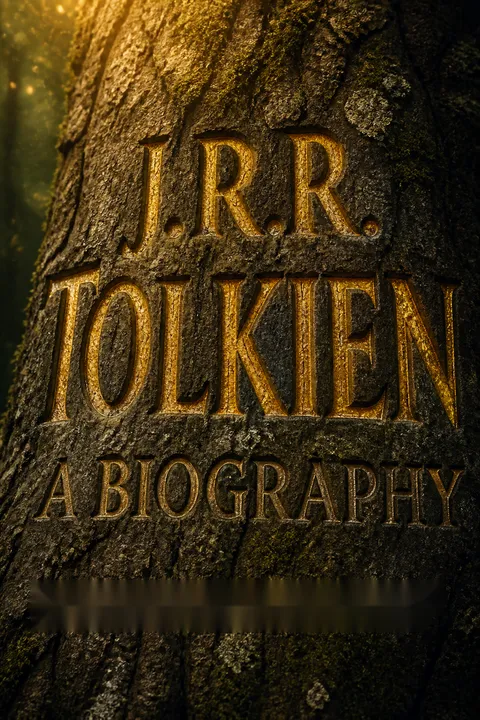
J.R.R. Tolkien: A Biography is praised for its balanced portrayal of Tolkien's life, offering insights into his creative process, academic career, and personal relationships. Readers appreciate the book's exploration of Tolkien's linguistic interests and their influence on his fantasy works. Many find the biography engaging and well-researched, providing a comprehensive look at Tolkien's life from childhood to his later years. While some note that certain periods are covered more thoroughly than others, overall the book is highly recommended for both casual fans and devoted Tolkien enthusiasts.
People Also Read

Glossary
Sub-creation
Human making of imagined worldsTolkien’s term for the human act of creating an imagined world within the larger reality believed to have been created by God. A sub-created world can have its own histories, peoples, and rules. Tolkien saw this act as more than invention for entertainment: it could reflect, imperfectly, truths about the world beyond the story.
Secondary World
A coherent imagined worldThe internally consistent world made by a storyteller, distinct from everyday experience. In Tolkien’s account, a reader can enter it imaginatively when its details accord with its own rules. If those rules fail, the world loses credibility. The term describes the achieved setting and reality of a story, not simply its location or genre.
Quenya
A high Elvish languageOne of Tolkien’s invented Elvish languages, influenced especially by Finnish. Tolkien developed its vocabulary and structure as part of a wider linguistic history, rather than as a collection of attractive names. In his mythology it is associated with Elvish peoples and histories, and its existence helped motivate the creation of Middle-earth.
Sindarin
A second Elvish languageAn invented Elvish language Tolkien developed alongside Quenya. Its sound patterns were influenced particularly by Welsh. Tolkien treated it as a related language with its own development and speakers, allowing names and words in his mythology to carry traces of a larger linguistic past.
T.C.B.S.
Tolkien’s schoolboy fellowshipAn informal group of Tolkien’s school friends, named the Tea Club and Barrovian Society. Its core members were Tolkien, Christopher Wiseman, Robert Gilson, and Geoffrey Bache Smith. They shared reading, debate, performance, and ambitions for creative work. The group’s encouragement mattered deeply to Tolkien, especially after two members died during the First World War.
The Inklings
Oxford friends reading draftsAn informal circle of Oxford friends, centered on C. S. Lewis and including Tolkien, who met to talk and read unpublished writing aloud. There was no formal membership system. Meetings offered fellowship, criticism, and an audience for work in progress, including Tolkien’s developing Lord of the Rings.
Philology
The historical study of languageThe study of languages through their history, structures, and relationships. Tolkien’s work focused especially on early English and related Germanic languages. For him, philology was inseparable from literature: understanding a word’s development could illuminate a poem, while hearing a poem as art kept linguistic study from becoming mere cataloging.
FAQ
What's J.R.R. Tolkien: A Biography about?
- Focus on Tolkien's Life: The biography details J.R.R. Tolkien's life from his early years in South Africa to his academic and literary achievements. It explores his personal experiences and relationships that shaped his imagination and writing.
- Detailed Timeline: The book is structured to cover different periods of Tolkien's life, including his childhood, education, military service, and the creation of his mythology. Each chapter provides insights into how these experiences influenced his works.
- Exploration of Themes: Themes such as loss, friendship, and the impact of war are prevalent throughout the biography, reflecting in Tolkien's writings and personal struggles.
Why should I read J.R.R. Tolkien: A Biography?
- In-depth Understanding: The biography offers a comprehensive look at Tolkien's life, helping readers understand the man behind the beloved stories and providing context for his works.
- Rich Historical Context: It situates Tolkien within the broader historical and cultural landscape of the 20th century, including the impact of World War I on his life and writing.
- Personal Insights: The book includes personal anecdotes and reflections, revealing Tolkien's thoughts on creativity, language, and mythology, which can inspire readers and writers alike.
What are the key takeaways of J.R.R. Tolkien: A Biography?
- Influence of Childhood: Tolkien's early experiences in South Africa and his relationship with his mother significantly shaped his worldview and creativity.
- Impact of War: His experiences in World War I profoundly affected his outlook on life and influenced his writing, particularly the themes of fellowship and loss.
- Creation of Mythology: Tolkien's ambition to create a mythology for England is a central theme, showcasing his deep connection to his heritage.
What are the best quotes from J.R.R. Tolkien: A Biography and what do they mean?
- “I desired dragons with a profound desire.”: This quote reflects Tolkien's fascination with fantasy and mythical creatures, signifying his longing for adventure and imaginative worlds.
- “I have (of course) placed the action in a purely imaginary (though not wholly impossible) period of antiquity.”: It highlights Tolkien's skill in blending reality with myth, crafting a believable yet fantastical world.
- “The T.C.B.S. is not finished and never will be.”: This underscores the enduring bond of friendship among Tolkien and his peers, signifying the lasting impact of their shared experiences.
How did Tolkien's early life influence his writing in J.R.R. Tolkien: A Biography?
- Childhood in South Africa: His early years exposed him to diverse cultures and languages, influencing his linguistic creativity and the settings in his stories.
- Loss of His Mother: The death of his mother instilled a sense of loss that permeated his works, echoed in the journeys and sacrifices of his characters.
- Formation of Friendships: The friendships he formed, particularly with the T.C.B.S., inspired the themes of camaraderie and loyalty in his writing.
What role did World War I play in Tolkien's life and works?
- Military Experience: His service in World War I exposed him to the horrors of war, influencing his perspective on heroism and sacrifice.
- Loss of Friends: The war resulted in the loss of many close friends, deeply affecting Tolkien and reflected in the narratives of fellowship and mourning.
- Inspiration for Mythology: The trauma of war prompted Tolkien to create a mythology that could provide meaning and solace, serving as a coping mechanism.
How did Tolkien's academic career influence his writing?
- Philological Expertise: His background in philology and love for languages greatly influenced the creation of the languages in his works, such as Elvish.
- Teaching Influence: As a professor, Tolkien shared his passion for literature and language, which inspired him to write and shaped the themes he explored.
- Research and Writing: His scholarly work on Old and Middle English texts provided a foundation for the themes and styles in his fiction.
What is the significance of the T.C.B.S. in Tolkien's life?
- Creative Fellowship: The T.C.B.S. was a group of friends who shared a passion for literature, fostering an environment of support and inspiration for Tolkien's early writing.
- Impact of Loss: The dissolution of the T.C.B.S. due to the war left Tolkien with a profound sense of loss, influencing the themes of friendship and sacrifice.
- Legacy of Friendship: Their shared experiences and dreams became a source of motivation for his literary endeavors.
How did Tolkien's relationship with Edith Bratt shape his life and work?
- Source of Inspiration: Edith was a significant influence on Tolkien's writing, particularly in the creation of the character Lúthien in The Silmarillion.
- Emotional Support: Edith provided emotional stability and support, helping Tolkien navigate challenges as a writer and scholar.
- Shared Faith: Their shared Catholic faith deepened their bond and influenced Tolkien's worldview, reflected in the moral themes in his works.
What role did C.S. Lewis play in Tolkien's life and work?
- Catalyst for Conversion: Lewis played a crucial role in Tolkien's conversion to Christianity, engaging him in discussions about faith and mythology.
- Supportive Friendship: Lewis provided encouragement and feedback on Tolkien's works, being a significant source of motivation during his writing process.
- Inklings Group: As a member of the Inklings, Lewis was part of a literary circle that fostered creativity and collaboration, providing a space for Tolkien to share ideas.
How did Tolkien's views on mythology shape his writing?
- Myth as Truth: Tolkien believed myths contain fragments of truth and reflect a deeper reality, allowing writers to explore profound themes.
- Sub-creation: He viewed storytelling as "sub-creation," where authors create secondary worlds reflecting divine creation, central to his fictional universes.
- Cultural Reflection: His mythology draws from various cultural traditions, creating a rich and immersive world resonating with universal themes.
What impact did The Lord of the Rings have on literature and popular culture?
- Revival of Fantasy Genre: The book revitalized the fantasy genre, inspiring authors and creators to explore similar themes and worlds.
- Cultural Phenomenon: It has transcended literature to become a cultural phenomenon, influencing films, games, and other media.
- Enduring Legacy: The Lord of the Rings is regarded as one of the greatest novels of the 20th century, with its impact continuing in contemporary storytelling.
About the Author
Other books by Humphrey Carpenter
Download PDF
Download EPUB
.epub digital book format is ideal for reading ebooks on phones, tablets, and e-readers.








