

Key Takeaways
Treat the 1962 Himalayan war as a second global crisis, not a footnote
Two crises collided. On October 20, 1962, China attacked India while President Kennedy was confronting Soviet missiles in Cuba. The Himalayan war was not a minor sideshow: Nehru feared the loss of northeastern India and asked Kennedy for American aircraft and pilots. Kennedy sent emergency arms, backed India publicly, and dispatched a senior mission to assess what more was needed. A U.S. carrier group was also ordered toward the Bay of Bengal, signaling that support could widen.
Restraint had several causes. China declared a ceasefire on November 20, before the United States had to decide whether to join combat. The book argues that American support helped deter a deeper Chinese advance, alongside winter supply problems and Mao’s own aims. Kennedy’s simultaneous crisis management deserves more attention, while the precise weight of each factor remains uncertain.
The episode is a reminder that public memory follows vividness, not necessarily strategic importance. Cuba offered a clear nuclear confrontation, while the Himalayan conflict was harder for American audiences to visualize and its consequences unfolded over decades. Crisis management also depends on signaling: aid shipments and diplomatic backing conveyed resolve without immediately committing U.S. forces. That is a valuable middle ground between passivity and war. Still, the ceasefire cannot be credited to Washington alone. Mao had limited objectives, and sustaining an army across the mountains was difficult, so deterrence here was a contributing pressure, not a proven single cause.
Never let intelligence confirm the commander’s preferred story
Warnings were available. Before China entered the Korean War in 1950, Indian diplomat K. M. Panikkar relayed a direct warning from Chinese premier Zhou Enlai that China would intervene if U.S. forces crossed the 38th parallel. MacArthur’s intelligence chief, Charles Willoughby, dismissed the warning and discounted reports of Chinese troops. His estimates supported MacArthur’s advance toward the Yalu River. By October 19, about 260,000 Chinese soldiers had crossed into Korea, while American estimates remained far below the reality.
The failure was institutional. MacArthur kept the CIA out of his theater and relied on an intelligence apparatus that reinforced his assumptions. The resulting surprise was not simply a shortage of information. It was a failure to test conclusions against inconvenient evidence. The episode shaped later American expectations of China, including the fear that the 1962 attack on India could become an unstoppable advance.
This is a classic problem of confirmation bias amplified by hierarchy. When a commander controls both the questions analysts are asked and the channel through which dissent travels, intelligence can become a permission slip for a preferred plan. A useful safeguard is independent review: ask what evidence would disprove the leading assessment, and give analysts access to decision-makers outside the operational chain. Yet alternative views are not automatically accurate. Panikkar’s warning proved valuable, but intelligence systems need disciplined comparison of sources, not a reflexive preference for whichever voice was previously ignored.
A covert operation can become an adversary’s evidence for a false theory
The CIA backed resistance. From 1957, the agency trained Tibetans and sent fighters, weapons, and supplies into Tibet using airfields in Pakistan. The project could not match the Chinese army, but it did produce valuable intelligence. In 1961, Tibetan fighters captured documents describing Chinese military conditions, food shortages, and tensions with the Soviet Union.
Perception created a second effect. Mao believed India was helping Washington destabilize Tibet, although the CIA’s operational partner was Pakistan. Nehru knew something of the American activity and sheltered the Dalai Lama, but India was not coordinating the covert program as Mao imagined. The book argues that the operation helped reinforce Mao’s suspicion and may have contributed to his decision to attack India. Its exact influence is difficult to establish, but the strategic risk was real.
Covert action operates in two arenas: what it accomplishes on the ground, and what the target believes it means. Even a limited operation can strengthen an adversary’s story about encirclement or foreign subversion, especially when leaders already distrust their neighbors. This does not make resistance support inherently wrong, and the Tibetan fighters were not simply inventions of the CIA. It does mean that planners must assess how an operation will be interpreted, not only whether it can deliver supplies or intelligence. In this case, secrecy obscured the true partnership while leaving room for a more threatening imagined one.
Do not mistake territorial resolve for military readiness
A political signal became a military test. India’s Forward Policy meant placing posts in disputed territory to block further Chinese advances and assert its claims. It grew through incremental decisions rather than a fully reviewed military plan. In September 1962, Nehru’s government ordered troops toward the Thag La ridge, despite warnings that they were outnumbered, poorly supplied, and exposed. In Aksai Chin, Chinese forces outnumbered Indian forces by roughly five to one, while many Indian soldiers carried old Lee-Enfield rifles.
The gap was structural. India lacked the roads, equipment, and troops to sustain its forward positions. China had built transport links through Tibet and prepared its forces. The Forward Policy did not alone cause the war: Mao’s decision to attack had deeper causes, including Tibet. But a claim backed by vulnerable posts invited a test that India was not equipped to meet.
The distinction between resolve and capability is central to deterrence. A government may intend a deployment as a warning, while an opponent sees an opportunity to expose its weakness. Credibility depends not just on willingness to act, but on logistics, command, and the ability to sustain action under pressure. The Indian case also cautions against reducing a complex war to a single provocation. Poorly designed policy can heighten risk, but it does not erase the agency of the state that chooses a large-scale attack. Both facts belong in the same explanation.
Read an adversary’s beliefs, even when those beliefs are wrong
Mao saw a threat in Tibet. India recognized China’s sovereignty over Tibet and Nehru had tried to preserve friendly relations with Beijing. Yet he also gave the Dalai Lama refuge after the 1959 uprising and allowed a Tibetan community in exile. Mao interpreted these actions, along with CIA support for Tibetan resistance, as evidence that Nehru wanted to undermine Chinese control and restore Tibet as a buffer. That interpretation overstated India’s intentions, but it shaped Chinese policy.
The border was not the whole dispute. China needed the Aksai Chin road connecting Tibet and Xinjiang, while India rejected a proposed exchange that would have left the road with China and accepted the McMahon Line in the east. Mao came to see Nehru as an imperial successor challenging Chinese authority. His perception helped turn a border conflict into a deliberate effort to punish India.
Leaders act on their model of another state, not on the other state’s private intentions. That makes accurate perspective-taking a practical security tool, not an exercise in sympathy. Mao’s suspicion was distorted, but dismissing it as irrational would miss how it informed his choices. At the same time, explaining an adversary’s worldview should not become an excuse for its actions. The strongest account separates motive from justification: it asks why a leader believed force useful, while still recognizing that the invasion was a chosen policy with severe consequences.
Let ceremonial diplomacy build trust, but do not confuse warmth with agreement
Jackie Kennedy changed the atmosphere. In March 1962, the First Lady toured India and Pakistan on a widely covered fourteen-day visit. She met Nehru, saw the Taj Mahal, and traveled through Indian cities before visiting Pakistan, where Ayub Khan gave her a horse. Crowds greeted her enthusiastically, and her personal rapport with Nehru helped repair ties strained by the U.S. criticism of India’s seizure of Goa and the awkward 1961 visit to Washington.
The goodwill had limits. The trip made the United States more visible and appealing, but it did not settle India’s disagreements with Washington or China. Nehru still guarded India’s nonalignment, and Kennedy still backed covert action in Tibet. The visit mattered because it reopened space for cooperation, not because pageantry replaced policy. Personal diplomacy can make a relationship easier to use, but it cannot by itself align national interests.
The visit shows how symbolic work can create political room. A First Lady could connect with audiences in ways formal negotiations often cannot, and the images of warmth helped counter a recent period of mistrust. This is a form of diplomatic capacity, even when it produces no treaty or immediate policy change. Its limits are just as instructive: personal affection can soften the setting without changing the strategic bargain. Leaders should treat public goodwill as an asset to spend carefully, not as evidence that substantive disagreements have disappeared.
Delegate to trusted envoys when a crisis outruns the capital
Galbraith became the working channel. When China attacked, Kennedy’s senior team was absorbed by the Cuban missile crisis. Ambassador John Kenneth Galbraith returned urgently to New Delhi and received wide room to respond. He pressed Nehru for clarity, endorsed India’s claim to the McMahon Line with White House approval, and prepared recommendations before Washington could move. U.S. and British airlifts began delivering arms and ammunition, with eight flights a day bringing supplies to Calcutta by November 2.
Support grew as the danger rose. Nehru’s requests included American air defense, but Kennedy first sent Averell Harriman’s mission to assess needs and increased material aid. A direct U.S. combat role never became necessary because China announced a ceasefire. Delegation worked because Galbraith had the president’s confidence and a detailed grasp of India. It also required coordination, since his judgments sometimes conflicted with State Department instructions.
Delegation can make policy responsive when communication is slow and the center has competing emergencies. The principal-agent problem is visible here: an envoy needs enough discretion to adapt, but the president still needs reliable reporting and limits on what the envoy may promise. Kennedy’s personal channel with Galbraith helped bypass delay, while White House approval for the border statement kept a major decision politically anchored. The arrangement was effective in this crisis, though it depended heavily on trust in one unusually influential ambassador. Institutions need ways to preserve that speed without making it depend on one personality.
Protect crisis coalitions without letting allies auction off a third party
Pakistan saw an opening. Ayub Khan feared that American aid to India would weaken Pakistan and sought concessions on Kashmir in exchange for staying out of the war. He also reminded Kennedy that he had been promised prior consultation before U.S. arms went to India. Kennedy proceeded with emergency assistance anyway, while asking Pakistan to remain neutral and rejecting Kashmir as the price of restraint.
The alliance was never simple. Pakistan belonged to U.S.-backed security pacts, but its main concern was India, not China or the Soviet Union. Kennedy and British prime minister Harold Macmillan warned against a Pakistani attack. Pakistan did not open a second front, although the book does not attribute that outcome to one cause: U.S. pressure, uncertainty about China’s plans, and the risks of isolation all mattered. The crisis exposed the danger of assuming an ally shares the purpose of an alliance.
Alliances are coalitions of interests, not automatic machines. Pakistan’s leaders had joined Western pacts to strengthen their position against India, so Washington’s expectation that American weapons would be used only against communist threats rested on a convenient fiction. Kennedy’s refusal to trade Indian territory for Pakistani neutrality prevented one crisis from becoming a bargaining auction over a third country. The harder question is how to reassure an ally without rewarding coercion. Clear red lines and sustained communication help, but they cannot remove the underlying security competition.
A ceasefire can freeze a defeat into decades of strategy
The fighting stopped, the rivalry did not. China withdrew from much of the territory it had taken in the east, but retained control of Aksai Chin, about 14,380 square miles claimed by India. The border remained unresolved. Pakistan soon formalized its own border arrangement with China in Kashmir, deepening a partnership that India viewed as a strategic threat.
The consequences accumulated. The 1962 defeat strengthened India’s military buildup and opened a lasting debate about nuclear weapons. In 1998, India cited China’s earlier aggression and assistance to Pakistan as reasons for its nuclear tests. The war also created an opportunity for closer U.S.-India military ties, but that momentum weakened after Kennedy and Nehru died. A ceasefire can halt immediate violence while leaving territory, fear, and alliances in place to shape future choices.
The war’s legacy illustrates path dependence: an event changes the choices that seem prudent afterward. India’s military and nuclear decisions cannot be reduced to 1962 alone, but the defeat became a durable reference point in debates about vulnerability. Likewise, China-Pakistan cooperation had its own incentives, yet the crisis accelerated its strategic importance. This is why settlement design matters as much as stopping combat. A pause without a mutually accepted boundary may prevent immediate losses while preserving the conditions for future competition.
Review covert operations for political costs, not just intelligence yield
A useful asset can become a policy trap. Pakistan’s bases supported U-2 surveillance and the Tibet operation, producing valuable intelligence. Over time, preserving access to facilities near Peshawar became a major concern in Washington. Kennedy asked what the United States received from Pakistan, yet the Johnson administration later hesitated to provide India with military aid because officials feared Pakistan might close the base.
The book’s institutional lesson is clear. Presidents should choose intelligence leaders who can report unwelcome truths, revisit covert operations outside the agencies that run them, and manage the diplomacy required to secure foreign cooperation. The Bay of Pigs showed the cost of accepting an inherited plan without a hard review. The Tibet project showed that even a productive operation can create political risks beyond its immediate results.
This is a problem of mission creep and organizational lock-in. Once a facility, program, or partnership becomes valuable, officials can begin treating its preservation as the objective rather than as a means to a broader policy. Independent review helps expose that shift, especially when the agency defending an operation also evaluates its success. The argument is not that intelligence access is expendable. It is that its strategic value must be compared continually with the costs it imposes elsewhere, including relationships that may matter more than the collection platform itself.
Analysis
The book’s central contribution is to reconnect two crises that are usually studied in separate rooms. The Cuban missile confrontation dominates because its danger was immediate and unmistakable. The war in the Himalayas appears less dramatic in American memory, yet it altered India’s security outlook, sharpened the China-Pakistan relationship, and drew the United States into a consequential partnership with India. Kennedy’s response therefore matters not only as an episode in presidential history, but as an early turn in Asian geopolitics.
The narrative is strongest when it shows how institutions and perceptions interact. In Korea, command structures filtered out warnings. In Tibet, covert action delivered intelligence while helping nourish a suspicion Mao already held. In India, a policy intended to demonstrate resolve was not matched by military capacity. None of these dynamics alone explains the war. Together they show how decisions made under uncertainty can create the very conditions leaders fear.
The evidentiary balance deserves caution. The book draws richly on American records, Galbraith’s diary, and Indian accounts, while Chinese decisionmaking remains less accessible. Its account of Mao’s motives is plausible and carefully contextualized, but interpretations of his private reasoning carry more uncertainty than the documented American response. The claim that Kennedy’s support helped prompt China’s ceasefire is similarly persuasive without being conclusive. Chinese logistical limits, seasonal conditions, and Mao’s limited aims also mattered.
The book’s counterfactual that Kennedy would have entered the war if the ceasefire had not come is credible, given his military aid and planned air defense cooperation, but it remains a counterfactual. Its most durable lesson is less speculative: presidents need intelligence leaders who challenge assumptions, covert programs need regular political review, and alliances cannot be understood by their labels alone. In this history, the decisions that endured were often made where intelligence, diplomacy, and local security fears overlapped.
Review Summary
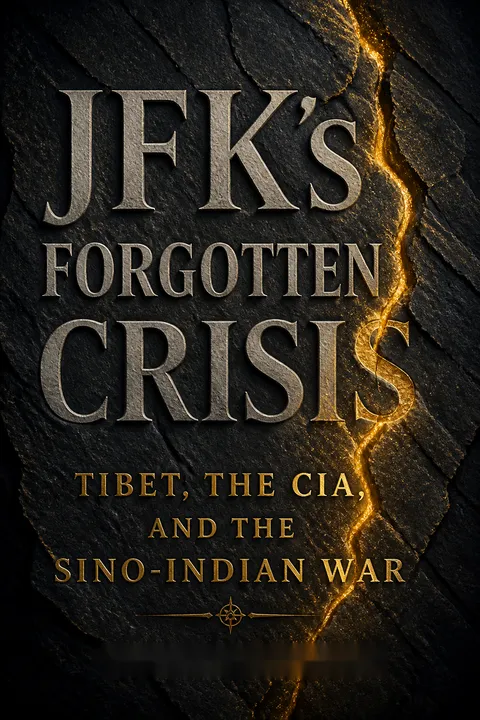
JFK's Forgotten Crisis covers the 1962 Sino-Indian War, which coincided with the Cuban Missile Crisis. It details Kennedy's diplomatic efforts to support India while managing multiple global crises. The book provides insights into Cold War geopolitics, Kennedy's leadership, and the long-term implications for South Asian relations. Readers appreciate the well-researched content and new perspectives on a lesser-known historical event. Some criticize the book's pro-Kennedy bias and lack of Soviet perspective, while others praise its readability and historical context.
People Also Read




Glossary
Forward Policy
Forward deployment in disputed areasIndia’s policy of establishing military posts farther into territory disputed with China, with the aim of blocking additional Chinese advances and asserting Indian claims. It developed through incremental decisions rather than a comprehensive military plan. The posts were difficult to supply and, in many areas, were not supported by enough troops or equipment to withstand a major Chinese attack.
Panch Sheela
Five principles of coexistenceThe five principles India and China included in their 1954 agreement concerning Tibet: mutual respect for territorial integrity and sovereignty, mutual nonaggression, mutual noninterference in internal affairs, equality, and peaceful coexistence. Nehru regarded the principles as a foundation for stable relations. Their promise did not resolve the border dispute or prevent growing conflict over Tibet.
McMahon Line
British-drawn eastern boundaryThe boundary drawn by British officials in 1914 to divide India from Tibet in the eastern Himalayas. India treated it as the legitimate border, while China rejected it as a product of British imperialism. Its uncertain placement on the ground contributed to disputes, including the 1962 fighting in the northeastern region then known as the North East Frontier Agency.
Line of actual control (LOAC)
De facto military boundaryA line describing the positions held by Indian and Chinese forces, rather than a mutually agreed international border. In the book’s account, China’s 1962 ceasefire proposal referred to the line that existed on November 7, 1959, and demanded withdrawals from it. The unresolved distinction between military control and accepted sovereignty remains central to the border dispute.
Special Frontier Force (SFF)
Indian-led Tibetan unitA force recruited largely from Tibetan exiles and organized by India’s Intelligence Bureau after the 1962 war, with CIA assistance. Initially called Establishment 22, it was trained for patrols and intelligence gathering along the border with China. Some recruits hoped the force would liberate Tibet, while Indian planners initially emphasized reconnaissance and monitoring Chinese military activity.
National Intelligence Estimate (NIE)
Interagency intelligence assessmentA formal assessment that presents the considered judgment of the U.S. intelligence community on a major issue. The book discusses NIEs on China, India, and their relations, which summarized information available to American decision-makers before the 1962 war. Such estimates can organize evidence and uncertainty, but their value depends on the quality of collection, analysis, and dissenting review.
FAQ
What's JFK's Forgotten Crisis: Tibet, the CIA, and the Sino-Indian War about?
- Sino-Indian War Focus: The book delves into the 1962 Sino-Indian War, highlighting the geopolitical tensions between India and China during the Cold War.
- CIA's Role in Tibet: It examines the CIA's covert operations in Tibet, including support for Tibetan rebels, and their impact on U.S.-India relations.
- Kennedy's Leadership: The narrative explores President Kennedy's diplomatic strategies during simultaneous international crises, including the Cuban Missile Crisis.
Why should I read JFK's Forgotten Crisis by Bruce Riedel?
- Historical Insight: The book offers a detailed account of a largely overlooked aspect of Kennedy's presidency, providing insights into Cold War dynamics in Asia.
- Modern Relations Understanding: It helps readers understand the historical roots of current tensions between India and China, as well as U.S. foreign policy in South Asia.
- Leadership Lessons: Readers can learn about Kennedy's leadership style and crisis management, relevant to contemporary political and diplomatic challenges.
What are the key takeaways of JFK's Forgotten Crisis?
- Complex Geopolitical Landscape: The book illustrates the intricate relationships between the U.S., India, Pakistan, and China, emphasizing how historical events shape current international relations.
- Impact of Covert Operations: It highlights the consequences of CIA operations in Tibet, showing how they inadvertently contributed to the Sino-Indian conflict.
- Kennedy's Balancing Act: The narrative showcases Kennedy's efforts to balance U.S. support for India while managing relations with Pakistan, reflecting the complexities of Cold War diplomacy.
What are the best quotes from JFK's Forgotten Crisis and what do they mean?
- Communist Expansion Fears: “Any country that faltered in Asia... would find itself subjugated to communism.” This quote reflects the high stakes of U.S. involvement in Asia during the Cold War.
- Unintended Consequences: “The CIA operation helped persuade Chinese leader Mao Zedong to invade India.” This highlights how U.S. covert actions can escalate conflicts.
- Kennedy's Support for India: “Kennedy assumed the role of ‘big brother’ and true friend of India.” This emphasizes Kennedy's commitment to supporting India during the crisis.
How does JFK's Forgotten Crisis connect to current U.S.-India-China relations?
- Historical Context: The book provides a framework for understanding ongoing border disputes and tensions between India and China, rooted in the events of 1962.
- U.S. Foreign Policy: It illustrates how past U.S. actions, particularly in supporting India, have shaped contemporary diplomatic relations and alliances in the region.
- Lessons for Today: The analysis of Kennedy's strategies offers valuable lessons for current policymakers navigating complex international relationships in Asia.
What role did the CIA play in Tibet according to JFK's Forgotten Crisis?
- Covert Operations: The CIA supported Tibetan rebels through training and air drops of supplies, aiming to destabilize Chinese control over Tibet.
- Intelligence Gathering: These operations provided critical intelligence on Chinese military capabilities and intentions, vital for U.S. strategic interests.
- Consequences of Actions: The book argues that these covert actions contributed to heightened tensions between India and China, leading to the Sino-Indian War.
How did Kennedy's administration respond to the Sino-Indian War?
- Support for India: Kennedy assured Indian Prime Minister Nehru of U.S. support during the conflict, emphasizing a commitment to aid India against Chinese aggression.
- Diplomatic Maneuvering: The administration sought to prevent Pakistan from becoming involved in the conflict, aiming to keep the war localized and manageable.
- Military Aid: Kennedy's decisions included providing military assistance to India, crucial in bolstering India's defense during the war.
What was the Forward Policy and how did it contribute to the Sino-Indian War?
- Military Strategy: The Forward Policy involved India asserting its claims along the disputed border with China, leading to military deployments in contested areas.
- Miscalculations: Indian leaders underestimated China's military capabilities and resolve, contributing to disastrous outcomes for India during the war.
- Political Fallout: The policy led to significant political repercussions for Nehru and his government, exposing weaknesses in India's military strategy.
How did the Cuban Missile Crisis affect the Sino-Indian War?
- Divided Attention: The Cuban Missile Crisis consumed much of Kennedy's focus and resources, impacting the U.S. response to India's requests for military assistance.
- Diplomatic Leverage: The simultaneous crises provided a unique context for U.S.-India relations, as Kennedy sought to reassure India while managing the Soviet threat in Cuba.
- Strategic Decisions: Decisions made during the Cuban Missile Crisis influenced Kennedy's approach to the Sino-Indian War, prioritizing avoiding escalation in both conflicts.
How did the Sino-Indian War impact U.S.-Pakistan relations?
- Strained Alliances: U.S. support for India during the Sino-Indian War created tensions with Pakistan, which felt sidelined by the shift in U.S. policy.
- Pakistan's Response: In response, Pakistan strengthened its ties with China, leading to a strategic partnership with long-term regional implications.
- Military Aid Dynamics: The war highlighted the complexities of U.S. military aid in South Asia, as the U.S. balanced commitments to both India and Pakistan.
What were the long-term consequences of the Sino-Indian War as discussed in JFK's Forgotten Crisis?
- Enduring Tensions: The war established a precedent for ongoing tensions between India and China, with unresolved border disputes affecting bilateral relations.
- Shift in Alliances: The conflict influenced the geopolitical landscape, leading to a closer alignment between Pakistan and China, impacting U.S. foreign policy.
- Nuclear Developments: The war prompted India to reconsider its nuclear policy, leading to its development of nuclear weapons as a deterrent against threats from China and Pakistan.
Download PDF
Download EPUB
.epub digital book format is ideal for reading ebooks on phones, tablets, and e-readers.








