



Plot Summary
Beets at the Door
Priscilla Partido3 returns from exhausting restaurant shifts to a cramped Seattle apartment that doubles as her laboratory. She is broke, lonely, clumsy, and intent on making a perfume whose jasmine middle note still lacks a lasting base.
Then she finds a beet on her doorstep. Similar beets appear in New Orleans, where perfumer Lily Devalier8 and her assistant V'lu Jackson7 are struggling to revive their shop, and in Paris, where master perfumer Marcel LeFever6 recognizes an old, disturbing scent on the roots.
Priscilla3 also guards an antique blue bottle taken from Lily8's shop, though she does not yet understand its importance. Across three cities, the vegetables link people who have never met and point toward a fragrance with a history of its own.
The opening makes a humble vegetable carry the weight of a message before anyone can read it. Priscilla's improvised laboratory, Lily's failing shop, and Marcel's corporate office represent different relationships to perfume: desperate invention, inherited craft, and industrial expertise. The beet quietly connects these worlds while resisting their assumptions about what counts as valuable. The mystery is not merely who is delivering it, but whether an overlooked, ordinary material can alter lives organized around money, status, and scientific prestige.
The White Hair
Centuries earlier, King Alobar1 rules a small northern kingdom that kills its ruler at the first sign of age, believing the king's body governs the people's fortune. When a white hair appears at his temple, Alobar1 pulls it out and hides the evidence. His wife Wren10 understands that he is questioning more than the ritual: he wants his individual life to survive beyond its usefulness to the clan.
She agrees to help conceal his aging, even as the necromancer Noog12 watches for signs of weakness. When Noog12's magpie plucks another white hair from Alobar1's beard, the king's death becomes unavoidable. Wren10 secretly replaces the lethal egg used in the execution with a harmless imitation, then digs Alobar1 out of his grave and revives him with mead.
Alobar's rebellion begins with a small bodily fact that his society treats as public property. The white hair is not simply a sign of age; it is evidence that the king no longer serves the community's myth of unbroken vigor. Wren's loyalty gives his private selfhood a practical ally, while Noog's surveillance shows how ritual authority protects itself. Their deception preserves Alobar's body, but it also severs him from the collective identity that once made his rule intelligible.
The Bean King's Flight
Alobar1 flees east, but pregnancy redirects him when the banished Frol,11 his young former concubine, catches up with him in the forest. They settle among peasants near Lord Aelfric's manor, where Alobar1 works as a serf and discovers the intimate pleasures of raising children. Years later, a Christmas cake selects him as King of the Bean, a festive ruler who is sacrificed when his twelve-day reign ends.
Alobar1 seeks counsel from the village shaman, who tells him the world is round and that his restless individuality will take him beyond the village. Rather than wait for the ceremonial knife, Alobar1 leaves his family and heads east, carrying the shaman's challenge and the cost of another escape.
The bean repeats the hair's threat in a new social costume. Aelfric's festival turns temporary kingship into a communal joke with a real execution at its end, revealing that Alobar cannot simply change societies and expect mortality to leave him alone. His years as a serf and father briefly give him a grounded life, but the shaman reframes his restlessness as a capacity to become more than one assigned identity. Leaving Frol and the children is not triumph without loss; it is the first clear price of his pursuit.
Pan in the Pasture
On his journey, Alobar1 encounters Pan,5 the horned god of wild places, whose laughter first terrifies him and whose pipes draw him into an afternoon with nymphs. Pan5 reveals that gods, too, can die when people stop believing in them. Christianity has weakened him by separating people from animals, nature, and bodily pleasure.
Alobar1 tells Pan5 that he resents death rather than fearing it, and Pan5 recognizes a fellow fugitive from extinction. Their meeting gives Alobar1 no recipe for immortality, but it changes his understanding of the quest: resistance must include an appetite for life, not merely anger at its end. He continues east, carrying the god's warning and a memory of his untamed music.
Pan makes mortality reciprocal: humans fear the end of their bodies, while a god fears the end of belief. Their conversation unsettles the hierarchy between divine and mortal power, and Pan's music offers Alobar a form of knowledge that argument cannot supply. Yet the encounter also complicates Alobar's defiance. Resenting death keeps him moving, but Pan suggests that bodily fear may contain more wisdom than abstract opposition. The novel begins to distinguish mere survival from a fuller participation in life.
The Girl at the Pyre
In India, Alobar1 witnesses a widow being forced onto her husband's funeral pyre. He cannot save her, but he comforts a frightened eight-year-old girl named Kudra,2 who has seen the same scene while delivering beets for her family's incense business. He tells her that the roots are food, not merely dye, and recognizes in her face a resemblance to Wren.10
Kudra2 remembers him and his warning when, years later, her husband Navin dies in an accident. Her in-laws and priests expect her to live as a despised widow or join Navin on the pyre. She leaves her jewelry for the priests, packs food and perfume, kisses her sleeping children, and escapes in boys' clothes, carrying the pennyroyal she has used to avoid further pregnancies.
Kudra's first encounter with Alobar plants an alternative memory inside a culture that presents widowhood and self-immolation as fixed destinies. Her later escape is not a rejection of grief or of her children; it is a refusal to let religious and family authority dictate how her grief must be expressed. The incense trade offers her a sensory imagination beyond domestic duty, while perfume becomes a portable fragment of the life she wants. The beet links her to Alobar before either can understand the connection.
The Widow Finds Alobar
Kudra2 travels to the Himalayas and disguises herself as a boy, hoping to find the masters of long life Alobar1 once mentioned. At the Samye lamasery, she recognizes him after twenty years, though he has not visibly aged during his own long stay there. Alobar1 has studied meditation and served as a laborer, but he doubts the lamas' goal of escaping desire and the world.
Kudra2 explains how her arranged marriage to Navin brought years of rope-making and motherhood, and how his death drove her to flee the restrictions imposed on widows. She also tells Alobar1 that she followed his old advice to find him. Her arrival rekindles his desire, and the two leave Samye for the Bandaloop doctors' caves.
Their reunion joins two forms of resistance that have developed separately. Alobar has challenged death through endurance and philosophical argument; Kudra has challenged social death by leaving a life designed to erase her choices. At Samye, their attraction is inseparable from disagreement about spiritual discipline. Alobar distrusts renunciation because it seems to exchange pain for emptiness, while Kudra is still negotiating the beliefs that shaped her childhood. Their partnership begins not in shared certainty, but in mutual permission to question.
The Bandaloop Caves
The Bandaloop doctors test Alobar1 with baffling kindness, humiliation, and feats of magic, then admit him into luxurious caves where he finds no simple elixir.
Kudra,2 who has fled ahead, joins him, and they remain there for seven years, learning practices that later form the basis of their longevity: controlled breathing, bathing, modest food, sexual vitality, and a sustaining will to live. They leave the caves for Constantinople, where Alobar1 rises to manage the imperial spice warehouses and Kudra2 enjoys the city's baths and aromatics.
Their unchanged appearance eventually fuels rumors that they consume children and serve the Devil. A mob drives them out, and their home burns behind them. Their longevity works, but it makes ordinary life dangerous.
The novel presents longevity as an embodied discipline rather than a purchasable cure. Breath, water, food, sex, and thought matter because they organize a life around pleasure and attention, not because they promise a clean escape from vulnerability. Constantinople tests that practice socially: the couple can endure time, but their unchanged bodies provoke suspicion in people who use aging as proof of normal belonging. Their success therefore carries a paradox. The more they defeat decline, the less safely they can remain among others.
Pan's Dwindling World
After centuries of travel, Alobar1 and Kudra2 seek Pan5 again in Greece. He is nearly invisible, weakened as Christian belief and urban life displace the wild world he embodies.
His music draws Kudra2 and Alobar1 into a night of chaotic desire, then Lalo,13 an older nymph, warns them that human individualism can become another force of domination if it treats nature as inferior. She asks them to oppose future attempts at immortality pursued through intellect alone, without growth of heart and soul.
Alobar1 resists the demand at first, but Kudra2 promises to help, and he follows with his own pledge. They continue across medieval Europe, often forced to move when their unchanging faces attract suspicion, and eventually settle in Paris to open Kudra2's incense shop.
Pan's decline gives the lovers' private search a political and ecological dimension. The danger is not simply that a god may disappear, but that people may lose the bodily and environmental knowledge he represents. Lalo's warning also refuses to romanticize individual freedom: a person who escapes social control can still become careless toward other forms of life. Kudra's promise makes her more responsive to interdependence than Alobar, whose independence remains both his strength and his blind spot.
Kudra Chooses Change
In Paris, Kudra2 and Alobar1 run an incense shop beside the monastery perfumery that will become the LeFever business. Their partnership remains passionate, but Kudra2 grows weary of hiding and of being the same age for centuries. She proposes allowing herself to age, trusting that she can stop the process if she chooses.
Alobar1 sees this as a reckless gamble and blames their incomplete education in the Bandaloop caves. They compromise: Kudra2 will age toward his chronological age, then reassess. When her gray hairs appear, Alobar1 suggests they leave for the New World, but she refuses to let fear decide for her. Later they attempt to dematerialize together. Alobar1 returns to the room; Kudra2 vanishes, leaving only her shoes.
Their conflict exposes the difference between living indefinitely and living well. Alobar treats continued existence as proof of victory, while Kudra asks what that victory has made possible beyond survival. Her desire to age is not a wish for death so much as a demand for change, risk, and a life that can still surprise her. The failed experiment converts their philosophical disagreement into separation. Alobar's most painful loss comes from the very freedom he once insisted both of them deserved.
The Scent of Return
Alobar1 searches for Kudra2 through scent. Recalling the smell of dogs that have run through seed-beet fields, he realizes that beet pollen can anchor jasmine and citron in an unusually persistent perfume. He calls the blend K23 and leaves it in their Paris room, hoping Kudra2 can follow it back. Instead, he finds Wren10's old handwriting in the dust, urging him to take the loss less heavily.
Alobar1 carries the formula through the centuries, eventually living in America and sabotaging longevity experiments he believes could empower people who lack moral depth. Arrested after damaging a laboratory, he meets Wiggs Dannyboy4 in prison and recounts his life, but withholds the crucial fact that the base is beet pollen.
K23 turns memory into a practical technology. Its ingredients are not arbitrary symbols: the beet pollen recalls Alobar's homeland, jasmine belongs to Kudra's craft, and citron gives the blend its opening. The perfume is an attempt to make attachment travel across a boundary that reason cannot map. Wren's message interrupts Alobar's fixation without resolving it. His later sabotage shows how a promise to protect humanity from dangerous immortality can become a justification for damaging knowledge, repeating the coercion he once escaped.
Priscilla Meets the Immortalists
In Seattle, Priscilla3's friend and coworker Ricki9 brings her to the Daughters of the Daily Special, a group that funds waitresses' abandoned creative ambitions. Priscilla3 hopes for a grant to buy jasmine oil and finish her formula, but her messy life and uncertain romantic feelings for Ricki9 complicate the prospect.
An invitation to the Last Laugh Foundation introduces her to Wiggs Dannyboy,4 an eccentric researcher devoted to longevity, and to chemist Wolfgang Morgenstern.
Wiggs4 tells her about Alobar,1 the thousand-year-old janitor he met in prison, and explains the four bodily practices behind Alobar1 and Kudra2's long lives. Priscilla3 realizes that the antique bottle she took from Lily8's shop may hold the perfume linked to their story, but she keeps its existence to herself.
Priscilla's ambition begins as a commercial fantasy, a route out of exhausting service work, but the encounter with Wiggs makes perfume intellectually and emotionally consequential. Her attraction to Ricki and her fascination with Wiggs expose different forms of intimacy, neither of which she can yet navigate honestly. The Last Laugh Foundation offers no conventional laboratory, only an eccentric household and a disputed theory. That mismatch forces Priscilla to decide whether knowledge must arrive in respectable institutional form before she will take it seriously.
The Missing Bottle
Priscilla3 attends the Foundation's dinner and grows close to Wiggs,4 while Ricki9 waits for her and later withdraws her nomination for the waitresses' grant. Priscilla3 discovers that her bottle has disappeared from its hiding place and assumes Ricki9 took it, so their friendship collapses into accusations.
In fact, V'lu7 has taken the bottle, convinced it belongs with the Devalier perfumery. Priscilla3 loses her restaurant job and travels to New Orleans to recover it.
There, she learns that Lily8 and V'lu7 are in protective custody after witnessing the shooting of Jamaican flower seller Bingo Pajama17 by off-duty policemen. The killing has ignited a tense public fight over police violence, while Bingo's small, unexplained swarm of bees keeps attacking people connected to the case.
The bottle becomes an object of competing claims: Priscilla sees her chance at independence, while V'lu sees a resource stolen from her family business. Their conflict is sharpened by incomplete knowledge rather than simple malice. Ricki's withdrawal of the grant adds an intimate injury to Priscilla's professional setback, pushing her toward a city where private perfume history collides with public violence. Bingo's bees make the conflict impossible to contain within human institutions, disrupting both official explanations and the usual division between commerce, politics, and the natural world.
Bingo's Unquiet Funeral
Bingo Pajama17's killing sparks protests in New Orleans because the policemen claim self-defense while Black residents recognize a familiar pattern of lethal impunity. The city appoints a special commission, and Lily8 and V'lu7 face threats that move their testimony and trial proceedings to Baton Rouge.
Bingo's bees guard the place where he fell, evade insecticide, appear at city hall, and follow his empty-coffin jazz funeral without stinging the mourners. Priscilla3 reaches New Orleans too late to find the Devalier8 shop open, then waits while the case proceeds.
The commission recommends that the officers stand trial for manslaughter rather than murder. The compromise fails to calm the city: a cross is burned at the shop, and the bees resume striking people across New Orleans.
The bees act as witnesses that cannot be managed by courts, police, or scientific classification. Their attacks are selective enough to seem like judgment, yet their behavior remains irreducible to human testimony. The jazz funeral transforms grief into collective movement, insisting that Bingo's life matters even when authorities diminish the charge against his killers. The commission's compromise reveals how institutional procedure can recognize injustice while still narrowing its consequences. Nature does not settle the case, but it prevents the city from pretending the case is settled.
The Bottle Breaks
At Mardi Gras, Priscilla,3 Marcel,6 and Alobar1 disguise themselves as beets and join the crowd near Royal Street. V'lu7 appears in the parade district, and the costumed group splits: Priscilla3 retrieves the antique bottle from Lily8's shop while Alobar1 approaches V'lu.7
As Priscilla3 brings the bottle back, it falls beneath a parade float and shatters. The released scent makes Marcel6 recognize a perfume of extraordinary power. Alobar1 finally explains the missing ingredient: beet pollen, joined with jasmine and citron.
Marcel6 arranges for LeFever to distribute the fragrance while Lily8's shop produces it, sharing profits with Priscilla,3 V'lu,7 and Wiggs.4 Having seen the bottle again, Alobar1 decides he is ready to seek Kudra2 rather than cling to life alone.
The bottle's destruction does not erase its value; it releases the scent in a form no owner can control. The final revelation comes through Alobar's memory of a landscape, not through a laboratory analysis, so the perfume joins technical craft to lived experience. The commercial agreement also repairs a chain of exclusions: Lily receives recognition, V'lu gains a stake, and Priscilla's work becomes possible without the grant she lost. Alobar's decision changes the meaning of K23 from a lure into a farewell instrument.
The Bees Choose Huxley
While Alobar1 remains imprisoned, Wiggs,4 Marcel,6 and Priscilla3 learn that a mob has stormed the Last Laugh Foundation after rumors and fear turn its hopeful crowd violent. The attackers kill Wolfgang Morgenstern and badly injure Wiggs's daughter, Huxley Anne.14 At the hospital, Wiggs4 refuses to abandon her, and Marcel6 leaves her favorite perfume nearby while Alobar1's breathing practices help guide their effort.
Huxley Anne14 wakes from a coma and describes her returning consciousness through the image of a television that had not fully switched off. Alobar1 is paroled, and Wiggs4 brings him to New Orleans. On the way, he and Huxley Anne14 encounter Bingo's bees, which settle harmlessly on the child's head and travel with them.
The Foundation's attack turns the longing for immortality into a dangerous demand for a visible miracle. The crowd destroys the very people trying to study how life might be extended, revealing how hope can become violence when it is organized around entitlement and spectacle. Huxley Anne's recovery refuses a simple medical or supernatural explanation, but her account preserves her agency within the crisis. The bees' calm choice of her contrasts with their earlier punishments and suggests a relationship to life that does not depend on human control.
Erleichda Opens the Door
In New Orleans, Priscilla3 reconciles with Lily8 and V'lu,7 and Wiggs4 teaches her to treat life as more than a succession of losses. After the perfume's success, she receives money and a path beyond waitressing. Alobar1 prepares to dematerialize in Paris, at the place where Kudra2 disappeared.
Kudra,2 meanwhile, has crossed the Other Side, where she sees the dead weighed by their hearts and learns that scent keeps her connected to life. A word in Wren10's language guides her back through a marked doorway.
She emerges on the rue Quelle Blague, now transformed by the modern LeFever skyscraper, and meets Claude LeFever.15 He takes her to the airport, where Marcel,6 V'lu,7 and Alobar1 are arriving. Priscilla,3 newly free to choose, plans to travel to Argentina with Ricki9 and find Effecto.18
The ending answers the novel's central question without reducing it to a technical proof. Kudra returns because memory, scent, and choice remain active across death, while the weighing of hearts suggests that continuation depends on how a person has lived, not merely how long. Alobar's search is no longer an abstract campaign against extinction; it points toward reunion. Priscilla's departure offers a smaller but equally important form of renewal: she can choose a future without mistaking money, romance, or perfume for a final cure.
Epilogue
The final beet meditation contrasts the root's vivid red with the brownness of a life worn down by institutions, habits, and age. It urges readers to preserve the capacity for wonder rather than let experience flatten it.
The book closes not with a cure for mortality, but with a reminder that the living can protect their distinctiveness through attention, pleasure, and choice.
The beet's color survives digestion, making it an emblem of what resists assimilation. That image gathers the novel's many forms of endurance: Alobar's refusal of prescribed death, Kudra's refusal of prescribed widowhood, and Priscilla's recovery of ambition after betrayal. The closing warning is not that conformity makes people morally bad, but that repeated compromises can make them forget their own vividness. The story's answer is deliberately material. Food, scent, bodies, work, and pleasure are not distractions from spiritual life; they are where a person practices remaining alive to it.
Analysis
Jitterbug Perfume treats immortality as a problem of conduct before it treats it as a problem of duration. Alobar1 and Kudra2 learn practices that keep their bodies vigorous, but their long lives do not spare them from grief, displacement, jealousy, or political suspicion. Longevity enlarges experience while making ordinary belonging harder. Kudra2's wish to age is therefore not a failure of courage; it challenges the assumption that survival is always the highest good. Alobar1 must learn that his devotion to life can become another form of attachment when it prevents him from accepting change.
The novel connects perfume to memory because scent makes the past physically present. K23 is not merely a product: it is a message built from the specific landscapes and crafts that shaped its makers. The beet's pollen, initially hidden inside an unremarkable root, stands against the prestige logic of industrial perfumery. Marcel6's sensitivity, Lily8's inherited knowledge, V'lu7's technical intelligence, and Priscilla3's restless experimentation all become necessary to recognize its value. The scent's discovery is collaborative, even though Alobar1 first conceives it in private grief.
The story also questions the idea that individual freedom is automatically virtuous. Alobar1's refusal to submit to communal death enables a singular life, but Lalo13 warns that individualism without responsibility can feed the exploitation of nature. Pan5's decline makes that warning concrete: when people dismiss bodily and ecological knowledge, they damage both the land and their own capacity for pleasure. The bees, meanwhile, expose the weakness of human systems that claim authority over violence and meaning.
The novel's comic excess keeps its arguments from becoming doctrine. Wiggs4's theories, Alobar1's declarations, and the characters' appetites are all subject to humor and contradiction. The ending offers no final proof that death can be defeated. Instead, it favors practices that make life more fully inhabited: curiosity, physical pleasure, creative work, loyalty, play, and the willingness to change course. Its deepest claim is not that every person can live forever, but that a life should not be surrendered to habits that make it feel already over.
Review Summary
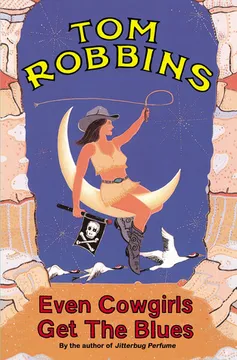
Jitterbug Perfume by Tom Robbins is a polarizing novel that blends elements of philosophy, humor, and sexuality. Many readers praise Robbins' unique writing style, clever metaphors, and exploration of themes like immortality and sensory experiences. The story follows multiple interconnected plotlines spanning centuries, featuring characters seeking the perfect perfume and eternal life. Critics argue the book is overly vulgar and misogynistic, while fans appreciate its irreverent approach to weighty topics. The novel's focus on beets and olfactory imagery is particularly memorable for many readers.
People Also Read

Characters
Alobar
The death-defying wandererAlobar is a northern king who becomes a serf, traveler, lover, perfume maker, and eventually a man driven to question the boundary between life and death. His defining impulse is not fear of dying so much as resentment that death arrives without consent. He values individual consciousness, bodily pleasure, and the freedom to change identities, yet his pursuit of survival can make him stubborn and inattentive to the costs others bear. Wren10's loyalty, Kudra2's independence, and Pan5's warnings repeatedly challenge his certainty. Alobar's humor and appetite keep his philosophical seriousness from hardening into solemnity, while his repeated departures reveal the loneliness hidden inside his freedom.
Kudra
The incense maker who choosesKudra grows up in an Indian family whose incense business awakens her imagination, but her society prepares her for marriage and domestic service instead. She is observant, sensuous, commercially gifted, and unwilling to confuse obedience with virtue. After widowhood threatens to strip her of autonomy, she chooses flight and searches for the stranger who once offered her a different possibility. With Alobar1, she is both lover and intellectual counterweight, pressing him to risk change rather than worship survival for its own sake. Her attachment to fragrance reflects a mind that understands memory and desire through the body. Kudra's central drive is to make a life she can recognize as her own.
Priscilla Partido
The genius waitress perfumerPriscilla is a gifted but disorganized waitress whose education and scientific instincts have not brought her a stable career. She dreams of inventing a profitable perfume, partly from genuine fascination and partly as an escape from fatigue and financial dependence. Her childhood is marked by an absent father and a painful rupture with her stepmother, Lily8, leaving her wary of promises and hungry for recognition. Priscilla is funny, impulsive, and more emotionally perceptive than she first appears. Ricki9's friendship, Wiggs4's ideas, and the ancient bottle draw her into choices larger than her original ambition. She must learn to distinguish a meaningful life from a fantasy of eventual success.
Wiggs Dannyboy
The irreverent immortality researcherWiggs is an Irish anthropologist and former counterculture figure who turns his restless curiosity toward longevity after prison forces him to confront mortality. He combines scholarly range with theatrical humor, alcohol, sexual confidence, and an instinct for challenging respectable explanations. His interest in immortality is not simply a bid for personal survival; he believes fear of death deforms human behavior and obstructs consciousness. Yet his charisma can obscure the limits of his evidence, and his expansive theories sometimes outpace his care for other people's emotional needs. As a father, Wiggs is more vulnerable than his public bravado suggests. His bond with Huxley Anne14 gives his abstractions a fiercely personal stake.
Pan
The fading god of wildnessPan embodies the untamed connection between human beings, animals, landscape, music, and bodily desire. He is comic, lustful, rude, and capable of startling tenderness, with a presence that is as much an odor or a tune as a visible body. His dwindling influence makes him a living measure of cultural change: as people reject the natural world, they also lose forms of instinctive knowledge. Pan resists being turned into a polite symbol or a source of easy wisdom. He unsettles Alobar1 and Kudra2 through appetite, play, and warning, reminding them that vitality is not the same as control.
Marcel LeFever
The perfumer with a remarkable noseMarcel is the creative force behind the LeFever fragrance business and a perfumer whose nose can detect subtle materials and combinations others miss. He resists turning perfume into a mere ingredient for commercial products, believing scent has artistic and emotional power. His eccentricity, including his whale mask and environmental sympathies, puts him at odds with the firm's more practical leadership. Marcel is also capable of focused tenderness, particularly in his attention to V'lu7 and to the craft of perfume. His professional skill eventually connects modern perfumery to a much older, stranger history.
V'lu Jackson
The hidden fragrance expertV'lu is Lily Devalier8's assistant, confidante, and most capable partner in the shop. Her employers have underestimated her education and fluency, while she has learned to conceal her sophistication behind a country persona. She understands fragrance and chemistry, but she is also navigating loyalty to Lily8, complicated ties to the LeFever company, and her own desires. V'lu is practical and observant, often recognizing a perfume's significance before the people around her do. Her guarded manner reflects a life shaped by others deciding which parts of her intelligence are convenient to see.
Madame Lily Devalier
The stubborn perfume matriarchLily Devalier has run her New Orleans perfume shop for decades, preserving techniques and knowledge that larger fragrance houses have discarded. Proud, theatrical, and shrewd, she measures love partly through work and loyalty, which has helped sustain her business but strained her relationship with Priscilla3. Her attachment to the shop is also an attachment to a family inheritance and a way of life. Lily can be defensive and possessive, yet she is capable of recognizing her own failures and making room for reconciliation. Her expertise rests in both the chemistry of scent and the social world that gives perfume meaning.
Ricki Sinatra
Priscilla's bartender friendRicki is Priscilla3's coworker, sponsor in the waitresses' organization, and possible romantic partner. She is bold, sexually direct, and quick with jokes, but beneath her confidence lies a genuine desire to help Priscilla3 escape dead-end work. Their relationship becomes strained by competing expectations, jealousy, and choices neither woman initially explains well. Ricki's practical energy contrasts with Priscilla3's scattered ambition, though both use humor to cover hurt. She is not merely a love interest: her friendship exposes how care can become entangled with entitlement when affection is left unspoken.
Wren
Alobar's first trusted mirrorWren is Alobar1's perceptive wife, trusted because she sees his character more clearly than his court does. She understands that his refusal of the death ritual comes from a newly felt sense of personal identity, even when she cannot share all his reasoning. Her loyalty is practical rather than sentimental: she helps him conceal his aging and judges when his ideas require support. Wren's steady intelligence provides a counterpoint to Alobar1's restless appetite for the unknown. She represents intimacy grounded in recognition, even across the limits of their very different worlds.
Frol
The young concubine turned companionFrol is a young concubine who becomes an unexpected ally to Alobar1 after his escape. Initially protected by him from harsh punishment, she later shares his exile and builds a family with him. She is spirited, resilient, and practical, adapting from the harem to the physical demands of peasant life. Her experience gives Alobar1 a glimpse of parenthood and ordinary attachment, even as their paths eventually diverge. Frol's importance lies in showing that Alobar1's search for freedom is never emotionally cost-free.
Noog
The king's calculating necromancerNoog is the court necromancer who interprets omens and guards his influence over Alobar1's kingdom. He resents the king's independent judgment because it diminishes the authority of ritual expertise. His surveillance helps expose Alobar1's attempt to conceal his aging, making him an agent of the social order that treats the ruler's body as communal property.
Lalo
The nymph who warnsLalo is an experienced nymph who has lived close to Pan5 and understands what his decline means for the natural world. She speaks with more foresight than the immortals want to hear, warning that personal freedom can become dangerous when severed from care for other beings. Her candor and later vulnerability give her warning emotional force rather than making it a mere prophecy.
Huxley Anne Dannyboy
Wiggs's perceptive daughterHuxley Anne is Wiggs4's young daughter, curious about the unusual people and ideas around her. She tends plants, observes adults without much reverence, and offers an instinctive way of describing experiences that leaves grown-ups reconsidering their assumptions. Her relationship with Wiggs4 is affectionate and central to his private life. She brings a child's directness to a story crowded with theories about consciousness and survival.
Claude LeFever
The practical LeFever executiveClaude is Marcel6's cousin and a business-minded executive who keeps the LeFever company functioning while tolerating Marcel6's creative unpredictability. He is conventional in taste but not incapable of wonder, and his loyalty to family complicates his role as a corporate realist. Claude's encounters with perfume and people who defy ordinary explanations reveal how quickly calculation can yield to curiosity.
Luc LeFever
The aging fragrance patriarchLuc is the head of the LeFever fragrance company and Claude15's father. He values profit, continuity, and control, but his own aging makes him consider whether a life can be extended. His preparations for business risks reveal a mind accustomed to treating uncertainty as something that can be managed.
Bingo Pajama
The Jamaican flower sellerBingo Pajama sells flowers and sings in New Orleans, accompanied by a small, unusual swarm of bees. His presence joins fragrance, music, and a kind of joyful defiance that unsettles the people around him. He is difficult for the city to categorize, and that uncertainty becomes significant when violence turns him into a symbol.
Effecto Partido
Priscilla's accordion-playing exEffecto is Priscilla3's former husband, an Argentine accordion player whose charm and promises once offered her an imagined escape. He represents a chapter in which Priscilla3 mistook another person's promises for a secure future. His musical life later intersects with Wiggs4's ideas in an unexpected way.
Fosco
The poem-painting lamaFosco is a gentle, enigmatic monk and calligrapher at Samye. He offers Alobar1 a lead to the Bandaloop doctors while remaining loyal to the lamasery's spiritual life. His cryptic manner reflects the novel's insistence that guidance is not the same as explanation.
Albert Einstein
Alobar's late-night confidantEinstein meets Alobar1 while the latter works as a janitor at Princeton. The two share private conversations about science, mortality, and ideas that should not be placed in careless hands. Einstein's friendship gives Alobar1 a rare male confidant and links his ancient journey to twentieth-century research.
Plot Devices
K23, later called Kudra
A scent that carries memoryK23 is a perfume Alobar1 develops from jasmine, citron, and beet pollen after Kudra2 disappears during a dematerialization attempt. He hopes its distinctive scent can reach her across the boundary between life and death, and it also masks Pan5's powerful natural odor. The perfume connects Alobar1's homeland, Kudra2's craft, and his memory of a dog in a beet field. Priscilla3, Lily8, V'lu7, and Marcel6 later encounter the same fragrance through the antique bottle. Its composition turns a private act of longing into a shared artistic and commercial discovery.
The beet
An ordinary root with a secretBeets recur as food, dye, gift, omen, and eventual source of perfume. Alobar1's people associate them with serious communal life, while Kudra2's family uses their color in the incense trade. In the modern story, unexplained beets arrive at the doors of Priscilla3, Lily8, and Marcel6, directing attention toward a hidden fragrance formula. The root's apparent plainness conceals the pollen that can hold a perfume together. It also gives the book a material emblem for endurance: something vivid can remain itself even after pressure from custom, commerce, and time.
The Four Elements
A bodily practice of longevityAlobar1 and Kudra2's longevity is tied to repeated practices involving air, water, earth, and fire: regulated breathing, bathing, restrained eating, and sexual vitality. Wiggs4 interprets these habits as ways to reduce bodily stress and sustain the will to live. The practices are not presented as a single magical potion or guaranteed formula. They become a discipline that joins pleasure to attention, and their interruption in prison accompanies Alobar1's rapid aging. The device keeps immortality grounded in daily conduct rather than abstract wish or laboratory intervention.
The Other Side
A border shaped by memoryThe Other Side is encountered through dematerialization and, in Kudra2's account, as a crowded terminal where the dead are sorted according to the weight of their hearts. It is neither a simple heaven nor a simple void: some travelers depart as energy, while a rare few are granted further freedom. Smell marks the boundary because it carries memory and keeps the living connected to earthly experience. The setting turns the characters' metaphysical questions into a place with procedures, travelers, and choices, while leaving its deepest rules unresolved.
Bingo's bees
Nature refuses official silenceA small swarm accompanies Bingo Pajama17 and reacts fiercely after his shooting by off-duty policemen. The bees guard the scene, evade insecticide, disrupt official proceedings, and appear throughout New Orleans. Their behavior prevents the killing from becoming a tidy matter of police procedure, while their later quiet attachment to Huxley Anne14 offers a different relation between nature and human beings. The swarm remains difficult to explain biologically or symbolically, which is precisely its function: it makes the limits of institutional control visible without supplying an easy verdict.
FAQ
Synopsis & Basic Details
What is Jitterbug Perfume about?
- Epic Quest for Immortality: Jitterbug Perfume weaves together multiple timelines and characters—an ancient king defying death, a modern waitress seeking the ultimate fragrance, and a fading Greek god—all connected by a mysterious perfume and the quest for eternal life. The narrative explores themes of consciousness, sensuality, and the nature of reality, blending history, myth, and science.
- Intertwined Destinies: The story follows Alobar, a king from ancient Bohemia who escapes his fated death, and Kudra, an Indian woman who defies suttee, as they journey through centuries seeking longevity. Their path eventually converges with Priscilla, a Seattle waitress and amateur perfumer, and Marcel LeFever, a Parisian fragrance magnate, all drawn into a cosmic dance orchestrated by the elusive god Pan and the eccentric Dr. Wiggs Dannyboy.
- The Power of Scent: At its core, the novel is a philosophical adventure centered on the creation of a legendary perfume, K23 (later Rudra), which embodies the essence of immortality. This quest for the perfect scent becomes a metaphor for humanity's deepest desires for transcendence, connection, and a life lived fully, challenging conventional notions of time, death, and existence.
Why should I read Jitterbug Perfume?
- Sensory & Intellectual Feast: Readers should delve into Jitterbug Perfume for its unique blend of philosophical depth, irreverent humor, and lush, sensory prose. Tom Robbins challenges conventional thought on life, death, and human potential, offering a vibrant, imaginative escape that stimulates both the mind and the senses.
- Unforgettable Characters & World-Building: The novel introduces a cast of eccentric, deeply human (and sometimes divine) characters whose journeys are as compelling as they are bizarre. Robbins crafts richly detailed settings, from ancient Himalayan caves to bustling modern cities, immersing the reader in a world where the magical and the mundane coexist.
- Celebration of Life's Absurdity: Beyond its quest for immortality, the book is a joyous affirmation of life's inherent absurdity, sensuality, and beauty. It encourages readers to embrace curiosity, defy convention, and find meaning and pleasure in the everyday, making it a truly unique and thought-provoking literary experience.
What is the background of Jitterbug Perfume?
- Interweaving Eras & Ideas: The novel's background spans ancient Bohemia (Alobar's kingdom), medieval India (Kudra's origins), 17th-century Paris (Descartes, early perfumery), and modern Seattle and New Orleans, reflecting a vast historical and cultural canvas. This multi-temporal setting allows for a rich exploration of how human consciousness and societal norms have evolved over millennia.
- Mythological & Philosophical Underpinnings: Robbins draws heavily on diverse influences from Greek mythology (Pan's role and decline), Eastern mysticism (Bandaloop practices, Buddhist philosophy), and Western philosophy (Descartes's rationalism, Einstein's theories, Dannyboy's counter-cultural ideas). This intertextual dialogue forms the intellectual backbone of the narrative, exploring humanity's relationship with nature, spirit, and reason.
- Critique of Modernity: The book subtly critiques aspects of modern society, such as corporate standardization, the decline of authentic experience, and the suppression of natural instincts. It contrasts these with ancient wisdom and a more primal, sensual way of life, inviting readers to reflect on the true meaning of "progress" and the enduring human quest for meaning beyond material accumulation.
What are the most memorable quotes in Jitterbug Perfume?
- "The beet is the most intense of vegetables.": This iconic opening line immediately signals the novel's unique voice and its ability to find profound meaning in the mundane, setting a tone of playful seriousness. It foreshadows the beet's central symbolic role in the quest for immortality and the novel's celebration of the overlooked.
- "The universe does not have laws. It has habits. And habits can be broken.": Uttered by Dr. Wiggs Dannyboy, this bold statement encapsulates the novel's central argument against fatalism and its optimistic view of human agency. It challenges the reader to reconsider perceived limitations, including mortality, as mere "habits" that can be overcome through conscious effort and unconventional thinking.
- "The highest function of love is that it makes the loved one a unique and irreplaceable being.": This quote, appearing in Part III, highlights a core theme of the novel: the transformative power of love. It suggests that genuine connection elevates individual existence beyond mere biological function or societal roles, making each person's unique journey invaluable and worthy of indefinite perpetuation.
What writing style, narrative choices, and literary techniques does Tom Robbins use?
- Lush, Playful Prose: Tom Robbins employs a distinctive, highly metaphorical, and often humorous writing style, characterized by elaborate similes, unexpected juxtapositions, and a rich, sensory vocabulary. His prose is dense with imagery, making even mundane descriptions vibrant and engaging, as seen in his detailed descriptions of smells and tastes.
- Non-Linear & Multi-Perspective Narrative: The novel utilizes a non-linear narrative structure, jumping between different time periods (ancient, medieval, modern) and geographical locations (Bohemia, India, Paris, Seattle, New Orleans). This fragmented approach, combined with shifting points of view, creates a kaleidoscopic effect that mirrors the novel's themes of interconnectedness, the fluidity of time, and the multifaceted nature of reality.
- Extensive Allusion & Philosophical Digression: Robbins seamlessly integrates a vast array of literary, historical, mythological, and philosophical allusions, enriching the text with layers of meaning. He frequently interjects philosophical digressions and authorial commentary, directly addressing the reader and inviting them to ponder the deeper implications of the story's events, blurring the lines between fiction and essay.
Hidden Details & Subtle Connections
What is the deeper significance of the recurring beet motif?
- Symbol of Earth's Primal Energy: Beyond life and death, the beet symbolizes the deep, earthy, and often overlooked wisdom of nature, contrasting with the refined, synthetic world of modern perfumery. Its "deadly serious" nature and connection to Rasputin and Wagner suggest a potent, almost mystical, grounding force that civilization has forgotten, yet which holds the key to true vitality.
- A "Calling Card" of the Unseen: The mysterious appearance of beets at Priscilla's door and Marcel's desk, often accompanied by Pan's scent, serves as a subtle "calling card" from the forces of nature and the ancient world. These seemingly random deliveries are actually deliberate, if cryptic, communications from Wiggs Dannyboy, guiding the perfumers towards the forgotten "beet pollen" as the ultimate base note, linking the mundane to the magical.
- The "Root" of Immortality: The beet's transformation from a simple vegetable to the essential ingredient in the immortality perfume (K23/Rudra) highlights the novel's theme that profound truths and solutions often lie hidden in plain sight, in the most humble and unexpected places. It underscores the idea that true longevity is rooted in a deep connection to the earth and its primal energies, rather than solely in scientific advancement.
How do seemingly minor characters or interactions reveal major thematic elements?
- Wren's Enduring Influence on Alobar: Wren, Alobar's favored wife, initially appears as a supportive but ultimately limited figure in his escape from death. However, her "good sense" and ability to "govern" rather than merely rule subtly influence Alobar's later development, particularly his shift from a warrior king to a more contemplative individual. Her "Erleichda" message, delivered posthumously, becomes a guiding principle for his continued journey, emphasizing the importance of a lighthearted approach to existence.
- Lalo's Prophetic Warnings: The nymph Lalo, initially a minor sexual encounter for Alobar, later reappears as an aged prostitute, delivering crucial prophecies about the future of Pan and humanity's pursuit of "false immortality" through intellect alone. Her warnings about the dangers of individualism unchecked by heart and soul directly inform Alobar's and Kudra's later choices, highlighting the novel's critique of unbalanced progress.
- Wally Lester's "Perfect Taco" Legacy: Priscilla's biological father, Wally Lester, a traveling evangelist, leaves her with a legacy of abandonment and the enigmatic dying words, "The perfect taco." This seemingly trivial detail becomes a symbolic quest for Priscilla, representing her subconscious search for ultimate fulfillment and authenticity, mirroring the novel's broader theme that profound meaning can be found in the most unexpected and even "vulgar" desires.
What subtle narrative techniques does Robbins use to connect disparate plotlines or characters?
- Olfactory Echoes and Shared Scents: Robbins frequently uses specific aromas to subtly link characters and timelines, even across centuries. For instance, Pan's distinctive "goat gas" scent is recognized by Alobar across different eras and later by Wiggs Dannyboy, creating an invisible thread connecting their experiences. Similarly, the "jasmine" theme in perfume connects Priscilla's modern quest to Kudra's ancient practices and Marcel's expertise, suggesting a universal language of smell.
- Recurring Phrases and Symbolic Objects: The repetition of phrases like "The world is round-o, round-o" (Alobar's song) or the recurring image of the "beet" itself, appearing in various contexts (food, symbolism, and eventually as a key ingredient), serves as a narrative anchor. These echoes create a sense of cyclical time and interconnectedness, implying that seemingly disparate events are part of a larger, unfolding pattern.
- Dreams and Psychic Connections: Dreams often serve as a subtle conduit for information and connection between characters. Pan visits Alobar in dreams, and Kudra's visions in the crystal ball foreshadow future events. Wiggs Dannyboy's theories on the "smell brain" and telepathy further suggest a psychic dimension to human interaction, implying that characters are linked by more than just physical proximity or shared history.
What is the meaning of "Erleichda" and its appearance in the story?
- A Call to "Lighten Up": "Erleichda" is presented as an untranslatable Slavo-Nordic word, roughly meaning "lighten up!" or "ease up!" It first appears as a message from Wren to Alobar, urging him to release his rigid attachment to his individual struggle against death. This suggests that true freedom and perhaps even immortality come from a less serious, more playful approach to existence.
- Gateway to the Other Side: The word reappears as the sign above the exit door in Kudra's near-death experience on the "Other Side." This reinforces its meaning as a key to transcendence, implying that the path to a different, perhaps higher, state of being requires shedding the heavy burdens of earthly attachments, fears, and rigid beliefs.
- Philosophical Antidote to Dogma: "Erleichda" serves as a counterpoint to the rigid, fear-based dogmas of various religions and societal structures depicted in the novel. It embodies the novel's core philosophy that liberation is found not through strict adherence to rules or the pursuit of abstract perfection, but through a joyful, curious, and less burdened engagement with life's mysteries, even death.
Psychological, Emotional, & Relational Analysis
How does Alobar's perception of death evolve throughout his journey?
- From Primal Fear to Defiance: Initially, Alobar's fear of death is visceral and immediate, driven by his clan's tradition of kingly sacrifice upon the first sign of aging. His act of plucking the white hair is a desperate, almost instinctual, defiance of this fate, marking his transition from a communal identity to a nascent individual consciousness.
- Resentment to Philosophical Inquiry: As he lives through centuries, Alobar's fear transforms into a deep-seated resentment of death's "impatient and thoughtless" intrusion. This resentment fuels his intellectual quest for longevity, leading him to seek out the Bandaloop and engage in practices aimed at "defeating" death, shifting his focus from mere survival to a more profound understanding of existence.
- Acceptance and Integration: By the end, particularly after Kudra's dematerialization and his own aging in prison, Alobar's stance softens. He accepts the possibility of his own death if it means reunion with Kudra or a new adventure. His final advice to "lighten up" and "eat your beets" suggests an integration of his long-held defiance with a more playful, less anxious acceptance of life's cycles, embodying a holistic approach to mortality.
What are the unspoken motivations of the characters?
- Priscilla's Search for Validation: Beyond her stated desire for a grant and a "breakthrough" perfume, Priscilla's deep-seated motivation is a yearning for validation and a sense of belonging, stemming from her abandonment by her father and her stepmother's
Download PDF
Download EPUB
.epub digital book format is ideal for reading ebooks on phones, tablets, and e-readers.








