

Key Takeaways
Treat trauma as unfinished experience, not a life sentence
Pain can stay active. Cortman compares unresolved trauma to a splinter: the body protects the injured area, but the irritation remains until the splinter is removed. In his account, Jim spent decades haunted by the deaths of his two young sons, despite moving away, working compulsively, and drinking to escape the memories. His grief affected sleep, relationships, faith, and his ability to enjoy ordinary life.
Healing means processing, not erasing. The book’s central claim is that painful memories can lose their power when a person faces and works through them. The past remains part of the story, but need not keep governing the present. The authors call this approach The Fritz, a five-part process described in more detail below.
The splinter metaphor makes an invisible problem concrete: symptoms can be protective responses to an injury that still feels unresolved. It also helps explain why outward functioning does not necessarily mean someone has recovered. The metaphor has limits, though. Emotional pain is not a foreign object that can always be extracted once and for all, and grief can return around anniversaries, new losses, or life transitions. A useful standard is not permanent silence about the past, but increased choice: memories may arise without dictating every response.
Notice what avoidance protects, then choose a safer way to face it
Avoidance offers short relief. The authors personify it as Mr. Avoidance, the pull to escape reminders, feelings, or conversations that seem unbearable. Jim avoided people who knew about his sons, moved away from the river, and used alcohol and work to crowd out painful thoughts. Terri, after a home invasion, repeatedly checked her locks and scanned for threats. Some caution made sense, but constant checking and alarm kept fear in charge.
Find the hidden purpose. Avoidance may protect a person from grief, shame, fear, or the acceptance that something cannot be changed. The book asks readers to notice what a behavior provides in the short term, then consider its longer cost. That inquiry is different from blaming someone for coping; it makes the coping strategy understandable while opening the possibility of a less costly response.
Looking for the function of a behavior is a powerful alternative to calling it irrational. It connects trauma work to behavioral science, where a response can persist because it brings immediate relief even when it creates longer-term problems. But avoidance is not always the enemy: distance from an abuser, sensible safety measures, and breaks from overwhelming material can be protective. The practical question is whether a strategy restores agency or steadily narrows life. That distinction supports curiosity rather than a blanket demand to confront everything.
Move from memory to meaning through five deliberate stages
The process is active. The authors’ five-part approach, The Fritz, moves from recovering the story to contacting its emotions, sharing it, loosening its hold, and developing a more workable understanding. These parts may overlap, and the book presents them as a guide rather than a rigid script. The aim is not simply to recall what happened, but to work with the memory and its meaning.
Jim’s case shows the sequence. He wrote out the day his sons drowned, then shared the details and grief with his therapist. He examined his belief that he had caused their deaths, said goodbye in a letter, and began reconnecting with friends and family. The authors describe his improvement as the result of completing the process, rather than waiting for time alone to do the work.
The sequence combines narrative, emotion, social witnessing, acceptance, and reinterpretation. That breadth is a strength: painful experiences are not only thoughts to correct or feelings to discharge, but events that shape relationships and identity. The model is easiest to use as a map, not a universal protocol. People differ in readiness, resources, and the kinds of support they need, so the order and pace should be guided by safety and clinical judgment rather than a demand to complete every stage quickly.
Let a trusted witness help make the unspeakable speakable
Words give pain a place. The book argues that recounting a trauma in detail, with its emotions, can help a person stop carrying it alone. Dennis, abused by a priest as a child, had kept the experience secret for decades. When a therapist asked what had happened, he began describing the abuse and a memory that had surfaced in a dream. The authors report that the recurring dream stopped after he worked through the memory and its feelings.
Expression needs care. Rick, abused by a traveling magician at age twelve, used guided imagery with a therapist to revisit the event and imagine his adult self comforting his younger self. The account illustrates the book’s emphasis on a supportive witness and on giving the survivor control during the exercise. It does not mean that everyone needs to share every detail, or that disclosure should be forced.
A trustworthy listener can counter the isolation that often surrounds trauma, and putting experience into language can make it easier to reflect on rather than simply react to. The emphasis on witness is especially important: expression is relational, not just a private performance. At the same time, detail is not automatically therapeutic. A person who feels flooded, pressured, or unsafe may need stabilization and choice before recounting anything. Good support respects the survivor’s pace and treats silence as information, not defiance.
Forgiveness releases your grip, not the offender from accountability
Letting go is not approval. The authors define forgiveness as releasing the hold of resentment, not forgetting, excusing, taking revenge, or restoring a relationship. They distinguish forgiveness without reconciliation from forgiveness that includes rebuilding a relationship. Randi, abandoned after her husband’s affair, initially feared that releasing her hatred would mean declaring his betrayal acceptable. The work instead centered on accepting the marriage’s end and rebuilding a life of her own.
Grief may hide beneath anger. The book also describes guilt and resentment as ways people can avoid the pain of accepting a loss. Releasing those feelings does not require denying love or preserving a bond in its old form. In cases involving abuse or betrayal, boundaries and accountability remain important; reconciliation is a separate choice, not a test of whether someone has forgiven.
This distinction protects forgiveness from becoming a demand imposed on the injured person. It also separates an internal change, reducing resentment’s control, from an external decision about access, trust, or repair. That is especially valuable where power or safety is involved. One caution: a person may not experience forgiveness as necessary, possible, or useful, and that does not make recovery invalid. The more flexible target is freedom to choose one’s next actions without being organized entirely around the offender.
Separate what you controlled from what you wish you could have controlled
Responsibility needs precision. The book distinguishes misplaced guilt from moral injury, its term for distress when someone believes they contributed to serious harm or violated their own moral standards. Holly blamed herself for a car accident that killed her younger brother. Austin, by contrast, had driven drunk and caused a fatal crash. Their situations call for different forms of responsibility, not the same reassurance.
Repair requires action. The authors describe an effective apology as ownership, remorse, stopping the harmful behavior, and making amends where possible. Austin accepted responsibility, served his prison sentence, committed not to drink again, and sought to use his experience to help others. Self-forgiveness in this account is not declaring the harm insignificant; it means facing it honestly and choosing different conduct.
This distinction prevents two opposite errors: taking responsibility for outcomes beyond one’s control, and using self-compassion to evade responsibility for real harm. The account of Austin also links repair to changed behavior, which gives apology a practical test. Yet no personal act can fully restore a life or guarantee forgiveness from those harmed. Accountability may therefore require ongoing humility, respect for victims’ boundaries, and acceptance that doing the right next thing does not erase what happened.
Treat repeated childhood trauma with trust, pacing, and specialist support
Repeated harm can reshape daily life. The book uses Complex PTSD for difficulties associated with ongoing or repeated trauma, often beginning in childhood. It describes effects on emotion, trust, relationships, and a person’s sense of safety. Leslie’s case involved a long history of abuse and many memories addressed over years of therapy. Her therapist prioritized trust and boundaries, rather than insisting she reveal everything immediately.
More memories require more support. The authors advise working with a trauma-trained professional when trauma is chronic, symptoms are severe, or memories emerge in overwhelming ways. They describe dissociation and distinct identity states as protective responses in some survivors, while noting that treatment may take substantial time. The practical lesson is to build safety and proceed at a tolerable pace, not to search for hidden memories or force them to surface.
The emphasis on trust and pacing is crucial when a person’s earlier relationships taught them that disclosure or dependence could be dangerous. The account also shows why a simple, one-size-fits-all exercise is inadequate for complex histories. A significant caution concerns recovered memories: memory is reconstructive, and suggestive questions can shape what a person believes happened. Careful clinicians avoid leading interpretations, distinguish remembered experience from verified fact, and prioritize the client’s present safety over dramatic certainty.
Use letters, imagery, or ritual to close unfinished relationships
Choose a form that fits. The book recommends goodbye letters and guided imagery as ways to express what remained unsaid. A letter can recount what happened, how it felt, how it shaped life afterward, and what the writer wants to do now. Guided imagery uses a structured imagined scene to revisit a loss or painful event and create a personal sense of completion. The authors also describe people using music, poetry, and other meaningful rituals.
Jeff faced several losses. He had avoided grieving friends who died, an estranged father, and an unborn child. With his therapist, he used imagined conversations and writing to say what he had left unsaid. These exercises helped him express grief and regret. They are presented as tools for reflection, not evidence that the dead literally communicate or that every person will experience the same result.
Rituals can give an abstract transition a concrete shape: writing, speaking, or gathering around a memorial marks a change that ordinary conversation may not capture. Imagery can also let people rehearse comfort or express feelings that were inaccessible at the time of an event. Its value lies in the meaning the participant makes, not in proving a supernatural encounter. Because vivid exercises can stir strong emotion, a therapist’s help is sensible when the loss is traumatic or the person feels overwhelmed.
Keep symptom relief, but do not mistake it for trauma resolution
Relief and healing are different aims. The authors argue that medication can ease symptoms of anxiety, depression, or insomnia without resolving the experiences underneath them. Jim tried antidepressants with little benefit and relied on alcohol for temporary escape. The book cites guidance from the U.S. Department of Veterans Affairs that trauma-focused psychotherapy is strongly recommended for PTSD, while also acknowledging that medication may have a role alongside therapy.
Match support to the need. The authors are not opposed to medication; they object to treating symptom reduction as the whole plan. They describe therapy as a way to address unresolved memories and beliefs, while coping strategies and medication may help someone function. A reader should not stop or change prescribed medication based on this book. Decisions about medication and trauma treatment belong with qualified clinicians who know the person’s history and circumstances.
The distinction between symptom management and underlying cause is useful, but the two are not rivals. Lowering distress can make sleep, safety, and participation in therapy more possible; for some people, medication is an essential part of care. The book’s strongest point is that symptom relief should be evaluated against the person’s broader goals, not assumed to equal recovery. Its warning that medication may reinforce avoidance is plausible in some cases, but cannot be generalized to every patient or prescription.
Analysis
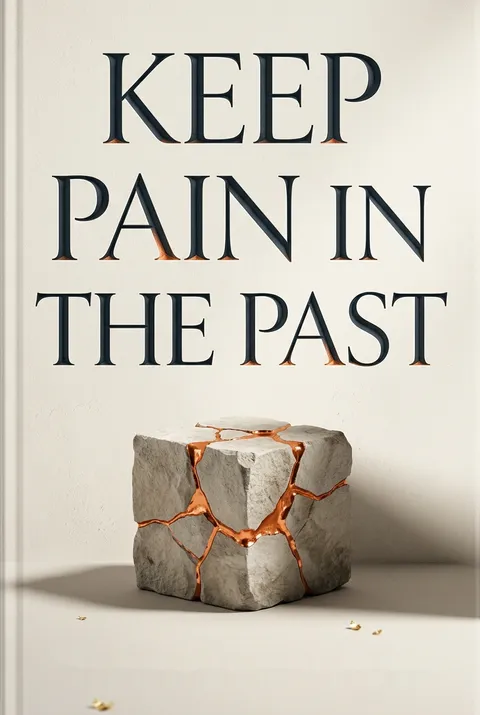
Keep Pain in the Past is a clinical self-help book built around vivid case histories and a memorable five-part model. Its central proposition is that painful memories can remain disruptive when they are avoided, emotionally unprocessed, or attached to rigid conclusions about blame and identity. The book’s most useful contributions are practical distinctions: coping is not necessarily resolution; forgiveness does not require reconciliation; guilt may conceal grief; and accountability for real harm differs from self-punishment for an accident. Jim’s story gives the model a coherent narrative arc, while the other cases broaden its application to bereavement, abuse, betrayal, and moral responsibility.
The book also makes claims that deserve careful qualification. Its description of The Fritz is supported primarily by the author’s clinical anecdotes, not by comparative trials establishing that this approach is more effective than other trauma therapies. The critique of prolonged exposure and EMDR is especially one-sided. Both are structured treatments with substantial research support, and exposure-based therapy is not simply repeating a traumatic story without purpose. Treatments vary, and dropout or nonresponse does not by itself show that a method is harmful or inferior. Medication also cannot be reduced to avoidance: for some people, symptom relief supports safety and engagement in psychotherapy.
The greatest ethical caution concerns memory. The book treats recovered memories as therapeutically useful even when details are uncertain, and it describes guided conversations in which a therapist speaks for a deceased person. Such exercises may offer comfort as imaginative meaning-making, but should not be confused with factual confirmation. Suggestive questioning can influence recollection, so clinicians should avoid planting details or treating imagery as evidence. Readers with severe symptoms, complex trauma, dissociation, or suicidal thoughts need appropriate professional support, not instructions to force an exposure alone. The book is most valuable as a compassionate argument for addressing pain with support, agency, and accountability, rather than as proof of a universal cure.
Review Summary
The reviews for Keep Pain in the Past are generally positive, with an average rating of 3.73 out of 5. Readers find the book helpful for dealing with trauma and past pain, appreciating the Fritz method and patient stories. Some praise its simplicity and insights, while others note it can be repetitive. The audiobook narration receives positive feedback. Critics mention religious content and a desire for more depth on specific issues. Overall, most readers find value in the book's approach to managing past trauma and emotional challenges.
People Also Read





Glossary
The Fritz
Five-part trauma approachThe authors’ trauma-recovery approach, named in tribute to Gestalt therapist Fritz Perls. It guides a person to revisit a painful experience, engage with its emotions, express it, loosen its emotional hold, and develop a more workable understanding. The book presents the parts as flexible and sometimes overlapping, not as a guaranteed cure or a substitute for professional care.
Mr. Avoidance
Avoidance personifiedThe authors’ nickname for the impulse to escape painful memories, feelings, reminders, or conversations. Avoidance can protect someone from overwhelming distress in the short term, yet may also prevent grieving, processing, or reassessing beliefs. The term is a teaching device, not a separate diagnosis or a claim that every form of avoidance is harmful.
General Adaptation Syndrome (GAS)
Three-stage stress responseHans Selye’s model of the body’s response to sustained stress. It describes an alarm reaction, a resistance phase during continuing strain, and exhaustion when the body’s coping resources are overtaxed. The book applies the model to trauma, arguing that reminders can keep a person’s threat response active. It uses the model as an explanatory framework, not a complete account of PTSD.
Complex Post-Traumatic Stress Disorder (CPTSD)
Effects of repeated traumaThe book’s term for difficulties associated with prolonged or repeated traumatic experiences, often beginning in childhood. In addition to trauma-related distress, the authors describe effects on emotional regulation, trust, relationships, and development. They emphasize that people with complex histories may need more time, a strong therapeutic relationship, and specialist support.
Guided imagery
Therapist-guided mental sceneA structured exercise in which a person imagines a scene connected to a loss or traumatic memory, often while relaxed and supported by a therapist. In the book, the person may revisit the event, comfort a younger self, or imagine saying what remained unsaid. The exercise is a way to create personal meaning and emotional closure, not verification that imagined events or conversations are factual.
Moral injury
Distress over one’s own harmThe book uses this term for anguish, shame, or guilt when someone believes they caused harm or acted against their moral standards. It contrasts this with misplaced guilt, such as blaming oneself for an accident outside one’s control. The authors connect recovery from genuine culpability with taking responsibility, changing harmful behavior, and making amends when possible.
Cognitive beliefs or schemas
Deep assumptions shaping interpretationThe book’s term for established beliefs about oneself, other people, and the world. These assumptions shape how new experiences are interpreted and can persist even when they are inaccurate. For example, a person who believes they are unlovable may interpret a cancelled plan as rejection. In trauma treatment, identifying and reconsidering such beliefs can change the meaning attached to an event.
goodbye letter
Written closure exerciseA letter used to express unresolved feelings about a deceased person, traumatic experience, or relationship. The book’s suggested structure covers what happened, how it felt at the time, how it affected the writer afterward, and what the writer wants to do to release its hold. The letter may remain private and is not necessarily sent to anyone.
Adverse Childhood Experiences Study
Study of childhood adversityThe book cites research on childhood adversity to illustrate links between early traumatic experiences and later health risks. It reports that children with six or more adverse experiences had a greatly increased likelihood of intravenous drug use compared with children reporting none. The study is used to show possible long-term associations, not to predict any individual child’s future.
Download PDF
Download EPUB
.epub digital book format is ideal for reading ebooks on phones, tablets, and e-readers.








