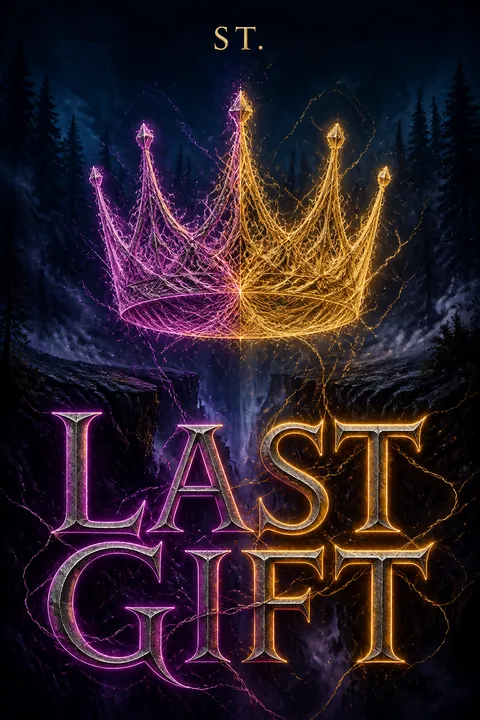


Plot Summary
Relics Choose a Reluctant Queen
A week after the demon assault, Tempest Corentine wakes beside Wild, her mate, with the coven’s survival still resting on her shoulders. Four relics have chosen her, and her new grimoire affinity makes her the obvious successor to Ryzika. Without a leader, the Buried Knolls coven may restart Caves, the three-hundred-year game that keeps its members split into rival teams, instead of preparing for the demons.
Tempest hates the idea of ruling and fears the coven will reject what she is: half demon. Still, she accepts the accession. As the coven welcomes her with a shared display of magic, she feels herself belong, even while she privately doubts she can wear the authority honestly.
Tempest’s accession begins as a practical necessity, but its emotional cost is personal: accepting responsibility means allowing a community to see her while concealing the fact she most fears will change its judgment. The coven’s shared magic offers a fleeting sense of belonging, not proof that division has healed. Her choice is therefore neither simple self-sacrifice nor uncomplicated ambition. She takes the seat because the alternative leaves the community vulnerable, while reserving the right to question whether the role can ever truly be hers.
The Council Loses Its Table
At her first council meeting, Tempest brings her stone authority into the chamber and binds the council’s decision channels to her own. She then replaces the old governing body with an advisory team, retaining experienced magus from both former Caves factions while bringing Huxley and Ruby into the group. She gives Sage a separate chance to lead strategy, and assigns Wild to organize sentries and demon training.
The new structure limits the council’s old power without discarding its knowledge. Tempest also hears the questions her rule cannot yet answer: how she gained a fourth affinity, why she knows so much about demons, and why the relics chose her. She postpones the hardest explanations, aware that every omission may deepen suspicion.
Tempest’s first act of leadership is institutional rather than heroic. She dismantles the council’s authority but preserves its expertise, a compromise that recognizes how status and competence can be entangled in a close community. Her choices also show the cost of governing through partial disclosure: she can organize people around a shared threat, yet the unexplained parts of her own history become political liabilities. The section frames authority as a relationship that must be built, not a prize automatically secured by the relics.
Caves Fed the Enemy
As Tempest’s advisers compare what they know, she lays out the supernatural territories and proposes that demonkind has used games to cultivate division among the species. Varden admits that he knew about a gate near his quarters after an earlier elder, Caradoc, and Caradoc’s son, Fyre, investigated the threat.
They had tracked moving gates with a demon-sensitive dagger, but Varden kept the knowledge from a council he believed too divided to act. Tempest confirms that the gates have crept closer and explains that her group worked to end Caves before the demons could exploit it further. The advisers agree to pursue two tasks at once: strengthen defenses and begin repairing the coven’s internal divisions.
The revelation recasts Caves from a merely damaging tradition into a vulnerability the enemy could exploit. Varden’s silence is not excused, but its logic exposes the institutional paralysis that made secrecy seem safer than consultation. Tempest responds by refusing a false choice between external defense and internal repair. Her plan depends on both, since weapons cannot compensate indefinitely for a community whose mistrust is being turned against it. Knowledge here is powerful, but only when it can be shared without being swallowed by factional rivalry.
Rhona Carries the Invitation
With most covens withholding help, Tempest seeks allies beyond maguskind. At the Buried Knolls pub, she meets Rhona, the human sister of Luther leader Andie, who has been waiting for a response after an earlier message. Tempest entrusts her with an invitation for Andie and the Vissimo leaders, protecting the letter with a charm that prevents unauthorized readers from seeing it.
Two days later, Princess Basilia and Crown Prince Kyros arrive by helicopter; Andie and pack leader Sascha reach the coven in wolf form. Tempest explains that all three peoples may have been divided by similar games. She heals Basilia’s damaged ear, and the visitors agree to continue talks, giving the isolated coven its first real opening toward an alliance.
Rhona’s role makes trust concrete: Tempest gives a consequential message to someone whose own history includes misplaced faith and damaged relationships. The alliance likewise requires more than strategic arithmetic. The visitors must enter a place that has treated outsiders as threats, while the coven must see unfamiliar bodies and customs without reducing them to inherited warnings. Tempest’s healing of Basilia’s ear creates an intimate basis for cooperation, showing how practical care can accomplish what formal diplomacy alone cannot.
Every Demon Gate Opens
Before Wild can explain their mating ritual to the coven, alarms sound: all five demon gates have opened. Tempest checks each site, finds no attackers, and seals the entrances with four-affinity barriers. The empty gates prove more disturbing than an immediate assault.
Rooke tests the magic seeping through and identifies a poison that damages magus skin; her antidote slows its effects but cannot yet stop the flow. The advisers increase sentry shifts, move vulnerable residents away from Tempest’s quarters, and begin testing protective charms.
At the same time, Huxley admits that a strange black-scaled demon woman directed him toward another gate during the battle. Her warning, combined with Tempest’s newly visible tether into the demon realm, raises the possibility that an enemy may be trying to help.
The open gates transform danger from a distant possibility into an environmental pressure that enters the coven even without an invading army. The threat works by exhausting bodies, distorting emotions, and making ordinary fear harder to distinguish from magical influence. Huxley’s account introduces a crucial complication: demonkind may not be politically or morally uniform. Tempest’s response remains empirical. She tests the poison, assigns specialists, and changes the coven’s routines, a form of leadership grounded in revision as new evidence arrives.
The Memory Opens Wider
The black-scaled woman’s description reminds Tempest of the silent tether leading into the demon realm, while the absence of her own demon threatens the mating ritual with Wild. With Wild and Rooke guiding her, Tempest returns to the memory of the day her family was attacked.
This time she sees beyond the moment that usually traps her in chaos: the demon king killed her mother, grandmother, and twin, but Tempest’s demon emerged from inside her, sacrificed herself to drive the king’s magic away, and was taken through a portal. Her blood remained in Tempest as a safeguard. The memory explains Tempest’s heritage and the demon’s disappearance, but leaves her with a new problem: the person who protected her is still imprisoned beyond reach.
The journey changes memory from an uncontrollable reenactment into evidence, but understanding does not make the violence bearable. Tempest learns that survival depended on a choice made by the part of herself she had not understood. Her identity is no longer a secret imposed from outside; it is also a bond sustained by sacrifice. The scene deepens the novel’s distinction between protection and control. Her demon saved her, yet the price was separation, and Tempest cannot assume that love makes the cost harmless.
Her Demon Comes Home
The revelation does not restore Tempest’s demon, and Wild’s worsening distress confirms that waiting is no longer harmless. After Tempest opens herself to the tether, pain from the demon realm overwhelms her. Looking through the barrier, she sees the unconscious black-scaled woman Huxley once encountered, only inches away.
Wild tries to hold Tempest back, but she reaches through and refuses to release the stranger. The woman wakes, recognizes Tempest, and dissolves into light that enters Tempest’s chest. Tempest loses consciousness as their bodies and magic reunite. Three days later, she wakes stronger, with her demon’s knowledge and instincts present within her, though still distinct in ways she must learn to understand.
The reunion is an act of retrieval, not a simple recovery. Tempest risks herself because her earlier choice to wait has become inseparable from Wild’s distress and her demon’s suffering. Their reunion does not erase the years of captivity; the demon must return through an overwhelming physical and psychic transformation. By presenting the demon as someone Tempest reaches for rather than a force she merely contains, the story challenges the idea that inner difference must be conquered. Integration begins with recognition and consent to remain connected.
The Mating Becomes Public
When Tempest returns to the eating chamber, seeing Wild triggers the next step of their mating ritual. They consume and exchange one another’s magic, then have sex on the tables while the coven is absent. A new rune appears on each of them, marking a deeper union. Rather than conceal the event, Wild and Tempest explain that the Mother has given maguskind a mating bond for the first time, with Tempest as leader and Wild as protector.
The coven responds with questions and excitement instead of the rejection they feared. The revelation begins to quiet rumors that Wild is being controlled through dark magic, though the couple’s visible runes and unusual powers leave plenty of unanswered questions.
Making the bond public shifts the couple’s private uncertainty into a collective responsibility. Their choice to explain what they know does not give the coven complete access to their lives, but it lets others interpret the evidence with less fear and fantasy. The coven’s positive response suggests that intimacy can become socially meaningful without becoming public property. At the same time, the ritual’s physical intensity and magical power make the couple a political symbol, a role they did not seek and cannot entirely avoid.
The Quipu Burns
During battle practice, a cage meant to test Tempest’s instincts triggers her demon’s memories of captivity. Black smoke and scales appear, and Tempest speaks in the demon tongue as she fights the cage. Spyne witnesses the transformation, feels betrayed by Tempest’s secrecy, and withdraws from her and Huxley.
Later, while the coven celebrates esbat, someone sets fire to Tempest’s quipu, the knotted record she uses to organize information and connect patterns. Tempest grieves the loss because the work was close to producing a strategy against the demons. She tells the coven about the attack, and members admit that some miss Caves and resent the speed with which their familiar routines disappeared.
The cage makes trauma visible before Tempest is ready to explain it, so her demon nature appears to others in the very form most likely to invite suspicion. Spyne’s response is painful precisely because their relationship had begun to include trust. The burning quipu then attacks both Tempest’s personal method of thinking and the coven’s prospective defense. Together, the events show how fear turns difference into evidence and how institutions can punish people for lacking a safe way to disclose what they are.
Frond’s Trial Backfires
Frond gathers enough signatures to force a trial over Tempest’s alleged dark magic. He presents reports of her black smoke, blood, and demon language as evidence, while Tempest argues that the claims can be tested. Both take truth serum.
Asked whether she has practiced or intends to practice dark magic, Tempest truthfully denies it; asked whether he has secretly supplied information to the original coven for a promise of leadership, Frond admits he has. Tempest declares him guilty of treachery and sends him to a holding cell.
She then tells the coven that she is half demon, the daughter of the previous demon king, and the survivor of his attack on her family. She relinquishes the authority until the coven can choose with the truth before them.
The trial exposes two kinds of uncertainty: a factual question about Tempest’s magic and a political struggle over who gets to define legitimate leadership. Truth serum gives the coven a clean test, but it cannot undo the appetite for suspicion that made the trial possible. Tempest’s decision to disclose her heritage and step aside is a refusal to hold power through concealment. It also leaves her vulnerable to a collective judgment she cannot control, making truth an ethical risk rather than a guaranteed route to acceptance.
The Quipu Returns as Power
While Tempest waits in a holding cell, she explores Ryzika’s relics and loses consciousness as their affinities combine. When she wakes, the burned quipu has returned as a web of mental threads linking knowledge, action, healing, and possible futures.
Tempest can now see how choices connect, though the sight overwhelms her when the coven’s emotions surge. She offers the coven a path to survival without demanding the authority back.
A majority accepts her guidance, and she identifies the answer the old game had concealed: Caves can become a training ground against demons instead of a contest between magus teams. The coven agrees to use its familiar tactics against the enemy, while Tempest remains outside the authority until they decide otherwise.
The quipu’s transformation turns a lost personal tool into a capacity that cannot be destroyed by attacking its physical form. Yet the new sight is not omnipotence: it overwhelms Tempest and requires restraint, especially when other people’s emotions flood its pathways. Her offer matters because she separates useful knowledge from entitlement to rule. The solution also alters the meaning of tradition. Rather than erase Caves or restore it unchanged, the coven can redirect its learned skills toward a common threat.
Two Kings Fall, One Escapes
The combined forces of magus, Vissimo, and Luthers lure the demon army into the caves, using old Caves tactics to funnel it toward a confined battlefield. The demon king appears on the knolls, where King Julius engages him and knowingly gives his life to weaken him. Varden then sacrifices himself to protect Tempest.
With their gifts buying her a chance, Tempest wounds the demon king with her father’s blade and ties it to the iron around his heart, but red-scaled soldiers carry him back through a gate. Tempest turns her quipu against the remaining army, linking demons’ violent intentions so their own magic destroys them. The allied forces survive, but forty-seven magus die, and the demon king remains alive, grievously weakened.
The victory is built from deliberate losses, not from the fantasy of a flawless plan. Julius and Varden each choose a sacrifice that gives Tempest the opening she needs, but their deaths expose the emotional price of treating people as strategic resources. The demon king’s escape prevents the battle from becoming a simple closure, even as the army is defeated. Tempest’s thread magic literalizes the alliance’s central tactic: forces that once acted separately become connected, and the enemy’s power turns against itself.
A Child Names Syera
After the fighting stops, a small demon boy approaches Tempest through the bodies and calls her his aunt. He identifies himself as Adeuto and says his mother is Syera, Tempest’s twin, whom Tempest believed the demon king killed years earlier. Adeuto explains that his mother sent him to Tempest and warned her not to enter the demon realm yet.
Syera’s note confirms that she is alive, that she is dealing with the demon king, and that Tempest must wait until the gates and rifts are destroyed. She entrusts Adeuto to Tempest’s care. The revelation turns the aftermath of battle into a new family crisis: Tempest has found her sister, but cannot reach her without risking the wider war.
Adeuto’s arrival reverses the certainty on which Tempest’s grief has rested. The revelation is not uncomplicated relief: Syera is alive, but remains in enemy territory, and the child carries instructions that limit what Tempest can do. The note gives Tempest a new form of kinship to protect without letting her mistake urgency for permission. Her sister’s survival also complicates the earlier revenge against the demon king, whose relationship to Syera is now entangled with the political catastrophe he caused.
Tempest Accepts the Authority
A week after the battle, the coven votes on whether Tempest should lead. The blue vial fills far beyond the red, and this time she accepts the authority with a cushion placed on the hard seat. She and the surviving allies discuss the dead, the wounded, and the next work ahead. King Kyros considers allowing Spyne to study within his clan, and Tempest authorizes a formal challenge to the original coven over its broken obligations.
Caves will return as a yearly event, no longer a weekly division. Yet the demon king may survive, Syera remains beyond reach, and Adeuto’s warning says the danger is not finished. Tempest leaves the knolls with Wild and the other leaders, committed to face the next battle together.
Tempest accepts leadership only after the coven has seen the truth and chosen her openly. The cushion is a small but resonant change: authority becomes something she can inhabit without pretending she wanted the old terms of power. The yearly return of Caves also models cultural repair as adaptation rather than total erasure. Still, the ending refuses the comfort of a completed war. The group has won time and restored a measure of trust, but the next conflict will test whether their new alliance can endure.
Analysis
Last Gift treats community as both a source of strength and a mechanism of pressure. The coven’s divisions are not merely interpersonal flaws: the demons can feed on the anger and despair those divisions produce. That makes emotional life part of the strategic landscape, but the novel does not argue that fear should be suppressed. Tempest’s approach is more difficult. She creates centering practices, invites dissent, and tries to distinguish genuine disagreement from deliberate sabotage. Her leadership depends on letting people retain agency while asking them to recognize shared danger.
Tempest’s secrecy complicates that project. She fears that disclosure of her demon nature will cause the coven to reject her, and the plot partly confirms her fear through suspicion and imprisonment. Yet withholding the truth also allows other people to build explanations from rumor. Her eventual disclosure is not a magical cure for prejudice. It is a choice to stop organizing her life around an imagined verdict and to let the coven decide with fuller knowledge. The distinction between privacy and public duty remains contested, especially through Spyne’s belief that leadership creates obligations to disclose.
The novel’s strongest structural metaphor is its changing use of systems. Caves begins as a contest that divides the coven, then becomes a method for drawing the demon army into a trap. The quipu begins as Tempest’s personal memory aid and becomes a way to perceive relationships and possible futures. Neither tool is inherently virtuous. Their consequences depend on how people use them and whether the connections they create are cooperative or exploitative.
The ending grants a victory, not a final peace. The demon army is devastated, but its king escapes, Tempest’s twin remains in danger, and the coven has lost many of its people. Tempest accepts leadership only after the community votes, turning the authority from a burden imposed by relics into a relationship chosen by both sides. That choice offers hope without pretending that grief, mistrust, or the next war has disappeared.
Review Summary
Last Gift concludes the Coven Caves trilogy with high praise from readers. They appreciate the character development, world-building, and ties to previous series. Tempest and Wild's relationship growth is well-received, as are the action sequences and plot twists. Many reviewers express excitement for the upcoming demon-focused series. While some found pacing issues or character inconsistencies, most rate it 4-5 stars, considering it a satisfying end to the trilogy and a strong setup for the next installment in the Supernatural Battle world.
People Also Read



Characters
Tempest Corentine
Reluctant coven leaderTempest is a sharp-minded outsider raised beyond the coven, with a rare gift for arranging tangled information into patterns. She is direct, resourceful, and often funny at the moments when other people would reach for ceremony. Her family’s loss has made her wary of secrets and fiercely protective of the few people she trusts. Yet she is not naturally comfortable with power: she questions her own right to lead even when others rely on her judgment. Tempest’s defining tension is between wanting privacy and accepting responsibility for a community. Her growth comes from learning that honest self-acceptance need not depend on predicting or controlling everyone else’s response.
Wild Astar
Devoted mate and protectorWild is Tempest’s mate, a powerful magus whose steady competence in combat contrasts with the intensity of his devotion. His bond makes him acutely responsive to Tempest’s feelings, and he often tries to protect her before she can decide what protection she needs. He is loyal to his friends and increasingly independent of the powerful parents who shaped his upbringing. Wild’s central struggle is to understand that being Tempest’s protector does not mean controlling her choices or measuring his worth solely by his ability to shield her. Their relationship is both emotional intimacy and a new source of magical power.
Rooke
Cousin and poison-makerRooke is Tempest’s cousin and one of her most dependable sources of affection, candor, and practical help. Her divination and apothecary skills lead her toward unusual substances and dangerous experiments, interests she sometimes hides because she worries about how others judge her. She can be playful, but does not soften the truth merely to make it easier to hear. Rooke’s support is valuable precisely because it is not blind approval: she tells Tempest when a choice may backfire while still respecting that the choice belongs to her. Her relationship with Sven is lively and affectionate, with room for both mischief and commitment.
Sven
Whisper-network operatorSven is Wild’s close friend and a powerful organizer who works behind the scenes to manage rumors and keep the coven functioning. He notices social shifts quickly and understands that information travels through relationships as much as through formal meetings. His practical instincts make him useful to Tempest, but his willingness to manipulate whispers can leave him overburdened. He sometimes pushes himself past exhaustion because he believes the community’s stability depends on his constant attention. His romance with Rooke gives him a private place to set down that responsibility, even when he struggles to recognize when he needs rest.
Huxley Leif
Blunt grimoire strategistHuxley is a gifted grimoire magus whose intelligence is matched by a prickly manner and a powerful fear of appearing helpless. He reacts defensively when failure threatens his sense of competence, often turning shame into irritation before he can examine it. Tempest values him because he will challenge her rather than flatter her, and she gives him meaningful work that asks him to use his mind in service of the coven. His relationship with Spyne exposes the difference between being loved and feeling worthy of love. Beneath the abrasive humor is a loyal friend who wants to protect the people he trusts.
Spyne
Grimoire with sharp insightSpyne is a composed, perceptive grimoire magus with a strong instinct for asking the question others would rather avoid. His calmness makes him an effective counterweight to Huxley’s defensiveness, though it can also conceal his own unmet needs. Spyne wants more knowledge of the world beyond the coven and must decide what loyalty means when his beliefs conflict with someone he cares about. He is not content to accept reassurance in place of an honest account, but he also tries to reserve judgment until he has understood what happened. His relationship with Huxley is tender, complicated, and marked by a desire for growth on both sides.
Varden
Elder strategistVarden is an experienced grimoire magus who has spent years watching the coven’s divisions deepen. He is measured in manner and careful with evidence, but his quietness should not be mistaken for passivity. His history with the demon threat has left him carrying knowledge and regret that shape his advice to Tempest. He values continuity and hopes the coven can recover a more unified way of life, sometimes placing too much weight on how quickly that repair should happen. Varden recognizes Tempest’s capacity before she fully trusts it herself, and his counsel repeatedly pushes her to see leadership as a responsibility to people rather than a status.
Frond
Resentful former councilorFrond is a former council member with rigid loyalties and a deep attachment to established rank. He has never warmed to Tempest, and her sudden elevation threatens the order in which he understands authority. Frond is skilled at gathering support from people who share his unease, especially when the coven is frightened or its traditions feel unsettled. He presents himself as a defender of transparency, though his political instincts make the question of whose interests he serves difficult to ignore. His opposition forces Tempest to distinguish legitimate dissent from conduct that endangers the wider community.
Syera
Tempest’s twin sisterSyera is Tempest’s twin sister, raised with her by their mother and grandmother outside the coven. Her absence has shaped Tempest’s grief and her understanding of what family means. As a child, Syera was bolder and more openly commanding in human settings, while Tempest preferred to influence events without being noticed. The sisters shared an unusually close bond, one that helps explain why Tempest’s loss of her family never became an ordinary memory. Syera remains an important presence in Tempest’s inner life and in the family history that her mother left unexplained.
The Demon King
Territory-hungry rulerThe demon king is an immensely powerful ruler whose ambitions are tied to expanding his realm and claiming other supernatural territories. His forces exploit emotional division and can use gates to enter worlds that believe themselves secure. He is disciplined enough to favor long preparation over reckless confrontation, and his magic can inflict damage even without a full invasion. Tempest’s history is connected to him in ways she does not initially understand, making him more than a distant enemy. His power represents the danger of a ruler who treats entire peoples as resources to be absorbed.
Princess Basilia
Vissimo royal envoyBasilia is a Vissimo princess whose polished, playful manner makes her seem disarming, though she is observant and politically capable. She has lived through pain and loss, and her humor does not erase the toughness those experiences demanded. She is fiercely bonded to Kyros and comfortable enough in her own status to tease him as readily as she negotiates with other leaders. Basilia builds rapport with Tempest through warmth, practical curiosity, and a shared refusal to let other people define them only by their titles. Her ease around outsiders helps the alliance feel possible.
Kyros
Vissimo crown princeKyros is a formidable Vissimo royal, controlled and watchful in unfamiliar surroundings. His loyalty to Basilia is visible in the care with which he tracks her safety, though his protective instincts can shade into possessiveness. He knows the history and power of his people and understands that an alliance is a serious risk, not a gesture of goodwill without cost. Kyros is initially difficult for Tempest to read, but he respects competence and evidence. His relationship with his father is shaped by inherited duty and deep family loyalty, giving his political decisions an intimate dimension.
Andie
Luther pack leaderAndie leads the Luther pack with an approachable manner and a clear sense of what her people need. She is more grounded and direct than her Vissimo counterpart Basilia, and her confidence comes from listening as much as commanding. Andie understands the strain of being changed in ways a community may not accept, which allows her to recognize Tempest’s uncertainty without demanding a confession. Her partnership with Sascha is affectionate and practical, and she often serves as a bridge between strong personalities. She values cooperation but does not confuse unity with the absence of disagreement.
Sascha
Luther pack protectorSascha is a powerful Luther leader whose watchfulness comes from responsibility for his pack and mate. He is less inclined toward speeches than toward assessing immediate risks, and his suspicion of magus reflects real grievances in his people’s history. His bond with Andie informs his choices without diminishing her independence. Sascha is willing to cooperate when trust is earned, and he respects leaders who acknowledge the costs of alliance rather than asking others to take risks blindly. His steadiness offers a useful counterweight to the volatility surrounding the coven.
King Julius
Ancient Vissimo rulerJulius is an ancient Vissimo king whose authority is expressed through stillness, direct tests, and immense physical power. He distrusts magus because of long-standing conflict, yet he is capable of revising his judgment when experience contradicts inherited prejudice. His decisions are shaped by the survival of his family and clan, and he expects others to understand that leadership carries consequences beyond personal preference. Julius recognizes patterns between the supernatural leaders and treats those patterns as warnings worth considering. His formidable presence forces Tempest to negotiate as an equal rather than hide behind ceremony.
Queen Titania
Vissimo queen and motherTitania is the Vissimo queen, an expressive and unconventional presence in a royal household built around formidable power. Her playful confidence sits alongside a fierce commitment to her family. She reads people in a different way from Julius, often making room for humor and social ease while he tests strength and resolve. Her relationship with her children is affectionate, and her partnership with the king shows a division of influence that is not reducible to rank. Titania’s warmth makes the Vissimo court less alien without disguising its danger.
Corentin
Magus seeking inner balanceCorentin, often called Corey, is one of Wild’s close friends and a magus whose magic has caused him deep distress. Tempest helps him reorganize that magic, giving him a chance to pursue a more centered life. His new calm can seem comically extreme to friends who remember his former manner, but it also reflects a sincere effort to understand himself before taking responsibility for others. Corentin contributes knowledge of divination journeys and participates in the coven’s healing work. His presence shows that transformation can be liberating while still leaving a person with unfinished questions.
Winona
Steady senior adviserWinona is a composed former council member who favors careful observation and clear procedure. She is respected for her judgment and does not hesitate to challenge Tempest when a decision needs scrutiny. At the same time, she can recognize when old procedures are no longer adequate to new dangers. Winona helps coordinate strategies across the coven’s different affinities and often keeps difficult discussions from becoming personal contests. She believes power brings constraints as well as influence, a lesson that informs her reluctance to seek the highest position herself.
Delta
Battle instructorDelta is a battle-affinity magus who responds to danger with energy, decisiveness, and a fighter’s appetite for direct action. She is quick to question decisions that seem too cautious, particularly when defense of the coven is involved. Her experience makes her an effective organizer of demon-focused combat training, and she can recognize the value of combining practical drills with new information. Delta’s anger is vivid, but she is capable of reconsidering a position when evidence or necessity demands it.
Opal
Tradition-minded adviserOpal is an experienced magus who trusts inherited customs and is initially wary of outsiders. Her reservations are rooted in the stories and assumptions her community has preserved, rather than in direct knowledge of other supernatural peoples. Opal’s caution is not simple malice; she is trying to protect a way of life that has long seemed self-sufficient. As new evidence accumulates, she can acknowledge the practical value of cooperation without pretending her discomfort vanished overnight. Her gradual openness gives the coven’s cultural change a credible human scale.
Sage
Coven lead strategistSage is a respected magus who excels at gathering ideas and creating a process through which others can contribute. She values precedent and reliable procedure, qualities that become complicated when the coven faces an enemy no existing policy can handle. Her initial uncertainty reflects the real difference between managing a game and preparing for lethal combat. Sage is not ineffective; she needs a clear role and support to use her strengths. Her work helps turn scattered expertise into strategies the coven can practice.
Rhona
Human supernatural messengerRhona is a human representative connected to the Luther community and Andie’s sister. Guarded and impatient, she has spent time waiting for a chance to repair trust with her family. She is capable of admitting that she made a mistake, though the admission costs her pride. Tempest recognizes that honesty as a beginning rather than a complete solution and entrusts Rhona with a consequential message. Rhona’s ordinary humanity is a reminder that supernatural conflicts affect people who do not possess magical defenses.
Ty
Divination mentorTy teaches divination and the interpretation of Ogham staves. He is perceptive without being intrusive, and his questions help Tempest examine an affinity bound up with grief and trauma. Ty treats spiritual practice as a discipline requiring patience rather than a shortcut to certainty. He is willing to acknowledge what he cannot fully explain, while still encouraging Tempest to explore her abilities. His mentorship helps her approach the part of her magic she has long found most difficult.
Barrow
Coven liaison and messengerBarrow is a former council member who handles correspondence, negotiations, and the many small tasks that keep the coven connected to others. He values position and formal courtesy, but he also demonstrates courage and a sincere commitment to the community. Tempest’s affectionately teasing manner sometimes leaves him bewildered, though his respect for her grows through their work together. Barrow provides a practical link between the coven and outside groups, making diplomacy less abstract.
Adeuto
Young demon childAdeuto is a young demon child whose earnestness and direct manner contrast with the violence surrounding his arrival. He is brave enough to approach strangers and carries an important message from his mother. His presence creates an immediate need for care and protection, reminding the adult leaders that the war reaches beyond armies and territorial plans. Adeuto’s curiosity and trust make him a person rather than a symbol, even when others are tempted to see him only through his species.
Plot Devices
Caves
Game turned battlefieldCaves is the Buried Knolls coven’s centuries-old contest between two factions, a structured way to compete for leadership and status. Its divisions also create the kind of negative emotion demons can exploit. Tempest first works to end the game so the coven can unite, then recognizes that its rules and tactics can be redirected against the invaders. The same practice that once made the coven vulnerable becomes a defense when the teams cooperate. Its later return as a yearly event acknowledges that traditions can matter to people even when they must be changed to keep them safe.
Tempest’s Quipu
Memory made into strategyTempest records facts and relationships in a magical arrangement of knots and braids, which helps her manage information that would otherwise overwhelm her. She uses the quipu to analyze Caves and later to organize knowledge about the demon threat and possible alliances. When someone burns its physical form, Tempest loses months of work, but the destruction ultimately precedes a transformation: she begins perceiving a vast network of knowledge and possible paths within her mind. The quipu makes her method of thinking visible, and its growth links personal organization with strategic responsibility.
Ryzika’s Four Relics
Relics of chosen authorityRyzika’s pendant, gemstone, robe, and dagger identify Tempest as the successor to the coven’s last leader. They function as more than symbols: their different magical affinities respond to Tempest and eventually combine in a way that changes how she experiences her own magic. Their significance depends on the bearer, so Tempest must learn what they can do rather than assume the objects contain one fixed answer. The relics connect leadership to inheritance, but they do not remove the need for the coven’s consent or Tempest’s own acceptance of the role.
The Mating Ritual
Bond that changes magicTempest and Wild begin an unprecedented magus mating ritual after their magic meets during her initiation. Its successive stages bring runes, a multistrand bond, new magical capacities, and escalating protective instincts. The couple initially do not understand what is happening, and their attempts to delay or explain it create private strain as well as public rumors. Their bond allows them to share and strengthen magic, but also makes each deeply vulnerable to the other’s distress. The ritual makes their relationship a supernatural and political event without making their choices or emotional difficulties disappear.
Demon Gates and Smoke
Threat moving between realmsDemon gates appear in ravines around the coven and move closer as demon power grows. Opening the gates allows poisonous, decaying magic to seep into the caves, weakening inhabitants before an attack. The red smoke conceals demon activity and can signal that the demon king is preparing to invade or expanding his realm into the ravines. Four-affinity barriers, sentries, alarms, and Rooke’s antidote let the coven measure and resist the threat, though none offers an easy permanent solution. The gates make the enemy’s campaign a sustained pressure, not simply a battle at the boundary.
Supernatural Battle Universe Series






About the Author
Other books by Kelly St. Clare



Download PDF
Download EPUB
.epub digital book format is ideal for reading ebooks on phones, tablets, and e-readers.








