

Plot Summary
The Pumpkin and the Pact
In Gemond, Ryn uses her plant-growing Phaetyn power to make a pumpkin so enormous she gets trapped inside it. Tyrrik, her newly bonded Drae mate, cuts her an exit, then accompanies her to a council where Lani, heir to the Phaetyn throne, needs to return to her forest.
Ryn insists on going with her, despite Tyrrik’s fear that Draedyn, the emperor and Ryn’s father, can track her when she shifts. The council agrees that Tyrrik will remain in Gemond as a decoy while Ryn escorts Lani. Ryn accepts Tyrrik’s condition that they keep in contact through their bond, but the separation forces her to face her uncertainty about letting instinct define their relationship.
The pumpkin episode makes Ryn’s power both comic and consequential: she can nourish a kingdom, yet still cannot control a basic transformation. That gap between immense capacity and practical mastery recurs throughout the story. Her choice to leave Tyrrik is not a rejection of love so much as an attempt to preserve agency inside a bond that makes closeness feel compulsory. By agreeing to go, she accepts responsibility for Lani while risking the comfort that has begun to steady her.
Sisters Beneath the Veil
Before leaving, Lani teaches Ryn to weave a Phaetyn veil that can hide them from observers, though holding it drains Ryn’s strength. Tyrrik and Ryn part painfully, and she carries Lani toward Zivost in her Drae form. During the night, Draedyn’s white fire crosses the sky. Its presence stirs a dangerous longing in Ryn to meet her father, but Lani’s veil shields them and Ryn keeps Tyrrik from rushing to her aid.
They reach the forest to find the stone defenses lowered and Phaetyn gathered to greet them. Kamoi, the prince, welcomes Ryn too intimately; she rebukes him, then brings Lani to her sister Kamini. The sisters recognize one another, and Lani asserts her claim to the throne.
The journey makes concealment a skill Ryn must actively sustain, not a magical solution that removes danger. Draedyn’s influence arrives first as desire rather than force, illustrating how control can exploit emotional need before it becomes visible coercion. At Zivost, the sisters’ reunion offers a counter-image: recognition is mutual and freely chosen. Ryn’s resistance to Kamoi’s unwanted familiarity also marks a growing insistence that her body and loyalties are hers to define.
The Coronation Turns
Lani and Kamini agree that Lani will be crowned queen and restore the protective barrier over the forest. Before the ceremony, Lani touches her mother’s ancestral tree and recovers confidence in the legacy she must carry. At the feast, however, a drink leaves Ryn and the sisters foggy and weak.
Draedyn arrives in his emerald dragon form, drops Druman into the courtyard, and burns Phaetyn as the unfinished barrier fails. He seizes control of Ryn and makes her carry Kamini toward him, while Lani and Kamoi are also captured. Tyrrik arrives too late to stop the abduction. Ryn blames herself for surrendering her friend, and Lani blames herself for failing to protect her people.
The celebration turns the tools of welcome into liabilities: shared drink, public ceremony, and an unfinished defense all make the community vulnerable at once. Ryn’s forced actions expose the difference between responsibility and control. She experiences herself as an agent of harm, even though Draedyn has removed her ability to choose. Lani’s shame follows the same logic, treating a magically engineered failure as a personal moral defect. Their mutual blame reveals how tyranny recruits its victims into carrying the burden of its violence.
A Crown Rekindled
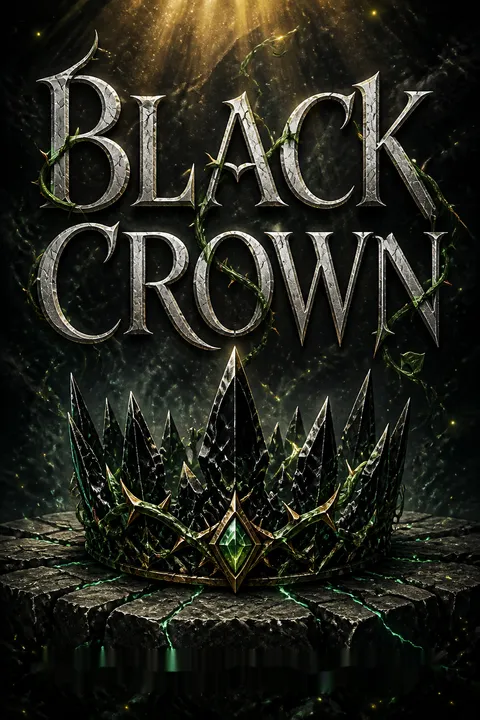
In the aftermath, Lani believes she is unfit to rule because she could not raise the barrier. Ryn places Queen Luna’s hidden crown on her head; its embedded power lets Lani connect to the ancestral tree and feel the forest answering her. With her confidence restored, Lani can raise the veil and protect what remains of her people.
Ryn and Tyrrik commit themselves to rescuing Kamini and the other captives, and Ryn declares that the rebellion must become a war. Before the army moves, she and Tyrrik argue over his need to protect her and her refusal to promise she will never leave his side. They reconcile without surrendering their disagreement, then finally consummate their bond.
The crown does not create Lani’s legitimacy; it reconnects her to a source of strength she had mistaken for absent. Leadership here depends on relation, to a living forest, a dead mother, and a frightened community, rather than on confidence alone. Ryn and Tyrrik’s dispute makes a similar distinction: love can intensify duty without giving one partner ownership of the other. Their reconciliation matters because it preserves the conflict instead of pretending affection has resolved it.
Ash Across Gemond
Flying back toward Gemond, Ryn and Tyrrik find the kingdom blackened by smoke: its homes, shops, barns, and stores have been burned. They fear that Zakai, the Gemondian king, and Dyter, Ryn’s mentor, are gone, but find both alive inside a hidden mountain refuge. Zakai explains that warnings drove some people to shelter, though the losses remain uncertain.
The survivors prepare to join the campaign, and Ryn scatters seeds over the devastated land, using her Phaetyn power to coax crops and trees from the ash. Her growth transforms the valley into an oasis and gives the displaced people food. Tyrrik’s presence steadies her, while the sight of the ruined settlement sharpens her resolve to protect those who cannot protect themselves.
Gemond’s destruction converts the rebellion’s strategic cost into a landscape Ryn can touch: ash, empty foundations, and threatened hunger. Her power answers immediate need, but it cannot reverse the losses or make her responsible for preventing every future attack. That distinction begins to change her relationship with power. Rather than treating exceptional ability as proof she must control every outcome, she uses it where it can materially help, while joining a collective defense led by people with different strengths.
The Mind’s Open Door
As the Gemondian army marches toward Azule, Ryn trains to veil the soldiers and shield her mind from Draedyn. During sleep, he invades her thoughts with a nightmare that recreates her dungeon captivity and makes her attack Tyrrik with living plants. Tyrrik wakes her before she can seriously harm him, confirming that her father can manipulate her even when she sleeps.
Ryn realizes that relying on Tyrrik’s proximity is not enough, and the two begin testing her defenses while moving with the army. She also learns that Dyter had long known Caltevyn planned to use Azule’s boats to bring home soldiers forced to fight overseas. Dyter apologizes for keeping her uninformed, and Ryn joins the leaders’ plan to approach Azule.
The nightmare weaponizes memory rather than inventing a new fear; Draedyn makes Ryn’s survival strategy, vigilance, serve as the route into her mind. Her attack on Tyrrik dramatizes the danger of treating trauma as a private wound that can simply be contained. The episode also alters how Ryn understands preparedness: affection cannot substitute for a defense she can command herself. Dyter’s withheld plan supplies a quieter parallel, as Ryn now expects political trust to include information, not just protection.
Azule’s Glittering Trap
Ryn, Tyrrik, Dyter, and a small delegation arrive in prosperous Azule, whose well-fed people and flourishing fields sharply contrast with the starving kingdoms around it. At Queen Mily’s extravagant birthday celebration, guests and servants engage in sexual revelry that leaves the visitors uneasy.
Mily nevertheless agrees to provide boats for the return of the overseas soldiers. Dyter then disappears with a Veraldian servant, while the rest of the delegation becomes distracted by the party.
Ryn and Tyrrik pull the group together and search for him. When Tyrrik questions a servant, the man’s enchanted response leads them toward a hidden stairway. Tyrrik senses danger, but before the group can regroup, he uses his power to put Ryn to sleep and hide her from the threat.
Azule’s abundance is not proof of security or benevolence; it is an unsettling exception whose social spectacle obscures the political arrangement beneath it. Mily’s easy promise of ships seems like a breakthrough precisely because the visitors lack reliable knowledge of her court. Tyrrik’s decision to incapacitate Ryn repeats the paternalistic logic she fears: he protects her by taking away her choice. His motive is urgent, but the breach strains the trust that their earlier argument had carefully preserved.
The Emperor’s Audience
Ryn wakes in a cleaning closet, furious that Tyrrik has left her behind. She veils herself, finds a concealed balcony, and sees Draedyn holding Kamini, Kamoi, and other captives while Druman kill Azulis below. Before she can help, the emperor breaks through her defenses and takes her to his stronghold.
There, Kamoi admits he contacted Draedyn weeks earlier, drugged the coronation drinks, and helped expose Zivost because he wanted influence over its throne. He had expected Draedyn to seize Lani, not Kamini. Draedyn kills Kamoi for his betrayal, then introduces Ryn to the captive female Drae. Their presence gives her a new sense of kinship, even as the emperor’s control keeps her cut off from Tyrrik.
Kamoi’s betrayal clarifies that the attack on Zivost was not simply the emperor’s violence descending from outside; local ambition prepared the opening. His mistaken calculation, that he could direct a tyrant toward his preferred victim, shows how power-seeking can disguise dependence as strategy. Ryn’s encounter with the female Drae offers belonging without freedom: kinship is real, but it cannot protect her from an authority that has made family itself a captive category.
A Thread of Blue
Among the captive Drae, Ryn recognizes a woman named Ryn as her aunt, her mother Ryhl’s sister. Her aunt explains that their family belonged to the old alpha line, and that Ryhl had resisted Draedyn from childhood. During a disturbance that briefly weakens his mental hold, Ryn refuses to call openly for Tyrrik.
Instead she threads a tiny strand of her Drae power through the emperor’s shield, conceals it with her Phaetyn veil, and sends Tyrrik images of the palace, the prisoners, and Draedyn’s movements. Her aunt mistakes this restraint for cowardice and turns against her. Ryn keeps the hidden connection intact, then secretly heals her aunt after Draedyn forces her to wound her, sending her over a cliff under an invisibility veil.
Ryn’s resistance becomes more sophisticated as she stops equating courage with immediate, visible action. A concealed strand of power preserves communication without alerting the person who controls the larger channel. Her aunt’s anger complicates inherited solidarity: shared blood does not guarantee shared judgment, especially under coercion. The rescue is ethically uneasy, because Ryn must appear to harm the woman she is saving. Secrecy becomes not evasion but a carefully chosen means of protecting another person’s chance to act.
The Knife from Below
Exploring the stronghold, Ryn discovers a Phaetyn prisoner named Ash, who has endured decades in Draedyn’s dungeon. Ash asks Ryn to use a knife bearing Phaetyn blood against the emperor, believing that death would free her. Ryn returns to her room with the blade as Draedyn’s influence takes hold of Tyrrik and drives him to bite their mate mark, apparently trying to force them toward producing heirs.
Ryn stops him, recognizes the intrusion, and understands that Draedyn has left the palace to attack the approaching rebellion. She and Tyrrik see dragons and Druman moving toward the army. With the emperor away, Tyrrik frees the dungeon prisoners while Ryn prepares to use Ash’s bloodied knife against their enemy.
Ash’s request turns the dungeon from background evidence of cruelty into a direct moral claim on Ryn’s choices. She does not accept the idea that Ash’s life is expendable, but she does carry the means of resistance out of the cell. The attempted manipulation of Tyrrik shows Draedyn targeting intimacy as a political instrument, trying to make reproduction serve his rule. Ryn’s ability to recognize the intrusion protects their bond and reveals that the coming battle concerns control over future generations as much as territory.
The Battle of Two Veils
Ryn and Tyrrik destroy Draedyn’s stronghold while he leads his forces toward the rebellion, then fly into a battle where the Gemondians, Veraldians, and Phaetyn are badly outnumbered. Ryn combines her Phaetyn and Drae powers to break the emperor’s mental control over the captive female Drae, though the effort knocks them unconscious.
Kamini, carried by Draedyn and forced to reveal Lani’s protective veil, helps the emperor attack the army. Ryn’s aunt joins the fight and distracts him long enough for the freed Drae to fall clear. The reunited overseas soldiers arrive to bolster the rebels. In the chaos, a Phaetyn-poisoned blade strikes Tyrrik; Dyter is held hostage, and several fighters die before Ryn can reach them.
The battle turns Ryn’s mixed identity into a literal method: neither inherited power is sufficient alone, but their combination can undo the emperor’s control. This does not produce effortless victory. The freed women collapse, Kamini is coerced into assisting Draedyn, and the rebellion suffers severe losses. The scene resists a simple equation between power and mastery. Ryn can change the battlefield, yet she cannot control its cost, and her deepest vulnerability remains relational: Tyrrik’s wound threatens to overwhelm every strategic objective.
The Black Heart Breaks
With Tyrrik apparently dying, Dyter’s life at knife point, and the Azuli Queen Lahr revealed as Draedyn’s ally, Ryn fights through the final circle of enemies. She kills Lahr when the queen stabs Dyter, then turns to Draedyn. The emperor tries to make Ryn heal Tyrrik, but the dying Drae sends her images showing that he himself inflicted the wounds.
Remembering Ash’s knife, Ryn drives its Phaetyn blood into Draedyn and combines her powers to shatter his hold. As he dies, he reveals that he is Aedyn, the former alpha who abandoned the Drae, not the brother he claimed had betrayed him. Tyrrik’s bond then seems to vanish. In a liminal encounter, Ryn finds one last thread of his power and draws him back to life.
Draedyn’s death depends on three forms of knowledge converging: Ash’s blood, Ryn’s combined power, and the truth that his historical account cannot be trusted. His revelation that he is Aedyn recasts imperial authority as a self-authored identity, not a rightful destiny. Yet defeating him does not immediately restore what the war has taken. Ryn must confront the apparent death of Tyrrik after the political victory, making the final act an expression of attachment and persistence rather than another display of force.
Epilogue
A year later, Ryn and Tyrrik have lived in the Drae desert with the surviving Drae, while the wider realm believes they died together. They decide to end their isolation and return to Zivost. The Phaetyn stare as the pair land alive, then welcome them among friends and former allies.
Dyter, now blind and ruling Azule, embraces Ryn; Lani and Kamini join the reunion. Tyrrik’s surprise is a potato-growing contest, which Ryn immediately means to win. As she begins, she separates the golden Phaetyn power from the blue Drae within her, ready to grow enough food for the whole realm.
The return corrects the story’s central survival strategy. Hiding gave Ryn and Tyrrik space to grieve, recover, and choose one another without the demands of war, but it also cut them off from the people they had helped save. Their reappearance is not a surrender of private love to public duty; it is a decision that both can coexist. The potato contest deliberately shrinks the scale of heroism from emperors and armies to food, play, and shared abundance. Ryn’s final act uses her powers in a form that sustains ordinary life.
Analysis
Black Crown places a young woman’s struggle for self-determination inside a war where power repeatedly arrives disguised as care. Tyrrik’s protective instincts are loving, but they can become coercive when he decides that Ryn’s safety matters more than her consent. Draedyn makes the same claim at imperial scale, calling possession family, discipline, or protection. The contrast is not that one bond is good and the other bad by nature; it is that Tyrrik can be challenged and can change, while Draedyn treats resistance as proof that tighter control is needed.
Ryn’s mixed heritage gives this conflict a material form. Her Phaetyn and Drae powers initially seem to compete, but her greatest defenses and the eventual attack on Draedyn come from layering them. Identity is therefore not a compromise between two halves. It is a new capacity produced by their combination. The same principle holds politically: no single ruler or race can repair the realm alone. Lani protects the forest, Gemond provides refuge and organization, Verald supplies a history of rebellion, and the returning soldiers make the coalition large enough to fight.
The novel also distinguishes responsibility from omnipotence. Ryn blames herself for the people Draedyn kills, for failing to stop the attack, and for every moment she is absent from the front. Her growth does not erase that guilt; it redirects it toward specific action, including growing food, sharing knowledge, and accepting other people’s leadership. The closing potato contest is more than comic relief. It replaces the emperor’s politics of extraction with a public practice of nourishment and play. After a story crowded with captivity, coercion, and grief, the possibility of ordinary abundance becomes the clearest measure of victory.
Review Summary
Black Crown receives mixed reviews, with an average rating of 4.04 out of 5. Readers praise the world-building, character development, and humor. However, some criticize Ryn's immature behavior and use of euphemisms for sex. The ending is described as rushed by some, while others find it satisfying. Fans appreciate the growth of Ryn and Tyrrik's relationship, but some feel the final battle lacks depth. Overall, the series is considered entertaining despite its flaws, with many readers enjoying the fantasy elements and romantic subplot.
People Also Read







Characters
Ryn
The mixed-blood protectorRyn is an eighteen-year-old Phaetyn-Drae raised among poor humans, and her humor often survives where certainty does not. She can grow food, heal, veil herself, and transform into a dragon, but the scale of her power outpaces her experience. Her mother’s death, years of danger, and her bond with Tyrrik make dependence feel both comforting and frightening. Ryn is drawn to practical acts of care, especially feeding people, yet she repeatedly faces pressure to become a symbol or weapon. Her deepest strength is not confidence but the ability to reconsider: she learns to ask for information, honor her own boundaries, and combine parts of herself she once treated as incompatible.
Tyrrik
The devoted Drae guardianTyrrik is an ancient Drae warrior who spent a century bound to the human king Irdelron and carries the habits of someone trained to expect danger. He is intensely protective of Ryn and accepts their mate bond with certainty, but that certainty can tempt him to decide what risks she may take. His reserved manner hides tenderness, humor, and a willingness to expose his thoughts to her. Tyrrik’s central struggle is not whether he loves Ryn, but how to protect her without turning devotion into control. He also wants to repair the harm he caused under coercion and to reclaim the Drae role as guardians of the realm.
Lani
The returning Phaetyn queenLani is the long-lost heir to the Phaetyn throne, a people whose healing and protective powers are vital to the rebellion. Though she looks like a child because of her people’s slow maturation, she is decades old, perceptive, and capable of dry humor. Years of hiding have taught her to survive alone, but returning to her people forces her to build trust and accept public responsibility. Her attachment to her mother’s legacy is both a source of strength and a source of anxiety. Lani is not merely Ryn’s dependent; she challenges Ryn, teaches her, and expects her to be honest about what the alliance requires.
Draedyn
The imperial mind-controllerDraedyn rules the empire through fear, military force, and the ability to enter the minds of other Drae. He presents himself as patient and even paternal, but his version of care is inseparable from possession and obedience. His history of perceived betrayal has hardened into a worldview where opposition confirms the need for greater control. He wants his daughter’s power and lineage in service of the order he has built, and he views human lives as resources rather than relationships. Draedyn’s plain appearance and measured speech contrast with the scale of his violence, making his restraint feel less like kindness than a deliberate tool.
Dyter
Ryn’s stubborn mentorDyter is an older Veraldian rebel, Ryn’s mentor, and the closest thing she has to a father. He is practical, irascible, and deeply committed to ending the empire’s rule, though his habit of withholding plans can leave Ryn feeling excluded. His affection is expressed through protection, guidance, and the assumption that she can handle more than she believes. Dyter understands the political machinery of rebellion and has spent years preparing for a wider uprising. He also represents the life Ryn knew before discovering her heritage, grounding her in loyalties built through care rather than blood or magic.
Kamoi
The ambitious Phaetyn princeKamoi is a charming Phaetyn prince whose confidence in his own political importance often overrides his attention to other people’s boundaries. He is attached to the royal family and concerned with the future of his people, but his desire to shape that future carries a strong personal edge. His social ease can make his motives difficult to read, especially beside Lani’s more direct sense of duty. Kamoi’s relationship with Ryn is marked by his attraction to her and her repeated efforts to make clear what she will not accept.
Kamini
The young forest rulerKamini is Lani’s younger sister and the Phaetyn leader who has tried to steady her people through a period of upheaval. She is affectionate toward Lani and careful about the political meaning of restoring her sister to the throne. Her gentleness does not make her passive: she has already taken responsibility when the forest lacked a secure ruler. Kamini’s closeness to Ryn grows through shared danger, food, and the hope that Phaetyn power can once again protect the wider realm.
King Zakai
Gemond’s resilient kingZakai is the king of Gemond, a mining kingdom whose people have been weakened by deprivation. He is grateful for Ryn’s help but does not treat her as a tool; he listens, shares decisions, and respects the limits of what one person can do. His experience with hiding from imperial forces gives the rebellion practical methods, including decoys and mountain refuges. Zakai’s care for his people is inseparable from the caution of someone who has seen how quickly a kingdom can be exposed.
Prince Zarad
Gemond’s measured strategistZarad is Zakai’s son and a thoughtful young leader who helps plan Gemond’s military response. He approaches danger through logistics and discipline rather than bravado, proposing tactics that reduce the army’s vulnerability. His respect for Ryn develops as he sees her power paired with judgment. Zarad is one of the people trying to turn a scattered rebellion into a coordinated campaign.
King Caltevyn
Verald’s rebel kingCaltevyn is the ruler of Verald and a former soldier who has ties to the rebellion’s plans to retrieve men sent to fight overseas. His past gives him direct knowledge of the emperor’s military system, while his political role requires him to convert that experience into alliances. Though he is not present for much of Ryn’s journey, the plan associated with him shapes the mission to secure Azule’s boats.
Ryn’s aunt
The surviving family linkRyn’s aunt shares her name and family line, and her life in the imperial stronghold has made her wary, disciplined, and quick to judge perceived weakness. She remembers Ryn’s mother as a stubborn, compassionate child who resisted the emperor’s household. Her relationship with Ryn is complicated by their different ideas of courage and sacrifice. She offers Ryn a living connection to the family and history she lost, while also embodying the injuries that long captivity can leave between relatives.
Ash
The imprisoned PhaetynAsh is a Phaetyn prisoner whose long confinement has left her physically frail but politically clear-eyed. She has endured enough of the emperor’s rule to understand that escape and resistance may carry terrible costs. Her knowledge of Phaetyn blood gives Ryn a practical means to challenge a foe ordinary weapons cannot defeat.
Queen Mily
Azule’s pleasure-loving queenMily rules a prosperous Azule court whose lavish customs bewilder the visitors from poorer kingdoms. She is impulsive, sociable, and eager to please, qualities that make her difficult to assess in a political crisis. Her court’s apparent ease contrasts sharply with the suffering beyond its borders, raising questions about what Azule knows and what it chooses not to see.
Queen Lahr
Azule’s hidden power brokerLahr is a political operator able to conceal her authority behind another person’s public position. She is patient enough to wait for an opening and adept at using other people’s assumptions to gain access. Her presence shows that Azule’s court is more dangerous than its spectacle first suggests.
Draesi
A captive Drae sisterDraesi is one of the captive female Drae raised under the emperor’s authority. She approaches Ryn with warmth and offers a measure of companionship among people who have shared a long confinement. Her kindness makes the Drae household feel less like a collection of strangers and more like a damaged family.
Dilowa
Gemond’s alert commanderDilowa is a Gemondian military commander who weighs the risks of an alliance and recognizes that arriving with a small show of strength may be wiser than sending a lone messenger. She is observant, decisive, and willing to act directly, while her sense of duty competes with the unfamiliar pleasures of Azule’s court.
Gairome
Zakai’s battle commanderGairome is a broad-built Gemondian commander and one of Zakai’s key military advisers. He focuses on practical needs such as food, movement, and troop strength. His experience helps give the rebellion a structure beyond the personal powers of Ryn and Tyrrik.
Niemoj
The smiling assassinNiemoj is one of a pair of powerful twin assassins serving Zakai’s cause. He can laugh easily, even when describing lethal work, and carries a history shaped by the empire’s raids on border families. His apparent good humor does not diminish his competence or commitment.
Nielub
The quiet twin assassinNielub is Niemoj’s twin and a disciplined assassin who speaks plainly about violence and the losses that shaped his family. He tends to appear more reserved than his brother, but shares the same skill and loyalty to the rebellion. His name reflects a childhood custom meant to protect children from imperial kidnappers.
Fabir
The wise Phaetyn elderFabir is an older Phaetyn who serves on Lani’s council. His gentleness and willingness to listen distinguish him from the harsher voices around the throne. He recognizes Ryn’s candor and offers her a small but meaningful sign of respect.
Plot Devices
The Mate Bond
A link across distanceRyn and Tyrrik’s bond lets them sense each other’s emotions and communicate across great distances. It comforts them during separation, transmits warnings during danger, and allows them to share energy. The bond intensifies their loyalty, but it does not settle how much freedom each partner should retain. That tension gives the romance practical stakes: Tyrrik’s instinct to protect can become controlling, while Ryn must decide when accepting help strengthens her and when it erases her choice.
The Phaetyn Veil
Concealment and protectionPhaetyn power can form a veil that hides people from ordinary sight and helps shield the forest from Draedyn. Lani teaches Ryn to create a smaller version, then Ryn adapts the power to cover a traveling party and eventually portions of an army. Maintaining it consumes energy, and Ryn’s mixed heritage changes how it behaves. The veil is both a defensive tool and a recurring test of attention: when fear, exhaustion, or trauma breaks her concentration, protection can vanish at the worst moment.
Ancestral Crown
A conduit to the forestQueen Luna’s crown contains a piece of the ancestral tree’s power. When Lani wears it, she can feel the forest answer her and gains the strength needed to raise Zivost’s protective barrier. The crown does not substitute for her judgment or leadership; it helps her access a relationship with the forest that was already hers by inheritance. Its recovery from Luna’s hidden home also ties political legitimacy to memory and care rather than to a title alone.
Phaetyn Blood
A weapon against DraePhaetyn blood can poison the Drae element in Druman and can make a blade dangerous to otherwise resilient Drae. The rebels use it on weapons, and Ash’s bloodied knife becomes a crucial tool against Draedyn. Ryn’s own blood does not affect her father as expected because their familial bond gives him a measure of protection. The device therefore supplies both a weapon and a limitation: the rebellion must rely on collective resources rather than assuming Ryn’s exceptional nature makes every obstacle simple.
The Divided Mind
A contest for agencyDraedyn can invade the minds of Drae, and his familial connection gives him unusual access to Ryn. Ryn first experiences this as alien desire, then as forced action and nightmares drawn from her captivity. She develops a Drae mental shield and learns that her Phaetyn veil can conceal a narrow thread of communication. The device makes internal experience part of the battlefield: Ryn must distinguish her own wishes from imposed ones, and her defense depends on practice, trust, and the ability to combine both sides of her nature.
Darkest Drae Series Series
Download PDF
Download EPUB
.epub digital book format is ideal for reading ebooks on phones, tablets, and e-readers.








