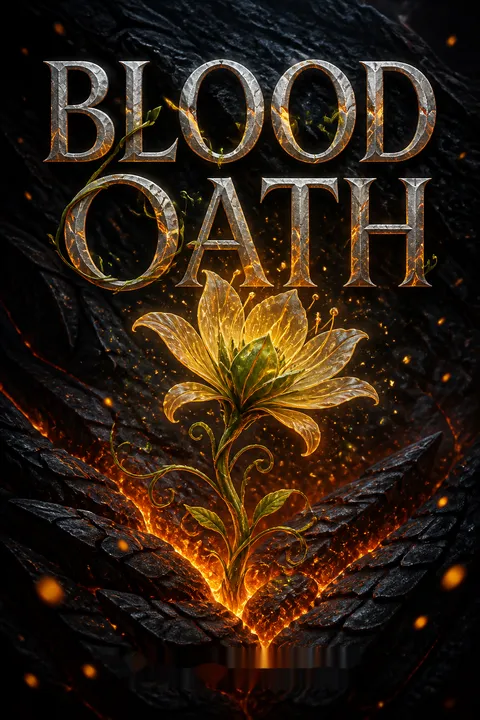


Plot Summary
A Stranger at Dyter's
In starving Verald, seventeen-year-old Ryn serves potato stew at the Crane’s Nest, where her friend Arnik and tavern keeper Dyter shelter meetings against King Irdelron. A sandy-haired stranger pays with gold instead of food and seems far older than the young men around him, most of whom have already been sent to war.
Ryn is more curious than cautious, hungry for any break from the life she expects to inherit. Dyter sends the crowd away before curfew and warns that Lord Irrik, the king’s dragon-shifter, has been circling Harvest Zone Seven. He also hints that the elusive rebel leader Cal will visit the tavern the following night, giving Ryn a reason to return despite the danger.
The opening makes political oppression tangible through food: peasants surrender their harvest to the king while Ryn serves a stew made largely of potatoes. Her curiosity is not yet ideological. She wants novelty, not revolution, and this distinction gives her later commitment room to develop rather than arrive fully formed. The stranger’s age marks him as an anomaly in a society that consumes young men through conscription. Meanwhile, Dyter’s tavern is both an ordinary workplace and a clandestine civic space. Ryn stands between those functions, not yet understanding that her desire for a life beyond routine has already brought her close to the forces that will dismantle it.
Fire Over Zone Seven
Walking home after curfew, Ryn sees Lord Irrik’s enormous black dragon form crossing the sky and breathing fire above the poor districts. She hides in the shadows, then reaches her mother’s house undetected, treating the escape as a narrow adventure. Her mother, Ryhl, is less amused: soldiers have increased their presence, and she plans to travel with Ryn to failing gardens in another zone.
The next morning, a sandy-haired man warns Ryn that soldiers are following her and that Irrik has been tracking people who left the tavern meeting. Ryn carries the warning to Dyter, who confirms that she and other rebels have been tailed. He sends her away through the fields rather than risk bringing soldiers to the tavern.
Ryn first reads danger through the lens of adventure. Her jokes about evading an invincible dragon protect her from fear, but they also reveal how little experience she has with political violence. Ryhl and Dyter, by contrast, recognize patterns: increased patrols, surveillance, and the risk of a meeting place becoming known. Their responses turn Ryn’s private thrill into a public liability. The episode also makes concealment a practical theme before it becomes magical: Ryn survives by using shadows and indirect routes, while the authorities use surveillance to make ordinary movement suspicious. Her mother’s planned journey offers safety, but also foreshadows how little control Ryn has over the threats now closing around her.
The Breath Does Nothing
On her way home that evening, Ryn encounters a black-clad man in the fountain square and warns him about curfew. He reveals that he is Lord Irrik, then questions her about the rebel gathering. Ryn lies about her companions and refuses to identify Dyter or Arnik. Irrik breathes on her, expecting his magic to make her compliant, but she remains herself.
When he touches the back of her neck, pain and energy surge through her, startling him as much as her. Soldiers arrive, and Irrik pulls Ryn away before they can see what happened. He tells her to leave Verald with her mother and threatens to kill her if she returns, leaving Ryn frightened, furious, and unable to understand why the king’s most feared servant seems afraid of her.
The encounter overturns Ryn’s childhood stories by making the supposedly invincible monster both dangerous and uncertain. Her resistance does not give her power in any immediate, usable sense; it only makes her more conspicuous. Irrik’s contradictory behavior, interrogation followed by a warning, creates the story’s central ambiguity around protection and coercion. Ryn answers fear with irreverence, but her defiance is still mostly instinctive. The touch at her neck introduces a bodily mystery that she cannot interpret, while the failed breath establishes that the king’s power does not operate uniformly on everyone. Difference becomes a source of exposure before Ryn can recognize it as a source of strength.
Ryhl’s Last Choice
That night, soldiers break into a neighboring home while Ryn and Ryhl prepare to leave. Irrik climbs through Ryn’s bedroom window and reacts to Ryhl as if he has seen someone believed dead. Ryhl tells Ryn to escape, then speaks privately with Irrik while the soldiers close in. Ryn returns to the window and sees her mother drive a golden dagger into her own chest.
Irrik pushes the blade farther, ending Ryhl’s life as soldiers enter the room. Ryn attacks him, but he restrains her and pretends she is merely an ignorant girl. When guards move to seize her, he makes her appear harmless and takes her toward the castle instead of letting them kill her on the spot. Ryn’s old life ends in the space of a single night.
Ryhl’s decision is an act of protection that Ryn can initially experience only as abandonment and horror. The private exchange with Irrik signals a history Ryn has been denied, but the immediate brutality leaves no room for explanation. Irrik’s staged contempt is another form of concealment, though Ryn has no reason to trust it after watching him finish the killing. Her attack is emotionally legible but strategically useless, a first collision between moral outrage and the need to survive. The scene also alters the mother-daughter bond retroactively: Ryhl’s calmness, gardening, and insistence on safety now look like parts of a larger secret. Ryn loses her mother before she can ask what that secret was.
The King’s Red Room
At the castle, Ryn watches King Irdelron’s guard kill Madeline, a scarred servant who had tried to disguise her and soften her arrival. The king then orders the silent torturer Jotun to extract information about the rebellion. Ryn knows little, but she refuses to name Dyter or Arnik. Jotun straps her to a table and uses needles, a stake, and a magical injection that makes her feel insects tearing through her body.
She loses consciousness and wakes in a cell, injured but mysteriously restored. The king’s cruelty is not an outburst: he treats pain as a tool for control and as proof of his authority. Ryn has entered a world where silence, compliance, and even survival must be learned under pressure.
Irdelron’s power is theatrical as well as physical. Madeline’s public execution warns every witness that even small acts of mercy can be punished, while the torture of Ryn turns her body into a site where the king expects information to appear. Ryn’s refusal to betray her friends is a meaningful choice, but it is not yet a triumphant one; it leaves her vulnerable to escalating violence. The magical torture blurs the boundary between bodily injury and perception, making certainty itself difficult to preserve. Survival begins here not as courage in a heroic sense but as a repeated negotiation with terror, exhaustion, and the knowledge that resistance may increase the cost.
A Voice Through Stone
When food and strength run out, Ryn hears a prisoner in the next cell and meets Ty, a young man with a damaged, rasping voice. He shares drink and bread, teaches her to save food for periods of starvation, and becomes her only steady human contact. Ryn eventually tells him that Lord Irrik helped bring the soldiers to her home and that her mother is dead.
Ty does not excuse the Drae, but he helps Ryn find a reason to keep going: protecting Dyter and Arnik from the king’s questions. Ryn stops seeing endurance as passive surrender and begins treating silence as a choice she can still control. A hooded caretaker named Tyr also tends her wounds in secret, though Ryn does not know why.
The cells make companionship materially consequential: Ty’s food keeps Ryn alive, while conversation gives her mind something beyond pain to organize itself around. His advice about rationing turns survival into a practice rather than a vague hope. Ryn’s commitment to protect her friends is also a redefinition of agency. She cannot choose her confinement, but she can choose what the king learns from her. Tyr’s wordless care complicates the apparent structure of the castle, suggesting that kindness can exist inside an institution built to extinguish it. Because Ryn has been isolated and repeatedly harmed, these relationships form quickly, carrying genuine comfort alongside the danger that intimacy gives others leverage.
A Garden in the Cell
After Tyr secretly cleans and treats Ryn, seeds and scraps of food begin sprouting into moss, grain, and a sunflower inside her dark cell. Ryn tries to destroy the growth before Jotun sees it, but the guard finds the plants and takes her to the throne room with a pumpkin from the cell. Irdelron mistakes the garden for proof that Ryn is Phaetyn, one of the land healers he has hunted.
His attention shifts from interrogation to exploitation. When he sees cuts on her hands close without Tyr’s help, Ryn recognizes that the healing is coming from her own body. The king orders her to restore the fields, and binds Irrik to keep her alive. Ryn moves from disposable prisoner to captive resource.
The garden transforms the dungeon’s defining condition, deprivation, into evidence of a power the state wants to own. Its growth is not a triumphant display: Ryn fears discovery because she knows the king will interpret usefulness as permission to control her more closely. Her self-healing provides a second, more intimate revelation, showing that her body can repair what torture does to it. Irdelron’s response makes the political logic explicit: he does not free what he can exploit. Irrik’s new duty places him beside Ryn as both guard and potential protector, sharpening the difference between a formal role and a person’s actual motives.
Spit, Blood, and Potatoes
Irrik takes Ryn out of the dungeon and leaves her in the potato fields with little guidance. Her first attempts, running, sweating, and spitting on the soil, produce uneven results. After she cuts a finger on a hoe, she mixes the blood into a bucket of water and uses it to water the rows.
The plants respond, though Irrik burns some oversized growth before the king arrives, helping keep Ryn’s power from appearing limitless. Irdelron tests the field and orders her to continue. Ryn realizes that bodily fluids can carry the same life-giving force as her blood, while Irrik quietly teaches her to control how much she uses. The fields become both her labor and the first place she can act with purpose.
Ryn’s power grows through trial, error, and bodily cost rather than inherited instruction. Her discovery of blood in the water is practical, almost domestic, echoing the ways Ryhl tended gardens, yet the king immediately converts that knowledge into compulsory labor. Irrik’s destruction of the oversized plants reveals a tactical conflict: he is helping Ryn conceal her strength even as he remains bound to the king’s orders. The field also shifts Ryn’s relation to work. Tasks that once felt like evidence of her inadequacy become a means of feeding others. Her agency remains constrained, but she begins to distinguish what she can do for the people from what the king intends to extract.
Ashes of Zone Seven
Irdelron sends Ryn through her former neighborhood on the way to the vineyards. Harvest Zone Seven has been burned to ash, including the Money Coil, the fountain square, and the houses where Ryn grew up. Irrik tells her that most residents escaped, but the sight of her erased home leaves her grieving and enraged. In the vineyards, Arnik and other rebels find a moment to reach her.
He reveals that the rebels have watched her work and now know she is Phaetyn. Ryn tells him that killing Irdelron could release Irrik from his oath, information she learned from Ty, and urges him to pass it to Cal. Irrik catches them together and sends Arnik away, leaving Ryn with a fragile hope and a newly sharpened purpose.
The destruction of Zone Seven converts the king’s abstract supremacy into a landscape Ryn can no longer mistake for ordinary rule. The burned fountain and vanished home are especially cruel because they erase the places that held her daily rituals and her mother’s care. Arnik’s survival briefly restores continuity, but their meeting is already bounded by surveillance and danger. Ryn now acts as a messenger in a political struggle rather than a bystander, using information acquired in prison to shape the rebellion’s strategy. Her grief is no longer only private; it gives her a reason to oppose the king’s system. Yet the scene refuses simple empowerment, since Irrik can still separate her from the people she wants to help.
A Rescue Set in Motion
Before the vineyard reunion, Ty tells Ryn that he is a senior figure in the rebellion and explains that Irdelron’s blood oath may bind Irrik to the king. Ryn carries that information to Arnik. Later, Tyr visits her dungeon cell and confirms that he has reached Dyter, who passed the message to Cal. The rebels plan to ambush the king’s forces in the fields soon.
Ryn is relieved that someone outside the castle is acting for her, but she refuses to imagine escape without Ty and Tyr. Her feelings for the hooded caretaker deepen, and he responds with tenderness without promising that he can leave. For the first time, rescue is more than a daydream: it has a route, allies, and a likely date.
This turning point turns private knowledge into a network of action. Ty supplies the political interpretation, Ryn carries it beyond the prison, and Tyr moves the message through Dyter to Cal. The sequence gives Ryn a role that depends on trust, but the story keeps that trust precarious: every person she relies on is still inside a system shaped by torture and oath-bound obedience. Her insistence that she will not leave loved ones behind is compassionate, yet it also risks making escape harder. The developing attachment to Tyr offers emotional warmth without security. His inability to promise freedom reflects the central problem of the novel: care can be sincere while power still dictates what a person can do.
The Fields Become a Trap
Irdelron sends Irrik and the Druman guards to hunt the rebels, while Jotun keeps Ryn working in distant fields. As the rebels surge over a hill, Ryn recognizes Arnik and tries to reach him. Jotun charges first, but Ryn cuts her hand and drives a bloodied rock into his side, destroying his Drae nature and leaving him badly weakened. She runs toward the rebels.
Irrik arrives in dragon form and herds them into the open, then breathes fire across the field under the king’s command. Ryn reaches Arnik and shields him as the flames catch her. The fire overwhelms her, but her Phaetyn healing keeps her alive. She wakes days later in the dungeon, realizing the rebellion’s rescue attempt has become a massacre and that she was used as bait.
The battle brings together the novel’s two forms of power: Ryn’s life-giving blood and Irrik’s destructive fire. Her attack on Jotun is the first time she uses her body’s unusual nature deliberately against an oppressor, but the immediate cost is not victory. Irdelron has arranged the field as a trap, and Ryn’s desire to escape becomes the means by which rebels are exposed. Irrik’s violence is coerced by the oath, yet its consequences remain real, preventing his suffering from erasing the dead. Ryn’s survival is equally double-edged: healing saves her body while leaving her to reckon with guilt, uncertainty, and the possibility that someone betrayed the plan.
Arnik’s Last Stand
After three days unconscious, Ryn is summoned to the throne room. Irdelron says the attack revealed Dyter’s location and that Arnik has given the king names and rebel sites under torture. The king orders Irrik to execute him.
Ryn pleads, but the command stands; Arnik tries to speak of their childhood before Irrik decapitates him. Irdelron then promises to hunt Dyter and Cal until Ryn submits. Ryn collapses under grief, understanding that the king intends to make every attachment into a handle for control.
Irrik carries her toward his tower, but she asks to return to the dungeon instead of accepting comfort that would make captivity feel safer than it is. There, she offers to heal Irrik, recognizing that he too lives under the king’s coercion.
Arnik’s death breaks the strategy Ryn had built around protecting her people. His disclosure under torture is not framed as simple betrayal; Ryn knows what the dungeon can do to a person, and grief does not require her to condemn him. Irdelron’s threat to pursue Dyter and Cal reveals the logic behind his violence: he wants submission through the destruction of relational life. Ryn’s refusal of the tower matters because she rejects the comfort that disguises her captivity. Her offer to heal Irrik does not absolve him, but it marks a new moral distinction. She can recognize his constrained agency without denying that his hands have caused harm.
The Key and the Knife
In the dungeon, Tyr reaches Ryn and urges her to escape, placing a key where she can take it. Ryn opens her own cell and searches the neighboring one, where Ty had been confined, finding a Druman uniform and a dagger beneath the blankets. She understands this as evidence that the prisoner she trusted has deceived her, though she does not yet know the full truth.
On the way out, she meets Jotun leaving the torture rooms. She attacks him, wrestles his weapon away, and stabs him, ending his reign of violence. The Druman catch her before she reaches freedom and herd her to the throne room. There, she finds Dyter captured and learns that the sandy-haired stranger from the tavern is Cal, the king’s son and the rebel leader.
The escape attempt is driven by accumulated choice rather than sudden fearlessness. Ryn uses the key, investigates the empty cell, and chooses to confront Jotun instead of fleeing past him. Her decision to kill him ends an immediate threat, but it also costs her the chance to reach the exit unseen. The uniform in Ty’s cell fractures her faith in the one relationship that helped her survive confinement. Meanwhile, Cal’s identity reconnects the first chapters to the rebellion’s larger political structure: the stranger who seemed merely unusual was moving through the kingdom under a concealed role. Each revelation gives Ryn information, but none arrives early enough to spare her from consequences.
The Oath Breaks
Irrik enters the throne room carrying Jotun’s body and a bloodied bundle that makes Ryn believe Tyr has been killed. Seeing Dyter captured and the king triumphant, she takes the dagger and stabs Irdelron. He invokes his oath and commands Irrik to kill her. Irrik refuses: the order to kill a fellow Drae breaks the oath’s deeper constraint, freeing him to drive a talon through the king’s throat.
As Irdelron dies, blue scales appear on Ryn’s arms. Irrik explains that she is both Phaetyn and Drae, and that her mother was Drae too. Ryn also learns that her blood killed Ryhl because it was on the blade, though she had not chosen that outcome. The king’s death ends his rule, but Ryn’s identity and grief remain unresolved.
The climax turns the oath from a mechanism of subjugation into the precise condition of its failure. Irrik is not freed by a general act of rebellion but by Irdelron’s own demand that he violate the boundary between Drae. Ryn’s attempt to kill the king is both vengeance and a response to the apparent loss of Tyr, while Irrik’s decisive action prevents her from becoming another victim of the oath. Her mixed inheritance unsettles the categories that have structured the story: healer and destroyer, human and Drae, daughter and weapon. The revelation about Ryhl’s death adds guilt without assigning Ryn intention. Political liberation arrives, but it cannot repair the personal losses that made the victory necessary.
A Flower in the Ash
After Cal accepts the crown and becomes King Caltevyn, Irrik admits that he had also been Ty and Tyr, using different forms to obey Irdelron while caring for Ryn. The dungeon friendship and the hooded healer were both real in their tenderness, but built through deception; Ryn feels manipulated and refuses to remain with him.
She leaves the castle alone and walks to the ashes of Zone Seven, where Dyter eventually finds her. He tells her that her feelings for Tyr were real even if the identity was not, and warns that her eighteenth birthday will soon bring her Drae transformation to the emperor’s attention.
As Ryn grieves, her power produces a small blue flower in the ruined soil, resembling the welded flower she touched with her mother as a child. She names it for Tyr, carrying loss and memory into an uncertain future.
The ending refuses to make the king’s death equivalent to healing. Cal’s accession creates a political possibility, but Ryn’s immediate need is distance from the person who made her feel loved while concealing his identity. Irrik’s care cannot erase his manipulation, just as his coercion cannot make every act of care false. Dyter offers a more difficult consolation: the feelings belonged to Ryn even if the person she imagined was not real in that form. The flower then gives her grief a material shape, joining the childhood ritual with her newly visible power. Its growth is a beginning, not a restoration. Ryn leaves the novel more powerful, but not yet ready to trust that power or its bearer.
Analysis
Blood Oath makes political power legible through the control of food and bodies. Irdelron’s quotas take harvests from a dying land, while the king’s table displays abundance that the people who grow the food cannot touch. Ryn’s magic threatens this arrangement because it could restore the soil without depending on royal stores. The king therefore treats her capacity to heal as property, converting a gift into compulsory labor. Her body becomes contested terrain: it is tortured for information, watched for signs of power, and used to nourish fields. This makes bodily autonomy inseparable from political freedom.
The novel’s most difficult moral relationship is Ryn’s with Irrik. He is responsible for actions that injure and kill people, but the oath constrains his choices and turns obedience into a form of captivity. The story does not use coercion to erase responsibility; instead, it makes responsibility uneven and costly. Irrik’s attempts to reduce harm matter, but they cannot restore the dead or spare Ryn the consequences of his obedience. Ryn’s changing judgment of him reflects a hard-won capacity to hold two truths at once: a person can be both an agent of violence and someone trapped inside a violent system.
Ryn’s growth is not a clean progression from innocence to heroic certainty. She begins by wanting excitement, then learns that attention can be dangerous, silence can protect others, and escape can place other people at risk. Her humor persists as a defense and a sign of selfhood, but it cannot prevent grief from changing her. The apparently loving bond with Tyr sharpens the book’s interest in trust: genuine feeling does not make deception harmless. By the ending, Ryn has helped overthrow a tyrant and discovered an identity that combines powers once treated as opposites, yet she leaves the castle grieving rather than triumphant. The flower she grows in the ashes offers no restoration of the old home. It offers a first living mark of what she may choose to grow next.
Review Summary
Blood Oath receives mixed reviews, with ratings ranging from 1 to 5 stars. Readers praise the dark fantasy elements, world-building, and intriguing characters, particularly the dragon-shifter Lord Irrik. Many find the plot captivating and unpredictable. However, some criticize the protagonist Ryn for being naive and making poor decisions. The extensive torture scenes are divisive, with some finding them excessive. Despite flaws, many readers express eagerness to continue the series, drawn in by the complex relationships, political intrigue, and potential for character growth.
People Also Read






Characters
Ryn
Restless survivorRyn is a seventeen-year-old tavern worker in famine-stricken Verald, raised by a mother who gardens while Ryn struggles to grow anything herself. Her humor is quick, her appetite for novelty stronger than her initial interest in politics, and her loyalty to childhood friends is more instinctive than ideological. She notices people and details, but at first underestimates how dangerous the world around her has become. Under pressure, she learns to treat silence, observation, and endurance as choices rather than signs of weakness. Her irreverence remains part of her character even when fear and grief alter what she can bear. Ryn’s deepest drive is to protect the people who have given her a place in the world.
Lord Irrik
The king’s DraeIrrik is the king’s feared dragon-shifter, a solitary figure whose power makes him both weapon and prisoner within Verald’s political order. He watches people closely, speaks with calculated restraint, and often disguises concern as contempt. His actions can be frighteningly violent, and Ryn has good reason to distrust him, yet his behavior does not always align with the king’s interests. He is disciplined, proud, and visibly burdened by obligations he cannot easily refuse. Irrik’s guarded nature makes every gesture difficult to interpret: protection may be strategic, kindness may carry a cost, and silence can conceal both guilt and resistance. His relationship with Ryn develops amid danger, mistrust, and unequal power.
Ryhl
Ryn’s devoted motherRyhl raises Ryn in the Penny Wheel and supports their household through remarkable skill with plants. Practical and self-possessed, she responds to hardship by working: tending gardens, helping neighbors, and planning carefully for their safety. Her warmth is apparent in private rituals and affectionate teasing, while her calmness can make Ryn underestimate how much she knows about the dangers around them. Ryhl protects her daughter through decisions Ryn cannot always understand, creating a relationship built on deep love but incomplete knowledge. Her garden work is both livelihood and care for a wider community, and her influence remains central to Ryn’s ideas about home, cultivation, and what it means to keep people alive.
Dyter
Tavern keeper and mentorDyter runs the Crane’s Nest, shelters rebel meetings, and acts as Ryn’s dependable surrogate father. A veteran with a missing hand and a scarred face, he combines humor with a commanding presence that makes younger rebels bristle and then listen. He is protective of Ryn and wary of careless recruitment, understanding that one loose conversation can bring soldiers to the tavern. Dyter’s practical judgment often clashes with Arnik’s youthful impatience, but his caution comes from responsibility rather than timidity. He gives Ryn work, affection, and a community beyond her home. His loyalty to the people of Zone Seven is expressed through action, especially the risks he accepts to keep the rebellion organized.
Arnik
Ryn’s childhood friendArnik grew up beside Ryn and remains her closest friend among the young people of Harvest Zone Seven. He is sociable, strong, and eager to prove himself, especially after reaching the age when young men are expected to take on adult duties. His enthusiasm for the rebellion sometimes outruns Dyter’s caution, and his wish to help can lead him to bring untested people into dangerous spaces. Beneath that impulsiveness is a sincere attachment to Ryn and a desire to make a future for their community. Their closeness carries the familiarity of shared childhood, while the prospect of adulthood begins to change how each understands their bond.
King Irdelron
The famine’s iron rulerIrdelron rules Verald through quotas, surveillance, and public punishment. He appears courteous and composed, but this mild surface makes his cruelty more disturbing rather than less; he treats execution and torture as ordinary instruments of governance. His pursuit of power is tied to his fear of mortality and his willingness to consume whatever might preserve his rule. Irdelron studies people for leverage, especially their relationships and vulnerabilities, and views food, bodies, and loyalty as resources to be managed. He is not impulsive in the way his violence might suggest. His brutality is systematic, designed to teach subjects that resistance will cost them not only their lives but the people they love.
Cal
The elusive rebel leaderCal is the hidden leader whose name gives the rebellion a point of unity. He works through messengers and concealed meetings rather than appearing openly, making his identity and intentions subjects of rumor. When Ryn encounters him, he is observant and composed, a man whose age and manner distinguish him from the conscripted youths around him. His role connects local resistance in Zone Seven to a wider political challenge. Cal’s public purpose is inseparable from the risks of secrecy: he must remain difficult for the king to find while still persuading scattered groups that resistance can be coordinated.
Ty
Ryn’s cell neighborTy appears to Ryn as a young prisoner with a damaged voice and hard-won knowledge of the dungeon’s rhythms. He shares food, explains the need to ration supplies, and offers companionship when isolation threatens to overwhelm her. His humor is dry, often arriving at moments when Ryn has little reason to laugh. Ty understands the castle’s prisoners and political arrangements better than Ryn does, and he helps her think beyond immediate survival. Their friendship grows from dependence and conversation, giving Ryn a reason to preserve her strength and her silence.
Tyr
Hooded dungeon healerTyr is a hooded caretaker who visits Ryn in secret, treats her injuries, brings food, and communicates with her through thoughts rather than spoken words. His appearance is difficult to read, but his care is gentle and methodical, sharply contrasting with the violence of the dungeon. He regards endurance as compatible with kindness and tries to help Ryn recognize that surviving does not make her weak. Their closeness develops in moments of physical vulnerability and shared silence, giving Ryn a form of intimacy she has never experienced before. Tyr’s guarded presence suggests that compassion inside the castle must remain hidden to survive.
Jotun
The king’s torturerJotun is a powerful, silent guard who carries out the king’s punishments and takes particular satisfaction in breaking prisoners. His muteness does not make him less expressive: anticipation, resentment, and cruelty show plainly in his face and movements. He treats pain as a routine craft, dragging Ryn across stone and using the instruments of the torture chamber without hesitation. Jotun’s loyalty to the king is reinforced by the hierarchy of the Druman guards, but his hostility toward Irrik adds another rivalry inside the castle. For Ryn, he represents the immediate, bodily face of Irdelron’s rule.
Madeline
A servant who shows mercyMadeline is a young castle servant with severe scars and an understanding of how people endure the king’s household. She disguises Ryn before the audience with Irdelron and offers hard advice about preserving an inner self when outward choices are taken away. Her compassion is practical, shaped by long familiarity with loss and danger. In the brief time she is with Ryn, Madeline gives her a vocabulary for survival that continues to guide her in the dungeon.
Lydelia
A castle bathing attendantLydelia is a young attendant ordered to bathe Ryn in the dungeon. She is uneasy around Irrik’s influence and initially speaks of him as a source of danger, yet she performs her assigned task and helps restore Ryn’s cleanliness and dignity. Her wary, practical manner reflects the compromises required of servants inside the castle.
Plot Devices
The blood oath
A binding with a flawIrdelron’s oath binds Irrik to protect the king and obey his authority, making the Drae’s strength an instrument of the throne. The oath shapes nearly every choice Irrik makes: he can resist in limited ways, but direct defiance risks worse consequences for himself and others. Ty explains that the rebellion believes Irdelron’s death could free Irrik, giving Ryn information to carry to Cal. The oath is more than a magical rule; it externalizes the political problem of obedience under coercion. Its exception, revealed at the climax, turns the king’s own command against him.
Phaetyn life magic
Land and body restoredPhaetyn power allows life to flourish where the famine has left the soil barren. Ryn discovers that seeds grow rapidly around her and that her blood, sweat, and other bodily fluids can carry healing force into the land. The same power repairs her injuries, making her difficult to kill and valuable to Irdelron. Its relationship to Drae blood adds danger: Phaetyn blood can harm the Drae nature within Druman, and Ryn’s blood is implicated in her mother’s death. The magic therefore links agriculture, bodily autonomy, political exploitation, and lethal vulnerability.
Drae powers
Control, concealment, and flightDrae abilities include shifting between human and dragon forms, flight, fire, exceptional strength, and a breath that can influence human behavior. Irrik can also use darkness and mental communication, abilities that let him move unseen or speak without revealing a conversation to nearby guards. These powers create the immediate imbalance between him and Ryn, but her resistance to his breath and her ability to hear thoughts complicate it. Drae power is never simply freedom: Irrik’s oath makes his strength answer to Irdelron, while Ryn’s emerging connection to the species threatens to draw the emperor’s attention.
The healing nectar
A hidden store of strengthA sweet, unfamiliar drink reaches Ryn in the dungeon and helps her recover from starvation and exhaustion. Ty shares it when Ryn has no food or water, and Irrik later supplies it during her work in the fields. Its restorative effect makes it a small but crucial resource in a world where nourishment is controlled by the king. Ryn initially knows neither its source nor its full properties, so the drink also functions as a quiet sign that the castle contains powers and resources beyond what the prisoners are allowed to see.
The Harvest Zone map
Scarcity made visibleVerald is organized like a series of rings around the king’s castle: quota fields, a market road, wealthy districts, and the poorer outer zones. The king’s food demands force peasants to work the land while receiving little of what it produces. This geography makes class power visible in daily travel and gives the rebellion a practical network of districts, taverns, and fields. The same places change meaning as Ryn’s story advances: the fountain square is a childhood landmark, a site of danger, and later part of the world erased by the king’s violence.
Darkest Drae Series Series
Download PDF
Download EPUB
.epub digital book format is ideal for reading ebooks on phones, tablets, and e-readers.








